
The Day Everything Changed: My 140-Pound Weight Loss & Food Healing Journey
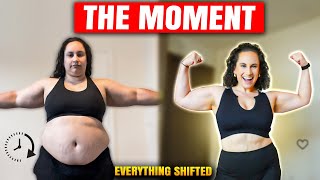
Jessica Lawson lost 140 pounds after bariatric surgery, but realized the surgery changed her stomach, not her mind. She developed a four-phase framework to address emotional eating: observe patterns with the STOP method, identify what food was actually fulfilling, build flexible meal structures, and separate self-worth from weight.
Chapters
I still remember the exact moment that everything changed for me. I was living in Los Angeles and I was struggling, and I mean struggling, up the stairs to my second floor apartment. After walking my dog, Selena, I was gasping for breath. My body weighing 290 pounds. I'm 5'1.5". My mind weighed even heavier with shame. And in that moment, I looked down at my feet and I realized I wasn't just losing a battle with my weight, I was losing my life. And that day marked the beginning of a journey that would transform not just my body, leading to a 140-pound weight loss, but something far more profound— my entire relationship with food. And even after bariatric surgery, I discovered that losing weight was only half the battle. The surgery changed my stomach, but my mind was still trapped in the same food prison that it had been for my entire life since I was 10. And until I finally understood what true healing meant, nothing was going to change. Today, food is just food, not my enemy. Not my comfort, not my obsession. And those 140 pounds, they've stayed off because I finally addressed what was really driving my weight. So let me share how that day on the stairs changed the entire trajectory of my life and how the lessons that I learned could change everything for you too. For those who don't know me, I'm Jessica Lawson, the founder of the Bariatric Success Academy, and growing up, I was always the high achiever. I was the valedictorian of my high school. I got a full-ride scholarship to college at Georgetown University. I got an MBA from a prestigious Ivy League school and a successful corporate career. But from the outside, I checked every box of success. But inside, I was fighting a battle with my weight that seemed impossible to win. And when I moved to Los Angeles after graduating from Wharton, I gained 70 pounds in a year while battling anxiety and depression. And quickly I reached 290 pounds, spending nights ordering takeout and watching movies on Netflix to escape my reality. Then came that pivotal day on the stairs. I was struggling to breathe, really struggling. Feeling my heart pound, I had a moment of complete clarity. This wasn't about being overweight anymore. This was now affecting other people. This was affecting my dog, who I was responsible for, the love of my life, my miniature schnauzer, Selena. This also was about survival. I was watching my father battle diabetes. He'd had multiple heart attacks because of obesity, and I realized I was slowly disappearing, both physically under the weight, 290 pounds of weight, and emotionally under the shame. I didn't want to leave my apartment because of how I felt and how I looked. And I remember sitting at the top of those stairs, and I made a promise to myself that would ultimately lead to losing 140 pounds. I told myself, Jessica, Today's the day. Something has to change and it has to change right now. So I had bariatric surgery. Initially, everything seemed like a dream. I followed every rule perfectly. The weight came off rapidly, eventually 140 pounds. And for the first time in years, I felt confident in my body. But then my father passed away and everything I thought I'd learned was tested. Grief hit me hard. I began regaining weight, 15 pounds in a short period. All those familiar thoughts came rushing back. The obsession with good and bad foods, the guilt after eating, the all-or-nothing thinking. And that's when I had my second transformative moment. I realized that bariatric surgery had given me a tool to lose 140 pounds, but it had not given me a new brain or a new relationship with food. The surgeon had changed my stomach, but only I could change my mind. My real breakthrough came when I finally understood what my relationship with food was actually about. It wasn't about willpower or finding the perfect meal plan. It wasn't even about bariatric surgery protocols. The day everything truly changed was when I recognized that food had become everything except what it was meant to be: simple nourishment. Food was comfort when work stress overwhelmed me. Food was celebration when I achieved something. Food was distraction when I was bored or avoiding difficult tasks. Food was self-soothing when I felt anxious or sad. Food was a coping mechanism for regulating my emotions. And food was punishment when I felt like I failed. Food was control when other areas of my life felt chaotic. Does any of this sound familiar? Because the most profound realization that I've had was how I connected to food to my identity and my self-worth. A good day meant I was a good, disciplined person. A bad day with food meant I was a failure. And the scale was more than a tool for measuring weight. It became measuring my value as a person. And psychologists call this emotional reasoning, a cognitive distortion where we believe that what we feel must be true. In a 2019 study in the Journal of Personality and Social Psychology found that this type of thinking creates powerful feedback loops that reinforce negative self-perception and problematic behaviors. And This insight was my true turning point, the moment that would ensure those 140 pounds stayed off for good. I realized I needed to not just heal my body, but my relationship with food and my relationship with myself. So to maintain my weight loss, I needed to understand what was really happening in my brain. And what I discovered explained why that day on the stairs couldn't change things alone. It was never going to, and also why traditional approaches and diets had always failed me. When we experience stress, whether it's from work or relationships or negative thoughts about ourselves, our bodies release cortisol, our primary stress hormone. And according to research from the University of California, this triggers increased activity in the brain's reward pathways, particularly towards high-calorie food. In groundbreaking studies at the National Institute of Health, have shown that this isn't just psychological. It's a measurable neurobiological response. This is not a character flaw. It's biology. Your brain is trying to protect you by seeking quick energy and mood-boosting chemicals. And research from Harvard Medical School shows that chronic stress actually changes how our brain responds to food. The reward centers become more sensitive to the dopamine release from eating palatable foods. A 2021 study in Nature Neuroscience found that these brain changes can persist long after weight loss, creating what scientists call the metabolic memory effect. For bariatric patients, this creates a unique challenge. The surgery changes our physical hunger cues and helps us lose substantial weight. But it doesn't address these neurological pathways that have established over years or decades. And longitudinal studies of bariatric patients published in JAMA Surgery confirm this disconnect between physical changes and psychological patterns. But the good news, our brains have an amazing ability called neuroplasticity. They can reorganize themselves by forming new neural connections. In a fascinating study, from MIT's McGovern Institute showed that we can actually rewire these pathways through specific repeated interventions. The key is targeting both conscious thought patterns and subconscious neural associations. But rewiring requires more than just trying harder or following another diet plan. It requires a systematic approach to creating new neural associations with food. And addressing the emotional need that food has been fulfilling. This understanding became my foundation for maintaining my weight loss transformation and finding true freedom with food. After that day, everything changed on the stairs. My journey unfolded in several key phases, and I've since guided dozens of Bariatric patients through the same process, helping them maintain significant weight loss while finding freedom with food. Phase 1 is awareness without judgment. The first step was developing awareness of my patterns without the harsh self-judgment that had always accompanied them. I started using a practice I call compassionate observation, simply noticing my eating behaviors, thoughts, and emotions without criticism. This is similar to mindfulness, but specifically focused on food-related thoughts. And neurologically, this approach is powerful. Research published in Frontiers in Psychology shows that self-compassion activates the parasympathetic nervous system in our rest and digest mode rather than our sympathetic fight or flight response that drives emotional eating. And studies demonstrate that self-compassion literally changes brain activation patterns in the prefrontal cortex, reducing emotional reactivity. And I developed a simple technique called STOP that creates space using pattern interruption techniques between the trigger and the response. So you stop what you're doing, you pause. We're literally pretending like we're a time traveler in space pressing pause because we gotta buy some time. We're pausing. Okay? Then we need to think. We need to think about what is making us feel the need to eat. What emotions are going on? We wanna observe what's happening in our body. Are we feeling physically hungry or emotional head hunger? Then we wanna proceed with intention. And this pause became crucial in maintaining my weight loss because it interrupted automatic patterns and created space for choice. Neurologically, this activates the prefrontal cortex, giving it time to override automatic limbic responses in a process well documented in research on decision-making. Phase 2: Emotional Needs Identification. Next, I learned to identify what emotional need food was fulfilling. When I felt the urge to eat despite not being physically hungry, I asked myself, "What am I feeling right now? What do I really need in this moment? And how can I meet this need without food?" This approach is grounded in emotional intelligence theory and supported by research on emotional regulation. And studies show that accurately labeling emotions activates the right part of your brain, which helps modulate the amygdala's emotional reactions. And I discovered that food was often a substitute for much more fundamental needs. When I was stressed, I needed calming. Not calories. When I was lonely, I needed connection, not comfort food. When I was bored, I needed engagement, not entertainment through eating. When I was tired, I needed rest, not energy from food. In a landmark study in the Journal of Clinical Psychology, found that addressing these primary emotional needs directly reduced emotional eating episodes by 67% in a 6-month follow-up. Phase 3: From rules to structure. The third phase involved moving from rigid food rules to flexible structure. So instead of categorizing foods as good or bad, I focused on creating consistent eating patterns that provided stability while allowing flexibility. And this approach is supported by dietary restraint theory developed by psychologists in the field, and their research shows that rigid food rules often backfire, creating what they call the what the hell effect, where small deviations lead to complete abandonment of healthy intentions. And in contrast, flexible restraint correlates with long-term weight management according to the National Weight Control Registry Study. This includes regular meal timing to stabilize blood sugar and hunger hormones. Protein prioritization to support bariatric needs, building meals around nutrient-dense foods while allowing pleasure foods, planning for challenging situations like travel or social events and high-stress periods. Phase 4: Identity Transformation. The final, most powerful phase was changing how I saw myself in relation to food. I stopped defining myself by my eating behaviors or weight and started cultivating a new identity as someone who nourishes her body with awareness and care and responds to emotional needs appropriately, enjoys food without being controlled by it, and recovers quickly from setbacks without shame spirals. And also someone who maintains her weight loss as a natural result of this healthier relationship. This identity-based approach has strong scientific support, and the research on mindset demonstrates that how we perceive ourselves shapes our behavior more powerfully than willpower ever could. If you're new here, I don't believe in willpower. It's not sustainable. It's not a strategy. It comes and goes. Oh, I could not say that louder. Okay. And a 2020 study in the European Journal of Social Psychology found that identity-based habit formation is 43% more effective than outcome-based approaches for creating lasting behavior change. And this complete transformation journey from that desperate day on the stairs to the freedom I experience now laid the foundation for lasting change that goes far beyond losing 140 pounds. So let me share how this might look in everyday life, because that day everything changed for me didn't just happen once. It happens every day as I make different choices. My morning routine reset. I start each day by setting an intention for my relationship with food. Instead of, "I'll be good today," or, "I need to lose weight," I affirm, "Today I'll nourish my body mindfully and respond to my needs with awareness." This simple reframing activates different neural networks, moving from avoidance motivation, which is fear-based, to approach motivation, which is growth-based. This creates sustainable habits that maintain weight loss naturally. In research, at the University of Rochester has demonstrated that approach-focused goals activate the left prefrontal cortex, which is associated with positive emotions and resilience. While avoidance goals trigger right prefrontal activation linked to anxiety and withdrawal. Emotional eating intervention. So when I notice the urge to eat outside of hunger, I use the STOP method, then ask these key questions: on a scale of 1 to 10, how physically hungry am I right now? What emotion am I experiencing? What alternative ways could I address this emotion? And this practice is grounded in interoceptive awareness, our ability to sense internal bodily states. A groundbreaking study from the University of California found that strengthening this awareness through targeted exercises improves the ability to distinguish between emotional and physical hunger by up to 70%, directly reducing non-hunger eating. For example, when I realize I'm eating due to work stress, I might take a 5-minute walk, practice some box breathing, or talk to a supportive friend. Friend instead, and these alternative responses prevent my emotional eating that has led to my weight gain in the first place. Structured flexibility for meals. I create a simple meal framework that ensures I get proper nutrition while allowing flexibility. I prioritize protein at every meal. I include veggies for nutrients and fullness. I add healthy fats for hormonal balance. Include moderate complex carbs based on activity level. And this structure provides guardrails without rigid rules, allowing me to adapt to different situations while maintaining nutritional consistency that supports my weight loss. And research from Cornell's Food and Brand Lab shows that having consistent food scaffolding, as I like to call it, reduces decision fatigue, a phenomenon where the quality of our decisions deteriorates after multiple decisions, which is a major factor in poor food choices, according to Harvard Business Review analysis. Social situation navigation. I developed specific strategies for social situations that had previously triggered anxiety or were overeating. So reviewing menus in advance when I'm dining out, having a simple eating strategy, not a complicated plan, deciding on my alcohol approach before events, and practicing conversation pivots for food pushers. These practical strategies allow me to participate fully in social events and without any food anxiety dominating my experience while still maintaining my weight loss with ease. And a 2019 study in the Journal of Health Psychology found that implementation intentions, specific if-then plans for challenging situations, increase success rates in navigating food-related social pressure by over 300%. Looking back at that day on the stairs when everything changed I could not have imagined the freedom I experience now. And my transformation went far beyond losing weight. It completely changed my relationship with myself. That mental space that food obsession had occupied is now freed up. I no longer constantly think about what I'm going to eat next, whether I'll be good, or what to compensate, or how, for being bad. Neuroscientists call this cognitive bandwidth liberation. When neural resources previously dedicated to obsessive thought patterns become available for other cognitive processes. And research from Princeton University has shown that resolving these internal conflicts can improve executive function, creativity, and emotional well-being. And I can enjoy social events without anxiety about the menu. I can travel to new places and experience their cuisine without fear. And I can have a cookie without it turning into a binge. Most importantly, I stopped using food and the scale as measures of my worth. A day with unplanned eating isn't a moral failure, just a day when I ate differently. A fluctuation on the scale isn't a reflection of my value, it's just data. Psychological shift from fusion with thoughts to cognitive defusion, recognizing thoughts as just thoughts and not reality, is a core principle in Acceptance and Commitment Therapy, which has shown remarkable effectiveness for long-term behavior change, according to a meta-analysis in the Journal of Consulting and Clinical Psychology. And the freedom from food obsession gives us so much more than stable weight. Gives us mental peace. Gives us energy to focus on things that truly matter. And it gives us the ability to actually enjoy food again without fear. And that day on the stairs truly changed everything for me in ways that I could never have imagined, not just leading to weight loss, but to something far more valuable: a healed relationship with food and myself. So if you've been struggling with your relationship with food, especially after bariatric surgery, I want you to know that I see you, that your day everything changes could be today. I've seen it in my own life with my own weight loss transformation. I've witnessed in dozens of clients who thought they would be doomed to struggle forever. But the science is clear. Transformation is possible. You are not broken. You're not stuck. You just don't know how to fix yourself. And a landmark study in the New England Journal of Medicine found that psychological approaches combined with bariatric surgery resulted in 42% greater long-term weight maintenance than surgery alone. The neural pathways that once drove problematic eating can be rewired. Through the right interventions. And here's where I suggest you start. Begin compassionate observation. Notice your food patterns without judgment. Use the STOP method when you feel triggered to eat emotionally. Start food feeling journal, not tracking calories, but tracking how you feel before, during, and after eating, and look for patterns in your emotional eating triggers. Create a flexible meal structure. Develop a simple framework that ensures proper nutrition while allowing adaptability. Practice self-compassion. Speak to yourself with the same kindness that you would show your best friend who's struggling. And connect with support. Healing your relationship with food is difficult to do alone. You don't know what you're doing. Whether it's a coach or a supportive community, find people who understand this journey. And if you'd like to go deeper into this work and discover how we could transform your relationship with food together, I invite you to book a Bariatric Success connection call with me. During this complimentary call, we'll discuss your specific challenges with food after surgery and identify what might be keeping you stuck and explore whether the Bariatric Success Academy would be the right fit for you. So click the link in the description below to schedule your call. And if this video resonated with you, please like and subscribe for more content on finding food freedom and maintaining your weight loss after bariatric surgery. And remember, Your day everything changes could be right now. True healing happens when both your body and your relationship with food are transformed. And just as I lost 140 pounds and found freedom, you can create your own transformation story that starts today. Because why not? Why not you?
More from Jessica

Why You Lose Control With Food The Second You Get Home From Work After Bariatric Surgery




Why You Keep Reaching for Food After Bariatric Surgery, Even When You Know You Shouldn’t #bariatric

Why Food Takes Over When You Get Home From Work After Bariatric Surgery #bariatricsurgery




What no one tells you about regain after Bariatric Surgery #bariatricsurgery #bariatric

She Spent $15K on Bariatric Surgery and Still Couldn't Stop the Food Noise (Until This)