
Too Busy to Meal Prep? Do This Instead (High Performer’s Guide)
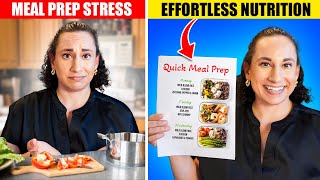
Jessica Lawson shows busy professionals why traditional meal prep fails and offers the Freedom Framework instead: strategic defaults for different days, nutrition backup stations, and no-cook assembly meals. A three-week plan replaces stress with effortless eating that fuels performance.
Chapters
It's Sunday night and you're looking at the week ahead. Back-to-back meetings, 3 major deadlines, and 2 client dinners. The last thing you have time for is hours and hours of meal prep on a weekday or on the weekend. But you also know that you need to fuel your performance. What if I told you that good nutrition doesn't require spending your precious weekend meal prepping? And in fact, I'm about to show you how high performers can eat well with minimal preparation, and it's all about strategy, not time. I'm Jessica Lawson, and as a former tech executive, I know exactly what it's like to to feel too busy to eat well. My calendar when I was an executive was packed with meetings. My to-do list was endless, and the idea of spending hours meal prepping seemed impossible. And during this time, I gained 140 pounds because I was always choosing between my time and my health. I tried the meal prep approach, spending the entire Sunday cooking, only to have those carefully prepared meals go to waste when my schedule changed or I worked late. But everything changed when I discovered that good nutrition isn't about having perfect meal prep. It's about having strategic systems that work with your busy life. And today I help other high-achieving women just like you fuel your success without sacrificing hours in the kitchen. So if you're ready to learn how to eat well without spending your weekends meal prepping, hit that subscribe button and the notification bell because I'll be sharing strategies specifically designed for busy women who want to optimize their nutrition while excelling in their careers. So let's talk about why traditional meal prep methods that bodybuilders use, for example, fail busy professionals. First off, there's the reality of our schedules. Your Sunday plans might be perfect, but by Tuesday, everything's changed. Client emergencies pop up, meetings run late, and those perfectly portioned meals, they sit untouched in your fridge. Then there's what I call the Perfectionism Trap. As high achievers, we think we need to prep every meal perfectly. Multiple proteins, various vegetables, perfectly portioned containers. That all-or-nothing mindset leads us to think that if we can't do it perfectly, why do it at all? But here's what's fascinating about high achievers. Our drive for excellence actually works against us with meal prep. We overcomplicate it. We try to optimize every detail and create such elaborate plans that they're impossible to maintain with our busy schedules. So if you're nodding your head right now, which I can see you are, if you've ever felt guilty about not having time to meal prep, or if you've given up on trying to eat well because you're too busy, you're not alone. And more importantly, the solution isn't finding more time to meal prep. It's creating a strategic system that works without it. So let's dive into the common traps that busy professionals fall into when trying to eat well. Well, first, there's the Overtrap. We treat nutrition like a complex project, creating elaborate meal plans with multiple components, specific portions, and complicated recipes. Think about your last attempt at meal prep. You probably spent hours researching the perfect recipes, created detailed shopping lists, bought specialized containers, and planned different meals for every day. But here's the reality: complexity is the enemy of consistency, especially for busy professionals. Then there's what I call the Unrealistic Expectation Syndrome. We think we need to prep 7 different meals with perfect macros macros all Instagram-worthy. We try to be food prep perfectionists just like we're perfectionists in our careers, and when we can't maintain this unrealistic standard, we give up entirely and fall back into whatever's convenient. The impact on your performance is serious. When these complicated plans fail, you end up making last-minute food decisions when you're already depleted, experiencing energy crashes during important meetings, or turning to stress eating when your perfect plan falls apart. Or maybe you're losing mental bandwidth to constant food decisions, or feeling guilty about failing at nutrition or compromising your performance because of poor fueling. This is where we need to completely shift our approach. Instead of striving for perfect meal prep, we need to think like strategic executives. The same way you optimize your business process, we need to optimize your nutrition approach. So let me share what this looks like in real life. Take Sarah, a CFO I worked with who was spending 4 hours every Sunday meal prepping, only to have those meals go to waste when client emergencies came up. And once we implemented strategic defaults instead of rigid meal prep, she was able to maintain maintain consistent energy through her 12-hour days while actually spending less time on food prep. Or consider Michelle, a managing director who was constantly skipping meals during back-to-back meetings, then binge eating at night. By creating simple assembly systems instead of relying on traditional meal prep, she was able to fuel properly even during her busiest days, all while managing a team of 50 and closing major deals. Just like you wouldn't try to handle every business decision individually, you shouldn't have to think about every meal separately. It's about creating systems and defaults that work automatically. Think about how you run your team. You have systems and protocols and efficient processes. We need to apply the same strategic thinking to your nutrition. Here's how this mindset shift looks in practice. Instead of perfect meal prep, focus on strategic defaults that work in any situation. And instead of complicated recipes, use simple assembly formulas that take minutes. Instead of rigid plans, create flexible frameworks that adapt to your schedule. And instead of all-or-nothing thinking, build strategic backup plans. Now let me show you what I call some quick win strategies. And these are your go-to solutions that require minimal prep but maximize results. Strategic defaults for different types of days, meeting-heavy days, travel days, office days, no-cook meal combinations that fuel performance and take less than 5 minutes, time-saving techniques that actually work in real life, and emergency protocols for when everything goes off plan. And lastly, simple assembly methods that feel effortless. And the key is shifting from perfection to strategic efficiency, just like you do at your work. So this is where the Freedom Framework transforms your approach to busy day nutrition. We start with foundation, but not the complicated kind. We're talking simple nutrition basics that anyone can follow, easy protein options that don't require cooking, quick energy optimizing combinations, and minimal prep requirements that actually work. Then we focus on real-world implementation because let's be honest, your days are unpredictable and you need strategies for back-to-back meeting days, travel days without relying on airport food, and high stress periods when cooking is the last thing on your mind. Here's what makes this approach successful: we create easy-to-follow guidelines that don't require perfection and a flexible application for your dynamic schedule with sustainable practices that work in real life. For example, on meeting days, you'll have what I call your power packs—strategic combinations that you can assemble in minutes. For travel, you'll have your performance protocol, a simple system for maintaining energy without meal prep. And for high-stress periods, you'll have your emergency excellence strategy, ensuring you stay fueled even when everything is chaos. The key is creating what I call strategic simplicity, Instead of perfect meal prep, we focus on simple repeatable systems, flexible frameworks that adapt to your schedule, and performance-based choices that don't require hours in the kitchen. This is not about having Instagram-worthy meals. It's about having reliable systems that fuel your success without taking over your life. Let me give you 3 specific steps you can take right now to start transforming your approach to nutrition without relying on meal prep. First, create what I call your strategic defaults menu. List out 5 no-cook meals that you can easily assemble in under 5 minutes. These are not elaborate recipes. They're simple combinations that fuel your performance when you're too busy to prep. Second, set up your performance stations. These are strategic spots in your office, your home, and even your car where you keep emergency nutrition options. Think of it like setting up backup systems for your business. You need backup systems for your nutrition too. And third is what I call success pattern mapping. For the next 3 days, notice when you actually have time to eat, what situations derail your nutrition, and what quick options work best for your schedule. And here's what you can expect timeline-wise. Within the First week, you're going to stop stressing about perfect meal prep, and by week 2, you'll have strategic defaults in place. By week 3, you're going to have what I call effortless nutrition, where eating feels automatic, not overwhelming. Imagine having a nutrition approach that is just as efficient as your business systems. Imagine never having to stress about meal prep again while still maintaining the energy and focus you need to perform at your peak. You've already proven that you can create efficient systems in your career. Now it's time to apply that that same strategic thinking to your nutrition. So if you're ready to stop struggling with meal prep and create effortless nutrition systems, here's your next step. Book a Food Freedom Strategy call with me, and during this call, we're going to map out your specific nutrition challenges, create your personalized quick win strategy, and determine if my coaching program is the right fit for your transformation. But I want to be clear, this is not for everyone. I only work with women who are ready to stop the perfectionistic approach to nutrition and create real sustainable systems. So if you're ready to make nutrition as efficient as the rest of your life, click the link description to book your Food Freedom Strategy session today. And make sure to hit subscribe and the notification bell for more strategies designed specifically for busy, high-achieving women who want to optimize their nutrition without sacrificing their time. Remember, you don't have to choose between success and good nutrition. You can have both.
More from Jessica

Why You Lose Control With Food The Second You Get Home From Work After Bariatric Surgery




Why You Keep Reaching for Food After Bariatric Surgery, Even When You Know You Shouldn’t #bariatric

Why Food Takes Over When You Get Home From Work After Bariatric Surgery #bariatricsurgery




What no one tells you about regain after Bariatric Surgery #bariatricsurgery #bariatric

She Spent $15K on Bariatric Surgery and Still Couldn't Stop the Food Noise (Until This)