
Why Weight Gain After Weight Loss Surgery Feels So Terrifying
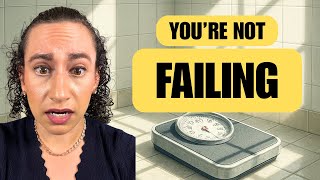
Jessica Lawson, who lost 140 pounds after bariatric surgery, explains why patients panic over small weight regains. The terror isn't vanity but an identity threat: the brain sees weight gain as losing the confident self surgery promised. Surgery's benefits fade when stress responses and emotional patterns resurface, making regain feel like failure rather than information.
Chapters
Right after Thanksgiving this year, I had a client tell me, Jessica, I just stepped on the scale this morning and I saw it go up by 3 pounds, and my heart started racing, my hands were shaking. I felt like I was watching my entire future disappear. She told me, I know it's just 3 pounds, but look, I know that's nothing, but I couldn't breathe. I felt like I was falling back into a black hole I'd worked so hard to climb out of. As a certified nutrition coach and bariatric coach who's worked with hundreds of women at this point, that terror that you feel, it's not actually about the weight. If you're new here, I'm Jessica Lawson. I've had bariatric surgery myself, and I coach bariatric patients who are experiencing regain, food noise, and loss of control. And I've lost over 140 pounds, but more importantly, I've sat with hundreds of bariatric patients as they navigated the emotional crisis that comes with regain. And what I've discovered is that the panic that you feel when you see regain is not about vanity, it's not about discipline, or it's not even always about health, but something much deeper, something that goes to the core of who you believe you are. And today I'm going to explain why regain feels like a life or death emergency, why your nervous system goes into crisis mode when you see those numbers climbing on the scale, and most importantly, why this reaction is completely rational. Because once you understand what's really happening, that terror starts to make sense. And when it makes sense, you can stop fighting yourself and start understanding what your body is actually trying to tell you. First, let me ask you something. When you see that number on the scale, going up, what is the first thought that goes through your mind? I bet it's not, oh no, I gained 2 pounds. I bet it's something like, oh my God, I'm going exactly back to where I started. I'm going back to the old version of me, right? Or everyone's going to see that I failed bariatric surgery and I was another failure. Look, it's not about weight. That's about identity and who you are. And identity threats feel like survival threats to your nervous system. And here's what really is happening. You believed surgery would create a permanent after version of yourself, not just someone smaller, but someone fundamentally different. You imagined her walking into rooms with confidence. You imagined her shopping in regular-sized stores, trying on clothes without dread, looking in the mirror with confidence. And you imagined her going to restaurants and ordering whatever she wanted without calculating, without panic, without shame. You imagine her comfortable in her own skin. You imagine her not thinking about food every waking moment of the day. And you imagine her being a woman who could keep cookies in the house and forget that they were there. You imagine her being respected, being seen, being valued in ways that the before obese, overweight version never was, because that's how society works. And you imagine her finally being free. So when regain starts, it's not just pounds coming. It feels like that entire identity, that entire future version of you is slipping away. It feels like you're losing the most important thing that you've ever gained. Not the weight loss, but the freedom, the confidence, the respect that comes with it. Your brain doesn't distinguish between physical threats and identity threats. And so when you see regain, your nervous system reads it as, we're losing everything that we've worked for. We're going to go back to being invisible, being judged, and being trapped in the old life. Here's what makes it even more terrifying. You start to wonder if that confident version of you, this smaller version of you, was ever even real, or if you were just pretending. You felt like a fraud. You start to question whether you actually changed at all, or if you were just wearing a costume that's now falling off. Of course you feel terrified. Your brain thinks you're about to lose the most important transformation you've ever experienced, thinks you're about to become invisible again. So if you've been lying awake at night, checking the scale multiple times a day, avoiding mirrors, canceling plans because Nothing fits right. You're not overreacting. You're having a completely rational response to what feels like identity death. But here's the thing that nobody told you: surgery never actually promised to create that permanent after version of yourself. Now, I'm not saying that anyone lied to you, but there's a gap between what surgery can do and what we all believed it could do or would do. Because surgery changed your stomach, it reduced your stomach capacity, the amount of food that you could hold. It altered some hunger hormones temporarily. It created a window where weight loss felt easier than it ever had before. But surgery did not rewire your stress response. It did not teach you emotional regulation. It did not eliminate decision fatigue. It did not teach you how to handle criticism, rejection, or overwhelm without reaching for food. Surgery was just one tool, not even the tool, just one tool. Not a transformation, but somehow you believed it would be both. I've had so many clients tell me they thought surgery would make them naturally disciplined, never struggle with food again, and that they'd wake up and just not want junk food anymore. They'd automatically know when to stop eating. That food would finally feel easy. And one of my clients even told me, Jessica, I thought I'd become one of those people who forgets to eat lunch. Another one told me, I thought I'd stop thinking about food all the time and just think about it when I was hungry. But here's what actually happens. Surgery creates a honeymoon period where everything feels effortless. The weight comes off quickly, food feels less appealing, and you feel in control for the first time in years. And during that honeymoon period, you start to think, this is it, this is who I am now, this— I'm finally the person I was supposed to be my entire life, just took surgery to get there. And then gradually the old patterns start creeping back, not because you're weak or undisciplined, but because surgery never addressed the underlying systems that created those patterns in the first place. It's like getting a beautiful new car, a Maserati, but never learning how to drive it, never getting a license, never learning the rules of the road. Eventually you're going to crash, not because the car is broken, but because you never got the complete operating manual. The medical system focuses on the surgery itself, the procedure, the recovery, the immediate weight loss, the pre-op diet, the post-op diet, but they do not prepare you for what happens when the honeymoon period ends. They don't tell you what the real work of transformation happens after surgery, not during it. So when regain starts, it feels like the surgery failed. It feels like you failed. But really, really, really, really what's happening is that the temporary boost surgery provided is wearing off, and the deeper work of transformation was never addressed. No one ever told you to address it. Your terror isn't irrational. You're watching the only solution you believed in stop working, and you have no idea what to do next. Because if surgery didn't work, what's wrong with you? That's what's going through your head. You feel like you're freefalling. You just jumped out of a plane. You don't have parachute. Here's what I need you to understand: you did not fail. Surgery didn't fail. You were just never given the complete picture of what lasting transformation actually requires. Weight regain isn't your body betraying you. It's not proof that you're broken or that you'll never figure this out. It's your body giving you information. It's telling you that the deeper work, the work surgery couldn't do, still needs to happen. The scale is a lagging indicator. By the time it moves, Patterns have usually been building for months, and you're not seeing the beginning of the problem. You're seeing the end result of systems that were never fully put in place. And that confident, in-control version of yourself that you thought surgery would create— she's still 100% possible. She's not gone. She was never lost. But she was never created by surgery alone. She gets created through understanding how your brain actually works, through learning what your body actually needs, through building structure that supports you instead of fighting you. But here's the most important thing that I want you to understand: the terror that you feel about regain is not about the weight. It never was about the number on the scale. It's about losing the hope that you could change your life, that you could be different. And that hope, that's still real. It's very real. That version of you, she's still possible. The only thing that's changed is your understanding of how she gets created— not through surgery alone, but through the deeper work that comes after. So the next time you step on that scale and feel your heart racing, I want you to remember: this is not failure. This is information. Your body is telling you exactly what still needs attention. Instead of asking, why is this happening to me again? I want you to ask yourself, what is this telling me? What part of my transformation still needs support? If you want to understand exactly what that deeper work looks like, how to complete the transformation that surgery started, go sign up for my free training on how to stop bariatric weight regain without restriction or willpower. And in this free training masterclass, I'm going to show you why regain happens to over 70% of bariatric patients. What the medical system doesn't tell you about lifelong success and the missing pieces that keeps women trapped in regain cycles. The link's in the description below. But for right now, I want you to sit with this one question: what if this isn't failure but just information? What if your body is simply telling you that the transformation was never finished? That terror you feel when you see regain makes perfect sense. You're not being dramatic, you're not overreacting. Your nervous system is responding exactly as it should to what feels like You're losing the most important thing you've ever gained. But now that you understand what's really happening, you can stop fighting the panic and start listening to your body, what it's trying to tell you. Look, you're not broken. Your transformation is not over. And that, my friend, changes everything.
More from Jessica

Why You Lose Control With Food The Second You Get Home From Work After Bariatric Surgery




Why You Keep Reaching for Food After Bariatric Surgery, Even When You Know You Shouldn’t #bariatric

Why Food Takes Over When You Get Home From Work After Bariatric Surgery #bariatricsurgery




What no one tells you about regain after Bariatric Surgery #bariatricsurgery #bariatric

She Spent $15K on Bariatric Surgery and Still Couldn't Stop the Food Noise (Until This)