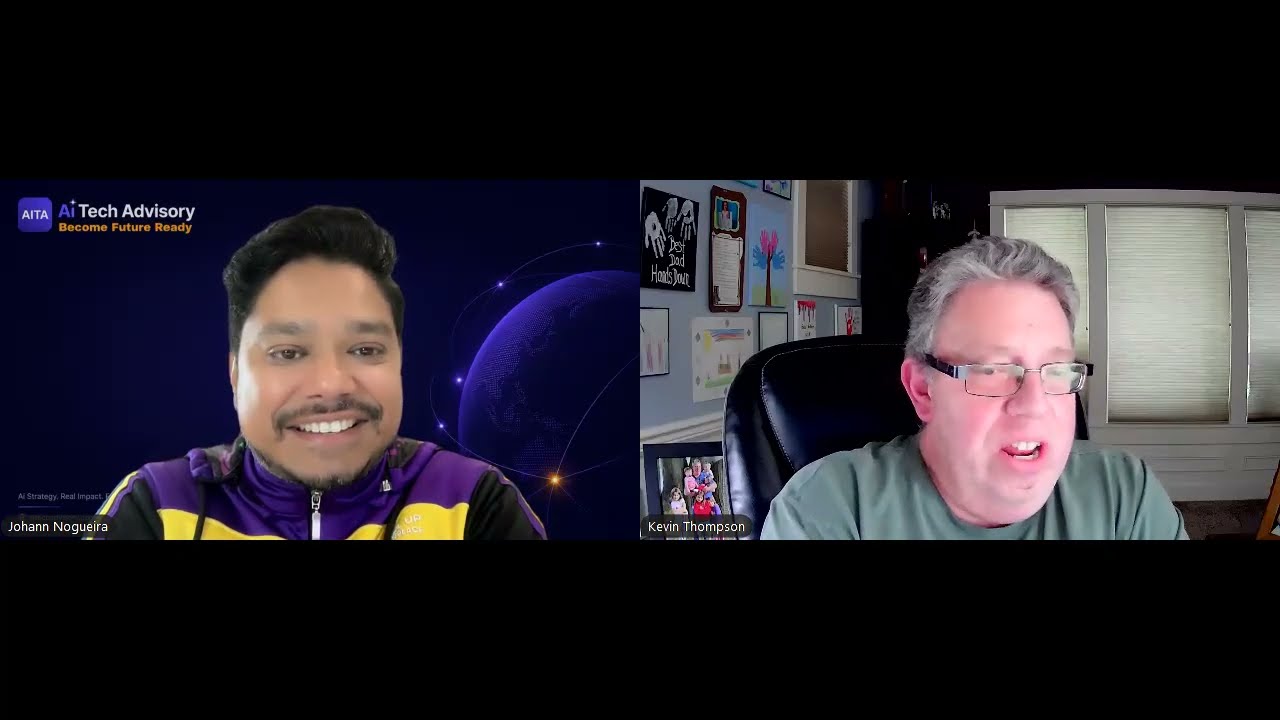
22 Years, 8 Companies, 258 AI Agents: Inside the Mind of a Serial Exit Founder with Johann Noguiera
In this interview, serial entrepreneur Johann Nogueira shares his 22‑year journey across eight companies, highlighting how he leveraged personal development, mentorship, and a PhD to build a mindset focused on distribution, systemization, and AI‑driven growth. He explains his three‑role framework (Artist, Entrepreneur, Manager) that balances product creation, sales, and operations, and how documenting processes enabled rapid hiring, scaling to 100+ staff, and smooth exits. Nogueira describes his latest venture, AI Tech Advisory, and its Prism platform—a live, data‑driven AI roadmap dashboard that helps CEOs visualize gaps and assign AI agents to specific processes. He provides concrete examples, such as a four‑email reactivation campaign that generated $800 k, and a hospital MVP that secured a $500 k contract. The conversation also covers his decision‑making matrix to avoid shiny‑object syndrome, goal‑setting practices using the Wheel of Life, and the importance of family and surrounding oneself with supportive people. Finally, he outlines his exit strategy: building every company to be sellable within five years while maintaining cash‑flow when appropriate.
Chapters
So we went into a company the other day. They called us in because they wanted to AI-ify the company. Hey, come in and AI-transform my company. Sure. Cool. Let me look at all the things you're doing. And then we found that they've got a database of a lot of people that they haven't talked to in 3 years. I said, hey, tell you what, I'm going to show you something. I'm going to get us funded by just sending out these 4 emails to your database. They go, okay, what does that mean? I'm like, let me show you. We sent out 4 emails to their database. They pulled in $800,000 and they're like, this is magic. You're a genius. No, that's just a reactivation campaign.
Yeah. Go high level. But
because they've got such a big database and they've got a great product, which people buy from, it makes a massive impact to their bottom line. So if you can do that with small businesses too, but it's just, if you take this, the methodologies and apply it to bigger business, you have bigger impact.
Welcome to the Shi Fund Show. This episode is brought to you by the Prosperum Publishing System. For thought leaders and content creators looking to build lasting value, this publishing system transforms your expertise into evergreen digital products and assets. With business systems that work independently from social platforms and algorithm changes, this performance-based model is all about turning valuable content into sustainable enterprise value without relying on social media platforms. Details in the show notes below. But let's dive into today's episode.
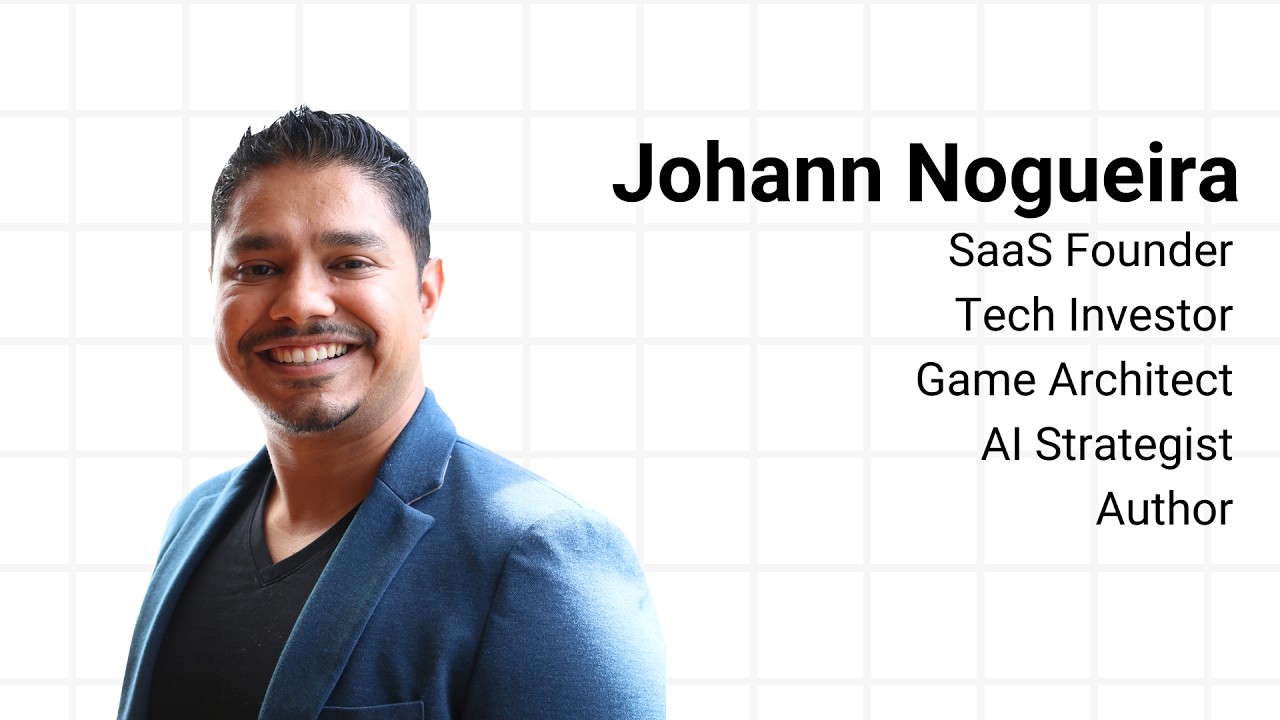
All right, today's guest, I'm very excited to have Johann Nogueira. He's a serial tech entrepreneur, SaaS founder, and AI strategist who helps ambitious business owners scale through strategic partnerships and cutting-edge technology. After building and exiting multiple ventures, Johann now leads a portfolio of AI-powered companies, transforming how businesses and his clients acquire customers and scale properly. I also heard, I think you also undertook your PhD, I think, which is very cool. But anyways, welcome, Johann.
Thanks, man. Thanks for having me. A pleasure to be here.
Amazing, man. So I'm always very keen to find out more about founders because like when I think I first heard of your sharing with Scott Bywater, great guy, by the way, he mentioned you started Built and sold multiple companies. But let's take a step back. Everybody's here like, this is amazing. This guy probably has a formula that can make millions, help a lot of people, save people a lot of time, grow revenue. But what's like to know, what's your initial journey like to start your first business?
Initial journey is hectic because when you first get into business, I started back in 2004. long time ago now, 22 years in. But when I started, I had no idea about anything. I wasted a lot of time, energy, money, resources, all of those sorts of things. But I don't know whether you can shortcut that. I think there are some lessons that you need to learn in order to be able to move forward. And so, for example, when I started, I used to, when I started, I serviced everybody. Like I had a digital agency. I'm skipping forward a couple of years, but My first business was an e-commerce business. My second business was a media buying company. My third business, you know, we did lead generation and the next one was, I actually have had too many businesses now that I'm thinking about it. The next one was the digital agency. And then in that we had 1,800 clients at its peak. And so we had 100 staff. It was just, it was nuts. It was crazy. Wow. Okay. During those times, could barely sleep, right? Because dealing with a lot of, you're dealing with staff, you're dealing with clients, you're dealing with partners, you're dealing with so many different things. Um, the next company was a building, we built software for buildings. And so we grew that to $20 million in 4 years, uh, sold that in 2019, um, acquired, bought digital agencies, sold those. So we'd buy them, build them up and then sell them. Um, and then the last one, the last exit that we just did, we bought 8 different companies, put them all together. We launched Comet Suite, which became White Label Suite, which 5 years in, we just sold it in March this year. And now the newest business is aitechadvisory.com. So here we are.
Amazing.
Amazing. And one more that I forgot. It's my passion business, which is called Business Authorities. And we started that in 2017. And that was to show people how to build, grow, and scale companies. And we used to run events over here in Melbourne every quarter. And we had 3,000 entrepreneurs come through the doors of Business Authorities. And with that, when the pandemic hit, we couldn't do events anymore because we were locked down for 2 years. So that's where that company is sitting there. It's on pause for now, but all my energy and effort now is directly into AI Tech Advisory. And it's just, it's so much fun.
Damn, man, that's like quite a portfolio there. Like, when you first started your business in 2004, like how old were you then? Were you still like in university, still in high school? Like what was it like for you back then?
You mentioned my PhD. So that's when I was doing my PhD and I was doing it in a tiny little country town. There was 14,000 people there and the whole town shuts down at like 6 o'clock at night. So I had nothing to do at nighttime. All my friends were busy playing video games and I said, I'm going to use, I was listening to a lot of Jim Rohn and personal development stuff back then. I said, I'm going to leverage these 4 hours in the night. It turned out, you know, more than 4 hours. I'd usually be up until midnight learning and studying and going, there's got to be a way to make, to leverage, you know, leverage this time that I have. And so that's how I got into back then, you know, e-commerce because eBay was massive then. Exactly. Yeah. Mediums change. It's the exact same business model that you can apply on Amazon right now. So yeah, that's, that's how it all started. Just spending time doing some personal development, which has, which has served me for the rest of my life. So that's one of the biggest things. Anyone who's getting into business, they need to know that they have to train their mind all the time.
Yeah. Amazing, man. And so like back then, like you mentioned Jim Rohn and stuff like that, like any particular books or was there any like audio tapes that got you like, dude, I can do something bigger than You're somebody bigger than dad and playing video games.
So what happened was I had 3 mentors and one was in stocks and shares, one was in property, and the other guy was into online marketing. And so every day, because it's a small town, we would rotate and go to each other's houses and we would cook dinner together, enjoy a meal, and then we would spend an hour listening to one of the tapes from Jim Rohn, Brian Tracy, Tony Robbins, Jay Abraham, Dan Kennedy, all the greats, And so we'd listen to this and then we'd discuss it and have real good critical thinking and think about life. And then when you listen to these things, you can't help but go, wow, the world is at my fingertips. I can actually do whatever I want to do. And the only thing that's stopping me is me. So when you realize you are the bottleneck and whatever your— how far your imagination can take you is what you can achieve. So that sort of set the foundations as a young adult. Saying, wow, the world is amazing. And anyone and anything that I need to need in my life, I have access to. We're very lucky.
Now that's amazing, man. Like, honestly, man, like you sound like one of those guys in like, you know, you go to high school, there's always that one kid where it's like, it's like he, he will, after an exam or test, be like, oh, that sucked. And then when they get the results back, it's like, oh, I got 99%, you know? I mean, the fact you did a PhD, You start multiple businesses there as well. Probably like most people would be like, what the heck, Johann? Like,
dude, the, the, the— Well, one, one month before handing it in, I quit. So because, okay, so 8 years of study and then one month before handing it in, I quit. So that's, you know, it's because my, my business was going well. And then my professor came to me and said, hey, there's a new statistical analysis come out. You should redo your entire thesis on that stats, uh, stats analysis. And I said, That's going to take me 6 months. He goes, yeah, go for it. I said, I'm sorry, I value my time. I can't. And so, you know, walking away from that is hard, especially with, you know, the background, the amount of time, energy, and effort I put into the honors and doing my bachelor's, et cetera. But then no one has ever asked me what I studied. And so here I am 22 years later, and we've— all we do is solve people's problems all day, every day. And that's the value to the marketplace, right?
Yeah. Do you feel like your PhD helped you a fair bit in your business journey or was it more like the self-education and mentors and I guess courses outside all of that?
If it wasn't for the PhD, I wouldn't have been in that town. If I wasn't in that town, I wouldn't have met the 3 people who I hung out with every day. If I didn't meet those 3 people, I wouldn't have gone. I would've been partying with my friends. Everybody's at the club, partying, drinking, doing all that sort of stuff. Instead, I went down a different pathway of personal development. And then, yeah, so 100%, the PhD has played a massive blessing in my life. And then it also taught me public speaking. So when I had to do my first presentation in front of 3 people, I was terrified. I was shaking. Public speaking was not something that I ever wanted to do. And then now I find myself in front of audiences of 2,000 people plus, et cetera. So it's, that's another gift that it gave me.
Ah, amazing, man. I want to dive into your methodology a little bit because sometimes you speak to different founders, like I got bit by the founders startup bug here in Perth and just listening to so many different founders as well. It sounds all glamorous and it sounds amazing. It sounds like I'm starting something new that could change the world, change my country. But back to the grit and reality, there's a lot of founders where they're more market-driven, sales-driven, product-driven. customer base driven, technology driven. But it sounds like all throughout, I was looking through your portfolio, it seems like everything focuses more on distribution and marketing. So I want to know your thoughts about like why you, I guess, have that little tagline of like you purposely focus as a founder and a business owner on distribution over, I guess, product, for example.
Yeah, for sure. So we can all have the greatest product in the world, but if you don't have distribution, there's no point, right? And so that's usually a lesson that the third-time founder learns because the first-time founder is always focused on, I have the best product in the world. Great. What are you doing about it? I'm going to spend another 2 months and perfect it. Okay. But how much dollars have come through in the, in, you know, in 2 months? Nothing, nothing. I'm not ready to launch it. Okay, cool. So that's the problem product-led founders get stuck with. And so let me preface that with In order for a business to be successful, you need 3 people in the business. They don't all have to be the founders. They don't have to be, but you need these 3 people. The first person is the artist. The artist is the creator, the person who creates that product. And that person is in love with the product and they will do anything. And they don't want to, they don't ever want to sell the product because the product is never ready. And they just want to make a few more tweaks. So that's the artist is in the business. The second person you need is an entrepreneur or a dealmaker. The dealmaker just sees the value of exactly what this is and says, holy moly, we need to get this out to people and we'll bust their ass to get this out to the audience. And so all that, and then these two are usually having a little bit of an argy-bargy and for Americans having a little bit of a fight. The reason is the artist never wants to sell because they're like, no, not yet. It's nearly ready, but not yet. And the entrepreneur is always wanting to sell. And always overpromising and hyping it up, saying it can also do this. Oh damn. All right, cool. Now the artist has got to go and build all this other stuff. But anyway, they find unison very quickly after working together for a little bit. But artist builds, entrepreneur sells. And then what happens is you now have customers. The artist doesn't want to deal with customers most of the time. The entrepreneur doesn't want to deal with customers. They want to close a deal and then Let that be. So therefore you need the third piece. The third piece is the manager. The manager is managing the relationship between the artist and the entrepreneur and is also managing the relationship between the customers and making sure everything's good and customers and staff. So when you have those 3 in place, then you have the formula for success for the business.
Okay. Now that's very cool. I think I heard that before. I think that's like, is that from The E-Myth? book or something? I can't remember,
but
I'm not too sure.
I went to Tony Robbins' event and I think he probably got it from Michael Gerber. And so at Tony Robbins' Business Mastery in Vegas, he distilled it down into those 3. And I was with my team. I took my team to the Business Mastery event and we were like, ah, that's why we all get along. It's because we've got the people here. So yeah.
Are you more the entrepreneur or more of like, I guess, the manager? Like what do you feel like you lean towards too?
Throughout your journey, you'll play different roles. So I've lived the artist role in one of my companies. That's the building one, where we built mobile apps and communication for buildings. I was the product creator. In most of the other businesses, I'm the entrepreneur. So I'm out there making deals, building partnerships, getting distribution. And that's my strong suit. So if I can just be doing that all day long and I have beautiful artists who can take care of what they need to take care of and the managers who need to take care of everything, then we're sweet.
Amazing, man. I guess because we're in the marketing space as well, like, do you, before you launch any of your companies or products, like, do you do any sort of like validation tests? You know, like typically for like us, we launch like an info product or digital product. We just kind of like, hey, let's test out maybe like $50 a day on Meta Ads or Google Ads. To see who bites and ends up building, or you kind of like, where do you sit in that frame or in that spectrum?
I have the privilege of being part of a lot of different networks. And so I'll put it out there and see what the feedback is. And if the feedback is good, then from there we'll pursue it. So with AI Tech Advisory, the reason why we got into this is because all day, every day, people ask me about AI, AI, AI, because it's my passion. This is what I talk about and this is, I love I love, you know, I love, I love that. I can't believe that we get to live during this age. And so because I talked about it so much, people keep saying, hey, come, come speak on my stages, et cetera. Anyway, so we started getting into companies now, significant companies, big companies. And they'd say, come in and talk to our people about AI. And I'd say, okay, cool. And then they'd say, can you run a workshop? Can you help us AI-ify the company? And we said, sure. And what happened was we ended up doing it management consultant style. We'd go in there and we'd get pieces of paper, we'd get sticky notes, we'd start sticking all these things on the walls and, you know, write out, draw out processes and then do the thinking. And I went, this is completely not scalable. Like, love doing the work, but not scalable. Mm-hmm. I, and, you know, I want to build the company to a significant amount. So spend the time, built a software. Our software is called Prism. And now Prism, pretty much we sit down with the CEO, with the leadership team. We all work on the same thing together and live in front of our eyes. It'll build out the AI that needs to go into the company and which departments and with which people. And it shows them exactly what they need to do and builds out the roadmap. Solves a massive problem because most CEOs don't know, they don't have an AI roadmap for their company. They don't know which AIs to use. And now they have in an hour a roadmap that they can take, they can implement, they can give it to their CTO. But now they have something which they can take to the board and say, here's my AI roadmap, this is what we're going to do, which adds massive value to their enterprise. And then if they want, we can build it out for them or we can help whoever's building it with them. So the reason for telling that is we had an idea, we streamlined the idea, we tested the idea, we got some case studies on board. Case studies then became, you know, hey, cool, this is what we did for this. This is what we did for this. So it removed the barrier of, are you new? And then from there, it just starts rolling and people just start saying, I need you, can you come in? I need you, can you come in? And so now we get traction, then you got to build team. Once you build team, then you build systems. Once you build the systems and you build scalability, once you build scalability, you optimize. And then after you optimize, you either keep it for cash flow or you sell it.
Yeah. Wow. Simple formula. I mean, it sounds so simple and everything, but like, I mean, we'll definitely get to AI Tech Advisors. I was very interested by that when Scott got you to share that last time. But take me back, I guess, now your experience as having multiple businesses here as well. I guess a lot of people struggle with hiring their first hire or even their first 5 hires, et cetera there. So from back when you first started in 2004 to now, what do you look for when hiring somebody? Of course, you're going to identify and leverage your strengths and find people to fill in your weaknesses. But I guess for your own philosophy or your own perspective, how do you approach hiring and recruiting?
The first thing that I did was, I think my first hire was about 2006 and it was, hey, I'm doing this thing and I keep doing this thing all the time. I don't need to do this thing anymore. I've now written down all the steps that are involved. Let me find someone who can do it. And mind you, back then it was, it was crazy. I was selling websites for $500. It would take me a month to build a website.
Wow.
I was not making any money, but I didn't know I wasn't making any money. I loved building websites, right? And then I was like, hey, let me get somebody else to build a website. And they're like, hey, I'll charge you $400 for a website. I'm like, yay, I made $100. That's where it started. I didn't make $100 because I had like 8 meetings with that person. It was definitely not, you know, anyway, but the first thing I, the first hire I did was to get the grunt work done and out of the way so that I didn't have to do that so I could do more things that brought money into the business. So systemization by documenting exactly what I did so that the person I hired could take over and just follow my steps and build it to my standards. That was the most important thing. And by the way, that business, we then ended up hiring 100 people. So yeah, we did end up making money in that business and we systemized it and all of those sorts of things. And yeah, it was, but started off with that first hire.
And you make it sound so simple sometimes that maybe it's because like a lot of us, we overcomplicate it. And I think now we're living in an age where there's so much information, Obviously AI, I think we can sometimes get flooded with so much info that, okay, do we actually take a step? But it sounds like you just kind of like, I like how you methodically just list down, okay, what do I need to do? What's bringing the money? I think it's very simple. I think end of day is my key takeaway from everything you said so far is like, let's keep it simple, stupid.
Yeah, exactly. And it's humans that make it more complicated. And I'll give you an example. My first business that I talked about, the first business was I used to go to this website called Bidz, B-I-D-Z.com. I think it still exists. I checked it out a couple of months ago. It was still there. It was basically an auction site for jewelry for American jewelers to liquidate stock at 90% off. And so I'd buy the stock at 90% off. And there was an education process around learning about diamonds and gold and all that sort of thing. And market. And so I'd buy it at 90% off and I'd put it on eBay at 50% off and I'd make a 40% margin. That was the whole business. And literally I'd just log in, buy. I knew what I was buying. I had criteria. Buy, go do my thing. And then these things would come and then I'd literally, after I bought it, I'd put it directly on eBay and it would take, yeah, I don't know, half an hour, an hour to do. And then by the time it shipped to me, As soon as it sold on eBay in 10 days, and we had 10-day auctions running. And so it would arrive the day it arrived, I'd ship it straight out to the other person. I'm making a 40% margin. Now we were, as I said, diamonds and gold is what we used to sell. And so that's a whole nother story of how we got into that. But that's the margins on that is pretty damn good. So that's, um, yeah, systemization.
Systemization. Yeah, there's a keyword. I think a lot of times people like, um, what we use the word these days as well. I think I even bought the book Systemology. That's a great book, by the way. But I think every time people talk about systems, like the other day I was having a consult with somebody in a mining space, I think. And he says, oh yeah, implementing AI in systems. I'm like, that's cool. What's that mean? He's like, I'll ask my CTO.
Exactly. I love it. People go, hey, we're using it. I'll give you a real example. Went into this company and then there's, you know, Chloe from finance. Chloe from finance puts her hand up and says, I've been using AI for 2 years. This is a $500 million company. Okay. Wow. How are you using AI? I do all my reports and analysis. I'm like, wow, that's pretty cool. What are you using? ChatGPT. Okay. Whose account? My account. I go, you're uploading all the company's financials to your personal ChatGPT. All right. That's dangerous, man. And they're going, oh my God.
Yep. So dangerous. So dangerous. But I feel like I'd jump into now the AI tech advisory side of things. It's very cool what you're doing so far. But I think right now, just give me a bit of a background. Is it a handful of you guys now? It's no longer like 100+ staff. Is it just on maybe a few of you guys right now in the AI tech side?
We live in an age where it's a complicated question because I have had many teams. I'm all about humans, human relationships, et cetera. And business is about human relationships. That's what it comes down to. Staff-wise, I wanted to challenge myself to build a company with as minimal staff as possible. And so with the tools that we have now, for example, I'm like, hey, I need, I trained up my brain by my AI brain. I'm like, hey, I need a pitch deck for blah. I need a talk for this. And literally 2 minutes later, it's there. I'm like, huh, interesting. So the hires that we're making right now are very specific, very high-profile people who are going to be put into companies for a specific purpose. So we no longer need generalists. We need just specific people for specific tasks to get things done. So the team now is, I think, about 22. And we're growing. No, no, no, we've got 258 agents. So we have 258 agents running most of the business, but in terms of people and partners who are out there across the world who are delivering our methodology and speaking to our clients is about 22 right now.
Amazing. Amazing. And so like, I mean, I think you saw your last company as well. Like sometimes people want to take a bit of a backseat and relax, but you seem really excited even hearing your last talk as well. So
this is a once in a lifetime opportunity and it's insane. Like this, what we're doing right now will create generational wealth because there won't be a time like this ever again. that I can foresee. AI is here. AI and robotics is here now and will be for the next 10 years. And so it's the most, and then quantum computing is going to come as well. So there's a couple, it's what a great time period to live because in my lifetime, we experienced globalization. Everyone could fly anywhere. Globalization. We got the internet, 1996. We got mobile phones. We got the dot-com boom. We got mobile phones. And then from there, we've got anything and everything at our fingertips. And now we have AI and the next year we'll have robotics. And then the year after that, probably quantum computing. So dude, there's no time to sit down and do nothing. I said to you, I went on holidays for the last 3 weeks and I'm sitting on the beach going, yeah, this is great. I want to go build some stuff. And one of my things is I want to live, I always wanted to live 1,000 lifetimes.
Right.
And now I get to live, I won't live 1,000 lifetimes, but I get to live as close to that as I can because anything I can imagine, I can get done. So in the last year with AI, what I wanted to do, I've actually achieved 5 years of my plans thanks to AI. So whatever I think of, I've, hey, here, spin up an agent. This is your job. Go get this done. Go have a coffee, come back and it's finished. I'm like, wow, I'm the bottleneck.
Yeah, so true. So true. I don't know, going back to that once in a lifetime opportunity, I feel like sometimes that could have a bit of a negative connotation to it because people, like you say, they're rushing through, they're jumping to shiny object syndrome there as well. How do you help yourself prevent that? I mean, considering you've done this for a long time, but how do you help yourself, I guess, put boundaries in place mentally as well as into your personal life so it doesn't become like, hey, this is another shiny thing I want to jump into, like crypto, blockchain kind of thing in the past. Like how do you mentally like put yourself in that space there?
Yeah, for sure. I built my, so as I said at the start of the podcast, 3 mentors. And by having these 3 mentors, they're all older than me. So they were about 10 years older than me. So I got to see what life would be like. So at the age of 22, I decided what my life be like at 32, because I wanted kids. I wanted, you know, I come from an immigrant family. My father was working his butt off all day, every day. I didn't get to spend much time with him. Now I get to see him every day. Yeah. So, you know, it's a decision. And so I said, okay, I want to be around my kids. I want to make sure they grow up, they grow up good. They're a good representation of me. every morning we drop the kids off, we pick the kids up, we spend good quality time with the kids, we teach them skills. Last night we started teaching them, all right, every night before going to sleep, you've got to do a 2-minute presentation on a topic. So family is— and so now they're learning presentation skills. It's epic. Family is my most important value. So everything comes after family. So family's first. And then what I do during my day is I get to have fun. I get to be around people that I want to be around. I get to play with technology that I've always wanted to play with and I get to build whatever I want to build. So yeah, very, very blessed.
Okay. No, that's awesome actually. That's awesome. And so you said, I guess, what the—
How do I get rid of shiny object syndrome? It's
a
decision-making metric. So when my wife and I got together, So we, we got engaged. When we got engaged, she said, hey, let's, let's celebrate. I said, cool. So we booked this beautiful hotel overlooking the ocean and all this, and we booked it for 3 days. And we walked in and I said, oh, we're going to have some fun here. And she goes, yes. And she pulled out a stack of books. I'm like, that's not the type of fun I was talking about, but okay. And so for 3 days, literally what we did was we sat down and, you know, the Wheel of Life, we went through the Wheel of Life. And you can Google it, just type in Wheel of Life. We went through the Wheel of Life and typed in, not typed in, wrote down, what is our relationship going to look like? What is our finances going to look like? What is our health going to look like? What is our kids going to look like? Who's in our circle? Who's not in our circle? And we went through the entire thing. What do we spend our days on? How do we invest, et cetera? We literally had 3 books that we wrote out of what we wanted to do. So the reason for saying that is we used to do that once a year. Now we do it every— it used to be every 3 months. Now we do it every month because life is moving so fast. And so we have to review and we have to iterate all the time because what we would achieve in a year, we now, then we achieved in 3 months. Now we're doing it in months because so much is happening. So that roadmap keeps us on track. Yeah. So you asked me, how do we get rid of shiny object syndrome? It's, if it's not on the roadmap, it doesn't get done. And so one of the things when I met my wife 14 years ago now was she said, okay, I've been listening to you for a long time. Come sit down. Okay. And she pulls out all these bits of paper. I mean, all empty blank sheets of paper. And she said, write down your ideas, write down on the sheets of paper, the idea. Who's involved with this project? How much time, energy, money, resources is it going to take? And dude, I had like 80 pieces of paper on the table. That's a lot. Wow. A lot of stuff that was in here that I was holding, which occupies RAM in the back of your head, right? After I wrote that down, I had the best sleep of my life because it was all out on paper. And that exercise, we do that every month. Because as we go and meet and talk to people and all these things come up, you start accumulating into here. It's our defrag where we do this. And then we go through the same process. How much time, energy, money is it going to take to launch this? What's the ROI from this? And so that's how we get rid of shiny object syndrome because, hey, if we don't have the time for it, we're not going to succeed with that project. If we don't have the energy for it, we're not going to succeed with that project. If we don't have the money for it, I had a friend come up going, hey, you want to buy an island? We don't have the money to buy an island. Ain't even gonna think about it because there's no point. It's a waste of my time. Take it away, scrunch it up, throw it out. It doesn't belong on the table, right? And so then for this month, what are we going to achieve? We're going to achieve this, this, this, which then moves us to our end goal. And so that's our decision-making matrix.
Wow, that's really good. And I think there's 2 things I take away from it. It's like, one who you marry is so important. Sounds like your wife is also like, sounds like she sounds like almost like, yeah, like a director kind of like, was she doing business when you met her as well or something like that?
That is the reason why we are together. So the day I met her, my friend married her friend. And so we met at a bar in the middle of the city where everybody was meeting. And then the bus was taking us to a winery, which is like 2 hours away from the city. So anyway, so I walk into the bar and I see her and I walk up to her and I say, hey, can I buy you a drink? She goes, sure. So we're walking over to the bar and I said, how come you have a Wednesday afternoon off? And she said, I'm not like those people. I own my time. I went, oh, bam. That was the number one criteria was I had to be with the business owner because a business owner mindset is completely different to an employee mindset. Yeah. So, you know, my previous relationships, it was, Hey, 6 o'clock, dinner time. Turn your phone off, put it away, no working. And when I said to my wife, I gotta take a call, it's 10 o'clock at night, she was like, yeah, go do what you gotta do.
Oh, wow. Okay.
So having a person in your corner who has the same mindset, who knows the goals, who supports you is the most important thing.
Nice, man. I love that. And that's the first thing I took away from that. Number 2, the power of pen and paper. I actually neglected that for a very long time. I just bought another journal again just to get my thoughts out. Because you're right, I like what you said, the 30-day turnaround, because when I do this podcast, when I talk to, see the guys in Elite Marketers group or other groups, I'm probably like, wow, I should probably do this thing in there as well. Or maybe I should start another AI automation agency. Maybe I should do this offer. Whatever, you know, it's kind of crazy actually. Yeah, I love that pen and paper. So powerful.
Dude, I've got so many bits of pen. So this is just this morning.
Oh, so cool, man. So cool. Anyways, I think we digressed a little bit, but yeah, back to AI tech advisory there. So I know you can't spoil it. You said it's one selected opportunity, but basically like what do you see now? Because last time in the call, everybody was so amazed at You're able to secure some conversations with some multimillion-dollar companies as well. But I guess right now, a lot of people out there selling Claude skills, AI automation agencies, become like an AI guru, start your own AI YouTube channel, make money off YouTube by running Higgs field-generated clips or whatever it is, blah, blah, blah. But I like how you actually focus on real problems. And looking for solutions there. So compared to somebody who's just using ChatGPT AI or Microsoft Copilot to solve for their enterprise or company, what was something you saw that you say, okay, I think I can solve this better? And what was the, I guess, frequent conversation that led you to start AI Tech Advisory?
So it's solving, you solve bigger problems, you get paid more. Comes down to that. How do you get access to bigger problems? You work with bigger companies. When you work with the smaller companies, all of their problems are the same. Most of the time, they're not systemized. They've got the roadblock, which is the founder who's like, I'm running around doing 20 million things. And so they're the roadblock. And then cash flow is tight. They don't have the right team in place. So all of those things, and they have to go through that evolution. So you get to choose. Where do you want to play? 100%. That's who I served for more than 15 years of my life, was those people, making sure that we get them organized, get them systemized, get them team, help build, grow, and scale their companies. But now time is running out. Like my time on this planet, if I'm lucky, I got 20 years, right? And so I want to maximize those 20 years where I'm fully cognitive and working. So how do I create the greatest impact? And it's with bigger companies. I made a decision, I'm gonna work with the bigger companies and show them how to do what we gotta do. And systemization is one of the key things. Any company, when they're a bigger company, one tiny little move on the needle makes a massive impact to their bottom line.
Mm.
I'll give you an example. So we went into a company the other day, they called us in because they wanted to AI-ify the company. Hey, come in and AI-transform my company. Sure. Cool. Let me look at all the things you're doing. And then we found that they've got, they've got a database of a lot of people that they haven't talked to in 3 years. I said, hey, tell you what, I'm going to show you something. I'm going to get us funded by just sending out these 4 emails to your database. They go, okay, what does that mean? I'm like, let me show you. We sent out 4 emails to their database. They pulled in $800,000. Wow. And they're like, this is magic. You're a genius. No, that's just a reactivation campaign.
Yeah. Go high level.
But because they've got such a big database and they've got a great product, which people buy from, it makes a massive impact to their bottom line. So if you can do that with small businesses too, but it's just, if you take this, the methodologies and apply it to bigger business, you have bigger impact.
Yeah, I love that. Okay, so that's kind of your main goal, work with bigger clients and solve the bigger problems and get paid better, of course. But like, was there— so there wasn't basically any sort of like, besides, you know, like living a once-in-a-lifetime opportunity, it was more like, have fun but get paid better, basically. That's what you wanted, right?
It's having more fun. Yeah, having more fun with people that create more impact. The once-in-a-lifetime opportunity, Look, opportunities are like buses. There's a new opportunity all day long. There's so many different ecosystems that you can go into that for that ecosystem, it's a massive transformation. But the reason I say it's a once in a lifetime opportunity is because we have access to these tools that can transform any industry that we go into right now. And if you're focused on one industry, you can transform that industry. One of my friends, he works in a hospital. Now,
wow,
that's a big one. In the hospital, I'm just gonna, this is not the real number, but I'm just gonna give you a number. Let's just say he's on $80,000 a year and he loves what he does and this is what he does. And so he's like, man, I'm like, hey, what in the hospital, what's something that's broken? What do you hate doing? Or, you know, what do the other people hate doing? And he goes, it's this product, this problem. You're cool. So we sat down and we literally over 2 hours built something. And then he has an MVP and show, he goes and he shows it to the board at the hospital. They cut him a check for $500,000 and say, go build this and make it and we'll own it and just go make it happen. Now he gets to do something that solves a massive problem for the hospital. He gets paid really well for it. And he gets to, he gets to have, you know, transform that industry. So. Yeah. If you're in any industry right now, leverage AI to transform your industry because if not you, then who? Now is the time to do it.
So cool. Wow, that's actually really amazing. And I guess going back to AI Tech Advisory is like, because I think I was a bit late for the call last time with Scott when he was introducing you, but you built something to help decision makers for these larger companies have a better, clear understanding, almost like a dashboard. Because I think typically, like you mentioned, a lot of management consultants, they— there's a lot of fluff, I guess, involved. Obviously they want to get paid for their time. They got paid, they got staff to feed and everything. But I like how you just cut through all the noise, all the crap and everything, and just went straight to like, here's what's a broken thing. Like, was it like a visual dashboard or something? Was it like a data, like showing— what was it exactly?
So basically we used to go in and we started going, cool, let's stick all the sticky notes. Let's draw out your processes. And with the management consultant style, it would take 6 months to get all the information from every employee in the company. Yeah. So we built a program, a software that now I sit down with the CEO and the leadership team and we plug it all in live into the system and it builds the dashboard live with their numbers. So there's no hallucinations. There's no making up anything. It's their data, their numbers, and it shows them exactly where the holes are in their system. And it'll say, okay, cool, this process takes 20 hours. We can cut it down to 10 minutes by leveraging this AI. And it'll identify the AI, it'll identify the steps, or it'll say, we need to build an agent, and this is the agent. And now the CEO, we say CEOs, if you've got, you know, the president in the United States, it's called the president of the company. The president of the company can go, hey, cool, now I have an AI roadmap, which I can take to the board. Or I can get signed off on. And so that's our foot in the door, because once they have that, then now they know exactly what they need to do. And then we just go ahead and build everything for them.
So before you meet up with, like, say, the CEO or the director, do you get them— are this information they provide to you actually, like, their assistant collected for them? Or is it just from their—
We do everything live with them. So we'll sit down and we'll say, okay, you've got your CEO, you've got the owner of the company and their leadership team. We'll sit down and we'll go, cool, everybody create your profiles, type in your tech stack, let's put in your workflows, and then it just builds everything in front of them.
Wow. And this is from, is it like, my question is like, is it like data that they're just pulling from their laptop or computer? Is it basic stuff they put before the meeting, say, Keith, please collect everything you need for each department and bring it to the meeting or whatever?
You know what happens when you ask humans to do that? They don't do it.
Okay.
Yeah. So what we do is we do it live and then after we do it live, they go, actually, what happens if I get my data from here? Oh, good idea. Let's do that. Hey, what about if I invite this person? Yes, go ahead and do that. So it's a sales methodology. It's different. Whereas if we say, hey, go and upload all this content and then people are going to come back and be like, ah, you know, I didn't have time. I've been busy. I had meetings, et cetera. So yeah. Again, the simpler it is, the easier it is. If you put up different roadblocks for them, then they will resist.
Yeah, fair. Now I see where you're coming from because initially, somebody's talked to one person, it just brings their own subjective data or perspective to the whole thing. But I like how you kind of get your foot through the door, get your foot in the door, and then basically from there it builds upon itself. And I think we did this last year, not in 2024, And it's like, to be very fair, I think I just had a very bad client. He's a director for this large trades business here in WA. And after doing the initial cost, I did do something similar. He's like, wait, this information's wrong. What do you guys do for me? I was like, well, I don't know. It went south because he didn't want to bring in proper objective information. And then we finally present to his team. He's like, this is all from my own perspective. This is BS. I'm like, no, no, that's your BS, not my decision.
Human error is a big thing. One of our guys, you know, when we were in one of the sessions, he came back with this one man is going to be able to save them $10 million. I'm like, whoa, that's huge. Except he put in the wrong data and just made up numbers. And so of course it said, cool, if you keep doing that, you're going to make the company $10 million. And I'm like, that's completely wrong when you look at it. So human error. Is there? Here's another funny thing. When we have salespeople talking to people live, people lie to the salesperson. So for example, they'll say, I'm making 55% profit on my blah, blah, blah, blah, blah. And then when they're talking to an AI, they'll be like, I'm making 10% profit because they know the AI is not going to judge them. And the AI, if you give it accurate information, it'll give you accurate output. So yeah.
Yeah, I love that, man. I love that. And so I guess now with AI Tech Advisory, what's the goal? Is it to continue building it and eventually sell it or keep it under one of your portfolio belts for long-term? Are you also looking to maybe potentially have a stake in those companies that you're working with as clients or what's the goal?
Great question. The goal is to exit in 5 years. That's what we're building. Any company that we build, we always build to exit. But if it's good and cash flow is good, we'll just keep it for cash flow. So, but every company we build, we build to exit.
Interesting. Interesting. Because like I was listening to another podcast by David Senra, Founders. I'm not sure you heard of that guy, but all the guys he speaks to, they're a bit, every like legendary founder is a bit cuckoo in the head, but a lot of them actually decide to just keep the companies till the day they die, or they try to pass on to their grandson or whatever that, but it sounds like you want to focus more on like exiting and doing something else later
on. My grandson, it's like me creating a company that sells shovels. My grandson has no interest in selling shovels because by the time they grow up, they'll have big machines and tractors and things like that. So great. It's a great thing to have, like, you know, but there's too much disruption and I'd rather teach my kids how to how to build their own businesses and build them faster and quicker and skip all the hard lessons that I had to learn.
Hmm. Hmm. A good point, I guess. Yes. I think there's a noble cause of like these guys who built like, you know, like Elon Musk, those guys who started IKEA, Walmart, those guys just wanted to keep going. Unfortunately, age caught up to them. So that's fair. That's fair. I don't know. I'm also kind of thinking like, do I want to like, Eventually hold on to my own company or sell it, but that's for my own decision, my own journey down the track.
Whether you're going to keep it or not, always build to sell. The reason you build to sell is so that everything is systemized. So when we sold our company in March, we decided we were going to sell it in October. And so we contacted 4 people who we'd known for the last 5 years and said, hey, would you like to buy the company? And out of the 4, one of them was like, really excited for it. And so we went through the process of due diligence, et cetera, with them. And then the one who was going to buy it, 25th of December, it fell over. We went, oh, sad. But because we went through due diligence, we went, wow, there's so much money on the table that we've left in the company. Let's go and put another 1 year into it and sell it for a higher multiple. So we decided to do that. But 3 months in, every day we get asked about AI. I'm like, so I said to my business partner, I'm like, dude, man, Would you consider selling? And he's like, yeah, let's do it. So we messaged the other 3. One of them said, I'm interested, but I want you to be with me for another year. The other guy said, hey, I want both of you to be in the company for the next 6 months. The other guy, the third guy said, great, I can have 25% of the money to you tomorrow in 24 hours, but I want a 4-month payment plan and I want to pay you over 4 months. Okay, cool. Awesome. Let's, yeah. So messaged my business partner. I said, hey, this guy's going to pay us tomorrow. He's like, no way. All right, cool. Let's see. So we did it. And so we signed documents, you know, did all, did all the proper process, handed over the company, handed over the team, the code, everything. The guy paid the 25%. And then a week later, he calls, can I talk to you? Like, yeah, sure. Jumps on the phone and he goes, man, you guys have had every system in place. Your GM of your company, I've made him the CTO of all of my companies. Well done. I'm transferring the rest of the money today. It was a one-week close. So the reason for telling you that story is because we systemized everything, had everything documented, and we built it to sell. Everything was there. The new owner could take over without any disruption to anything. And we are redundant in the business.
That's amazing. That's really cool, actually. I love that. I'm taking a lot of, like the key word I'm hearing is systems again. It's really cool. It's really cool. And I think also the opportunity cost. If you want the guy maybe to pay you more, but you stick with him for 12 months, you probably won't be able to focus on AI tech advisory.
Correct. That's exactly right. Opportunity cost in this day and age is the most expensive thing. And that opportunity cost is on our sheets for shiny objects. Is this a shiny object? What is the opportunity cost? Hey, if I put in 20 hours or 10 hours into building this project, I've taken away from finishing this other project, which is going to make me blah, blah, blah, blah, blah.
Love that. I'll definitely add the link to AI Tech Advisory into the link for the podcast later on. I want to jump back to a bit more, I guess, it sounds cheesy, but a bit like goal setting there as well. Because I've come to a point where it's like rather than setting big goals, because it gives you that dopamine hit and you just want to focus on daily progress. But sometimes people also like myself, I think in 2025, I forgot where I was heading towards too. So then I go back to the drawing board. But I like how you also had a lot of monthly, basically refreshes for yourself between your wife, your business partners, and yourself. But what are your thoughts of goal setting as a whole? For founders and people in building, et cetera, considering things are going so fast today, how do you do goal setting for the long term, but still knowing how to pivot along the way without getting lost?
You've seen the graph where it's like starting here, finish here, and it's not a straight line. It's like— Of course. Yeah. Right? So that's every entrepreneur's journey. So we have a goal, but it doesn't matter how we get to the goal. We've got to get to the goal. And so every decision that we make in the company and any decision that we make across is, will it get us to our goal? That's the guiding principle. So if everybody in the company knows what the goal is, what the KPIs are, what the numbers are, where are we at right now, then every decision that they make is going to get us there to that goal. So this is what I do. I'll tell you the process. I have a goal and it's a 5-year goal. So in 5 years, we want to exit for X dollars. Cool. Break that down into how do we achieve that? It's, you know, business is a hockey stick. So, you know, the Nike hockey stick, that's how business is. So the, for the first little bit until you get market traction, you're going to be going down a bit while you're building the product, building reputation, building all the things. So that's that curve, but then you've got to go exponential. How do you go exponential? This is those, the last, you know, 4 years is where we're going to go exponential. How do we do that? Who are the right partners? What is the product? What is the offer? What are the price points? If I say I want to, so I'll give you an example. I was talking to another company just before. And so I mentor people and this guy's like, hey man, you know, I want, I want to be like you. I want to have 2,500 clients. I said, don't do it. Don't do it. Because that's what I did in my last company. I said, my other company that I talked to you about that, you know, we reached $20 million in 4 years. We did that with 40 clients. I go, I would choose 40 clients over 2,500 clients any day. Why? Because 40 clients are much more easier to deal with, to over-service them, to give them such a great experience that they are, they become your raving fans. 2,500 clients, you don't have, they become numbers. And then you're like, hey, yeah, cool. We lost 60 clients this month. Okay, big deal. Let's just go get 60 more. You know, it's sort of, it's a different relationship. Yeah. So this client company that I was talking to, he goes, I want to be like you. I want to have all these thousands of clients. I said, no, you know, another company that we both know closed a deal for $100,000 a month. And now this guy's talking about selling something for $300 a month. I go, how many $300 deals do you need to make in order to achieve $100,000 a month? He goes, this much. I go, well, wouldn't you rather just get one $100,000 client a month? He goes, yeah. I go, what's your goal? He goes, my goal is to make a million bucks a year revenue. I go, cool. Let's just go find 10 of those guys. Do they exist? Yes. Market research. How many of them are there? There's about 55,000 of those people. I go, out of those 55,000 people, can we find 10? Because that's going to get you to your goal of $1 million, right?
Yeah, that's so good. I think sometimes people get scared of like the larger ones because like I think it's, I spoke to some guys, even like ourselves, I think one of the largest deals we closed in 2024 was, at that time was I think $47K. But it felt like, maybe it's also our personalities at the time and the client, but not to put point in things, but it felt like, man, we're like constantly on the phone with them, et cetera. And then you hear like those guys are selling GoHighLevel SaaS. Oh yeah, I sold SaaS for like $200 a month. I got I got 5 clients, it's great. I can just update their leave, that's fine. Go find somebody else. And I was like, oh, that sounds so good. Or like some of the larger clients, you feel like you have to, of course, if you don't set the right boundaries, you'd be servicing them day and night. It is quite scary sometimes.
Yeah. And that's a big thing to set boundaries, to set the contracts of agreement. This is what's covered. This is what we're going to do. You can see in my background, Over there is my GoHighLevel award and that's my affiliate award over here. So we've, we've been part of the GoHighLevel ecosystem for the last 5 years and seen incredible businesses get built there. But scope creep is one of the biggest things in business that kills a business because you're right. You can get a client who's like, hey, can you just, can you just do this thing for me? It should take you 10 minutes. Yeah. And that's 1 hour of your time gone. And you've only got, you've only actually got about 4 productive hours in the day. Yes, we've got 8 hours, but the most concentrated, productive, real work is 4 hours. And the other hours are reactive hours where you're doing stuff and replying to emails and doing that sort of stuff. But yeah, so protect your time is one of the keys of making sure you're successful.
Nice. Nice. Oh, that's so good. That's so good. I've taken a lot away. I know we jumped around a fair bit in this call, Just a wealth of knowledge, man. Like, damn, even with Scott as well, I was like, man, this guy has so much knowledge, but like, only got so much time. Sorry, another podcast sometime down the year or something as well. For sure. Like, Johann, thank you so much. Like, couple of things, where can people best find you?
Look, I should be more active on LinkedIn. I'm definitely not. Go to aitechadvisory.com. Hit me up on johann@aitechadvisory.com. And Yeah, that's where we can connect. If you want to connect with me on a social level, it's Instagram or Facebook.
Nice. I guess also final thing, typically for founders, there's always that one bit of advice they would like to give to the audience, especially those starting or maybe scaling or maybe guys like myself who've gone through ups and downs, a bit burnt out, et cetera. Do you have one statement or some little takeaway advice to wrap up this entire conversation together to end on a good note?
Yeah, for sure. The best advice is trust in yourself. A bird lands on a branch. It's not scared that the branch will break. It trusts in its wings to take it wherever it needs to go. So if you trust yourself, if you know that you have all the resources at your fingertips, and you do, if you've got access to a computer, if you've got access to a mobile phone, you do. Surround yourself with amazing people, get rid of all the crap people. Everyone's, and unfortunately everybody has that. So if you surround yourself with amazing people who are always supporting you, you will succeed.
Amazing. Well, thank you so much for your time, Johann.
Appreciate it.
Pleasure, dude. Thanks for tuning into the Shivansh Show. Turning expertise into evergreen digital assets that work independently from social media platforms. You can find out more with the Prosperin publishing system that does this exactly in the details and the show notes below. See you next time.
More from Johann

"Best of breed in the world" | Greg Cassar on Johann Nogueira #aitransformation