How Johann Nogueira Built a 7-Figure SaaS While Raising a Young Family

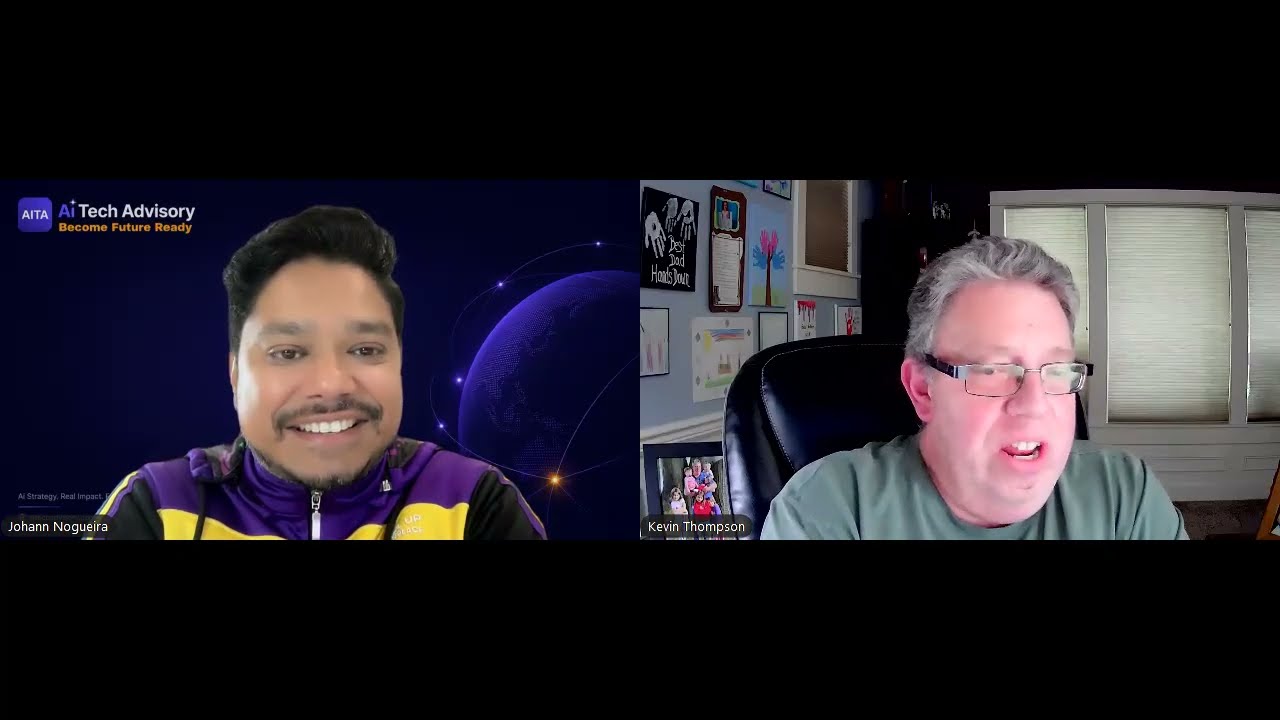
In the inaugural episode of the "SaaS Dads" series, host Speaker A interviews SaaS founder Johann Nogueira about how he grew White Label Suite into a 7‑figure recurring‑revenue business while raising two young children. Johann shares his immigrant background, the origin story of his company, and the personal values that drove him to build a business that lets him be present for his family. He explains his lean organisational structure – communicating with only three key people while managers handle the rest – and how time‑blocking, early‑morning routines, and clear boundaries protect family time. The conversation dives into parenting philosophies, turning kids into creators rather than consumers, using games like Snake Oil and AI tools to teach entrepreneurship, finance, and storytelling. Johann describes his habit of taking two weeks off to redesign the business with AI, hiring A‑players, and creating a board of advisors that includes top marketers. He also reflects on the importance of health, fitness, travel with his father, and the privilege of being a SaaS dad, concluding with optimism about AI’s role in both his business and family life.
Chapters
Johann, how are you, mate?
I am fantastic, my friend. How are you?
I am very good, mate. So today, very excited because this is the very, very first in our SaaS Dads little series that we're putting together. And part of this is, well, the whole purpose of this is to talk to other SaaSpreneurs, SaaS dads particularly, so that we can have a dad's conversation about what it's like to build, grow, start, run a business while being a dad, running a family, all those kinds of things that we have to do because there's, you know, we're trying to do our best, right? We're trying to run our businesses, trying to do all the things we have to do and juggling it. And there's a lot that we project online, a lot of people do, we do as well about this is how our business is going, these things are great and these are our customers. But behind the scenes, right, we've all got this other stuff going on behind the scenes that's all happening and we wanna have like a real conversation with other SaaS dads go like, how the hell do you manage it? Because I know personally that there's some days I get to the end of the day, I'm just like, oh my God, like now I've got to do this and manage to make the dinner, pick up from school. I need this meeting. I've got to get back. I'm on the phone, on a Zoom. So that's the purpose of our chat today to really get into that stuff. Before we do, like I just want to just quickly let you introduce yourself as well. Just the business that is behind you. Now you have quite a Let's say a fairly reasonable business, I'd say, mate. What is your business and how long has it been going at the moment?
Yeah, for sure. So White Label Suite is the business and White Label Suite's been going for 4 years now. So we started off as Comet Suite and about a year in, we switched to White Label Suite because everybody asked to white label our lead generation tool and then we became White Label Suite. And so yeah, here we are 4 years later. It's It's crazy to think that it's already been 4 years. So
that's pretty good, man. 4 years. And so how many and how old were your kids when you started your, well, I know you've been on an entrepreneurial journey for a long time, more than 4 years, but how, what age are your kids now?
My entrepreneurial journey started 21 years ago. So I started, I decided to go into business 21 years ago. My kids are, 7 is my daughter and 9 is my son. So But they were actually conceived in my mind a decade before that. And so a decade before that, I started building my business to be able to be with them. I know that sounds funny, but I'll give you, I'll give you the origin story for where this came from. I was, so I was doing my PhD and I had 3 mentors at this point in time, and I was doing it in Horsham. Horsham is about 4 and a half hours away from Melbourne. So, in this remote country town and every— I had 3 other dads. I wasn't a dad then. I was the young one. I was 10 years younger than the other 3 guys. And yeah, so, they all had kids. So, I got to see what dads were like. I got to experience it through their eyes, to be in their house. I remember the first time I was, you know, in their house talking to them and the kids were yelling and screaming and I'm like, dude, I can't concentrate. I can't hold a conversation with you because there's all this noise. They're like, what noise? I'm like, dude, your kids are going nuts. Like, what are you— Because, you know, as a dad, you tune that stuff out. Right? Yeah. Not as a dad. And anyway, so I remember this one lunch. So, this was a huge turning point. This one lunch, I was sitting down with one of my mentors and his kid comes up and goes, Dad, Dad, Dad, I want to show you something in the backyard. And, you know, country backyards, they're huge, right? Come, I want to show you the backyard. And he goes, No, I'm having a conversation with Johann. You wait until we're done. And then the kid sulks away, walks away, goes to the backyard, ends up falling down, slicing his head open. And so now we have to run out and take the kid to the hospital and all this kind of stuff. And I was like, oh wow, you know, that was, that was an interaction. And then literally a couple of days later, I went to the other mentor's house and we're sitting down talking and his daughter, his daughter was 9 years old at this stage. She comes up, she's like, dad, dad, dad, tell me about Mars. And he's like, Johann, excuse me for a moment. He takes her to the computer, he loads up, you know, Google and he shows her where, where Mars is in relation to all the other planets and all this stuff. He educates her for No more than 5 minutes. And then we sit down and we continue our conversation. About 10 minutes later, we look outside. Now she is standing on a rock. She's got all the other kids sitting down around her and she's teaching them about Mars. And I went, wow, that 5 minutes turned her into a leader.
Mm-hmm.
That's the type of dad that I want to be. So that's the conscious decision. You know, my kids could come now and interrupt me and I will excuse myself and Give them what they need, and then they will continue on. And all my, like throughout entire COVID and everything, my kids have been growing up. They've grown up with Zoom being on me talking to people. They'll come in; they'll sit in on meetings, and it's pretty cool. It's a pretty cool time to have our kids at this level to be ingrained in the business. Yeah, a little bit of an origin story. So my father. He, when we came to Australia, so we came to Australia in 1991 and he was busting his ass to get, to get a job. It was a recession at that point in time. And once he got the job, he was up and out of the house by 5 in the morning. He'd come home at 7. He'd be sitting at the table studying because none of his qualifications were recognized in Australia. So he was studying until 10 o'clock. So we never actually even talked to dad. And so because he was just He was just providing for the family, and I went, "I want to make sure that I don't have that type of relationship. I want to be there for my kids. I want to take them out. I want to have fun with them." And nothing. I love my dad. My dad is amazing. But that was the reason I built the business. So yeah, I'll let you ask some questions because I'm I'm yapping on here.
No, no, yapper away, mate. That's what it's for. But no, that's really interesting as well. Like the whole origin of like your your dad to. Because isn't there, I don't know what the stats are, but they do say like more entrepreneurs are immigrants than anything else, basically born in the country because they've seen something where their family have worked hard or they've just come with nothing from another country and then they've got a lot of drive to work and go hard to actually build something that they want to have in their life rather than what they've got to have.
Yep, 100%. So it's, I think it's an immigrant saying, it doesn't matter which country. Immigrants all say the first generation makes it, the second generation enjoys it, and the third generation loses it.
Yeah. I mean, I'm an immigrant to Australia. I came from the UK 25, 26 years ago, similar to your dad in some ways. Like I came here and my qualifications were not recognized in this country. I had engineering qualifications in the UK. They weren't recognized here. I had to go through a whole process to get my residency and get sponsored and all that kind of stuff. So it, I don't know, it just makes you wanna, Build and drive a bit more. But, um, going back to the kids as well, and one thing with this, like, juggling kids and family— you talk about your, your kids coming on Zooms, or my son Finn does all the time as well. Like, we delayed this because we've just— well, I say we've just finished, we've just had Easter holidays. For us, it's been 3 weeks. For our son, um, and then we found out last week, because I, I pushed this out with you because I was like, we had Easter holidays. And I had a lot of work to do as well during Easter holidays. For our business, we launched something right on the first day of Easter holidays. Big mistake. Shouldn't have done that. Didn't look at the calendar. So I had work to do and then juggling family life with Finn. So I'd be working a bit in the morning because I just have to, and then I'll take the afternoon off to hang out with Finn. And then today I scheduled this with you, but then we found out that he doesn't actually go back to school until Tuesday. So Finn is sitting in the corner over here, which people can't see. He has like a camp that he makes in the corner behind me there, and he's sitting there reading. He's on my Zooms all the time. Finn, would you like to come and say hello, mate, and be an honorary guest on the very first SaaS Dads just to come and say hi? Just come say hi to Johann. There you go, mate. Come and say hello.
Hello.
G'day, Finn. How you doing, man?
Good.
And do you wanna tell everybody, like, what do you do a lot of the time while Dad's on Zooms?
Uh, sit in the corner, read my Kindle because it's freezing. Basically, that's all we— that's all I do. Maybe knock with Finn, but he has one day— well, Finn's my neighbor, but he has one day less of school holidays, so he's at school, so I can't knock for him now.
Fantastic, man. Well, congratulations on reading. You're upgrading your brain. Well done.
He makes me.
A lot of reading.
And you will thank him for it.
We keep having this discussion. He will thank me one day with all the reading and less of the screen time.
I'm still trying to have a negotiation with him about Minecraft.
Yep. Well, my son does that too. And if he achieves— if he reads 20 books, he gets some Minecraft money. So yeah.
Yeah,
I read like 40 books a day. Dude,
you are a genius.
Legit reading machine. Really machine.
Well done. Well
done. Thank you, mate. Do you want to go back into your camp? And I'm going to finish up my chat with Johan, and then we'll go and do something after we finish this. Sure. All right. Thank you, buddy.
Bye. So this
is part of— and I just thought it was funny today. This is part of being a SaaS dad, right? Is that I didn't manage the calendar properly. I didn't actually realize that he was coming on Monday. He wasn't going back to school. But he hangs there in the background with me half the time on my meetings, or you're wondering, like you said, He'll just pop into me and so many of my clients know him. He'll pop in on demos or whatever. And I think it's good too that he's around in the background. And
dude, 100%, my son, so check this out. How's this for a conversation? SaaS dad conversation, right? Because I've got other friends who are SaaS dads and the conversations that we have with our kids, I didn't have ever with my parents or my dad. And So I'll give you an example. So the other day we woke up and I said, okay guys, too much screen time. We are going to build a universe. And so they're like, what? And so I put on ChatGPT on the voice mode and I said, all right, cool. We're building a galaxy and the galaxy has how many planets? And they go, 9 planets. And so we said, ignore the laws of physics and everything. Anyway, they had 3 planets each there. And my son had 3, my daughter had 3, I had 3. We talked to ChatGPT for an hour. By the end of it, they had their own planets with ecosystems, with the entire food chain, with their own creatures and their own physics built into this thing. And then they asked it to build it into a graphic. So the book graphic essentially got created. And so now they're creating stories for each one of those. So school holidays, we've got another week of school holidays here. And so they're writing character stories for each one of the characters that they've built. And so now my son's gone, hey, so what are we going to do once the stories are done? I said, well, I'm going to get them printed from Amazon and we're going to donate it to the school and school can raffle it off. He goes, oh, so how much would we sell it for? I'm like, well, the average price would be about $20. He's like, oh, cool. So $20. And then he went, he went on to Google. He's like, there's all these schools around. And he calculated that there's 1,300 people that would buy his books. And he goes, hey, Dad, so I can make like $26 grand? I'm like, yeah, you can. I was never having these types of conversations with my, with my, with anyone, you know, at that age. And so at 9 years old, he's gone, huh, okay, cool, I can make $26 grand. So, okay, I'm gonna write these books to make sure that the schools can, you know, buy them or the kids can buy them. And yeah, he's a marketer at the age of 9. It's pretty Pretty epic.
That's so good. And I try like stuff like that with Finn all the time and I try as a dad to look at, I mean, he's 7, he's gonna be 8 in a few months' time. But like, he's actually a young adult. I know he's a kid and we talk about this all the time, but it's like, yeah, you're a kid, but it's just, you just don't know stuff yet. You're an inexperienced adult basically. And my journey as a dad is to put you on the path to being an experienced adult where you can basically do and take care of yourself. That's my job. That's my, that is my job as a dad. Alright, to make sure that you can do and take care of yourself. It's not really to tell you what to do. It's to tell you how and why you should do things and educate you to find your own path of what you want and what you like as well.
Yep.
So, yeah, it's a real, I try and look at it as a real different path to rather than telling them what you should do. It's like, okay, figure out, figure it out.
I do the same thing. I go, look, I'm gonna be your best bud. I go, your sister, she's probably gonna get married. She'll move out of the house. I go, you and me, we're gonna build empires So I need to show you how life works. I need to show you how things are so that you can be the best that you can be. I go, there's there's two. I told him the two wolves thing. You know, there's two wolves inside you. One's a good one. One's a bad one. And the bad one is always trying to make you lazy, trying to make you spend more time on the screens. The good one's trying to get you educated, upgrade your brain every day, upskill, learn new things. And so one of our latest things that we've been doing is we've been watching entrepreneur. Movies. So we watched Jobs last night. We watched BlackBerry the day before. So after he listens to after he watches the movies, the movies go for two hours. He then writes a summary about BlackBerry, about Apple, and then he has to present it to us. And so he knows all the numbers. He's like, so the first deal that Apple did, they they actually you know one point six million, and then they were hoping to sell it for sixteen million, but they got screwed by this guy and. Like he's 9, to have that business acumen at this age is gonna serve them. They don't know that we're training them, but—
Yeah. Yeah. I'm not sure what he knows. I'm gonna be careful because he's still sitting behind me. So let's just talk about routines and stuff, right? Managing, because I mean, you've got a pretty big business, right? You've got a great business partner, Walt, who I know. You've got a good number of staff. You've got a few thousand clients. How do you manage all that and like the routine of managing all those other people on one side for the business and then family, which is a much smaller number of people, but certainly I would say more important at the end of the day, right? How do you manage that balance? Because this side with clients, staff, all that is a big number of people. There's a lot of noise coming through there, right? And then this side, it's a few people, still a lot of noise. You've got to balance that. How do you, how do you manage that yourself?
So with the business, I only really talk to three people in my entire organization. Everyone else, there's managers who manage everything else. So I only talk to three people, and so that's how I get like I'm I'm across all the all the click-ups and all the slack and everything. So I can see everything that's happening in the organization. But in terms of communication, three people is all I really communicate with. So my structure there is pretty simple. Most of our clients, 98% of our clients are in America. In the USA, so we don't. When Walt and I wake up over here, we're working on the business. When we go to sleep, the team is up, the managers are up, everybody's up, customer success, etc. And so they're looking after everything and building. And then when we wake up, we get to see everything that's done, and then we get to work on the business again. So it's actually worked out really, really good with the business not being available during the U.S. time zone because. We just get to work on the business every day. So that's, that's a huge distinction between this business and every other business that I've built in the past. Um, family, family is number one. So we, we wake up at 5. My kids are usually up by 6. They have their routine, so they'll wake up and they'll, they'll do their, you know, lunch and they'll, they make their lunch, they'll make their breakfast, they'll have some chill-out time. I'll spend some time with them. We both, actually it's a privilege that my wife and I can take them to school together.
Mm-hmm.
And, you know, that's a big thing. And then we both pick them up from school and we look around and everybody else is stressed and running around while we're just strolling to school, holding hands. We get to talk while we're walking there. We get to talk while we're walking back. It's good bonding time even for my wife and I. So that's there. Nighttime, 5 o'clock. 5 o'clock to 9 o'clock is kids' time. So, we won't— nothing interrupts that. So, between 5 and 9, it's good to spend time with the children. It's usually reading, just talking about the day, spending time with them, cooking together, eating a meal, watching a movie, talking, and yeah, they have to create something every day. So, one of the things that I've hammered into them is you're either a producer or a creator. I get it. Sorry, a consumer. I go, consumers, that takes away money. So I go, you're sitting down, you're playing Roblox, you're consuming, you're consuming your brain, you're rotting your brain, and you're costing me money. I go, whereas if you're sitting down and producing stuff, producing the books, producing the graphics, producing videos— like my 9-year-old, he's on CapCut and he's cutting videos and all this kind of stuff. I go, you're a producer now. So I go, in life, you want to be more of a producer than a consumer. As soon as you become too much consumer, You're going downhill. So that's, uh, that's our approach.
That's a great analogy. I'm gonna remember that one. I'm gonna use that one a bit. So you've obviously got to a very good place of balance. Um, we've got a pretty reasonable-sized business. I wouldn't say that I've got the balance quite there yet. I'm still doing way too many things and different hours. And my schedule is that I have work time in the morning. I'll see Finn off to school. My wife takes him to school. I pick him up from school. I spend time with him after school until he goes to bed. So between 3 3 and 7:30, that's all bedtime. And then I'll go back and then I'll end up working because I only work a short amount of time in the morning. It's like 4 hours or so in the morning that I work and then I work again later at night, which is not a great life balance. I'll be the first one to admit that. But it's the balance that I've created because I still feel like I'd rather spend that time with my son between after school and bedtime. It's like, how long am I going to get to do that for? But it means that for me, there's a sacrifice at the end of the day where I go back to work for a few hours because I just have to To get stuff done. How did you manage to juggle business and family to get to the point that you're at? Because there's gonna be a lot of people that listen to this and they go, that's all right for Johann, look at him, he's got staff and managers and he talks to 3 people, that's great. But you didn't always have that, right? There would have been an imbalance at some point and that's what we're all trying to navigate, right?
100%. When I started, I was doing 18 hours. In fact, even a couple of years ago, I was still doing 18-hour days. When I say I talk to 3 people, I go, that's 3 people in my organization. My job in the business is to is essentially a BDM role. I am recruiting affiliates. I am promoting the business. I am that that's all I do. So I actually still have a calendar that's full, and it's filled with like just before this call, I was with one of the biggest affiliates. So talking to people promoting the business—that is my everyday when it comes to the organization stuff. I've got three people that I talk to because. Everything that needs to be created here. It's like, hey guys, we're launching a book. I need all the book funnels done. I need the affiliate pages done. I need the JV pages. I need collateral. I need social media posts. And that's what the team just makes it happen. Then I wake up and it's done. I'm like, man, that's amazing. So, um, that I don't think that the 18-hour days, like, you know, even, even after I go to bed, I'm still thinking about the business and you have to be obsessed with the business. It's just what it is. You can't not. And if you're not thinking about your business, then, you know, be— there's something wrong there because it has to. There is no— there is no work-life balance because all day, every day, I'm thinking about the business, thinking about the business and family. That's all I care about.
Yeah.
You know, there's other dads who go and do all the sports and like you, you go to the gym and all this kind of stuff. I don't have that or I haven't created the space for that because I'm like, hey, I'm, I'm good where I am. And this is, this is my priority for these next 2 years. And so by building those systems in place, that's, that's what I focus on.
Yeah. So it's like, it's the old eating an elephant analogy, right? If you're not there yet, like it's a bite at a time, put a system in place, get your first VA. But prioritizing time, I think is the most important thing, right? And having boundaries. And I'm sure even with those 18-hour days, right, is that like me, like I'll prioritize my time. Like I say, it's that time between 3 o'clock, like school pickup and Finn going to bed. There, I'm not working. I would say not working because there's still stuff that pings on my phone and I'll be making dinner and like, oh God, yeah, I'll just reply to that and stuff like that. So that balance isn't 100% there, but there is a definite lockout time of like, well, I'm thinking for now, I'm not at the computer, I'm not at the desk. Like, I don't think with, you know, with iPhones and stuff in this day and age, we're ever fully away from it. But prioritizing time for the family and for yourself as well. Like for me, I'm very big on I prioritize fitness time. Like, it's in my calendar. It's like, this is my workout time. And I'll work out, I'll have a sauna. I'll like, every single night I stretch. I've got reasons for that too. I had a very— I had a pretty bad motorbike accident when I was young, which like, if I don't stretch every day, it's not good for me because I spend too much time sitting down and stuff anyway. So for me, fitness is like, it's a massive priority for me to stay fit. And I mentioned to you just as we were starting this, like, I'm turning 50 this year, which I can't believe. Like, I'm gonna be 50 On the flight back from Dallas for the High Level Summit. And then I'm gonna stay for a few extra days because I've got some of our team coming over. So we're gonna stay and have a bit of a holiday together. But it means the flight back, I'm actually gonna be on a plane for my 50th birthday. So I'm gonna see what I can do at the counter to go, any chance for like a good upgrade to first class? Even business class would be nice.
Dude, so every time we come back from Dallas and we've done for the last 4 years, I figured out a cool little hack. Whenever we go to check in, I have a little $100 note and I stick it on the table and I'm like, any chance of getting me the bulkhead? And every time I've got the bulkhead. It's been epic. And I'm, you know, you're a tall guy. I'm not the tallest guy. So I have like, my legs are stretched out. It's like first class for me.
Very nice. I seem to get quite lucky a lot of the time. Sorry, we're digressing here, but a lot of the times I've worked out quite well with picking placements on the plane where At least 50% of the time I get an entire row to myself. At least 50% of the time.
Wow. All right.
I do very well. I've figured that out quite well. And also, here's my other tip for flying is like be the last person on the plane every time. Always be the last person on because then you can see even if you haven't got seats, if there's a vacant row somewhere, just go and sit straight in that because you're the last person. You're just gonna sit there. That's it.
Hey, that is a great tip actually.
Yeah. always the last person on the plane every single time.
That is cool. I like it. Well done. All right, I got, I got something out of this. Great thing.
Um, so family, how do families support you in your business as well? Like, obviously the kids. I mean, I think some of the stuff you've touched on, like talking with your kids about being creators rather than consumers, is amazing. All right, but family Like, what did the whole family think about this business and when you wanted to start it as well? Like, this is a crazy idea, especially like your dad as well. Like you said, you know, your dad worked very hard. I mean, I don't know, but was he of the opinion that, oh, you know, don't do that, that's crazy, get
a job,
work hard?
My culture, so I have an Indian background, my culture is stability and security and go become a doctor, lawyer, an engineer. So my dad was an engineer, by the way, and he's retired I think five years ago now. But yeah, so he worked his way up. He started off in ninety-one when we came here. He had to start up none of his qualifications were recognized as we discussed, and he had to start off cleaning toilets. And then he ended up becoming the head engineer at the Frankston Hospital over here for twenty-five something years. So he did. He he killed it, right? So he did really well. Business—it's not part of it's not part of our family culture. Like all the cousins, everyone in our family is like. Dude, go get a job. And I remember, you know, 2008, when I had— when I started my agency, there were moments where I was like, man, I'm just gonna go get a job. Screw this. Because I— so 2008 is when I started the agency. And I remember I had to manage myself. I had to manage my team. I had to manage the project managers. I had to manage the clients. I had to manage the outsourcers. I was literally drinking a bottle of whiskey at night to put my brain to sleep because it just wouldn't shut off. And I blew up. I became, you know, very fat and all this kind of stuff. So health went out the door. It just happens, right? But then through that, you learn systems. So every deal that I closed, I was like, I can hire someone else. I can hire someone else. I can hire someone else. Having a general manager in place was the biggest thing for me. Once I had a general manager in place, Changed my life because that person then took on the role of managing everything and then I could work on the business. So that was a huge turning point. Um, every business— hang on, I'm gonna have a sip of water.
Is it water or whiskey? It's quite a big hip flask you got going on there. Oh, sorry, vodka. I mean, not whiskey.
No, no, it's a, it's a bottle of water. I stopped drinking actually. So anyway, that's a whole nother thing. Um, So every business needs 3 people. You don't— they don't have to have— they don't have to be founders. They don't have to have equity in the business. But 3 people are key. The first one is the artist. The artist is the one who's creating, who knows all the technology, the person who loves tinkering. In our business, that's Walter, right? He is building all weekend. He's built something amazing and he's like, oh my God, this is amazing. And I am the dealmaker. So you have the artist, you have the dealmaker, and then you have the manager. Those are the 3 people. So the dealmaker just wants to sell all day long. They're like, they need to go and tell everybody about what you're building and how amazing it is. The artist is like, no, it's not ready yet. Walt's like, it's not ready. You can't tell anyone. I'm like, come on, man. It's going to be so amazing. And he's like, no, no, no, no, no. Anyway, so, and then you have the manager in the middle who manages the relationship between the two and between the customers. So that's, that's the 3 people. And so when you have that trifecta, the business can grow and scale because the artist is doing what the artist has got to do. Mm-hmm. The promoter is promoting all day long, the dealmaker. And then the manager is making sure that the house is in order, everyone's happy. And so when you have those 3 people in the business, the business can grow and scale very quickly.
Yeah. And again, there'll be people watching this now and they go, oh God, I'm all 3 of those people and I've gotta do dinner and the washing and the cleaning and I don't have enough clients coming in and I've got this and it's just, I think a lot of it is time, right? People, I know systems, process, all these things, right? But they all still take time and whatever you Buy or build or whatever, it still takes time. You just gotta stay the course like this. I think that there's an attrition rate where people will just give up along the way because it is hard, right? It's very hard to manage all these things.
It is the hardest personal development course in the world. Like you've given up a 9 to 5 for a 24/7, 365. I will never ever ever forget those days. And yeah, I still do. I still remember them. So the Does it become easier? No, because problems never go away. You always have bigger, better problems. And you know, I was watching Steve Jobs last night, and it's the Apple story. And they're now they've got a board, and they've got shareholders, and they're like, "Come on, man! The queue is the this quarter. We're going down. We need to go create something new," and all this kind of stuff. So the pressure is always on. My wife was looking at me going, "Wow!" We have chosen a hard life. I go, yeah, we didn't choose an easy life. If we wanted an easy life, like, we've got friends who are— who have a great life. They're employees and they have an amazing life. Whereas business, you never get to shut off. You're always in it. But why are you in it? You're in it for the long run because there is something at the end of it and you have something to prove. I said to my kids, I go, hey, I'm busting my ass all day every day so that you guys— My dad said to me, hey, I've got you here. you got to do 10,000 times more than me. So that's always been in my head. And I say that to my kids. I go, guys, I'm giving you the best education. I'm giving you all the resources, all the tools so that you can be better. One of the things that my son— so he's 9 years old. He does not like to stand out. So he is super smart, but he won't answer questions and everything because he doesn't want to stand out. I'm like, dude, you got to learn in life. I go, let me show you something. Here's all the people I grew up with. I go, they're not around anymore because I outgrew them. I go, all of your friends that you have right now, you're going to outgrow them. They're not going to be around as much as you would like them to be around if they're not cheering you on. I get that the difference between your friends that he has currently, like, he's amazing at soccer and they'll be like, oh, here comes the soccer champion, you know, he thinks he's so good. I go, dude, when they talk to you that way, they're trying to pull down. That's called tall poppy syndrome. If you have good friends, your good friends are going to be like, dude, that's amazing, but have you practiced this scissor kick? Have you practiced this, you know, the reverse kick? And all this kind of stuff. I go, those are good friends. So now teaching him how to qualify his friends has become a big thing. So now he's understanding that, and he's going, ah, cool, that kid's teasing me, but he's teasing me because he's jealous.
Mm-hmm.
So him having that understanding, um, you talked about Finn, you know, being a little young adult. My son said for his birthday, so his birthday usually we have like 100 kids and it's a big ordeal. And ordeal is the is the keyword there because there's lots of stuff to organize. But this year I said whatever you want for your birthday we'll make it happen. And he said I just want to have an amazing day with two of my friends. Okay cool. I go you tell me whatever you want we'll make it happen. He goes okay I want to be I want to pick up my friends I want to go to here here here and he planned out a whole day. So I pick them up, I get in the car, and these other 2 kids in the back, and he's taking privilege because he's in the front seat. He's like, I'm in the front seat. You know, at that age, the front seat is the cool thing. So we're sitting down and these kids are talking about, oh, so where was your favorite holiday? Oh, Thailand. No, actually Malaysia. Actually, I like Vietnam. And I'm sitting here going, wow, like, and they're having really in-depth conversations. And then they're like, hey, so what do you think about this guy? And this is one of the the kids in the backseat. He's like, I've got 22 girlfriends. I'm like, it's— it— they have their own little lives, they have their own little thought process. They are little people with aspirations and dreams, and we see them as kids, whereas they've got their own world that they live in. And then, yeah, so it's— I had that realization on his birthday. I'm like, wow, he's got his own little gang and his
Yeah, yeah, I love all that stuff, like having a conversation about what's been going on and his friends and stuff like that. Even just picking him up from school, I always get there and then see him, he's playing with his little gang of mates in the waiting area and stuff like that. That's the stuff that I love about being a dad, a SaaS dad or an entrepreneurial dad, is having that time, all right? And like I said, like my work-life balance at the moment isn't amazing. It's like, well, I work for a bit in the morning and then I work at night, but then I can have that time in between. But also, I'm not a dad, I'm not a dad. That's the path that I've chosen because that for me is way better because I get to spend every day with him. I get to see him every morning for breakfast. I'm not rushing off to work. I'm hanging around. It's breakfast time. My wife takes him off to school. I get to pick him up. We get to hang out after school. If there's any assemblies or stuff like that, it's like, okay, well, I can move those meetings or cancel that or do whatever. And then I can just be there for assemblies, school things, gatherings, whatever it is. And then the, it is such a hard path to go along building your own business or being entrepreneurial. But there's elements to it that the flexibility that it gives you that you just can't have if you've got a 9 to 5 and you've got a boss and you've got a deadline and stuff like that. They don't care. Like I see that and the amount of things that I go to at the school and there's a lot of mums at the things, everything you go to. I don't know if you've ever noticed this. But it's probably a good 80% mums, 20% dads, maybe something like that, which is a real shame, I think, especially when you've got boys. Like, boys, I don't know what your son's like, but Finn is attached at the hip to me 99% of the time. He wants to hang around with dad, which is great, you know. But to be able to be there for your kids or kid, we only have the one Finn. That's the biggest privilege I think of being, being doing what I do or, you know, being able to be entrepreneurial and do what we do is amazing.
Yeah, man, dude, just talking about a 9 to 5 gives me like,
ugh. I just, I can do it. I mean, I don't know if I don't know anyone who's got like a 9 to 5, 9 to 5 anyway. Most of those people, if they've got, let's say higher roles, you know, managerial roles and stuff like that, they're not 9 to 5 anyway. They're way worse than that. And there's, I don't see the upside on those things a lot of the time anyway.
The best thing about having a business and being a SaaS dad, so there's businesses and then there's SaaS. There's a massive difference between business, normal business and SaaS. So SaaS, we have recurring income. So it doesn't matter. Like that thing just keeps rolling over all the time. There's payments coming through all day, every day. That's the best thing about being a SaaS dad as opposed to just having a business where you are chasing clients all day, every day. Last year, six months of the year, I was traveling the first half of the year. I went, I went and did the Camino de Santiago.
I wanted to bring this up, mate. I'm glad you did. But yeah, please continue.
I traveled from France across to Spain, walked 800 kilometers with my father. It was a thing that he always wanted to do. In fact, we're just booking in the Japan one. So next April, we're doing Japan. So it's a trek across Japan. And again, I said Dad's going to be 73 there, and so I get to walk across with Dad, and that. 2 months that we spent together in walking across Spain was the most amount of time I'd ever spent with my father. Now I'm turning it into a tradition where I'm gonna do it with my son and my daughter. And yeah, so it's gonna start this whole new thing. But that time being with your son 24 hours a day for 2 months when, when he's older is going to make such a, such a massive difference.
Yeah, I remember when you, when you did that and messaging you, because to me that was aspirational. Like, I saw you doing that with your dad because I unfortunately, when I grew up, I didn't have the best relationship with my dad. Mum and dad were divorced, you know, whatever, just broken home thing, nothing terrible, whatever. But, um, just, just didn't have much of a relationship with my dad from the age of 5, pretty much. Would see him on weekends a bit, and then as a teenager that all kind of fell apart. Didn't really have much to do with him at all since I was 15 or 16 years old, which is a real shame. And I look back on it and just go, what a, what a missed opportunity for a journey for, for Gary, right? For me, is that I just didn't have that mentorship or that person to go to and ask those questions of that you need as a young man, young adult, whatever. And I, I just remember seeing your thing and I was messaging you about it too. I remember messaging you a specifically about it, saying, I'm just— jealous wasn't the right word. I can't remember how I put it, but like, just so in awe of the fact that you're doing that with your dad and you're doing that together. And as a father and a son, what a bonding thing it is. And I remember you saying to me that then it's like, well, this is the most time we spent together. And it really brought you guys even closer together again. And I was like, that's what I want. Like, I want to be able to do that. And You know, hope that Finn wants to do that with me as we get older. He'll be like, "Yeah, Dad, this is cool. Let's go. We're gonna trek. We're gonna cycle across Vietnam. We're gonna kayak across the country. Whatever." He doesn't want to kayak across the country. I don't know if you can hear that in the background. You want to walk across the country? Sure. All right. You pick a country. We'll walk it.
Africa.
Yeah, really aspirational to do that and to, you know, do that with your dad now. And obviously, I mean, when I say obviously, that's not true at all. It's easier to have that conversation as adults with your adult father and say, I'd like to do this, even if, and we're not saying there was, but even if there is any, you know, break with a relationship or something like that, or maybe, you know, father and son, you just go, hey, look, this would be a cool thing for us to do as a father and son. But I hope, and my aspirations are, and a part of that is from watching you with that journey with your dad, is to just keep that relationship with Finn up until the point we just go, hey, do you want to do this? And he's just like, yeah, cool, of course we do, let's go do it then. Like, how good would that be?
So good, so good. I aspire to the same thing with my son. Like, he's now 9, and I can see he's testing boundaries and things like that. And I told him, I go, dude, you're gonna turn 13 and you're gonna hate me. It's, it's an inbuilt thing. Okay, just know it's gonna happen. I'm fine with it. It happened with my dad, you know. My dad, I was like, hey, don't, don't hold my hand and all that stuff. And, you know, he's at that age now where he's like, you leave me at the school gate and he'll run in. And before, he'd want me to walk into the, to the school, you know, to his classroom. And so I said, it's okay, these things happen. So explaining to him what's happening in the future and that we're cool with it because we know what's happening, it also gives him Like, ah, dad said I was gonna do that. Yeah.
Yeah, I do very much the same thing. It's like, let them be okay with it. It's like, it's all right. I'll just, I'll be here when you come back. Like, I've had very much the same conversation. So, look, mate, this is what's gonna happen. I'll be here when you come back. I love you. Me, dad, always love you. I'll be here when you come back. It's fine. You know, we'll work it out. We're always working stuff out. Do you have any, like I was mentioning for me as well, like time routines, fitness? Do you have sort of habits around your family? I know you've got like the walking into school, all that stuff. What's your habits around your family and work and routine and stuff that you do for you as well to keep SaaS Dad straight, SaaS Dad sane?
We love turning knowledge into board games. And so we love playing board games as a family. One of the best games that we ever got was called, is called Snake Oil. Now, Snake Oil is where I saw my kids transform. In a week, they transformed. So this game is literally, you've got 5 cards in your hand and you've got one deck where you're a customer. And so this is the exact thing that happened. So it was a chef, right? So the customer was the chef and everybody's got cards. And my son has this card and he's like, Sushi knife. And so he's like, hey, do you want to buy a sushi knife? It's like, no. He goes, you're a chef, you should buy a sushi knife. No. And then, you know, you go around and you got to make up stories about why it's good. And you're, you're selling. It's a whole thing about selling. By the end of the week, so that chef card comes up and he goes, Ninja Blade. So he's like, hey, so you're a chef. Is cutting and precision important to you? Chest is out. So he's no longer just looking down at a card and, you know, just mumbling under his breath. Chest is up, eye contact is up. He goes, hey, how important is getting that precision cut when you're serving your customers? Is it important to you? Yes. Well, you know, and he took us through a whole process, and then at the end he's like, and I have the sushi blade or the samurai blade for you, which is going to make the best sushi in the world. And it's like, dude, you got it. And so that one little game in the week, his, his transformation was his confidence, his focus, his clarity, his communication skills. So we practice that a lot. So that's why I'm getting him to do what I said. We watch a movie, he gets to write it all out, he gets to present it to us, and now it's ingrained in his head. Now he has another story, which is part of his knowledge base. I know, we're prompt engine, prompt engine, putting more stuff into his knowledge base, right? So that he knows all these things, which makes him stand out amongst the rest.
Yeah, very cool, man.
I'll give you, I'll give you one more story on routines. So on Sundays, we go to the shopping center. My wife and my daughter, they go do what the girls like to do, and they go buy soaps and makeup and all this kind of stuff. That's just their routine. My son and I, we go for a walk, and we go and buy a Boost Juice. So we go and buy this Boost Juice, and we're sitting down, and he's going like this. I go, what are you doing? He goes, I'm counting. I go, what are you counting? He goes, you give me $7 a week in pocket money. I go, yeah. He goes, you just spent $10 for my juice. I go, yeah. He goes, there's 100 people here. Who all bought their juice. Yeah, it was a hot day. It was summer. He goes, that's 100 times $10. He goes, that's $1,000. And then it takes them 5 minutes to give me the juice. I go, yeah. He goes, they made $1,000 in 5 minutes. I go, yeah. He goes, how do I make $1,000 in 5 minutes? Not $7 a week. I went, I win. That's my— I win. I was just smiling. I'm beaming down like, that's the right questions.
Yes. Perfect. I've been trying to do something like that with Finn because we would, every day after school, we would end up in the IJAs, local IJA right near his school. We'd end up in there or in the sushi place. That's all right, mate. Or in the sushi place. And like every day after school, it's like $10 on sushi rolls or something in the IJA. And I said to him, I said, mate, I'm fed up spending $10 every day. All right. And we're buying stuff for you that like we don't buy junk food. Well, like sushi or whatever, but even that is not necessarily the best food. I said, how's about instead of that, I'll bring you food, or you wait till we get home and we'll get food at home. And instead of spending $10 in the IGA, I'm going to give you $5 every day that we don't go to the IGA. We're going to put that into the bank for you. So every day you'll get $5. And then every Friday you can spend $5 of that money on whatever you want. So, to try and get him doing the math for learning and saving and then the value of spending something on the Friday and the difference. And he's just mathing it all up. He's just like, okay, how many weeks in a month? 4 weeks. So, by the end of the month, I'm going to have $100? Oh my God. So, I'm just trying to just go, all right, just educate. Because I think we talk about educating our kids on business, entrepreneurship, finances. It's different now as well, right? It's quite hard in some ways because we don't have money anymore, right? There's no cash. Like, I don't carry cash at all. It's all tap and go. It's not real. Like, money just isn't real, basically. I mean, we know it's all fake anyway, fractional banking, the whole other conversation, right? But it isn't real. But how do you teach someone to manage and value a number on a screen?
So, so that's what— so I always go to the bank and I, I'll withdraw cash and I'll take the kids with me and they see me getting the cash and I put it into the wallet. And then when we go and they want to buy something, so for example, they had these Squishmallow things. I don't know if you— if Finn was around that age, but these are like, they'd done good things and so they get to pick out something. And so my daughter said, I want a Squishmallow. They're $30. So I go, okay, cool. You've picked that Squishmallow. I hand her the cash. I go, here's $30, go buy it. And she goes, hmm, can I, can I not buy it and can I keep the $30? I go, yeah, you can do that too. So now I always hand them cash and they like to, they like to keep it. And now they're collecting. My son's like, look how many $100 notes I got. And my daughter's like, like, this is, this is their thing, right? So now they've learned They can accumulate things. They can accumulate goodwill. They can accumulate and they can ask for something. If it gets approved, then they have a choice of either banking it or spending it. Now, it's taught them finance. It's taught them the value of money. And now when they see something that they really want, like my son loves Roblox, so he'll come up and he'll be like, "Can I give you ten dollars for some Roblox bucks?" Like yeah, sure. Why not? You know, it's school holidays. You won't. You can do that, but he's spending his money. And so there's pain associated with spending your own money. And so they have to double think before they do that. I love it.
Yeah, maybe I should do that with more cash because, yeah, we've been trying. Yeah, that's the path we've been taking. And I was explaining to Finn about cash. We set up, I don't know if you've heard of it, Spriggy. There's a Spriggy wallet thing. So basically they get their own little card and stuff like that. And I set that up for him and then we're doing the $5 a day thing. So it's $25 a week, but he gets to spend $5 So you'll end up with $20 a week, which is a reasonable amount of money, you know. And then I set up the Spriggy card and what I didn't realize with the Spriggy card was that it had a $60 a year annual fee attached to it. So you get the first month for free and then I got an email saying, oh, you know, if you want to continue using it, it's going to charge you $60. And I said to Fin, I said, we're closing that down. I said, we're not going to use that. I said, because of this fee. And at that point, because it was the first month and we only set up a few weeks before the holidays, so I think there was only like $50 in there anyway or something like that. I said, so you don't have the money to pay that $60 and I'm not paying it. I'm not paying $60 for that. So we're gonna shut it down and we're gonna set up a different bank account instead. So we did that, we found another bank account, but he really understood it when I explained to him. I said that They're gonna charge us $60. That's gonna wipe your entire account out plus another $10 and put you in the red and I'm not paying it. What do you wanna do? Oh, well, we need to find another account then. So we sat down and we found another bank account.
So, well done.
That's right, mate. You can't get—
$55. How much money will I get since I can't, when I can't age?
Uh, you'll probably have a few hundred dollars, mate. I don't know if you can hear that, he's asking questions in the background about his Westpac account and stuff. But, um, yeah, so that's what we're doing to try and teach him, teach him that and some finances and stuff, which, yeah, he's only 7, just going on 8, so it's an early, early path to that stuff. So if we're— well, we're getting near an hour of chatting anyway, but, um, if you could go back in time and start again and talk to that Johann that was working 18 hours a day while trying to raise a family and do all those things and juggle everything. What's the, what's a bit of advice you would give to Johann of, I mean, you even said like 2, 3 years ago when you were doing those kind of hours, what's the Johann advice from the wise sage Johann now to the one of 3 years ago?
I've been on a couple of podcasts and meetings and masterminds and my advice is the same to everybody. I would implore everyone to take 2 weeks off, not to holiday, but 2 weeks off to sit down and design out your ultimate business with AI, to hire the right people. So I got, I got access to this AI called Menace in March, and I sat there and I told it, I said, hey, build me a personal brand. 10 minutes, it was done. And it had gone and watched all the YouTube videos and all the podcasts that I'd been on, and it came back and gave me my personal brand and I went, wow, this is pretty epic. I go, hey, here's my companies and I told it everything about my companies. And then I said, these are my goals. This is what I wanna achieve in my lifetime. And it came back with, you cannot achieve all that in your lifetime. You need to pick. So there's a difference between Manus.
Damn it, Manus. Yeah.
Manus is a Chinese app, right? And ChatGPT is built to make you happy. Like I told it, I wanna start a newspaper. It's like, that's a Brilliant idea! Let's start getting printing presses. I'm like, no. You know, ChatGPT is designed to just to to be your best friend, and doesn't matter what you tell it, it's going to tell you, "Yeah, that's a great idea. Let's go." Whereas Manus is the opposite, where it's like, "You know what? I don't think that that's right." Anyway, so it comes back and it goes, "Hey, you want to do all these things? You can achieve this if you do these three things." And so then I told it about my hopes, my goals, my visions, everything. I wanted to do. Then I told it about my team, and I— it now reorganized my entire organization. It set up 30-day plans for each person in my company with their particular skill sets in order to achieve the primary goals. I take this to my GM and I go, dude, can you look at this for me and tell me if this is real? With all of our team members, couldn't we achieve what we need to achieve if we rearrange their schedules like this? And he's like, wow. And so he came back a couple of days later and he's like, we can do it. And so hence there's going to be— you're going to be seeing a lot of changes in our company thanks to this 2 weeks that I had just playing with the AI and reimagining the business. So my advice to people who are, you know, who are going through this is design your business, take 2 weeks off. I know it's the hardest thing to do, but take 2 weeks. Don't go out and just sit down with the AI. We've never had access to tools like this before. Design out that business, find the right people, getting the right people on the bus that you know if if Walt and I spend more than two hours talking about a person in our organization, that person has to go because we're they're not like right now we've got we're trying to only build A players and A players they just they they do the best work and we they don't have to be micromanaged. So this is something that we've learned. So now through conversation we've figured out how to how to hire A players and. Through experience as well. So have A-players, have your vision of the organization, have the A-players working in your team, pay them handsomely, and build it. It sounds painful when you have to take money from your account and put it into other people's accounts, but it pays you dividends because now if you have peace of mind, you can grow the company. So that's, that's my advice. That's my advice to young Johann. It's like, dude, just go spend the extra money because that peace of mind that you buy allows you to grow and scale the company quicker than you would do it trying to penny pinch, essentially.
Yeah. Just invest into the future.
Yep.
Right. So we'll wrap it up on this then, mate. So what are you most excited about for the future of both you, your business, and your family, mate?
AI plays a big, big role in our family. Because we all use it. Like, my kids use it all day, every day. I use it all day, every day. So that, as creating, it allows them to create. It allows them to go, hey, I've got an idea. Let me turn it into reality. My son has printed out cards. He's made up stories. He's going to school. He's like, this is an ultra rare card. And I'm like, who determined it's an ultra rare card? He's like, me. So he's creating his own marketing and all this kind of stuff. So it's great to watch that. So that's the family. That's, that's what's there. Family is awesome. Uh, actually, I was saying that this is the best time in my life right now that there has ever been because my kids are good, my wife is good, my parents are good. Most of my friends, their parents are a little bit older, and so they're just dreading a phone call about their parents, right?
Mm-hmm.
And it's, it's, it's about to happen one day. And so right now is the best time in terms of all of that in place. Next thing, business. Business guys, we've never had opportunity like we have right now with AI. It is such a game changer. It's crazy. I can't believe we've got access to this technology. And so one of the biggest things I've done is I've created a board of advisors. So now I have on my team Ryan Reynolds, I have MrBeast, I have, you know, some of the greatest marketers on one of my boards. I've got some of the greatest investors. I've got some of the greatest You know, visionaries. And so by talking to them and because the AI knows everything about my business, it's transformed our business. So yeah, that's my little endpoint.
What a time to be alive, honestly, with AI stuff now. I can't believe it. There's stuff that I do now and I get impatient waiting for the AI to do it. And it's something that would've taken me a day to do and I'm getting impatient waiting 2 minutes for AI to finish. I'm like, come on, come on, let's go. It's amazing. But, mate, Johann, look, honestly, thank you so much for coming in, taking some time out of your day today as well to do this. I hope anyone watching this— Johann, if I can say it, you're in a privileged position now, but you have put in the yards to get there. So anyone who's watching this who goes, oh yeah, like, it's all right for Johann, it wasn't all right for Johann at that point in time. He worked very hard to get there. And all the things that you say that you've done, Those are the kind of steps that people need to follow, like just one foot in front of the other every day. Try and manage that work-life balance. Sit and breathe maybe at the end of the day. Don't drink a bottle of whiskey. That actually wasn't a good part that you did there.
Oh, I don't drink anymore.
No, I don't either. Like, it just clouds your brain and takes time away, right? What's the point in doing that? So I don't drink either. But yeah, it is definitely a war of attrition in some ways to get to where you are. And I think we have to go through the fire to reach those levels as well and to appreciate where we are. So thank you so much, mate. I really appreciate your time today.
Pleasure, man. Thank you for having me.
All right. Thank you, mate.
See ya.
More from Johann



"Best of breed in the world" | Greg Cassar on Johann Nogueira #aitransformation