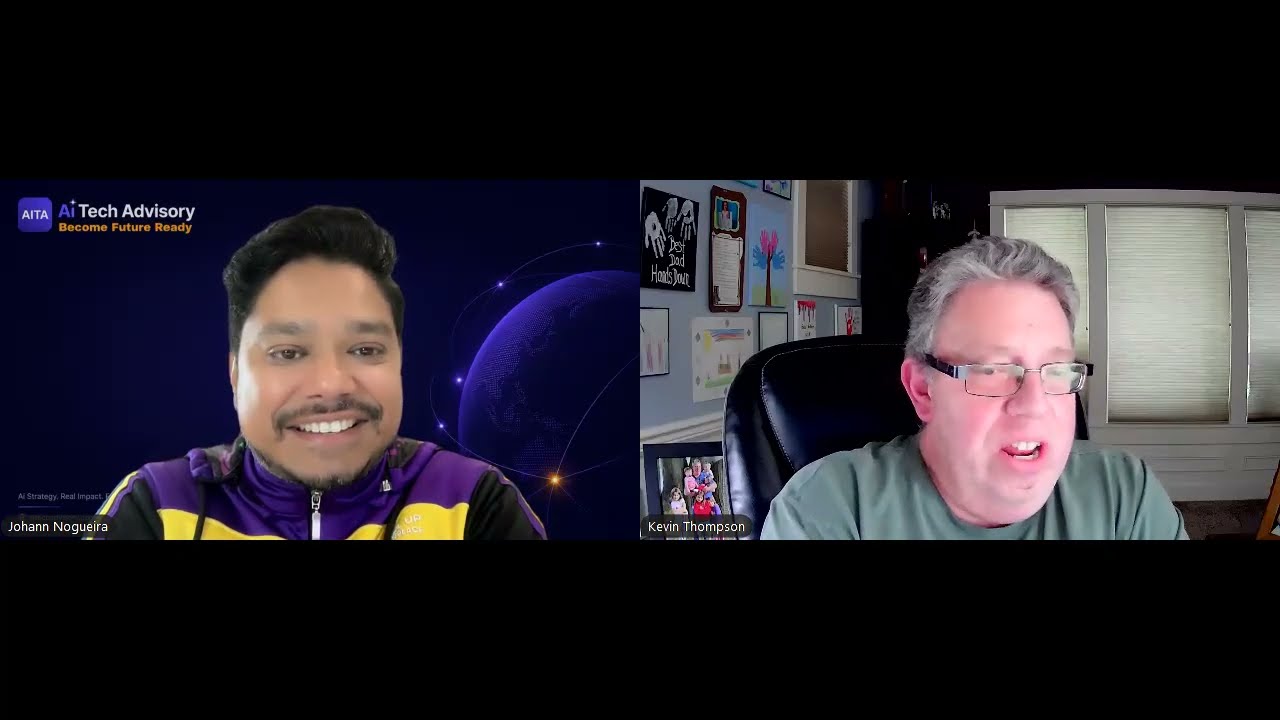
Johann Nogueira on the 500-Mile Walk That Healed His Family

In this hour‑long Leverage & Lead podcast, Johann Nogueira shares the full arc of his personal and professional journey, from early experiments in e‑commerce, affiliate marketing and agency life to building complex tech solutions for residential buildings and the White Label Suite. He recounts the extreme stress, burnout, and alcoholism he endured while micromanaging an agency, the pivotal moment when he shifted from selling cheap websites to orchestrating a full client‑journey referral network that generated multi‑million‑dollar projects. Johann explains how he and partner Walt created Comet Suite, grew a $20 M business, and later exited in 2019. He describes the tragic loss of three friends, which spurred the creation of the charitable Business Authorities community that has impacted over a million lives. The conversation turns deeply personal as Johann details his father's immigrant struggle, their 500‑mile pilgrimage on the Camino de Santiago, and how that walk reshaped his family relationships. He also discusses his marriage, the importance of systems that allow his business to run without him, his philosophy of delegation, transparency, and community‑driven growth, and offers advice on avoiding burnout, leveraging partnerships, and building authentic connections. The hosts Bridget and Marla interject with reflective questions, highlighting Johann’s vulnerability, authenticity, and the value of genuine relationships in entrepreneurship.
Chapters
I was micromanaging everybody, and at this point in time, I was nearly having a nervous breakdown because I couldn't shut my brain off. I literally had to turn to a bottle of whiskey every night to put my brain to sleep. It was the most stressful period of my life. I think I put on like 50 kilos. It was nuts because of the stress. Anyone who's in agency land, I know exactly what you're going through because I went through all of that and it was horrible. I met this guy and he was running a big giant seminar over here. This guy had spent 6 months building his seminar, but guess how many people he had coming? Zero. So he's like, dude, I need people to come to this event. Can you please help me? I'm like, can I help you? That's what I do. We do lead generation. So of course I can. 24 hours later, he had 80 CEOs and directors booked into the seminar. He's like, how did you do this? This is magic. It's like, how do you know all this stuff? I'm like, this is what we do. Throughout my whole life, my father always said, so what? Like, that was his thing. So what? Do better. So he said to me, All my life I told you guys you weren't enough to push you further.
But he didn't feel that way.
No.
But you got to learn that. That's incredibly powerful. Johann Nogueira. That's how you pronounce it, right? Nogueira?
Nogueira. You got it.
All right. Because I, I asked ChatGPT because I thought I've known Johann for so long, if I mispronounce his last name I'm gonna be a horrible friend.
So it's so good to be here. Thank you for having me. I'm so excited. You know, I'm so excited, Bridget, that I had a shower, got all dressed up, sprayed on some perfume. My wife's like, where are you going? I'm like, I gotta— I got an interview with Bridget and Marla. She's like, you know they can't smell you, right?
You know, I think it's a mental thing because sometimes I put perfume on before my—
It makes me feel good.
Yeah, it's like it pumps you up, you know? Yeah,
I love it. Well, thank you so much for being here. You know what, it's funny, you just, you just did your, your, your mug up. I told Bridget, we have— we maybe we need to start doing like a little cheers to start. And what's everybody drinking? What you got, Johann?
Cheers! I got rooibos tea.
All right, I'm, I'm doing coffee, a little pick-me-up in the afternoon.
Bridget, super Boring with my water in my Yeti cup.
Welcome. Thank you so much for being here.
A pleasure. I'm so excited. I missed you guys. I feel like I didn't get to spend enough time with you in Dallas.
You know what? But again, I'm going to tell you in this podcast, like I told you in person, I loved that you and Walt did not get a booth this year. I don't know what your takeaway from it was. We talked a little bit about it, but I just feel like For me too, like, this time, it's like we've spent all these years now building relationships with all these people. And it's like, in the speaker sessions, it's so hard to, like, really get to know people. And I started noticing, man, lunchtime and, like, breakfast, that's where you really have the conversations, which kind of is what prompted this podcast. But getting to know and talk to you and Walt so much better was just a total, like, I mean, obviously, I adore you both. That hasn't changed. But it was just so much more fun being able to just relax and have normal conversations.
100%. So, this was the first time we hadn't sponsored, and it was the best decision we made, actually. Anyone who's thinking of sponsoring, please do it. I'm not saying don't do it. For us, we got to actually talk to people, talk and build genuine connections. For the last 4 years, when people come to the booth, we've got a impress them, we've got to show them who we are, we're going to show them what our product is, all of that in the space of maybe 4 or 5 minutes. Whereas being at the conference this time, it was just real relationships, real people. You got to just spend time. Hey, how about let's go grab some lunch, let's go grab a drink. It was just so nice, so easy. And we were there from 6 in the morning. I don't know if you saw, we were there from 6 in the morning until probably midnight every night. And we got to— I only got to 2 sessions during the whole thing because we were just meeting all the cool people. I said to somebody, it's like having Facebook in real life because these are all the people we interact with all day, every day on Facebook. And now they're in real life and now we get to talk and catch up. And because of Facebook, we know everything about them. You know what I'm saying? Like, you've never met my wife and children yet. You know what they look like. You've seen them. You know what we like to do? We go to the beach and all that kind of stuff. So you, yeah, through these mediums, the world has changed and we get to have real deeper relationships.
Yeah, it's so true. So true. And from knowing you and Walt, that's really the magic behind White Label Suite. I mean, obviously, because it's the two of you. But when I first met you and Walt, I had just like I saw you know the post, the infamous post in the High Level Facebook group where you had showed that you were trying to white label your tool that you guys had already been using and found success with. That's how I was introduced to you guys. But I have always said that the tool that I choose, obviously it should be a good tool that that's practical and has great use cases. But what's actually more important to me as a coach and a reseller is the the leaders behind the tool, because I've seen them come and go. And the one consistent thing— the, the businesses that stay with HighLevel, the ones that are successful, they have great leaders. And the leaders know how to run a team, the leaders know how to adapt to changing markets, and the leaders are the one that brings the integrity to the entire company. And so you and Walt— that's— this is why I absolutely adore you. If you decided to sell White Label Suite tomorrow and start a a new company, I'm going to be your biggest fan because I just adore you guys. And I mean this. I say this to you privately. I just want to say this publicly as well because I just absolutely adore you, both you and Walt. You bring a whole different— something about your energy or just who you are when you walk into a room. It's like you're magnets. Thank you. So I can see you guys never— actually, I might even call Shaun Clarke himself and say, Don't ever let Johann and Walt ever be sponsors and have a booth ever again, because you are a connector. You guys are the magic behind White Label Suite. So you guys being able to have conversations, that is absolutely your best asset, is the both of you.
Thank you. And it's, it's, it is, it's the people we get to— the reason we're glowing is because of the amazing people in the community. There is no other community like this one. We've been to so many conferences. We've been, we've been parts of many communities over the years. This one, everyone is there to share. I saw so many people just literally pulling up their laptops. Hey, what's your problem? Cool, let me come. Let me fix it for you. All of this, this doesn't happen in other, in other communities. So it's a community, um, the, the energy comes from, it's amplified, you know, whatever you get you get, you put out 10 times more. When we walk in there and, you know, we saw you and Marla, I'm like, hey, and you guys like, hey. And so we're walking around hugging each other and everyone's like, who are these crazy people? I'm gonna be part of that crazy clan. Yeah, it's just so good.
It does feel like when we're at the summit, especially those who've like been with HighLevel for a few years and a few summits in, you know, you do feel like when you go to the summit, it's like a family reunion because like you said, not only do we know each other from the summits, But we know each other just from being friends on Facebook and all of those things. It just really helps to— plus, we're a little bit like misfits, you know? And so, when we get together, we're like, Johann, what was that techie thing that you did? And Walt just blew my mind with some new White Label Suite stuff. And I was like, dude, you just went over my head. You're going to have to come on. You're going to have to come do a webinar because that was incredible. But I do definitely— we've done so many webinars together and I absolutely adore you both and White Label Suite. But I think this is such a great opportunity for other people to get to know Johann, the person, the father, the husband, you know, all of those things. And you're such a great person. I just feel like you're going to have an enormous fan base when we're done here, when they realize like what's behind— what's the passion behind Johann. I know it's your family, but I would love for you to talk a little bit about that. Like, tell about your family. your children, how you met your wife. I would love to hear all about it.
Yeah, for sure. So first, 100%, family. Family is my number one value. My passion, passion comes from business. Now, it's a little bit of a sad story as to why. So, well, actually, I'll get into the sad story in a second. But I started my business when I was doing my PhD at the University of Melbourne. And You know, I asked my professor, I said, hey, you know, I've been working like 6 in the morning. It was nearly midnight when this guy rocked up to the lab. By the way, I don't think you know this, but Bridget, I did agricultural science. I was a— my PhD was in secondary biofuels and climate change. So absolutely nothing to do with what we do right now. Actually, I'm going to go back a couple of years before that. I was the first person in Australia to get an honors degree in genetically modified canola. And so I was going to be leading the GM canola revolution over here in Australia. And then the government— I got my degree in November. In December, they banned genetically modified canola in Australia. So I've got this degree, which I've just spent 5 years getting. And then now it's like, hey, you can't do anything with it unless you move to Canada. Canada leads the genetically modified canola industry. So I went, I don't want to go to Canada. It's a bit cold. No offense to any Canadians. I love being on the beach here in Australia. And so I said, what else can I do? And so that's how I went into the PhD. Now, now we're back to the story of me and my professor. My professor's there, I'm working until midnight, and I broke one of my dad's rules. My dad said, never ask a woman her age or a man his wage. Those are the 2 rules you gotta live by. I said, done. And so I've been working so hard, I was like, dude, I gotta, I gotta know that it's worth it. Now, this man traveled the world, speaks on stages, writes books, you know, is adored by the community. I was like, I want to be like this guy when I grow up, but I also want to have some, you know, lifestyle, because he didn't have any lifestyle. So I said, how much money do you make? And he told me, and I could not sleep for weeks because the money that he was making was probably— it wasn't that much compared to what I was making working at Hugo Boss selling suits. I was like, wait a minute, you're telling me 10 years later I'm gonna make like this amount of increase in my salary I'm like, something that— he goes, no, it's a— it's science is a love of passion. I'm like, okay, cool. Well, I don't know if I'm that passionate about this. I envisioned a different life anyway. So I built a little eBay business. My little eBay business made more money than he did in 6 months, and it was fully automated. It was literally— I had these listings on eBay. I'd wake up and in 10 minutes, I'd wake up at, you know, in the morning, in 10 minutes my business was done and I had the whole day to myself. Now, at the age of 22, having financial freedom, that version of Johann had financial freedom. Now I have team, family, a whole heap of other things. So this version is different. That version, single, living in a country town, have no responsibilities, you know, financial freedom was crazy. Now I had— so what was the business that I built? I built a business of gold and diamonds. So I used to have a bag, a duffel bag with gold and diamonds in there. And because I had nowhere to store it, I used to carry this thing around with me everywhere I went because I lived in a, in a house with me. It was like a frat house, I guess, with 3 other people. And so there's parties happening all the time and I can't leave my stock— that's my whole business— with them, right? And so this thing went with me everywhere. People thought I was a drug dealer, by the way. They're like, hey, for, for Christmas and for our birthdays, he's giving us gold and diamonds. I'm like, dude, Yeah, that's my business. So this business actually still exists. You can go to bidz.com and it's America's auction house. They sell jewelry at 90% off. So my business was literally buying it 90% off from there and selling it on eBay at 50% off. That was it. And I'd make a 40% arbitrage and it was all automated. And then they had an affiliate program. So this is my evolution. So we're at actually 2004. So then they had an affiliate program where they would pay 15%. Now the average person would spend $1,000. on this website. So my ad on Facebook, this is 2007, was targeting men in relationships for 3 to 5 years. Show them this ad, 90% off diamond rings. It's time to, it's time to make the commitment. Click here to get your diamond ring. They'd click, they go to the website. It didn't matter if they didn't buy the ring, they'd buy sunglasses, belts, jackets, whatever else, because there's tons of other stuff there. And they'd spend on average $1,000, of which I'd make $150, 15%. But it cost me 5 cents to get that traffic to that website. That was my intro to the affiliate game. I'm like, wait a minute, I don't even have to have this duffel bag. I didn't have to have the stress of if anybody's gonna break into my house and steal my entire business, my stock. Now it's all electronic. So that's how I got into the affiliate game. From that, 2008, CPA, cost per acquisition, came about. And it was a brand new thing in the whole, you know, internet marketing world where, hey, generate leads and you get paid for the lead. And so we were generating leads for the banks over here. So if anybody went in and typed in, as an example, Commonwealth Bank credit card application, we know that that has intent, right? So Commonwealth Bank is the name of the bank, credit card application. They want— what do they want? They want a credit card application. That would cost me 20 cents to put it on Google. This is in the good old days when things were really cheap. Now, nowadays, that same click will cost me about $60. Anyway, so they'd click on that, they'd fill it out, we'd get paid $200 from that. So that was just for the lead because they knew that the lifetime value of that client was worth way more than that. So that's how I started my lead generation for CPA. And it was just me and one other person. That was it. That was the whole team. So I had this great idea. Well, this guy, I met this guy and he was running a big giant seminar over here. It would be the equivalent of your, in New York, the Trump Tower. Like it's the most famous building in Melbourne over here. This guy had spent 6 months building his seminar. But guess how many people he had coming? Zero. So he's like, dude, I need people to come to this event. Can you please help me? I'm like, can I help you? That's what I do. We do lead generation. So of course I can. 24 hours later, he had 80 CEOs and directors booked into the seminar. He's like, how did you do this? This is magic. I was like, well, you know, and by the way, this is me wearing a leather jacket, torn jeans. I look like a young punk. He's like, how do you know all this stuff? I'm like, this is what we do. I said, he said, other than the money, what else can I give you? I said, can you give me 15 minutes to talk? He's like, yeah, sure, done. So now I'm in front of 80 CEOs and directors telling them about how lead generation is done online on, well, basically I got them all from LinkedIn and they all started saying, hey, I want you to do the thing for me. And that's how I started my agency. So now we're at the start of my agency. So that was the silliest thing I ever did. For anybody who's listening who's built an agency, you know the pain. And I was like, yay, an agency. Now I have bosses 24/7, 365. I'm looking after my staff. I'm looking after my project managers. I'm looking after, you know, the virtual assistants. I was micromanaging everybody.
Are you a coach or consultant trying to build your business with HighLevel but feeling overwhelmed and overworked? Are you putting in long hours but still struggling to land your first client? You're not alone. Many entrepreneurs believe they just need to work harder, but what if your problem isn't your work ethic but your lack of a system? I've spent the last 6 years perfecting a system called the Vision Blueprint. It's a structured method to build a successful business with HighLevel without the burnout. Stop the insanity of endless trial and error. Join my free community today and get access to all my tutorials plus live coaching with me 4 days Let me personally guide you as you implement this system and build the life that you want, not just the business. Now, back to the conversation.
And at this point in time, I was nearly having a nervous breakdown because I couldn't shut my brain off. I literally had to turn to a bottle of whiskey every night to put my brain to sleep. It was the most stressful period of my life. I think I put on like 50 kilos. It was nuts because of the stress. And Anyone who's in agency land, I know exactly what you're going through because I went through all of that and it was horrible. And yeah, so anyways, I can keep going, but if you have questions, please interrupt.
I do. So you touched on the struggle, right? The pain of having an agency, but I want to go deeper into What did that day-to-day look like and how did you come out on the other side of it? Like, what was the breaking point where you said, I can't do this anymore? And then what was the evolution of that?
Yeah, for sure. So when I started, it was, we were selling websites for $500. That's what we did. And then I was like, man, we're selling these websites, but I don't feel like I'm making any money. I'm working so much. I'm building all these websites. And then the clients started coming to me saying, Great, I got my website. What do I do now? I'm like, um, you gotta go get traffic. That's how— they're like, well, can you do that for me? I'm like, I can't, but I have a friend who can. They're like, can you make an introduction? Like, yes, I can. So now I'm introducing them to my friend. He does Google Ads and social media. And then he's like, dude, I'm making so much money. Thank you. Can I give you some commission? I'm like, huh, never thought about that. So I'm like, yeah, sure. And then I went, hang on a second. People come to us, they get their website built. What do they need next? They need their traffic, but they need brochures, they need videos, they need content marketing, they need a business strategist, they need Google Ads, they need a YouTube person, they need all this. And so I drew out this entire client journey. And when I did that, I went, who can— who do I know here? And then I started calling up my friends. I'm like, hey man, can I send you referrals? What what kind of commission would you give me? They're like, on average it's 20%. Now imagine the, the web— anyway, we ended up selling websites for like $5,000. Now we're doing 20% commission, so we're getting paid a lot along this entire chain. Even though the person came in at, let's even, let's call it $500 to start off with, by the time they had gone through each one of those people, they were spending $20,000, $30,000, $50,000. Of course they're getting value for it, and that's why they, they continue along the chain. Because if they're not successful with— if they don't have a good-looking website, they're not going to convert. If they're not going to convert, they're ads guy cannot do what he's got to do. If the ads guy cannot do what he's got to do, then, you know, there's no point building brochures and glossy things, and there's no point having a business strategist to help you grow, and then team person, all that kind of stuff. So I built this beautiful chain of people, and then I started showing people, hey, when you come to us, this is what's going to happen next. And then they're like, oh, done. Like, that was our selling point— having a map, showing them the progression of what's going to happen after, and having everything. And all the prices were there too. I was like, this is how much it's going to be for us. This is how much it's going to be next. But you don't have to worry about the next part until you make the money over here. So we were always showing them how can you make money.
So were you white labeling the services eventually of your other providers or were you still doing the introductions?
No. So we, at that point in time, no, because it's too hard. It was too hard to do that. We used to do white label websites. So we had 36 agencies who would white label our services. And then we would go under their brand, which was great for my company because we had systems, but other companies did not have those systems. So we tried it a couple of times, but then, you know, they'd answer the phone and say, hey, it's James's agency, how are you doing? And they're like, James's agency? I thought this was Mary's agency. Like, what's going on here? Like, you know, that sort of thing. And so we said, okay, we're just gonna be completely transparent. And actually having transparency is the easiest thing in the world because you don't have to hide anything, right? This comes back to GHL. When we white label GHL, we're just like, dude, we white label GHL. Anyway, back to the story. We just told people, this is my friend, this is their specialty, this is why you need to go to them, here's their results, here's their case studies, and this is why you should go with them. And so everybody, everybody was making money, everybody was having fun, everybody got good service. From my first 3 clients, we actually mapped it out, we got 1,800 referrals, 1,800 clients. Just from 3 people. It was insane. And so, customer service is number one. Transparency is the next value. Honesty, you know, if you mess up, tell them. They appreciate that rather than them trying to find it, you know, find out something that was broken or whatever. So, there's all these different values that we shared that we made sure that our partners shared. We said, hey, if you mess up, just tell the client. They're going to understand. It's life. And yeah, sorry, keep going, Marla.
Well, so, okay, so you're, you were, you left off at the agency, right? And so where did that evolve? Like, how did that, you know, what, what ended up happening that, what was the natural progression?
Yeah, so the agency evolved. We started getting complicated projects. People started giving us the most complicated projects because I hired a team, like, they were the best. They were the best. They are the best. They're still around. And I was like, man, we can build anything. And so, I used to tell people, hey, we can literally build anything that you want. And so, we ended up building systems for power stations, systems for, like, the airport. If you've been through the airport and, you know, you scan your passport and the doors open up, we built that. So, let me tell you that story, how that happened. This company calls up and they're like, hey, we heard about you guys. They say that you can do the impossible in the best time. I'm like, yeah, we can. That's our team. He's like, all right, here's my project. Here's the brief. And he sends me the brief and I'm like, I look at it. I go, yeah, cool. Send it to my engineer. He's like, yeah, easy. We can have this done in 6 weeks. I'm like, all right, cool. Dude, we can have this done in 6 weeks. This is the price. The price was $50,000. I go, this is the price, $50,000. Here's the details. Here's the invoice, et cetera. And that night I got $50,000 in my account. Now, in agency land, this is not normal because in agency land we used to do 50% and then 25% upon checking and then 25% upon finally final delivery and sign-off. So here's this $50,000 has just landed in my account. I'm like, what the— all right, cool. Anyway, guys, go to work. And they go to work. And 6 weeks later, we've delivered the project. On the 8th week, I get a phone call. Oh, no. And the phone call is from the CEO of this company. He goes, Johann, I'm coming to Melbourne tomorrow. I need you to make an hour. We have to talk. That's non-negotiable. Okay, Jesus. All right, something, someone has messed up. So I call up my project manager. I'm like, dude, what's going on here? Why is he calling me up and why is he telling me to make— I go, I didn't know anything about the project. You took care of it. I need you to be at the meeting. He's like, all right, cool. I'll cancel my stuff. I'll come. So now he's— my project manager's come. It took him like 3 hours to get to where I am because we live far away. So we're sitting down in the thing. This CEO comes. He's brought his CFO and his project manager. Now there's 2 of us, 3 of them. And they go, guys, just want to say, working with you was absolutely incredible. It was the best thing. We'd send you edits at 6 in the evening. You'd have it done by the time we woke. This was amazing. And I'm sitting there like, what the heck? What's going on? I thought we were going to— we were prepared for battle. Like, we knew everything about the project. Everything was delivered. you know, crossed off all the T's and dotted all the I's. And here they are just praising us. And I went, okay, so what was the purpose of the meeting? They're like, hey, we want to give you guys a bonus. We want to take you out for lunch. We just sold the technology to the airport for $250 million.
Wow.
And my— I came back and my wife's like, $250 million and you charge $50,000? Are you serious? I'm like, hey, babe, they I quoted, they accepted, they paid straight up. It's on them. Congratulations. Well done to them. So, Mala, you asked me what was the progression. We got— we started building the most complex systems. I moved into a building over here in Melbourne, and when I moved in, they said, welcome, this is the best building in Melbourne. There is no better building. We are the technologically the most advanced building. We have blah blah blah blah blah. Anyway, I'm like, great, I'm excited. This is the best building in Melbourne. And then I get a piece of paper coming to my door. And the piece of paper says, your windows will be getting cleaned tomorrow at 2 o'clock. Okay, that's interesting. By the way, timeline, we're at 2012 right now. So that evening, I get another piece of paper. The bushes will be trimmed tomorrow at 10 o'clock. There might be some noise. Okay, this is interesting. This goes on for 1 month. And at the end of the month, I've got an inch of paper sitting on my table next to my door with 1 sentence on it. And I take it and I go to the building manager and I'm like, dude, how much is this costing me? He said, it's $1 per sheet. $1 per sheet, 500 apartments, twice a day, that's $1,000 a day, $365,000 a year that they're spending just to let me know that the pool is out of order for 2 hours or whatever it is. It's like, I'm like, man, it's 2012. Why don't we build a mobile app for the building? He's like, What do you mean a mobile app for the building? I'm like, we can build a mobile app just for the building, just for the residents, and you can just send out a push notification to the levels that you need to alert that the windows are getting cleaned or the gym's out of order or whatever. He's like, what is this magic you speak of? This doesn't exist. I said, it does. Let me show you. So, I went to Dubai, looked at their stuff, came back, built a prototype, showed it to him, and then he's like, this is brilliant. He goes, let's show it to the owners corporation. And In over here in Australia, we have owners corporations. I don't know if you have that there, but anyway, body corporate, owners corporations. They looked at it, they're like— I'm like, my opening slide was for buildings that are the most technologically advanced buildings in Australia. And they're like, wait, that's us. And so we signed them up to that. And so they signed up for the technology. The technology we were selling at $50,000 a license for the mobile app. I walk out of the building, the building manager comes chasing me. He's like, dude, that was epic. Can we be business partners? I'm like, sure, why not? He goes, I've got 30 other buildings that we can roll this out to. I'm like, all right, sure, why not? Let's do it. So we did it and it took us 2 years and we rolled it out and we were charging $50,000 for the license. But on the backend, we were doing $300,000 to $500,000. What does that mean? On the mobile app, if you Picture a mobile app of the community that you're living in. We would have a button. So, we used to get— the problem that we solved was there was so much junk mail coming into our— and, you know, hey, here's the latest restaurant. This is before Uber. Here's a restaurant. Here's a carpenter. Here's a plumber. Here's a concierge. Here's the whoever. I was like, dude, just got all that. Put that all into the app. Now, they can all just be at the click of a button. I need an electrician. Click the button. Call the electrician. You want to disconnect your services, connect them somewhere else? Click the button. And so, we trained everybody. Each building is essentially a database. So, if you look at it that way, we have these databases where we have them all inside one little app. Now, this goes to community building and things. So, we can correlate that to what we're doing right now, all these little databases. And so now, the banks started coming to us saying, hey, if somebody gets a refinance on their mortgage, can we have a button on there saying refinance? Like, sure. And so then, they said, hey, we'll give you 3% to 5%. Now, the house, the apartments in these buildings are at a minimum $1.5 million. So now you do the maths on $1.5 million by 3 to 5%, it adds up pretty quickly with all these people clicking. So that business we built to $20 million in about 4 years. And so we exited that in 2019 in the middle. Now, this comes back to my little loose end about the sad story. 2017. Having this, like, this business is growing and I'm like, wow, this is amazing. And 3 of my friends, a couple of months apart, committed suicide. And it was the worst thing because I'm like, dude, one, one con— the beautiful thing about business is one decision, one conversation could literally change the directory— change, not the directory, change the direction of your, of your path. I wasn't there for them. And I said, I never want to not be there for my people. So, Bridget, this comes back to you saying, I'm always available, always there, always— I'm always there no matter what. If you're listening, if you need any help, I'm always here. Please know that.
Does it feel like snapshots are either too basic to help or too complex to fit your business? Trying to untangle someone else's workflows can feel overwhelming, but it doesn't have to be that way. I'm Marla, and I work with agencies and business owners to design and build custom CRM in AI systems that actually align with how you operate your business. If you're tired of trying to do it all yourself, let's connect. Reach out at marlaharmon.com.
So these 3 people, just one of them actually, at one of their funerals, there was 500 people. That's how many lives were impacted by this person taking this decision. And I said, I never want this to ever happen again. So I ran an event. And called it Business Authorities. So Business Authorities was— it's still there, but it was our community where we would, we would show people how to build, grow, and scale, and all the money from that would go to charity. And from that one tiny little business, in 3 years, we impacted more than 1.1 million lives. So all the money that came through, we donated. 1.1 million lives were changed. So that's Business Authorities. That's how that was. And then 2021, we got, we got, you know, COVID happened and all events across Melbourne were shut down. So we were an events company. We'd run events. We'd have, and our events weren't about having the greatest speakers. It was about the real people who are making real differences in people's lives, having them come up on stage, giving them a platform to share. And so that's what Business Authorities was built on. Real Business Authorities, not trained NLP speakers who are designed to extract money from the audience. This was people who had real strategy, who were doing the real thing. That community from 150 people grew to 3,000 people. And so that's how— that was our community there. The government shut down all events. People to this day keep saying, when are we going to have those events again? I'm like, soon. So it's, it's been on pause and probably might restart it next year. So that's the Business Authorities. 2021, we started Comet Suite. So I met Walt. That's another great story. Met Walt. He interviewed me on his podcast and 2 years prior to that. And then we caught up finally, you know, we got a break. I flew up to Gold Coast. Gold Coast is, I love it because it's like the most beautiful place in Australia, beautiful beaches, et cetera. We caught up over breakfast and we just, there was just this spark, this thing. I was like, dude, you are a genius. He's like, no, you're a genius. I'm like, yeah, you're a genius. And so we started the Mutual Appreciation Society. It's like, no, you're a genius. And so he called up and said, let's do this together. I'm like, dude, you've invested millions and millions of dollars in this technology. I can't just be part of it. I was like, I'll tell you what, I'll do you one better. I'm going to write down on a piece of paper, you can kick me out of the company until December 2020. It was the end of 2021. I go, I'm going to work in the company like we're partners. He's like, yeah, sure, whatever. I don't care. I just want you to work with me. I'm like, all right, cool. So that was 2021. Here we are, 2025. Built an amazing company, an amazing culture, amazing team. I can't speak more highly of our team and our people and our clients and our great partners. By the way, Bridget was the first partner that jumped on board right from the inception. You've been our number one supporter and I will never, ever, ever forget that.
And I feel the same about you. I absolutely love what you guys are doing and I'm shocked to find out that you and Walt have only known each other A Few Short Years, because it's like you guys are brothers. I was literally watching you guys at the summit. We all— for the awards night, we all go and we're sitting at the table. Immediately I saw you and Walt, I was like, yeah, that's my table. But it was funny because people were sitting down at the table and it was like you guys kind of got like mixed up, like you were on one side of the table and he— That's true. But I was watching you guys have this like conversation with your eyes. And it was cracking me up. I was like, these guys are like, you guys are like brothers or something, like the perfect partners.
100%. And there, I've had many partnerships and this is the best one ever. My wife says it all the time. She's like, no one, no one else, just, just Walt. And if we don't talk to each other, we talk to each other probably 30 or 40 times a day. And it usually starts off at 5 in the morning. It's like, dude, What's up? Let's go. And at the end of the night, it's, dude, I did everything I could. I'm done. Yeah.
I love it. I love it. Hey, can you talk a little bit about— there's so many things I know and love about you. It's kind of hard for me to like pick from the list, but I did see that you took a vacation with your dad. This was last year. Can you talk a little bit about that? Because I actually, I don't know the story behind it. I just saw all the videos and pictures and I was like, oh my Gosh, this was like incredible.
Yeah, cool. Thank you. Yes, I will. So COVID happened. And so now let's go back to in 1991, we migrated here from India. And when we came here, it was a recession. So it was the worst time to be in the country. There were no jobs. My father came from— he was pretty well off. You know, he was a head engineer on the ships. That's what he used to do. He came here and he couldn't get a job. Now, my parents came here with $1,000 and they spent $900 of that on a fridge. So, you know, it was miserable when we came here. And so my dad said, no, I moved here to give my kids a good life. And so he would study his— I mean, study. And he started off cleaning toilets. That's the only job he could get at that point in time. He was my age. So imagine— well, not my age now, but imagine being a 40-year-old man at the height of your— Career and then to go all the way down to the very bottom and start cleaning toilets, literally starting from scratch. I was like, wow. When I think about that now, I'm like, wow, what did it take for him to do that? But he said, no, that's, that's not enough. So he wanted to build up and he's, he's made a massive success of himself. So every day my life when I was growing up was dad would leave at 5 in the morning, dad would come back at 6, 7 he'd sit down at the table and he would study. And so the only interaction I had with Dad was sit down at the table and study with Dad. No, no talking, just sit down and just— that was the only time we got to be together. And then year 10 happens, like grade 10, and then university. Once university starts, you never see the kids. Like, they are— I was off with my friends. I'd come home, sleep, jump in the car, go, you know, I'd be gone. And then university finished And then I found my wife, and then we moved out and all of those. So life robbed my father of a relationship with his kids, even though he sacrificed everything for his kids. And so during COVID he came to my house and he'd be like, you're abusing your dog. I'm like, what? He's like, you don't take your dog for a walk enough. You're just working all the time. You abuse your dog. I'm like, all right, cool. Well, you want to help me with that? He's like, I will be here and I'm going to take your dog for a walk. I'm like, all right, sweet. Thank you. So every morning he'd be here at 6 in the morning and he'd take the dog for a walk. So this happened for like a couple of weeks and it became routine. And it just so happened because I usually work, you know, US times and things like that. I'm dead. Like 6 in the morning, I wouldn't— couldn't get me up because I'd only gone to bed like 3 hours prior to that. This one morning I happened to be awake and I'm like, huh, dad's about to come in 5 minutes. So I got dressed and he comes and he's like, all right, I'm taking the dog for a walk. I'm like, all right. Can I come with you? He's like, come with me. Uh, sure, all right. And it was the most awkward thing because we walked for an hour and I was like, how are you? He's like, good, how are you? I'm like, I'm good. And we had nothing to talk about. And then I went, hang on a second, this is my dad. So the next day it's like, hey Dad, tell me about your childhood, tell me about when you grew up, tell me about your aspirations, tell— so that was day 2. By day 3, before we could even get to the, the front gate, we were like, ah. And then it was 2 years because we were locked down here for 2 years. We were just the best friends. We became the best friends through talking. And one of the things that he said was, I, he's retired, he's 70 years old. I said, what's one of the things on your bucket list that you never got to do? And he said, I always wanted to do this walk. I was like, let's do it. He's like, what do you mean? I'm like, let's do it. I'll do it with you. He's like, it's 8, it's 500 miles walking. I'm like, Let's do it. It's on your bucket list. Let's make it happen. So I called up Walt. I'm like, dude, just giving you 2 years' notice. In 2 years, I'm going for the walk with my father and I'm going to be not available for— I'm going to be in the mountains. You can't— I can't even, you know, I need you to run the business without me. He's like, yeah, no problem. All good. I got you. I actually had 6 months off, 6 months away from the business, and the business grew without me. Yay! Success. So Back to, back to the trip. So yeah, so Dad and I went on this trip, and the first day— Dad trained for 2 years for this walk. Like, it is, it's crazy. We literally walked from across the Pyrenees. Anybody who doesn't know, this is like a mountain. The first day, I thought one of us was gonna die for sure because we're walking and there's— the pathway is like not even, not half the width of a road, right? And there's cows and horses walking up to you, and there's a drop of about 400 meters down. And we're walking through this thing. Dad's nearly delirious, passed out. There's a whole story around the first day. We barely made it alive. The second day, we see a person fall from the mountain, 400 meters down, crack their skull open, dead. Through our entire walk, Bridget, I haven't shared this. We saw 20 people pass away. It was not— it was just a normal thing. People like, oh look, another person didn't make it. I'm like, what do you— and there's literally like gravestones going, he was 20 kilometers from his destination and he didn't make it. I'm like, are these people— this, this pilgrimage has been there for 1,000 years, right? So every year there's 350,000 people who do this thing. It's called the Camino de Santiago, and it's a pilgrimage from, um, Saint John, from France across the north of Spain, uh, to Santiago. 350,000 people do this every year. Um, I think it's 8,000 that do the crazy one that we did, which is all 800 kilometers, 500 miles in one shot. So yeah, so we made it, we survived. And that, that's the most amount of time I've ever spent with my father— 56 days, 24 hours a day, every day. And we got to know each other so well. Uh, we're actually doing one in April this year in Japan. Next year, 2026. So we're doing one in Japan. And now my brother's like, hey, I'm coming too. I saw all the photos. I don't want to miss out. So my dad, my brother, and I are doing that in April.
You know, from looking at the pictures, it definitely looks like one of those bucket list type trips. But, you know, I like to get deeper in the story, Johann. So when you told me that, I'm still stuck at the beginning. Where you didn't speak to your dad, and then suddenly he says, "You're abusing your dog because you don't take him out enough." I just wonder if in his man type of way, if that was him saying like, "I regret not spending so much time." You know, for him to say, "You're abusing your dog," I wonder if he like correlated that with like, "Was I an abusive dad because I wasn't there? I didn't." Go for walks with my kids. We didn't talk at the dinner table. You know, I wonder if you had those levels of regrets.
100%. And he shared that on the walk. On the walk, we shared so many things. There was lots of tears. Yeah, it was deep.
Do you think that that affects, like, your relationship with your dad? Do you think that that affects, like, the dad that you are to your own kids?
100%. So while— so now I'm going to go back to my 20s. In my 20s, I lived in a little country town. This is where I was doing my PhD. And my, my friends who were also my mentors, they were all 10 years ahead of me. Now, them being 10 years ahead of me allowed me to see into the future. And so there were 3 different people, 3 different— in their mentors, one was in real estate, one was into stock trading, and the other one was into online marketing. And we were the best of friends. Every day we'd actually sit down, listen to Tony Robbins together and all that kind of stuff, which was a massive Brian Tracy, Jim Rohn, all of that every day was a massive, um, you know, gave me— it formed my young adult brain and into— it shaped me. That's those— that 5 years in Horsham, which is where the town is, shaped the way I see the world. And all being with those people changed me. Now I got to see the way that they were with their families. And so one of the guys, he was at home, he worked from home, he had an online business. And time was his. He could do what he wanted when he wanted. Another guy, so we were having lunch with this other guy and he said, we're having lunch and his son comes running up, Dad, Dad, can you come show me something in the backyard? Blah, blah, blah, blah. And he goes, no, I'm talking to Johann right now. I'll be there in 10 minutes. And the kid runs outside, falls down in the backyard, cuts his head open. We had to take him to the hospital, stitches, all this kind of stuff. I was like, huh. Like that, it was just a thing that just happened. Literally a week later, I'm with the guy who's the online guy, and we're sitting down and his daughter comes up. She's like, Dad, Dad, can you tell me about Mars? And he goes, excuse me, Johann, just give me 5 minutes, I'll be back. And he takes her to the computer room, loads up the map of the universe and shows her where Mars is, shows her the composition of Mars. And literally it was a 2 or 3 minute conversation. And he comes back and we're talking, and then we look out the window. And she's standing on stones with all the other kids sitting around her, and she's teaching them about Mars. And I'm like, wow, that 2 minutes made such a big difference to her. I go, that's the type of dad I want to be. And so, you know, my kids— I'm here, I'm at home, and my kids get to see me every day. And we go for walks, we get to— I get to give them what I never had. And so that's been a massive— It's something that I decided I was going to have when I was in my 20s, and now I get to live that every day. So I'm very blessed.
Did you make that conscious decision? Like, I am going to— like, today, if we were talking, I know you wouldn't, you would listen to what I was saying. But if anybody else, you were having a conversation with them, and your kid walked up and said, hey, Dad, show me this. That you would think about that and then you would make that decision to go show your kid, right?
I wouldn't. My kids come in and they jump on Zoom calls with me because we were locked down here. My daughter, I think since she was 3, from the age of 3 to 6, those 3 years, she sat with me at all the— she literally thinks like a— she's I don't want to use the word cunning. She is extremely— she knows how to make money and she's 7 years old now. I'm like, wow, all those years of just listening to us has gone into her brain. And she's like, yeah, I'm gonna go make $200. And she'll go at the age of 7, she's going and she's making money. And I'm like, this is amazing. If, you know, heaven forbid, but if something happened to me today, I know my kids would be fine. With what they have instilled in them.
Yeah, because you've really worked to build the relationship. And I know you and Walt both, your families are top priority. And I think that's a really hard balance, especially when people are first growing their business and they're working 20-hour days. How do you— you didn't have kids at that stage in your business though, were you? Did you?
Well, I didn't have kids when I had the agency. I don't think I would have lasted if I had kids when I had the agency because that was just, that was probably 20 hours a day. I think I was getting on average 4 hours sleep. The stress was insane. But even through building all the other businesses, the kids have been there, but it's, you get better at it. You know what needs to happen. You make, when you're young, You, you'll do whatever it takes. You will make that— you, you will push through whatever it has to do to make it happen. As you get older, you get experience, and now you know which levers to pull when to make things happen. So it's not about— Yeah. Young Johann was like, I will break through the wall if it takes me all day. Older Johann's like, huh, can I get 5 friends to help me break through the wall? Yeah, sure, done in 10 minutes, easy.
That's because you're using your experience over your time. That's why.
Yeah. And, and I think over time we learned the power of no and, and being able to focus in on the things that are important, whether that's in the business or family and prioritizing the things that are important. And, but you, you, you said something about, um, you know, when you were talking about your dad and being at that table and then the progression of Of reforming that relationship so many years later. And I can't help but wonder, like, what was that? You know, how instrumental was the conversations on that journey that when you were walking with your dad? Like, how, how did that— when you came home from that trip and you reemerged into work? I can't imagine all of the things that the shift in who you became and the relationship that you formed with your dad. What did that feel like coming back to work? And how did it impact you when you got there?
So throughout my whole life, my father always said, so what? Like, that was his thing. So what? Do better. And I'm gonna need a moment.
You're good. You're and honestly, just so you know, we have had many, many people that have shared really vulnerable experiences. So please, people are going to get to know you and love knowing about you.
So he said to me. All my life I told you guys you weren't enough to push you further.
But he didn't feel that way.
No.
But you got to learn that. That's incredibly powerful. That's like life-changing when you have— and really it's also like such a testimony of like what we tell ourselves or what other people tell us.
Absolutely. And, you know, I think too, it's really important to understand the difference in culture and the difference in generation and how, you know, our parents, the differences in the life that they lived, and they just want the best for us, and they're doing the best that they can. And I'm sure that he probably thought, you know, I'm going to get married, I'm going to have He a family, I'm going to have a was doing the right thing, like working those extra jobs, going the extra mile to study, and he was doing it for you, right? Just like we do it, just like you do it for your children.
100%.
And did, I mean, did I, gosh, just think about those conversations that you had and it just, I'm touched by the thought of them.
The conversations were incredible and it was, it was the best time. And him being able to say, hey, you guys did it, you made it. And so you said, how do I feel when I came back? I was like, man, I haven't— still want to do more.
Yeah, but he's already proud of you though.
Exactly. That's
the cool part, because that's what you got to learn through that whole trip. Not only did you have some awesome conversations with your dad, but you got to learn that You know, even like what he said, and you know your whole life, and like the story you told yourself. It's like really behind the scenes. He was just so super proud of you, and how rewarding because you're a dad. How rewarding do you think that that was for him to be walking with you and thinking about his kids and be like, "You guys are awesome."
Yeah, and I think about also the stories that you're going to be able to tell when your brother and you and him come back.
Yep. And now we've made it a tradition. So as soon as my son turns 15, we're going to do that walk. So,
yeah. So, Johann, tell us a little bit about your wife. Like, how did you meet her? She's beautiful, by the way.
Thank you so much. Now, that is a great story. We met at a friend's wedding. Now, my friend said, everybody meet in the city. So we're meeting in the middle of the city at this bar, and then a bus was going to come pick us up and take us out to a winery where— that's where the wedding was. So I walk into this, into the bar, and I see this beautiful girl dressed in an Indian outfit, and I went, ha, target acquired. So I walked up to her and I said, hey, what's going on? can I buy you a drink? And she's like, Sure. And as we're walking over, I'm like, hey, why do you have a Wednesday? How did you manage to get a Wednesday afternoon off? And she said, I'm not like those people. I'm like, oh, you're a business owner. Because on my list, number one was she had to be a business owner. And so she's like, I'm a business owner. I'm like, wow, this is amazing. So throughout the entire wedding, we're dancing and we're having fun. And at the end of the night, she gives me a little kiss on the cheek. with a little bit— I got a little bit of lip and I went, I think I'm in. So I call her up the next morning. I'm like, hey, I really want to catch up. Let's have a coffee. She's like, okay, sure, when? I'm like, in 10 minutes, I'm gonna pick you up. She's like, 10 minutes? I got— I'm gonna be at your house. I'll be waiting outside. She's like, okay. So we catch up and we go for a coffee. The coffee goes for 4 hours. At the end of the 4 hours, I'm like, wow, I really like this chick. And so I go home and I do my due diligence. I pull up Facebook and I look her up. I hadn't done this before because, you know, we've just met the day before. We danced all night, came home, passed out, and then next morning we're going out for coffee. And so I do my due diligence. Turns out we've been in the same circles for 5 years. We were literally in the same room, same seminars, same business events, and we were just sitting near each other. We had been to the same parties together. She had been to a party at my house. At that time in time, it was the times when I was having a bit too much whiskey, but I remember that. But there's photo evidence that she was like literally right behind me. So that's, you know, this is 13 years ago. So that's it. That's how we met. And 3 months into our relationship, she's like, she'd come over and she'd be like, actually, probably before that. Let's go 1 month before. So while we're dating, she'd come over to my house Monday morning, Monday morning. And at this time, it's in my apartment. I've got 5, 6 people working away. And she comes in, she's like, hey, you want to go for a picnic? I'm like, picnic? Lady, I'm running a business. Look at the people. What do you mean picnic? She's like, oh, all right, I'll go by myself. And then she comes back on the Wednesday again. It's humming. Everyone's working. She's like, you want to go for a drive to the Great Ocean Road? I'm like, okay, obviously we have a communication breakdown. I thought you were a business owner. And she's like, I am a business owner. My business is running without me. I thought you were a business owner. I'm like, ah, damn it. I'm self-employed. It was a big distinction. I went, oh, she's a business owner. The business runs without her. My business doesn't run without me. Oh my God. And so that's where I got into the whole— I spent the next couple of years systemizing the business so that I didn't have to be in the business like she did.
So that was your light bulb moment, huh?
That was my light bulb moment. Now here I am thinking, wait a minute, I own a business. And she's like, you don't have a business, you're self-employed. I'm like, damn, all right, that hurt, but sure, I take it.
I'm gonna teach you something about business, lady. And then she's like, hey, let me teach you something, brother.
Now in the relationship, like, she is— so she'll sit down with me, and we, we used to do this once a year. Now we do it once every Two or three months, she'd be like, "Sit down. Tell me everything that's happening in your head," and we'll literally write it all down on different pieces of paper because there's that much chaos that's happening in the head, right? Yes, I do meditation and all those sorts of things, but there's still some in the day and age that we live in with the technology that we have access to, with the tools, with every there's so much your brain is like, "Oh my God, we're overstimulated." So I'm like, "Hey, I want to do this, this, this, this, this, this, this, this," and she goes. Stop. And she did this with Walt and I, like Walt came down about a month ago and she's like, all right, this is what we're gonna do. And Walt's like, oh my God, this is such a waste of time. What do you mean we gotta write down what's in our heads? He's like, I have Notion. Notion knows everything. And I'm like, dude, trust me.
I was like, oh,
trust the process. It's okay. And so we sit down and we spend probably half an hour writing out everything that's in both our heads. And then she's like, okay, now Put next to it the amount of time, energy, people, money that it's going to take to achieve one of these things. And now you've got these 50 pieces of paper. And when you write down, it's going to take— oh man, this is going to take me until I'm 150 years old, right? Okay, now which one is going to be the most fun? The one that you can make the most amount of money from? The one that gives you more time? The one that Elevates where you want to go to. It's like we make a list of the top ten out of fifty. We've got down to ten now, and then from the ten you get down to three, and from the three you go one two three and put it into the timeline, and that's what you make happen. I know it sounds so simple. It's an exercise I wish everybody did because when you do that, you're like, "Wow! Why am I worried about fifty things when all I need to worry about is for this month?" This thing, making it happen. Now I got another quick little story for you on this exact thing. I was sharing this with a friend. Now this friend, we were having a conversation yesterday. His 10-year-old son is in hospice. He has— he's at the end of his life at the age of 10. It's the worst. I cannot imagine anything worse than that. Like, my son's nearly 10, and his business is has been crashing the last— we've known each other for 5, 6 years, and over the last couple years it's been crashing. His energy and effort is on trying to save his kid and all this kind of stuff. So I was thinking, while he's talking to me, I'm like, wow, at this point in time, if at this point I would have given up— when your 10-year-old is at the end of his life and your business, like, that's it, I'm done— this man figured out how to make $500,000 a month by just thinking smarter. And he now owns his entire time. He's leveraged his network. He's built something amazing. I was like, wow, if this person can do it, what excuse does anybody else have not to build the business of their dreams? And then I came back to Napoleon Hill's Think and Grow Rich. I, I was sitting there going, how did he figure out How to turn his business, which again was crashing, into $500,000 a month passive. It's nuts. And when he shared the strategies with me, I'm like, oh my God, it's so simple.
And it's not only that, but it was the coming across all of the obstacles that he had with the emotional weight of having a child that is going through everything that he was going through. And at the same time still was able to accomplish that. That's huge.
It's huge. Like, what excuse does anybody have? Like, it makes all of our— any tiny little trivial thing that's annoying us or that we're upset about or whatever, it just— you— no one can compare it to that. I'm sure people could, but the majority of us could not compare to the pain that this man's going through. the stuff that's going through his head and then his ability to think his way out of that just by going, I'm gonna simplify my life. What was I really good at at my peak? It was this. How can I get more of this with the least amount of time? And then that's what he's ended up doing. I don't wanna share his strategy because that's his strategy.
Please.
But just last night I could not sleep. I was like, wow. And I did the thing that I did. Well, Guess what? And then Walt couldn't sleep because he's like, oh my God, this is— I'm like, man, anybody else would have given up. And here's this guy who through the worst point in his life has just made a decision and said, nope, I'm going to give my other kids and my wife everything. And this is how I'm going to do it. And he just made it happen. Resilience.
Unfortunately, I think that it usually takes something like that, like a really high pressure like tragic situation for us to make changes. I mean, it's almost like, as weird as it sounds, like the silver lining of these situations where we're like, okay, there's like a fork in the road. I can let my business crash and watch my son die and, you know, my wife and I can be homeless, or I can figure this out. And I can at least solve this problem. Maybe he can't solve his son's health problem, but at least he could solve this one problem, which eliminates a huge— I mean, my— when my mom was passing away, the— they— she was in the hospital for a week and she was septic. And they, they said, well, if she makes it through, she's going to have to go to a nursing home. And my stepdad, you know, he was like retired, a bunch of financial issues. And so He was the look on his face was just distraught. Like I could see, you know, obviously he's upset about my mom, but the financial stress that I saw like come over his face, I just thought I never want my husband to have that look on his face ever. And that was like just seeing that just totally shifted my whole brain into like. I need to figure it out because I was agency at that time too. And it just made me like, it propelled me into this place of I need as much recurring income as possible that takes zero time. And that's really been my whole motivation for exactly what you just said. It's like, we can't replace time. We can always replace money.
You, you mentioned something, you know, And it's so true. Diamonds are made under stress, you know, and when it's, it's some, many times it's like if things are, you know, just going along, um, we kind of take those for granted. It's when, when things get really rough that you, and whether that's personal or business, right? That seems to be when the character is really built in our lives.
Yeah,
100%.
Johann, thank you so much for joining us today.
It's been a pleasure.
And thank you for being vulnerable and transparent and letting everybody else see the Johann that we all get to see behind the camera.
Yeah,
thank you. And, um, yeah, I'm not used to getting emotional. Thank you very much for, for that.
Well, yeah, thank you for being brave enough to do it.
We appreciate your vulnerability.
Have an awesome day, Johan.
Awesome. Thank you. Thank you, ladies. Hey, guess what? It's going to be only 11 months till I get to see you again.
Oh yeah.
Hey,
a
month
ago we were in Dallas. It was a month ago.
I know, I know.
We'll have to, we'll have to get our, our annual selfie that we do.
Yeah.
Deal. You guys are amazing. Keep doing what you're doing and inspiring so many people. You guys are changing lives. So thank you. Thank you for being who you are.
Thank you.
Bye.
Bye. Okay, Johann, I adore him. And talk about bringing the fire like he always does. I just adore him. It's just, first of all, he should be reading audiobooks for a living because his voice is like— I love the accent and he has this like smooth tone to his voice. He should be. I've told him this for years now. You should be reading audiobooks or like— Something to ElevenLabs.
He could. Yeah, I was gonna say he could just license his voice.
Yeah, yeah, for sure.
Oh wow.
Love, loved, loved, loved his vulnerability, obviously. Uh, loved his story too. And hearing the backstory, I think, really helps me understand like where he is today and why he is such a connector and such a, you know, I mean, the guy is like a JV genius. I mean, the, like he's built his whole business and it was so smart what he said. Honestly, I could Like pick apart everything that he said. But it was so smart what he said about when he's younger, he's like, I'm going to work 20-hour days. Now that he's older, he's like, which 5 friends do I have that could, you know, that could go into this with me? And I just love that whole shift in his mindset. And it really is experience that teaches you. We don't have to do all of this on our own, and we can still own and manage our own businesses. But we can partner with other people that have different skill sets and we can all thrive and grow together. I just think what a valuable conversation.
Right. I mean, if you think about, that's so true how you and I work together to, you know, offset each other's, you know, like you hand clients off to me and I just, I love that, that he's learned how to leverage other people's talents, but But I want to say too, like, one of the things that I did not know that I learned was that he's from India. I had no idea, none. And so it's like, now I want to invite him back just so I can learn more about his, you know, like his upbringing and his culture and like all of these amazing things that we don't know about the entrepreneurs behind the success, right? Um, I've always, you know, for years known that he was just so genuine and so nice and so giving. And I'll never forget one of the first times that I was learning about his business, like we sat down and he, he just took time with me, you know? And I've found that that is exactly who he is. Yeah. Like he's giving of himself to, um, Whether you're a friend or whether you, you are in business, he's just so genuine and giving. And I love that about him. And it really did come through in the interview, I thought.
He's very, uh, he's very much himself. I absolutely love, like, the Johann that you see here is the Johann that we see, like, in private, you know, when there are no cameras or he could totally be himself. Um, it's the same person. And I sometimes in business, you know, I've been jaded before, which is why I'm super transparent and try so hard to be my normal self because I have discovered people will be super nice in your face as long as you benefit them. And then behind your back, they're a totally different person and not so nice. And Johann, honestly, he is so kind and such a great person that at first I was like, I'm a little skeptical because I don't know if this guy is too good to
be true, right?
You think nobody's that kind. Nobody's that sweet, but it's just really him. That's just who he is as a person. So I love to see that.
Oh, I know. You know, and I, you know, I even think why, like, why is he that way? What amazing upbringing or, or obstacle. Sometimes it's like the, the good things and sometimes it's the obstacles that, that form us into, um, being that way. But my goodness, he's gold.
We'll have to dig deeper into all of that in the next episode we have with him because he'll definitely be back for sure.
Oh yeah. I hope so. Yeah. Because he's so, he's just like, I learned something new every single time I talked to him and every single time it's so good.
Yeah, it's just like it instills— you're like, okay, this is why I love Johann.
Yeah, right. Oh, awesome. Okay, well, thank you, Bridget, again for an amazing episode. You always bring incredible questions for our guests. And
thank you. It's so great to have an awesome co-host that it's like I don't have to do all the work anymore.
Yeah, yeah, you're so used to that, uh, Solopreneur lifestyle.
Yeah, but it, it's also, it's just like Johann was talking about, you know, it's like, it's so awesome to work on projects with other people and just like help each other's businesses grow and also make really awesome relationships, which is something that I think that we've done a really exceptional job with this podcast and these interviews. If nothing else comes out of it, we have really built some awesome relationships with some amazing
Yeah. And I hope that when people watch these episodes back, that they learn how genuine and authentic and how people connect with people. Right. And, and that's so like, I'm learning, I'm taking that in. And, and I think it's every single time we have an interview with a guest, I'm becoming a better person through their shared experiences and even Just through understanding that the authenticity is really what we crave, right? It's it's what everyone craves, and they want a connection with people. And I think we can do that through our personal brands. I think we can do that through building our businesses. And when we when we just let that come out naturally, it it helps to build a bridge to with with the people that we're we're hoping that we resonate with.
Yeah, we want to be a light to the world and we can use our businesses to do that. I think it's just a beautiful combination when we can combine those 2 things.
I agree.
Thank you everyone for joining us for another episode of Leverage and Lead podcast. We will see you in the next episode.
Bye.
Bye. If you enjoyed this conversation, make sure to subscribe so you never miss an episode and And join the Leverage and Lead private community for live coaching 4 days a week at leverageandlead.com. We'll see you inside.
More from Johann

"Best of breed in the world" | Greg Cassar on Johann Nogueira #aitransformation