John Zimmer, Lyft | Mayfield People First Network
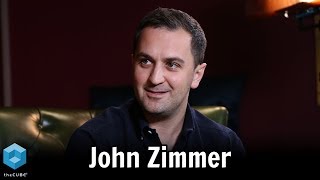
Lyft co-founder John Zimmer traces the company from its Zimride roots to a billion rides, arguing car ownership is wasteful and Lyft is only 1% toward replacing it. He describes the 2015 cash crunch when Uber's funding surge nearly killed them, and how three core values—be yourself, uplift others, make it happen—shape hiring and product decisions.
Chapters
From Sand Hill Road in the heart of Silicon Valley, it's TheCUBE presenting the People First Network. Insights from entrepreneurs and tech leaders.
Hello everyone, we are here for a CUBE conversation in San Francisco. I'm John Furrier with SiliconANGLE Media, TheCUBE. We are in San Francisco with John Zimmer, who is the co-founder and president of Lyft. The famous ridesharing company that's dominating the world and changing the game in transportation. We all use Lyft, we love it. John, great to see you here for this People First Network special conversation. Thanks for spending the time.
Thanks for having me.
I know you're super busy. You guys are growing, billions of dollars in raised capital. You guys are growing like a wee, like a rocket ship. A lot of things happening, but it's interesting, you guys are not that old of a company and the growth has just been fantastic. So as you continue to ride the wave here, there's a lot of lessons that you've learned. So tell the story about how you guys got started. You and your co-founder have a great relationship, and this has been part of the culture at Lyft. How did it all get started?
Yeah, so I'll start with Logan, my co-founder. He grew up in LA surrounded by traffic, and he hated that, and he wanted to find a better, better way to get around. So when he went to college, he went to UC Santa Barbara, and he did not take his car. He rode the bus, he carpooled, he had friends with cars, and then he went to to start a car-sharing program before Zipcar was around on college campuses. He got the attention of the local transit board. He got elected as the youngest member ever on the transit board. And he fell in love with the promise of public transportation, affordable, accessible transportation for everyone, but frustrated by the reality that it was dependent on tax money. So he wanted to create a better solution, and he started coding his own website called Zimride, named after a trip he took to Zimbabwe. For long-distance carpooling. My own journey was, I was on the East Coast, I did not know Logan, was in love with hospitality, making people happy through great service, so I went to Cornell Hotel School, I took a city planning course, and I saw that the most important hospitality experience we have in society today is the city itself. And yet unfortunately we've designed cities for cars and not people. What I mean by that is most of our cities are paved over, there's roads, there's parking lots, And if you design a city instead for people, pedestrians, safe places to bike, and don't need people to own cars in order to get around, then you could have a much more durable place to live. So we came together in 2007 to work on Zimride, and then a few years later in 2012 we launched Lyft.
So this is, this is a transportation problem ultimately solved, but it all kind of started the itch you guys were scratching was just the need for transportation. You saw it as more of a convenience thing as well, and hospitality kind of comes together. Boom, Lyft is born. Then you guys enter the market. Mm-hmm. And the transportation problems are still there. And then you have the growth of mobile. So a lot of kind of a perfect storm coming together. And what is the biggest challenge and exciting things that you guys see in this transportation scheme? Is it, it's antiquated, inadequate? Is it a technical thing? What are some of the challenges that you guys are excited about?
Well, I think the biggest thing is this fact that the American dream has almost become or been historically synonymous with a car in every garage and that everyone should own a car. And that was your sense of freedom. But the reality is not quite that. American families spend more money on their car than they do on food. It's the second highest household expense. A new car on average costs an American family $9,000 per year to own and operate. And so there's a lot of ingrained behaviors and designs of cities so that it does cater to needing to own a car. So we're trying to break that down piece by piece and making progress, but we're about 1% of the way there.
Yeah, it's a cultural change too, but I also want to get to that in a second about culture, both for Lyft and also into your audience, both which is the cities and the environments you guys deploy in, but also the users. But the founding and the story of you guys growing is interesting because You know, startups are all about execution and culture. You've had an interesting relationship with your co-founder, and this is the secret sauce of startups that is documented somewhat, but it's a people-first mindset where you get a good team early on. You kind of feel your way through those first couple of years. Talk about that relationship with the founders, because this is something that's important. It's not just a number on a cap table. It's a little bit more than that. Talk about the relationship.
I mean, Logan has become my best friend. We actually carpool to work still almost every day. And we weren't friends prior. So a lot of times you have friends that start a company together. We were two people that were incredibly passionate about our mission, which is to improve people's lives with the world's best transportation. So we shared this passion, we shared this vision, and we're two completely different people, so our approaches were different. His approach is often product-oriented, and my approach is often hospitality-oriented. And the fact is, for transportation, you need to combine those two pieces, so it worked out really well for us. So I think having a co-founder is a massive advantage, because you can have two different people, and that you wanna find the thing in common, which is the thing you're fighting for, in our case, the mission.
[Speaker] How did you guys work together to, play off each other to get that innovation spark? Because when you get into the ridesharing, certainly it's a brand new category, huge demand, and there's a lot of build-up, a lot of things you gotta stand up for the business. At the same time, you also wanna differentiate and be innovative. I mean, you're kind of a first mover, you know, with Uber, these guys are out there too, you guys are building a business and growing really fast. So how do you guys nurture that innovation? How do you put a twist on it? How do you keep it alive versus the blocking and tackling and, standing up the basic business activities?
Well, I think 'cause we, at the beginning, we created a new category. We're the first to do peer-to-peer ridesharing. Uber existed, but they were doing cabs and limos, and we said, you know, that may work for 1% of the population, but we wanna use this underutilized asset, which is the car that's sitting in everyone's parking spot or garage. And so, you know, that DNA of innovation, that DNA of being the underdog, The Challenger has always been true to us, but also the people that we've brought on and hired. People and the hiring is something that over the last 10 years is probably the thing we've spent, the one activity we've spent the most time on, because that's the best way to keep those values, keep that focus on vision.
And certainly these days, certainly the people wanna work for a company that has a purpose and has a mission. When you hear the word people first, mm-hmm, what pops into your head?
Um, obvious. Um, it just, it just feels, uh, and everything I've tried to do as a person, uh, whether I was studying— like, hospitality is basically the business of people first. How do you give people a great service and a great experience? And so I think oftentimes when people think about technology, they think about the what, which is I made this phone, I made this device, or I made this app, when way more important to that is the why. Why did you do that? Who are you doing that for? And so we try to start everything we do with the person we're trying to, you know, our mission is to improve people's lives with the world's best transportation. It's not to build the world's best transportation.
So that's your why.
Mm-hmm.
All right, talk about how you guys scaled to a world-class organization. You guys have built a world-class team, certainly got great investors. Floodgate, Mayfield, and then the rest is all on the web. You guys raise a lot of money, but you can't just throw money at the problem. You have to have that foundation and culture. How do you scale up a world-class organization? What's the learnings? Can you share your perspective?
Yeah, so first having clarity on the mission, which we've talked about, but then also having clarity on core values. So we have 3 core values that have been true for a very long time. So one is to be yourself. It also sounds very simple, like people first, but it's A lot of corporate environments have made spaces where people aren't comfortable being themselves, where there's groupthink, where people don't feel comfortable bringing their full self and therefore their most productive self to work. So be yourself, respecting the diversity of our team has been critical from the beginning. The second is uplift others. So we use that both internally and externally. Life's short. Yeah, we spend a lot of our time working. We might as well enjoy what we're doing. Again, all these values are both the right thing to do, make for a better place to work, and lead to better productivity and business success. And the last is Make It Happen. So that's pretty self-explanatory. Be an owner, go out and get stuff done, take action and get stuff done. And so with those 3 simple core values, looking for amazing talented people who also care about our mission, people are mission-oriented. People want to care about what they're working on. And if you're fortunate to have a choice where you work, what we've seen is people will follow a mission.
[Speaker] Yeah, that's totally true. I can see that in the culture here. And I've also seen, you guys got kind of a cool factor too in the way I've seen some of your activations out in the marketplace. You kind of got a cool factor going on as well. But I think what's interesting, and I want to get your reaction to this, I think this points to some of the cultural discussions. Just recently during the elections, I saw you guys really wanted to make an effort to help people get to the polls. Here in California, the disasters of the wildfires are really tragic. You guys are doing some work there. This just speaks to the culture. You say, hey, Lyft's available, and you're helping people out. Talk about that and what that means to you and the team here and the culture at Lyft.
Yeah, at the end of the day, when we look back on the work we've done, we wanna make sure it is improve people's lives. And when we see opportunities to take our ability to provide transportation that will benefit people in a meaningful way, whether it was, you know, in the last— not this most recent election, but in the last presidential election, I believe it was about 15 million people listed transportation as a reason why they couldn't vote.
And take that away.
Hey, yeah, let's, let's solve that. We can. When you think about unfortunate natural, natural disaster, If we can help people get to safety or, you know, help a horrible situation, then we should do that. I think that's just a moral and civic responsibility. It allows us to be aware and proud of kind of the solution we've created, and I think it keeps our team extremely—
And I think it's one of those intangibles in terms of the mission, you know, changing the transportation industry. Sounds academic and you know, corporate. But here you're changing lives by one, the voting, and two, saving lives potentially with the disaster. So great, great job. Okay. So when I talk— let's talk about the growth. Okay. I had a great conversation with the CEO of Amazon Web Services, Andy Jassy, a few years ago, talking about the early days of AWS. You have to be misunderstood for a while and get through that early on if you're going to be successful, because most big things are misunderstood. But he also made a point about the key learnings during the early days. When you're trying new stuff, things going so fast that there's learnings that come out of it. And if you can persevere through it, that sets the culture. Share a story around something that you guys have been through at Lyft where you persevered through it. It might have been some scar tissue, it might have been, you know, got a little bloody, might have dirty, and but it got through it and you learned from it, you applied it and changed the culture.
Well, I think there's two main ones that come to mind. So, you know, people may think Lyft is you know, in the last 5 years has really come out of nowhere. Logan and I have been working together for 11 years, and the first idea was Zimride, was long-distance carpooling. And we built a team of 20, 25 people. We got this to break even. That's actually the company that Mayfield invested in, or the product. And, but it didn't have product-market fit in a massive way. It wasn't a massive success. And then, so we tried to reinvent ourselves 5 years later, and that was Lyft. And at that point, this was a crazy idea to have people riding in what everyone thought of as a stranger's other vehicle. And so, that was a reinvention, an acknowledgement that the first solution we created did not fully work in the way we wanted it to. The second was about 4, 4 to 5 years ago, We wake up and Uber raises $3 billion. And we have $100 million in the bank, about 5 months left. And everyone said Lyft is done. There's no way that they can survive this. It's a winner-take-all market. Uber's way more aggressive. And we proved that wrong. You know, by focusing and staying true to our values and to our mission, By having an incredible team, an amazing community of drivers providing great service to our customers, we've gone from the early days of single-digit market share to nearly 40% market share amidst that pressure and belief that we couldn't survive.
Yeah, game's on. They're like, hey, either rally or fold, right? I mean, it's a cultural test, really. Yeah. Talk about— let's— what's your mindset around the capital markets? I know I've done a lot of startups myself and I know a lot of other fellow entrepreneurs and when you raise that money and you guys had that product market fit post the first venture where you got through that, then you get lightning in a bottle, whoa, let's double down on this. But I wanna go back to the early stage when you were thinking about investment. Was there any cautions around, should we go VC? 'Cause a lot of startups have that conversation and how did you guys have that narrative? What was the narrative for you guys at that time? Hey, let's go to Mayfield. We— should we raise money? Should we bootstrap it? Make cash flow positive? What was your mindset as founders at that time when you were doing the venture round?
Well, I think we, we knew we needed a certain amount of capital to get to a scale that was interesting to us. So not every business needs, uh, as much capital, but for the type of transportation infrastructure that we wanted to change, the type of scale we wanted to get to, we knew that it was important to raise VC money. So money that was substantial and also understood the level of risk we were taking. So at that point, you know, we were fortunate to have a firm like Mayfield believe in us. And what we were looking for was people that cared about who we were, cared about our mission, and understood what it was like to be an entrepreneur and an operator, not just an investor.
[Speaker] What's the rallying call now for the team as you guys look out and continue to have this growth? Obviously you guys cleared the runway in a big way, and there's still a lot more work to do. The market's still early. I mean, you think about transportation and the regulatory environment and how technology and policy are coming together. A lot of forces out there. You have some tailwinds and some headwinds. How do you guys look at the future? What's the next mountain you're going to climb?
Yeah, so we've now done a billion rides since inception, and we're focused on providing a full alternative to car ownership. So I don't think people grasp that, you know. The idea is not to provide an alternative to a taxi or a late ride home. It's to completely replace car ownership. And so we are 1% of the way there. Those that are joining our team and our mission get to be there for the 99% rest of that. And at the same time, as we go towards the next billion rides, we want to stay focused and rally around the individual stories behind each ride. So every single week we have over 10 million rides happening where two people are coming together. They could be two people that helped each other have a better day. They could be a Democrat and Republican sitting next to each other and finding common ground. And so to us, yes, we have big milestones and big opportunities ahead, but also care that— care about each ride that's happening on the platform.
And the other thing I love about what your background in hospitality is, is that you're bringing an experience as well, not just math in terms of the bottom line numbers. And so people— a lot of people are doing the math and say, should I have a car? But I ask you a question. So what you learned at school— Cornell, great school, great lacrosse team, great great Ivy League school. What they teach you in the textbook, the old, oldest hospitality, this is a new era we're living in. What is happening in your world that they don't teach you in the textbook from hospitality standpoint? As you look at the experience of ridesharing and transportation for users, what is different? What's the twist in hospitality that has not yet been written in the textbooks that you're exploring or thinking about?
I actually think the, the old basics are more important than ever. I think there's all this flashy technology and opportunity to do it at larger scale, and to use data, that's new, to use data in ways that help inform providing great service, but the basics of human interaction, communication, and treating people with respect can get you pretty far.
And happy customers. Yeah. Right. Final question, I know you gotta go, appreciate your time. Share a story or something about Lyft that people might not know about. First of all, everyone, a lot of people know about your brand. I see you guys doing a great job out there with the market share. But tell a story about Lyft or something, a data point, anecdotal piece of information that they might not know about that they should know about. Share an inside story or factoid about Lyft that people should know about that they might not know about.
I think it's really deep, deep in the mission that people, you know, people may not understand what gets us out of bed in the morning. You know, every time I have a new hire orientation, I try to talk to every new hire that comes to the company and really emphasize the importance of every driver, every passenger, and I read a story about a driver and passenger that really helped each other. And don't really want to provide the details because they're private to those individuals, but it's incredibly powerful to hear about. And so I would just— we may look like a big company or a brand at this point, but we care deeply about each individual that's on the platform.
The fabric of society is being changed by you guys. Really appreciate the work you've done. Congratulations and a lot more work to do. Thanks for the conversation. I'm John Furrier here in San Francisco at Lyft's headquarters talking with John Zimmer, who's the co-founder and president of Lyft, sharing his stories and successes and a lot more work to do here at the People First Conversations with TheCUBE and Mayfield. I'm John Furrier. Thanks for watching.
More from John

Lyft Founder: The Uber War, the COVID Collapse, and the Robotaxi Threat | John Zimmer



Life In The Fastlane: Lyft’s Big Bet To Change How The World Moves | 2022 Forbes Under 30 Summit

Interview With Lyft's President John Zimmer On Community, Driver Pay, New Features And More!


Lyft Co-founder on the Future of Rideshare | How I Built This with Guy Raz | NPR

LYFT Co-Founder John Zimmer: Ask Me Anything with Aaron Samuels | AT Main Stage Talks


