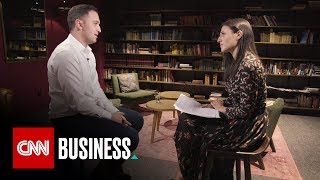
Lyft Co-founder on the Future of Rideshare | How I Built This with Guy Raz | NPR

Lyft co-founder John Zimmer describes navigating the pandemic's 75% drop in rides through layoffs and debt, launching new services like bike rentals and Essential Deliveries, and defending the company's stance on California's labor classification battle. He also discusses Lyft Pink, a subscription bundling ride discounts with scooter access, and the company's autonomous vehicle partnerships.
Chapters
Hello, everyone, and welcome to How I Built This: Resilience Edition from NPR. I am Guy Raz, and I am— excuse me, a little choked up— back in my studio, out of the broom closet in Las Vegas. So it's great to be back. This, of course, is where we talk about how entrepreneurs are building resilience during this incredibly challenging time. And hopefully, this is a place you come to for ideas about how you can build resilience as well. Before we begin, I want to thank Twilio for supporting this series. Right now, businesses are trying to reinvent how they connect with the world. Whether you're delivering packages to customers or treating patients, your users need you to invent new ways to stay connected, and Twilio is the platform that millions of developers trust to build seamless communications experiences with phone calls, text messages, video messages, video calls, and more. So whatever your case, Twilio has your back. It's time to build. Visit twilio.com to learn more. Thank you, Twilio, for supporting this series. We can't do these shows without support from companies like Twilio, so thank you. Okay, super exciting show today. In the window next to me is John Zimmer, co-founder and president of the rideshare company Lyft. We told Lyft's story on the show back in 2018. John joined us at the first ever How I Built This Summit later that year. We, of course, are here to talk resilience, challenges, Controversy and of course solutions with John Zimmer. John, welcome. It's great to have you.
Thanks for having me.
And before we get to my questions for John, I want to remind everybody watching on Facebook or Twitter or LinkedIn or YouTube to please submit any questions you have for John. We are going to take your questions and we will get to them very shortly. So first of all, John, your business is based in San Francisco. You're in the Bay Area. How are you doing? I mean, it's been now 6 months since this pandemic really shut everything down. How are you? How's it going?
Personally, I'm doing okay. I think, you know, the business has had a tough time, but has seen some really strong recovery since the bottom. We were down about 75% at the peak in terms of rideshare rides. We've now returned to a little under half down, which is actually good progress. The air is clean today. So the things we take for granted in normal times, you know, we appreciate today. The team is doing well and kind of fired up around the mission. You know, we've always been a very long-term-minded company, you know, working to build a new way of people getting around, improving people's lives through the world's best transportation. Nothing has deterred us from that. We've had hard times before. We've always been the challenger brand. Actually, I think moments like this are opportunities for us and our team to shine. Happy to share some of that with you today.
Yeah, I want to talk about that. Let's first talk about, drill down into some of the challenges first. There's no question that this has to be the most challenging time in your leadership of Lyft. I think it's the most challenging time for any business leader or founder around the world today for a variety of reasons. And as you mentioned, it's been a tough year for Lyft. You had to have some layoffs in May, I think about 1,000 layoffs, which could not have been easy for you to go through. So as you began to see, you know, the pandemic having a significant impact on your business, what kinds of conversations were you having with your leadership team, with your co-founder Logan, about ways to kind of begin to build resilience?
Yeah, one of the conversations that we've had, or one of the challenges throughout, is how many different audiences and kind of groups of people that we're working to take care of throughout this, right? So we have our drivers, we have our riders, we have our employees, within employees. There's those that are working in person to help drivers at operating, like, operation centers, and there, there are those that could work from home. So kind of thinking through— and then there are Black team members who have had, you know, particularly difficult time through, through this period. So all different populations that, that we want to take care of, uh, and, uh, and then, uh, investors as well who who are judging those decisions we make. [FOREIGN LANGUAGE] So I think that's been a really interesting conversation. Also the conversations around short-term thinking versus long-term thinking. There are short-term decisions we need to make in order to preserve the long-term mission that we have as a company. And those have been really key decisions. You talked about the layoff, that was very, very difficult. It forced us to make hard decisions, some of which I think actually in hindsight were very healthy for the business. But very difficult to make, especially for people that are all in this tough time where the job market is difficult. Those are not easy decisions.
Let's talk about some of the short-term decisions that you had to take. I mean, you are a publicly traded company, so you're obviously accountable to investors, and everything's on the table. You have to reveal— you can't hide anything. First of all, just to keep the business operating and to get you through this time, because this is going to be a challenging year and there may be a recovery next year for you. We'll talk about that in a moment, but you knew this was going to be a tough year. So was one of those decisions to retain as much cash on hand, was that one of the initial decisions that you guys had to take?
Yeah, obviously. So we look at the cash that we have on hand we also raised our first debt to add cushion. We're actually in quite a strong position. We're lucky that we went public when we did and have, you know, nearly $3 billion in the bank. And so what we did to start is we ran all different scenarios. We said, okay, if we were 75% down, for 6 months or 2 quarters, you know, what would the situation be like for cash? If we were down, you know, for 4 quarters, what would it be like for cash? And so we ran, you know, the worst-case scenarios, the medium-case scenarios, and the best-case scenarios, and then made the decision that, you know, raising the debt was kind of a no-regrets move. But then, and also to your point, preserving the cash that we do have on hand making decisions about certain expenses that we had in the office that were more of a luxury, and making decisions around certain teams that we needed to tighten up. For example, on the operating side, there were some markets where we had to close some of our centers.
I recently took a Lyft ride, and it was the first time I did that since the pandemic, and I mean, in part because obviously I'm not going anywhere, right? I'm not traveling as much anywhere, but I was, you know, part of me was a bit nervous at the beginning, but then I got into the car and it was a normal ride, just like any other. I mean, I was wearing a mask, the driver was wearing a mask, and my window's open. What are you finding out from users? Like, why, what is it that is preventing them from using Lyft? Is it basically that they just don't have anywhere to go, or is it Is it the fear of being in a car with somebody else?
It's a mix of both. I'd say primarily that a lot of people, primarily in the Bay, actually, we can see really interesting trends across the country where other regions are recovering faster than the Bay Area. But, you know, first I think it's people changing their transportation behavior, their actual transportation behavior. And then secondarily, it's obviously the questions around health safety. And I'd love to walk through what we're doing on that end. So, you know, as you saw, as you open the app, we ask both driver and rider to confirm that they're wearing a mask. We ask driver and rider to confirm that they haven't been in contact with anyone that has COVID. And we ask everyone to keep their areas clean and open windows if possible. So that's gone a long way. I mean, if you zoom out, actually, the fact that half as many rides are being taken now as before, I'm actually— quite happy with in a strange way because I know many people that are— their behavior is, you know, they're not going into the office, right? So that's a huge change in transportation. So the fact that 1 out of 2 rides are still present even in this environment shows some flexibility in the model because we've seen different types of rides. We've seen a lot of essential workers using this way more because there are other options, potentially public transportation, are things that they're more concerned about from a health safety perspective. And so we've seen those rides increase.
I mean, one of the things that you did before the pandemic was to diversify. I mean, Lyft invested in bike share programs and in the scooter programs in certain urban areas around the country. I wonder, I mean, given that the rideshare part of your business is still the core part of your business, What are conversations you're having internally about building, about creating other revenue streams in the future to, if rideshare doesn't recover as quickly as you hope or expect, or if rideshare is a completely different thing in the future, what other places are you looking to diversify?
Yeah, the good news is transportation is fundamental and is something that through the recovery is going to be important and people will need. To your point, there will be different ways people take transportation on the way back and even after. So one, on bikes. Bikes has become— we've just hit kind of records. So, you know, we own the system City Bike in New York City, Bay Wheels in the Bay, Divvy in Chicago, and you can access them through Lyft. And for City Bike in New York, I believe it was last weekend we hit our record of over 100,000 rides in one day. And so we're actually seeing faster recovery and not as deep kind of downside on those modes, which has been really helpful. The other area we've looked at is delivery. So we have no intention to be a, you know, another kind of food delivery consumer app. We will not do that. But there's a lot of small and local businesses that are having to pay 30%, 20% of their revenue to be on those platforms. And so we think there's a huge opportunity to help those small and local businesses have their own kind of capabilities and provide more jobs for drivers. So we're experimenting with that. We started that with Essential Deliveries. We've worked with partners to deliver millions of meals for people in need during this time. I think that's another really interesting opportunity on the driver side.
Why would you rule that out? If there's an opportunity to attract partners who don't want to pay 25%, 30% to delivery services and you see an opportunity there, why would you rule that out as a potential opportunity?
We will look at supporting those businesses and those retailers. But, you know, the consumer platforms are not profitable. The consumer platforms are bringing people in with coupons, you know, saying, "Hey, here's a great way to get food delivered," but they're doing that at a loss. And so the consumer platform's losing money. The local business is, instead of making $10 on the pizza, they're getting $7, 'cause they have to give $3 to the delivery platform. And then they're charging for the delivery fees. So if you remove the kind of consumer platform and you have the pizza store or the retailer do their own local marketing, and you provide them with delivery capabilities, we think that's a really good and different alternative that is a win-win-win for the consumer, for the store, and for Lyft. Got it.
We're taking questions for John Zimmer on Facebook, Twitter, YouTube, LinkedIn, however you're watching. I'll get to them in just a moment. John, I want to talk to you about— I want to ask you about an initiative And if you're watching, we are gonna talk about Prop 22, so just stand by. But before we get there, I wanna ask you about an initiative that you recently put out. I think it's called Resilient Streets, where you asked urban planners to sketch out plans for what cities will look like with fewer cars. Basically, city streets that are designed for more bikes and e-scooters and e-bikes and so on. I mean, it's interesting because your business model depends on cars and rideshares. Walk me through the thinking behind this and how would that affect your business model in the future?
If you zoom out and you think about our mission, improve people's lives with the world's best transportation, from the beginning, we looked at the fact that Americans spend $9,000 every year owning and operating a car that they use 4% of the time. They spend more money on their car than they do on food, than they do on healthcare. The only thing they spend more money on than their car is their house. And to us, that, that doesn't make any sense. So we want to create a whole new way for people to access transportation. Um, because we think by doing that, we can allow cities to be built around people instead of car, car ownership, right? We have so much parking everywhere. We have so much clogged streets. They say when you build more, or studies show, when you build more streets, you get more traffic. And so, especially in a moment like now, when you can rethink everything or that you're forced to rethink everything, thinking about street design is critical. You know, we have the bikes, as I mentioned, across the country. There would be a lot more people using bikes if there was safe bike infrastructure. There would be a lot more people walking and enjoying local commerce in cities if it was always safe for pedestrians and there was easy access throughout the city. There is going to be transportation in cars, in vehicles. That will always be important. But the infrastructure needed, whether that's parking or the number of streets that we have, or the lack of safe streets for bikes and pedestrians, needs to change.
Could you imagine a future where the bulk of your business comes from people using bicycles and e-scooters and electric bikes and other modes of transport?
I think in a very urban core. Manhattan is a great example. I forget the average speed of a car in Manhattan.
It's like 7 miles an hour or something.
Yeah, exactly. It's single digits. It's not very impressive. If you look at that and you think about, you know, all of the car transportation needed to get to the outer boroughs, to get to the airports, vehicle transportation, you know, on the platform, one, you know, we'll get back to our 100% that we were pre-COVID, and then we'll continue to grow beyond that. There's still a large need. The primary way people get around is in their own vehicle. So our rideshare business has many times over to grow. That said, in urban cores, micro mobility or bikes and scooters, as those vehicles get better and better and safer and safer, and as the street infrastructure adapts to make the environment safer, absolutely, it can be the best way, the fastest way, the cleanest way, and the most enjoyable way to get around your city.
All right, let's get to some questions, John. Actually, Madeline Chen had a question that I think we just answered. Her question was, Is Lyft considering diversifying beyond ridesharing transportation?
Yeah, one other, if it's okay, one other mode that we've been really excited to launch or to grow even in this environment has been a rental service that we created. So car rentals. As we get people out of car ownership, there are use cases if you go away on a weekend on a, you know, 2-hour drive and you don't own a car, having easy access to a car rental is important. So with Lyft Rentals, You get a Lyft to the car rental location that we operate, and then you can just grab the keys and go. There's no counter. It's really fast and easy. And in COVID, we launched a kind of contactless experience to get the car. We also announced a partnership with Sixt, which is a European car rental operator, such that we brought that technology and that access through our app to their vehicles as well.
Um, this is a question from, uh, Kyle Ashcraft from Facebook. Kyle asks, what do you see as a future for subscription-based ridesharing? I know we talked about that at the How I Built This summit, which was you had a vision for in the future, you know, people have subscriptions for, for, for bikes and for e-scooters and for car, for, for Lyft rides. What, what, what's the status of that?
Yeah, I love that question. Uh, we have a program called, uh, Lyft Pink which is our subscription service. And so you pay a monthly fee to get a 15% discount on all rideshare rides, as well as access to bikes and scooters. We're even testing unlimited access to bikes and scooters. So this is live, you know, we're gonna be testing, you know, upgrades on your car rental. So by having all these different consumer transportation options, Lyft Pink can become your transportation wallet, can become the most affordable way to access transportation. And can fully align us with our loyal customers in that, you know, you pay for Lyft Pink, and then we go to battle for you to get you the most affordable and efficient transportation.
All right, John, this has not only been a tough economic year for you, and obviously you're in California and you've been dealing with the smoke and we've got this pandemic and it's been a tough year for everybody. But in addition, I mean, you guys are in the middle of a battle with the state of California and some drivers, some consumers. There's a ballot initiative, for those of you who don't know, in California for this November's election, basically trying to overturn a state law that was passed by the legislature that would force companies like Uber and Lyft to reclassify their workers from independent contractors to W-2 employees with benefits. I'm paraphrasing and oversimplifying, but that is essentially what it will do. Uber and Lyft and some other companies are basically fighting this initiative and fighting this law and saying, "We want our drivers to be considered as independent contractors." This is a heated topic. You know a lot of people are angry on all sides of this. There are drivers who support the initiative, drivers who oppose initiative, consumers who support it and oppose it. First of all, can you explain from your perspective, why is it so hard for a company like Lyft to— why would it be so hard to treat your employees like part-time, your drivers like part-time employees?
Well, I think first it's starting with the fact that many of our drivers already have full-time work, and the majority, something like 80% of our drivers, maybe in California it's 86% of drivers, drive less than 20 hours a week. Part-time work is a model that works for people that are typically doing maybe 2 jobs, but this is something someone does maybe 5 hours a week, 10 hours a week. Yes, of course there's people that are doing it 40 hours a week. And, um, but the far majority are doing it less. And I think it's important to zoom out and, and have the nuance part of the conversation, which is what do we want to accomplish? What is, what is the right thing to do here? The right thing to do is to get benefits for drivers depending on how much they work. If you force the specific type of benefits that are typically made for 20, 30, or 40-hour workers onto the workforce, the business will need to focus on that set of workers, which is the minority of workers that use these platforms, because the cost of those benefits would mean, okay, that's fine, we can have those 30-hour workers and those 40-hour workers, but if you're gonna drive for 5 hours for 3 months to save money for a wedding or for a medical expense, The way we're being forced into employment would make that not tenable. What we're saying is, okay, so let's look at this new form of work. Let's not ignore that these drivers deserve benefits, but let's have the benefits scale with the amount of work that we do. Prop 22 is that middle ground. We're not saying no to AB 5. We're saying here's a better solution. For clarity, we do think AB5 is a bad idea, but we're not just saying no and we won't do anything about it. Here's, here's a better solution that provides healthcare for drivers driving, you know, 15 hours or greater that provides other benefits.
So just to clarify, I mean, your position is— what you're saying is, look, we, we don't oppose providing benefits to, to people who drive for Lyft, but we want to be able to scale those. So if you drive more we want to be able to offer those benefits, but you're essentially saying you don't want the state to legislate and regulate and force you to do this?
No, I mean, Prop 22 forces us and forces all the other companies to do it. We're not against, we're not, you know, the type of company that says, that is against regulations. We think regulations make a lot of sense. We think labor protections make a lot of sense. I think the labor movement in this country has been critical for workers in America. I read Zinn in high school, People's History, and I think it's really important that that history is known and respected. And I think we have a new form of work that 5 years ago I went to our general counsel and said, how can we get benefits to drivers that are driving more on the platform? And she said, well, you have to classify everyone as an employee. And then 80 to 90% of drivers, uh, likely wouldn't be able to drive on the platform. And so we've been trying to find a portable benefit type structure for a while. Uh, AB 5 has created kind of the pressure cooker to get it done. 4 to 1 drivers support Prop 22, uh, versus the alternative. Uh, and so we've heard their voices and we've incorporated that into Prop 22.
When you go to Sacramento, right? I mean, you can have an audience with Governor Newsom and you can have an audience with state legislators and the state of California, they're Democrats, and you've been very vocal about your own politics. And I mean, when you sit down and have these conversations with them, what is it that you have not been able to convince them about? Like, 'cause you're making this argument here, sounds reasonable. When you make this argument to legislators, What is it that they're not, you know, what is it that you're not able to convince them of?
The politics. Um, honestly. So, you know, I've not only spoken to, uh, legislators and politicians, I've talked to labor leaders, listened, uh, and, and provided this viewpoint, uh, listened to drivers. Uh, so, so listen to all these constituents and provided this, and the majority if not all, agree to a certain extent. The challenge is political. We're living in a time where nuanced opinions and non-extreme opinions are harder to legislate, are harder to get through. And so there's like a political survival aspect. And so we have to be part of creating the political conditions by having drivers have a voice, demonstrating that drivers 4 to 1 want this, versus the alternative, demonstrating the true consequences of 80% of people, at least articulating them and hoping not to demonstrate them in practice. But I think that the challenges have been, it's been hypothetical because it hasn't been real, and because political conversations favor kind of extreme opposing views versus kind of nuanced compromise.
I mean, I wonder if we're kind of in a moment where, you know, people are sort of fed up with this idea of trusting businesses, right? I mean, in a sense, what you're saying is, hey, you know, we operate in good faith, we can be trusted to operate as a responsible employer and as a responsible business because the market is going to judge us. Users won't use us if we're not, if we're not doing that. And that makes sense, but at the same time, it, you know, we're in a moment now where people have heard that message in the past and, and haven't seen it right now.
I agree with you. I don't think people trust businesses, and I don't think that's crazy. I'm not saying trust us. I'm saying let's legislate a solution that works well for drivers, works well for riders, works well for the business, works well for labor. I'm not, I'm not of, you know, the same thing happened in the early days of Lyft when 7, 8 years ago, it was wild to get into someone else's car. It was absolutely something that people said would not happen. And we started doing background checks. We started doing driving record checks before there was a rule to do it. And I did used to have that philosophy of, oh, well, look, we're doing it, you know, trust us. But then I learned quickly and I went to the regulator and I said, you know, we received a cease and desist. And I said, look, like, here's what we're doing, but don't take my word for it. Regulate this. And that led to the state law in California, uh, now known as like the, the TNC, um, category. And that got brought across the country. So I, I agree with you. I think people are fed up listening to not only businesses, but leaders, uh, of all different, you know, ilks, uh, saying, trust me. Uh, and that's not what I'm saying. I'm saying, listen to the drivers and, and let's create a new regulation.
I want to get to more questions in a sec, but I just want to make one point, which I think It's an interesting idea, and some people watching might not like what I'm about to say and might hate me for it, but the reality is, if we had universal healthcare in this country, these kinds of questions would be irrelevant, essentially. If healthcare was a right that everybody had and it wasn't employer-based, or maybe that was an option, but everybody had access to it, I think a lot of these conversations would be very different.
I agree. I mean, that said, I'm not trying to shirk responsibility. I think in the current environment, we have a responsibility. Lyft has a responsibility. I have a responsibility as a leader, and we're willing to put money on the table. We're willing to put economics on the table to make this work, but not at the expense of 80% of drivers losing their job. And yes, if the federal government created policies that provided a universal suite of benefits, that would be another way through this.
All right, let's get to some more questions about Lyft. And can you, can you stay with us for another couple minutes, John? Yeah. Okay, this is from Daniel Kramer from Facebook, and Daniel asks, are you going to start to focus more on autonomous vehicles in part because of COVID Does that change that equation for you at all?
We have been working on autonomous vehicles. We have a program called Level 5 We have a great team and we're making great progress. We also have a partnership model called Open Network where we've partnered with Waymo and others to bring those vehicles to Lyft riders. We actually have some of those in Arizona. So this hasn't changed that. I mean, I think of course the ability to create health safety through autonomous is definitely quite interesting and through designing the vehicle. But it's still a technology limitation and a cost limitation at this point. And so those haven't changed materially during this time.
Here's a question from William Curtis. He's a Lyft driver. So anybody who's a Lyft driver has questions, now's your time. We're with the co-founder. William Curtis asks, says he's a part-time Lyft driver. He wants to know when Lyft will require all riders to upload a photo of themselves for drivers to see.
Ah, I love that question. Thank you for driving with Lyft. We, every year at least once, I drive on the platform and I was driving and I do it on New Year's and I was doing it this past New Year's and had the same thing happen where a rider came without a photo and then a rider came with a photo and it was such a more delightful and obviously, you know, safe feeling experience when you had the photo. And right after that, which is the reason I drive and I will try to do it more frequently, right after that, had a conversation with the team about improving the rate of photos uploaded. We don't want it to be a blocker in the sense that we don't want to, you know, get less rides, which would be less income-earning opportunities for you and the company. But we have increased the percent of riders that are posting a photo, and we're working on more features to kind of encourage that while they're in the ride, to simply take a selfie and things like that. So I agree, and expect more from us on that.
Just for clarification here, when you actually are a Lyft driver yourself, when you're out there and it says John, and I'm assuming you're in your Toyota Highlander. By the way, do you—
We just upgraded to a minivan.
A minivan, okay.
Honda Odyssey.
Honda, you're in your Honda Odyssey driving around. Do you, is that an XL? Is that like the, that you gotta pay a premium?
I haven't driven with the Odyssey yet, but the, yeah, the Toyota was.
Alright, so if you see a John driving a Honda Odyssey, you know that it's gonna be the co-founder of Lyft who's driving you around. And then you can ask him any questions you want. John, I wanna ask you about something you said at the summit a couple years ago. You said that in 20 years, you know, we're gonna go to amusement parks to drive cars. We're not gonna use them as means of transportation in big cities. Do you, do you, do you still stand by that idea?
I do. I think in urban cores, I mean, we talked about it today, uh, in, in New York City where you can go 7 miles an hour in a car, uh, versus at least that in an e-assist bike. Um, and, and the, the safety that will come from autonomous vehicles, uh, as well as safe bike lanes and things like that, it will not make financial sense. It will not make safety sense. and it won't make sense for the city, uh, in, in these very, you know, dense urban cores. So yes, I stand by, uh, in 20 years, or if I said that a year or two ago, uh, in 18 years, uh, it'll, it'll be more of an amusement to ride, uh, cars, uh, in urban cores.
You know, a lot of people ask— have asked me, and I've asked on this show whether now is a good time to start a business. I mean, you started what would become Lyft during the last financial crisis in 2008 with Logan, your co-founder, who you met on Facebook. Do you think that economic downturns are good moments to start businesses?
I think so, for two reasons. One, depending on the individual, your risk profile might be, you know, the job market might not be as good, and so there may be less risk to taking that risk and starting your own thing. But maybe even more importantly, things are changing. The world is changing, business is changing, people's preferences and needs are changing, and those are all opportunities. And so I think now is a great time to be an entrepreneur.
John, you talk about Logan, your co-founder and I think a super close friend of yours, as being very kind of deliberate and methodical, and you're kind of slightly more emotional. Which is a great balance to have. And you talked about how you were the one who was freaking out when things weren't quite going right. And I mean, now you're a big public company, you're valued at billions of dollars. And despite obviously the huge challenges you have this year, are you able to manage stress better or actually do you still have sleepless nights?
Do you still have anxiety even You still have lots of anxiety, but much better, I guess, with the few years and the kind of experiences we've had with Lyft to manage that. For me, physical exercise helps a lot. It helps me get out of my head. So I've learned that. Also spending time with my daughters. I have a 4-year-old and a 1-year-old, and that is incredibly grounding. You know, when I have a tough day, when you got to make tough decisions, And then I'm with my daughters, they say something funny to me, you know, I have to change a diaper or whatever, it is incredibly grounding and frankly brings joy to a tough day to kind of spend time with them. So that's been helpful as well.
Last question for you. When we spoke at the summit, the High Builder Summit in 2018, I asked you, You know, you mentioned how you and Logan often ask yourselves, if we were starting over today, what would we do differently? So now that we are here in this very challenging moment, if you were starting over today, what would you do differently?
Oh man, using my question against me, that's good. I think if we were starting over today, I might I might start with pink, which we talked about as the subscription, as a way to get people to interact with Lyft, to say, hey, you know, there's a membership service. It's going to be more affordable than owning a car. It's going to be more enjoyable than owning a car. And we're going to go to battle for you to build the best transportation experience. To give you access to bikes, cars, car rental, et cetera. So I'd probably maybe start from pink and work backwards.
Nice. John Zimmer, co-founder, president of Lyft, thank you so much.
Thank you.
And thank you everybody for watching. I'm sorry I couldn't get to all your questions. Thank you to Adrian, Katreya in Detroit. We've got Tammy, Thomas Bowser in Frisco, Texas, Amir Abdelrahman in Egypt. Hello, Amir. Sheila Bryson in Toronto, so many others watching. Thank you. Later this week, by the way, on Friday, we're gonna have Jeremy Stoppelman, co-founder and CEO of Yelp, will be here on Friday. So bring your questions for Jeremy. Also, just last week, my new book came out, How I Built This. It was published, it's now been a week. You can get it at any bookstore and it's only about $20. And actually, it's based on the hundreds and hundreds of interviews I've done with amazing entrepreneurs like John Zimmer. So check it out. I will be back here Friday at 9 Pacific, noon Eastern with Jeremy Stoppelman. We had a new episode of How I Built This drop yesterday, the story of Khan Academy and Sal Khan, one of the most inspiring episodes of How I Built This ever. We don't do a whole lot of nonprofits. This one you don't wanna miss. Please check out Sal Khan's story because at a time when a lot of us are losing hope, this is an incredibly hopeful episode and an inspiring episode, so check it out. John Zimmer, thank you again. Thank you everybody for being here, and I will see you Friday.
More from John

Lyft Founder: The Uber War, the COVID Collapse, and the Robotaxi Threat | John Zimmer



Life In The Fastlane: Lyft’s Big Bet To Change How The World Moves | 2022 Forbes Under 30 Summit

Interview With Lyft's President John Zimmer On Community, Driver Pay, New Features And More!


LYFT Co-Founder John Zimmer: Ask Me Anything with Aaron Samuels | AT Main Stage Talks