Lyft's co founder is giving his all to catch Uber
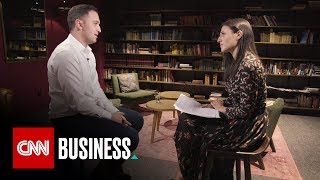
Lyft co-founder John Zimmer traces the company's rise from a 20-person startup to a multi-billion-dollar platform, and explains how his time on the Pine Ridge Reservation shaped his vision for cities. He discusses hiring former Transportation Secretary Anthony Foxx, competing with Uber, and his belief that technology should prioritize human connection and equity over pure growth.
Chapters
6 years ago, and a friend of mine here in Silicon Valley was like, you gotta hear about this company. It's called Lyft. They just started, and they have these giant pink mustaches on the cars, and it's gonna change transportation. Just go. And I was one of your first, I was, I think, maybe your first TV interview at the time. The company then was very, very different now. Let's do, if you could say, the biggest change between then when I was talking to you with the pink mustache on the car and now here we are sitting here 6 years later.
Yeah, I mean, there were 20 people on the team. There's now almost 5,000 people. We have millions of passengers and drivers. And so we're actually able to execute on our mission in a way that we never thought was possible.
And going back to when you started, you were at— I thought this was really interesting— you were at Lehman Brothers. And 3 months before it went under, you were out the door. You had this vision to do this. But that was right before the financial collapse. That was right before a lot of the innovation started happening in Silicon Valley. It was a really interesting time if you look back on it. Like, tell me about that time period.
Yeah, I would take it back a little farther. I went to hotel school. I studied at Cornell School of Hotel Administration. Was always interested in hospitality. And one of the areas within hospitality is finance. How do you finance properties? And so I went to Lehman Brothers to look at real estate finance. But I always wanted to be an entrepreneur. And—
Why?
I wanted to—
It wasn't cool back then.
Yeah, I wanted to create something. I wanted to build something. I wanted to care deeply about the work that I was doing. I didn't want to just show up and, you know, fortunate to have the opportunity to choose if I could work one place or another and make this decision. So because I was fortunate to make that decision, I wanted to do something with it. And I got enjoyment out of, you know, in hospitality, making other people happy. And I thought that business was one way to do that at scale.
Where does that come from?
I think part of that's just someone's personality. You know, in testing, I think everyone's trying to make themselves happy. And I got exposed, you know, I grew up in New York and Connecticut, and I saw people that had material objects that weren't happy. And then I was really fortunate in high school, I actually lived for a summer on Pine Ridge Reservation in South Dakota. And I saw a situation where people didn't have material things, but had community, had a connection to nature, had a connection to the food they were eating. And I felt much more alive and happy in that environment than in an environment where I saw people with just material things. And so I'd say it was just that feeling that I wanted to bring to other people and wanted to— felt like because I was fortunate to have, you know, a good family and good education that I had to do something with it.
That's really interesting because we're all products of how we grew up, right? We are all a byproduct of our childhood. And so it sounds like you grew up with something and you saw folks that didn't really have it. That time seems like it was very special. Do you have anything specific about that that you can think of, like when you were spending time there? Anything that sticks out to you? Any interaction you had that really kind of shaped you?
Yeah, nothing specific. I mean, we were literally living in teepees. For several weeks and having amazing conversations with the local community, working with them on projects around their gardening, their gardens, where they were growing all their own food, and just actually hearing about a lot of injustice on why that situation was like it was. And I think at that point, I wanted to immediately go into action. And one of the elders said to me like, like, hold on. And he was— it was really helpful because I think I was super naive, and he was like, we don't need you to give us things or help us directly. I just want you to take this experience and do something with it and, and, and never forget kind of this, this culture. And, and that stuck with me.
Something I want to go to— so you left Lehman Brothers, and I know you've spoken about this before, but Something I found is like there was something very special about 2008 because there was the financial crisis and it kind of wasn't as cool to go to Wall Street anymore. And you had the App Store that had come out a couple years before. And there was just this feeling of innovation and entrepreneurship. And it was kind of before the band got cool. And you were there. You were almost like right, you were there almost before the band got cool, before people were creating these apps and whatnot. I'd be curious, did something about that time play play into what you wanted to do? Or was there— what was the feeling at that time as you were building?
Well, for me, actually, in college I took this city planning course. And I saw a lot of— well, actually, my professor, he gave this amazing first lecture. And it was like the history of the world in 40 minutes. And he basically said, we're at this turning point in world history. Population density is rising rapidly in our cities. And the infrastructures that we built for society were built decades before there were this many people. And if we don't do something to fix our infrastructure, we're gonna have major economic, environmental, and social problems. And he said, "If you don't make this the most important thing you do, I don't want to teach you. Don't come back to my class." And it was actually a really simple message. And he was so good at zooming out and looking at society and looking at history and saying, The way we're living together is not ideal. It can be better. And that, that's when I started applying hospitality not to a hotel or a restaurant, but to the city itself. And then I asked, why is our city designed the way it is? And in the United States, the car has been a major determinant of that. Um, the car is parked 96% of the time. It's used 4% of the time. Uh, it's available to those that can afford it. It's not available to some who can't afford it. And that has shaped our environment, built environment, has shaped people's economic well-being. And we take that for granted. We just take for granted that our cities have been designed around a car. We take for granted that Americans spend more money on the car than they do on food and only use their car 4% of the time. And something clicked for me at that moment which said, we don't have to take that for granted. I think we could fix this. And I actually knew that I wanted to, to do the Lehman, uh, 2-year program and then save some money to be able to then go off and do my own thing. And I told one of my friends, hey, if I don't leave after 2 years, like, punch me in the face.
What were you afraid of?
I didn't know. I mean, I saw a lot of people that did that for a really long time, and I, I imagine— and I saw people that become intoxicated and kind of dependent on a lifestyle and a sense of success that was different than how I wanted to define it. And whenever I, you know, they had this structure of how they paid people with a bonus, I would just put that 100% in the bank. So I didn't live as if I had that money. And so that when I left, it wasn't hard to do so.
I saw when you left, you were wearing like, they had said you were in an office where they suggested that you wear a helmet because it wasn't like earthquake safe. Safe? Is that— was that the—
that was actually when I met Logan.
Yeah. And when you were at the beginnings of—
yeah, the beginning of Zimride, which turned into Lyft, uh, was we were renting a— you could call it a room, but it was more like a closet. It had an interior window that looked on this interior courtyard that had a fake palm tree, and there was 3 of us in there. And every morning it was— I don't know, I have fond memories of that, but The reason we got really cheap rent was because the building was not earthquake safe, and so they suggested we wear helmets when we worked.
Oh, wow. Did you wear a helmet?
We did not.
So you were— you took risks, and that is why you're an entrepreneur.
Yeah, exactly.
Well, we're glad you're still here. And something you kind of mentioned, you talk about hospitality and your background in hospitality. That's a very different background than a lot of Silicon Valley people. I've spent my career in Silicon Valley, and you've got a lot of engineers, a lot of people, a lot of designers, a lot of people who think in a very certain way. I think you're probably the only person I've met that says they have a background in hospitality. How has that shaped how you have led Lyft and how you are as a leader?
Yeah, I think that when I think about doing my best to be a good leader, I think about empathy as the most important trait. If we're leading our team members, we need to understand what it's like to be in their shoes. If we're leading our driver community and providing a service to our passengers, Understanding how their experience is allows us to build the best product. So I think hospitality is a great background for an entrepreneur and has been a big part of our set of values and our focus on our drivers and passengers.
But doesn't there seem to be a bit of an empathy vacuum in Silicon Valley?
I'd say so.
Say more.
I don't know. What do you mean?
Well, I think it's been, as long as I've been covering tech, which is, you know, longer than when I interviewed you, I was rah-rah and excited about it. And I'm looking at tech now and I'm wondering if our democracy's safe, and I'm wondering if the engineers here have the answers that they promised us that they had.
Yeah, I think, you know, we often talk about also diversity, and I think the two things are quite related. You need to have diverse backgrounds, perspectives, and thought when you're building large platforms. I think what's somewhat unique about the moment that we're in is that when people say technology or tech companies, part of what we're saying is business today, new businesses today, entrepreneurship today. Never before in history have you been able to build a platform that affects millions, if not billions, of people in a few years. And therefore, a sense of civics, ethics and empathy is even more important than ever. And certain types of people who are great at problem solving in a math or science-based approach should surround themselves with people that think differently from a people and humanistic approach. So I think it's a factor of kind of how, These companies are built on the backs, often, of technology, where someone who's able to do that may not be the same person that's able to see how it, you know, as empathetic as someone else.
[Speaker] As kind of like, and not to state the obvious, like, a white dude who probably has a lot of money now because of this. I mean, how do you build out empathy around you? How do you make sure that now your company, as you guys, and we'll get into driverless cars and all that in a little bit, how do you make sure that Lyft doesn't fall into that, that sticky territory as you guys are taking on incredibly challenging problems like the future of work and people being out of work and artificial intelligence and the future of cities? How do you make sure that that's something that, even though it was a core, that it actually keeps being coded into the culture?
Yeah, I mean, Logan and I are heavily involved in our hiring process, and we're working really hard to bring together a diverse set of leaders that have expertise in areas in technology and outside of technology, and then we marry those two pieces together to deliver the world's best transportation. One of our most recent hires was Secretary of Transportation Anthony Foxx. Anthony Foxx was running the transportation system for the entire country. He was a regulator. He was also a mayor. And so as, in order to build the best transportation in our cities, We have to think like Anthony Foxx and other mayors, and now we get to have his perspective at the table.
What was that first meeting like with him? What did you say? I'm Anthony Foxx, you're you. Was it a pitch or was it a job interview? What was it?
I think it was about 2 years ago that we met Anthony, and I was just incredibly excited to meet him, you know, for the work he had done for transportation. He was known as bringing a lot of equity to transportation in Charlotte, where he was the mayor. And so I was, you know, it was exciting to meet him. It was kind of towards the end, I think, of his time at the Department of Transportation. And I was thinking in the back of my head, it would be amazing to have this person as an advisor. Never did I think that upon leaving, we would have the chance to bring him in full time. And so that relationship developed over 2 years. Built a lot of respect for each other. And I think one of the things that is super important, it's not just important to hire great leaders from diverse perspectives, it's important that you, like, listen to them and you default to their decision-making ability and authority when they're the best position to do so. And so we've built— I think about our executive team, and even starts with the relationship Logan and I have. Logan and I are two different people, You know, one, I'm an extrovert and he's more of an introvert. And we've been able to share a lot of the responsibilities, and that demonstrates the team of how— what it's like to kind of share decision-making and work together. And if you look at our extended exec team, it's not that Logan and I are making every decision. That's inefficient, and that doesn't— you could have a diverse team and only 2 people are making decisions. That's not helpful either.
Going to some of the ethical issues that you guys are taking on, because now you are at, I mean, you're now a leader at this time that we spoke a little bit before. This is like a historical moment for Silicon Valley. Like, you guys have so much power, an extraordinary amount of power. Do you personally take that on?
Yeah, I mean, I think we feel an incredible amount of responsibility to get this right.
What does getting it right look like?
Getting it right means maximizing a solution, a business that provides the most value to the people that are using it. In our case, transportation. We want to create transportation that is more equitable than it has been in the past. Owning a car, which costs $9,000 a year, wasn't easy for a lot of families to do. And then it's hard to get out of their condition if they don't have access. Now you can get a ride for $10, and some new products, bikes and scooters, you can get more affordable rides. We're adding transit to our platform. We're investing in equity programs. It means sustainability. So we've offset all the emissions that are coming from our platform. We're going to work towards shifting all the vehicles on our fleet over a decade or two to electric vehicles. And it means, I think, at its core, having empathy for the people that are affected by your platform, whether that's in our case a taxi driver or a taxi medallion owner that is impacted by what we do. I sat down with every general manager in San Francisco of a taxi company when we launched. I wanted to understand their perspective. It doesn't mean that we always agree. It doesn't mean that we don't take on hard challenges where there are positive and negative externalities. But I would not be sitting here today if I didn't believe, which I do, that the net of what we are doing at Lyft is extremely positive, and we are just 1% of the way there on the type of impact we can have on our cities.
What about this, you talk about having empathy for, you know, taxi drivers and whatnot. What about empathy for the folks who will eventually, inevitably lose their jobs because you guys are working on driverless car technology. This is something that's coming, no matter what we say, this is coming down the pipeline.
Yeah.
You, the you I met years, years ago, and the you I know now was telling people, open up your cars, you know, I'll give you flexibility. I'm— you drive people around, like, I can help change your life and make it better.
Yeah.
So what do you say to the Lyft driver who says, I'm genuinely concerned that I'm gonna become irrelevant?
Yeah, I would say I, I don't believe that's the case, and I'm gonna do everything possible to make sure that's not the case. Today Lyft and Uber do 1%, less than 1% of the miles that are happening in the United States. The majority of personal transportation is someone alone in their car driving themselves. Over the next 10 years, I believe that we will have a proposition with Lyft for transportation as a service that is better than owning a car, and the majority of miles will turn over to platforms like Lyft. In that case, even if we 10x, you know, go from 1% of miles traveled to 10% of miles traveled, and if only 20% of those trips are with human drivers versus autonomous vehicles, we'll need twice as many drivers on the platform. I don't see a time in the next decade or longer that we will need less drivers, is what I would say to that individual. And I would also say that I feel that incredible responsibility to make sure I know that that person has a family, that that person has needs, and that we as a company will do everything possible to make sure that if there was that extreme of a transition, which again, I don't believe to be true, then we would be responsible in that.
What kind of work are you guys doing when it comes to driverless cars? I know this is something you're working on. All other— so many other big companies are working on it. What's gonna give you a competitive edge at this point?
So a few things. We have two strategies with autonomous vehicles. One is what I call open network, where we partner with those, whether it's Waymo or Aptiv, who have technology that is safe, that can be brought to our passengers. On the other side, we're also building our own self-driving technology. Advantages that we have is that on our platform there's over 7 billion miles traveled every year, which allow us to learn about the type of trips where this could be helpful and will put us in a position, I believe, to build the most tailor-fit self-driving technology.
So I find— so I think this stuff is so fascinating because I love the ethical, the part where we're looking at the future and like, "Oh, that's going to be a weird one." And I think there's a very interesting ethical issue here, and I'm sure you guys talk about it a lot, but who will decide what decisions the self-driving cars make?
Yeah, I mean, I think there's certain decisions that companies should be aggressive on the side of safety. You can make a decision now to— we're not rolling out autonomous vehicles from our own self-driving technology. We are rolling them out with our partners today. And we will limit things like the speed limit that that car can go on. And when you limit speed, you don't have to make some of the harder decisions. And so I think you can slow down or eliminate some of these harder decisions over what would you do in a certain situation.
Yeah, like, explain that to me, because the question is— and by the way, maybe it's not something you guys are specifically involved with, but you're kind of in that, that orbit of people who will be involved with it, like What do you say to the question of, like, okay, there's going to be driverless vehicles and they're going to have to make a decision between hurting, you know, a crash is inevitable and it's going to have to make a decision between hurting the person in the car or hurting the person on the sidewalk. And what does it take into account?
I would say in that situation, this is a great example of where regulations are important. And having third parties that are better fit to make that decision makes a ton of sense. Makes a ton of sense. The reason to do autonomous vehicles is twofold. One, about 100 people die in car crashes every day in the United States. And so investing in that technology is a decision to say, that's not okay. If 100 people were dying for some other cause that was on TV every day, there would be an incredible amount of energy going into that. And so that's one of the reasons why It should be worked on. And having third parties hold us accountable, I think, is the right way to think about, you know, how it should be regulated.
But it's different, 'cause in the past it's been kind of like, we figure this out first, and especially with Silicon Valley, you know this better than I have, it's the kind of, we know this, trust us. And then it's kind of like, and now we're hearing about regulation now. So you think that'll change a little bit, especially when it comes to these types of life and death decisions, or these types of decisions.
Yeah, I think it has to.
Do you think it will? Like, do you think that the engineers at Uber or whatever will be making some of these more—
I can't speak for other parties. I know that we're taking that extremely seriously.
I saw something. You have this idea of the future in a transportation plan. Explain that to me.
Well, when I was taking that course, it was called Green Cities. We looked at how cities were designed, how they'd been designed around the car, and how if you look at many major cities, the majority of that city has been paved over. That's sad. That's not enjoyable. You have emissions coming off these vehicles that, that cause cancer. It's not healthy. And so what if we were starting over from scratch today? What if we got to redesign our cities around people and there were safe places for pedestrians only? There were safe places for bikes and scooters only. And then when you wanted to go a medium or longer distance, you could get in a car or public transportation. The opportunity in front of us, and the reason why we need to work with the public sector, is that we can redesign cities. We can add more green space, we can add more local housing, we can get rid of on-street parking. These things are possible. It is not a, a crazy idea. I mean, we've been saying it for 10 years, but now when you remove the need for car ownership, and instead of someone using their car or the car being used 4% of the time, you increase that to 20%, you can do a lot more with the land.
You think Hyperloop is gonna actually come into, well, does that fit into the grand plan of like the John Zimmer city of the future? Are we seeing flying cars? Are we seeing Hyperloop? Paint the painting of what I'm saying.
I'm not convinced on what people call flying cars and I call helicopters. I think public transit, whether it's in the form of something like a Hyperloop, or a phenomenal subway system like in Manhattan. That needs to be part of the solution for sure.
Okay, so let's go to, dare I say, Uber. It's 3 years ago. I'm painting my own picture. Uber has 30 times the capital you have. Investors are looking at you like you're like the nice friend, you know, like the nice guy, the one that people don't really want to date, but like is really, really nice and you can probably bring home to mom. How do you feel?
Looking back, I have a lot more perspective than I had in the moment. I think in the moment it was scary. One, we cared so deeply, as we do today, about our mission to improve people's lives with the world's best transportation. And you had this entity that had 30 times the amount of cash as you that wanted to destroy you. And it was very clear that they were willing to go to whatever means to do that. And, you know, I think what really got us there, one is this partnership I have with Logan, the team members that we brought in were, they knew from day one that we were the underdogs. They had to believe in the mission. And so we were, I'd say, more hungry. The why behind our work was stronger than I would say, you know, other companies. And we just kept grinding. And pushing to the point now where we now have markets that have more market share than they do. And I think that's because of that focus on people. You asked if that matters. I think we've demonstrated that, and we, over the next few years, intend to win the market, not because that's the most important thing in the world, but because the values behind why we're going to do so and the way that we hope to treat people along the way, we think, We'd like to also influence other entrepreneurs with how they run their business.
But you think at some point you'll be able to overtake Uber's market share?
Absolutely.
When do you think that'll happen?
No predictions, but it will happen.
Okay, I want to read you something. I want you to actually read it. It's something you wrote at the time. These two quotes, it's something you wrote at the time.
This isn't a time to gloat. The faults of our competition don't do anything to deliver a better experience for our customers.
And you wrote that when Travis Kalanick was ousted from Uber.
Yeah.
Why'd you write it?
I was walking around the building and thinking about my own feelings and thinking about feelings of the team. We'd been at battle with this entity that thought they could kill us and that they should kill us. And then that— Uber was having challenges. And I thought this, of all the moments, this might be one of the most important moments for us to show who we are. And why are we doing this? It's not just to win. It's not just to beat them. It's to serve our customers and our drivers. And so nothing changed about how we were serving our drivers and passengers in that moment. And I thought it was a great moment to share with the team that we remain focused on serving our— the people that make our business possible.
How did you feel when you wrote it?
Good. It felt straightforward. It felt— it wasn't hard to think about. It wasn't— it was— it seemed obvious.
Especially because I'm sure your phones were ringing off the hook, you know, when something like this happens. It was a rough year for Uber. I mean, between the Susan Fowler post and between Travis Kalanick and a lot of the issues they were facing, they all kind of came to the surface. There was a very, a lot of, I think the other question was, okay, is this Lyft's moment? Did you feel like this was your moment?
I think it's been, I mean, we've been confident that it's been our moment, you know, and that we have a long-term view of what we're trying to accomplish. So there's no one day, there's no one month, there's no one year. I mean, we will execute, we are, aggressive in standing up for our values and doing our best to deliver value to our drivers and passengers. But it doesn't have to happen in a second. In fact, this business takes time to move. So we've been very steady, and I think that will deliver the best result at the end.
There's a lot of questions about capitalism now, especially like here in Silicon Valley and this idea of can you have capitalism and can you do good, the good that you promised that you guys could do? Can those two things coexist? Do you think they can, or do you think capitalism has to change, or this idea has to change a little bit?
I think we simplify things a lot, too much. There are aspects of capitalism that allow for the greatest possible growth, but they need to be felt equitably. And I think today's system— I don't even think you should call it capitalism. I don't know that it is.
What should you call it?
It's what we have. I don't know. And the way that income is distributed and the tax code is written should be done in a more equitable way.
I mean, you do see different leaders and tech leaders taking on positions that they normally, in the past, we haven't seen them take on. Is that something that you as a leader will do? I mean, taking on more moral and ethical decisions that might not make as much sense sense when it comes to money or the business?
I mean, there— if there are things so fundamental, like freedom and voting, those are things we'll stand up for. Because to us, that is obvious. So I don't think that we as a leader should be political. But I think we should defend the people that we serve. And I think over the past couple of years, there have been some moments where being quiet doesn't do anyone any good.
What's been a moment for you that maybe you struggled with and you thought, "Should I come out and say something?" and you ended up doing that? Can you give us a specific example?
Yeah, the Muslim ban that was happening, the immigration ban. We— Logan and I were together that weekend and we were talking about, you know, First, we were asking, you know, how does this affect our team members? How does this affect our driver community? And we heard firsthand stories of people that it impacted. And we said, you know, we're getting asked for comment. You know, what do we— what should we write? And then I said— Logan and I said that writing something felt really weak. And so we wanted to take an action. And then we said, who would best who would best be able to do something. And in that case, we felt like the ACLU was out in front and had the capabilities to actually make a difference. And they have made a difference. And so we decided to make a million-dollar donation to the ACLU. That was a hard thing to do. People weren't sticking out their neck at that time to make those type of decisions. And so, So that was one example.
When you say that was a hard thing to do, what specifically was hard about it?
It was a very public act.
Yeah.
And there are, there's a fair perspective that some people feel that companies and business leaders shouldn't get involved in certain issues. And so, We— for us, this was a fundamental value that we felt we needed to stand up for.
What was the feedback? Did you get anyone saying that it was the wrong thing to do?
Oh, yeah. We had people that canceled their account. And, you know, we had questions from obviously the investor community. And— but— and we also got positive feedback of standing up. And so— Our, you know, we made a decision, we learned from it. I'm happy with the decision. I would make it again. And then we moved on.
Is it hard to be the nice guy? Because when you look at the narrative around Uber and Lyft is that you guys are the nice guys.
I wouldn't say it's hard. I'd say, I don't know why it's become such a thing. I think there's a lot of people that are good people, whether it's here in Silicon Valley or whether it's across the country. And I think we've simplified things way too much. This us versus them in whatever context. It's like so much easier to talk about one group versus another group than it is about all the commonalities we have. I think most people are good people. So no, it's not hard.
But we're at a moment in history where our nation, the United States, we've never— I mean, okay, maybe we've never been more divided. Okay, let me try to not— let me try not to, as you said, I try and put more nuance, but we are really divided right now. The country is really polarized, and the power here in Silicon Valley is extraordinary. And there is the ability in these walls to, you know, further divide. There really is, especially when it comes to the future and income. And we really want our leaders to be thinking in those ways, you know, that are, that are really helping humanity and thinking about the human. And sometimes it seems like the human part gets lost. I'd be curious to know As someone who, you know, it doesn't seem like Lyft has really like fallen into the bad guy territory that I think a lot of people are having, but have you changed at all? You know, how have you as, I mean, you're young, how old are you?
34.
34 years old. I mean, you're 34 years old and people and jobs and the future and all this stuff is here being coded in the walls of Lyft. What's been like the biggest fundamental change for you as you think about this current environment where we are so divided and where there is so much power here?
Yeah, I mean, I think it's also important to remember that we're human too, and we're, you know, we have good days and bad days. And I, you know, I feel this responsibility that we have to support our team, to support our driver community, is very heavy at times. And we're not always right. But I think what we've done is we've surrounded ourselves with experts. You know, we can get on the phone and ask someone, what is the economic result of making this decision. And that's allowed us, I think, to make better decisions. It's also, if you go to the root of why we're doing this, it's because our mission is literally to improve people's lives with the world's best transportation. Our mission is not build the world's best transportation. And so that's how we're measuring ourselves. And again, we're doing our best and we're working to listen to people that know more than us.
What do you think is the single most important ethical issue that we're going to be needing to look at when it comes to technology and the future of humanity? Big question, I know, so I can give you a couple seconds if you need it.
Yeah, I'd say equality of opportunity. Does the population have equal access to income earning opportunities? Do they have equal access to new technologies? Or is that fixed with a small population? I think that because of the speed at which technology can move and the differing speed of which regulation can move, I think that is the most important thing. And then at the same time, building up regulatory abilities that can meet that speed will also be important.
You now have Obama's former advisor on your board. You have— you really kind of tried to bridge that gap a little bit between the government and Silicon Valley, which isn't something that Silicon Valley has always done. There's always been a little bit of tension between Silicon Valley and Washington. We're kind of seeing that play out on a national stage. Do you think that there will be more cooperation, and do you think that they'll come up with the right type of regulation for this industry?
I hope so. It's really important that we get it right. And again, this is another moment of if it's public industry or public versus private industry, us versus them, that's bad. We'll get a bad result. That if we work together with cities, state, and federal government, whether it's on the future of work or whether it's on the future of our transportation systems, we'll get the best result for our communities. We just have to work together. And so that's an example of us saying, these are experts in a different area. They know way more than us in a different area. Have them at the table, have them advising us, and not just have them there. This is not just a show. This is actually listening and making sure that we allow them to make certain parts of these decisions.
What's like a specific example of what you think would be the right kind of regulation for like driverless cars?
Well, I think that we should— and this might be counterintuitive, you might think, for me to say, but I think certain streets should be just for pedestrians or bikes. We don't need to build our cities the same way that we have. They should be more walkable. And so I think designating certain zones that are for autonomous vehicles and others that aren't is an important part of this, the land planning.
I think a lot of people think that you guys aren't human, the leaders that lead Silicon Valley and that are just CEOs in general of successful tech companies. So I want to ask you kind of a little bit about being a human. When you run a company at the level that you do, when you're as high up as you are, Is there anything you give up?
Yeah, but I don't think that— I'm sure there is, but I don't think that matters. I mean, we're— I'm— I feel super fortunate to be in this position. It's funny almost to hear this question because 5 years ago or 6 years ago when we were together, I would have just laughed if you said that because—
why?
Because we were just you know, 29 years old with this dream to change how our cities are built. And so I just feel fortunate to be in that position. Sure, there are things that we give up, but for what other people are giving up, I think it pales in comparison.
What do you do to deal with the extraordinary stress and anxiety? I mean, I mentioned a couple of years ago when your competitor has like 30 times the amount of capital, like that's extraordinary stress. Like we can all be on our high horses and say like, It's a privilege to be here, but like, oh my God, I cannot imagine what is going through your head at that time. So when you go home, like, what is your practice? Like, what do you do to try to take the edge off? Or what do you do when like the walls are just closing in?
If I'm lucky, I go home and my daughter says, "Papa," and then everything else fades away. That's super helpful. And so spending time with my family, with my wife and daughter, is super helpful perspective. Having close friends and family, and then working out in the morning, doing something physical.
Is there a moment that you think you've— I'm sure there are many moments, but is there a moment you can go back to that you've failed as a leader?
Yeah.
Specific one?
There's several. I think, I mean, stuff that happened that people didn't see. I mean, I think I was, I was in a funk for several months at that moment you talk about.
When Uber raised money?
4 or 5 years ago, Uber has 30 times as much cash as you. I went to a dark place, and, you know, people didn't see that when I came into work.
What does a dark place look like?
I was depressed, and I didn't know what to do, and I was— it was foggy, and I didn't necessarily take action and focus on what I could control. I got overwhelmed with the things I couldn't control. And again, I think that's normal, and I've learned a lot from it. But I was slower to lead, I think, in that moment because I had to get myself right.
A lot of people in Silicon Valley have talked to me about even depression or feeling, because I think a lot of the same traits that make you incredible and great are also linked to some of the stuff that can be a little darker. So I wondered, during that time, how did you take care of yourself? And I'm sure it was lonely too, right? Because when you're a leader at a company like this, who do you get to talk to and say, I'm not doing OK? You're at the top of the company. So you don't necessarily get to surround yourself with people and say, like, I need a little support. So who did you go to?
Super fortunate. One, my wife has been incredible, and my co-founder Logan. So, you know, he's often more reserved and more quiet. He's extremely steady, and he was both a friend and a co-founder in that situation. And so I was super lucky to have him and my wife as partners in that.
What did he say to you?
He tried to help me focus on, you know, the positives, obviously my family, and saying, look, let's enjoy this journey, let's make the best of it, let's continue to fight for the values we believe in. And it luckily worked out.
It's cool to be on the other side talking about it when the fog is cleared. I wonder, like, is there a day or a specific day you could go to when that was happening that just felt particularly like Wow, like, we're here.
Yeah, there were a few of those days, and I'd probably— more personal than I want to share, but, um, but yeah, there were a few really, really tough moments.
Um, how do other— how do you guys create an environment also where other— because it's not just you, a lot of other employees, a lot of people have spoken, are beginning to speak openly about some of these types of things too. What is your advice to folks who are going through the fog or who you know, are having a bit of a moment here in Silicon Valley, but in general, what would you say kind of coming out of it?
Yeah, that's what you gotta— you have to have— it goes back to one of the reasons that we want to build this is, like, community. And I think it's been overused and kind of oversold in kind of businesses. Oh, we're here to connect people and build community. So, I want to be careful with how I talk about it, but— that's what matters the most. That's what makes us human, being able to like either give or receive care from other human beings. So having those real human relationships, acting human, making time for that is critical. It's so obvious. It's so simple, and yet, and I think in today's world with so many distractions and so much information being thrown at us, it's easy to get distracted and sucked in versus, you know, go outside, get some fresh air, take a walk in nature, talk in person to your friends. Some of the most basic principles of being human are the best ways, I think, for me at least, to get out of that fog.
Isn't it so funny? I feel the exact same way. I was thinking about that, like, I'm thinking about anxiety and stress and, you know, all the information and thinking like, Man, like, it's just so— it's so true. Just like the obvious of like just being able to like go outside and look and actually look up from your phone and have a conversation. I think that's something, if I could define in different leaders, that's always been something. I mean, to the point where like, I know at the beginning you guys were talking, you were self-interviewing every driver, you were driving on New Year's Eve. Like, you more than many other founders I know have always seemed to kind of like figured out a way to try to be human, if that makes any sense.
It makes sense, but it's pretty sad and weird, right?
But it is sad and weird.
Yeah, um, I think it, I think it is a big part of this moment we're in. Um, people are getting sucked into their phones, uh, and, and then getting into this us versus them mentality. But when you sit across from someone, when you share real history or an experience or emotions with someone, it's not hard to have empathy. It is very human to have empathy. I think just we need to get outside of our— away from our screens and interact more.
So I'll tell you what the— I admitted to you that I took an Uber, but I also take Lyft. I do both. forgive me, I do both. But I was in an Uber earlier today and I said, "Do you drive Uber or Lyft?" And she said, "I drive both." It was a wonderful woman. And I said to her, "I'm interviewing the Lyft founder today. What do you want me to ask?" And she's like, "Well, I just want you to know." And she kind of went off and she said, "I always like the Lyft customers more." And I was like, "Well, that's an interesting thing to say." And she said, "Because there's more energy and they treat me like I'm a person." And I thought that was an astounding thing. To say. And I said, well, what's the difference? And she said, you know, well, Uber, I feel like more of a commodity, and I feel like I had to have certain things in my car and I had to be a certain way. And it was really interesting to hear that feedback. And she said, my friends like driving Lyft more. She's like, we just wish, you know, we could make more money off of it. So what's your response to her?
Yeah, I think it shows the power of having values and a culture and a brand that stands for something. And at first we said, I hope I hope that the way we set this up and the way that we communicate with our driver community matters. I hope that it impacts the passenger experience. I hope that we can scale that to millions of rides. And I think we've demonstrated that you can. Oftentimes it's— we hear this all the time that Lyft drivers say that they prefer Lyft passengers if they've tried the other service. And it may be the same person, but they understand that Lyft stands for something if you want to be part of the community, you need to respect other people. And so that's, you know, when we're looking for our optimistic signs of hope in challenging times, I would say it's a sign that people want to treat each other well if you create the system that makes it easy for them and you tell people what you expect.
I think a lot of folks are worried about safety now. You see what's happened with Uber with a lot of safety issues. —how do you ensure that—and this is such a basic question, but it seems like we keep having to ask it—how do you ensure that your riders are safe?
The first thing is when we started Lyft 6 years ago, we said we want to build the safest transportation for our loved ones to get around in. So we looked at what other modes of transportation, whether it was taxis, limos, or transit, what they required of drivers and passengers. And then we created a new benchmark. So for, for hire vehicles prior was about $750,000 of insurance. We set it at $1 million. Some required background checks, some didn't. We required background checks for driving record check as well as criminal background checks. And so that was step 1, imagining we're going to use this service. I'm both a driver and a passenger on the Lyft platform, and so really understanding what that experience is like and saying, "When are we going to feel comfortable with our own loved ones using this service?" And so I feel confident that we are doing better than the alternatives, but that's not enough. Any bad experience, especially when it comes to safety, you know, we'll continue to work to find more and more ways to improve upon.
What have you learned from Uber's mistakes?
I've learned that, like, focusing on us and us guiding our own course, us setting the safety standards, is important rather than looking to others.
How do you think we're going to define this era of technology?
So I think my hope is that, and I'm optimistic, that where we are coming from is, can be considered a paleotechnic moment where just like Neanderthals, we're staring into our phone like, uh, like sucked in. And we're gonna realize that we have to do better than that, and we can do better than that. We have tools and resources to make people's lives better. And so we'll move into a neotechnic period where people will be required and held accountable by society. That's what you're seeing now. We're all, us included, being held accountable for what we do. And I hope that that continues. I think that will continue. And I'm optimistic that we can move down a better path.
Do you think we're going to be okay?
I think we're going to be okay. You positive? I'm pretty confident. I think if you look back at history and some of the toughest times, that things are a lot better than they have been. They're not good enough, but we're going to be okay.
More from John

Lyft Founder: The Uber War, the COVID Collapse, and the Robotaxi Threat | John Zimmer



Life In The Fastlane: Lyft’s Big Bet To Change How The World Moves | 2022 Forbes Under 30 Summit

Interview With Lyft's President John Zimmer On Community, Driver Pay, New Features And More!


Lyft Co-founder on the Future of Rideshare | How I Built This with Guy Raz | NPR

LYFT Co-Founder John Zimmer: Ask Me Anything with Aaron Samuels | AT Main Stage Talks


