Steering Towards an Autonomous Future?

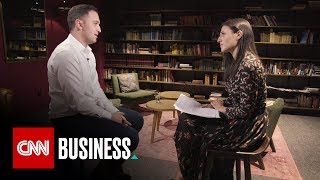
In this YouTube interview, Lyft co‑founder and president John Zimmer reflects on the company’s ten‑year evolution, recounting the early battle with Uber, a near‑cash‑runway crisis, the IPO, and the COVID‑19 shock that wiped out most of its business. He discusses how those challenges shaped his leadership mindset, including his personal experience with depression and the resulting emphasis on empathy, mental‑health benefits, and a people‑first culture. Zimmer explains Lyft’s stance on gig‑worker classification, emphasizing the importance of driver independence while seeking ways to extend benefits within current legal frameworks, and outlines the company’s response to the Biden administration’s proposed re‑classification rule. The conversation moves to Lyft’s multimodal vision—its dominant bike‑share operation, rental cars, and a focus on superior customer experience—as the core growth engine, while deliberately avoiding large‑scale delivery ventures to stay focused on transportation. Zimmer then addresses autonomous vehicle (AV) strategy: selling Lyft’s in‑house AV unit, partnering with firms like Motional and Woven Planet, and envisioning a hybrid network where human drivers and robotaxis coexist, with no expectation of reducing driver demand. He touches on policy questions around Tesla’s FSD beta use, EV adoption among drivers, and safety considerations. Throughout, Zimmer balances optimism about future mobility with realistic assessments of regulatory, technical, and market challenges.
Chapters
So let's welcome our next guest, who's co-founder and president of Lyft, John Zimmer, and your moderator, Kirsten Koreszek. All right, hello everyone. Jordan totally stole my line because my whole entire goal in this interview, just so you know, is to get as many transportation puns as possible in a single interview. So, shall we begin? Let's do it. So Lyft is celebrating its 10-year anniversary. We were kind of reminiscing backstage. You actually were on this stage, I think, in 2014. It's been quite a ride.
It has.
Yeah, see?
Hey. Number one.
All right, okay. I got like 3 laughs. That's awesome. If you could do, if you could have a redo, What would you change?
Honestly, it was my own psyche. You know, going through readying for what we went through over the last 10 years, basically been like 3 big chapters. We came in with this really big mission of changing cities, making cities designed around people, not cars, and we've made a lot of good progress on that. You know, we didn't, obviously foresee all the, all the crazy challenges we'd have, uh, with a competitor raising $3 billion, uh, overnight, with us having 5 months left to live, with a pandemic that took out 70% of our business overnight, and, you know, the, the precursor of potentially a recession. Um, and throughout that, um, you know, some— sometimes, you know, I could, I could psych myself out. And so, uh, halfway through, I think I really learned how to as a leader, as an entrepreneur, kind of get myself ready for anything. But there were moments where I was kind of stuck. So that's what I would change.
So do you feel like you were kind of getting in your own way a little bit?
Yeah, exactly.
And so it's kind of interesting because we like to think that once you reach some sort of anniversary or pinnacle that you no longer have imposter syndrome. So. You know, sitting up here today, do you, are you able to push that aside and say, yeah, I've got this?
Yeah, I think now I'm in a much different place, older, been through some of that crazy shit, so feel like I can take it on, but wish I had gotten there sooner, yeah.
Yeah, we were talking about some of that crazy shit. You were like, we finally survived, we, after basically battling it out with Uber.
Yeah.
Go public, and then COVID comes.
Yeah.
So when you're looking at all of those challenges, which one just— was it COVID that just completely just took all the oxygen out of the room, or was it really the sustained fight with Uber?
The sustained early fight with Uber was by far the hardest part of this journey. So that was, as a business, it was the earliest on. If you think about, we started with this idea to, to get people to ride in other people's cars. It was a new regulatory category, received cease and desist within the first few weeks of operation. We were the first to kind of really scale up peer-to-peer. Uber followed with UberX. They were actually trying to shut us down in back channels through the PUC. They raised the most money ever by a private company. We had 5 months left to live in terms of cash. So those moments were by far the hardest moments. But we, you know, incredible team with a focus on the mission and passion for what we're doing was able to go to single-digit market share up to 30 to 40% and in a couple markets nearing 50%. And so that was by far the hardest. So then you're like, and we get out public before them, we have enough cash to sustain us, you know, forever. And then a pandemic takes out 70, 80% of your business. So it wasn't the hardest, but it was like, just after you take a small breath, that is also quite challenging.
During the Uber battle days, how did you, or were you even able to keep up employee morale? Because it was like a sustained, long fight.
Yeah, in retrospect, in some ways that was the most passionate and exciting moments. It was clear kind of who and what we were fighting. We had a belief that businesses should be run a certain way with certain ethics and values. We believed in the mission of what we're doing to improve people's lives with the world's best transportation, but to improve people's lives. There was some humanity in what we were doing, and we were fighting, I'd argue, an entity that did not share those values or that vision. And so it was incredible. I think you'd ask— I just saw one of the early team members, Veronica, right there. And it was an incredible moment to be and excited.
So do you think it's harder then to kind of keep that passion because there isn't necessarily like, I don't know, not an enemy to go after, but to keep that kind of level of passion and excitement as the company has grown?
It changes. So you like survive and you kind of get your footing a little bit, but then obviously the pandemic, but then there's a larger, you would get into this to fight, another company. We got into this to change the way transportation works. If you look back historically throughout US history, canal infrastructure, railroad infrastructure shaped our cities, shaped the economy. People's access to transportation is more determinant of their ability to pull themselves up than— some studies show— than education. Mobility, as you know from what you do, is incredibly important to people's quality of life. So the— no, it like, we're so grounded in that, we're fighting for that, that it's not, not hard to get fired up.
So as you know, you know, having a 10-year anniversary or hitting some milestones does not remove any challenges. There are still ones that remain, and a new one has kind of popped up. The Biden administration has recently proposed a rule that would if adopted— there's a long way to go— but if adopted would reclassify gig workers as employees. You already kind of had that fight in California. So what is your strategy as a company on the national level? Are you going to do the same thing, put the same amount of resources, which were considerable, in California to fight this?
Yeah, so first, for this question, I always think about what drivers want and how drivers use the platform. So I think the reach of the platform is still shocking to us that about 5 million drivers have driven on the Lyft platform all time. 3% of the US workforce has earned tens of billions of dollars on the Lyft platform, of which the far, far majority, 90-95%, drive less than 20 hours. They're using this as supplemental income. You can turn on and off the app and get income whenever you want, which is incredibly empowering. Drivers want to remain independent contractors, and that's the most important part of this. At the same time, we want to provide benefits to those drivers, but the current legal construct is that benefits are tied to employment. And so it's been a multi-year, just like creating the new regulatory category for transportation network companies, creating the right conditions for workers on these platforms is also really, really important and speaks to the broader mission. The recent Biden administration ruling that you're talking about basically just returns things to the way they were in the Obama administration, where all our drivers were independent contractors. Typically, we are governed at a state level. Federal government is important and matters for all industries, but it's really interpreted at the state level, of which I would argue we've made significant progress over the last few years, California being one example, both educating—
And Massachusetts as well.
Correct. That's still kind of—
Yeah.
There's things happening, but made a lot of progress in both kind of educating policymakers by having them talk to drivers, and in creating policies that allow for independence plus benefits.
In California, and also potentially in Massachusetts, depending on how this— if it doesn't go your way in Massachusetts, let's say, or even on the federal level, even as an independent contractor, how does that— it does put pressure on your bottom line, though, doesn't it?
Sure. If you like, in a hypothetical situation, if that was— which I don't foresee to be happening, First, I think it's important to talk about the experience. People don't believe us and they say, "Well, what's so hard about doing that?" And, "Why is that bad for the driver?" So the way labor law works, if everyone on the platform was an employee, they would, the second they turn on the app, start collecting income. So then wouldn't everyone just turn on an app that you just start getting income? So then we would create shifts in that case. Then when you create shifts, it doesn't give drivers the type of flexibility that they wanted to begin with. So one, just to explain kind of one of several reasons why that's not the best solution. You know, if you're forcing me to think through, like, you can find a way, I'm sure, to make everything work. I think it ends up with a lot less drivers and conditions that I don't believe drivers would like compared to the situation today.
There's other kind of interesting renewed pressure. I mean, Uber's always sort of there in the background. But we've also seen a little bit of a resurgence in the taxi industry, like in New York and San Francisco. Also during COVID car ownership went up. So these new kind of new/old pressures. And so I'm wondering how Lyft Lift outmaneuvers— another pen, by the way— how does Lyft outmaneuver these old and new sort of pressures on the bottom line operations?
It's the customer experience. We need to continue offering an amazing, incredible customer experience and evolving that customer experience to make it better than owning a car, or even providing services for those that do own a car. So I think there's our— the broad vision is that whenever you need transportation, whether that's a bike from our bike share systems, whether that's a rideshare vehicle, a rental car, that Lyft provides you with that best alternative. So I'd say it's being customer-oriented. To zoom out like I did on drivers, we've since the beginning done over 3 billion rides more than a third of the US population has taken a ride with Lyft, over 112 million people, unique people. So we have this incredible reach and ability to provide better and better transportation services to that broad user base.
So is it just about experiences, or is it finding growth in new areas? I mean, you have bikes. How substantial of a revenue contributor is that, and is there growth there?
Yeah, well, as a single segment company and as someone who's in a quiet period pre-earnings, I can't give specific financials. But on specific what we've talked about with bike share, we are the largest bike share provider in North America. I believe in '21 we did about 45 million rides on the bike share system, just to give it a sense of scale. To compare that, that is larger than BART, the transit system here. If you call City Bike itself is actually larger, which is the New York bike share system we own. Is larger than BART. It's about, if you compare it to a transit system, the 25th largest transit system in the United States. In places where we've gotten to density of bike share and added the e-bike, which is an incredible product that the team developed, it's getting to a real significant scale.
How come you have not embraced or jumped into delivery? As a growth opportunity and instead really steadfastly said you're not going to do that and take the Uber Eats route, for example?
There's $1 trillion spent on transportation in the US alone every year. There's so much more to be done in this space. If we focus on transportation, which again has many different verticals, you can build one of the largest companies ever built, even just by focusing in the regions we're currently in. I think focus is really, really important. We can have partnerships in other areas. And but I think that allows us to best compete and best deliver for our customers.
So focus is important, but also diversifying a business is also important. And during COVID we did see that, you know, ride-hailing really took a hit and delivery was a bit of a bright spot.
Yeah.
So when that happened, were you like, oh, I really wish I had diversified my business?
Yeah, I mean, you think about like what is temporal and what is permanent, right? We're, we're in this, you know, with a long-term vision, and, uh, COVID, I would argue, is, is mostly past us. And, uh, and I feel good about the strategy. We, we did, you know, work on some B2B delivery, meaning, uh, we have an amazing driver community, an amazing driver network, and there are retailers that want to go direct to their customers and not go through a delivery platform. And we can provide them with, with a certain amount of delivery, you know, as a platform. So I think that's been smart. But, but we're past COVID, I'd again argue, and we're now looking at a potential recession. And in a recession, transportation historically is always stable. It's a necessary thing that people need. And $30 salads on food delivery is not stable in a recession. And so this is the kind of— you have to have a the right, I think, longer-term perspective on that. I'm not saying that's not a good business. I'm just saying I think there's a higher ROI for us with focus, and it's on us to make sure that we balance both the near-term and long-term.
Another growth area, which is really a little bit more futuristic, it's certainly not near-term, is autonomous vehicles. Lyft did a bit of a U-turn. Anyone? No? No? Okay.
Yay.
All right. It sold their technical unit for developing autonomous vehicle technology, sold it to Woven Planet, and really is now doing this sort of network effect, partnering with companies like Motional. And I'm wondering, what is the timeline from your view to when not just, oh, we have commercial launches, but there is an appreciable amount of revenue that Lyft is capturing from this.
I've gotten these predictions wrong, and it kind of feels like, you know, I have two kids now, and so it's like, you know, the are we there yet, and you just keep saying 20 minutes, and then 20 minutes later you say 20 minutes. So I always think like it's just a couple years away, the answer to your question, but it's super hard to predict. It's kind of this last percent of a technical problem and then you have to get the cost down for autonomous vehicles. So it will happen, I strongly believe it's not a matter of if, but obviously when. But the good news is for Lyft is that we have a business that creates revenue and profit and doesn't necessitate that happening tomorrow. The other thing is for autonomous vehicles, the best way to commercialize them will be on an existing network. You're going to need to have a hybrid network with drivers and with autonomous vehicles. Because as you're seeing now with autonomous vehicles, they can do less than 1% of use cases today without a driver. Maybe it'll get to 10%, you know, in the next few years. But imagine being on AT&T or Verizon and making 1 out of 10 calls. That would not be a good network to be on. Being on the Lyft network, you'll be able to get 10 out of 10 rides. One might be an autonomous vehicle, with one of our partners. 9 are going to be with, you know, from our driver community. And so I think what we do is super important and can flex as that technology is ready.
Is your aim to partner with every single autonomous vehicle company out there, or are you being strategic? If you are being strategic, what is making you pick one company over the other?
I think there's a certain bar of any partnership, particularly in AV. For AV, it's safety and it's likelihood to get over this extremely difficult technical challenge. So I'd say there is a bar, but I think it's too early to pick one winner. And so today it's about having multiple partners. 10 years from now, too hard, too hard to predict. But today, you know, having multiple partners as that field continues to develop is important.
On the— I'm going to say the ADAS front because Tesla FSD is not a self-driving vehicle because the driver has to be in the loop. But more and more ride-hailing drivers are actually using Teslas. Does Lyft have a policy, or will it have a policy, about whether drivers can use FSD beta software, which is while they actually have passengers in the back? Have you talked about that internally?
There's probably been a few conversations that, you know, something that could be potentially talked about. We do not have a policy currently. You know, we think that the regulatory Regulatory bodies are our best regulators when it comes to that level of safety. I think more and more people are turning to electric vehicles as drivers because as gas prices rise and as EV prices come down, for a driver on the Lyft platform that utilizes the vehicle far more than the average consumer, the payback on that battery is much faster. And so the economics make sense for more and more drivers.
The economics make sense on the electric piece, but I would argue that regulators haven't stepped in actually with Tesla and FSD, and it's very experimental. I mean, really, we're all kind of living in Elon's beta-verse, if you will. And I'm wondering if It is going to come down to the private sector, Uber, Lyft, others, to sort of say, you know, actually we don't— when you're driving on our— giving people rides, we're just not going to— we're going to request that you're not using that sort of beta software.
Yeah, I think we will continue to assess. And I think, again, we are not the best regulatory body for kind of the entire industry. But obviously, driver and rider safety is our top priority. And so, to your point, it's something that will continue to be looked at.
On the Robotaxi side, you have talked about a hybrid network. Do you see, like, eventually when this really comes to an appreciable, again, like, commercial level, how the makeup is going to be between the human drivers and Robotaxis? I know it's a little bit distant, but Do you see overall growth, or is the aim to have overall growth throughout, or like a 50/50 split? Is it going to be dependent on marketplace? How are you thinking about that?
I think there'll be overall growth such that I can't imagine any time in the next decade plus where we would need any less drivers. Because the big opportunity here, as AVs come on board and bring down the cost of transportation and continue to improve the experience both from a safety perspective and an enjoyability perspective, is that more and more rides— still today, what we do in our industry represents, you know, maybe 1% of vehicle miles traveled. As you get into autonomous, you can go from 1% of vehicle miles traveled to 2, to 5, to 10. So there's much more room for growth of our overall business. And so I don't see any path where there's less drivers. In fact, as that keeps happening, you could argue that you'll still need more, even if they're doing 90, 80, 70, 60, 50% of rides. The overall pie is getting much bigger.
I wanna go all the way back to what we first talked about in the beginning, and you were talking about your psyche, and I was, you, as a founder, and sort of how you've navigated that. And you have publicly talked about your depression. And how that has changed you as a founder. How has it informed how you run your business and even mental health policies with your company?
I mean, you think about team member productivity, and the best way to get team members being highly productive and building a phenomenal business is that they are happy and healthy. And so we've added mental health benefits, wellness benefits, but also just run the company and business with empathy. My background's in hospitality, not technology, and so I always think about the people in the business. And so in our case, that is our team members, that is the drivers, that is the riders. And I think as any leader, being empathetic, having your own personal experiences and using that to inform how you continue to lead, is a good thing.
Being empathetic is one thing. Kind of deciding that you're going to publicly talk about it is a very different thing. So what compelled you to do that? I mean, why was that important to actually tell the world that this is something that you've felt?
I think it's important to normalize it. You know, I think if you survey, you know, 10 people that have experienced some form of sadness or depression or anxiety, you'll come back with a pretty high number. I don't know the current count, but it could be something like 50% of that group. So it's— you got to normalize it. So by talking about it— or not talking about it is not helping in that way. And so I thought about it more about that way. It's not like a— for me, not a big deal to talk about it. I think it would be detrimental to not talk about it.
And then the health— mental health policies that you've extended, is that just for— your full-time staff, or are you actually working on extending that to your drivers?
That's been for the full-time team members at Lyft to this point, yeah.
Would you, I mean, when you think about the gig workers, they're actually kind of on the front lines, so have you thought about that internally, like how to support that really important group on the medical side?
Yeah, that is the, when you look at flexibility plus benefits, that is the idea, that is what we wanna do. A year into starting Lyft, we didn't start it with this idea that holy shit, 3% of the US workforce would earn tens of billions of dollars on the platform. We hadn't realized that would happen. And then when you realize that, you feel, or you start seeing that, you feel an incredible amount of responsibility. And so I went to our general counsel, hey, what type of benefits, health benefits, can we provide for drivers? That's when I really learned deeply on the current construct of employment being what it is and what we talked about and providing certain limitations. So I think there is an opportunity, and we're going to continue to work with policymakers to make that more true.
OK, well, we'll see what you come up with on the state side and potentially on the federal side.
Sounds good.
Well, thanks for joining us. We should say John Zimmer's parents are in the audience. So let's give them a round of applause, and thanks for joining us today.
Thank you.
More from John

Lyft Founder: The Uber War, the COVID Collapse, and the Robotaxi Threat | John Zimmer


Life In The Fastlane: Lyft’s Big Bet To Change How The World Moves | 2022 Forbes Under 30 Summit

Interview With Lyft's President John Zimmer On Community, Driver Pay, New Features And More!


Lyft Co-founder on the Future of Rideshare | How I Built This with Guy Raz | NPR

LYFT Co-Founder John Zimmer: Ask Me Anything with Aaron Samuels | AT Main Stage Talks