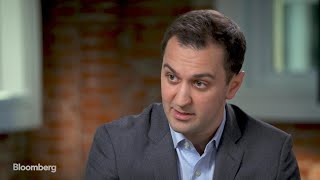
Lyft co-founder John Zimmer on growing from underdog to one-third market share. Lyft has completed over 500 million rides and is valued at $11 billion, growing 2.3× year-over-year while Uber had 30× more capital early on. The 2017 Delete Uber movement helped Lyft gain ground by focusing on driver and rider experience.
Chapters
Lyft is now valued at $11 billion, as we understand it. You've raised more than $4 billion. You've surpassed 500 million rides. Where are you in terms of growth?
Yeah, last year alone we did nearly 400 million rides. Uh, we grew 2.3x. Uh, we brought our market share over the last few years from low teens to now over a third of the market, uh, that Lyft has. We have markets over 50% market share for the first time in history. And so there is an incredible amount of momentum behind what we're doing at Lyft, and at the same time, I'd say we're just getting started. Lyft and Uber combined do just half a percent of miles traveled in the United States. I believe over the next, call it, uh, 5 to 10 years, uh, that this 0.5% is gonna grow significantly to the point that, uh, eventually the majority of miles traveled in the United States will be on a network like Lyft. And you'll be subscribing to a Lyft transportation plan, similar to how you have a music program, maybe Spotify, or a minutes plan like you have on AT&T or Verizon.
The last year especially has been very transformational for Lyft, and we have seen a shift in the balance of power between Lyft and Uber. I'm curious, in 2016, when maybe it felt like Uber would be the dominant ride-hailing company forever. What did that feel like? And how does it feel today?
Yeah. So I take it back, take it back maybe 3.5 years, 3.5, 4 years now. Uber raises $3 billion. We have what I believed was a lot of money, and is a lot of money, $100 million in the bank. So they had 30 times the amount of capital as us. And they're trying to destroy our business using that money. And that was, to be blunt, you know, it was scary. You know, someone attacking the business, incentivizing drivers not to drive on our platform. But the team had such drive and such passion, and we were smart about the tactics we used that were asymmetrical. And we rose up. That was, you know, the time we had maybe even single-digit market share. And we raised the capital we needed, we built an incredible team, and by kind of Coming up as the underdog, but with the vision, I'd say the leaders on vision, we've been able to build a team that's not just doing it for, you know, a monetary reason and not just doing it to win, although we intend to win and that's something that drives us. We're very competitive, but we also have a team that's values-based and mission-driven, and ultimately that's why we will win.
I often look at it from a male and female perspective, and women-led companies get just 2% of overall funding, but often, you know, there are other biases that exist in the system as well.
Yeah, I think that, you know, for a while investors and others looked at us as, "Oh, you guys are nice." And we said, "Okay, we believe it's important to treat people well, not just because it's the right thing to do, but because it's great for business." And now we're seeing that play out.
So being nice was to your detriment?
I think in the early days people misunderstood it as a weakness. You know, we are aggressive, but in our own way. We are aggressively working to treat people right, aggressively working to win. We are highly competitive. As I mentioned, we are taking market share from our competitors, so that's working. I think what's happening in Silicon Valley and maybe more broadly is positive in that they're looking for other models of success and other factors, not like— not just an outgoing form of overconfidence.
Do you think Silicon Valley has rewarded the wrong kind of confidence, the wrong kind of arrogance?
I would say more broadly, not just pointing at Silicon Valley, but across the country, historically, yes, absolutely.
2017 was very transformational for Lyft, in part because of what happened at Uber. We saw the Delete Uber campaign, Susan Fowler's blog post that went viral, ultimately Travis Kalanick, the CEO, was ousted. How did that particular sequence of events impact your company?
Yeah, I mean, it definitely impacted us. Um, but what— we've had so many moments as a company, both competitively and internally, that have been difficult over the 5 years of running Lyft. And the thing, the muscle that we've developed is to focus on our drivers and our passengers, because we can't control the things that are happening outside of Lyft. And so that muscle that, again, took years to develop, and in early days maybe we were more distracted by the competition, paid off because we put our heads down, we said we need to continue to serve our drivers better than anyone else, serve our passengers better than anyone else, and let's, you know, let's move to offense. In the Delete Uber movement that you talked about, the ability to have enough drivers in a moment when demand increases is difficult to do market by market. And so our team did a fantastic job during those moments. But we had been working hard, heads down for a while.
Is there any way to quantify how many drivers and riders or how much business you gained as a result of anti-Uber sentiment over the last year?
I'd say in one week alone, I think there was like a 20% rise in the business. So it was— It was real, but as I mentioned, the business grew 2.3x last year, and there could have been a temporary moment where people said, "Hey, Lyft is a good option for me to try," but we held onto that, and we continued to take market share throughout the year.