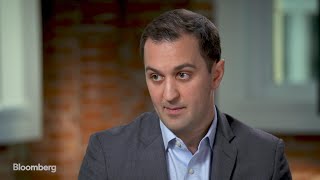
In this interview, Lyft co‑founder John Zimmer discusses Lyft’s long‑standing interest in autonomous vehicles, explaining that the company began researching driverless technology several years ago because it sees autonomy as a key lever for reducing the high cost of vehicle ownership for consumers. He outlines two primary cost‑reduction strategies: shared rides through Lyft Line and autonomous driving, noting that Lyft currently accounts for only about 0.5% of total miles traveled by rideshare services, leaving massive scaling potential. Zimmer addresses concerns that driverless cars could threaten driver jobs, arguing that as the share of rides grows, even a small percentage of human‑driven trips will require many more drivers, thus preserving or expanding earning opportunities. Looking a decade ahead, he envisions cities redesigning road space to separate pedestrians, cyclists, and autonomous/human‑driven vehicles, creating more walkable environments, repurposing parking lots into parks or housing, and triggering unprecedented infrastructure changes. Finally, he acknowledges that Lyft is behind competitors in building its own driverless stack and hints at the substantial R&D effort required to catch up.
You're also pushing into driverless cars. When did you start researching autonomous cars, and how did you decide this is something that you wanted to pursue?
It was several years ago that we decided this is— we knew this is where things were headed. And the most important thing to the customer is, you know, how— if I'm spending $9,000 a year owning and operating a vehicle, how could I spend $8,000 or $7,000 or $6,000 to get and even better service. That's what we're working towards. Two of the ways to bring down costs right now are through shared rides, which is what we call Lyft Line, and you get multiple people that are going the same way. And the other is autonomous. But again, we're at half a percent of miles traveled on Lyft and Uber, and so there's a lot of scaling and change to come.
There are two reasons not to build driverless cars. One, it's expensive, and two, it can alienate drivers who worry that their jobs are going to be replaced. So why pursue this?
We wanna design our cities around people, not cars. So we need to replace car ownership. Whether or not it, it costs a lot to do the R&D, it is ultimately where the business is going and will ultimately provide a net positive benefit to society. On the driver side, I don't believe there'll be less earning opportunities for drivers on our platform as we continue to scale.
Why not?
Because if you have 0.5% of miles traveled on Lyft and Uber today, and you scale to 80% of miles traveled on Lyft and Uber in the future, and just 5% of those 80% miles are in human-driven cars, you have, what is that, 4%, which is 8 times the number of drivers we would need today.
Let's say, okay, 5 years from now.
Yeah.
10 years from now.
Yeah.
What is— what do the roads look like?
So I think, let's say 10+ years from now, I believe cities will start to divide where certain forms of transportation travel within a city. And so pedestrians, bikes, they should have a very safe, separate area to get around in a city than, say, both autonomous and human-driven vehicles. That, I believe, is kind of how our cities will function in the future. It'll make our cities more walkable and enjoyable. It'll change real estate values. It'll— you'll get parking lots that you can either turn into parks or housing. And so I think the changes that we'll see 10 years from now in our cities will be the largest physical infrastructure changes we've ever witnessed in our life.
Now, when it comes to Lyft building its own driverless technology, you're clearly behind. What is it going to take to make that happen?
We are definitely honest with the team and with ourselves that we're coming from behind, but just as we did with the original business and taking market share from Uber, we're making up ground every day. There's also not just the data advantage we have, but starting now, sometimes in certain industries, there's a second mover advantage. There's a lot of technologies that didn't exist 5 years ago when others were starting their autonomous efforts that exist today that allow us to kind of leapfrog.