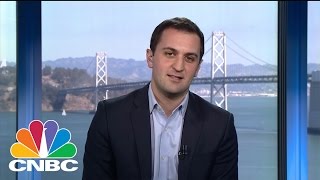
Lyft co-founder John Zimmer predicts that by 2025, most major U.S. cities will see personal vehicle use drop dramatically as ride-sharing replaces car ownership. General Motors' 9% stake and joint driverless fleet development will accelerate the shift. Lyft operates in 200 cities, delivering over one million rides every two days, and is fully funded to break-even.
Chapters
Just because we're back from San Francisco and the market's getting hammered, it doesn't mean we're going to stop meeting with innovative companies that are transforming the way we lead our lives and do business. Just look at this ridesharing space, which has been a game changer for the transportation industry. This business is really a two-man band. You got Uber, the number one player. You got Lyft, its next largest competitor. It's been working hard to take market share and establish itself as a real rival. Now Lyft is still a privately held company. That means you can't buy stock. But they've attracted plenty of investment interest at the corporate level, including GM, which bought 9% of Lyft for $500 million this January. And the two companies are working together to build a fleet of driverless, on-demand vehicles. As far as Lyft is concerned, driverless cars that you can hail via an app are the future of transportation in this country. A decade from now, they think private car ownership could seem like an antiquated concept. Why do we need to bear down on this? This is a company with a vision. And I want to hear all about it. So let's check in with John Zimmer, the co-founder of Lyft, to find out more about his company and the future of transportation. Mr. Zimmer, welcome to Mad Money.
Thanks for having me.
All right, John, I went through your unbelievable third transportation revolution and you're really— a line sticks out to me. By 2025, private car ownership will all but end in major US cities. And yet your biggest partner, one of them, is GM. I mean, isn't that antithetical to the 2025 Doom and destruction, cool?
Not necessarily. So every year in the United States, $2 trillion is spent on car ownership, and that's financing the car, the fuel, the maintenance, everything. And over the last couple years, as we've been building our business, we've been talking to all the major auto companies. And when we spoke to General Motors at the end of last year, they agreed with our vision in that consumers will move towards more of a Netflix or Spotify model where they buy a subscription for transportation. And Lyft and General Motors can provide that to them.
Well, I mean, if I— why buy that much? Why not just buy the whole shooting match so that you're hedged against the doomsday scenario you've outlined for 2025?
Say that again.
Why doesn't GM just buy you so they're better hedged against your doomsday scenario? Buy the whole thing, not buy a percentage.
Yeah, I mean, Lyft right now is not for sale. We believe the best way to get to that ultimate vision of creating an alternative to car ownership as an independent business. And so we'll continue down that path.
All right. So is your goal— you're behind, you're moving fast. I know that we have traffic numbers from July. You're gaining and gaining and gaining. Can you ever catch Uber or does that not matter?
Look, there's going to be two major networks, just like with phone carriers. You have AT&T and Verizon. The thing that consumers care most about is that they can get a ride within 3 minutes, uh, and then it's about the experience and the brand. And now that we've hit our critical scale in all major US cities— we're now in 200 cities— uh, more and more people are choosing Lyft. So we've actually increased our market share by 80% year over year, and we're now doing over 1 million rides every 2 days.
Excellent. Now, John, I, I am concerned. There is something fundamental that's changed in this economy. When I turned 16, Car, license, Feb 10th, boom! I mean, you know, Feb 11th meant that I was— there was something wrong with me, all right? I was there. What is happening now with people who turn 16, 17, 18, 25? What is going on?
Yeah, the idea of American freedom being through getting a car when you're 16 is actually still alive and well because what we were promised was transportation freedom, but what we got is being stuck in traffic, high bills, paying for our car, and having to deal with parking and maintenance. And what we're delivering at Lyft is actually that freedom that everyone wants and has wanted when they turn 16, which is the ability to get where they want to go when they want to go there. And I think that's why with, you know, the coming of smartphones and Lyft, you're actually able to deliver that true freedom.
OK, but someone my age doesn't think like that. I mean, it is true, my car is in the garage. The vast amount of time. My wife's car's on the street. We spend hours looking for parking spots in Brooklyn, okay? It's just our lot in life. But you're telling me that younger people have looked at what we do, decided it's a bad waste of time, they're more interested in experiences and using their time, and so therefore they're just not wanting to have their own car?
Yeah, exactly. So more and more, as millennials are moving to cities and they have access to Lyft, They're saying, "I'm not gonna deal with parking a car 96% of the time." The average American vehicle is not being used 96% of the time, and it costs the average American $9,000 every year. And when I go out, I have to look for parking. The real thing I want is I want the ability to get from A to B, and that's what we're doing at Lyft.
Okay, is there— lots of talk, for instance, when I talk about Uber, that people tell me, "Listen, they're losing fortunes." I mean, does Lyft have a sustainable business model that would make it so that if you wanted to at some point you could show really good cash flow?
Yeah, absolutely. We're fully funded to a break-even. We have raised over $2 billion. And really what's happening is that there's such a massive opportunity as transportation is turning into a service instead of owning a vehicle. And that, that $2 trillion spend on car ownership will transition more and more to Lyft and other services. And in order to invest in that future and get new users, the majority of what we're spending is on getting those new users. And so that's completely controllable. And at the right time, we'll be focusing on profitability versus growth.
I mean, if Uber were to, say, come public within the next few months, would that affect Lyft's trajectory?
I don't believe so, no. I think, you know, we've grown up in a very competitive environment and done incredibly well scaling our business and focusing on what we do is paying off.
Why do you think people are so high on cars, you know, self-driving cars? Is it, I know that I think I've always felt that a drunken issue is very, very important in terms of fatalities. But I mean, this is just something that I thought was pie in the sky and David Faber and I talk about every morning. We think that this is probably the most important trend right now in technology. Do you see it that way?
Yeah, I think it's not only the most important trend in technology, I think it's the most important trend in our economy and how our cities are designed. You know, never before, I think, in our lifetime will we have another opportunity to redesign our cities around the economy, around the people in our cities, versus the car. So much infrastructure and real estate has been devoted to car ownership And by transitioning that into a service, transportation as a service, we're gonna be able to shift a lot of things, including the way our cities look.
Well, I think your vision is one that I hope pans out because it would certainly be less pollution, be a better world. I wanna thank John Zimmer, who's co-founder and president of Lyft. Good to see you, sir. Thank you for coming on the show.
Thanks for having me again.
I wanna suggest everyone read The Road Ahead by Mr. Zimmer, The Third Transportation Revolution. If it comes true, wow, is the world going to be a different place. It's David Kramer. Booyah! Jim Cramer here from Mad Money. Thanks for watching CNBC on YouTube. Click here to subscribe and get the jump on my exclusives with CEOs, plus market news, investing advice, and a whole lot more.