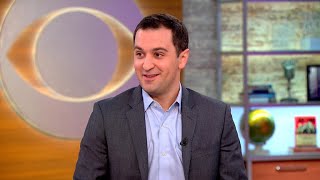
In a YouTube interview, Lyft co‑founder and president John Zimmer discusses the company’s stance on autonomous vehicle safety following Uber’s fatal Arizona crash, emphasizing the need for pauses after tragedies while maintaining a broader vision of zero traffic deaths. He highlights Lyft’s growing market share and 2017 revenue surpassing $1 billion, noting a 168 % share price increase since 2016. Zimmer explains Lyft’s service‑first culture rooted in his hospitality background, describing how he regularly drives on the platform to experience driver and passenger perspectives firsthand. The conversation shifts to Lyft’s strategic goal of making personal car ownership financially nonsensical in major U.S. cities by 2025, citing that Americans spend about $9,000 annually on a car that is used only 4 % of the time, and proposing a $5,000 household tax‑credit equivalent. Zimmer also details Lyft’s internal equal‑pay audit, which uncovered a 0.6 % pay discrepancy attributed to unconscious bias, and the company’s commitment to annual third‑party audits. Throughout, Zimmer contrasts Lyft’s people‑centric approach with Uber’s perceived shortcomings, positioning Lyft as the “good guy” in ridesharing.
Chapters
The president of ridesharing company Lyft says the deadly crash in Arizona involving an Uber self-driving SUV could have been prevented. Lyft is continuing trials of its own autonomous vehicles. Uber has now decided to stop testing its driverless cars in California. Uber tests are also suspended in Arizona. Lyft's market share is growing. Its 2017 revenue crossed the billion-dollar threshold. The company says that's up Shares are up 168% since the end of 2016. John Zimmer is co-founder and president of Lyft. John, good morning. Welcome.
Thanks for having me.
Any pause about your own self-driverless vehicles after the Uber decision?
I think everyone should take pause when there's a tragedy like what happened in Arizona, but it's also important to zoom out and understand why companies are doing this. And the fact is that 35,000 people every year are killed by are killed in a car accident, and the ultimate goal is to bring that to zero.
Are you noticing that there's more of an increase in Lyft mentions? You know, before, John, it used to be Uber, Uber, Uber, but now I see it's Uber and Lyft in the same conversation. I see more cultural references to Lyft in movies and on TV shows. So I'm wondering from your point of view what's working for Lyft. I, for one, am glad you got rid of the pink mustaches, which you did a long time ago. But what is working? What's working for you guys?
I think what's working well is our vision, which is to improve people's lives with the world's best transportation. The way we treat people, whether that's our drivers or our passengers, my background, or our team members, our employees. My background's in hospitality, and so to me this was always a service business.
What does that mean, hospitality? Like hotel?
I went to hotel school.
Oh, not technology, okay.
Right, yeah, and I, uh, one of my first jobs was a phone operator in a hotel, and I saw the obvious importance of taking care of people to provide great service. And I think that's what's really paying off.
You actually walk the walk too. We should say, listen, we always send a very nice car to pick up our guests, and we said we're going to send the car, and you said, nope, I'm going to take a Lyft. I would like to do that. I'll get there on my own. But you also drive. You're also— so somebody can put in an order and you're the one that picks them up. Why do you do that?
It's, it's critical that we understand the entire experience So every New Year's, and I try to every month as well, I drive on Lyft. And I learn a lot.
What do you learn from it?
Yeah. I learn a lot. I learn the challenges of being a driver on the platform, the opportunities for us to improve the product for our drivers, and I understand better the passenger experience from a different perspective.
Why is Lyft better than Uber?
Lyft is better than Uber because we care about improving our cities, we care about improving people's lives, and we care about the people that are behind the business.
And Uber doesn't.
You—
if there's such a— if there's such a trillion-dollar market for ridesharing, why isn't Uber or Lyft profitable yet?
The focus right now is on growth. The opportunity here is that Americans spend $2 trillion every year on car ownership. We spend more money on cars than we do on food, but we use our car only 4% of the time. And so we're going after that really large—
in fact, you want to eliminate—
yeah, you and your co-founder, Logan Green, you're actually pushing for the end of personal car ownership in major cities by 2025. 2025?
I believe it won't make financial sense for someone to own a vehicle in major cities by 2025 because we— the house—
it won't make sense.
It won't make financial sense. You spend $9,000 every year owning and operating a vehicle when you look at all the costs and you use the car just 4% of the time on average. That does not make sense. We can give the equivalent of a $5,000 tax credit back to every household if we, if we improve that efficiency and that's worth doing.
Well, that's a hard sell for me because suppose you just want to run to the store for just a second. Yeah, I got to wait and dial it in. But I mean, you're raising an interesting point here. You're raising an interesting point. The other thing that I think is fascinating about you and co-founder Logan Green is that you guys are known as the good guys in the business, in the business world. And I think something that struck me interesting is that you all just recently ordered an internal audit last year. A self-imposed internal audit. What were you looking for? Why did you do that?
We did an internal audit around equal pay. And to me, this is just obvious. If someone's obvious that if someone's doing the same work, they should be paid the same. And we didn't want our team members, our employees to take our word for it. We wanted a third party to validate that was true. So we did that last year. And I think it was yesterday we announced our commitment to do that every year.
Did you find discrepancies?
There was about 0.6% discrepancies, likely from some type of unconscious bias or just different opinions, and we addressed those.
John Zimmer, thanks for being here. We appreciate it.