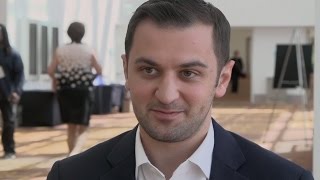
Lyft co-founder John Zimmer says the patchwork of state and local ridesharing rules makes it hard to operate nationally. He wants one strong safety standard instead, and proposes cities create innovation agencies to write forward-looking transportation regulations.
Chapters
The dangerous thing is to have a patchwork set of regulations can make it really hard for a company to operate.
Hi, I'm Alexis Garcia with Reason TV here at the Atlantic City Lab in Los Angeles, and right now I'm joined by John Zimmer. He's the co-founder of Lyft. Now, John, you know, we're at this conference, and talk a little bit about what services like Lyft do to help a city grow.
Yeah, so one of the biggest reasons that young people are moving into cities or, or not is accessibility to everything in that city. And so transportation is incredibly powerful to help empower small businesses, to get people to those small businesses, to help people live in more affordable places so that they can then get into the city where they work. So transportation is incredibly important to a city growing their jobs and people moving to that city.
Talk a little bit about being here because you're essentially around people that would like to regulate you.
Yeah.
And, you know, talk a little bit about what cities can do to really encourage the growth of businesses like yours.
Yeah, I mean, we have had mayors across the country, whether it's, you know, Kevin Johnson in Sacramento or Bill Peduto in Pittsburgh, actually ask for Lyft to come to their city. That's really helpful, right? Because sometimes we hear the opposite, which is when we go to that city were met with resistance. I think what we'd like to engage in dialogue and, and talk about the rules that were created mostly decades ago. Let's have an open conversation about why. And typically, you know, it's around safety, and safety is something we're very comfortable talking about because we have extensive driving record checks, background checks, insurance that often goes beyond what those regulations require, but we do it in a different way. And so typically what we really just need is to have an open dialogue around adapting rules such that it works for this new model so that everyone eventually could be a Lyft driver as long as they pass the screening, which would empower this new form of ridesharing where you can get wherever you need to go really quickly with, with a neighbor.
And are you finding that you're getting that dialogue? Because I know just recently here in Los Angeles and San Francisco, they again served you and, you know, a couple other popular services like Uber. Again, with the safety, with the background checks, do you think there is that dialogue going on? Because it seems like you guys have shown that you are doing this.
Why do you think they're still going after you? Yeah, I mean, we've been working for— with the PUC, the Public Utilities Commission, which is, you know, California-wide, for a couple years now. But what we realized is that there's many agencies with, you know, at a state and local level And there are many interests and existing industries. And so often when we work really hard to solve a problem with, you know, the state agency, the Public Utilities Commission, then the legislature comes out with something that's being supported by trial lawyers or insurance companies, or city attorneys have separate issues that they're concerned about from their constituents or existing industries. So it's really challenging. There's— Seems like there's a lot of overlap. Yeah, there's like— and the scary thing or the dangerous thing is to have a patchwork set of regulations can make it really hard for a company to operate because we have to have different standards in every place. And when you think about this ultimate solution, which is people traveling from city to city, from state to state, sharing rides, it's way— it's much better to have one set of strong, safe rules.
So what would be the one thing that lawmakers could do or maybe not do that would help companies like yours succeed.
I think what would be really interesting in cities across the country is to have an agency that looks at innovation, and a lot of cities are starting to do this. San Francisco does this, where we're based, and— but within, I haven't seen yet a model where within that innovation group they start looking at regulations and they think forward 5 years, 10 years to think through, hey, how can we maintain the things that are important to us, safety as the example, but still allow for this type of innovation. And so having people really thinking forward within the agency, I think, could be, could be really helpful.