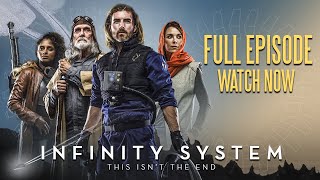
House of Wolves Episode Sixteen - Learn About Our New Film Project and How You Can Be Involved.

In this episode Jonathan Yanez and Jennifer discuss the next phase of their creative enterprise: adapting the popular novel series Forsaken Mercenary into a short film. They explain why they make stories— emphasizing hope, redemption, imagination, and family— and how that "why" guides both the narrative and the way they run their business. The conversation weaves through their influences (the tonal differences between DC’s darker grit and Marvel’s hopeful humor), the evolution of Jonathan’s writer’s voice (every‑man heroes, Drax‑meets‑Jack‑Sparrow style), and the practical side of filmmaking: their existing arm Infinity System, agents, entertainment lawyers, festival successes, and the slower Hollywood pipeline. To keep momentum they are launching a Kickstarter, detailing reward tiers (starting at $5), community‑driven perks (art, exclusive updates, limited‑edition coins, on‑set extras), and how they use polls and social media to shape the project. They also touch on production logistics (crew safety, accommodations, pandemic considerations) and their relentless work ethic (early mornings, daily creation). The episode serves both as an update for existing fans and a call‑to‑action for new supporters, positioning the short film as a stepping stone toward potentially a feature‑length adaptation.
Chapters
You should be a monster, an absolute monster, and then you should learn how to control it. There's an intensity to what we're trying to accomplish, and, um, you know, if you want to be truly great, you've got to bring it every day. Do you enjoy pain? Pain don't hurt. You blitz all night. Standing out is a long-term strategy, takes guts and produces results. If you care enough about your work to be willing to be criticized for it, then you have done A good day's work inside.
Hey guys, we're here for one more episode. So glad you're here.
Yeah, this episode is going to be something that's a little bit different because we have some really cool news to share. Our series Forsaken Mercenary is actually going to be turned into a short film again, just like what we did with Infinite System. If you've been following us for the last year to year and a half, and what's been going on is we have opened up a new arm of our company which goes into making films. So we started with Infinity System and all of that is going exponentially well, is going through the correct avenues. We have an agent, an entertainment lawyer. It's just the Hollywood machine. When you get to a certain level, everything takes a lot longer for meetings to happen and pitches to happen and for them to review content and then to get back. So nothing but good news with Infinity System. But in the meantime, while we're waiting, we decided instead of just like hanging out and eating Cheetos— as much as we love Cheetos, it's, uh, as much as we love them and say they're good for us—
I don't love Cheetos.
You don't love Cheetos?
No, they're like orange and they get stuck in your teeth. It's not a good feeling.
It makes it so good. No. Okay, so we decided to do another film. So we're going to be taking a series this time of novels that already exist called Forsaken Mercenary that you might be familiar with, and we're gonna be adapting it for film.
Yeah, and what we really wanna talk about in this one is, yes, the next film and projects from a very executional standpoint, but something applicable for anybody no matter where they are in their journeys is our why. Our why, the why is important. It's all about the why, and no, not the why in my name, Jennifer, or last name, John, yes.
W-H-Y.
You sent me recently, Jonathan, a TED Talk. I don't know if anybody likes TED Talks. Would love to know your favorite TED Talk. But one from Simon—
Sinek.
Sinek on all about your why, and you were pretty jazzed about that. Can you tell me more about that?
Sure. So he goes in to talk about people will gather around or rally around a reason, a why, more so than they would rallying around a person or anything that you, a product, right? So it's important to explain your why. Our why for wanting to make film stories in general, wanting to tell stories and now translating into making film is we believe in stories of hope, redemption, imagination, family. That's what we believe in. And if we can tell you what we believe in, we believe that there are people out there who want those same things, who also enjoy stories, right? Where we're not trying to preach anything, we're not moving any sort of agendas forward. It's just good, clean content that, you know, has the heart of telling stories of people who are just like you and I, who struggle with things like you and I do, whether it's like loneliness or depression or bullying. And these stories where the heroes are going to come out on top. There's enough darkness in the world where I don't feel like with our stories we need to add to that darkness. We want to tell stories full of adventure and hope and light and a lot of laughs along the way.
I think that's one of the things that you had mentioned to me is the difference between DC and Marvel. Uh, big comic book fan here, and our little ones are actually really getting into comic books. It's very sweet. So therefore I have gotten into reading comic books, but the types of heroes that they featured, you read growing up, what you thought about them, and then how that applies to the characters you're creating today.
Right, so one of the things that I had heard about DC versus Marvel, and that might be changing now, but at least for a time, the DC Universe was really dark and gritty, where the Marvel Universe was serious, a lot of action, but in the middle of the action when hope was about to be lost, they would always crack a joke and then the good guys would always come out on top. So in the middle of all that darkness, you would still have the light and then you would still have the good guys winning. So that's kind of what we have adopted by default. Like I wasn't intentionally trying to write that way. I think it's just naturally the stories that I tell. Yes, there's going to be a lot of struggle. Yes, there's going to be loss and sacrifice. But ultimately, hope will win out. The light will win against the dark.
So it sounds like those were the kinds of things you enjoyed reading, the stories growing up, and it informed what you write today. I think that's really interesting because you mentioned that it wasn't intentional. And we were just talking to some folks and they were commenting on the number of books that you have written. And so it's wild to think that while you may not have had that intention over time from executing, right, writing stories over and over, new, new story, new story, new story, that the type of characters, the types of stories you want to write kind of just came out naturally on their own.
That's right. Not trying to sound like anybody besides me. A lot of times when I started early on as an author in my career, I would hear everybody talk about your voice, finding your writer's voice, got to find your voice. I had no idea what that meant for the longest time. And then I found my writer's voice. So for anybody who doesn't understand, all your writer's voice is, is exactly how you sound comfortable. Like when you're writing, not trying to sound like anybody else when you're writing. And ratcheted that up all the way to volume 10. And that's your writing voice. Like on your best day when you're writing and the words are coming, that's what you normally sound like, right? Just ratchet that up, turn up the volume. So my writing voice sounds a lot like Drax the Destroyer talking to Captain Jack Sparrow, them two having a conversation. Imagine that. That's just naturally what I write like. A great example of naturally how I write is Hunters for Hire. The Hunters for Hire series is just what comes out. If I'm trying to write a little bit more serious and not so silly, that's more like Forsaken Mercenary. If I think, okay, I'm going to dial it back down a little bit, still give you the story that you like, but a little— with a little bit more serious tone. So, uh, and to your point earlier when you were talking about DC and Marvel, I remember growing up and reading comic books. I remember going to our library, my mom would take us and there would be a rack of comic books. I don't think at that time there was a ton of them yet. Like, we can go to our library now today and there's like shelves of comic books. But back then there was just like one wire rack, I remember. And I remember reading those comic books, the same ones over and over and over again, like Batman, Superman, all those guys. So now being able to translate and seeing, looking back like, oh, in my formative years, how that has influenced me today. They are very similar stories, not exactly the same, but we have new characters and new background. But still, at the core, Jenna always teaches me that I'm always writing superheroes.
Mm-hmm. Yeah, and I think the why comes out naturally if you know what you're doing or why you're doing it. It's part of your natural ethos, part of your DNA. And so applying that in storytelling, and I believe that in order to have room for hope, there has to be something to overcome. And what I believe people have said about— what I've seen them say about your characters is that they can identify with them, whereas I forget if we were listening to Emergency Awesome or something along those lines, but they were comparing the two different— or maybe it was at a screen festival in a panel, but they were talking about the different characters. Whereas the Marvel stuff is sort of an everyman, but the DC heroes are sort of gods, you know, where Superman is impenetrable, he's above reproach, he is this idyllic individual, um, and things of that regard. So can you, being the one who's read so much on comic books, can you talk more about that and how that plays into your characters?
Right, so when I approach characters, I kind of approach them as being the everyman, more like you and I here today. Like my latest series, Galactic Guardians, starts with a truck driver. He's just a normal guy. He's called to a larger path for his life to travel, a bigger adventure. And he answers that call as opposed to somebody who already starts off like super crazy powerful and who has it all together. Because I think those kind of stories resonate more with us because none of us, as we're beginning to know, even like in large companies and corporations and films, nobody has it all together. Nobody has it as together as you think they might. So I think it's easier for audience and readers to relate to that. When you were talking about too how many books that we've written, um, that I've written, didn't you share like our book covers with somebody recently and they're like, oh whoa, this is a lot of books?
Yeah, uh, I mean, all the time. Oh yeah, I shared the book covers and they responded with, uh, oh my gosh, I can't— I didn't believe or I didn't understand how many books this guy has written. And then he sent me like this skull emoji, like, I die. Like, I die, man. I've been here for this whole time. Was he's writing all these stories, all these characters in his head.
Yeah, so I don't really think of it as that much so because I always tell everybody, everybody's like, oh, you've written a lot of books. But it's not like I wrote a lot of books like this year or last year, the year before. We've been at this now for 11 years. So you can imagine if you did something day in and day out for 11 years non-stop, you would have a lot of content to share, right?
Like if you, I don't know, built Roblox or content builders, people who are always like on social media, right?
Right.
You're going to see if they're doing one post a day, that's 365 posts in a year. That's going to compound within 3, you're going to have 1,000 posts. So yeah, that people underestimate how much can be done in 10 years and their expectations for one year's accomplishment can be a bit skewed, but it's about staying consistent to, to make those achievements and to learn. Because I, if I had to guess, I wouldn't say that book one, you're like, oh, this is about hope and adventure and family. I think that was already in you, um, and that came out through the exercise of repetition and, uh, a natural flexing of those muscles and the exercise so that now when we talk to people about what we're writing or what you're writing, what kind of stories we're telling, we can identify and relate that that's what we're doing. Because it's not as if you're like, I'm gonna write an everyman. Everyman sounds good. People like everyman. They're gonna relate to that. That's good marketing. It was, this is a character I like. Well, an everyman may have more to overcome because he doesn't have those godlike resources. Therefore, something that humans can have and every person can have is hope. So I think that's where that all came in for you.
Yeah, it came naturally. It's not like we set out to specifically do this. It was like over the course of time we got to see the common themes and tropes within the stories that I was writing and realized like, oh, this is what we write. So it's almost kind of like finding your voice too, I guess.
Yeah, to find your voice, right? Absolutely. So as I seek to relay that in marketing, whether it be an email, a landing page, social media post, or an ad, to be authentic about it too and not just list it off as a sort of Chinese menu of, oh, do you like hope? Do you like adventure? Do you like family? Come on in. But why those things might resonate with someone, what are the emotional benefits, um, or the antithesis of that, you know, like we're getting away from the darkness. We want something to leave you uplifted and not in a, like, a book hole afterwards where you just have to crawl up in fetal position in bed for a few days.
Yeah, we had never— I had never heard it put so simply as Simon Sinek did in his TED Talk. But basically, like, if you just speak with what you believe So just tell people what you believe. There's other people who believe the same things, and the other people who don't believe the same things you do, like, that's fine. If they want darker stories or they only want stories, you know, void of any hope or redemption or anything like that, that's fine. They're not part of your pack anyway. They're not part of your community. They wouldn't want what you are providing anyway. So that's fine. That's okay. But by being direct and honest with what you're doing, other people who also appreciate and want those same types of topics and stories will find you.
Do you think there's people out there like, 'Nah, Hope, no, I want everything to be miserable. I want a lot of unsolved angst in my stories.' Yeah. Okay.
Yeah, yeah, that's definitely out there.
Oh, I mean, it's out there. Do you think people are like wanting, like seeking that out?
Yeah, I know an author who writes not happy endings. Like things—
yeah, my mind cannot wrap around this idea that— okay, and are they doing well with their books?
I think so. Like, as far as I know, like, there's definitely people out there who write in different genres that might be like horror, horror and stuff like that.
Well, I mean, somebody has to survive at the end, right?
Not all the time. Oh, well, how about all those stories where the killer gets away? I don't know, right? That doesn't end happy or with hope.
Is that a thing?
Yes.
Oh my gosh, where have you been? I'm not reading any of that stuff. No, everything I read or consume has some sort of resolved, happy-ish, happy ending. Wow. Well, I guess you really do have a niche here. I didn't realize.
I was like, yeah, I do think that we're in the majority. I think most people do believe the same things we do. They want stories of hope and redemption and good versus light, and the good guys win. But that's— I mean, there's still definitely other people on the other side.
Okay, great. Uh, that makes me ponder the concept of talking about what we are about versus what we are not about. So instead of saying we don't have darkness, we don't have unresolved angst, or we don't have a lone wolf who never finds cub, because it's more found family, community, all of those things. I think that sends a better message and is more attractive than saying what we're not about.
Correct. Yeah, I agree. Saying what we are about, like what our stories are, I think is better. People can rally around those. Not that they're necessarily rallying around us, but they're rallying around ideas or beliefs that we have.
Yeah, so they're part of that. It goes back to that whole humans are our dog brain. We want to be in a pack. We want to be together, that longing to, to belong and be in a group together, right?
So that's what we're doing with the Forsaken Mercenary film now as we kind of shift directions into doing that. We're always working on projects, and a good point that Jen had said too is with Infinity System, everything's going well. We've won multiple awards, gone to film festivals, signed with agents and entertainment lawyers. Everything's going well, but Infinity System, nobody— the— it's not open to the general public as of yet, right? Everybody who supported us on the Kickstarter was able to see it. Uh, when we went to the film festivals, everybody who went out to a film festival was able to see it, but it's not like it's on like YouTube or Amazon or Netflix where you can just pull it up and watch it, right? So the point that Jen was making is, in the meantime, while Infinity System is on the correct road of getting sold. What if we do another project and maybe with this project we can curtail it or mean for it to maybe get on to YouTube or a streaming platform so people can actually find us organically and be able to watch it?
Yeah, instead of, uh, begrudging what we didn't know 18 months ago, 2 years ago, less than 2 years ago— I would like to point out that it's been less than 2 years since we met the director and co-creator of Infinity System. And here we are now, gonna be actually next week being our 5th or 6th film festival. This one's gonna be in Los Angeles, so that's gonna be exciting to have that basically in our backyard. But we've learned so much, and that has been an exciting process to be open to it. So we have our why, we have our intention, But within that, there's sort of like open hands and open arms to receiving all the learning that we can along the way. And now saying, instead of saying like, oh, if only I knew, or how can I shoehorn that into the last project, just say, good, now we're going to go ahead and move forward. We need to build up our cachet, our body of work of film, so we can, one, continue to make content for all the— anyone who would like to consume it, but two, for anybody else to future collaborators, investors, studios, whatever it is, to show that we're consistently showing up in the way we say we are, as who we say we are. And so that's why we wanted to move forward with, with Forsaken Mercenary. And even though we have Hunters for Hire in the work, um, that has its own path, it's got its own journey in that is equally exciting and bigger than we anticipated.
Right, yeah. So just a brief note, Hunters for Hire is still going through, again, the exact same process. There's just a very big difference with the films that Jennifer and I can push through if we're in charge of it, as opposed to a much larger project or IP going through the traditional Hollywood machine. Which runs much slower.
Yeah, so all good things, all good things. I don't know why Jonathan likes to say like, oh, we're not doing anything, so while we're not doing anything, let's do something else. I'm like, I haven't slept— two nights ago I slept 5 hours, and the nights before that, it's like, uh, I feel like I'm doing a lot. But I know you're doing a lot too, but it's just funny that you would say it that way.
Yeah, I feel like we're always working. Like, there's never— if you ever wake up in the morning, I take off Sundays, but if you ever wake up any other day and you're like, oh, I wonder if 'Jonathan, work today.' The answer is yes. Wake up at 5 AM to work Monday through Saturday, whether it's a next novel I'm working on, a script. In this case now, as Forsaken Mercenaries starting to pick up steam, it's, you know, pitch decks and meetings and actors and locations now as we start to get the ball rolling. Like, we're always working on something, but I think there's a beauty in that. It's fun to always have something to work on. Like, I feel like it would be a very boring existence if I woke up in the morning and had nothing to do.
What would you do?
I would just lay in bed and then I guess watch TV or shows and listen to podcasts and read, but you can only do so much of that.
I can read all night.
I feel like you can only do so much before I want to actually, you know, go and create.
Yeah, you're a very productive individual.
Yeah, I like to create things.
I admire that and appreciate that about you because execute sometimes where I just want to sit and think. And so it's nice, a good, a good combination together.
Thank you. We should start circling back now to what we're doing with Forsaken Mercenary though. So Jen just had a meeting with our cinematographer that went really well, and he gave such a great compliment saying that Infinity System— correct me if I'm wrong, maybe you should talk.
The compliment about the fitting system, uh, with this crew, that it was the highlight for the crew for that entire year and, uh, even beyond.
Didn't he say that last year and this year?
I don't know about this year. He said last year.
In my mind, I know the best. I know they've ever worked on.
I know, but he says that to all the teams, all these producers.
But that was such a cool compliment to hear because we worked so hard on that set. To do just that, to make sure that we were leading from the front, that everybody was taken care of and felt valued, and that everybody was in a position to give their best.
Yeah, upfront even asking, what do you need? How can we support you? How are you comfortable with this? Does this work for you? And not trying to ask favors, but, and part of that was making ourselves aware of industry standards, expectations, rules, and regulations. But, you know, from something as big as safety, because it still was in the time of the pandemic, to meal times and breaks and what kinds of foods people liked. We made sure we asked about dietary restrictions or any of those things. And I think at one point, we 'Cause we were in a small, small town. There wasn't a ton of available lodging and it's rather remote. So we got the hotel rooms where we could. There was apparently a conference. Was it a BLM conference? That's what it was. I'm like, who was out there?
Bureau of Land Management.
Yes, a Bureau of Land Management conference. 'Cause we would be shooting adjacent to some federal land. And actually it was a national park. Anyway, our hotel room was all set up for everybody, cast and crew, and our one set of the team arrived late, and as they were checking in, all females, they felt rather uncomfortable because their room was in the back and not the best lit area. So it's like 10:30 at night, we've got a 6 o'clock call time, I'm about ready to get into bed, and we just say, okay, We want them to feel safe. Do we believe that they're safe? Yes, but it's not about where we are, what we perceive. The important thing was that they felt safe, and so we worked with them to get them a room down the street in a different hotel that the other conference was taking place, but at least they had just a couple of extra rooms in a different area. And so I think that it came across with intention for everybody. So our why played into not only the screen and the story, but also behind the scenes and the development. And that's why for Kickstarter, that's why we want to do crowdfunding on this, because it is about community. And we wanted to invite our community and the community at large of sci-fi fans and Kickstarter junkies to, to participate.
Right, so for everybody who might not know what Kickstarter is, basically Kickstarter is just a platform where we can go ahead and post our project, in this case, the Forsaken Mercenary film, and then we can offer rewards, different ways that we give back, different tiers that you can support us at. The lowest tier starts at $5, and then we have options going up. We started at $5 because we don't want to leave anybody behind who might be on a fixed income might not have a lot of disposable income to spend. So at $5, it'll still give you access to know what's going on. You get some really cool art, and you get to be part of this project together. And Kickstarter basically is just a website that facilitates all that. You can go to the link— we'll have a link in the show notes, in the comments. You can just go ahead and click it and go to our Kickstarter page, and you'll be able to see at what reward tier you would like to be involved. And then you can click that, and that's basically it. And then Our Kickstarter will be open for a month. When it closes out, we'll be in constant contact with you through emails and updates letting you know what's going on. And some of the Kickstarter perks are pretty cool too, like what you'd be able to get for supporting us.
So to make sure that it's pretty clear is that they're contributing kind of like a fundraiser, right? And instead of me just selling them some home-baked goods outside of school, then they get you know, they buy cookies for more than they would normally, but they get the cookies and all of that money would go towards whatever we're fundraising. So in this case, they can contribute $5. They're going to get exclusive— to start, $5 exclusive art and the inside information. Like, we can post like videos or an email, just a newsletter, like a journal. Dear Diary, today I had to contact SAG. It was— also, uh, but here's who we got to talk to you in terms of celebrities. So people might get to have that information exclusively and ahead of anyone else. But then it also goes up to special t-shirts we're gonna have designed or a chance to come on set and meet the crew, meet the actors, and have lunch with us, get a special tour. I think one thing that people might really enjoy in particular is we're thinking about doing a Zoom So any aspiring or existing authors who are aspiring filmmakers want to know the nuts and bolts of how this works and, as they say, pick our brain, we'll be able to share insights not just on the things we think people might want to know, but people will be able to ask questions specific to their situation and their interests on how to become a filmmaker, how to get their books made into film, and coming to the world premiere. I'm not saying we're going to France, but I'm saying I want to go to France and enter into some festivals there as well. And all the big genre ones where it's going to be cool, right? Because John Wick debuted at a film festival in Austin. And so we can go somewhere where a big feature is going to be screening too, right?
And what Jen was saying too, like, there's so many cool different things that we've been listening to other people and fans of the IP of what they would want. We put a poll in our Facebook group saying like, hey, what would you want? And the two biggest things that came up in the Facebook group were they wanted a limited edition Forsaken Mercenary coins. So we're going to make sure we have that. And they also wanted the chance to be an extra on set. So we're definitely going to make sure that we have that. So while we're putting all this together, we're doing it, yes, because we feel like that's our calling, but we're also doing it with you in mind. We're thinking of stories that you enjoy, what you would want out of an experience, different perks or reward tiers that would get you excited. For the IP. So we're really happy with how Kickstarter preparation is going. And I guess this will air when the Kickstarter is already out, so you'll be able to see the final product. But we're super excited to be able to work on this again together. And there was so much support last time that we did the Kickstarter with Infinity System. We can't wait to see how this one is received because not only has our pack grown in the last year and a half, but we know so many more people in the filmmaking world, and we know so many more people even at Kickstarter, and now we know so many more people, um, just as readers of our books through direct sales from our website. So we're really excited to see what we can do with this project, and it's slated right now to be another short film, but who knows if the support is there. We would love to do a feature-length film if it's possible.
Yep, we could have gone to private investors and— but they would have a different agenda potentially, and they have different requirements for a family. They're in a business, right? And so, uh, we've seen different filmmakers go to Kickstarter to make— get their content done the way they want to, to satisfy their why. I think Zach Braff did that with his second film. So The Garden State was privately funded, and while Zach Braff had a big name enough in Hollywood, studios wanted to do things their way based on their experience. And not to discredit that, but Zach Braff also knew his audience and his followers and people who would enjoy his films, and he wanted to make sure to not lose any of that nuance for those fans at the sake of trying to make something for everybody. And so I think Veronica Mars did that, Vox Machina did that. For anyone that's D&D fans and enjoyed watching Critical Role, those characters were developed and established, and a lot of what they said and did, I could only imagine the studios wouldn't have been able to sanction that, but they did it their way. And the fandom showed up in a huge way, and it went from, we're gonna do a short, to we're gonna do an entire episodic series. And then it got picked up later. So I'm not saying that's what's gonna happen here. It very well may, but it goes back to each of those entities stuck to what they knew and loved best and what they knew their fans loved best. And that's why we wanted to do this. We want to bring Daniel Hunt and Forsaken Mercenary true story, the one that has sold over 200,000 copies, the one who has, you know, over 15,000— is it 15,000 5-star reviews for the series or something like that? So to go back and pay homage to all of those, those readers.
That's another big thing too, where we had so much support with Infinity System. That wasn't a pre-existing IP. It was like a brand new story. Nobody really knew what it was. To now being able to do Forsaken Mercenary that does have the massive following that's already been out for years. So we're really excited to— we have nothing but faith for sure we're going to be able to bring you a short film.
Oh yeah.
But again, who knows, if the support is there, we might be able to do a full-length movie for you.
A feature film of Daniel.
Yes. And again, before we leave, we just want to say we just want you involved at any capacity. So if you have $5 that you can give, we would love to have you on board. We'd love to get you there, your art, and have you take part of this journey and process with us.
Or share.
Or share. Yeah, even if you were to share, even if you don't have $5 and all you could do is just share, we'd love you to be able to share and let us know. I mean, I'm always responding to those. I'm always responding to different Facebook messages or Instagram messages. So feel like you can reach out to us and we're here too. Thank you so much for your support. We have faith that this is going to go off well. We can't wait to show you the final product.
Thank you. Have a wonderful day.
More from Jonathan



MILSFPODS2EP23 The boys interview sci-fi author and screenwriter, Jonathan Yanez!