The Worldshapers, Episode 195: Jonathan Yanez - Forsaken Mercenary

In this episode of The World Shapers, host Edward Willett interviews award‑winning author, producer, and entrepreneur Jonathan Yanez. The conversation begins with Yanez’s childhood in Southern California, his early love of stories, and his academic shift from a double major in business and English to a full‑time writing career. After five years in a corporate job, Yanez quit to pursue writing, supporting himself with a part‑time personal‑training gig while building a prolific output. He recounts his early self‑publishing efforts, the launch of his own imprint Archimedes Books, and the challenges of querying agents (sending 100 queries in batches before landing his first small‑press deal). Yanez describes his daily writing routine—early‑morning 2‑hour sprints broken into 30‑minute focused blocks that yield about 1,000 words each, and a similar sprint‑based approach for screenplays. He reflects on genre experimentation, noting that spreading his work across sci‑fi, fantasy, thriller, and zombie‑type stories diluted his brand. The interview then shifts to Yanez’s foray into film. He raised $60,000 via Kickstarter to produce a 30‑minute pilot for Infinity System, which garnered 300,000 YouTube views and multiple festival awards, leading a New York publisher to request a novel adaptation. Leveraging that experience, he produced and wrote the feature‑length film Forsaken Mercenary, now on the festival circuit with awards already earned. Yanez explains his hands‑on role as writer‑producer, his collaborative philosophy on set, and the differences between novel and screenplay writing, emphasizing visual storytelling and director/actor input. Editing practices are covered: multiple passes with his editor, beta‑readers, and public read‑alouds to catch typos, acknowledging that even major houses miss errors. Yanez shares the emotional impact of his work on readers, citing messages from fans who find solace in his stories. He outlines current projects—a novel slated for a New York publisher in February, a new Archimedes imprint release later this year, and an undisclosed script for a well‑known actor. The conversation closes with Yanez’s branding and merchandising efforts (coffee, pajamas, etc.), his social‑media handles, and contact information. Overall, the episode provides a detailed look at Yanez’s evolution from corporate employee to prolific self‑published author and filmmaker, his disciplined creative processes, entrepreneurial mindset, and the community‑building aspects of his work.
Chapters
Welcome to The World Shapers, conversations with authors about their latest books. I'm your host, Edward Willett, and this episode's guest, Jonathan Yanez, talking about his book and film Forsaken Mercenary. Welcome to The World Shapers, conversations with authors about their latest books. I'm your host, Edward Willett, I am myself an author. In fact, I have a new book coming out very soon after this episode goes live on June 24th. I have a young adult, well, more of a middle grade, young, young adult fantasy novel called Fireboy coming out from my very own Shadowpaw Press. That'll be on June 24th, available everywhere, and I hope you'll check it out. It's gotten some great initial reviews, and I'm very excited for more readers to discover it. I mentioned Shadowpaw Press. I'm also a publisher, and Shadowpaw Press is my publishing company. I had a very busy year last year. We slowed down a little bit this year, but I've already put out two literary short fiction collections, Shapers of Worlds Volume 5, which is an anthology featuring authors who, science fiction and fantasy authors who were guests of this podcast in its fifth year, and Cupboard Love: A Dictionary of Culinary Curiosities just came out. That's a very fun book. That's just what it sounds like. You can use it as a dictionary and look things up. But of course, in editing it, I read it all the way through from start to finish, and it works very well as something you read all the way through from start to finish.
Very funny.
It's by Mark Morton, who also wrote The Headmasters, a young adult science fiction novel I published last year. This is actually the third edition of this book, which originally came out in the late '90s or mid-'90s and, uh, was— made a pretty good splash and had some award nominations and a lot of good reviews. There was a revised edition about 20 years ago, but it hasn't been in print since until now. So do check that out. And still to come, after Fireboy, there's another science fiction novel coming out from Ottawa writer Ryan Melsom called Gods of a New World, about trillionaires and superpowered AI reshaping the world and what that might look like. And then as we get into the fall, I've got a couple of more literary works coming. There's a poetry collection called First Light, Last Light by Glenn Sorstad, one of Canada's senior statesmen in the poetry world. First, his first collection in I think about 5 years, so excited about that. And another literary short fiction collection by Betty Jane Hekarat called Elephants in the Room.
But that's way down, believe it or not, from what I put out last year.
I'm trying to slow down a little so I can keep this going. That's Shadowpaw Press, and that's all coming up in the very near future. But today we are not talking to a Shadowpaw Press author, although I certainly have done that. Today we're talking to Jonathan Yanez, and, uh, let me tell you about him. Award-winning writer and producer Jonathan Yanez is an international and USA Today bestselling author. He has been awarded the Jack London Award for his advocacy among young artists and writers and has served as president of the California Writers Club. His work has been adapted for the foreign market into graphic novels and film. Jonathan wrote and produced the multi-award-winning film Infinity System and Forsaken Mercenary. We're going to talk about the Forsaken Mercenary book and film in this podcast. He's also launched a successful merchandising line around his brand, which includes everything from coffee to pajamas. He has been featured on the front cover of Indie Author Magazine and is also an owner of Binge Books and Shelf Space Side Over the last 13 years, Jonathan has grown a rabid fan base of followers hungry for every installment, in addition to yearly meetups where readers fly in from all over the world. So let's talk to Jonathan now.
So Jonathan, welcome to The World Shapers.
Thanks so much for having me, Ed.
I was thrilled to get the invitation to talk to you, and we don't have any connection other than the fact that we both write and I guess that's about it. So, never met you before until now, so this is very nice. So we'll start— we were just, before we came on, I was mentioning musical theater, so this always comes to mind at this point: let's start at the very beginning, a very good place to start. So tell me about yourself, where, you know, born, grew up, and how you got interested in words. And then I know you didn't begin as a writer, so let's talk about your whole writing journey For sure.
So first of all, just thank you for having me on. This is great talking with you. Even just like the few minutes that we had before this, I already feel like we have a lot in common from both taking off our glasses to living and dying by our calendars. So thank you, Ed. Let's see. So I grew up in Southern California. I always loved reading and just everything to do with stories. My earliest memories of ever thinking I wanted to tell stories was I remember I would watch movies And then I would fall asleep at night as a little guy thinking about like creating my own character within that movie. Like, what if I could add in my own character to like Zorro or like, you know, in Hercules I could be like a sidekick and I would like play through the storyline if I could include my own character as me in the story. And then growing up, my parents were big proponents in reading, especially my mom. So she would take my brother and I to the library every week. And we would, I remember we'd have these big plastic crates that we would fill with books. So I would read everything from like, you know, Greek mythology to Robin Hood, all the comic books I could get my hands on, all of that. So that's probably like my earliest memories of wanting to be a storyteller.
I think most writers start as readers. I think it's very rare of somebody who doesn't.
Yes, we fall in love with the story telling ability of others. And I think as writers, then it's our mission to try to take the best of what we love and then add in our own voice as well.
So when did you actually start writing along in there?
So I didn't actually start writing until maybe when I was in college. I wasn't really sure what I wanted to do, but my parents were big on education. They're like, hey, at least go to college and get a degree. So I went in and I was a double major at first with business and English. I don't even know why I didn't like my business teacher, Ed. I'm sure he was a great guy. I'm sure it was me and not him. For whatever reason, I didn't enjoy my business class. So I dropped business and just went English major because I enjoyed reading and writing. So I started writing some in college, but nothing like starting a novel or anything like that. When I graduated, my dad was like, because they— the deal was they would help me for half of college, I would pay for half of college, and then I was on my own. So, Ed, once I graduated, my dad's like, hey, we're gonna help you for 2 months. You've got 60 days to find a job. Yes, exactly, or else you're cut, you're cut off. And I was like, okay. So I just, you know, started applying everywhere I could. I got a job in the corporate world. And it was a job out of necessity, not necessarily love. So for like the next 5 years, I was climbing the corporate ladder. I didn't love it. But it was like, you know, just enough for me to stay on, you know, paying the bills, until I finally reached a breaking point. And in this time too, I would write off and on. But again, nothing ever really serious. But I finally reached a breaking point where I saw what my boss was doing. And I realized, Ed, I don't even want to do what my boss is doing. So if I'm here, like, what am I aspiring to be in the next 5 years if I don't even want his position? He was always stressed out. He never had time. He definitely wasn't happy. So I almost got like a look into my future if I stayed in that job. And I don't recommend this, Ed, but I quit. Without telling my wife. I just one day, it was like a movie, it was like Jerry Maguire. I didn't ask who was coming with me, but it was like a movie where I just like straight up just quit one day. I told him I was done, and then I told my wife after the fact that I had quit and that I was going to give this writing thing that I had always played with off and on, I was going to give it a real chance.
Well, I wasn't married, but after I worked as a newspaper reporter and then editor in my 20s, and then I was a communications officer at the Saskatchewan Science Center here in Regina, And after 5 years of that, basically I went on a vacation and I was enjoying the vacation and thinking, I don't want to go back and keep doing what I've been doing. I want to focus on writing full-time. And I quit, but I didn't have a wife to, to worry about yet. Uh, fortunately I found one even after I quit. And fortunately she's an engineer, which is a, a really good career move for freelance writers to marry an engineer.
Yeah, you're right. So we are the same person in many different ways. So yeah, so I quit. I decided, you know, I could work anywhere from like 10 to 12-hour days at that job I really wasn't passionate about. So I told myself, if I could pour into 10, 12-hour days into something I wasn't passionate about, what could I pour into something that I really did want to give a shot? So as you can imagine, as many people out there probably can imagine, when you first start writing, there's no money. There's no people lined up to buy a book that you're still working on from somebody they've never heard about. So my wife was working at the time, and I was writing full-time, but I thought to myself, hey, I still got to contribute somehow. So I got a part-time job as a personal trainer because I always loved exercising as well. So I got a part-time job personal training, and I would write full-time. And for about the first 5 years I was just falling on my face all over the place, Ed. All the mistakes that you can make in publishing, I was just trying to— I was like a small child lost at the mall looking for a familiar face. Just all the mistakes that you could imagine from branding and all the above. So eventually I started querying agents, and I told myself that I was going to query 100 agents. And then if I got 100 nos, then I would just write another book and I would do another 100. And I was going to make it no matter what happened. Either I was going to break because I didn't want it enough, or something was going to happen. So in that first batch, I would send out the queries 20 at a time, which you're not supposed to do. A lot of agents are saying like, hey, you know, you're not supposed to query 20 at a time. But I thought like, you know, time's running out, I'm not getting any younger here, I gotta get a yes. Quickly. So I would send them out in batches of 1 through 20. So it was finally the batch of— what would it be— 81 to 100. It was that last batch of 20 that I got my first yes, and it was a small publishing house. So, um, nothing but great things to say with them. But as I was understanding more of the process and what it meant to actually publish a book, I thought to myself— and this is something that's gotten me in so much trouble, Ed, throughout the years— I thought to myself, how hard could it be? How hard could it be to publish my own stuff, right? Again, didn't have like a horrible experience with that small publishing house. They're great. Still have a relationship with them. But I thought like, hey, I could do this. How hard could it be to publish a book? And Ed, it turns out it is actually pretty hard to start publishing, open up your own publishing company and start publishing your own work.
Uh, I've opened up a publishing company that publishes other people, so it's actually cut a great deal into my own writing because the publishing thing is like this constant fire hose of stuff coming at you. So, uh, yeah, it's, uh, and you know, I'd worked with publishers, all kinds of publishers, until I started doing my own publishing and, uh, I got a new appreciation for what they do, that's for sure.
Yes, 100%. We've published a few authors now because we've been doing this for about 14 years. So now fast forward, we've published a few authors, and by a few I mean probably just like 3 or 4. And God bless you, Ed, I understand, I understand the different personalities that might come with different projects and different wants and needs. So I, I respect the patience that you have.
What was that first book?
Uh, so the very first book that I had the small publisher with, it was called the Elite Series, and the first book was called The Beast Within. It was, um, just like a logline: there are a group of families that have an extra DNA strand that you and I don't. It makes them live a little bit longer, and they've been behind history manipulating mankind.
A certain, uh, Lazarus Long, uh, Methuselah's Children, Robert A. Heinlein vibe there.
Yes, exactly. That was the, the first, uh, series, and it did okay, like, for a first series. It did well. I think with my first, uh, royalty check, I could put some gas in the car. I think I made a few dollars. I had some gas to put in the car. And then again, nothing wrong with the traditional publishing, but I also enjoy being hands-on. And I guess I just have that entrepreneurial spirit somewhat. So we started publishing our own work. And now fast forward 14 years, almost 14 years later, I have just over 70 novels We've published a handful of other authors. I've done comic books. We've gotten to film, so making a few movies. And yeah, even like merchandise and reader meetup.
Well, yeah, you're, you're doing stuff. I have a publishing company, but I'm not doing all the stuff you're doing.
So, but you're, you're managing. It sounds like— I mean, again, I understand what it is. To manage, you know, different careers. So I understand where your time's going.
So, um, 70 books, are they entirely in the science fiction and fantasy genres? I know that's kind of the bulk of them, I think, aren't they?
Yeah, so I am going back to me making all the mistakes. Like, if you look up in a dictionary, I'm like, what author made the most mistakes in their career? You would see this face right there looking back at you in the dictionary. So now I know that conventional wisdom is pick a genre that you enjoy writing and write within that genre because you'll gain readers who like what you're saying, like sci-fi, right? So if I had only written sci-fi, I think my sci-fi platform would be much larger. However, Ed, I didn't know not to do that. So I've written everything from like angels and demons to I have a thriller series. It's called Jack of Oz. I've done my interpretation of zombies. They're not really zombies, or my spin on zombies. And yes, plenty and plenty of sci-fi.
So you mentioned movies. How did you— and we're going to talk about Forsaken Mercenary, right?
Yes.
The movie is just out and there's a book as well. How did you break into the movie side of things?
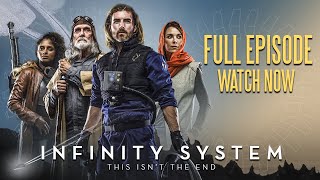
Oh man. I think we're so similar. I'm sure you probably have this too. I think something in my mind is broken when I figure something out. When something becomes too easy or I feel like I figured it out, I think to myself, like, okay, like, this is, you know, working now. I understand, I have a grasp on this. What else could we do? What else is out there? What other forbidden fruit can we taste? So film, of course, was one of those avenues to explore that I knew nothing about. So my readers had always asked for film adaptations, like, hey, when are we going to get a movie? When are we going to get a TV show about your books? So finally I told them 4 years ago, 4 years ago, I told them like, hey, if you give me the money, if we can raise the money to make this into a TV show or a TV show pilot, I'll do it. So we did a Kickstarter and sure enough, they raised $60 grand. So $60,000 to do a pilot. So we did a 30-minute pilot. That was our first one.
That's pretty low budget for—
yes, yes. I'll send you the link too. It's called Infinity System.
So Infinity System, you can watch it on the webpage if you want with this.
Oh yeah, perfect. Thank you. Yeah, so Infinity System is out on YouTube right now. We're just over 300,000 views. So Infinity System came out Everybody loved it, got fulfilled with the Kickstarter, but from then we started building. So we took it to different film festivals and we won 4 or 5 different awards with it. And then that got noticed by some larger publishing houses out of New York and they're like, hey, is this a book? And I was like, no, this is just an original screenplay that I wrote. So they're interested now in turning the— adapting that into a novel. So I have contracts signed with a New York publishing house to— and that book will come out in February of next year. Cool. Um, so that was our first film, and then we kind of like got the bug, like, hey, we're starting to understand this, we're starting to figure out how a film can come together. What if we did something not for a brand new IP but for an IP that already exists? Forsaken Mercenary. So we leveraged all our knowledge from the first film into the second, and we filmed Forsaken Mercenary. And now that is about to start its film festival run as well. It just did. We've won 2 awards already, but a film festival is normally about a year run where you get to go show it around the world, meet different directors and producers, financiers who might be interested in funding more projects.
So how hands-on are you in the filmmaking side of things? I presume you're doing the writing, the screenwriting. Uh, are you producing, directing, acting?
Yeah, I don't know what you believe, but I believe whether we can see it or not that everything happens for a reason. So it's interesting now to see all my corporate experience where I was in charge of millions and millions of dollars of product and teams of like, you know, 50 to 60 people in the corporate world. Now on set where there's, you know, tens of thousands of dollars going into each day of filming, you have to get certain shots. And then also like 50 to 60 people on set between your different departments of like wardrobe and hair and makeup and, you know, the lighting team. So I produce and I write and producing is fun because I get to get out of my shell and I get to, you know, taste a little bit of that corporate world over again.
Um, so let's talk about Forsaken Mercenary. Give me a synopsis without giving away anything you don't want to give away.
For sure. So the easiest way is to think of maybe like, um, Total Recall and Jason Bourne had a love child. So we have our hero who doesn't remember who he was but he knows that he's really good at fighting and for some reason he heals quickly. Characters from his past start reaching out to him and be like, hey, we know who you are. You were this animal before. And now he's struggling. Does he want to be that version he was in the past or is he ready to move on?
So you've written a lot of books. And so this is a question that you're, you know, for some reason authors, oh, you know, that's a stupid question, but it's a valid question. If you don't like to think of it as where do you get your ideas, you can think of it as what kinds of things give you the seeds from which things grow and blossom. Is that better than where do you get your ideas? I don't know.
No, no, I don't think that's a stupid question at all. I think— I don't want to get too deep on you, Ed, because we just met, but I've thought— I've been thinking about that a lot, and maybe you have an answer that I don't know. I've been thinking about where do ideas come from. I know I can get inspired by watching films and seeing different characters, reading books and, you know, reading certain storylines. But I've thought about that, like, where does the idea come from? Are we just manifesting that out of nothing? Like, it has to come from somewhere. Where does that come from?
Yeah, I think for me it's— it varies from book to book. Uh, like, then I have a YA middle grade slash YA novel called Fireboy coming out next month, and, uh, it starts with, uh The first sentence is, I knew things were getting weird when I saw my best friend's face in the campfire. Oh, and I think as much as I can remember, it was that image, you know, watching things in the flames. And what if you saw somebody's face in the flames? And that gave me, you know, and then it's just a question of building on that. It's a spark, literally in this case, and then it, it, it lights other things and you ask questions and you build, build around it. I think that's where it comes from. Um, and then of course the next step after you have the idea is the planning and, and, you know, turning that initial idea into a, into a story that you can flesh out. So what does that look like for you?
Uh, a story that I could flesh out real quick before I answer that. I know this interview isn't about your new book, but I am interested to hear about— so you were saying that initial idea was seeing somebody's face in the flames?
I think so.
Where do you think that came from?
Probably just from watching videos of, or watching fires, you know, camp, sitting around campfires and the things, the images you can see in, in campfires. Uh, if you stare into those images, you can see all sorts of things. And, you know, that's been, it's been done in fiction and magic systems and all that sort of thing, or even Harry Potter with, you know, the, the Floo and, uh, Sirius Black shows up at the fireplace. So it probably may even have gone back to that. I don't know.
Right. I'm wondering too, as a storyteller, if you're able to tap into maybe a creative frequency that maybe is not available to everybody.
I think there's a genetic component to writing. I really do, because I know, you know, I know lots of people, and I've worked with lots of— as a writer-in-residence, I've worked with people who, you know, want to be writers. And sometimes you can just, you can just sort of see a spark in some Sparks again. A spark in something that you don't see in something else. I, I really think there is a, uh, well, like your DNA, that, you know, the— if some people live longer, I think there's definitely a kind of a twist in some people's brains that gives them that. And maybe you develop it from all the reading you do as a young person, but again, maybe you do all the reading as a young person because it's already there.
I don't know, right?
Is this— I feel like we could have a podcast just on that topic, and we could probably talk about an hour. Because it's so interesting to me because for so long I've taken that for granted, that I can tap into this frequency, this imagination that others might not be able to. And I've seen over the years now how important it is that we tell these stories, Ed. Like, I know I've gotten emails and messages of people saying like, you know, they were so lonely or depressed. Uh, one reader is taking care of her husband who has cancer and she says when things get so rough, she escapes into one of my books. So these books that you're writing and that other authors out there are writing are so needed by so many people who can't necessarily tap into whatever it is that you could tap into.
Yeah, I suspect there's something to that. But coming back to your book, yes, once you have that idea, wherever it comes from, uh, what kind of planning process do you go through when you writing Forsaken Mercenary, for example, do you do an extensive outline or how does that work for you?
Yeah, so again, like, God's given me this ability where I don't outline at all. Like, I have no idea what's going to happen, and that's why it's—
you're one of those, huh?
Yeah, yes, I'm one of those where I, I feel like I'm just along on the adventure with the characters, and I can't wait to happen. I might have like an idea Somebody explained it, somebody far smarter than I am explained it kind of like you're walking through a heavy fog, and while you're walking through the fog, like, oh, there's a street lamp on the right side. Maybe a garbage can gets kicked over by a cat. You didn't hear that coming, right? Then there's like two cars that got in an accident. You didn't know that was going to happen until you started walking through the fog.
Well, you're not the only one. As I often say at this point in the interview, uh, you're Let me think. This will be episode 195, I think. So that's how many authors I've talked to on here. And, uh, there, uh, Kendare Blake is the one I often mention who, when I talked to her about her latest book, that's how it started. She just had a sentence and then she just kept writing. She didn't have a— anything worked out. And then my other example is always Peter V. Brett, of the— wrote a series called The Demon Cycle, very, very popular. And he told me that he writes 150-page outlines and then just fills them in. So, and I've had everything in between. So it's, it's always interesting to me the different approaches people take. What does your actual writing day look like? You, you sit and write a certain number of hours, or only when the muse strikes you?
Oh no, I, uh, I always think about that saying— again, I didn't come up with this, it was somebody, uh, somebody else. Somebody else should be credited for this, but she was saying that she's got bills to pay, so that muse better show up. They have a standing appointment when she needs to sit down and she needs to write. So a schedule that was worked out for me is we have two little ones that are homeschooled, so I wake up at 5 AM to write, and I can usually get about 2 hours of solid writing. They're usually up around 6:30, 7 o'clock to start their day. And what I realized is, just like Tom Brady talks a lot about getting into a flow state when he's in a game. And I've realized that as a writer, I can also tap into that flow state. So for me, that means no social media, no phone. I write on Microsoft Word, so it's just a Microsoft Word document in front of me, and it's just my job to get in there and get into the zone and let the words flow. And I found that in about a 20 to 30 minute sprint of no distractions, I can get about 1,000 words in. So if I can do 4 of those a day, it's only 2 hours of actual writing and it's broken up throughout the day. I can get 4,000 words a day and that's great to finish a novel pretty quickly. And then what I do in between is like I'll do a sprint, get up and go grab some coffee, go feed the dogs, get breakfast ready. Even after the kids wake up, my wife starts school with them, their school day. So then I'll go back to the office, hit another 30 minutes, which is another sprint. And I'll do that 4 times throughout the day. And year over year it's worked. And even now as I'm writing scripts and we're getting approached by some larger production companies to write scripts and movies for them, I'm still doing the same thing. I found that I can write 4 pages of script in about 30 minutes. So I'll write 4 pages of script, then I'll give myself the permission to scroll on my phone, or like my reward, right, to go grab something to eat, to do something like that. And then I'll come back, and then in about another 30 minutes I could write 4 more pages of script. And that's how, that's how it's all worked.
Novel writing and script writing— I've done play scripts but not screenwriting— are very different things, and you're adapting your own work. So, um, what What is the difference between them for you, and how do you decide what to leave out? Because that's, that's usually what you're doing going from a novel to a script of any sort.
Yes. So for me, I'm sure everybody's different, from my own experience, and for me, writing scripts, Ed, it is so much easier for me to write a script than it is to write a novel. Because when I'm sitting down writing a novel, it could be, you know, 60, 80, 100,000 words. That I'm putting down to create this novel, where if I'm writing an hour and a half script, so about 90 pages, it's anywhere from like 17,000 words to maybe 19,000 words. So I might write 100,000 words versus 19,000 words. I can get through it so much faster. So, um, and then I've had the privilege to be on set while things are being filmed, and I can see the collaboration that happens between a great director and great actors where they'll elevate my words in ways that I never thought. Like when you watch Infinity System, there's a scene where our hero drinks some coffee and it's not very good. So you see him spit it back in and put it to the side. And that was— yeah. So you're drinking your coffee now. If you didn't like that and you're going to spit it in, put it to the side. That was not in the script, but it's so funny, like his presentation and the director loved it. So, um, I think my words get enhanced by a great director and by a great cast.
Yeah, as I said, I mostly worked— well, I'm an actor as well. I've done, but not a screen actor to speak of. I've done a lot of theater work and, uh, it is theater as well is very collaborative. Although I think in the difference between a play script and a screenplay is that you can rely a great deal more on visuals in a screenplay. Than you can in a playscript where if people aren't talking, there's not much happening up there, there's not much story advancing. You know, you can have moments of silence, but there's going to be a lot of talking.
Yes, good point.
So do you do in your screenplay— again, you're boiling down a novel— how much of the visual element do you put into the screenplay and how much gets brought in by the collaborative process?
I try to be a good collaborator in the way as like, I don't wanna feel, make directors or writers feel or actors feel constrained. So I try to give them a lot of leeway when I'm setting each scene and setting the heading in the location in the space. So I'm a big believer in letting professionals do what they do best. So if I can, you know, make, write the best script possible, and leave room for a director to do his best job and the actors to give them some freedom in playing within this sandbox. That's what I prefer to do.
And speaking of collaboration, once you have a manuscript, a lot of authors have beta readers and writing circles and all that sort of thing. And then of course there's an editor usually involved. What does the end process look like for you once you have a manuscript and you get to the revision?
For sure, exactly what you said. So I have an editor that— so I go through it and I may do the best job I can, and things always slip by. Inevitable. Every, every book I've written, I've never written a perfect book. Probably never will. Definitely never will. As I, as I even pause for a second to think about that, you would be the first. Yeah. So, uh, I do the best job I can once the book's finished to go back and edit, find any of my mistakes. Then it goes to my editor, she sends it back, and I go through another pass. Then it goes to my beta readers a group of readers who I've known for a long time who will go in. Each of them goes in and corrects any missed commas, any extra spaces, anything like that. They go through it, and then I get to go through it again. So it gets, you know, over and over again. And still, Ed, still— I was reading an article the other day that was saying even the traditional publishers, right, like HarperCollins, Penguin Random House, on average they miss 7 typos per novel on average. So I mean, things are still going to get through. It's just on us to do the best job that we can.
The way our kitchen is set up, we can't really work side by side, so my wife will be cooking dinner and I sit over to the side and I read her audiobook. And reading books out loud is where you really spot the typos that were missed. And the same thing applies to yours. The best way to find a typo in your book is to do a public reading. Because it's probably on the first page that you decide to read from.
Yes, I forget the science, or if there's a term for it, but I was looking into this too. It's like, um, your brain knows what's supposed to be there, so it'll almost like, um, tell your eyes like, oh, this is correct, it's supposed to be this word, and you'll just keep on going right along.
I actually find for copy editing, I will sometimes not necessarily read aloud, but at least subvocalize while I'm looking over my stuff so that I'm forcing myself to read every word and look at every word. Still doesn't catch everything, but it helps sometimes.
Yes, you're right, that's a great tip.
Uh, so the, um, sorry, Forsaken Mercenary, that's what I was— when did the book come out?
So Forsaken Mercenary came out, I think it was like 2019, maybe like around 5-ish years ago. And then, um, Forsaken Mercenary, and I have another series called Hunters for Hire. Those are like our two biggest series. So when it came to starting to adapt more and more of our films, we decided to go with Forsaken Mercenary. But there's other films now in the works. And what's— it's really true, like the Field of Dreams saying that if you build it, they will come. So we just started building our— the film arm of our company. And just like that saying, there's been investors now coming and financiers and seeing what we're doing after they watch Infinity System and they're like, hey, what else you got? So we're able to— we're actually going out to dinner tonight to go meet somebody to invest in one of our films. But it's opened up so many doors that we're so grateful for. So even though we started with Forsaken Mercenary, Hunters for Hire will be coming soon and some other projects.
Did you have a clue when you quit your job that you you would get to this level in 14 years?
And I had no— like, people ask me now, and I do see value in this, don't get me wrong, I'm not knocking this, but like, there's exercises of like, you know, where do you see yourself 5 years from now? Where are you planning to be 10 years from now? And I, I can see a year, I can see like a year of what I think is going to happen. And then that's it. Because I did not see any of this happening 5 years ago. 5 years ago, 10 years ago. Yeah, like, so if I go back 15 years ago, I never knew I was going to write. 10 years ago, I never knew I was going to do any film. 5 years ago, I had no idea that we'd be talking to like the directors and actors that we're talking to now. So yeah, it's, it's a crazy roller coaster ride that I'm grateful for. But it's so hard for me to imagine 5 or 10 years down the road.
So what gives you the most pleasure? Is it, you know, the fame and fortune, or those things you're talking about where the readers come to you and say, this book meant so much to me?
You know what, I think again, I'm really good at using other people's words, so this is not— these are not my words, and give somebody else credit. But somebody said, I don't know if it was maybe Mark Twain said this one, but the two greatest days in somebody's life are the day that they're born and then the day they find out why. So I know why I was born. I was born to tell stories. And whatever it is that you and I could tap into, whatever that might be, I feel like it's my duty and the reason I was created to spread that out to others who might not be able to tap into these stories. So I am having just such a great time doing what I know I was created to do.
What people— you've mentioned, you know, meetings and movies and stuff. But what specifically are you working on now, book project-wise?
Uh, so book project-wise, there was that publishing house, and, and I, I'm not being vague for the sake of just like being vague and mysterious. He's not mentioning any names, but I'm just a big believer in like waiting until it actually comes out, right? Because who knows, who knows what may or may not happen. It all sounds good. But so the book that I, uh, am finishing up now is going to that New York publisher, so that will come out in February of next year. And then I'm writing a book for, uh, our own publishing imprint that'll be coming out later on this year. And then I'm writing a script for, um, again, just being super vague, but I'm writing a script for an actor that, uh, I'll tell you offline, but for an actor that you all know. So yeah, it's a bunch of really cool projects coming down the line.
And your imprint is Archimedes Books, right?
Yes, Archimedes Books.
Archimedes. You say Archimedes, I say Archimedes.
Um, sorry.
And, uh, well, this is where I say, where can people find you online?
So yeah, so I'm on, uh, Facebook, Jonathan Yanez, uh, Y-A-N-E-Z. Our website is jonathan-yanes.com. And on Instagram, if you wanted— if you had any questions about writing or wanted to reach out, I'm really active on Instagram at Author Jonathan Yanias.
Yeah, I somehow missed that memo where all of your social media handles are supposed to be the same, so mine are different on every, on everyone.
Ed, don't, don't worry, I'm going to make you feel really good about yourself right now. When I was first making my email address, all Jonathan Yanias was taken, a bunch of iterations were taken, so I'm like, oh, I'll just put out my full name, but it's so long now. Every time somebody asks me for my email, I'm like, oh no, but I've been too many years with it to try to like change it now because it's my whole name including my middle name. So now it's jonathan.allen.yanez@gmail.com.
Oh, that's a lot of opportunities for typos and putting in the email.
Yes, it's like— but it's like one of those things now I'm like, oh, I've come so far. How many things would I have to change now if I was going to change my email address?
I just use e-willet, but where's— oh, it's over on this side. But the second T It's over on this side to me. It's probably the other side from the actual view.
But anyway, you have it on the right side. You were doing it right.
Oh, good. I'm never sure because you get a mirror image sometimes, but the, the second T gets dropped off all the time. And then I get an awful lot of email to other E. Willetts who are somehow a little bit different. So there's no ideal solution.
That sounds like some story fodder right there. What kind of emails are you—
I've gotten is like medical records and things like that.
Oh my goodness.
I have to send them back and say, you know, this is not me. Please do not send this to me. Yeah, well, anyway, so it's been great having you on and yeah, I hope you continue to do all these things that you're doing and have the same great success telling stories in all these different formats going forward.
Awesome. Thanks so much, Ed. I appreciate your time.
Thank you. And thanks again to Jonathan for that great conversation. That was a lot of fun. I hope you enjoyed hearing it as much as I enjoyed conducting it. That's what you call it. Do you conduct a podcast? You host one, I guess. That's the word I'm looking for.
That's it for this episode of The World Shapers.
There are more episodes in the works already, so please keep coming back to check out the authors that I speak with. You can follow The World Shapers online at theworldshapers.com, where you'll find more information, links, and pictures of the books and all that sort of thing. Plus, the audio-only version can be accessed there, as well as in Spotify and all the other places that fine podcasts are aired. You can also find The World Shapers on X @theworldshapers, on Facebook @theworldshapers. You can find me personally at edwardwillett.com.
That's my main website.
You can also find, well, I have several others. There's also ecblakeguck.com and chargeofexcalibur.com, but edwardwillett.com is the main one. You can find me on X at E. Willett. Don't forget that second T on Willett. You can find me on Instagram at Edward Willett Author, on Facebook at Edward.Willett, and on various other social media, including YouTube. As you may know, if you're actually watching this on YouTube, you're probably on my channel. Where among other things I, I walk around my home city of Regina and I live stream and blab as I walk. So if that sort of thing appeals to you, Walking in Regina is the name of the playlist.
You can find that.
I've been a bit sporadic recently because of one thing and another, but as we get further into the summer, around about July, I hope to get back to a more regular, almost everyday schedule of Walking in Regina. And Shadow Paw Press should be mentioned as well.
Again, Shadow Paw Press is my publishing company.
You can find it at shadowpawpress.com. You can find it at, uh, on X at Shadowpaw Press, on Facebook at Shadowpaw Press, and on Instagram at Shadowpaw Press.
That's it for this episode of The World Shapers.
I hope that you enjoyed it, and I hope that you will continue to come back as I continue to talk to other authors about their latest books.
That's it for this time.
Bye for now.
More from Jonathan


MILSFPODS2EP23 The boys interview sci-fi author and screenwriter, Jonathan Yanez!






House of Wolves Episode Sixteen - Learn About Our New Film Project and How You Can Be Involved.