Jonathan Yanez - BingeBooks Book Club Sept 2023

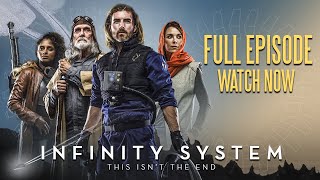
In this live Binge Books Book Club interview, host Alessandra Torre talks with prolific author Jonathan Yáñez about his 11‑year writing career, during which he has published roughly 90 books across fantasy and science‑fiction. Yáñez explains his genre focus—early fantasy series like Hunters for Hire and later space‑opera/thriller series such as Galactic Guardians (also known as Legend Rising) and Forsaken Mercenary—and describes the narrative premise of each. He details how he built a reader community called the “Reading Wolves” pack on Facebook, using it for feedback, merchandise, and support. The conversation shifts to his recent expansion into comics and screen media: the original‑idea film Infinity System (a pilot posted on YouTube) and the adaptation of the Forsaken Mercenary series into a feature‑film script, with his wife serving as CEO and, soon, director. Yáñez shares the practical challenges of adapting long‑form genre books to screen—script length, cutting scenes, budget constraints, and the need to target sci‑fi/fantasy decision‑makers—while emphasizing a producer philosophy of caring for the crew. He also outlines his storytelling structure (character growth arcs, villain arcs, found‑family and “base‑building” tropes) and clarifies content ratings (PG‑13‑style violence, no sex or profanity). The interview ends with a giveaway of signed copies of Drop Ship (the first Forsaken Mercenary novel).
Chapters
Hello everyone and welcome to another Binge Books Book Club chat. I am your host Alessandra Torre and I am here today with Jonathan Yáñez and we are going to be talking all about his books, his series, um, his book Legend Rising, but also some really exciting projects that he has in the works. So welcome to Binge Books, Jonathan. It's great to have you here. Do you want to just tell the audience just kind of a little bit about yourself, what type of books you write?
Well, first of all, thank you for having me. I've been like that little kid on the bench who really wants to participate in a game. As I see you doing all these Binge Books interviews, I'm like, oh, maybe my time is going to come. When is it? When my name is going to be called and I can get into the game. So thank you for having me.
You're up. I love it.
I've been writing, let's see, for the last 11 years, science fiction and fantasy. I didn't count myself, but a popular question I get asked is like, how many books have you written? So one of our team members had to count for something we were doing, a promotion. And I guess we're at 90 now. So we're at 90 books in 11 years. So it's like 8 books a year. But I don't know also if that included box sets. So if you threw box sets in there, then it's down to maybe like 7 books a year. And then you throw in foreign translations and maybe it's like 6 books a year. So it sounds super impressive, but when you start thinking about it like that, Um, yeah, so I've been like, made all the mistakes, just fell on my face for probably like the first 5 years. I feel like I've been given a lot of opportunities now just because I didn't give up. They're like, okay, who's left? We give everybody else opportunities. Who's still like hanging in there?
Yeah, there he is, there he is. Fingers. So what's your main genre? Like, is it military science fiction? Is it— what is— what's your main subgenre that you write in?
So I started in fantasy. So I wrote like 3 or 4 different series in fantasy, and I still write fantasy now. And then I started in sci-fi maybe like 6 years ago, and it's primarily space opera or maybe like a sci-fi thriller. So Forsaken Mercenary has very deep thriller feels to it where it's set in the near future, but it's not like they're exploring other planets yet. Not like that.
I love that. It took me longer than it should have to kind of differentiate between fantasy and sci-fi. So, but what, when you very first started writing, what was like your life at that time? Were you always a writer? Did you have like a boring day job and you started doing this on the side, or did you just jump in full time?
No, I have a lot of skeletons in the closet. This is, this story is bananas. As I look back on it and think about it, I'm like, oh man, I'm glad things worked out. Because they could very easily not have worked out. So I graduated from college with an English degree, wanted to write, but wasn't really sure how to go about it. But I needed money in the meantime. It's not like I could just like hang out and try to figure this out. So I worked at a job in sales and management for 5 years. And I just like, it was just like soul crushing. And I just was fed up enough one day after 5 years of working at this job where I just quit. Like no plan at all besides that I was just going to—
you were like, forget this, I'm out.
No idea at all. Like, you know, those people who need to be talked off the ledge? I'm like the last person that should try to talk somebody else off the ledge. I would probably hold their hand and say, I'll jump with you. Let's— I'll jump with you. We'll figure this out. So I just quit. So I had to tell my wife when I got home, like, hey, I don't have a job anymore. So I cashed in my 401(k) to give me some money in the meantime. And then I started personal training at a gym part-time while I wrote full-time. And started just trying to figure out, like, what did it mean to be published and what were the different options? And just like everything from traditional to independent. And I started off traditionally published and then went to independent. But now fast forward 11 years, now I'm kind of like a hybrid with a literary agent again.
Oh, I love that. And so when did you really kind of hit it big? Like, when did you know, like, okay, I don't need to go back to another job this is, this is what I'm going to do. Well, did you find success super early on?
No, but I think that there's something broken in my head. Like, I don't think this is normal, like normal people are like this. But I just kind of like, when I quit my job, I was personal training part-time, there was like no black and white, there was like only forward. There was no like, oh, I'm going to see if this was going to work out. Like, we were going to make it work out, like whatever it takes, whether it took, you know, 10 years, 11 years, whatever, like we were going to make make it happen. So there was no looking back. I just went from personal training part-time to writing full-time till eventually I didn't need a personal trainer anymore. So then just writing full-time. And now it's like a very similar path with film. Now that we make a comfortable living with writing, we're like, okay, so like, what's next? What else is out there? Comic books, comic books, movies. We're starting to do movies. But like, there's no— there's never any doubt in my mind like, well, if it doesn't work, like, no, this is going to work out. It might take a decade or two, But I'll still be there trying to figure it out 20 years from now.
Oh my gosh. And we're certainly going to talk about films. But before we jump into that, I do want to talk about kind of the book we had as a focus this month, which was Legend Rising. So if there's someone watching who hasn't read Legend Rising, can you give us kind of the elevator pitch for that book?
Yeah, so there's a war going on at the center of the universe, the oldest galaxy. Your classic, like, light versus dark. And they need guardians to help with the fight. So they recruit people not for who they are today, but for the wealth of potential they could have if they applied themselves. So we meet like a broken down, you know, down on his luck, depressed truck driver named Max Tycho who's lost everything. And they reach out to him not because of who he is today, but for the depth of potential he has if he applies himself. And I feel like that storyline is like all of us, like what could we be if we dug down deep, no excuses, as hard as we could and we fought for what we really wanted? Like what are we capable of?
So they going back in time to get these Guardians, or these are— are they aware that there's a battle happening, or this is like normal Earth?
Yeah, so this is normal Earth, every day he's driving his truck. We have I have a group called Jonathan Yáñez's Reading Wolves, and we have a lot of truck drivers in our group. And I was just thinking of like a way to thank them because during the pandemic, the truck drivers like never stopped. They were working like nonstop hours. So I was thinking like, what, how can I say thank you to them? So I made the main character a truck driver. And yeah, so it's just present day. He's chosen to help this intergalactic war between the light and the dark.
I love that. I love that because, um, I haven't finished the book, but in starting off— and I can see that someone's reading it now— they said certainly starting off well. And it does start off with a bang, but it also— he is a very ordinary guy. I mean, you can see a little bit of potential in him, but he is, you know, I mean, he's not a superstar yet. Um, so it— and does that character Max continue through all of the books in this series? Is he the main character of all of them?
Yeah, so what I really enjoy— I enjoy them both. Like, a lot of times in my mind, I'll either start with the main character where he's already, like, knows what's going on, he has, like, special trained, or I start with a character like Max where he's, like, starting from level zero and you get to see his progression and you get to root for him as he fights and throughout the book. So he— his character spans all 6 books that are out now and the 7th one that will be coming out in January.
And is the 7th one the last one, or are there more books ahead for him?
I think so. I think 7— I tried to write with what the characters are telling me, so I think 7 is going to come to a good stopping place for him. Maybe not forever, but like at least for now, a good place where we can leave Max in a good space, um, where his character arc, at least for now, is finished. Like, I don't like leaving series unfinished, so So definitely have like a good payoff at the end.
Yeah, that makes perfect sense. And one of the audience members said former long-haul trucker, so it hits home. I love that. So, so that is the Galactic Guardians series. And is each of those— you need to start with book 1, I'm assuming. Can they jump in at book 2 or book 3?
Yeah, it would make most sense if you jumped in at book 1. Like, you could jump in like at 2 or 3. So what I started doing, I tried to listen to readers as much as I can. So a lot of the times the readers were saying like, hey, like, you'll have a book come out, but you know, I'll read like 10 or 20 books in between when your next book comes out, so it's hard for me to remember kind of like what happens in book 1. So at the beginning of like books 2 on, I put previously on So like as soon as you open a book, there's like a previously in the Galactic Guardians universe and it catches you up with anything that you might have missed or forgotten about with the previous book. But they could—
that if they didn't want it, like if they just finished book 2.
Yes, you could just skip that. It's like 2 pages long. You can just skip that. But if you did jump in like to book 3 there without reading book 1 and 2, there'll be like a section, 2-page section at the front catching you up on like what happened.
Oh, I love that. That, yeah, that's unique. I— and something I also often struggle with, with long series because I don't remember especially if there has been, right? Yeah. And we have another, um, another trucker says they have made the days driving go very quickly. So, uh, yeah, I love that. And are these on audio?
Yes. So Galactic Guardians is available on audio. I think they have the first 4 books out maybe on audio. And both those names that popped up, I recognize Charlie and Alan from, uh, our pack. So thanks guys, thanks for coming in.
So tell us about the pack. Is this on Facebook?
Um, yeah, so it's on Facebook. I'm actually wearing one of our shirts right now. So there's our shirt with our wolf logo on it. Um, 5 years ago, 6 years ago, some of our readers like, hey, we should really start a Facebook group. And at first I didn't want to, like, I'll be honest, just because there's so much going on. There is so much going on. Um, and I was like, I just don't have time to do this. But it was definitely one of the best decisions that I've ever made to go ahead and start, uh, the community. Because it's, it's grown now, like, where it's not about me at all, right? It's about friendship and community and sharing stories and laughs. And like, somebody can share when they're sick or they're going through a hard time, and then we see a whole bunch of people saying like, hey, we're praying for you, like, we're thinking about you, like, anything that we could do to help. So it's kind of a place now that I feel like God's using to bring people together in a community to support one another.
I love that. I love that. And do you chime into that community if you are struggling with a craft issue? Like if you are thinking about where to take a book or whether to write this series or that series, is that something that you interact with the group on?
For sure. Yeah. I try to interact if not every day, maybe like every other day, pop in and say hi to everybody or pose a question or share a post. And they've helped us do a lot of our merchandising. So I'm like, I could, you know, create merchandise for what I think maybe people want, or I could ask them directly, specifically, what do you want? So we'll do polls like that, so they'll tell me exactly what they're interested in, and we'll do our next merchandise line on whatever they want.
So that you're on your shirt, is this like the Wolf Pack logo, or that's from a specific series or book?
Yeah, yeah. So this is the first logo that we started off with That's the wolf. It shows up in our book too, and characters in different books have like tattoos of it and stuff like that. So it shows up all over the place. And then we would like— our 2.0 version is the shirt that I'm wearing where he has an axe and a pen in his mouth.
Super cool. Yeah, I love that. Were your fantasy books— was there a wolf involved, or is it—
yeah, so our best-selling fantasy series is called Hunters for Hire. And, um, he has the wolf tattoo that he wears. Like, that's our symbol. And, uh, the mantra in all our books now over the last few years, whether it's fantasy or sci-fi, is "Send me." That's like the mantra that they use, the motto that they use.
Send me. And I didn't know— oh yeah, I know what that meant. So yeah, that's the truth too.
Yeah.
Is it like, send me to that foreign thing? Like, I volunteer as tribute type thing?
Yeah, yeah, yeah. So there's a mantra. I'm not— I probably should have memorized it by now, but it's basically like, you know, when the light is struggling on its knees and the darkness is spreading, who will go? And then the guardians or the hunters will say, send me. And they'll be like, and when all hope is lost and the day is about to be broken, who will go? And then they repeat together, send me. So it's like their mantra, their motto.
Oh, I love that. And you have a lot to update them in your group because you aren't just a writer, you aren't just books. You have moved into the, I guess, production phase. I don't know the right way to say that, but can you talk about— you were writing books and then at some point in time you decided to bring them to life on the screen. Um, so how did that come about?
Yeah, so I'm always trying to learn, and like, um, it's a very fine line between being grateful, which I am, I'm very grateful, I wake up grateful every morning, but then also just like an unending hunger, a deep hunger to do more, you know what I mean? Like, grateful, thank you God so much, thank you, I'm so grateful for everything you've given me. Now let's go grind for the next 12 hours a day and see what we can do. So, uh, we got to a point where we were, uh, comfortable with publishing books. Like, we— I'm not saying we know everything, but we had learned a lot to the point now we're building a community, we're able to release, release these books and continue to grow. So we're like, okay, like, we understand this. What else is there to figure out? So I wanted to write comic books. That was super quick. So I learned how to write comic books, and we have our first comic book coming out. And then decided, like, okay, like, what's the forbidden fruit that must be tasted? Like, what does every author want? Every author would like to see.
Every author wants, yeah.
Right, everybody. And I also thought, like, how sad it was because I see a lot of other authors talking about, like, their readers will ask them, like, hey, when are we going to get a TV series? Or this would make a great movie. And there's almost like no hope with the author. The comments, the responses are usually like, oh, haha, well, if Hollywood comes knocking.
Yeah.
And then that's like the end of it. And I'm like, isn't that just so sad? Like, why did you decide to stop now? Why are you putting that limit on yourself now? Like, look at everything that you've done as an author. You're writing books and publishing, but for some reason you decided that's enough, that's all you want, and you're just going to stay. And who knows, like, if I'm not trying to knock anybody, like, if that makes them happy and all they want to do is write then more power to them. But, uh, well, a lot of people— it's like, I use this analogy all the time, like, they got really good at hunting deer, right? They got really good at publishing books, hunting deer, and they're just going to hunt deer for the rest of their life. That's what they want. Like, good, you know, good for them. But I want to go hunt some dragons and minotaurs, you know what I mean? Like, we figured out how to hunt, like, the, you know, the other stuff. Now let's go to these mountaintops and see how far we could go. So I did some research on different authors who have made the transition to writing screenplays, and even some of them, even in some cases, directing or producing their own TV shows. And I came across somebody called Michael Crichton. Are you familiar with him?
I've heard of him. Yeah, have you? I have. I read a book and watched a movie that he did once.
Yeah, yeah, yeah, yeah. So Michael Crichton at one point had the number one selling book. It was Timeline. The number one selling movie. I think it might have been the second Jurassic Park. And the number one TV show, ER. All three. TV show.
He was behind ER.
Yeah, he went to medical school first before he started writing. Wow. And consistently, like, uh, I've always put limits on myself. Like, I always think like, okay, I really— like, early on, I really want to publish a book. I really want to see my book in a bookstore. I really want to be invited on Binge Books. Like, I'm always setting those goals, right? But I think I feel like I need to dream bigger. So I'm like, what's the biggest I could dream? I was like, I'm going to pull a Michael Crichton. Yeah, it takes me like a decade or two decades or whatever. Like, I'm not going anywhere. So now that we have books, kind of like we understand the life of a book and how it all works. For the last 4 or 5 years, we started unraveling film. Like, what does it mean to be in your own studio? What does it mean to be a producer? Like, how does it all work? Like, where do you find funding and distribution? And how does a casting director work with the stunt choreographer? How does, you know, hair and makeup work with wardrobe and all this kind of stuff? So we've just been learning for the last 4 years. It's been fun.
Well, and so I know you're in like the Los Angeles area now, but were you there before or did you move there specifically to pursue this this portion of your business?
No, I've always lived in California. So I grew up in Ventura County, which is only like 2 hours away, and then I went to school down here in Orange County and just stayed. So I've always been here.
Okay, so you are— yeah. And, um, and you've referred a couple times like we— like we figured out this, we did that. So who is we?
Yeah, so my wife plays a huge role in our company. She worked for an advertising agency for many years. And then once the book, um, our book started taking off, she retired from that job just to come and run our company. So she's been helping like produce films and helping with the marketing advertising side. Uh, we do a pack meetup, like an in-person meetup for our pack every year. So I think last year we had 30, 30-some people come. This year we're expecting like maybe closer to 40 or 50. So we're getting more and more people to come. She helps run the events. We did signings at like WonderCon and Comic-Con this year. So like, there's so much it takes. Like, oh, you know, that's like, it takes an army of people.
Yeah.
Yes, for sure.
So she's the village leader.
Yes. Yeah, she's my CEO. Yeah, she just refers to me as the talent.
Yeah. So, and did the same thing. So when you moved into film, she took leadership role in that as well.
Yeah, so we are both producing. So producing is basically like, if you don't know anything about film, think about like the captain of a ship. The producer is the captain of the ship. They're finding the director, they're finding the actors, they're finding the funding, everything coming together. So last, for Infinity System, our first film, we were both producers, and then this time around she's going to be directing. So she's directing Forsaken Mercenary. Yeah. And then I'll be— I acted in Infinity System. I'll be acting in Forsaken Mercenary too. Not a big role, just like a small couple of lines that I can't mess up.
Yeah, a cameo. So writing screenplays is different. I mean, there's different beats, there's different pacing, and there's the whole structure of it. So how did you make that transition And did you write the pilot or did you write the script for both of these?
Yeah. So it's actually, again, I want to be careful with my words because I don't want to knock anybody who's on the screenwriting side and really struggles with that. So I'll just speak to myself from my own personal experience. I'm going from writing a novel that's 80,000 to 100,000 words down to writing a script. So a script is about 90 pages. Yeah, that's about 17,000 words. So going from 17,000 words versus 100,000, it's much easier for me to write a script, right? Yeah, so it was a much easier transition. Like, of course I had to learn the formatting, but, um, I forget who it was, there's a famous samurai that said, at first it's hard, but at first everything's hard. Yeah, and I think about that all the time, right? Like, I was teaching my daughter and my son, like, different things in life.
Hard.
Yeah, yeah, exactly. You don't stop just because it's hard. I think of the analogy all the time. Somebody else told me this, much smarter than I am, but they're like, what if a baby stopped trying to walk? You know what I mean? They're like, oh, this is too hard trying to walk. I just keep on falling. And they just crawled for the rest of their life, right? So I think about that too when I'm writing. Like, why would I give up? Of course it's going to be hard at the beginning. Everything's hard at the beginning.
So now with your first film project, you were dealing with a book that had already been written or a book that had not yet been written?
Yeah. So Infinity System, we just put it up on YouTube like 2 months ago and we passed 100,000 views already.
Wow.
There's over 100,000 views. So Infinity System existed as just an idea, as an original idea, not a book series. So we wrote it, filmed it, it's up. It got us a literary agent and an entertainment lawyer. And what they want to do with the book first is sell it to— as a series, as a book series, before it goes to a TV show.
So you have not yet written it as a book, or you have written it as a book?
Oh, I wrote it. It's all right. Yeah, yeah. Um, Infinity— so with Infinity System, uh, we shot the pilot, and that got us the literary agent and entertainment lawyer, and they're, uh, pitching the book series.
They're pitching it.
Okay. I've written it. But it's not like published yet.
Sure.
Like it's on my computer and they have it to give to different publishers.
But you wrote the script first and then did you use the script as an outline for the book?
Yes.
Okay. All right. Very interesting. But this next project that you're doing, it's the reverse. You already have the book out.
Yeah. So with Forsaken Mercenary, Forsaken Mercenary is a finished 12-book series. That I wrote a script for and that we'll be shooting in 2 weeks. In 2 weeks we're going to be shooting, and, um, that will have a different life because the book series already exists. We won't be waiting to pick it up as a book series and then a TV show. So this one we're going to be pitching as a movie. So we'll have kind of like 2 horses in the race now.
And so did you have to decide what scenes to cut? I mean, were there scenes you had to cut to trim it down to movie length?
Oh yeah, for sure. So the— I mean, again, the full book, I think Forsaken Mercenary might be like 60,000 words. It's shorter, but still going from 60,000 words, you know, just to a few thousand, there's a lot that you have to cut out. So what we'll be filming is just like the very beginning of what is the Forsaken Mercenary series. We're not filming the whole movie yet, so we're doing kind of like almost like a pilot to then pitch to different studios to see see who would pick it up as a full-length movie.
And if you were going to give an elevator pitch on Forsaken Mercenaries, what is that about?
Yeah, so Forsaken Mercenaries is like Total Recall meets Jason Bourne. So we have a hero who, you know, doesn't remember his past, but he knows he's good at fighting for some reason. And for some reason, he's healing much faster than he should. Characters coming from his past telling them like, hey, we know who you are. You're not this nice guy who you think you are. Like you're an animal. And then he has to decide whether he's going to go back to that world or try to be better.
But right now, when the book starts, he's in like a normal lifestyle.
Yeah, yeah, yeah. So when the book starts, he's like this normal guy who's really good at fighting, healing, and then a character comes in from his past and starts telling him like, hey, I have all the answers you never knew you wanted.
Yeah. And there's a— you said that's a 12-book series?
Yes, Forsaken Mercenaries, 12 books, and I think maybe like 4 short stories.
And all the same main character?
Uh-huh.
Yeah. Wow, that's interesting. From, I'm an author who doesn't write in long series, so is it hard to be in one character's head the whole time? Like, is there enough to unpack there? You have to continually, you know, or you just really flesh out a character before you ever start writing?
So I think about it kind of like in arcs. So there is an arc for the whole 12 books And the arc is his growth, his growth as a human being, right? That's like something we can all relate to. We're all, we're all growing. And so hopefully we're all growing in some way.
Broken in some way.
Yes, we are for sure.
Yeah, better, right?
100%. We're all broken in some way. So within that 12-book arc of his progression, there's smaller arcs. So what I found that really works for me is doing the villains as an arc. So the first 4 books is one villain. And then as soon as that comes to an end, like on book 4, I'm already introducing the next villain who's going to be the villain for the next 4 books. And then within those are smaller arcs of his— I really like the, uh, found family trope, or like, you know, loyalty makes you family, not blood.
Yeah.
So he's finding all these characters who are all broken and messed up, just like all of us are, in different ways, accumulating a family.
Yes.
And then there's also another trope that I throw in is it's called base building and lit RPG. But basically it's kind of like building your assets. So he starts with nothing, but then he starts getting a family around him. Then he meets an AI. Then he finds his gifted mansion. And then so you see him throughout the series starting to build a whole fleet, like his own army, basically.
I love that. And we did get Drew knew the quote or found it. So that's Miyamoto.
Oh, yeah. Miyamoto Musashi. I read his book. Yeah. He has an audiobook called— I think it's The Book of Five Rings.
Yeah. He was like difficult at first, but all things are difficult at first.
Yeah. He was in real life. He's like, he's a real dude. He was like a hardcore samurai who never lost a battle. It was either 40 or 50-some kills that he had. But what was crazy about him is that he appreciated art in all forms. So he was like a basket weaver. He like collected flowers and stuff like that. So that was cool.
So he had, yeah, another side of him, not just warfare.
Yes.
So anyone listening, we only have 3 and a half minutes left. So if you have any questions for Jonathan, this is your final opportunity. If someone's reading your books, what's the level if they're looking at them of like violence or sexuality language?
Yeah, so I think my mom would murder me in my sleep if I did any sort of like, um, sex or cursing. There's no sex or cursing, but there is violence. So kind of like, think of like if you're okay with a Marvel movie, kind of like a PG-13 rating, but for violence. So like Iron Man, Captain America, Thor, all that type of violence is the type of violence that I'm writing.
All right, but not super gory? Not—
yeah, no, no, no, not like Saw. I'm not a like a horror fan at all. There was like a trailer that came on for Saw and I was closing my eyes along with the kids. So I had my hands over my face too.
That's perfect. That's really helpful. And, you know, talking about any author who's like, oh, I want to make my books into movies, you have a bigger, a bigger road to climb, I would think, because of your genre. You know, if a women's fiction author wants to make a story about, you know, 3 women at a beach house, I would think like the budget and the set would be much easier. So was that a struggle at all? And I know, I know you were talking behind the scenes before this about stunts and things like that. So what are the hardest things you have to overcome? And is there anything you had to cut out of a book because you couldn't make that transition, but, you know, in the movie form?
No, you're absolutely right. So like, we have a harder road because we're considered like a genre category where we're science fiction fantasy. We've been to— because we've won a bunch of different awards with Infinity System, so we got to go to a lot of different film festivals and meet a lot of people in the industry. And they're all like, oh, like, if you only wrote romance, or if you only wrote, like, Hallmark, like, because those are easier to film, right? You don't have to worry about stunts. You don't have to worry about, like, these exotic locations. And also the market for, like, romance or Hallmark or all that kind of stuff, there's a bigger market for that than there is for, like, sci-fi fantasy. So this time around with Forsaken Mercenary, we have a plan now to kind of, like, really isolate and zero in on the decision makers within science fiction fantasy, as opposed to trying to cast like this wide net. Because we cast the wide net and everybody wants me to write Hallmark or romance.
Oh, that's so interesting. I have to say, I think you did such a fantastic job. Just, I mean, you, you don't have, you know, $10 million, $20 million budgets, but the production quality on your work is so fantastic at what I'm assuming is a tight budget. So I don't know if you did most of that with computer animations or I don't know how you did it, but I have to say, like, if anyone goes and watches and we posted the link to Infinity System on the social media, but any, any tips that you have for a filmmaker starting out?
Yeah, for sure. So what I learned early on with books as well is my job as a producer is to just set people up for success. So like, uh, on our set, in, in our set in 2 weeks from now, I'm gonna let them know, like, we hand-chosen pick people who are great at what they do. I'm not trying to micromanage anybody. Like, you do what you do best, and whatever you need, I'll make sure you have so you can perform at your best. So I told that to the crew during Infinity System. So somebody asked for Red Bulls, I made sure that there were a pack of Red Bulls there the next day, bright and early, right? Like, whatever you need. Like, we're making sure that we fed them like really great food on set. I was going around asking them if they needed anything. There was a point, I think it was like on our third day of filming Infinity System, and it was like a 12-hour day. So everybody was kind of like, you know, lagging. And the director was like, you know what we should do? We should do like a Starbucks run that will really like boost everybody up, make them happy. So I'm gonna be honest with you, like I did not want to go around to like 30 crew members and ask them with my pad and paper like, hey, what would you like, you know, from Starbucks, right? Not because it was like— it definitely was humbling, but not because of that. But I just didn't— I don't want to do that to anybody. I don't want to go around and take— I don't even like taking—
you don't want to be at Starbucks giving them a 30-order—
yes, yes. So I went around with a pad and paper and I was getting all the orders. And then this is a real story, it's going to sound like I'm messing around, but I asked one of the guys who I won't mention his name, I was like, okay, what would you like from Starbucks? And he gave me this crazy order. Like, I didn't know what he was drinking. It was like, I'll take a soy venti latte with 2 shots of espresso and whipped cream on the side with almond milk shaken with ice. And I don't even know what it was. And I was like, I just looked at him dead straight and I was like, I'm not going to write all that down. If you would like to write that down on this piece of paper for the order, you could write down. So I gave him the piece of paper and the pencil. He wrote it down. It was an 8 by 11 sheet of paper, right? It was 2 lines. His one order was like 2 lines worth of text. I was like, okay, that's what he wants. So we ended up doing the Starbucks run. But yeah, like, yeah, so it was like basically humbling myself to the point where like I'm willing to do anything. I'm willing to like sweep the set. I'm the first one there, I'm the last one to leave. And I think that really sets the tone. If everybody sees you, the producer is supposed to be like, the executive producer is supposed to be kind of like, oh, like the boss, right? So if they see the boss kind of like running around helping everybody else out, I think it makes them want to work harder too.
100%. 100%. And before we sign off, we do have winners. So thank you so much, Jonathan, to donating signed copies. We have 3 winners. So big congratulations. You're winning a signed copy of Drop Ship, which is the first in the Forsaken Mercenary series. So huge congrats to— and I hope I pronounce your name right.
I can do it. I'll do it.
You got it.
I'll fall on the sword. So I'm going to say congratulations, Sayaka M, Karina I, and Sherry P. All right, fantastic.
So big congrats to those winners. We will reach out to you via email to set up the shipment of those books. And thank you, Jonathan, for everything you shared today. We really appreciate your time and coming on to Binge Books.
Yeah, no worries. Thanks so much for asking me.
Thank you all. And we'll be back in a month. With another Binge Books Live Book Club author chat. Thank you all. Happy reading. We'll see you later.
More from Jonathan



MILSFPODS2EP23 The boys interview sci-fi author and screenwriter, Jonathan Yanez!





House of Wolves Episode Sixteen - Learn About Our New Film Project and How You Can Be Involved.