LitRPG Author Jonathan Yanez discusses latest novel "Hard Reset"

In this Stage Left Unsaid interview, host Adam Ferguson talks with prolific LitRPG author Jonathan Yanez about his upcoming novel Hard Reset and his extensive career. Yanez explains his lifelong love of video games and movies like Jumanji that led him to LitRPG, and gives a spoiler‑light overview of Hard Reset’s premise: a protagonist awakens in a coffin inside a simulated, alien‑type survival game designed by a corporation to train humanity for a post‑apocalyptic world. He describes his "pantser" writing style—writing without outlines, relying on subconscious brainstorming and minimal note‑taking— and how he maintains plot continuity across over 60 books. Yanez recounts his publishing journey, from an early traditional deal to founding his own publishing company, balancing part‑time work while writing full‑time. He details fan‑funded film adaptations (Infinity System on YouTube and the award‑winning Forsaken Mercenary) and the role of community support in financing media projects. The conversation turns to audience building: leveraging personal connections, social media, reviews from friends, and the "Field of Dreams" mentality that readers will find the author’s work. Yanez comments on the recent explosion of the LitRPG genre, attributing its growth to a generation that grew up with video games and now seeks narrative experiences that blend game mechanics with storytelling. He offers practical advice for aspiring writers—focus on consistent daily word counts, avoid burnout, use beta readers, keep detailed character/weapon documents, and limit work to one series at a time. He also mentions his use of mushroom supplements for cognitive stamina, his thoughts on Patreon, and the possibility of a sequel to Hard Reset contingent on reader response. Contact information (Instagram @authorjonathanyanes, website jonathan-yanes.com) is provided at the end.
Chapters
Welcome back to an all-new episode of Stage Left Unsaid with Adam Ferguson. That's me, I'm Adam Ferguson, and today I'm here with a LitRPG author, an author of many different books, uh, over 50 I believe. There's so many, uh, but today we're going to be talking about a new one that's coming out, Hard Reset. Uh, Jonathan, how are you doing today?
Awesome, Adam, thanks so much for having me on your show.
Absolutely. And, uh, so you got this new book coming out, Hard Reset, and it's a lit RPG. I just finished it not too long ago and I loved it, man. It's very good as a solid introductory piece to that genre. What got you interested in doing lit RPGs?
Man, I feel like ever since I can remember, I've loved video games and like going back even like in cinema to like watching Jumanji for the first time. I know that wasn't a video game, but they were in a game. A game was coming to life. I thought, like, oh man, this is just something within my wheelhouse, something that I enjoy. And I decided to jump right in.
Awesome. And so how many have you written so far in this genre?
That's a good question. So I've written over, just over 60 novels. So it's been a while. Sometimes I have to go back and like, wait a minute, when did I write that series? Or like, I'll forget, Adam, about entire series that I wrote like 10 years ago. I'll be like, oh yeah. I did write that series. So let's see, I've written Legends Online with a co-writer, Ross Bazell, and that was 11 novels long. So we're 11 novels into Legends Online, and then there's Hard Reset, and then we're in the works of another one. So at least 12.
Okay, and this one's going to be coming out in February. Uh, tell us a little bit about the book.
Yeah, so without giving too much away, no spoiler alerts, but we have a hero who wakes up in a coffin, doesn't know what's going on, trying to figure out what kind of world that he's in. And I really enjoy writing those types of characters because we get— the audience gets to find out along with them, like, what the heck is going on? What's happening? So like, no shade on those books where there's like a lot of information up front almost like an info dump up front. But I enjoy the stories where we get to see through the character's eyes and unravel the mystery with them. So he's unraveling the mystery of kind of like where he is, why he's there. And again, I mean, you tell me, do your listeners enjoy a little bit of spoilers, or should I save it?
Um, I think we can go a little light spoilers, uh, but we'll give them a warning. So 3, 2, 1, uh, just like skip ahead.
Yes, okay, good. So if you don't want any spoilers, skip ahead. So he finds out, our hero finds out that he's in kind of like this game-type simulation, and the reason being is the company that has put him there is doing an experiment to see who are the strongest people who would actually survive in a like a savage alien-type environment, kind of how to figure things out. So the main hero goes along, he goes through the different steps through the different levels of this game. And at the end, when he's taken out, they're like, hey, you're the perfect model. We need you to get a team ready of people who would actually do this in real life. If our world dies, we gotta go somewhere else. And that's the whole game built around the idea, like, hey, gotta train people up in the game so if the world actually dies, coming to an end, they can go somewhere and survive.
Awesome. And then of course, you know, we've got a few twists along the way. I won't spoil it for anybody who does wanna read the book, but There are some decent twists in there, and you don't really see one of those coming until right at the end. But, you know, of course, got to read the book to figure that out. What got you interested in writing in the first place?
Oh man, I don't think I'd be good at anything else. Let's be honest, if we're like in a tree of trust, I trust you, I'll just be honest. I wasn't really happy in like a regular 9-to-5 job. I was working at Enterprise Rent-A-Car renting out vehicles. If ever, if any, that's a passion to anybody, no shade, like go for it. I'm applauding you. It just wasn't for me. I didn't want to do it. So I had always loved stories. I grew up reading and I love stories in any format, right? Like stories, like music. Music tells stories. I love video games. I love reading books. I like watching movies. So I've always loved stories, but I didn't have kind of like that initial I was too scared to kind of jump in full force and say like, okay, I'm going to start writing novels. So I was working at Enterprise Rent-A-Car, and one time, one day, it kind of just came to a head. I was like, hey, like, I got to the point, Adam, where I didn't even want my boss's job. I'm like, this guy's stressed out, he doesn't even want to be here, like, what am I doing? So I just up— I don't recommend this, but I just up and quit one day. It was like Jerry Maguire. But I think in Jerry Maguire, somebody came with him, right? Nobody came with me when I quit. I just quit. I didn't tell my wife that I was quitting.
That's a good way to—
Yeah, yeah. In retrospect, that wasn't a good idea. Probably should have talked to her and told her that I was quitting. But yeah, I just up and left one day. I was like, nope, this is— I can't do this anymore. And I went all in writing and just— I love telling stories, so I just told myself, Adam, I'm like, hey, I'm gonna go all in. The Vikings have a saying where they go to a new land, they burn the boats. Like, there's no going back, there's only forward. Like, this has to work. So, uh, I started writing. That was now 13, almost 14 years ago. And now there's comic books and there's a merchandise line. I'm wearing one of our shirts right now. It's our logo for the wolf. There is, uh, movies and TV shows out now. So it just kind of like exploded. But that's almost 14 years down this road now.
Well, going down that road, of course, you, you took a very all-or-nothing route, it seems like. What were those first few months and years like jumping into this and being like, I'm going to be a writer, but how do I get paid?
Yeah, 100%. So early on, I kind of was trying to go the traditional route. So the traditional route is, you know, querying agents, querying publishers, trying to get picked up with a traditional deal. So I got a traditional deal, and no shade to them, still have a good relationship with them, but it just seemed a lot of like what they were doing. I was like, oh, I could do this. Well, I mean, there's a saying that I have, Adam, that's gotten me in a lot of trouble over the years, a lot of trouble. And the saying is, how hard could it be? And the answer to that is it's usually pretty freaking hard. But God opened some doors and I decided like, hey, I appreciate the traditional publishing path, but I'm going to open up my own publishing company and I'm going to start doing this myself. So we started doing that, and within that is a lot more work, but there's also a lot more freedom for you to get exactly the vision in your mind exactly into readers' hands. So I just kind of put my foot in the ground and I was like, all right, this is what we're going to do. So I got a part-time job in the meantime. I was writing full-time, working part-time. But I was just like, okay, come hell or high water, this is going to work out one way or the other. Another saying I like, Adam, is one way or the other, it's going to be a sight to see.
And it seems like it has become a sight indeed. I mean, you've mentioned having a few movies now. Are these all independently produced as well?
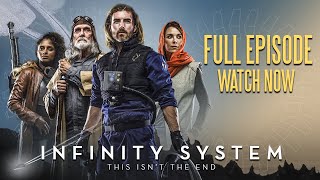
Yeah, so one of them is behind me. It's Forsaken Mercenary. That's one of the series that I've written, and it was fan-funded. So all our readers got together and just over the years they keep on asking like, hey, when are we going to get films? When are we going to get TV shows? And I'm the wrong type of person to ask that question to because what was my favorite saying, Adam? How hard could it be? How hard could it be to make a TV show or movie? We could do this. So we went ahead and took another leap of faith and everything worked out so well. So Forsaken Mercenary is our second film that I wrote and then we produced, all fan funded. The first one, Infinity System, is up on YouTube. I think it has like around 400,000 views right now. And that's opened so many doors. Forsaken Mercenaries and different film festivals around the world right now winning awards. And that'll go to a streaming service soon. So it's just been all forward. There's been no, there's been no room to like doubt myself because we're just like moving forward at lightning speed.
It definitely seems like that's the way you kind of have to go in this field if you're going to be a creative type and journey on that road. You have to have a lot of confidence in yourself and just push forward. But how do you find fans when you're one person screaming in a sea of creatives trying to make people look at you?
Oh man, I always tell people I'm going to give them the hard truth. It's maybe not the truth that they want to hear, but the hard truth for any writers. The good news is, yes, you could do this. You could do it. It's inside of you. You just got to rip it out, and it comes one reader at a time. One reader at one interaction online when they see your post, one email message returned, one quick like a Facebook Messenger message, right? It's just making those connections one at a time and just letting it build year over year. Because remember, we're almost 14 years in. So like year one, like nobody knew who I was. I didn't even know who I was. I'm still trying to figure out what I'm doing. So I was— I remember asking my sisters like, hey, could you leave a review? One of my books came to Amazon. Could you read it and leave a review? That's where I started, just with like very close friends and family. And then slowly, as the years passed, people started coming. Have you ever watched Field of Dreams?
I'm familiar with the if you build it, they will come thing, but I've never actually seen the movie.
Oh, okay. Yeah. So yeah, so same idea. Like, your tribe is out there. They're out there looking for you. They might not know they're looking for you, but they're interested in the same stuff. And you just got to— they have to find you. And over time, more and more of your tribe will find you, and then that platform will slowly begin to lift and grow.
Going with a traditional publishing route to begin with, I'm sure probably helped a little bit. How does doing that traditional route help build an audience versus going about it yourself and just trying that one-at-a-time style?
Yeah, I think too, like, um, so with the traditional book publisher, they do help, don't get me wrong. So like, they're doing the, the COVID and they're helping with the editing, and they're helping with the marketing. But eventually it comes back on your shoulders, right? Because they can like point people to your book. But I do think that readers enjoy a personal connection. And if you want to make, you know, a fan for life, it's great if you can respond to them with an email or like a personalized message, or if you get online and do Facebook Lives or Instagram posts. So I think the publisher can only take you so far, and then you have to be willing to go deeper with those connections and keep in contact, start your own mailing list, right? So you can email them, they can be aware when new content comes out. So I think a publisher is good at kind of like starting you off, but then you've got to carry that momentum year over year.
Fair enough. And of course, the lit RPG genre has been exploding in recent years. I know it's gained a lot of more, you know, general audience with stuff like Dungeon Crawler Carl from Matt Deniman, stuff like that. That's really gotten the genre out there. What are some of the key elements in this genre that you think has brought people into the fold?
I think that people my age, people of a certain age, so I'll use myself as an example, are now— have grown up with video games and have enjoyed them so much. Or before, lit RPG kind of was an option for us, right? Like, I'm sure if you like go back into annals of history, you could find some lit RPG that's kind of could pass for today early on. But like what you said, it's kind of exploding now, maybe within the last 5, 10 years. Recently, and I think it's because people of my generation are now getting older and we're like, hey, we love video games. Why aren't video games like, you know, they don't have a collaboration effort with books? We could do that. So I think it's kind of like, um, as the fan base has grown older, their demand for it has grown. Same thing with like all the reboots. Like, I grew up with like Power Rangers, Ninja Turtles, Pokemon. I love all that stuff. So I see more and more of that content being made because I think our generation now is old enough. We're like, hey, we can make this stuff ourselves that we want to see.
It does seem like the cartoons and television stuff like that has all evolved in the past, you know, 15 or so years. Instead of this episodic stuff like we grew up on, you have like entire arcs of shows like Gravity Falls where you have two like seasons of just overarching plot and stuff like that. Reading in general, kind of bouncing around a little bit, but reading in general seems like it's got a very niche audience. How has— how does this branch out and pull in those new audiences?
I think maybe when people understand— so when people always ask me, like, right, a lot of people don't know what LitRPG is. So I'm explaining to them, you know, they're like stuck in a game. I use Jumanji all the time because Jumanji is widely known with the, the movie with Robin Williams, but now with The Rock and Kevin Hart's coming back. So a lot of people know Jumanji, so explain them to them that way. But I've been trying to draw in new readers as well by letting them know, like, if you just want a normal, quote unquote, normal story the way it's written, technically you can read a LitRPG and maybe if you needed to, if you wanted to, you could skip all the skill points and leveling up, and you could still read the story. Or if you enjoy video games and you enjoy that type of detail, you can read the skill sets, read the leveling up system. But that's how I get a lot of new people to give it a shot, letting them know like, hey, you might enjoy all the skill tree and see the stats, but if you don't, you could skip that section because it's usually formatted a certain way in books. You could skip that block and continue reading the story, and it reads very close to a normal book. Sure.
With that style of writing, how does that differ from maybe just writing a standard novel where you're not necessarily thinking about stats and blocks and all that stuff?
Yes, going back since we're in the Tree of Trust, trust you, Adam, with this information. I'm not like crazy. You could probably know this by reading Hard Reset. I'm not crazy into like the details and leveling systems. Like nothing. Again, no shade to those authors who really enjoy that. I'm glad that they enjoy that. Just for me, like, it would, you know, it would be like a form of torture if I had to put like dexterity points and luck points and, you know, every single time they leveled up. So we're kind of just giving it to them hard and dirty. We're hitting them with, you know, just the bare level of skill stats. That way they can continue on the adventure. Because when I'm writing a book, I don't outline at all, so I have no idea where the story is going. So I'm just like rolling with the character and things are happening. I feel like a reporter. I'm like just reporting, hallucinating in my mind, if you would, Adam, reporting on what I've seen in my mind. And then I'm putting in those stat blocks, but I'm doing— as you know, we're doing it quickly so we can continue on with the story.
And, uh, there's a phrase or a term for that. I believe it's called panzer.
Is that right? Oh yeah, no, you're exactly right. Don't give me any credit for this, somebody else said it and it's always stuck with me. Um, when you're a pantser, that means you don't outline, you don't know where the story is going. But it's like, imagine walking in a thick fog and you know where you're headed, like you kind of see maybe a lamppost in the distance, you see some light. But as you're walking through that fog, maybe there's like, um, a crazy muscle car parked on the street and you're like, oh, that's cool. You could never have seen that muscle car. And so you're walking, maybe you get scared because because there's a cat that jumps out of the fog and you're like, oh, what's going on there? So pantsing, not having an outline, is very similar. You have like an idea of where you're going, but then things happen along the way that you could never have planned.
Did you ever try the traditional method of outlining and planning everything?
No, I am— my mind is just an oatmeal machine of chaos. It just like goes with stories. At the most, I, I have written down maybe like 4 or 5 key points, but it's never like in order. It'd be like, oh, it'd be really cool if our hero has like a wolf dog somewhere, or like, oh, it would be cool if he stabbed himself in the heart with like an adrenaline stick to get him like really amped for a fight. That would be cool. But that's about it. So that works somewhere in the story, but I won't know where that fits in the story until I start going.
How do you keep up with the plot of a book whenever you're going that route? And like, maybe you're writing something, you're like, wait, does he even have that thing? Or—
yeah, good point. So Stephen King taught me a long time ago, he calls it the boys in the basement. So at night before he goes to bed, he calls his subconscious his boys in the basement. He thinks about what he's going to write the next day as he falls asleep. His subconscious works on it for him. And he wakes up and it's there. Like, I don't know. I mean, I do believe in magic, I guess, to a certain point. It's kind of magical that we're all here on this spinning rock in space. But like, with the subconscious working on things for you, it's always worked. So when I wake up in the morning, I've been thinking about what I'm going to write, and the idea is there, and I'm just following along the main character and his plot. And a lot of times too, like somebody told me the other day, I got a review and they're like, whoa, It's like, you know, the main character so well. And I'm like, it's because I am the main character. Because it's just in my mind thinking like, what would I do? What would I do in this situation? And I think that's actually helped with burnout too, because almost 14 years in, over 60 novels, people always ask me like, oh, how do you not burn out? I think it's fun. It's fun for me to go on this adventure. And it's fun because I don't know what's going to happen. So it's like I'm in the adventure myself and we're going and we're fighting orcs. One day, we're in space the next.
Yeah, it seems like, yeah, I mean, you kind of just get to throw yourself in the role of the main character and just get to play pretend for a living almost.
Yes, exactly.
With over 60 books, I mean, you mentioned burnout a little bit, but for somebody like me who has ADHD and has struggles writing or completing even one book, how do you manage to pump out so much in such a short amount of time?
Are you working on a book right now? I am.
I'm 4 chapters deep currently.
Dude, anything I can do to help you. I know a few people. I can give you some resources. Let's get it done. It gets me excited when other people are writing novels too, because I know how far you're stretching yourself right now, and I know how hard it is, and I know how happy you're going to be at it once you get it finished.
I'm kind of going that pantser route myself, just winging it this time around. I've tried the traditional route where you outline stuff, and then I get to the point where I'm like, this is boring. I don't want to write this part of the book, but you have to do it to get to the next part of the book. And then I just wind up with a half-written book just sitting there for like 2 or 3 years and never touch it again.
Yeah. Oh man, I would love to be your sensei in this, Adam. So what I learned a long time ago is exactly those boring parts. If you start thinking that it's boring, that's going to come across. The readers are going to have a hard time with it, right? So again, don't give me any credit for this. Somebody much wiser than me said a good book is a normal story with all the boring parts written out. So anytime you feel like you might get into a boring part of the story, I always use it as a chapter break, or they go to bed for the night, or I pick it up again when there's stuff actually happening pushing the, the story forward. So a long time ago, somebody told me this rule, and again, there's always exceptions to the rule, but it's a good rule to use, and you can break it if you want to, is 2,000-word chapters really help with that momentum moving the story forward, and that each chapter has to end on the cliffhanger because then your reader is not going to want to put it down. They're going to need to know what happens next.
Yeah, it seems like that's kind of what I've been doing this time around. And it seems like it's actually working a little bit better than the previous attempts at writing long-form books. So we'll definitely have to check it out once I've got it figured out. The lit RPG genre is what really got me back into reading to begin with, because back in high school, we were forced to read stuff like The Scarlet Letter and stuff like that. And I was like, oh man, I hate reading now and just didn't really touch it for a while other than comic books. And then once Ready Player One came out, that was like that first little inkling of like, oh, maybe there is a genre out there for me that might be interesting. And then of course, I started with Dungeon Crawler Carl here relatively recently, and that just, you know, sent me on a whole path that I'm on now.
So— No, that's awesome. And think about that too, that one day your book that you wrote, Adam, will get other people reading again, and they'll be able to get lost in your story. I don't want to get too deep on you, but I feel like if you have a calling to write a book, there's a reason for it, and there's people out there who need it.
Absolutely. Um, for other people who are struggling, what are some other tips that you would have for them?
For other writers who are struggling to write a novel?
Yeah, because I mean, we're all in that same boat, you know, people who are struggling to write, trying to figure out what to do?
Yeah, 100%. So the first thing is I would say don't compare yourself to anybody else, because I know a lot of writers out there who ask me like, well, how many words do you write a day? How many words, you know, what's your word count each week? And I would tell them, don't worry about what my word count is. You do your best. You do your 100%, right? Because my 100% writing— I've been doing this for almost 14 years— is going to be very different from somebody who's starting out day one. And they're 100%. So if they try to push themselves, you know, to do something that they're not ready for, then they might get burned out or they might hate it. Like, oh, I can't do this if this is what writing is. So I always encourage people to do your 100%. So what that means is find a word count that fits for you and your schedule, whether it's 1,000 words, whether it's 100 words a day, but just stay consistent. And like a muscle grows when you're working out, so too that muscle will continue to grow when you're writing. And then you'll realize, let's say you do 100 words a day, like, oh, it's not that bad, I could do 200. And then exercise that muscle, and then 300 and 400, and find a number that you can hit consistently. It doesn't matter if it's a huge number, it doesn't matter if it's a page or two, whatever it might be, but if you hit it consistently, you will finish your book.
And jumping around a little bit, but you have a lot of different multi-book series. How How do you manage keeping up with what happened in the last book to get to that next book after you maybe not touched that one and written a different book for a while?
Mushrooms. Mushrooms is my secret. So I've been doing a lot of like coffee mushrooms in my coffee in the morning to help with cognitive function, some gummies to make sure that like I am firing on all cylinders at all times. And then what really helps is I try not to work on more than one series at a time, so I only have to remember what's happening with these characters in this universe. If I do have to switch around between different series, then it gets more difficult, right? Because then I have to remember, like, okay, the main character in this series had these weapons and this was his crew. And then jumping over here, like, what color were these characters' eyes last time I wrote them? So what I helped— what I found helpful is getting a Microsoft Word document. So I write all my books in Microsoft Word. But I'll have a separate document listing out all the characters of pictures of what I think they look like. Weapons is a big one. I have another series called Hunters for Hire, and those people, they love their weapons. They love knowing what, you know, kind of rifle the main character is using to go hunt the vampires and stuff like that. So I have to make sure that I'm doing justice to them. So he's not using, you know, one weapon in one book and all of a sudden in the next book he has like a warhammer instead of a katana.
That's definitely a lot to keep up with. I am familiar with that book series. I haven't started it yet, but once I finished this one, I started looking up some of the other books. I was like, oh, that might be the next series for me on, on my read list for this year.
So I appreciate it, man. Yeah, thank you. Yeah. And another thing that really helps to keeping everything straight is if you have beta readers. So early on, you know, it might just be somebody you know, a friend who also enjoys reading, and you can ask them like, hey, would you be willing to read my book? Or another author that you befriend. And if they can read your book, then you can ask them like, hey, what do you think about this? That beta team will grow over the years, and then you can go back to them and ask them questions like that. So that's what I'm doing for— I'm writing Hunters for Hire 7 right now. So I had to go back and ask my beta readers like, hey, In book 6, where did this character leave off? Like, what happened to him? Was he still being waterboarded, or did he escape? So different questions like that will come up, and your beta readers can help you with that.
This is cool. Um, do you go the Patreon route like a lot of other writers do at this point?
You know what, I'm not against it. I've thought about it. It's just capacity, Adam. Like, I'm over here taking mushrooms in my coffee to try to keep up with everybody every each day, so I'm like, oh, like I do see the value in it. I know a lot of authors do really well in Patreon. I haven't done that yet, but just like everything with the movie, because I'm writing our own scripts for the films too. So there's a bunch of different— like, doing our first two films has opened the door for us into bigger conversations in Hollywood. So I've kind of like geared my focus towards writing the books and making movies. But I have thought about Patreon. That's always— I feel like the donkey and then the carrot's like right in front of me. It's like, oh, if I could just like carve out a few weeks of like dedicated focus, I bet you I could get a Patreon running. So I know a lot of authors do that really well. Yeah.
Um, so with, uh, this book, The Hard Reset ends on a little bit of a cliffhanger. So are we gonna get a second book in this series?
Yeah, I mean, I would like to. Ultimately, I always tell everybody like I feel like I'm a gladiator in the arena. And if everybody wants more, everybody gives me a thumbs up that they enjoyed Hard Reset, I'll write another one. Like, don't tempt me with a good time, Adam. I'm in. So as long as this one's well received, if people are like, yes, we want another one, I'm in.
Awesome. Well, this book comes out February 10th for those of you who did not get your advanced copies for reading. Where can they find more information about you?
Yeah, so I'm on Instagram @authorjonathanyanes. My last name is spelled Y-A-N-E-Z. Or if you want to check out our books, you can go to our website at jonathan-yanes.com.
All right, well, uh, that's about it for this episode of Stage Left Unsaid with Adam Ferguson. Still me, still Adam Ferguson. Have a good one.
More from Jonathan


MILSFPODS2EP23 The boys interview sci-fi author and screenwriter, Jonathan Yanez!






House of Wolves Episode Sixteen - Learn About Our New Film Project and How You Can Be Involved.