Live with the Directors - Forsaken Mercenary Short Film

In this live YouTube conversation, Jennifer Yanez of Wolfpack Entertainment and director/cinematographer William Helmuth discuss the upcoming short‑film adaptation of Jonathan Yanez’s sci‑fi thriller series Forsaken Mercenary. They review the project’s Kickstarter campaign (two weeks in, already past the initial goal), recent Comic‑Con promotion, and the book’s strong sales (≈250,000 copies). William shares his experience listening to the audiobook, emphasizing the novel’s internal monologue and noir‑grit tone, and how that informs the film’s visual style. The pair debate how to translate the fast‑paced source material into a concise short film, balancing action with character‑driven moments—a challenge William’s previous short Alone (18‑minute, 600k YouTube views) exemplifies. Jennifer outlines her commercial‑production background and proposes a co‑directing partnership, citing past collaboration on Infinity System (≈15k views). They explore stylistic influences—Ridley Scott’s iconic imagery, George Lucas’s visual iconography, and the storyboard‑first approach of the Mad Max director—aiming for a neo‑noir, neon‑lit sci‑fi aesthetic that conveys hope and humanity amid darkness. The conversation also covers practical details: William’s website (williamhelmuth.com), how to view his past work, and a call‑to‑action for viewers to support the Kickstarter, with rewards and community engagement. The tone is conversational, enthusiastic, and collaborative, highlighting mutual respect, learning, and a shared vision for the film’s world‑building and emotional impact.
Chapters
Awesome, wonderful. Hey everybody, we're here today. This is Jennifer Yanez from Wolfpack Entertainment, and here with me, we're here together, is William Helmuth, director, cinematographer extraordinaire, and we're really excited to be gabbing a bit today about our upcoming film project. So Will just, you know, is joining us from a recent venture across the pond. So have you adjusted to our time zone here?
I am. I'm dialed in. I am. Yeah, I'm good. It's, you know, it's always a little bit of a— yeah, recovering from that jet lag is— it can be rough. But it kind of helped that as soon as I got back, I just had lots to do. So I just kind of had no choice but to jump right back into real life. So that's good.
Wonderful.
Yeah.
Good. I'm so glad. And that's one of the things that we really are enjoying to learn and work with you, Will, is that you're a beast. You go, you travel, you were packing up and you were filming and then you left. You came back and you jumped right into it. I know you were filming earlier today. We're grateful for this time. And as we're getting closer now, 2 weeks into our Kickstarter fundraising portion of our project, Jonathan and I just came back from Comic-Con as well, and it was an awesome opportunity to talk with everyone there about the book series. We're stoked about it. We know that the series has sold, you know, almost 250,000 copies, and Fans, readers love it. They're giving it great reviews. They don't have to, but they do. The feedback they give is just outstanding. But when we get to share that and see that face to face at events, it really— it's humbling and it blows my mind, honestly.
Yeah.
So you got the opportunity to listen to the audiobook, correct?
Yes. Yeah.
How was that?
And it was great. I mean, I loved it. As soon as you first, you know, you guys first talked to me about this project, that was kind of the, you know, thing number one for me to do, sit down, listen to the audiobook, really get a feel for, because there's something, you know, it's a different experience, you know, listening to this book where you can kind of hear the inner monologue and stuff of your character, the things that you maybe don't always see as obviously in a screenplay. So being able to really listen to that, like, it was great. And I mean, it really hooks you. Jonathan's style in this book just really puts you inside of Daniel's head in a way that is very compelling and And I felt a lot of this just almost like film noir kind of grit, you know, and inner conflict with Daniel that I just found very compelling. And the idea of being able to bring that, you know, to life in a film format is very— it's exciting. So Yeah, it was, uh, it's great. It's, it's a, it's a book that just really, it really does just, it just, it moves and it keeps you excited about, uh, what's happening next. Uh, but, but more than that, you really, really, you really feel with, uh, you know, with Daniel. And, and that's, that's, I think, I think that's really the most important part, you know.
So yes, yeah, I, I agree with you that His stuff moves so fast that it could feel as though it's so superficial and action-oriented that you might miss out on having any compassion and getting to know the characters. But somehow in there, within fewer words, right, he doesn't wax poetic on the background of a character and tell you how you should feel Rather, he lets you know inside of them, or he has these reveals of these nuances, and next thing you know, you're rooting for these guys. Like Daniel Hunt, he could be a throwaway, hard-edged, you know, savage of a character who's really good at fighting. Oh, just— and you can think, oh, this is just a Bourne Supremacy or Bourne Identity in space, but it becomes so much more as the scenes and the, the reveals take place. Yeah, it'll be interesting. I feel like one of the things— I wouldn't call it a struggle— one of the things we're working on balancing with this screenplay is that, um, how to— what do we put in that short film? Because it moves so fast and we can quickly find ourselves, uh, so many scenes and fights later that, you know, okay, how do— how do we slow this down a little bit, uh, for the screen? And that's something I feel you are exceptional at. One of your most popular films, um, is that— is Alone— is that one of your most popular, or is that—
yeah, yeah. Oh, I mean, it could be both, I don't know. But yeah, that's okay. Like, that's, um, that is, uh Yeah, that's definitely my most popular so far, a short film that played in some solid festivals, had a really, you know, a good run there, and has— we're at over 600,000 views on YouTube now, which is respectable, you know, it's good, it's solid, and it's gotten distribution, which, you know, has been kind of cool to see. So it's kind of gone around the world, which is great. And that one is, it's very character-based, you know, it's just all about getting into the main character's head. You know, the whole thing is basically a conversation between two people. So yeah, but 18 minutes, right?
Mm-hmm. It's about, yeah. So within that 18 to 20 minutes, just a character between our conversation between two people, so much transpires and you don't feel that it lags. Like, you're like, okay, well, that's nice, they've been monologuing for so long. So, um, you— I think that will be great to bring to Forsaken Mercenary that moves so fast, to find that balance in there and carve out those moments between characters and building up tension. I personally, I love thrillers. I didn't know this about myself, and I know it's a silly thing to say, like, how do you not know this about yourself, but I have an eclectic taste overall. I read, you know, I'm reading Jack Reacher and I'm reading, uh, Jane Eyre. So I'm reading nonfiction and I'm reading, you know, I'm reading, uh, Paradise Lost. So when it comes to books, I'm all over the place. But I do have found that like when I go back to the thriller, even the older thrillers, um, Dorothy Sayers or, um, Agatha Christie, I'll do those as well. And in TV shows or film as well, The, you know, they— it's the biggest genre for a reason. It's so compelling. It doesn't take— if done well, it doesn't take much to just keep you enthralled into the next scene and the next beat. So that mixed with what you were saying, that noir, or as we go into sci-fi, that neo-noir, neon noir, will be— I think it'll be a lot of fun to do that too.
Yeah, yeah, it's going to be a blast. I'm really excited about it. And you have a really good eye for story and and kind of, you know, what's— how to bring different elements together that work just from our conversations and stuff. And it's— I've been— I've honestly been surprised how often we're just, you know, kind of clicking like right on the same page with like, oh, like these— this is really, you know, working great and all that. Or things, you know, directions that we would like to move stylistically and everything, even, you know, like it's, it's, it's cool. So I feel like there's just a lot of potential for some really good world building here and, and, and ways to kind of draw out meaning and an atmosphere, you know. So yeah, I'm— it's, it's exciting. It's gonna be good.
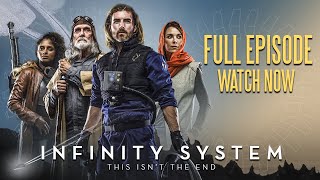
That's a great point. I guess I didn't really explain that. So William has experience directing and, you know, behind the camera in all ways. So my background has been in commercials, so advertising behind the camera. And so while I can produce the heck out of anything, I have had given some art direction on set for different things I did commercially. So while this feels like a project safe to keep my arms around, I asked Will if he'd be comfortable if we did this more as a co-direct. And, you know, bless his heart, he said Maybe. No, he said, uh, he said with, with sincere trepidation, uh, how are we gonna do this? And, and I said, we'll figure it out. Like, I, I don't have any ego in this. I, I'm here to learn. And sometimes, and most of the time, the best way to learn is to, to jump in, right, and make those mistakes. But because I care so much about the story and the, and the fans, the viewers, and everybody involved, and I respect Will as an artist and technician and all of that, that it'll be great for us, I think, to collaborate and bring those, those strengths together. I had the opportunity to work with him, you know, in, in a different capacity on our first film, um, Infinity System, which I don't know if you saw that, um, edging I think towards 15,000 views. It was just posted a couple weeks ago, so, you know, that we're excited for that. We want to grow up and be like, uh, Alone with 600,000 views by next time.
Never know.
Yeah.
Yeah, that's great. No, the, and you know, we're all always learning and that's kind of what, you know, you had mentioned, you know, you always, I'm also excited to, you know, to learn and I think that's the attitude to have, especially when you're going into a partnership like this. Co-directing together is, yeah, you want to bring your knowledge, you want to bring what you can offer to the table, but also stop and listen to each other and see what you can learn constantly, you know. And that, that, so it's, you know, it's not, I'm included in that too. So I, I'm excited to, to just, uh, see how, see how it all goes. I mean, I, I, I learned something on every single project I make and I, and I hope I, I hope that never changes, you know.
So yeah, right. I was watching a Hollywood roundtable with a few big directors, and one of the ones I was excited to see on there, um, because I think you said that was someone who, who inspires you, was, uh, Ridley Scott. Oh yeah, is that— yeah, okay. Yeah, so Yeah, yeah, yeah, man. That man is a savage. He talked about, you know, his little limited experience— not limited, he had experience, but not from that capacity. And then all of a sudden, he— I think he did some commercial stuff and then just did a ton of it. So he, you know, banged out a whole bunch of mistakes, like you said, and learned so much that by the time he was doing features, he was like, we're just gonna go for it. You want to talk this through? I don't want to spend time talking it through. Roll camera. Show me how it can go, performer, like actor, you know, bring what you have and let's just see if it works. It will— we'll see it on, on, on camera, on film or whatnot. And if it doesn't, we'll see it on the editing room floor, you know. So that's right. Yeah, yeah, yeah. Just to try it. There's no one to talk about it unless we need to sort some of it out.
But that was something where he was like, that's the cool thing about directing, I think, is there are as many ways to direct as there are directors. You know, obviously, you know, there are directors who aren't so good and some that are better, you know, but it's— but really, you know, all— none of the great directors, if you were to sit on set and watch them, you know, you wouldn't— you wouldn't see them doing the same things necessarily. And so it's really about finding your artistic method and your voice and just running into that or running with that. Right.
So anyway, running away from it. I'm just kidding.
No. Yeah.
So what are some of the things that, you know, you might say about your current style? It's an evolving, growing thing. So, you know, share a little bit about that.
Yeah. So, you know, at my core, it's funny because I feel like sometimes like I'm a little bit of a contradiction. I love genre films. Sci-fi, fantasy, you know, period films. Like my latest short film is a Civil War short. That's just, it has a world premiere tomorrow. So we're just starting our festival run. And, you know, so I love jumping, diving into these other either, you know, historic periods or imaginary, you know, places in time and space and stuff. But what really fascinates about me, what really fascinates me about that isn't the spectacle, the visual effects, you know, the Marvel style kind of, you know, I don't want to get in trouble here, but like, you know, the big action scenes and stuff like that. But I love the quiet moments, you know, like characters kind of living life and being just people in these extraordinary circumstances and environments. And so I love trying to find those character beats and drawing out these authentic performances from actors and really letting them, giving them kind of a foundation and an environment where they can really create something meaningful and true. Within this, you know, fantasy world. Because to me, that's what's really exciting is humanity and seeing humanity be humanity in kind of extreme environments that are— because a lot of times when we're talking fantasy or, you know, period films, a lot of those are in harsher environments than we live in now. And seeing humanity kind of, you know, thrive and flourish and all that kind of stuff, or seeing people, you know, wrestle and grapple with the same things that maybe we do in our core. To me, it's just really fascinating. It's very cool. So that's what I really like to do. I guess it's not so much a style, but more just what I've found I really like to hone in on. And then when it comes to things like, you know, visual style and stuff like that, you know, that's very, you know, very, it can change with every film, you know, it's all, it all comes back to, you know, the characters and the spine of the film. What are we really trying to do with this? And then from that, you know, we can sit down and talk about, you know, production design, cinematography, costumes, everything, and let everything kind of leap from that base, if that makes sense. So yeah, so, you know, stylistically, I am naturally very, very visual, and I really like trying to create iconic images. Some, you know, Ridley Scott is very, very, very good at that. Another director who I think is actually kind of underrated in that regard is George Lucas. You know, obviously everyone knows who he is. I'm not saying he's some sort of, you know, indie filmmaker.
Who are we talking about? I don't know that I'm familiar. George? George? Yeah. Yeah.
But, you know, he really, you know, if you look at all of his, you know, Star Wars films, he really, you know, love him or hate him, he finds these— like, he creates iconography, iconic imagery, and he does it very well, you know. And I find that kind of still life idea really fascinating. So I try to always find a few little beats or moments where I can create, you know, these, these single images where if you see this one image here, it's gonna kind of encapsulate the experience of the film in this, in this one shot or something, you know?
Yes, absolutely. It's almost like the aesthetic, right? What's, what's the aesthetic? What's that moment that, yeah, where it's like if you had to create one page of a concept art and then get to see it in action, live action, or, you know, yeah, in those moments, right? It's like you close your eyes and you could see particular scenes from the— we'll say for the original trilogy, we'll start there, because— right, right, there's just pause, press pause, and, and in your mind you know exactly, uh, what to see. There's certain contrasts or there's certain warm tones that just, you know, uh, Luke on the sand Looking in the distance, uh, those hallway scenes on the destroyers and all of that stuff, and in the white and the bright and the— and the— yeah, absolutely, absolutely. Well, I feel like that those moments really just, um, I mean, I hate to use these terms, but they're aesthetic, they're vibes. Like, they, they, they feel— they evoke a visceral emotion for each of those in one way or another, and you, you know it. There are colors, there are like that shiny black that shiny black on the helmet. Like, you know, to this day, it kind of— what it's tied to. And, and there are things in your brain, and that's just— you're right, is that your left brain can't explain what that right brain is experiencing. And it, and it resonates deep within you, and you don't know why, but it's like living rent-free in your mind, right? And it's there, and, uh, it's, it's wonderful, right? You don't have to do that. I heard that, um, The Mad Max director whose name I'm forgetting, but that he doesn't do script first. Like, it's all just storyboard of these mega crazy moments and scenes. So he's all visual. Yeah. And I think that's one of the reasons why I'm enjoying this aspect of our storytelling journey. Like, we know, Jonathan and I, like, what our purpose is and why we're doing it and why we're coming up with this content. I love to read. I struggle with writing, but when I'm writing, I'm more trying to convey what I'm seeing visually already in my mind. So to do this, I feel— this I get. I don't get the other stuff, but I get it more. It's easier, comes more naturally, I suppose. So to be able to— like we said, we're creating emotions and feelings. We're telling these stories. Because I want folks to walk away with a certain sense. And whether I think you had said like the sense of the people we're working with on set or the sense of the people who were working, who were watching the content where it's all storytelling, but it's a certain kind of storytelling. And again, for us, it's all been all about that hope, that hope of humanity, that hope of there's still good, that hope of what can come, the hope of overcoming a certain odds and that hope of like, you know, for whatever darkness, it's not Pollyanna, whatever grief, whatever hardships is in the world, if you're spending time watching or reading this, that you're gonna walk away with a good sense of hope or encouragement, right? Because it's not over. And this short, yeah, Daniel's story is certainly not over after this one film. But It's like, it's that staring off into that distance of like, yeah, life, I'm coming for you. So, uh, yeah, that's what I'm looking forward to, to seeing what's great and what that, that's going to sound like too with whatever, um, our, our composer comes up with for those moments.
Yeah, we'll be good. Yeah, cool.
Great. So, um, Will, if somebody wanted to learn a little bit more about you, um, I can go ahead and I'll post the links in the description with these videos in the comments. So you want to— for anyone solely listening, you want to tell them where they can check out your work?
Sure. I mean, you can check out my website. It has my cinematography work on it. It's just my name, williamhelmoth.com. Or you can watch my— I believe there's a link to my short film on my website, but if you get on YouTube and just search Alone Dust— Dust is the platform it's on— then it'll pop right up and you'll see it. And my name is there too in the description as the director, so you know, you'll know it's— you'll know it's the one. Um, and, uh, yep, because yeah, there's actually another film on the same platform called Alone that got uploaded like a year after ours. So it's kind of funny, but, uh, yeah, so you might just look for my name to make sure it's the right alone. But, uh, yeah, I mean, that, you know, my website has everything there. It's just, yeah, williamhollingsworth.com. That's, that's it.
Um, yeah, great. And then if anyone, um, is interested in being a part of this journey for Forsaken Mercenary to be filmed later this year, You can check out the Kickstarter page. We have lots of details there, a little more background information on the story in terms of the book series and what the film is more about. We're still working out this final shooting script and budget and all that fun stuff. So get your name in on there. You can pledge any amount that you're interested in or that makes sense for your family, but it's definitely free to share with a friend or family member who is a fan of science fiction, science fiction thriller, and just content you can feel good about sharing with your mom even, you know. So, um, you know, with some really cool rewards up there because we wanted everyone to be part of this journey. It's a very communal type of event. So, um, we're looking forward to— oh, go ahead.
Oh yeah, yeah. I just wanted to jump in real quick also, just since we're talking about the Kickstarter and people pledging and stuff, and just say, um, just a quick, you know, thank you, big thank you to everybody who's pledged so far. And, you know, just how, just how meaningful that is, you know, for, um, for myself and obviously, you know, you guys, just the whole team. And, and I know we're excited to, to to really make the most of every pledge. And I think it's gonna be great. And also just while I'm at it, while I'm thanking people, Jennifer, just thanking you for calling me up about this. So it's really exciting to me.
So yeah. You can't see me, but I'm smiling really big right now. Yeah, no, I, I'm— I think there's a reason that certain people kind of work together again. Like, when you have a good thing going on, right? When you have a good rapport, uh, that's, you know, like, you don't want to mess that up. And we just— everything drives so well, um, for our last film. And again, like, your talent, your work, all that was so outstanding. It's like Well, heck yeah, we want to work with Will again. So, yeah, I'm glad you answered that call, that text. Yeah, you weren't off like, well, you know, I'm super busy for the next 5 years. So, no, but yeah, you're right. Thank you to everybody. We've already surpassed our initial goal. And at this point, you know, we want to keep the funds going because that allows us just to be bigger and better. But even as it is, it's already— I know it's going to be fantastic. We're going to have a fantastic team and we've got an amazing vision. And obviously Jonathan has given us a fabulous story. So we look forward to connecting with everyone and leave posts in the comments and we'll respond to every question and every comment. You guys have a wonderful rest of your day.
More from Jonathan



MILSFPODS2EP23 The boys interview sci-fi author and screenwriter, Jonathan Yanez!





House of Wolves Episode Sixteen - Learn About Our New Film Project and How You Can Be Involved.