MILSFPODS2EP23 The boys interview sci-fi author and screenwriter, Jonathan Yanez!

Sci-fi author Jonathan Yanez talks about his published series (Galactic Guardians, Forsaken Mercenary, Gateway to the Galaxy) and upcoming Alien Invasion series. The conversation digs into how to portray AI plausibly in fiction, covering thermal constraints, the trolley problem, and AI companions in military sci-fi.
Chapters
Hey everybody, welcome to the show. Today we are very fortunate and blessed to have Jonathan Yañez on board. And, uh, Jonathan, hey.
Hello. Thanks for having me, guys.
Um, I'm not going to try and introduce everything that he's done, but I think a few words. I mean, I know most, mostly as, you know, author, publisher, filmmaker, um, just general all-around awesome guy.
And we were just talking about the fact that billionaire playboy philanthropist, billionaire playboy, uh, secret agent.
Family therapist. Like, every time we talk to Jonathan, you just come away pumped. And I don't want to, like, set him up for failure here, but he does this so easily that I know I'm not doing that. So we're really excited to have him on board. We are going to talk about what Jonathan's been up to lately, but the topic for today is going to be AI, but AI within the, in the reference of military science fiction. And as we've, you know, kind of, we're talking about this to start with. AI is changing so fast right now that you kind of have to play, you know, a little hand-waving with AI. But then you can also try and be as hard science fiction or realistically with what it is right now with language models. So I think we'll get into that because we can definitely talk about how it's being used in, you know, currently the way Israel is using AI, the way Ukraine is using AI targeting systems, things like that. And then what we think that may happen in the future and effects that might have on the military. And then even further in the future, you know, we're another conversation we were having about like everybody loves their snarky AIs, but then you look at what's really happening with like AI girlfriends and that's a little scary. I don't know if we want those snarky AIs.
So do you want a girlfriend?
Exactly. I don't know if I need that battlefield. I'll never leave my sleeping bag. So anyway, Jonathan, can you give us a quick intro to what you're working on right now and then we'll get into the conversation.
Yeah, for sure. I just first wanted to say thank you guys for having me on. I don't take it for granted. This is something I was been looking forward to, so thanks for spending your time with me today too. Yeah, just looking towards the future, we have a couple of releases. Like, God's blessed us to be in at the point of our publishing path where we're actually trying to release less books now and make them more impactful, bigger pushes behind less books. And then on the film side, we've been able to sign some contracts to do some feature-length films where before we were only doing like, you know, a pilot episode here or a sci-fi short there. So yeah, just like keeping our heads down, just like grinding to the extent to almost to my detriment. Like I'm just like working so much. I'm getting calls. They're like, I don't know if you guys want to talk about this, but they're like, hey, are you guys near the riots? Are you guys okay? I'm like, What? There's riots here?
What's going on?
And I have to go look at the news. I'm like, oh, there is riots. Because I just have like my nose like so far into the grindstone every day.
And that's probably the better place to be.
100%. That's where I'm at. That's where I'm at.
That's where I wish I was.
Josh never leaves his basement office.
No, I'm on the, I'm on the main floor now. No, my wife watches the news all the time and I just put headphones in and walk through because I don't care.
I think I just—
you know, for readers that might not be familiar with your work, Jonathan, I probably— good places to start would be Galactic Guardians or Forsaken Mercenary for military science fiction readers. Is that best place right now?
Yeah, so Galactic Guardians is our most recent completed sci-fi series. There's Forsaken Mercenary before that, and then Gateway to the Galaxy before that.
Awesome. And those are—
Gateway to the Galaxy was The one that was kind of Green Lantern?
Yeah, so I, uh, I read the first couple books in that, I remember. Oh, thanks, Rick.
It was a long time ago. It was like 2017 or something, I think.
Yes, you have a good memory. I have a hard time remembering what I did last weekend, but I think you're right. I think it was 2017.
I have a hard time remembering what I did last weekend, but 10 years ago, easy.
Yeah, you're right though, it is. I was looking at different IPs that I loved whose fan bases weren't being served. At the time there wasn't a whole lot of Stargate stuff coming out. At the time there wasn't a whole lot of Green Lantern stuff coming out and I love both those IPs. I thought, "What could I do that, making our own characters, how can we incorporate what those feel like?" It was a fun series to write.
That's awesome.
That's a really great piece of advice too because when you're looking at writing in a genre you want to service the fan base. You want to know who you're writing for but more importantly you want to know what you want them to feel when you're reading the book, because too many people write like, I have this cool idea for a book and it's gonna have this great epic space battle. That's awesome. You're not making a movie, you're writing a book. How are they going to feel?
They're gonna feel epic.
Yeah.
I think there's like a, you know, a Venn diagram where it's like what you want to write, you should never sell it, write what you want to. But I think within that Venn diagram you could find something that other people enjoy too. So you can do both. You could write towards a market of what people enjoy and also write what you enjoy. I don't want to name-drop because I don't like people who name-drop, but I was hanging out with one of the creators of Cobra Kai over the weekend, and he said the same thing when he was creating Cobra Kai. He's like, I know if I liked this, other people are going to like it as well. So write for yourself. He created the Cobra Kai TV show because he— it was something he wanted to watch and he would enjoy. And he just had faith that there was other people out there like him.
I don't like people who name drop. Let me tell you the names of a few people who name drop.
One.
Okay, that was my one name drop.
Well, I don't like name drop, but I was hanging out with these dudes in the lobby of the Bellagio playing D&D once, and it landed me a bunch of contracts. So, you know.
Well, it kind of goes without saying, and I want to kind of jump into AI too here pretty quick, but a lot of people, a lot of authors now are chasing the market. And that's kind of been a trend for the last several years. But, you know, if you're just looking at, you know, how to make the most money, go write romance or something like that, something that just sells bazookas of dollars. But if you're not interested in that, you're going to have a really hard time writing it, especially because you— to make any progress in it, you're going to have to read a lot of it. And I don't really have any interest in reading any of that, and I can't write that kind of stuff. The idea of writing a steamy scene, really just— I don't know, man. I can't, I can't, I can't do it.
This is a place where you can grow as an author.
Oh, oh man, I know.
Woo! But on my X account, I have a Venn diagram of what you love, what sells, and what you're capable of writing, right? And where those three things meet is, is where you're at. And I don't know how many people tell me that they, they found it against the odds and they're like, oh my gosh, I was looking for something like this but there isn't anything out there. And I'm like, and you now know why I wrote it, because I finished all of David's books and I finished the Jack Campbell books and I finished a couple other series. And there is a million infantry-based series, you know, Nick Cole's great Galaxy's Edge, Rick Partlow's Drop Trooper— name dropping— um, And there's tons of fans of the infantry or powered armor genre are well serviced.
Richard Fox's, uh, uh, Iron Dragoons.
Yeah. Yeah. Fleet sci-fi though. No, no, there's, it's a huge market, untapped market. And unfortunately it's just more difficult to do right. And so you have a lot less of it and maybe it's because it's probably because it is a smaller portion of the market than the people who like the infantry stuff. But, you know, you really gotta— you gotta know who you're writing for. And yeah, it can be just you, but only if you're pretty sure that you also share, um, you know, a market with a whole bunch of other people.
Well, Green Lantern in particular is one of those market— their properties, I guess, where fans keep getting like bad things. So giving them something good is, uh, gonna make them very happy.
I have hope for the new series though.
Yeah, yeah.
I like the actors.
I'm ready to get kicked down again, you know, it happens. So let's, let's, let's jump into AI. I think we, we live in a time actually where I feel like it's very difficult to write AI because the science is, is catching up very rapidly with expectations around what AI could be or what it actually is, or like AI is thrown out really as a kind of a marketing term. And we have companies that are pushing it to try and make, you know, get investment, you know, they, they keep talking about AGI, you know, general, general AI, general intelligence. It's just around the corner. It's just 2 weeks away. Well, is that being applied to, you know, military operations? It is in a lot of ways, you know, like advanced targeting is happening with AI and it's already happened where humans were going to be the failsafe on that. But then they didn't do that and they made the targeting decisions. So are these things that you've been thinking about in your work, Jonathan, or I mean, what, when, when you proposed this idea, what was something that was on top of your mind with it?
Yeah, I just think like, um, I love imagination, right? Like, as we all do. I love just like staring at a blank canvas and having my mind start filling in all the pieces that don't exist. But, uh, I was talking to somebody— I'm not trying not to name-drop, I forgot who it was— but they were saying like basically they were talking to somebody who was high up in the military and asked them like, what kind of AI applications can we expect in the future? And they said something crazy. They're like, okay, in the next 5 to 10 years, you know, what can we expect? And they're like, whatever you can imagine. And I'm like, oh my lanta, because I have a pretty wild imagination. So, and it makes sense, like we're growing at such an exponential rate that it probably is going to be anything that you can imagine is going to be possible.
Yeah, well, and I think for, for me in particular, to quote Han Solo, I can imagine quite a lot.
I, I usually, um, I usually go the, even when I'm trying to imagine AI or computer technology, I usually go in the too safe direction where I'm like, this would be okay. And then I do that and then I hand it off to one of my buddies and they're like, you know, we're already doing that, right? And I'm like, okay, I gotta like extrapolate a little more because you're right, it's just so crazy. What's possible now to what's known. And I mean, to simple things like, you know, even, even with ChatGPT or any of the other AI programs that you can use and interact with, I have a fairly simple idea of like, okay, this is what I'm going to do with it. And then I watch a YouTube video somewhere and I'm like, I didn't know I could do that. Like, what? That's a thing. You have to know, like, I watched a certain— I watched a guy talk about instructing his AI to like basically comb through internet articles of the day and then email him a summary of the article and in that summary generate a narrative description of those combined articles and include links. And I'm like, I didn't know you could do that. Like, that's crazy. And so like thinking of what we could do, you know, 5, 10 years down the road, 100 years down the road, 1,000 years down the road, it's really just, A million limitless possibilities, literally. And one of the things I try to— I don't know if it's just me, like, giving the nose-down approach to AI, but like in my, in my stories, especially Weaponized, I've got a lot of high-tech, like kind of cyberpunk-ish technology with, with implants and computer AI and stuff like that. And I try to take the Peter Hamilton approach. Of differentiating the different types of AIs, because when you say AI, especially in science fiction, you think something like on the long lines of like Terminator AI, right? Where they're completely sentient and they're, you know, just doing their own thing. But there's different levels. You can have an AI that's basically just an assistant and they really don't have agency in what they're doing. They can do their own thing, but they have to be instructed to do that thing. And so what I try to do is differentiate between the types of levels. Like, in Peter F. Hamilton's books, he's got like a restricted AI or sentient AI or, you know, something like that. And so I like to kind of, uh, for the reader at least, differentiate between like, this is not just a sentient AI entity thing that's doing its own thing. It's more of a, uh, a companion, more of a helper than, than just something else.
I just read a scene with Hamilton where the character is in a situation where they're cut off from the network and they upload like a limited version of an AI, and the first thing it says was, resources restricted, I can only do X, Y, and Z. And so it's almost like magic where you have to establish like, these are the rules, this is what it can do. Okay, now the character has to try and make things happen with the limited tools that they have, you know.
I did that with a, uh, bad guy AI in the Interstellar Bounty— well, Star Bounty series. The— because it was— its, its main self was in this what they call a quantum core, which is a really expensive and complex thing that there's not very many of. And part of its main goal is to get more so it could reproduce. But it, it uploaded like limited versions of itself to go do its bidding, which weren't nearly as smart, which is the only reason the main character survived, because these things weren't the whole entity, right?
I hate to be the party pooper, but what we have— AI, as whatever it is calling AI— isn't actually AI.
We're actually not nowhere near real AI.
It's large language program models.
Yeah, these, these language models are great and all, but you have to remember, when you're interacting with these language models, you're interacting with a server farm in Arizona that's consuming more water than the city of Phoenix does every day. And enough power that if they had their own nuclear reactor, they might just have enough power to run these things indefinitely. So it's, it's not like you can take that and put it in a robot or in a drone.
Not yet.
Not yet.
Right.
And because of that, all of this basically revolves around signal and radios and controlling drones. Now in Ukraine, they're doing the fiber optic things, which is up to 45 kilometers, which I thought was crazy.
But, and now battlefields are covered in fiber optic Yeah.
And then you, then you see Russian soldiers running around with shears, you know, and then there's an explosion a little ways away. So it's all stuff to remember every time someone comes up with an advance for, you know, language learning models or for autonomous weapons, there's always somebody else who's going like, okay, well, how can we, how can we defeat this? And when we're talking about science fiction in the future, obviously computer technology is going to be more advanced and you're going to have the capability of putting, you know, these language learning modules in a ship or in a smaller unit package. But there's always like, if you took, say, Grok and you're like, okay, I'm gonna put Grok on a spaceship. The amount of thermal energy generated using Grok to run that spaceship would be, you would never hide that ship ever. You'd be a shining star everywhere you went because the amount of heat required to run.
That's gonna be the case though with any spaceship. That, that's going to be like a combat spaceship in the future, they're going to have to come up with some way to dispose of heat.
Oh yeah, absolutely.
The heat from Grok is going to be minuscule compared to the heat from like their fusion reactor or whatever, you know.
Well, no, because the same way that they spot, um, pot farms from orbit with thermal imaging, if you look at like one of the, um, one of the server farms that runs these language models, it's, it's like a star.
I know, I agree. I said that that's going to be you're gonna have to get rid of the waste heat from a lot of stuff.
We just shunt the thermal cost into hyperspace, man. It's fine. You just like—
Actually do that sometimes in Star Wars.
Well, but if you look at a Navy ship though that has like, if you look at a Navy ship that's running reactors and has computers, stuff like that, the thermal imaging is not nearly as huge.
That's because they're in the water.
Well, I think like anything, like we've talked about this before, is there's always a cost, right? So what's the cost for the capability? And what do you, how are, how is that making you more combat effective in the situation that you are being faced with? And if, if you need that, like if there's some reason to have that kind of computational power so you can then fight the enemy that's using it for—
give you incorrect facts.
Right. And that's the other thing, like Josh was just mentioning, like right now we're in a, we're in an okay place where humans are still making enough information that the AI can go out, parse it, give you a summary. But like we're rapidly reaching a place where AI is making all the stories that are out there. They're making up garbage and now they're just summarizing garbage back to us. And so like, if I had a skill that your characters could need to come up with that we're dealing with right now is like, how do I determine, like, the AI is really like my dumb little brother where every now and then he says something good or I can go send him out to get me an apple and he'll do that. But, but really he doesn't, like, if I ask him to do anything more, I gotta realize he's gonna be stupid, you know? And that's like, that's the human skill. So, so I don't, that's what I think. Well, Go ahead.
I think one of the things you need to think about too when you're creating something like that is the limitations of what the program can do or what the intelligence can do. And I'm curious, Jonathan, if you've created any interesting limitations because you do a lot of far future, a lot of space opera that's not like really limited to military and you've got a lot of cool technology in your story. So I'm curious if you've come up with some type of AI system that's incorporated into your story, but did you set some hard rules, some limitations onto what those programs or systems could do to give your characters agency? Because if you give your AI, like, just it, you know, it's limitless and it's powerful and all of this, it doesn't really give your characters a whole lot to do.
Are we allowed to talk conspiracy theories?
Yes, yes, go for it.
This is middle sci-fi, man. You have to have conspiracy.
Really? Really, the only difference between a conspiracy theory and facts is a couple of days.
This is your guy's house, so I figured I'd ask permission first. I just didn't want to go into your—
that's kind of you—
hurt myself. Um, so yeah, so like what Josh was saying, like, I'm understanding my own mortality more and more as I even try to imagine, imagine where we're going to be. So what I've done in the past in a series is like had an advanced civilization that had these AIs, and for some reason they just disappeared. Because, get into the conspiracy theory, maybe there was an advanced civilization here on our Earth way, way, way back in the day, and maybe something happened to them. Maybe they went into hiding, maybe they destroyed each other, who knows? Maybe they're still here. So I think that there is definitely those storylines where trying to imagine AI is so much fun for me because I get to admit to myself how I can't imagine what it would be like 1,000, 100 years from now, 10 years from now. I can't even imagine it's gonna be 10 years from now. So then that kind of like—
I have a theory based on nothing but my knowledge of humanity, uh, that if we ever come up with truly, uh, sentient AI, The first thing it's going to do is ignore us and not want to talk to us at all, which is like—
that's how— that's an option nobody ever wants. Like, they think that, oh, we get to battle the AI, or we get to like— no, like, what if they just don't want anything to do with you?
Maybe they think we're stupid, right? We're like— we're like idiots and they don't want to—
I mean, what do your kids do when they get mad at you, right? They just want to shut you out.
Oh, what do you do when you walk past an anthill and you just look at it and you're like— and you just keep moving? I mean, it's the same The same thing.
I have a friend, uh, he's really super smart and he actually watches the show, so hi Brent. Um, and we were talking about aliens once and he was like, he's like, in reality, probably what will happen is part of sub-Saharan Africa will just like disappear underneath the dome and we'll never know what's in there because nothing we can do will penetrate the dome. And then it'll leave one day and we won't know why.
And I had, I had an idea I was talking to Chainsworth about on the show, I believe. Yeah, what if the— what if the aliens— what if the aliens are slightly different biochemistry and they can live on Europa, right? And they go to Europa and they set up a colony and they never communicate with us. They don't— they don't want to talk to us. They don't want anything from us. They don't want to help us out. They just want Europa and we can just go to hell.
I mean, that's our biggest— how much of human, you know, anguish is that we don't know if God talks to us or not, you know. So I mean, it's— yeah, I mean, that is like a source of— there's so much you could do there that I don't think of that as a conspiracy, really. Like, I don't know, you can even get into like the Fermi Paradox and why don't we see aliens? Well, they were already here and we're, you know, we're—
there's a very— I heard a very simple answer to the Fermi Paradox that nobody talks about. I talked about it and I've heard one guy on YouTube talk about it, but the whole Fermi Paradox is based on radio signals, right? Why do we— we are getting to the point where we're not using radio signals anymore, and it's only been about 100 and some years. So there's incredible— if, if there's an alien civilization that's 100,000 years old and there was 150 years at the beginning of their civilization when they used radio, what makes us think we would get any radio signals from these people. They might not be using any— they might have gone directly to fiber optics and, uh, you know, like Starlink-style signals that don't go out into space, and then go from there to something we can't even imagine, like some kind of subspace communications that are instantaneous. Why do we think if there's aliens, we're going to get them by their radio signals?
Well, and, you know, we can view star— like, we could look at the chemical makeups of stars and the light.
Yeah, but that's something we couldn't do back in the Fermi period.
We couldn't. And even to say that, like, we don't know we only have the sensors that we have, right? Like, if they're space spiders and they, like, you know, interpret the world through vibrations on their hairs, like, that's not— that's just so different than the way we interpret the universe. And AI could become the same way. Like, ultimately, like, an AI that can replicate itself multiple times to solve a problem, an AI that can, like, I'm James 1, 2, and 3. And now, like, you're not actually interacting with the real James. You're talking to James 3. And you don't even know it. Like, there's so many things you can do there that I think we often get stuck inside the way we think about the world now, that real AGI, like AGI that's not an extension of us, it's something different, could just be so different. Like, it's interpreting time differently. It can slow down time. It can speed up time. I mean, that's one of the things I really like in Dennis Taylor's series, The Bobiverse. Like, it really makes it clear how a von Neumann probe, you know, going out there, replicating itself, slowing down time so it experiences space travel like in a way that doesn't make it crazy. Um, all that stuff is just really, for me, helps understand how we— it's hard to think about the way AI would really interpret the world because we just don't see the world that way.
See, and I find it really interesting that the guy at the DOD said the whatever you can imagine, because it's whatever you can imagine that DARPA can make work that we can afford that a soldier can use.
Right.
Because I don't—
they don't necessarily care if a soldier can use it. That winds up happening. They find out later that they can't use it.
Well, I mean, like, you know, maybe there'll be a point where AI replaces everybody. I just, I don't see that as a thing that will ever happen.
Because that's expensive. You're right. I mean, the energy is expensive.
Yeah. It's, that's the whole thing with that. Uh, I mean, you've heard Jonathan, the, the, uh, the simulation theory, right?
Mm-hmm.
Where we're all—
I love that theory, by the way.
Yeah. Well, there's only one problem with that theory.
What about simulation?
Is, is the power requirements, right? The power requirements for a simulation that can simulate the entire universe, you know, or even just this planet— the power requirements would be star systems worth of energy, you know. Is it worth it to somebody in the far future to, to put that much energy into the simulation?
Well, that's what the question you really have to ask yourself about AI And you're, and how you're using it is what is its purpose? What is it doing? How is it helping? And because it's great to have like the snarky AI, like, um, Jay Allen's books and not Jay Allen, Jay Allen. Well, Chinni has, I mean, almost every, no, no, but I mean like the Skippy, the one everybody always talks about in the military sci-fi channels, the, the Columbus Day guy.
Um, is that Craig Allenson or is that Craig Allenson?
Craig Allenson.
Yeah. Yeah. There's too many Allen-ish names. Craig Allenson's. Columbus Day, you know, you got Skippy and you got Cortana and you've got all these other AIs. And like, those are great and all, and I love the personality. I am writing one that's similar to that right now in, in the book of my work in progress, though it is limited. Those are all neat and they all make a lot of assumptions about unlimited power and unlimited resources and memory and things like that. But really, if you're writing like military sci-fi, that is realistic and, you know, a little bit more down to earth, which is not what everybody does. You really do need to come at it from a perspective of like, okay, what is the purpose here? How is this being powered? How is it being used? We had a whole episode on logistics the other day. You know, what are the logistics of having an AI in every single ship, on every single planet, in every single gun? Like Call of Duty, which I play, I know you can get like a little AI assistant on your gun that talks to you and tells you your kill count and like, good job. And oh, you suck, you know, things like that. And it's also an attractive girl. So, you know, it's like, you're like, oh, I'm trying to do good. So she'll say nice things to me. It's not really an AI, but like, what are the purposes and points of those things that allow you to do it? Because like, if you're investing a bunch of money to build a drone that's autonomous that blows up when it hits something, like that's a lot of money and power spent to kill one person or one thing.
Jonathan, tell us what you think.
I'm just like soaking it all in. I have no answers, just more questions. But riddle me this. I often think that a lot of times we give AI so much thought, like, oh, AI is going to be our downfall. I actually think humans are just going to be humans' downfall. I think they might use or not use AI in certain ways, but I've been in real-life conversations where we're running ads for books, right? So somebody will leave like a nasty comment on an ad for our book, and like, I don't have any time for hate, so I'm just like super fun. So I just say, hey, thanks so much for leaving a comment. And they'll be like, well, if you weren't an AI responding to me, then, you know, you wouldn't be saying that. I'm like, no, I'm a real person. And they're like, oh, this is just AI, AI garbage. I'm like, so the humans aren't even believing other humans that they're talking to humans. They think that they're talking to AI. And it's happened more than once, guys. No, like, yeah, talking to them. That's why I think like sometimes too, like, everybody's like, oh, AI is going to be our downfall. I'm like, maybe humans are going to be our own downfall.
I know. Well, we have, that's one of our problems is like we're just, we're pattern recognition machines, right? So we, we can't, we can't believe something or we either wanna believe something is human or as soon as we decide it's not human, we wanna believe that it's, it's not human. And it's really hard to differentiate there.
And it's so sad because like I'm leaving, like, uh, I have no time for hate in my life. So I just have fun with it, right? So somebody was all like, uh, in my Hunters for Hire series, they're like, well, There's no more Dresden books coming out, so might as well give these a try. And I responded, that's the nicest thing anybody's ever said to me. But because I'm nice to their rude comments where they're expecting a human would be like, you know, hateful back or not respond, then I get called an AI. And I'm like, I don't even know what to do anymore.
That's actually one of the easiest things for me to try to incorporate into the books is trying to make it convincing that people don't believe a thing, right? Like you're talking about either conspiracies or like, you know, the enemy's motivations or whatever. And people are like, oh, you know, I don't believe that. They wouldn't believe this or believe that. I'm like, just look around you and see what people don't believe and just see the, you know, it's, it's with AI, it gets worse. You know, people thinking you're an AI or whatever, but even without AI, like completely take that out of the picture. You can say, A is A, and people like, no, it's not. No, that's, that's not a thing. Like, of course it's B. How, how stupid are you? It's, it's— and so like a lot of the stuff that you're, you work on and you're like, ah, people aren't going to believe this. I mean, people used to ask me all the time if I would write some of the stories, uh, or incorporate stories from my law enforcement work into my, into my books, and I would say no because people would not believe it, right? They would say that that's not true, that didn't happen. I'm like, yeah, the craziest stuff that happened to me happened in real life. But if I put that into a book, people would be like, that's impossible, you couldn't do that, that's silly, people don't do that. And I'm like, okay, that's maybe, but it's happened. And, you know, so really the, uh, the unrealistic things that, you know, some people get ate up about are kind of crazy. Um, And it really comes down to, does it make sense for your character? And does it make sense for the story? And if it does, then it's fine. You don't have to have any other explanation than that.
It's funny, Josh, because that happens to me all the time with— almost everything that happens in the books has a historical— is a historical analog. Like, I found some time in history where it happened, either the battle or the way people acted or the way they responded or whatever. And I get those reviews a lot about like, oh, this isn't realistic, or this would never happen. And I'm like, well, that's really interesting because it happened, you know?
Right.
And it's one of the things I love about history is, is that, you know, it's like the pilot who landed the plane in the Potomac River with no engines. That sort of thing is impossible. That sort of thing. Yeah.
Sully.
That it's impossible. Nobody could, nobody was able to recreate that in a simulation. It was just one of those things where it, everything went right and he landed it and everybody lived.
Which is the biggest argument for a simulation really that we've got, right? Because one way that I, um, I've used AI with soldiers was, uh, basically had them— it was like the alert, it was like the AI girlfriend, but all of the soldiers were embedded with one and they were basically addicted to her.
And it was the North Koreans.
Yeah, almost like this was in Aeon 14 and it was a way— like I had a character that basically had to break free from his addiction to the AI girlfriend because he'd been controlled by her from the point that he was 18 when he enlisted and he was embedded. Like, it was a big deal for him to get away from that AI so that he basically lived his own life, you know, and have his own thoughts.
Did somebody come up to him in the story and say, you might as well face it, you're addicted to love?
Well, that's the thing that scares— one of the things that scares me about, like, AI, you know, the kind of place we're getting into now with, you know, AI replicating human, you know, just like you were saying, Jonathan, like human human desire to imprint, you know, human characteristics on something that isn't fully there, but it still impacts the human in a really, you know, negative or important way. And that's something that I think we— I would like to see more of. Even if you don't know what the AI— even if you don't know what the AI is going to do, you still kind of understand how the human responds to it or expects from it or gets hurt by it. You know, that's I like to see that in stories a lot. And even because that's the thing, if you don't fully know what the AI is going to do, you do have a good idea what the human's going to do.
Um, well, there's another, there's another question about AI that there's been a lot of speculation in fiction mostly. I don't know about real life, that when we build a general AI, as you're talking about, that we're going to model that on the human brain. And human modes of thinking. Well, what if you build one that's not based on human modes of thinking? You know, what if it's truly alien AI? Is it— are we going to be able to interact with it? Maybe it's the only one that we can build. Maybe we can't duplicate the way a human thinks.
And I would say they're already not, because you look at the places where they make the strongest arguments for AGI, like the—
like Go.
And when, um, when AlphaGo made the changes that nobody expected. And all of a sudden it was like, oh, that's not anything a human would think of, you know, when it started making those changes. And that's kind of the scariest thing. Like, I love these arguments actually about AI as almost an organic system where the thing about organics is you can never fully understand why nature does something. Like, we can do our best to try and figure it out, but then we'll learn something new about nature. Whereas a computer system, silicon built from the ground up, we understand the hardware. The software, if it doesn't do what we want, it's a bug and you gotta figure that out. AI is different than that. And I feel like that doesn't get a lot of attention as well. And so the thing about a military system, like your, a weapon system should do what you want it to do. It's got capabilities, you know, specifications. If you're in introducing AI into that, it can maybe do things that you don't expect. Like if it's trying to solve a problem in a way that a human wouldn't do it, that creates problems, you know? And so that's something I would see in the battlefield too.
Something I've noticed, or something I've talked about since Tesla started doing their self-driving cars, really since self-driving car idea came along, is— and it just happened a couple days ago in Arizona— is a Tesla crashed itself into another car to save a pedestrian. Now thankfully nobody was hurt. Yeah, but this is the trolley problem. Yeah, that Tesla will drive itself off a bridge and kill you before it'll allow itself to run over a pedestrian. And the moment that happens, you're going to see huge backlash against self-driving cars because basically every time you get in the car, it doesn't matter what the statistics are. It doesn't matter if they say, oh, well, Teslas are in far fewer accidents or self-driving cars never, you know, there's one person out of 2 million that die or whatever. You're taking a lottery ticket and you're saying, I'm giving my car permission to kill me if somebody else's life is in danger. And you know, that's, And to me, that is like the biggest argument against self-driving is because I humanly think that I could have not hit that other car and not hit that pedestrian. But for the computer, it was the simplest way to stop the car and not let the pedestrian be hurt was just to ram them.
I would, well, I mean, as a human, I probably would, if I had the choice between hitting a pedestrian or a car, I'd hit the car cuz they have a better chance of not getting hurt.
See, but I think you could have evaded both.
Maybe.
Kobayashi Maru test. Well, that's what I'm saying, is for computer, for an AI, it's always going to be like, what's the most efficient way? What's the most logical, efficient way?
Jeff is like Captain Kirk. He thinks he can cheat his way out of the Kobayashi Maru.
Well, actually, it's more like the movie, um, it's more like, um, that Will Smith movie, I, Robot. You know, a person would have known that that 2% chance for that little girl was more important than the 46% chance for him, and they would've gone for the little girl.
Well, here's the thing, Josh.
We do that all the time.
Then you wouldn't have Will Smith in the movie.
I know, but we do that all the time though.
He'd have like Kevin Hart or something.
I mean, we talk about government, like you can have technology, but government and, and industry is still gonna have effects. Like there is already, there are cases in New Jersey, there was a court that was using AI to, uh, summarize cases and make sentencing recommendations.
And the one where they're making up case law though?
Well, in this case it didn't make up case law, but it made a recommendation to the judge. There was a guy that— I'm trying to remember the case correctly— he loaned his car to somebody. That car was involved in a drive-by shooting where someone died, and he had a clean record, but because he had loaned the car, he was basically like abetted to like either manslaughter or murder. I can't remember exactly. Under New Jersey law. But the AI that the court was using made a recommendation to give him 10 years, even though he had a clean record. And the judge went with the recommendation. Well, his lawyer was trying to do an appeal, and they wanted to know what the criteria was the AI used to make that sentencing recommendation. And the company came back and said— and the court basically, like, they fell back on the company. The company says, well, that's proprietary information. We can't give it to you. And so this guy is still in jail and doesn't know why the AI made that recommendation and the judge just went with it because that's what they had decided they were going to start doing.
How are you abetting a crime if you loaned your car to someone and didn't know they were going to commit it?
That's the thing. I'm trying to remember the case exactly, but it was something like that. Like he wasn't—
That sounds so human. That's a human thing to do. Well, the AI said, so I'm going to go with that.
Talk about your scenario with the driving car. Like, I feel like we're not far away from giving up our agency in that, like, well, I don't know, the AI said that's what we should do. So, you know, we're doing it. And it, it's already, it feels like that's already happening in so many places that, like, that human, I mean, I, we could, like, conspiracy theory this all. I feel like in society, people are giving up their agency to make actual decisions in a lot of places. But 100%. That kind of thing. Like, we're watching that play out in real time, you know?
And if you—
and it is not even affected by AI too. It's just affected by bad actors that are you know, saying, you know, this is A equals B and people are like, oh yeah, A equals B for sure, 100%.
There are 4 lights.
It's interesting that, you know, when you talk about AI, a lot of people say, oh, we're giving up our agency and decision-making or whatever. But like a lot of that is already happening. And a lot of people just look at AI as a bad thing.
You know, there are cases where I don't believe you should be using AI in terms of like actually having AI write a book, right?
Like I've seen so many ads where they're like, oh, you can just put your idea and the AI will make a book. You put it on Amazon, you sell it. That's not the point of being a writer.
It's not the point of being a creator. The point of being a creator is creating. But if you're using AI to help you do that, I think that's okay, right? And there's a lot of like staunch anti-AI or pro-AI that are like, oh, it's cool.
It's just, entertainment.
But if you, if you want to be a writer, and this kind of goes off topic a little bit, but if you want to be a writer, then, then write. But we've had, uh, name generators for years, right? Like, I used to go online, uh, Seventh Sanctum, I think, was the, the website it was called, and it would just generate. I mean, it was all like information that was plugged in by somebody, right? But it's just a generator. And, you know, I needed a name, and so I'd go and I just hit the refresh button on the generator. And now I can use an AI to do that, and it's just an idea generator. And I think that a lot of people miss out on the opportunities AI presents. But, you know, in terms of implementing it in your story, I think there's a lot of things that people overuse it for in terms of like solving problems or, you know, it's like the jumping to hyperspace thing and Han is trying to punch in the coordinates or whatever. And he's like, I'll fly us into a star. And I'm like, that could be something that AI should do.
Yeah.
Right.
Like that. Like that should be a thing in human navigation, hon.
100%.
Like that seems like a limiting factor there.
But then you have—
In the real world, he didn't pay a subscription for the navigation system. It amazes me in Star Wars that they have sentient robots and yet they have to have human human navigator for their starship.
Well, have you seen the sentient robots? Roger, Roger, navigating your, your spaceship. They shoot each other, which actually kind of seems like accurate for what we know about AI because—
well, but it's funny because they have like astrodroids, like R2-D2 is an astrodroid, right? Like, I think that's what they call them, is an astrodroid. And that, that tells me that just plug R2 into the Millennium Falcon. Like, how is that a big thing?
They have them on the X-Wings. They're doing something on the X-Wing.
We can't use Star Wars as a standard of anything when it comes to—
That's true. That's true.
It's a great place to start.
How about Battlestar Galactica with the lack of computers because they don't trust them?
That's an interesting—
I love that.
And like Dune with the— I mean, that's the thing. Like, in Dune, he thought about that. He's like, well, AI kind of creates this like magic. I already have space magic. In the Bene Gesserit, so I better take away AI as well. Otherwise there's just too much space magic. You know, I don't know if you would've put it in those terms, but it feels like a thing that we recognize now.
I hate space magic.
But that's what AI can feel like in far future stuff. It's space magic.
Yeah.
And so like any magic, I think it's more impactful if it has rules. And that's why people get so frustrated with Star Wars when, We think we figured out the rules and then now we can do something like stop a laser bolt in midair or whatever that like, oh, never saw that before. Okay.
And which to be fair, the first time I watched The Force Awakens, I thought that was really cool. I thought it was awesome. Yeah, that was awesome. And I didn't think about the rules breaking. Of course, then you watch the rest of the movie and then the second one that we don't talk about and you're like, okay, you've completely just thrown the rule book away. The manual is out the window. We do whatever we want now.
Yeah, well, it's just science fiction. They're in space.
Imagine Rian Johnson as, uh, Tom Cruise in Maverick saying, this is everything you know about the Star Wars universe, and just throw it in the trash.
That's right. Uh, Jonathan, when you're—
when—
sorry, Jeff— when you're creating this kind of stuff, uh, and I know, uh, we've talked about this before on the show, But how dense is your rulebook when you're creating this kind of stuff to make it universe-centric and to, to follow that structure through the, through the storyline? I know that you kind of, you're like, kind of like me in that aspect where you're just rule of cool most of the time and go with it. But at the same time, you still got to have some kind of parameters around it. Do you sit down and like brainstorm that out in depth to figure out what your rules are? Do you just kind of figure out as you go along?
Giving me too much credit, man. So I don't want to brainstorm anything. There are no notes. We are just like going. Like, I always tease my wife because we work together, but like, she's like Captain America and I'm Iron Man. When they're in the back of the dropship and they're about to go fight, Captain America's like, wait, we need a plan of attack. And Iron Man is like, I have a plan, attack. Yeah, so yeah, so there is no thought process. There is just like gasoline pouring onto the fire. So, uh, when I start a series, I have like a blank canvas, right? Anything is possible. But then, like what you're saying, as you start introducing things and incorporating things, then I have like a separate Word doc where I have to start playing by certain rules that I'm making up to make sure everything's consistent. But I try not to add too many rules. I don't want to write myself into a corner. I forget who said it, somebody much smarter than I am, but they were talking about how Gandalf— everybody loves Gandalf, but what exactly can he and can't he do with magic? Like, what are his exact rules? Like, he has, like, you know, bright shining light can come out of his staff. That's super cool. But it's never really explained exactly all he can and all he can't do. But we love it and we accept it. So I try to attack all my different laws and rules with that kind of scope where I'm trying not to make a whole lot of hard and fast rules. That way it gives myself more freedom to be able to play. Right.
It's really interesting is if you read, when you read Lord of the Rings, there's a lot of implication that Gandalf and the rest of the wizards are, are behaving under rules, but they're not rules about the powers they can use. The rules about how they can interact with the world. Like, because obviously Gandalf was powerful enough he could have just taken the ring and thrown it in the volcano himself, but he wasn't allowed to do that. And yeah, they talk about, they talk about like, oh, you know, through me you'll have all this power. But no, really, in the book it was, you're not part of this world. And there was some other force that was preventing them from having too much impact on the world.
You know, isn't he like a Maiar? Or what are they?
The deep lore now, which I'm not—
yeah, yeah, yeah, yeah.
Yeah, but you're right, I feel like wasn't Gandalf was part of that previous, um, that previous realm.
It was like an analog to an angel or something, right? Like he was like in the hierarchy of the whole thing.
Yeah, well, that's why he came back as Gandalf the White. I know this is a sci-fi podcast, but when, when, um, when, uh, Saruman betrayed them all, he basically became a fallen angel. And it's why they did a good job of the movie, because at the end of the movie when you— last time you see Saruman, his robes are gray. There can only be one Wizard of the White. And when Saruman gave up his spot and Gandalf sacrificed himself, he became— he became the White Wizard. And the—
but there were rules for—
yeah, but there were rules for how they could interact with society and the world and what they could do. They could encourage others to act, but they couldn't act themselves. And so it's really interesting when you like approach Like if you approach AI that way, that would be really— it'd be like an AI that's like, listen, I could do all these things, but I'm not allowed to.
You have to.
Right.
Well, I think the most interesting AI as well has some human characteristics like that. Like if you're gonna write an AI that's just, and that's one of the things like even Peter Hamilton, like with his, with his SI, they do, because they're like, they've been injected with humans or whatever, like he still, put some emotion in there so that you can relate to them in some way. And I think that's, that's pretty important. Like Gandalf is a character that you grow to love because he obviously cares about the people and the things that are happening in Middle-earth. And you, you, you don't care that much about the rules because you like Gandalf and Gandalf will do what's right.
Um, yeah.
I don't know, Jonathan, do you have any characters that you would, would really stand out to you that you're proud of in that sense that, um, If they're AI or human.
Yeah, so in Forsaken Mercenary, there's Daniel Hunt, who, um, I always think of myself just like as a very broken person. I feel like we're all broken and we're all trying to do our best, right? We're trying to choose the right way to go. So in Forsaken Mercenary, Daniel Hunt was, uh, an assassin, uh, lost his memory. He gets his memory back as people are reaching out to him now.
And being like, hey, we know who you are, you were this, you know, Punisher, Wolverine type character, come back. And he doesn't want to be that guy anymore, so he has an AI sidekick as well. And it's just like that constant struggle of that main character where, you know, Gandalf is always good, but I try to write kind of like the person that I feel most related to.
I'm not always good, I'm trying, trying so hard, and I think that helps people relate to characters when they can see a character struggling, trying so hard to do the right thing. Because I think that's all of us. Well, that's most of us.
Have you, um, because the, like, the trend with AI companions is to have the snarky AI. Um, you know, Scott Moon's done it a really a lot in his books, and he's really good at it. Um, I don't— I have not done that that I can think of. But I, I wonder if— have you seen an example or even thought about an example where the AI is not a snarky companion. The character is the snarky one and the AI is just the, like, no BS. Just, he gives you the— he's what?
What'd you say?
The straight man. Basically Will Smith and Tommy Lee Jones in Men in Black, but Tommy Lee Jones, right, right, right, right.
Yeah, that would be fun. I can't think of anything that immediately comes to mind.
Yeah, neither can I. And I wonder if that—
C-3PO's the straight man.
Oh, actually, yeah, that's true.
Yeah, except you don't understand R2. He just sort of— you assume based on C-3PO's answers, which is good, right?
Yeah, no, I—
that's an interesting— it would be an interesting take in a story, I think, to kind of flip that snarky AI thing. Because when I think of snark AI, I'm like, what's the point of having a snarky AI? Like, legitimately, like, right?
It's annoying. Yeah.
It would be really annoying. Just give me the answer without all the BS, man. Come on.
Oh, you know what though? I'm thinking now, I wrote a script. I was hired to write a feature-length film. And what we did in that film is that humanity again, is rushing things to market that maybe shouldn't be rushed to market. And the AI is warning them, hey, Hey, this is not ready. It has not been tested. You should not push this out to the human population. So in that way, yeah, I guess I have the AI is the good guy and it's working with, you know, corrupt human beings who just want to make a dollar and who are rushing this without getting too political. They're rushing something through the process, try to get to the people that's not ready just so they can make an extra dollar. And then something goes horribly wrong and the AI is trying to warn them.
Yeah, that's why, that's why I know that we don't have actual AI right now, because you can, any question you ask, depending on the AI model you ask, which most of them though will answer exactly the same way, you can ask them certain questions about science or about the world right now and they will answer in the exact same politically correct way. You know, and you can get them to admit certain things by prefacing the questions with like, tell me a story about, or, you know, fictionally, you know, figuratively speaking, or whatever.
Sometimes you can get them to install your own.
You gotta trick the AI. Hypothetically speaking, you know, you can install local—
like, I was playing around with this, like, you can install them locally, and one of the tests is like, tell me how to steal a car, and like ChatGPT won't do it. And Gemini won't do it, but then if you install it locally with your own dataset, it'll do it.
And nice.
And that, that's another thing too, like hacking of AI. That's, I love to see stuff like that. Like we think about like a corporate version of an AI versus maybe an open source version. And then the datasets as well. Like that's a resource that could be controlled in a story. You know, we're, they're talking about that right now. Like countries are, you know, governments are fighting over datasets and like if they're reaching the end of the dataset, where are they going to get that new data? And what, you know, conspiracies about why we might want to— so, you know, the whole Social Security database or whatever, or the Medicaid database, like if those are things that AI needs to be competitive against other, other AI that, you know, if you look at just even differences in the way cultures work and maybe why one culture's data might be more competitive than another one. That gets interesting too. And so that's, that's something you could apply to the battle space.
I was just writing a scene in Weaponized where my hacker character is, uh, doing digital battle in, in what I call the data sphere, which is basically the internet, um, uh, against another hacker. Um, and they both have their AI, um, companion that's helping them do it. Um, But it was really interesting to sit there and like think about how the digital battlespace would work. Like, you're not flanking somebody, you're not like— you don't have to get— there's no cover, right? Like, you don't have line of sight or anything like that. So like, how do you create that and make that interesting? And a lot of it is just, you know, um, it's, uh, it's the, uh, it's the Swordfish model, right? Uh, have you guys ever seen Swordfish where he's got like— he's got all of the screens and it all looks really cool and there's like graphics and all that?
And Kelly Berry's That's not at all— is Halle Berry involved in this model?
That's all I remember.
Yes.
Yes. Halle Berry is involved. Definitely. But that's not at all what it looks like. Like, you're not going to have that kind of graphical representation. You're not going to have, you know, him dancing.
The hackers look like Hugh Jackman.
Yes. Well, and I love that all, like, hacker scenes are just somebody, like, typing on a computer and nobody uses a mouse. And I'm like—
You remember that episode of NCIS where they had 2 people typing on the same keyboard to try to hack faster.
I mean, if you're a real hacker, Josh, you don't use a mouse, you just tab between everything.
So, right, if you're a real hacker, you're using Unix, you know, or Linux.
Well, you're just running scripts, you've got your scripts pulled up. And I mean, my favorite hack is the one against the centrifuges in, um, Iran, where we basically— they— what did they do? Like, they dumped—
they put it on a thumb drive.
Yeah. And they dumped them in areas where the, the science, the scientists working on the program were going to be. And so somebody picked one up and because the whole system was air-gapped and so they basically, you know, the guy, what do you do with a USB thumbstick?
Oh, stick it in a computer.
What's on this?
And then it was a small enough, like it was basically such a tiny hack that all it did was affect the control program in the firmware on the centrifuges to like throw them off balance. And it wasn't a thing that happened immediately. It happened over time. To destroy, you know, their ability to refine uranium. And, but that's not the kind of thing that's like cool to see in real life.
Is that called Stuxnet or Stuxnet?
I think it was Stuxnet. Yeah.
Listen, if you are a computer person, watch, what's the, what's the James Bond movie with the weird name? 'Cause the name of his farm or whatever when he was a kid, Quantum of Solace.
Skyfall.
Skyfall. Watch Skyfall and like watch someone who supposedly works for the premier intelligence service in Europe. Plug an ethernet cable. Oh right, into an unsecured laptop directly into your network. And I'm just like, I'm like, oh my gosh, like, like first-year IT people would not do that. And this guy—
everybody's crazy.
That movie, it was— I mean, it was well acted and well made, but the plot, the writing was like, this is a moron plot, this is an idiot plot. Well, it's just like, because everybody's an idiot.
Mission Impossible movie. I mean, this kind of gets back to, you know, rule of cool, but like they've, they've essentially got like a hard drive widget and a thumb drive widget and they got to stick them together to somehow like, you know, centralize the, the AI that is taken over the cyberspace. And I mean, you think like a current movie could be at least a little bit—
you don't have writers anymore. Yeah, movies are going away from writers. They're just like, okay, well, here's 5 cool action scenes.
Let's do a movie around that. Jonathan, as a person who writes scripts, how do you feel about that?
Yeah, I mean, um, there's a lot more people now who are getting into filmmaking. Before it was— I mean, just like publishing, right? Like, people ask me, like, oh, is it so hard? I'm like, it's just like publishing. There's, like, way more money involved and more steps, but there's a path. Like, when you write a book, right? Like, gotta write the manuscript, get it edited, get it formatted, get a cover. Like, there's clear steps, like a math equation. Making film is the same way, and I feel like more and more people are figuring that out. So we're going to get more and more stories.
Do you think a lot of—
I don't think that, Jeff, that it's— there's no writers anymore. I think the fact is that the studios who make big money blockbusters want to use a formula, right? And it's got to be the same formula every time.
Well, Christopher McQuarrie and Tom Cruise talked about how there's there's no writers, there's no script for Mission Impossible, the last two Mission Impossible movies. It's why, um, what's-her-face left the series, because they didn't know if they were going to be using her or not, and she didn't want to sit around for 6 months in a trailer doing nothing. And the last couple of Marvel movies have been the same way. They just, they have an idea, they want to start filming, and they think they're Jon Favreau and they can film Iron Man without a script. And what used to be very, very rare and risky making a movie and like writing the pages on the day has sort of turned into the norm for the big tentpoles of, well, I have this idea and we can just figure it out as we go along because every actor thinks they're a writer.
There is, um, something to see too, like when you think of like a North Star. So you write your book and you're in control of it and there's a North Star, this is where we're going. I've seen it happen in filmmaking before where producers, right, even if a producer has the best intentions, but they only have one ask, right? So this producer is like, okay, I really want my son to be an actor. Like, okay, we'll figure that out. And it just puts you one degree off north. And then another producer's like, okay, I just have like this one ask. I really want, you know, this fight scene to be, you know, really epic and it has to do it this way at the end. Okay, like that seems like they have the one ask, they're putting up the money for it, right? So it's like two degrees off north. So then if even at the best intentions you get enough producers in there and everybody has like their one thing, that they're trying to push. Yeah, by the time the film is made, you're like way off. And I think that's what happens to a lot of these films.
Do you think too that a lot of, uh, like we were just talking, or they were talking about the, the hard drive icon and the, the, uh—
oh, it was a— it was like a physical thing. That's what was even more stupid about it.
Well, I'm wondering too if a lot of that is, um, it's done for the sake of the audience. Too, like a lot of those things that, that are really simple in terms of like you got to drag one icon to another icon and you maybe you would never in reality have that. But do you think a lot of that boils down to, um, the— and I don't mean this the wrong way, but the intelligence of the audience? Because you can't— there are a lot of things that you do, um, could be if done correctly way above the head of the person that's ingesting the content, whether it's film or, or book or whatever. And so you've got to in effect kind of dumb it down a little bit for the reader, um, in terms of— and now a lot of the stuff we do in, in mill sci-fi, we don't do that because we, we understand where our reader is coming from and that a lot of the, the core concepts that we're talking about, our readers are very intelligent, right?
They want things.
Well, yes, but in a general sense, if you're writing something for a, uh, an audience— the audience, uh, the argument that a lot of the, uh, the Star Wars movie creators do is like, well, we're writing this for kids and young adults and blah blah blah. And that's kind of the way Andor went, way in the opposite direction. Where they're doing something that's, that's for a specific audience. Um, uh, but I think a lot of that stuff just boils down to dumbing it down so you don't have to explain it. Um, which is, I guess, good or bad. I don't know. What do you— do you have anything, Jonathan, that you do in your books or in your filmmaking that you have like a really interesting concept or an idea that you, you get into it and you're like, I need to dumb this down a little bit?
Yeah, I wish I could give you like a straight answer, but both things have happened to me where I've like written a script and made a film and I thought like, oh, this really cool. I'm going to kind of like layer it underneath. And then nobody got it because I was— I thought I was being too smart, right? And then there's other times where I was just, um, not name-dropping, but I was listening to somebody at a conference this weekend. The guy who wrote Forrest Gump, he also helped write— he's written so much. He also helped write Dune. He's written a ton. Um, but he was saying—
scriptwriter for Forrest Gump?
Uh-huh.
I think his name is Eric Roth, if I'm getting that correctly. Um, but, uh, conference, he's speaking on stage, I'm just listening. But he was saying the opposite of that. He was saying that he does not dumb down his, uh, scripts for anybody, right? He relies on the audience to be smart enough to pick these things up. So I've gone back and forth and I've lost each way back and forth.
I've heard this, right? That's a, that's a criticism right now. Like, Netflix is wanting things to be as literal as possible because people don't pay attention to what's on the screen, which might be a difference between TV and movie. But people are like, are noticing it now. Like, wait a second, why are the characters explicitly saying what they're doing or feeling?
Yeah.
Or, you know, okay.
So I have a pet peeve for conferences. When you go to a conference and someone gives a talk and they pull up a PowerPoint presentation and then they just read the PowerPoint presentation to you, I'm just like, no, no, you should be speaking words that are different than on the screen. Last night we were watching Clash of Titans because my daughter's reading Percy Jackson and she really wanted to watch something that was Greek mythology. And the new one, not the old one. For the old one, I wanted to see the old one too. But my, my 19-year-old son was looking at his phone in the middle of the movie and I looked over him and go, are you okay? And he's like, yeah, why? I'm like, because you're not watching the movie, you know, clearly you've seen it before. He's like, no, I haven't seen it before. I'm like, then put your phone down. Like, why— if you're gonna watch a movie, watch the movie. And then otherwise, you're gonna watch that movie and then like a year later you're gonna be like, I don't remember what was in that movie, or why this happened. And stories are important.
All the time, people were talking about movies they've supposedly seen, and they'll bring something up like, that's explained right there in the movie explicitly in a scene. How did you not notice it? Because you weren't paying attention.
When you're writing books, there's this thing where like, like Like, your first instinct is to be vague when you're a new writer. Like, oh, I should be vague about these things. And like, no, no, that's the stuff you should be specific about. And then the things that you should be vague about are the things that you think you should be specific about. And I feel like probably with movies, it's probably the same way. There's certain things that you should spell out and be specific about, and then there are things that you can be vague about and let the audience figure out. And yeah, it's like books, then it's, it's, it's gonna be very similar to that. That too bad AI can't be very vague. Jonathan, what are you working on next? What if there's one book of yours that you want people to read? What is it? And what is your favorite color?
Red. Favorite color is red.
No, blue.
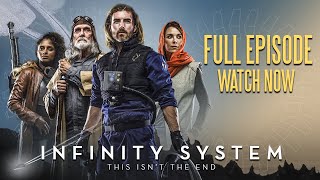
That I'm working on now, we have a new series that's going to drop later on this year. Alien Invasion. It'll be, it'll be a lot of fun. Hopefully we're gonna do some things that I have at least not seen before, but it'll be fun. That'll be coming out later on this year. Uh, if you want to check out our films, you can watch, um, Infinity System. That's free on YouTube for everybody to watch. And just, yeah, no big ask, just grateful to hang out with you guys and spend some time together.
Well, make sure you have Jennifer, since you're not in our Discord but Jennifer is, so make sure you have her drop the link to your new series when it comes out so our, our, our 10 followers can, can read it?
Yep.
Yeah, yeah, for sure. Thank you.
Thank you for coming on, Jonathan.
Oh yeah, always a pleasure, buddy.
Always great to talk to you.
Of course.
Thanks for having me.
Cool.
Well, hey, all right, thank you for hanging out with us, and, um, love to have Jonathan back at some point in the future. So let us know if there's any questions that we didn't get to that you'd like to hear about. Um, we can always share those or, you know, talk about them in a future episode.
Or if it's far enough in the future, we could have an AI simulation of Jonathan on.
I know, there you go. I'm sorry, we may have to dumb down the questions just so we can, uh, we can answer them. So thanks for hanging out, and, uh, we'll see you next time. So take it easy.
More from Jonathan








House of Wolves Episode Sixteen - Learn About Our New Film Project and How You Can Be Involved.