Live Trading Forex | Making $13,000 Trading NAS100
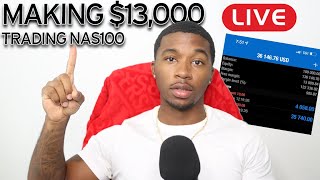
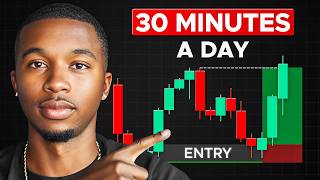
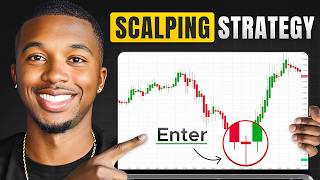
A trader shows a $10,000 profit day on NAS100: two losing trades cost $3,000, but one breakout trade made $13,000. His system uses 5-minute support/resistance boxes, enters on the 1-minute chart after price closes beyond the box, and targets a 1:5 risk-to-reward ratio with a 10-pip stop and 50-pip take profit.
Chapters
Turn up, turn up, turn up, turn up, turn up, turn up, turn up, turn up, turn up, turn up, turn up, turn up, turn up, turn up. We live. We live. We live, man. Vibing. Hold on, let me, let me share the stream real quick. Copy and let's go. Oh, somebody already did it. Bet. What up, chat? What up, chat? What up, chat? What up, chat? What up, chat? Let me move this over here so I can see this. Y'all can hear me and everything? Everything smooth? Everything good? Y'all let me know in the chat, you know what I'm saying? Yo, let me know in the chat, everybody good? Everybody vibing? Make sure y'all like up the stream, we trying to get it lit. Yo, everybody good? All right, bet. So, um, I mean, today I ain't gonna be long because the wifey is already cooking and all that, so we finna, um We're gonna break down the trade I took today. Um, well, I took a couple trades. I'm gonna break down all the different trades. I'm gonna break down what I did wrong because I did lose 2 trades today, but the 3rd trade, um, hit for way more than I lost for. Obviously, I think I lost probably like $3,000 or something like that, but then the 3rd trade made me $13,000, so net positive $10,000 today. Um, but I can show y'all why I lost the trade. Um, and why I won the other trade. And there was also some more trade, um, opportunities there that I'm gonna break down for y'all. I'll show y'all that too. I might try and get into the CAD/JPY, um, strategy. I don't know yet. We gonna see if I have enough time. Um, but yeah, make sure y'all like up the stream and all that. But I guess it's time to the charts. It's time to the charts, you know what I'm saying? So, um, this was the winning trade that I did take today. It was a 1:7 risk-to-reward ratio at the end of the day, and I'll show you exactly how I did it. But originally it was to right here, 1:5 risk-to-reward ratio. It's on NAS 100. Y'all see I have my boxes, I have my lines, I have all of that, right? I'm gonna break down the box, I'm gonna break down what it all means, why I hopped into the trades, and all that. So yeah, um, all right, so I'm Y'all know I got my indicators, the kill zones. This shows New York session, London session, and all that. Um, I'm not— I'm leaning towards never taking really any trades before 9 o'clock, um, my time, which is 10 o'clock Eastern Standard Time, because if you look at all the market action before that, it is just super, super crazy. This is the 8:30 candle, and it just does crazy things all through there. There's no real, like, market structure. Kind of just does whatever the heck it wants to do, and it's a lot of volume. Y'all know I like to use tight stop loss. I use a 10-pip stop loss and go for a 50-pip take profit, and then I'll let the rest run. Um, so during these hours, like the beginning hours, so this like whole area right here, I do not like to trade it just because it's too much volume for me personally. Of course you can trade it, it's just personally not for me. And it's the same thing happens all the time. This is like the 8 o'clock candle. We see a whole bunch of volume over here, price move 80 pips. Um, kind of went up and down 80 pips. We can look at this, the same exact thing. This whole area right here is just super, super choppy, but when you see further on the day, it just gets so much cleaner. Like, we have just very clean price action. We have higher highs, higher low, higher highs, higher low. Just, it's the price action after 9 o'clock my time, which is 10 o'clock Eastern Standard Time, is just so much cleaner and so much safer to trade, especially for this strategy that I use. Um, it's like always the same thing, like over here, same thing. This is like the, that 8:30 to 9 o'clock time frame. Um, yeah, but that's why I kind of don't like trading this time zone. That's why I didn't take any of these trades right here. You see, I kind of marked up my charts for these. I can actually mark it up on a clean chart just so you guys see exactly what I'm thinking when I first kind of entered into the day. Um, so this is kind of what I'm looking at in the beginning of the day. I'm on the 5-minute time frame right now. I know I don't want to trade anything right now because this is, like I said before, 8:30. We did have some minor news come out at 7:30, um, my time, which is— y'all just have to add 1 hour if you're on Eastern Standard Time or whatever time zone you're in. I'm in Central Standard Time, which is right now it's 6:20. So if that's not the time that you're at, then just do the calculations because I can't keep saying back and forth Eastern Standard Time, Central Standard Time, freaking Cali time and all that. What is Cali time even called? I don't freaking know. But this is what I'm seeing basically. So I see we have a support area right here— or sorry, a resistance area right here. Price can come up in that same area and kind of drop down. Um, so I really wasn't looking for anything. I know we have a support area right here as well. So I'm just drawing my boxes just so I kind of know what these areas are and um, just so I know they're actually there, right? Um, but like I said, I'm not trading any of this. I want to wait until after 8:30 or 9 o'clock Pacific Standard Time. Yeah, that's what it is. Um, but I'll wait till after 9 o'clock hits because, um, that's when it's a lot safer price action, a lot cleaner price action, where I feel a lot better taking trades. Today I kind of did— I want to say rush into a trade, and I lost 2 trades, which is technically the first trade. Well, it was technically one trade, and I'll break that down for y'all. But this is the 8:30 candlestick right here, and then it's just really crazy after that. It just kind of does whatever it wants to do. Of course, you could have caught trades dropping down here, but for my strategy, it just didn't play out, um, how I would like for it to have. And, um, yeah, so I ended up not even taking that, that trade at all. Um, so now this is kind of around 10 o'clock time. Um, let me kind of go back here because I do believe that that's where I took the trade at. Yeah, over here. So basically all my— I've went over this strategy multiple times. I'm really just waiting for, um, break of support or resistance, um, and then kind of just going with the trend of it. I feel a lot safer going in the direction of the trend. But like for today, right, I started off the trade— I believe I started off The first trade I took that lost— what? No, that's not it. Let me go back. The first trade I took was this trade over here. So once I'm on the 5-minute time frame, that's where I draw my boxes and everything. Then I hop down to the 1-minute time frame, and this is basically the trade I took. So, um, with this strategy, I've been backtesting multiple different versions of it. Um, so instead of waiting for a break or retest, I would hop into the trade getting a better entry and possibly hitting my take profit before it even comes back to retest, because my take profit is only 50, um, points when it comes to NASDAQ. So it really does not need to move that much. Plus I saw a lot of volume going down. I see we're in a downtrend as well because we have a high right here, we have lower low, lower high, lower low, lower high again. So I see we're in a downtrend, so I'm feeling pretty confident about taking a sell position right here. And if you see this white line right here, this is kind of what I do, um, on the 1-minute time frame. I want to see where price closed at last on the 1-minute time frame. So we see price closed right at this area on the 1-minute time frame. So I just wanted price to come back down here and close below this white line on the 1-minute time frame. But the reason I'm saying that this trade was not good, it was not a valid trade, I should not have taken this trade today Well, simply for the fact that it never really created a support zone right here on the 5-minute time frame. And y'all, I just explained to y'all, I look for my support zones on the 5-minute time frame and then scale down to the 1-minute time frame for my entries, right? So if you go to the 5-minute time frame, we had a little support area right here where it rejected this area right here. Um, but if you like go back in previous, um, price action, it really never rejected this area except for right here. But you see it went through it these candlesticks, went through on these candlesticks, went through it on these candlesticks. It only respected it one time over here, so this was not a strong, um, support area at all. And if I look again on this 5-minute time frame, it never really like respected this support area. So like I said, my strategy is waiting for strong supports or strong resistance areas and waiting for breakouts of those areas, because with NASDAQ, NAS loves— as soon as it breaks out, that thing goes stupid. It goes super, super far in that direction if it breaks out in that direction. You know what I'm saying, versus like other currencies I've traded, um, the breakouts aren't as like crazy, you know what I'm saying. But with NASDAQ, that's why I love trading the breakouts on NASDAQ or US30 or NAS100, whatever. I mean, not US30, or NAS100, um, whatever you want to call it. But like I said, this— there was no real support here. I never— it was not a real support. What I would like to see for like a real support would be price coming down, touching it, rejecting it, testing it again, rejecting it again. So at least we have 2 points on that area right here that show me that it is a valid support area. And then for it to break through and me take the sell on the way down if it came right here. But like I said, I— it never was a, um, real support area right here. And I think I got threw off because I was on the 1-minute time frame and I saw it came down here, then came back up right here, then dropped down a little bit and tested again before going up. I think that's what kind of threw me off. So I'll show you guys exactly what I did, right? So I hopped in on this red candlestick right here. Let me play it back exactly so y'all can see it. And if you're in the signals chat, you saw we lost this trade and we also lost the second one. I'll show you guys the second one, which is technically the same exact trade. But, um, I hopped in the trade right here, 10-pip stop loss right here, and then I had a 50-pip take profit. My entry was kind of a little bit below, it was right here. Um, yeah, so I hopped in, next candlestick it went down, it went up, and it ultimately took us out the trade, right? So then I was trying to hop into the trade again on— was it this candlestick? Yes, it was this candlestick. So like I said, took us out the trade right here, wick us out of the trade, right? And then I was like, okay, it's still very bearish. It closed below this line right here, which was an invalid line. I should know this. Like I said, this was a bad trade on my part, um, but this was whatever. So hop into the trade right here again. I believe this was the candlestick I hopped in at. We'll see. I'll see when it, um, kind of goes through. But I hopped in this trade right here. It— yeah, it did start to go down, and I was figuring— no, this wasn't it. This was def— this was the trade that I should have hopped in. Yeah, this was— this was the trade that I should have hopped in. I actually had hopped in again on this candlestick. Yeah, that's what made it stupid because I'm saying I'm looking at this candlestick, I'm like, this is a pretty valid candlestick right here, you know what I'm saying? It came back up, retested, and rejected right off this box. If I would have hopped in on this trade, I actually would have won my, my 50 pips, but I did not happen on that trade unfortunately. So let's just delete that because I did not make money there. I did not even enter right here because I just lost 2 trades and I was like, okay, let me just chill out, you know what I'm saying. So completely wrong. Um, I believe I hopped in the trade earlier. I just know I got wicked out on this, like when it went up this first time, literally like maybe on this green candlestick. Um, my broker probably took me out. The spread was probably probably a little, um, crazy, so it wicked me out. But I hopped in the trade again right here because I thought this was the retest and then rejection right here. So I thought that this green candlestick was the retest of this box that I had drawn, right? And then I had a red candlestick right here which showed me a nice rejection of this area. It looks very clean, so I ended up hopping into the trade again right here. Stop loss, again, I think my stop loss was just like— my spread at that time of day was just crazy. So 10-pip stop loss would be right here, and I got wicked out, and then it ended up going inside my direction. Yeah, that's exactly what happened actually. So I guess, yeah, it wasn't this candlestick that I hopped on, this red candlestick that I hopped on. But, um, yeah, then it would have hit I would have won the second trade. But anyways, we lost those two trades. It was sad and whatever. I was crying and all this stuff. But then, um, we made a comeback. So I knew that market was bullish overall because if we go to the higher time frames, we are on an uptrend. Um, it hasn't really created anything that showed me that— it's kind of hard. Let me take out these indicators. But, um, it hasn't really shown me anything that I really wanted to keep going down long term, long term. So I knew it would end up reversing. I didn't know if it was going to be today or tomorrow. But once I saw market structure showing me that it was going up, I decided to hop in a buy. So we had, um, it kind of reject this area pretty heavily right here. Let's go back to the 15-minute— I mean, the 5-minute time frame. So we saw I reject this area right here, and then at that point, I'm really just waiting for it to break this zone. Because if you know, support turns into resistance, resistance turns to support. So what I mean by that is that let's say we have a line right here, let's say we have a line right here, and price comes down, touches it, that's the support, touches it, touches it, and then breaks through, touches it and goes back down. This, while price was up here, this line right here was the support area. But most of the time when price goes and breaks through it, that previous support area now becomes a resistance area. So what I mean by that is when price comes back up here it'll test it, go back down, test it, go right down, test and go back down. Because that, like I said, that support area will turn into a resistance area once it breaks through on the other side. So, um, with that being said, I still— that's why I kept this box over here, this original box that we was trying to trade off of this morning. I kept this original box knowing that it would most likely come back up and, um, kind of have a support area right here. I saw we was making— we— I now we're creating higher highs and higher lows because we had a bottom out right here. Price came up, came down, and made a low, which was showing that it did not want to go lower than this zone. So then I started looking for buys because, like I said, I'm really just scalping at this point. I don't need to hold it long term, even though price did end up going up long term. Let me just show y'all real quick. Let me erase these stupid drawings. But yeah, price was going up long term. So, um, the same exact thing happened, right? I saw it come back up into the support area. I was waiting to see if it would reject off this area or break through it, and it ended up actually breaking through it. So all I personally needed was a close above this line right here, because we see price came up here and this is the last place to close. That's why I have this white line in the middle of my box. That is the highest place to close, so I wanted it to close above that line right here. And as we see, it did on this green candlestick, but I didn't even hop in on this green candlestick. I hopped in on the next candlestick just due to the fact that I just wanted to show a little bit more kind of momentum and a little more power, you know what I'm saying, a little more confidence. Um, so when I saw this candlestick kind of going up and staying up, I decided to hop into the trade. So I hopped in literally right here. Stop loss 10 pips like always, and then my take profit is 50 pips off rip. So usually when I'm trading, right, I'll literally just put in two positions. So let's— I told— I talked about this in my other live stream. Let's say I am, um, trying to do an overall one lot size, right? Instead of just putting in one position of one lot size, I'll put in two positions. I'll put in a 0.5 and a 0.5. I'll put the same stop loss on both of them, but one of them I'll have a take profit of 50 pips so that as soon as it gets to 50 pips, it takes me out the trade, you know what I'm saying. And the other one, I'll leave the take profit open because I'm going to kind of trail my profit at that point. Which pairs or pair is easiest to trade? Um, EUR/USD. Well, really any pairs that are easy to trade are like, especially for beginners, are ones with a lot— what, with less volumes, like things like EUR/USD or, um, GBP/JPY, that's— that has a lot of— has a good amount of volume, but it's still pretty easy pair to trade, and I've talked about it before on my channel as well. Um, yeah, but definitely like EUR/USD, that's probably the easiest pair to trade just because it moves slower than a lot of the other pairs because the euro, um, is getting used— or the euro is going against the US dollar, and those are two huge currencies, so it takes a lot of volume to make them move. But back to this trade. So I hopped into the trade right here. Price came up and retraced a little bit and then ended up going up, smashing my take profit right here. Like I said, it took me out one of the trade, um, one of the trades. Not gonna lie, these big words got me mad lost. If the words have you lost, go— I have a free course inside the signals chat. So if you're part of signals chat, you could just watch the course and I explained basically everything. Um, what big words am I using though? What— somebody let me know, am I using big words or am I just using like trading words like stop loss and take profit and all that? I don't know, I don't think I'm using big words. I ain't saying encyclopedia and velociraptor and all that. But anyways, man, so like I said, second position right here. Um, I'm still in one position Um, because like I said, the first position— you didn't got me— I'm over here talking about dinosaurs. That's that Velociraptor. Y'all got me so off topic just from asking about that. But one position is taken out. It got taken out as soon as it hit 50 pips. And then I ended up just targeting this last— this higher support area right here, my other box for the second take profit. So that's why, um, you'll see if you saw my Instagram story, one of the trades, I think it was like $4,000 or almost $5,000 on one of the trades. And that was the one that took Got taken out right here after 50 pips. Then the other one, the take profit was right up here, um, which was at 82 pips, and price took a little minute to go up there, um, but then it did ultimately end up going up and smashing that. And then it just reversed right off of this, went down here. Then I could have showed you guys— I'll show you guys a couple more trades that you guys could have took, or I could have took during the day, but I was kind of just okay with the trades that I took. So obviously price came up, came up again, made a double top, and then ended up dropping right down. It crashed all the way back down to this support area, or previous support area that we had before. And then if you're a support and resistance type trader, you could have traded off of this area again because it did come down and kind of taste this zone and then gave us a nice rejection area right here. So if you're a support and resistance trader, you saw rejection off of this previous support that we had. You could have entered the trade right here. Stop loss right below the box, and you could have targeted the last high, which is up here, and you could have actually made money on this trade, um, going up. But like I said, I don't trade, um, I don't trade support and resistances. I trade breakouts of the support and resistances, which is completely different. So there was no breakout during this section right here. Like, it never broke out. It just kind of respected the supports and resistances. So if you're that type of person, you could have traded that, but obviously you didn't. But there was another trade that you could have taken literally right here when price came up and broke this support area that we had. Remember, I drew this box the beginning of the day. This is the London high right here. I drew this box the beginning of the day, um, and prices just respected it. It respected it right here, respected it right here, respected it right here. So if you want to trade this breakout as well, you could have— you could have entered the trade right off of this breakout right here. If I drew my line like I showed you on my white line, is basically where the 1-minute chart um, or the last place a candlestick— or the highest place a candlestick has went or closed on the 1-minute chart. So I would do my, um, line right here. I wouldn't have hopped in the trade right here on this green candlestick because we've had candlesticks close higher than that right here multiple times actually. So I would have had to wait for it to close above this white line. And we got this huge green candle going up. I would put my stop loss for 10 pips um, in my take profit up here. This trade, I don't know if it actually went all the way up to the 50 pips, but for me personally, this would have broke even. It literally was 3 pips off, I believe. Yeah, basically 3 pips off from hitting that 50 pips, then ended up reversing and coming all the way back down, which for me personally would have been a break-even trade. But for somebody that likes to take profits on the way up, you would have made a good amount of money. But for me, anytime a trade goes 25 pips into profit, I just move my stop loss to break even, um, and this would have hit my actual break-even, um, target because like I said, it went up and just stopped, right? But the good thing, right— it— which chart is this? This is NAS chart. Um, the good thing is you could have caught another trade right here. So I'm saying like there's multiple different trades you could take a day. You don't have to be concerned about losing one or losing two. I could have made 10 times as much as I lost Well, not 10 times. How much could— yeah, I could have made 10 times as much as I lost today by just taking another trade, but I was busy. I wasn't really watching the charts after I won that trade. Um, if I get in the trade at 1.1278, would 10 pips be— I'll go over that in a second, but let me just go over this other trade that you could have taken. So like I told you guys, we have supports, and once it goes through— I mean, we have resistances, and once it goes through a resistance We have resistance here, resistance here, resistance here, and we see it broke through the resistance. And I told y'all, once price breaks through resistance, it goes back down to, um, what's it called, it goes back down to the previous support which now becomes a resistance, or the previous resistance which now becomes a support. So we see right here it did crash through our previous support area. So you could have hopped into the trade off of this candlestick right here and caught another trade on the downside. Same thing, 10-pip stop loss, 50-pip take profit. And as you see, it would have smashed that and actually ended up going further down as well before kind of consolidating before market close. I think it might have come back up here as well. Yeah, it did. So like I said, if you— again, if you trade, um, support and resistances, just rejections off of support and resistances, you could have caught another trade right here on this green candlestick once you saw this rejection of this zone that we drew earlier. Um, you have to understand, price is going to reject most of the zones that you draw. You don't have to keep drawing zones all throughout the day. It's going to respect most of the zones that you've drawn at the beginning of the day or even days before. Like I said, if you were a support and resistance trader, you could have just entered a buy right here. You could have put a stop loss, whatever, 10 pips, or you could have just put it below the last low, targeted the last high, and as we just saw, it would have hit that, um, TP, and you would have cashed out for a calm 78 pips. But, um, like I said, I don't I don't trade that. Um, but yeah, I think price just consolidated until market close, which is right at 15 or 16. No, I think it happened right here. It's at 15. But anyways, um, yeah, so that's basically the trades that I took. This is the trade I took. I won the $13K on, which made up for the two losses I took right here. Um, I could have took this trade, and I also could have took this trade because these are both breakout trades like I like them.. And, um, yeah, we'll be back again to, uh, literally kill the markets tomorrow because like I said, it happens multiple times during the day. You don't have to wait for one setup. The market gives you multiple setups a day. If it doesn't give you multiple setups a day, then the market hates you and you should probably go sleep under a rock or something. Nah, but like, it's— if it don't give you multiple setups a day, it's just, it's just a bad day. Like, there's some days where there's no setups at all, and that's perfectly fine. You don't need to trade every day. You don't need to trade multiple times a day. You don't need to hit every single trade. Like, you shouldn't be mad about a missed trade, because it's better to like, you know what I'm saying? I was just thinking about this other day because like people want freedom, right? People want money so they have freedom. Um, but yet people want to just spend all their time making money, all their freedom making money. But anyways, that's another topic for another, another day. I might get a little psychology on y'all. But what was that question that somebody asked? If I get in the trade at 1.1278, would 10 pips be 112 8.8 depends what currency pair you're talking about. Like what currency pair? I'm not sure what currency pair you're talking about. Your USD? Um, like a quick way to show like what, how much a pip is, is come to this measure tool on TradingView and you could just measure it like this. You see this 3.9? That means that's 3.9 pips, right? So let's say the price from here, we can measure how big this, um, candlestick is right here. Take the measure tool, take it from the top of the candlestick to the bottom of the candlestick. You see that's 1 point— I clicked off of it. You see that's -1.2 pips. So that's an easy way to do it. You do that on any currency pair. NAS 100, same exact thing. Take your measure tool. That's, um, -7 pips. Like, it's, it's 74— it's technically 74 pips, but it's 7.4 points, but when I'm trading it, it's basically points I count as pips. So I don't count this 74 as pips, I count that— I mean, as points. I count the— well, I don't count the 7.4 points as pips, if that makes sense. But just a simple way to do it: eliminate or just put a decimal in front of the last digit. So for pips on NASDAQ, Instead of this being 74 pips, it's 7.4 pips, right? Same thing if you're measuring from here to here, this is 27.8 pips. This is not 278 pips when— but even though technically terminology speaking it is, but that's not how I count it. But, um, yeah, let's see. Can y'all call these trades on chat even if you don't take them? Can you still call these trades in the chat even if you don't take them? Yeah, I can still call them in the chat. I didn't call them— I didn't not call them in chat because I wasn't um, because I wasn't going to take them. I didn't call them because I, I saw them too late, you know what I'm saying? Like this one right here, let me show you. This one right here, I saw this trade when, when price was already down here, so I wouldn't have taken that trade personally. This one right here, saw it when price was already like consolidating over here, so I did not take it. You know what I'm saying? Um, I— if I saw these breakouts, I would have taken them, and I also would have told you guys to hop into the trade as well inside of the chat. If you want to follow— if you want to follow your plan, set it and forget it. Watch the charts, we'll give you emotions. That's facts. Um, I mean, you should also be monitoring— not monitoring your trade, you should also be— what is the word? It's not— it's not like— it's another word for saying taking care of your trades. I don't know, but like I said, like how I showed you guys when price got 25 pips and take profit, I just moved my stop loss to break even. That's— you should also be doing that. You shouldn't just like— I mean, you can obviously if you want to, it's completely up to you. I personally, if it's in profit, I'm perfectly fine. I don't need to do nothing with it. If it's in negatives, I kind of just want to watch it, see if I want to cut my losses short and all that. Um, but the only thing I do when, um, hold on. The only thing I do to kind of monitor my trades is when it hits 25 pips, when my stop loss, take profit. And then after that, I don't— I really don't look at my trades, um, other than once it hits my full TP. I want to kind of just watch it and kind of trail my stop loss for my other, um, position that I'm in because I mentioned you guys open up two different positions. So that's really all I be doing, you know what I'm saying? Nursing a trade— I don't— that's not the word, it's something else. What is it called? It's not monitoring, it's not nursing. What the— bruh, what is— I don't freaking know. It's something. There's a word for it though, um. I have trouble with my entries. Any advice on candle confirmations? Yeah, uh, managing— that's the freaking word. Managing the trades. Managing the trades. Micromanaging it is bad. Never micromanage the trades because then you're going to convince yourself that your trade sucks. You'll always— if you look, you'll always find a way to convince yourself that your trade is bad and you should close it. Vice versa, if you're so eager to trade and you're so, this is bullish, or so this is bearish, or so you know price is going to go up, you're going to find something that tells you price is going to go up even though overall is not telling you that price is going to go up. So don't be so, so, I need to trade, or I know this, because then you'll find something, a small little candlestick that says, oh, price is finna go up, you know what I'm saying? Price is bullish, let me buy, when overall is telling price is really going down, but because you want price to go up so much, you'll look for— you'll be able to find one small little thing that says price is going up, and then you'll enter into the— enter to the trade. So like I said, do not micromanage your trades, and do not micromanage to hop into trades, you know what I'm saying? Um, your TA is so simple and effective, I like it. Thank you, sir, I appreciate that. I love my— my charts are very clean and simple. I can't And no offense to anybody that does this, I can't have all these indicators and all this stuff. Like y'all saw when I had the kill zones on, I only have kill zones on for the beginning of the day just so I know what sessions and everything like that. But after that, I take these kill zones off because I don't like— especially on the higher time frames, kill zones look so stupid. Like you see, I don't like that. I need to be able to see my freaking— my charts. I need to see price action. I'm a price action mover, you know what I'm saying? Our trader, sorry. But, um, yeah, so I like my charts to be super clean. I like just having the boxes, and you see I have the lines. All you'll see on my charts is boxes, lines, and positions. That's literally it. Um, how do you feel about funded accounts? I actually just started another funded— y'all see, I passed the funded account in like, what, 4 days or something like that, 5 days. They— I think accounts and prop firms are— I think they're freaking amazing, and they can help a lot of people. I just started another one. Y'all know I passed that, that $100K one, but I never used that account because like I said, I have my own capital and all that, um, and I'd much rather trade my own money. But my cousin just bought a $200K account, um, so I was like, hey, whoever beats— whoever beats the challenge first, the other person has to refund them amount for the— for the, um, the challenge. I think it was like $1,000, something like that. So I just got another challenge account just to beat him on that. But, um, yeah, so that's how I feel about, feel about funded accounts. Um, what was, what was it somebody asked me before? I have trouble with my entries, any advice on candlestick confirmations? Ashton, are you still in the chat? Because if you are, I'll, I'll break it down real quick. Y'all gotta like up the stream though, I'm not breaking down candlestick confirmations. Ashton not in the chat no more. I guess I— y'all don't want me to break down candlestick confirmations, I guess, because Ashton not responding. That's his name, right? I ain't read it wrong. Yeah, Ashton, he's not there anyways. Um, how do you manage while in drawdown, or do you always just let stop loss hit? Oh, Ashton here now. Ashton want to talk now when I'm talking about I can't do it no more. Let me answer Azzzz, whatever the heck it is. How do you manage while in drawdown, or do you just put always— or do you just always let stop loss hit? Um, let me show you a good example. So most of the time I'll just let stop loss hit because like I said, I'm only risking 10 pips, so I don't really mind it when I'm aiming to make 50 pips, so 50 times as much as I lost, um, per trade. So I really, most of the time I'll just let it rock, you know what I'm saying? But if I do want to manage my trades or if I want to manage my stop loss, um, let me try and find a good example for y'all, a valid example. Um, I'll just make up one. So let's say I hopped into a trade right here, right? Let's say my stop loss is all the way down here. This is a bad trade because the risk-to-reward ratio was trash. Um, yeah, I get— I guess this is a good example even though it's a really bad example. But let's say I hop into the trade right here. If I see price is consolidating a lot, like how it's consolidating kind of in this area, then I see it break out on the downside or towards my stop loss, and then I start seeing— let's see, price comes down, it starts making lower lows and lower highs, lower lows and lower highs, and I see it going towards my direction with no, like, chance of slowing down, I will hop out. I'll just close out the trade, you know what I'm saying? Um, but that's really the only thing I'll do if I just see a bunch of, um, indications or price action saying that it's, like, going to hit my stop loss. So I might as well cut my losses, um, as quick as possible. Um, but that's really all I do for managing my, my, my drawdown. Because honestly, if you're scared of like your, your trade hitting stop loss, you're using too big of a lot size. That means you're too concerned about you losing that money. But when you're managing your trades and you're managing your risk, you're not that concerned about losing whatever amount it is because you know you'll make it back, or that amount is very little so you don't have to be like, oh my God. It's like if you if you had $100 in your pocket, right, and then you saw a penny dropped out of your thing, you know what I'm saying? You saw a penny went out of your window, right? Oh, perfect example. Let's say you're driving, you're saying, riding the Lamborghini, you know what I'm saying? You got $500,000 sitting in your passenger seat. You saw a dollar go outside, flew outside your window. Are you gonna go and run outside on the highway to go get your dollar? No, you're not, because you manage your risk. It's only a dollar that went out the window. Versus if you have $500,000 in your thing and then you see $100,000 fly out the window on the highway, you won't stop the car. You could go get that $100,000, you get what I'm saying? So, um, yeah, it's the same type mindset. Um, do you only trade support and resistance? I don't trade support and resistance, I trade support and resistance breakouts, you know what I'm saying? It's different. So I wanted to break out of, um, those zones because when it breaks out breaks out good. Um, can you explain the white lines in the boxes and the reason why you place them there? Yeah, I'll tell you exactly why right now. I kind of said it earlier in this live stream, but, um, I'll do it right now again. So for example, let's say this, this area right here. I draw my boxes, these red boxes, on the 5-minute time frame, and I usually draw them from kind of wick to body. So kind of like this, or the general area of where it was wicking a lot. So I see it wicks a lot, um, in this area right here, this area right here, this area right here. So that's why I drew my box right here. So then when I'm looking for entries, I kind of want early signs that it's not just going down here and wicking down here. Just to go back up. I want early signs that price is going to break through here instead of coming down here and then going back up. So how I kind of do that, um, is come down to the 1-minute time frame, which is where I try and find my entries, and I'll draw my white line at where price had closed. Because if we look at, um, these candlesticks over here, we see that price came down here. You saw price came up, but if we go down to the 1-minute, we see price came down up, down again, and then up again. So it really never closed below this area right here. So when I'm looking for trades or breakthroughs, I'd be waiting for price to close below this white line for me to indicate that it's going down again. Now, personally, if like I was taking this trade right here, I probably would have taken this because as we see, it closed the lowest point it has closed in this box literally ever. It never closed that low on this area right here, never closed that low on this area, never closed that low on this area. So I personally probably would have hopped in a trade right here. I don't know what time of day this is. Yeah, but, um, I put my 10-pip stop loss, 50-pip take profit, but this got stopped out. Um, but that's what the white lines are for. Um, if that makes sense, Danny, let me know. Juver, about the micromanaging, well, do you think it's a good idea to— an example, when the trade is 8% of take profit to set stop loss breakeven? Um, it really is up to you. I do it when trade is 50% in take profit. Some people do it when it gets to a 1:1 risk-reward ratio. Um, that's just not what I do personally. Um, go up. There you go, you did it. Anyways, I don't even know why I just did that, but, um, yeah, it's really up to you. I wouldn't say like a certain percentage. It's really up to you. Like, when you have to realize Trading is all about mitigating your risk as much as possible. So you don't— you want to cut your risk as much as possible and let your winners run. So if a trade is going to lose, get out the trade as fast as possible so you lose the least amount of money. If a trade is winning, let it keep winning as much as possible. That's why I keep that other position open to let it run, you know what I'm saying? Um, yeah, so Like I said, for me personally, it's whenever it hits that 25-pip mark, um, which is basically halfway to my take profit, which is a 2.5 risk-to-reward ratio from what I'm actually risking on the trade. Um, but yeah, like I said, it's completely up to you. Some people, once it reaches 10 pips in profit, then with their stop loss to break even, or 20 pips in profit, they'll move the stop loss to break even, or whatever it is, 80%, 30%. It's really completely up to you and your strategy and your risk tolerance. Because are you more concerned about not losing money or making money? You know what I'm saying? Because sometimes price will come up, come back down, stop you out the trade, and then go in your direction. So would you rather that happen and you just break even and lose out on the money that you could have made, or, um, but you're safer from like price going down and coming back down all the way back down to stopping you out the trade and make you lose money? Um, it's like I'm saying, it's, it's literally all based off personal, um, personal, personal what you wantness, you know what I'm saying. Is your strategy in a structured course on the Cryptfire Academy or scattered through the YouTube videos? You have a course? It is. It's not on the Cryptfire Academy. It's if you go to the Forex, um, let me send the link for it. Um, but I have a signals chat where I send out like every single trade I take. Um, but it's a free course that's included in there that has a strategy in there as well. I've broken it down multiple different times as well for people, um, on live, on YouTube videos and all that. But it's a pretty simple strategy. If you just go back and watch this live stream, you'll see it. It's pretty simple. But that's the signals chat. I just put the link in there. Um, does your breakout strategy work on any pair? Basically, yeah, it's just different pips. Like, you want to do 10 pips for every pair. It would just be— it'll be different. Do you use key levels like where the banks and market makers are interested in buying or selling or trading between those levels? Not necessarily because I'm more scalping. I do want to be aware of certain areas like on the 1-hour time frame. I want to be aware where price rejected heavily. It's like right here. If you see like these red lines right here, these are like my danger zones. So you see I have red lines right here I've run lines right here. During this area is kind of where price had wicked off and went crazy in other directions. So I am aware of like huge zones, but, um, yeah, y'all see my trading rules right here. Breakout after 30— the 8:30 candle, because the 8:30 candle is a little hoe. Retest, rejection, enter, repeat. Don't overthink, don't force trade. I just got that on my chart. I don't even know why it's there, honestly. But yeah, you remember your breakthrough in Forex? The moment you— the day says moment you knew you have something going. The first day I started trading, I was like, okay, if you watch my video on like how much money I lost, you'll see like my whole journey. In the first day, I thought I was the best trader in the world because I made like $15,000 on gold on a demo account. I thought I was the best trader in the world. I was ready to just go balls deep, you know what I'm saying? Um, so once I saw like it was— it's legit, it's— you can do this, it's real, I was kind of like, okay, this is it, I'm, I'm gonna go crazy on this. And then I kind of just started going crazy on it. But like when I actually became profitable and all that consistently, what changed really? Just like risk to reward, like understanding that you're You don't have to win trades. You can have a 20% win rate and still be profitable. You can have a 30% win rate, 40% win rate, and still be very profitable, make a whole bunch of freaking money. You don't need the high— the people with the highest win rates are not the best traders at all, because anybody can have a 1-to-1 risk-to-reward ratio, or like a trade where you're hopping into the trade right here, your stop loss is all the way down here, and your take profit is right here. Anybody can really do this multiple times, but, um, the long term— the long— over the long term, or the long— what? I can't even— words right now. I can't words today. But over the long run, that'll mess you up. So really understanding risk-to-reward ratio and realizing I don't have to win every trade, I just have to find a strategy, and every single time I see this strategy happening, hop into the trade. If I win it, I win it. If I lose it, I lose it. It, you know what I'm saying? But I did what I was supposed to do. I followed my trading rules. I was not scared to hop into the trade. I was not too eager to hop into the trade. And I followed my trading plan, you know what I'm saying? And if I win, I won 5 times as much as I was willing to lose. And if I lost, I'm gonna make it back because I just need one win to make back 5 times as much as I lost, you know what I'm saying? Well, for that strategy, there's people that have 2:1 risk-to-reward ratios, 3:1 risk-to-reward ratios, and all that. But for my strategy and what I go 4 or 5 risk-to-reward ratios. Um, do you have a program that we can trade live with you? No, I mean, I have the signals chat. I just put the link up there, right, the launch pass thingy. Um, so the signals that we— you can kind of like do that, but I would, I would like livestream when I'm actually trading, like in the time when I'm trading, but, um, it's just you can't predict when the market is going to give you a setup.. And if a market's looking like it's about to give me a setup, I need to hop into the trade. I don't need to go and set up my camera and start live streaming and all that. I need to hop into the trade. So it's— that's difficult to actually like be live streaming when I'm hopping into specific trades and all that. But I do put out my trades in the signals chat as soon as I hop into them. Um, yeah. Do you plan on recording a video on the GPJP strategy that you talked about in a signals chat? It's the same exact— I'm This— it's the same thing. It's all my strategies are the exact same. Perfect example right here. So let's say we're on the 5-minute time frame right here. We have a support area right here. Multiple times it tried to break this area right here. I go down to the 1-minute. I go down to the 1-minute time frame. I draw my white line right here. This is the highest point it went, so I'd want it to close above this white line on my— on the 1-minute time frame. Once it does that, I hop into the trade. You could do like a GPJPY, you don't have to do a 10-pip stop loss, um, it could be less if you want, or you could do that 10-pip stop loss. It's completely up to you. Um, 50-pip, 50-pip take profit, the numbers are just different. Um, like me personally, I think I was doing 6 and 35. Still a 5 to 1 risk to reward ratio. And yeah, so it's the same exact strategy, just change up the pip size, you know what I'm saying? Change up the, um, the stop loss number, like that set number, um, and trade with the direction of the trend. Like you see, we're in an uptrend, we're We're making higher highs, higher lows, higher highs, higher lows, all that. So look for buys, don't look for breaks. And if you do want to look for breaks and wait for it to go on the downside, draw a box around major, major support areas. So let's say I see we're on an uptrend, right? In order for me to consider getting into buys— I mean, sells right now, I would need to see it break a major zone. So a major zone to me is like right here because we have this, this, and this. But I probably still wouldn't hop into the trade until it clears this zone right here, because this is another zone where it struggled to go past. So once it kind of breaks through these two zones, then I would look for sells down to this area right here. But we are in uptrend, so I wouldn't be looking for sells. Like I said, it's the literal same exact, same exact strategy— waiting for breakouts in the direction of the trend. On the 5-minute time frame, draw my boxes. 1-minute time frame, look for my entries. Hey, go to the CAD JPY and show me how you use the breakout. I'm totally new to this, where can I learn for a beginner? I'm gonna drop a link right now. It's a signals chat, but it has a whole free course in it. You can go sign up for it or watch a bunch of YouTube videos. YouTube is free, literally. But the course is literally step 1 to step 100 million, you know what I'm saying, instead of trying to go through YouTube to find it all yourself. Um, so you normally trade on the 5-minute chart, and would you recommend trading the 5-minute chart or just the 1-hour? I only trade the 5-minute chart. I draw my support and resistances on the 5-minute chart, and then I go— I enter into trades on the 1-minute chart. Oh, let me show you the CAD/JPY. It's, it's this literal same exact thing. This is kind of consolidating over here, so I probably wouldn't have traded this. But let's say I did trade this, right? So I see we're in an uptrend, right? We're in uptrend, uptrend, uptrend. I see a support being built right here multiple times. Touch here, touch here again, touched here again, rejected it. Now I'll be waiting for a break of here. I would go down to my 1-minute time frame. I look for it to close above this high because this is the, the highest point it's closed. Um, so once it closed above that high, I put there. And then CAD/JPY moves a lot less, as you see. Like, this would be 10 pips right here, so you could put the stop loss below the candlestick that you hopped in at and just aim for a 1:5 risk-to-reward ratio, like so. And that would have taken you out the trade. Bad example, but okay, let's try it again. Let's see if it breaks. Now, now I want it to break above this green candlestick right here. All right, so it broke above it. So let's, let's try doing the same thing. Let's see if this works. And it's running, it's running. Did it hit it yet? I don't think so. Oh yeah, it did. So it's the same, like I said, it's the same exact strategy. You're looking at your hairline, bro. Man TV, you live at the— you live at the barbershop, sir. You need to become a barber yourself. I'll fly you out to Houston. Um, but yeah, this is literal same exact strategy, bro. Like Wait for breakouts in the direction of the trend, hop into the trend, 1:5 risk-to-reward ratio. That's me personally. If you're like a little more safer, you can do a 1:3, 1:2, 1:4, or if you're a wild guy, a 1 to— I don't know, 1 to 100. I don't freaking know, do whatever you want. Um, but yeah, so like I said, the same exact strategy, it's nothing changed about it except for the pip sizes. Um, that's really all that changes. This strategy could be used on literally any pair. It's just I like trading NASDAQ because the breakouts are just so far, um, and they usually go pretty good. The strategy that simple? Yes, it is very much that simple. How do you pick your lot sizes depending on the pairs you're trading? Um, it also depends on the broker you're using as well. Like, I can't just say every single time use this lot size, but like for GBP/JPY or CAD/JPY or EUR/USD, on most brokers a 10 lot size basically means that for every pip it's $100. So if it goes up 1 pip you made $100. If it goes down 1 pip, goes down $100. Uh, for 1 lot size, it's $10 for every pip move. For a 0.1 lot size, it is $1 for every pip move. Um, yeah, so that's on most brokers. Like I said, it can vary. As far as NASDAQ or NAS 100, it is completely different. Like, it could be— like, I think on, uh, CAD/JPY or GBP/JPY, I would use like a 50 lot size, but then on NASDAQ I use like a 0.5 or 1.5 lot size, or 1 lot size, or yeah, something like that. And it's— but it still makes like the same amount of money. So let's say, um, on NASDAQ if I use a 1 lot size, it would make me— and let's say I'm risking 10 pips, I'm risking $1,000 basically. Um, yeah, what pending orders or order type to use? I do market execution, so I hop into the trade then. I don't use, um, buy limits or buy stops or sell limits or sell stops. Are you still doing a platform challenge? You did a video. I already beat the challenge, but I started another one just because my cousin wanted to see who could pass one first. So that's the only reason I'm doing that one. I'm not really recording that one, I'm gonna just beat that one real quick. Um, but yeah, as far as like choosing how much you want to risk on your account, I say this all the time, you don't want to risk more than 5% every single trade. The good number is like 2 to 3% per trade. So if you have a $1,000 account, risk $20 or $30 per trade, or max $50 per trade. But if you have, um, yeah, I guess that was a simple enough breakdown. Um, yeah, that's really it. I smell the food cooking. I'm kind of hungry. I should probably go downstairs and eat. But if y'all got any more questions, let me know real quick before I hop off. But hopefully I was able to explain it for y'all, um, break it down pretty simply. The strategy I use is pretty simple, nothing crazy, is nothing super extravagant where it takes you 5,000 years to learn it. Um, but yeah, but yeah. How much you make this year? $500 billion gazillion dollars. Now come try and see if you could take it. You also take liquidity grabs and balances to account. Uh, most liquidity grabs happen during 8:30 candlestick, so that's why I really don't trade it. Um, I don't really take those into account when I'm scalping these pairs. How do you keep hope hopping to a trade as soon as it touches your stop loss? And how are you typing in your stop loss? Take profit fast enough. What do you mean? Wait, how do you keep hopping into a trade as soon as they touch your stop loss? And how are you typing in your stop loss and take profit so fast? You just go on MetaTrader and you have— you press the trade and you put in your stop loss. I don't— I'm confused on a question. 8:30 candlestick. Yeah, 8:30 NAS 100 goes We call it crackhead hours inside of our chat. Um, like this green— this red candlestick and this red candlestick is the start of it. Crackhead hours usually last from like here all the way till like 9 o'clock, it starts to slow down. So if you look at all these candlesticks in here, they're just like crazy. They just no respect for really anything. They kind of do whatever the heck it wants to do. Most of the time it'll kind of like go up really high or go down really low and then shoot back up. Let me show you an example of it real quick. Let's go to— yeah, like this. This is the 8:30 time. You see how it came down and shot back up? Um, that's kind of what it does most of the time. Um, so that's why I say the 8:30 candlestick, like just crazy stuff happening at 8:30. It does whatever the heck it wants to do. Um, but yeah. Hey, do NAS 100. I'm just joining in. You can rewatch the thing, I'm gonna leave it up, but I can't go over it again. What time is Crackhead Hours Eastern Standard Time? It's 9:30 Eastern Standard Time. Um, but yeah, yeah, you can just rewatch the stream after I end it real quick, um, so you could watch the NAS breakdown of the trades I took and how I made the money and all that. But yeah, that's really it. All right, y'all, we're gonna see on the next live stream. I'm trying to do these a lot more often. They're really cool. I enjoyed them. I get to answer a lot of questions that y'all have, and hopefully one of these I'll be able to actually stream when I'm trading. But I don't know, because you can't really time the market. You can't time when the market is going to give you a setup. We're not going to rush no setups or force no setups just because we on the stream. But before you dip out, make sure you like the stream. And like I said, if y'all want to tap into the signals chat, it is inside my, um, the description of this live video, as well as I will type it in the chat one more time if you want to tap in. Like I said, it's a whole, um, it's not just a signals chat. The main point of it is to teach y'all how to do it yourself. Like, if y'all sign up for the signals chat, y'all go see us, not even if we don't post a signal, you still go see people posting profits inside the profit because they've learned the skill and they're making money themselves. That's the whole point of the signal chat. It's not for y'all to follow my trades. I'm trying to teach y'all how to fish so that I don't gotta fish for y'all all the time. Because like trading— I was just telling my wife this— I'm like, trading by myself is so much easier because I don't got to worry about other people. But when I'm— when I got the signal chat and I'm sending out signals, it'd be so stressful to take the trade, send out the stuff, and then People getting mad because the signal ain't hit. Like, come on, bro, risk less money. Am I gonna— it's not my fault you blew your whole account one trade. You 2 to 3%, sir, you'll be okay. Um, but yeah, yeah, yeah, yeah, yeah, yeah, yeah. All right, y'all, I'm gonna see you on the next one. Stay safe.