How To Do Novations In Real Estate (Step-By-Step For Beginners)
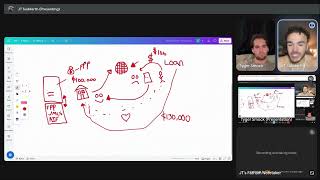
In this instructional video, the host walks a co‑host through the complete workflow of executing a real‑estate novation (also called a “family placement program”). The discussion covers how to structure the initial contract with the seller, how to present the offer and price, the legal role of an attorney‑in‑fact, and how to obtain a separate licensed agent to list the property on the MLS. It then details the buyer‑side process: marketing the property online, handling a buyer’s loan application, appraisal, required repairs, and repair‑credit or repair‑funding options. The speakers break down the financial math, showing how the wholesaler’s fee is derived from the difference between the seller’s price (e.g., $100 k) and the buyer’s offer (e.g., $130 k) after accounting for realtor commissions, closing costs, and repair credits, resulting in a typical profit of about $17 k. They compare novation to a traditional wholesale assignment, explaining why a seller would accept a higher price and why the wholesaler can earn the same fee while covering fees and repairs. The video also covers earnest‑money handling, default scenarios, and timeline considerations (45‑90 day closings versus fast wholesale flips). Throughout, the host promotes free scripts, calculators, and a mentorship program, and ends with a call‑to‑action to join their school community.
Chapters
All right, guys, in this video, I'm going to break down exactly how to do real estate novations from exactly what to say to the seller, what number you should tell the seller, and exactly how to make sure you pitch the seller correctly to get them to sign the contract. And make sure you get paid at the closing table. If you guys are interested in this, this is going to be a ton of free value. And speaking of free, in the description below, if you want free scripts, free calculators, and all of our free trainings that are over six hours long so you can go and start your wholesaling business for free, click the description below. I'll even include a free 90 day Blueprint call with my team where they'll map out the entire process for you and get you onboard into the school community so you can get results quickly. Anyway, if you've been interested in innovations, now's your chance. Go ahead and get into it. Okay. You're going to have the rights to the property. Okay, so here's how this works, right? Here's your contract with the seller, right?
Yeah.
And it. This contract says you. So you are the buyer. So I'm gonna put like a. I love a good visual example.
This is tough.
Yeah, bro, I got you. Right, so you're the. You're the buyer, right?
Yeah.
And you're offering to purchase the property at 120,000. Let's just say a hundred thousand. First easier number.
Yeah, 100,000. Easy math.
Right. And that hundred thousand dollars is for this property. Right. But this property's in good condition, but it's not in great condition. Right.
So type of deal?
What?
Cosmetic only type of deal. Everything's all kosher.
As long as it's not like it does. Honestly doesn't matter. Right. But I'm gonna explain that in a minute. Right, so here's this property. It's in pretty good condition, right? It's just not perfect. It's like a small rehab. You see how this windows cracked?
Mm.
That's why we're paying $100,000 for this property. Seller signs, you sign. Right. Then there's gonna be another page that says, hey, you're participating in our family placement program, the fpp. This gives us the right to list your property on the market for you. And you're aware that we could be Getting offers at 80 to 100% of its appraised value. Okay. And you're giving us the right to list the property on the mls. Ooh. We're not going to be your agent because we don't have licenses. Well, you do, but you get the point, right?
I feel you.
You don't have a license. So we're not going to be your agent. We're just going to be the attorney. In fact, we're going to find an agent who's going to list this property on the market for us. So these two, these two papers go hand in hand in order to do innovation, right?
Yes, yes. So you basically are purchasing in the set. Like you're offering a hundred thousand on the assumption that obviously we can still close on it. Even if it was at a hundred thousand. Obviously you need to make your profit, right? Your assignment fee. But it's not necessarily traditionally assignment fee anymore because technically you're basically getting them to give you the rights to market it on the MLS as if you are the seller, but you're not the seller. You're just the seller of the contract, correct?
Well, no, you're gonna see that in a second. All right, so we put this property to the World Wide Web, right?
Type, type.
We put this property to the World Wide Web. All right, So it's being marketed to millions of people, right?
Yeah.
Now we're gonna do. Now here's a real estate agent that saw this for their client, right? Here's the real estate agent. Meow. Because they're poor. Okay. All right, here's a real estate agent, right? Yeah. He calls us up. He calls the number listed on the mls, which is our real estate agent, because we got a investor friendly real estate agent to list our property on the market. Okay? So he listed it. He calls her up, beep, beep, beep. Then he says, hey, I want to show the home. Right. He brings his clients to show the home. They walk all the way over to the house. They love it, right?
Boom. That first sight.
Yeah. So what do they want to do? Hey, Realtor, we want to make an offer, but we need to get a loan on the property for it. We need to get a conventional loan. Let's just conventional loan or any sort of loan product. It can be conventional, it can be fha, but it's going to be a loan. Okay, so I'm just gonna write in. Here. We go. So here's the loan. Okay? We put a loan on the property, or they want to buy the property with a loan. So they do all their inspections. Did all the inspections.
They.
The loan comes and does the appraisal, right? So let's say, for example, they offered us one. Let's say they offered us 150. Or let's say 130,000. Okay, cool. For the house it came in, and the appraiser said, hey, it appraises at 130, but in order for it to get approved for the loan, we need you guys to fix the chipping paint. All right. So the seller is like, well, hey, I don't have the money for that. No worries, Mr. Seller. This is a part of our family placement program, so we will pay for the missing paint, which will probably cost a thousand bucks, right?
Yeah.
If you don't have a thousand dollars, I will fund it for you. Like, that's actually realistic. If you need help for real, I'll do it. Yeah.
Now I guess I'll get into questions. I'll keep letting you go because I gotta.
So we are going to pay for any repairs that the appraiser asks for, right? Or yeah. If we don't want to pay for repairs, we'll say, hey, no worries. We'll just give the seller a repair credit or the buyer a repair credit. Okay. If we don't have the money and we don't want to call JT for the money, we'll just give the buyer a repair credit if they're cool with that. Right. As long as the loan will still get approved. Right?
Gotcha.
So in a normal assignment deal, if this property was off market, Right. Then we would just take our contract, Right. And we would just say, hey, here's our contract. We'll assign it to you at 130k, right. And then it would be a $30,000 fee, correct? Mm, wrong. We're not doing that with novation. We're saying, hey, hey, Ms. Seller, Ms. Seller, we have a new offer. We have a new offer from this realtor and his client. Okay. They need a couple things done to the property. Right? And we paid for marketing and all that. And they're going to pay 130,000. Okay. So we're going to replace our contract with theirs. So their contract, we're going to replace with ours. And in return, this is called a novation. A replacement. Right. Novation is synonym for replacement. Then we're going to to give them another agreement. It's an addendum that says, hey, all fees come out of our pro. All fees. So all fees I'm gonna put AF here.
Yeah.
Are paid for out of our agreement. Out of our agreement here. But we will be taking the difference between their offer and our contract here. But we will be paying for all closing costs, realtor fees, and anything like that. Right. So here's how we will get paid all the way down. Right. So 130,000 is the total amount the new buyer is paying. Makes sense.
Yeah.
We're going to pay 6% to a realtor. So 3 1/2% to the buyer's agent, 2 1/2% to the seller's agent, or you know what I'm saying? Right.
Yeah.
Then we're probably going to have another 2% in closing cost and then possibly another 2% in buyers and in buyer's return repair credits. Right? Yeah, Whatever we need. So 10% of a. Of 130,000 is what?
10% of 130,000. What's that, 13 grand?
13,000, right.
Yeah.
So what is minus 130,000? Minus 6%? Minus 2%. Minus 2% would be 130. Minus 13,000, which would bring us to a whopping 117,000. Correct. So this money goes to our pocket, us, which is us with the money bag. Right. This is us right here. The seller is going to get 100k of this. This goes to the seller. And this is the seller, this house. Right. So the seller gets their 100k like we promised, and we took care of all the fees and all of that and absorbed those. And in return, they were able to get a higher price. Right. Than we would if we were able to traditionally wholesale. And in return, we are getting the difference between the two, which is 17,000. Okay. Now, why would someone do this over just traditionally listing it with a realtor? Or why would someone do this over, for example? Why would someone do this, for example, over just a regular wholesale? Well, if they don't want to do the repairs, they don't want to pay for the cleaning, they don't want to pay for the marketing, they don't have the funds to do that. They don't have the ability to stress over that we're giving them a white glove program. Okay, so normally, let's say this property needed light renovation, or let's say medium renovations. Right. It was livable, but it needed medium renovations. Okay. This property would be worth, let's say 160,000. Or 165,000 would be the ARV. I just pulled that number out of my butt. But if this property was completely renovated, it would be worth 165,000. Right. So an investor would pay 70% of that, minus repairs is what an investor would pay. Right?
Yeah.
And so if we were going to assign it to an investor, let's say this property needed 25k repairs. If they were. If we were going to assign it to an investor, they would be paying, let's see, 125 times 0.7 minus 25,000. They would be paying 90,500 for the property. So if we could sell it at 90,500 to an investor in order to be able to get the same profit, what would we have to offer the seller?
We'd have to lock that bitch up for the dirt sheet.
We'd have to offer the seller 73,500 in order to make the same 17,000 we made off the novation. Right. So the seller would have only got to make 73k on this deal. Right. But we know since the property, since the property was an okay and livable condition and it could get approved for a loan, the end buyer was actually able to pay 130,000. Right. Because they wanted to live there. It wasn't about an investment. It was more about, I'm looking for a place to live. So they paid 130,000 because that's what the properties as is market condition value was. So instead of selling it to an investor at arv, we sold it to a person who wanted to live there for what the property is worth in its current condition, appraised value. Okay, so our comparables, we weren't looking for renovated homes for our comparables. We were looking for other homes that needed a medium rehab versus if we were selling it to an investor, we would be trying to compare it to homes that. That sold for a re for that was already renovated. Does that make sense?
Yeah, that's what I'm thinking too. So basically the idea is that the seller, they're in the situation, I already explained it. Long story short, they need 100 grand. They're not going to get 100 grand because traditionally the offer is going to come in at 73,5. Right. And that's for us to make the same amount of commission, theoretically speaking. So the idea is that basically the contract is kind of structured out to where we will basically be able to not necessarily offer the contract. All it is is that we're going to be working with the real estate agent to put the property on a market that's essentially in layman's terms, what the contract is giving us the ability to do, regardless of the titles per what we're doing. Right. At least as like, I guess, the. What's the. What did you say? It was the attorney in attorney, in fact. Attorney in fact. So Attorney in fact. So that's what we are. We're working with the agent. The agent is, you know, aware the Situation knows what's going on this at the third. And then ultimately we're going to find someone who is a. What is it? A buyer's agent. The buyer's agent is going to come to our seller's agent and they're going to converse. Hey, I have client. Okay, cool. Sounds good. Does the client want house? Yes, they looked at it.
It's good.
Great. Then they come up with an offer. We'll be willing to offer you $130,000. However, per our FHA loan, our conventional loan, whatever it is, we can't have any major, you know, repair, you know, damages. Right. This plumbing, they can't be leaking, or this paint, it can't be chipping, Assuming that the property is in great condition and it is structured out to really be a good innovation. So that way it's not gonna be that much. It's just gonna be chipping paint something small, and then we get that fixed. Right. But the idea is that we would be fronting that cost. Right. But obviously, this is us being under contract with the other person. Now, my question, I guess, at this point in the process is what happens when we are at basically the point where we are having our buyer's agent and our seller's agent conversing, and then their clients are ready to go, and they will, I'm assuming, put up earnest money in some capacity on their contract. Right. So when they default, does that money get defaulted to us, I guess, for the repair money that we maybe have to spend? If it's a thousand bucks, fifteen hundred bucks for our local painter? Or are we just taking the gamble that assuming that that person, those clients on that other agent side, if they drop out, does that mean that we just have to replace them entirely, or does in some way we get rebated on our investment of the paint? You know what I mean? Even if it's only a thousand bucks.
So I would have an agreement with the seller stating that, like, if we pay for X amount of repairs, then we get those repairs reimbursed if they try to back out or whatever. Right. So in the case that someone defaults on the property, like in case they defaulted, that earnest money, they would get what was ever in our contract. So for say, for example, our contract had 500 earnest money, and then our contract with the end buyer had 5,000, we would take 4,500, the seller would take 5,000.
Rewind. I don't know if I followed. So you're saying that on their contract. So the buyer's agent is basically putting the 500 down on their. As their earnest money deposit. Right.
Me and you, you're the seller, I'm the buyer. Right.
Okay.
I'm. I'm the wholesaler. Right.
Okay, okay.
Okay. I'm gonna say, hey, I'm gonna give you 500 earnest money. Right. Oh, into buyer. The family tells me that I'm gonna give that. They're gonna give me 5,000 earnest money. If they default, I'm taking 4,500 and giving 500 to them.
Gotcha. So you're saying on your contract between us as the, as the wholesaler to the person who is in need of the bread, basically, or in the position of struggle, they are going to get only the $500 that you offered up on your earnest money because it's from you to them, and then it's the set of, like the actual buyers declines from them to you. So you're basically catching this friend in that 4,500, which, in a perfect world, assuming that the earnest money is high enough to cover the cost, which would, I guess by default, you put it in the earnest money slot, or are you going to make it separate with your agent and kind of in the
contract that the repair depends on the contract.
All right, cool. I figured that was a contract thing, but that's easy to figure out. When you get there, you just, you get it written up correctly and then from there it's, it's good. So, all right. Then after the repairs are made and everything's good, the inspector comes through, we qualify, Right. The, the, whatever it is, the loan fella, he gives them the green light, property's ready to close. We go ahead and. But we initially told the person in need, right. The original, original seller, the homeowner, we said, hey, we're going to cover your real estate fees. We're going to cover any fixes that need to be done to come to get this property to be mortgageable.
Let me give you the pitch.
Yeah.
Okay.
I guess that wouldn't necessarily be more so my pitch, but I guess just like the value add and like the ending of it is that we are covering that 6% on the seller, 2% on the buyer, 2% on any excess stuff that we had to pay to get the property to qualify for the mortgage.
Yeah. So basically what you'll do instead, like whenever you're, whenever you've gone, all of your wholesale offers don't work. Right. You're going to take it back to the team. You're like, I don't know if I can get you approved for this one program. But I do have one that you might be able to get approved for that would be able to get you a good amount more in your pocket. They say, omg, go on hold. Come back from hold. And you say, Mr. Seller. Well, I. I just went back and I got my boxing gloves on for real. I sold them on you and your situation to get you approved for this exclusive program that we have now. I didn't know if it would work because they rarely approve these kind of properties, but they did take a second look, reran the numbers, and they did get an approval for you on our equity buyers program. And this is the first approval for this program that we've gotten all month. Okay. So with this program, we're not actually going to be the buyer. Instead, we're going to partner with one of our local expert agents in the area who have buyers that are looking for properties in your exact neighborhood. And we're going to pair one of their buyers with your property. We're also going to go to the closing table together and close. Now, because this is a retail buyer, I'm going to need a couple things from you. But the buyer we partner with, they're likely not going to have cash. They're going to get some sort of loan to actually purchase the property. So we're going to need a couple things. One, we're going to need a little bit more time in the agreement on the current offer. We're sitting at 45 business day close. We're probably going to need closer to 60 to 90 business days. Just because you and I both know mortgage lenders loans, they take extra time to process. We're also going to need a little bit more access to the property. There's going to be things like inspections, appraisals, walkthroughs, and they may even be some repairs that we might have to make on your behalf in order to get this property qualified. I don't think there will be, but if there is, we're gonna need a little bit more access. In exchange for that, the underwriter was able to come up all the way from 150 up to 220,000. So next steps from here, I'm gonna get a brief email from you. We're take this back to the underwriting team. We're gonna have them write up the agreement. I'm gonna send it over to you right now. We'll get things started up. Okay. What's the best email for you? That's the pitch.
Boom. Gotcha. So that's the Actual pitch on them and it's the equity.
This is what a lot of people pitch it as. I pitch it as a buyer's program, Family placement program is what I pitch it as.
Family person. Yeah, it sounds better.
Yeah.
I think that's sick.
Yeah.
I never realized, I guess the angle of innovation and how it all works. But it's basically tearing your not dead wholesale deal, but dead wholesale deal because let's say a loan structure for them itself just doesn't make sense to accept an offer so low. They just physically financial not. The idea is they're given a second opportunity to go to market with it. So but you're going to be copying the material. The, the cost on the fixing of stuff and that's the huge value add is that we're going to get your property to mortgage qualifiable and that that is going to be. And of course not in the pitch, but just in my own head if I ever were to talk to, I don't know, somebody and how to explain it or something. But I guess the best way to explain is yeah, we're comp it. We're taking on some level of risk. We're not because earnest money will always cover. But the idea is we're going to help them through their situation where they don't have that couple thousand bucks. Right. And obviously the knowledge to know everything. But the main value add I think is that we're going to get your property mortgageable.
Correct? Exactly. Word.
That's sauce right there, bro. I knew about innovation like I knew the word but I obviously never really looked at it on a visual diagram. But that's.
That.
That's sick, bro.
So that's how we run that. Okay. So that is going to be a big arson. That's going to be a big asset to your offering structure. Right?
Yeah.
So the goal when you're offering is wholesale price, wholesale price, wholesale price, wholesale price, wholesale price, wholesale price. Okay, let me go see if I can get you approved for this next program. I don't think I will be able to, but it's worth a shot. Come back. Oh my God. We got your approved. We're able to do this.
Yeah, yeah. Talking a deal that makes no money into making.
So here's something you need to understand is that the goal for us is to make the same amount of money no matter what. Right. We just have to frame it in different ways in order to be able to make that same amount of money. For example, yeah. If we offer a hundred thousand dollars for a property that's worth $300,000. We can probably close in five days because we can make 20k easy. Assigning it to someone for 120, 000. Somebody will give us the cash within five days. Right. Versus if we offer them $200,000. We know we could probably offer. We could probably sell it to somebody else at 220. Right. If we have 30 days because it's still a great deal. So what I would do is I would say, Hey, 30 days, we'll give you 200 and then we'll sell at 220. Right now we have 90 days and we can list it on the market. All we have to do is let's get it for 270. Right. So all these different timelines affect how much we can actually sell it for because we have leverage. Does that make sense? Yeah, it's just us changing timeline and. And terms. But we're always going to make 20k
type regardless of the source of the deal. Yes, of course. It makes it to where every situation, regardless of what it is that you can always, you know, get something going. I mean, I guess same amount of
income depending on how and possibly even more the deeper you get it. Right. But you're going to make the same amount of income no matter what.
Yeah, beautiful. Regardless of the deal structure, regardless of their actual situation, you can always make it where it makes sense while they're either fishing market basically, or just, I mean, grinding them on price until they come down where you need to.
All right, guys, I hope you found this valuable. Don't forget we have a bunch of free trainings in the school community. So if you have any additional questions or you need help at all, just go to the link in the description and check out our school community and get book your onboarding call with our team so we can help you out and be as successful as possible. Again, it is all free. We just want you to be successful. So just click the link in the bio or click the link in the description and let's get after it. Have a great day, y'. All.
More from Jackson


90 DAYS TO MAKE $100K WHOLESALING REAL ESTATE FROM ZERO — OR I QUIT (Portrait)

90 DAYS TO MAKE $100K WHOLESALING REAL ESTATE FROM ZERO — OR I QUIT (Portrait)



90 DAYS TO MAKE $100K WHOLESALING REAL ESTATE FROM ZERO — OR I QUIT (Portrait)

90 DAYS TO MAKE $100K WHOLESALING REAL ESTATE FROM ZERO — OR I QUIT (Portrait)



90 DAYS TO MAKE $100K WHOLESALING REAL ESTATE FROM ZERO — OR I QUIT (Portrait)

90 DAYS TO MAKE $100K WHOLESALING REAL ESTATE FROM ZERO — OR I QUIT (Portrait)