the only real section 8 course on the internet (100% financing included)
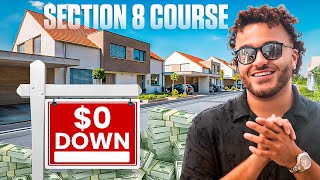
Jackson Sudderth claims he closed $4 million in real estate deals his first year, bought five rental properties in one month, and now makes $40,000 monthly using Section 8 housing and 100% financing. The video promises a step-by-step blueprint to replicate his results.
Chapters
In the past three years, I went
from being a fat, broke and lazy
college student who was over $30,000 in
debt and lost all of his money in the stock market to a fit
and healthy man who's making over $40,000 per month.
My first year in real estate, I
closed over $4 million in transactions. Last month alone, I bought five new rental properties. And this week alone, I have over $500,000 pending in new investments, all while working less than four hours a day. And in this video, I'm going to walk you through every single step I would take to start real estate from and go from $0 to $40,000 profit per month. And I'm talking every single step. You're going to have the literal blueprint that will take you from being broke to making $40,000 every single month. Quick disclaimer. This video is going to be packed with incredibly valuable details. So if you don't have the focus to watch this video, take everything in and apply it. Even though it would probably get you everything you've ever wanted in life and more, I just click off now. But for those of you who want to succeed, escape that 9 to 5, have that financial freedom where you can take care of yourself and your family
and finally travel the world and take
control of your life, watch this video
all the way through and implement the
exact steps that I'm about to reveal to you.
All right, everyone, this is how to become a Section 8 mogul. Starting from zero. This is a no BS approach to get your first Section 8 rental within the next 45 days. Look, the value in this video is unmatched. Nowhere else will you be able to find the level of knowledge you're about to receive. Not even YouTube. So make sure you're paying attention. So why should you listen to me? Well, let me show you why. So, first of all, we've done over $10 million of transactions. Now, I think it's even a little bit more than this combined, me and my partner Gunner. But I just want to highlight a few of my. A few of my favorite deals. So this deal right here, this one we got earlier this year, we purchased it with $75,000 of equity instantly and a thousand dollars positive cash flow. And then before forced depreciation. Now, now after forced appreciation, which will come early January or February of next year, where we get new tenants in and increase the Reese or increase the rent, It'll be roughly $2,900 cash flow in Section 8 rent and $150,000 in forced depreciation. I got that deal from cold calling and driving for dollars. This is my favorite deal of all time. So this property was three hours for me. I put $0 down. It was a subject to deal. And I spent less than $400 on repairs and it pays me $798 every single month and 100% profit. And I have over $50,000 equity in the property with $0 down. Then this house I bought last week for $0 down. It only needed roughly about $5,000 in repairs and, and let's just say it's taking care of my family for the entire year because it's a very, very large home. So what I'm trying to say here is I've helped countless people transform their life financially, mentally and physically, and I want to help you do the same. C.J. had his first deal locked up within 30 days of joining. Matthew wasted no time and bought his first rental in Miami in less than 21 days. A Miami rental, cash flowing over $1,000. Corey bought his first four units within two weeks of joining me. And then the craziest, Joe, he joined the mentorship and within 10 days he had two new Section 8 rentals. Pretty crazy stuff. And so these people have paid me tens of thousands of dollars total to help them transform their life. And I'm going to give you all of this knowledge for free today. Hopefully they're not mad at me, but here we are. I hope you guys find value in this, really. So our key principles, one for me is love God. I think everyone should, you know, look up to God. And he's transformed my life incredibly. And I encourage you to do the same. The second is be honest. Real estate is a very large asset. And a lot of these homeowners that you'll be working with or property owners, this is a large investment for them. So don't try and be snaky or fishy. Be honest with them. Work hard, come show up every day and, and make sure you're putting in the work to be successful and be who you want to be. And then again, never settle. You're probably going to reach your goals plenty of times because you're the kind of person, if you're watching this video, to want to reach your goals and you'll do whatever it takes to get that. But when you reach one, don't just give up and then settle. Instead, set another goal and go attack it. So, so let's get into how we can finance so you can, how you can finally achieve the financial freedom that you have always wanted. Let's start with section 8. And so let's start with sourcing deals. So you can find them on Zillow, you can find them on Investor Lift, you can find them on roofstock. Zillow is what you want to look for for turnkey. Really? That's where you find the better turnkey deals. Investor Lift is where you're going to find the better distress deals or creative deals. So if you're thinking subject to seller finance or like a flip property or a burst strategy, Investor Lift is a good one. Then there's roof stock. Roofstock is similar to, especially if you're finding off market, off market deals that are coming up there and they're more investment style properties. So what, what am I looking for specifically? In general, I'm looking for three bedrooms or more, any bathroom count and $80,000 max. If we're going to go the conventional route, you would want to go turnkey only or very minimal repairs. But I'm going to show you guys a few ways that we can get around the 20% down route here in a moment. So we're going to choose a city. Cities I like are Columbus, Ohio, Akron, Ohio, Dayton, Ohio, Columbus, Georgia, Atlanta, Georgia, Indianapolis, Indiana, Montgomery, Alabama and Birmingham, Alabama. I think they're great cities. So here's the cool part. So you have three things we can do. One, we can go the conventional route, which we already kind of talked about, but let's start with the routes where we can buy with $0 down. I'm sure that's what you guys want to know. So let's start with the more creative portion. So this is called creative finance. And to be effective and be efficient at creative finance, you have to know how to offer. So the big thing is finding out why they want to sell. Well, how do we do that? How do we find out why they want to sell? And the best way is to follow this script. So I've attached this script in the link in the bio. You can check it out there. But the big thing here is we're identifying the four pillars. And so the four pillars are price, condition, timeline and motivation. So the big things we need to know to do a creative deal is the motivation. If the motivation is they can't pay their mortgage, then we can offer something that saves them from the mortgage and doesn't prioritize cash. If their situation is getting cash, maybe they have a medical bill to pay or maybe they have a car payment that's due instantly and they can't make the payment. They need cash. We have solutions for that. So make sure you're finding out those four pillars and take your time with crafting an offer. Guys, this script has made me hundreds and hundreds of thousands of dollars and I encourage you to go use it. I'm going to link it below, so if you want to use it there, feel free to. But the big thing is finding out the four pillars which we'll get into how we can utilize those for the offer coming up now. So let's talk about Subject 2. What do we want to listen for? What pain points do we want to listen for in those four pillars for? Subject to? Number one, low equity. When people have low equity and they're still looking to sell, if they take it to the market with a realtor, they're actually going to have to pay to sell their home. So instead of the realtor getting paid out of their profits, if they have low equity, they don't have enough profit to pay the realtor. So instead they're going to have to pay the realtor out of pocket. Okay, so we don't want them to do that. So we find ways around it. How do we do that? Okay, so say they, they really need to sell fast, they have low equity, or maybe they just need the property out of their name asap. I had a guy in, I had a guy in Columbus, Georgia who called me up and he said, jt, I bought this home last year. I no longer want it in my name. Take it out. I just don't want it at all. How much will you give me? I said, how much do you want? He said, I want 126,000. I said, or I think he said 125,000. And I said, okay, that might be doable. How much do you have left on your mortgage? He said, I have 124, nine. And I said, well look, I'm not going to give you 125,000. I'm going to give you your payoff. And he was like, well fine, but we at least get me a Burger King burger. So I was like, yeah, I will get you a Burger King burger. So what he did is he had low equity, he wanted to sell and he needed it out of his name and he needed help paying the mortgage because he actually was in forbearance with which means the mortgage company was giving him forgiveness because he couldn't make the loan payment. So they give you like a catch up period where you don't make any payments at all. They basically pause the payments and then you're able to build More funds up so you can pay the mortgage. He was in that and he was like, jt, I don't think I'm going to be able to pay it. So I want you to think like when people buy a house but have to sell soon after they have they bought it, they have negative equity and they have to bring cash to the table to sell. Okay, Sometimes you can actually save them from bringing cash to the table to sell and just pay their mortgage, monthly payment for them after they deed you the property. So some people may not be able to afford the payment anymore. That's okay. You can help them out. Not only are you going to help them, you're going to build their. You're not only are you going to help them by not them not having to pay the mortgage, you're going to help build their credit. And the property is going to go into your name. So they're no longer going to be liable. I mean, they are going to be liable by the mortgage company for the property, but the insurance will all go in your name. So it will be. That property will be yours. The only thing you're responsible for is the mortgage. Make sure you pay this on time, though, every single month. And to do this, you need limited power of attorney for mortgage and insurance. So you want to make sure that you have those two. Then there's a wraparound. So with wraparounds, people still have mortgage, but they want a cash flow. This is great for absentee owners. So usually landlords like this one, because they get to keep their monthly cash flow, but they don't have to deal with the responsibility of the property anymore. So think of someone's mortgage payment is $100 and their rent right now is $200. Well, come in and arbitrage that. Tell the seller that you'll pay them $150 every month and they will no longer be responsible for repairs, maintenance, or anything like that. And then you go and then you rent it to somebody for 210, 220 and mark it up. And then you have an arbitrage going through a wrap. So this is for landlords, usually because they pretend to prefer monthly cash flows and they don't want to pay a lot of taxes because when you sell a property that has a large amount of. A large amount of appreciation, you have to pay something called capital gains tax. And you and I both don't want to pay the government as much as humanly possible. So think when some people love rental income but hate dealing with tenants, so instead they sell you their property and you pay them monthly payments like a bank, except they are they still have a mortgage on it because this will be a wrap. If they didn't have a mortgage, it would be standard seller finance, which we'll get into soon. This is usually done contract for deed style. So that means you have a contract on the property stating that you will purchase it once your total balance owed to the seller is paid off. So that helps avoid the due on sale clause. You can also do that with the. Thus with subject to where you put a contract on the property and you file a memorandum with the county that says at the point that you pay off the loan in full, or at a point you've satisfied all payments that have been put into the note, then at that point you would be able to go and put that property deeded into your name. And that way their due on sale clause does not happen. My biggest recommendation here is having an attorney write this up so you have full clear understanding of what's going on. Of course I encourage an attorney for everything. The Morby method. So this is a little bit of a different method. So this is very complex. So guys take your time to understand this. So they need a cash amount, but they only need a certain cash amount quick. So usually like say, say you have a house that you know isn't that good of a deal. But if you can do 100% financing, it's a smoker deal. Right? So they want to sell their property, but they aren't in a super big need for outright cash. They just need a certain amount of cash to begin with. But maybe it's like 50, 60% down. Ideally we don't ever put 50 or 60% down. Here's the kicker. You can do something called the Morbi method. This is where you go to a bank and ask the bank for an 80% LTV loan. Okay, so you ask the bank for an 80% LTV loan and you're going to put 20% down. So you and the bank are going to. So say the property is $100,000. The bank is going to give you 80. You're going to give. You're going to give 20. So 20 plus 80 is 100. You guys are both. Then you and the bank are going to give the seller $100,000. The only reason you're giving the seller that 20,000 is because the bank wants to see you have skin in the game. So now the seller gets all $100,000. But you told the seller that you would only complete this transaction if they loaned you back $20,000 to be owner financed over time. So the seller is extremely happy to do this because one, they get their asking price, two, they get 80% of it up front and three, the last 20% they get interest on which will probably double or triple over the next 30 years. So that one may be a little bit complex. But what you're looking for, sellers who want to sell but don't really need to, they just want their price paid out. Right. And a great way to do that is get them all their price and then have them owner finance you back whatever your down payment was personalized with color with personal, or collateralized with personal assets instead, which, that means instead of them putting a lien on the property with that, with that loan they're giving you, they're going to put, they're going to have collateralize your loan with your other assets. Maybe it's cash and bank, something like that. But basically if you don't ever pay, if you don't pay them their $20,000, they have recourse to come get something. So yes, you go to the bank for the 20% down loan. The bank gives you 80%, you put down 20%, the closing gives you your 20% back at closing and then you make payments on that 20% over the next certain amount of whatever time frame you guys agree upon. Seller finance. Great things about this. Owns outright, usually has renters, wants to sell but doesn't want to pay taxes. Right. And then likes the monthly cash flows and not loves them. So when that means they own outright, that means they don't have a mortgage on the property. If they did, it would be the same thing as a wrap. Basically what you're doing is these sellers just want their monthly cash flows and they don't want to pay the massive amount of taxes. So you're going to offer them whatever the price is and then you're going to come up with, you're going to come up with an interest rate which you can calculate on a mortgage calculator. You're going to come up with an interest rate that makes sense for you to be able to go out and purchase these, purchase these properties and make a good enough spread for you to be able to profit cash flow each month. So usually the sellers own it outright. They love their rental income but don't want to deal with the stress anymore. So they want to sell. However, they don't want to take a huge tax hit, so they sell it to you for their price. You make the monthly payments the exact Same way you would to the bank. It's literally like a bank loan. So instead of you going to the bank to get money, you're just going to ask the sellers to not make you pay all of the money up front. Instead you're going to say, hey, can I put 5% down? And then I'll pay you the rest of the 95% over the next 30 years, amortize over 30 years and at whatever interest rate you guys agree upon. So that's the first way you buy with 0 down. The easiest way to buy with 0 down is brrrr. So finding a deal, how do you find it? Wholesalers, MLS and for sale by owners. So first we have to know how to comp properties. And so the way you comp properties is you're going to have a subject property you've identified. And so what we're trying to do is we're trying to find out our offer price to make sure this can qualify as a brrrr deal. If you don't know what a brrrr is, it's buy, rehab, rent, refinance, repeat. So you're going to buy a property, you're going to add value to it by rehabbing or renovating the property. Then once it's renovated, you're going to go rent it out to a tenant and then you're gonna go get something called a cash out refinance, where they give you 80% of the of the property's new value as a loan to go pay off your last loan. And then anything left over you get to put in your payment pocket. And so then sometimes you actually make money by doing the brrr method. So in order to find our offer price, we're going to use our wholesale calculator. Okay, so right here you're going to enter whatever address that you're interested in purchasing. So now we know. So, so this house, for example, needs some work, right? Obviously it's $34,900. That's what they're asking. Don't pay attention to asking. What we're going to pay attention to is the square footage on this page right now. So we're going to enter our square footage here. We're going to, we're going to put our square footage here and then you're going to enter how much you want back in your pocket. So usually this would be a wholesale fee, but for a brrrr we're going to put how much profit we want to put in our pocket at closing. Honestly, this is fine, up to zero. This is fine. You don't need to put your one down in your pocket. I would recommend doing 5,000, maybe even $0 because we actually have a 10% margin already built in for you to put back in your pocket into this calculator. But this is like if you want to really hit a home run, right? So next we're going to go press back to search and we're going to be looking for sold. So you want to change for sale to sold. Okay. So it will match with and you want to match these other filters like bedroom and bathroom count. Okay. So you want to pick three properties with the same features. So that one was a 2:1. So we're going to try and find other two bedroom one bathrooms with a similar square footage and you're going to go comp them. So here's one for 159,000 and it was only 1337 square feet. Here's one that sold for 168,000 and it was 1188 square feet. Okay, so you want to record the sold price and the square footage. So this one sold for 175,000. It was 1266 square feet. So we're going to input that here. Comparable 1159 and 1337 Comparable 2168 and 1188 Comparable 3175 and 1266. Now it's going to tell you your maximum offer prices. Okay, now this is for if you're going to flip the property. Now let me tell you about this. If you're going to flip the property, you have to put exquisite finishes in it. However, if you're just going to rent it, here is your highest offer price. You can go and still get money back in your pocket. Okay, so we, so that we have a deal here. Now the cool part about this, you may thinking, jt, how do I get the money to go and renovate these properties and go out and renovate these properties in the first place? Well, luckily for you, I am about to give you my personal lender. He's got hundreds of millions of dollars to lend and I'm gonna go ahead and give it to you now, guys, I ask for you to please subscribe to me because I'm gonna give it to you. He is an awesome guy. He's phenomenal. I'm gonna give you his phone number. So when you watch this, make sure that it. Well, if you call him, make sure that you're motivated and really want to work through. But you know, please save Me some money. That's all I'm gonna say. Here's his number, you all if you guys want to talk to him. Keep it low key though. Try not to share him too much. I really. I really want to make sure he still has some. Some left for me. So you're ready to purchase. You're going to purchase this as a rehab property. So since we're going to purchase it as a rehab property, we're going to send over this contract right here. So you're going to put in the contract date, you're going to put in the. You're gonna put the LLC name, they're gonna put the seller's name. Then you're gonna put the address here. You're gonna put the partial ID here. You're gonna put the partial ID here. You're gonna put the purchase price written out here. So if it's 100 and 100,000, you could put o n e h u n D R e d T H O u S a d and then. And here you're gonna put dollar sign 100-000-8000 right. And the closing costs. Usually I just say buyer and seller to pay their own closing cost. However you could put it in. However you can put buyer pays all or seller pays all. It's up to you. So you can read through the rest of these. I'm also going to attach this in the caption. I recommend that you go do that. It will definitely be good for you to learn. For these things we're not going to go over but defects. I put buyer to purchase as is. There's a bunch of other things in here that you can look through as well. Let's go to page two of this. So page two, it's basically saying we're purchasing this as an investment property. Of course we are saying with the Section 8. With a Section 8 wholesale offer, it is subject to the the buyer being able to attain property financing and subject property and it is subject to appraisal. Sometimes they'll make you uncheck these but I like to always check them unless somebody says otherwise. So the buyer agrees to do all due diligence and inspections within how many business days? It's literally up to you. But I like to do at least 10. I'm up to 14, so I like to do like 3 weeks but can do 2. I'm earnest money deposit here. I put $250 and then with title company or closing attorney I put TBD via formal notification. But if you're already in a Market rehab. If you have a reputation or relationship with a title company, you can put the name of them there and then here. This is like the closing date. You put honor before the closing date and then back. Basically, earnest money is the sole remedy of this. Times of the essence. Basically, that's saying that you actually have to perform on time if you want to proceed with this. And then you have the seller sign here, buyer sign here. Guys, there's so many more things in this contract that you should have an attorney read if you really want to dive deep into it. But this is the contract my team uses to lock up a lot of money each month in real estate. So once that is signed, you're going to send it to the title company and they'll actually handle the closing process. So like I said, the title company will handle the entire closing. But before closing, you want to call a contractor and have them give you a quote. Because we want to make sure that your number is less than 70% LTV all in. So how do we determine that? So if our purchase price is 10,000 and our renovations are 5,000, we want that to be 70% or we want that to be 70 percent or less of the ARV. So let's take a look at this. For example, if the ARV is a hundred thousand dollars, right. If the ARV is $100,000, we have to have the purchase price plus the renovations to be below 70,000. Why? Because 70% of the ARV, 100,000 is $70,000. So we need to stay below the $70,000 mark. So you can purchase the property for 40 and do 30k renovations or, or you can purchase the property for 60 and do 10k renovations. But you need to make sure you're 70% under 70% if you want 100% financing, because Dan will actually do 100% financing on these properties. So if that works, we're going to. If you get all this done, you get the property renovated and you get it ready for a renter, you're going to go to this next step. Or if you just want to go ahead and do the conventional route, you can do the conventional route with skipping all this zero down stuff. So the conventional route is going to the bank, you have the best relationship and ask about their DSCR funding programs. This can be a refinance or a purchase. Okay. This can be a refinance or a purchase. And so if you've already renovated the property, you're going to go do a refinance. If you have, if you're Buying the property turnkey, you're going to go conventional. If it's creative finance, you don't want to do any of this. So the refinance or purchase. Guys, if the property you think will appraise for 75k or more, I want you to hit up Kian Chang. Okay. And if, if you. Okay. I'm also exposing this guy. This guy right here doesn't have a loan, a loan minimum. Every other lender across the country basically has a loan minimum. But this guy will lend on anything, on literally anything. So no matter what price it is dscr, he has a product for it. So here you go. His name is Simon Glenn. If you want his contact information, take a look in the description. I will attach his contact card there. But yeah, Key and Chang for 75k appraisal or more. And then Simon Glenn, if you want to use him all the time, he has zero loan minimums. So next step, this is where you would come if you're doing creative financing to determine how much you're going to cash flow. So you're going to go to small area fair market rent. Okay. So you're going to find the fair market rent for the area you're looking to purchase the property in. For this specific example, it's Columbus, Georgia. Right. And we're looking for our zip code. So to find the zip code rent you're looking for small area fair market rent. Whatever they publish here, you're going to underwrite that at 85% of this. 85% of this, not this. No guru is going to tell you that about that small area fair market rent and the utilities portion, luckily I will. You have to pay or 15% of it usually goes to utilities. And the small area fair market rent is not something they say they usually just tell you to go to fair fair market rent, but that is not an accurate representation as small area fair market rent is more accurate. A small area fair market rent is more for the cities. If you're going to go rural then you can use fair market rent. So we're looking for something that has cash on cash levered returns at 15%. So we're going to use a mortgage calculator to find out how much our payment will be. Interest rate, obviously we're going to use we're I estimate at 8.25 or 7.5 or depending on what time you're watching this video can be different for you. I would probably be at around 8.25 right now. Loan length. 30 years is the typical loan length for DSCR loans down payment we're assuming 20% insurance cost. For a single family home, I assume 1,200. For a duplex, I assume 2,200. For a triplex, I assume 3,000. For a quadplex, I assume 3,600. If it's in Florida, it tends to be way, way, way, way, way, way higher. So how do we calculate cash flow? It's going to be fair market rent. So whatever that small area of fair market rent was times 0.85. So fair market rent times 85%. So if it's 100 or if it's a thousand, if it's $1,000 rent times 85% it would be $850 in total rent getting paid to you per month. And then you're going to do rent minus your PITI payment, which is principal, interest, taxes and insurance. So for this specific example, it would be 1,000 times 85% minus 506, which would be 344. But here's the, here's the thing about this. If you have a property manager, you're also going to have to take out 10% of your total rent amount. So for this specific example, if it was $850 in rent, you'd be paying them $85 a month in rent, which would leave you with 765 and then 765 minus your payment. For this example, it's 506. So 765 minus 506 is 249 and then that would be your cash flow for the month. So when you have calculated your cash flow, you for one, you want to make sure it's a 15% cash on cash levered return. If you guys don't know about leverage, we're going to talk about that in a second. But if you guys want access to my exclusive calculator, click the link below. Guys, I have an exclusive calculator. It is just for people who are interested in Section 8. It is a Section 8 calculator. It, it does pro forma cash flow, which means estimated cash flow on properties using my underwriting. Of course I am no financial advisor. I am no legal advisor. However, it's what we use to buy multiple rental properties every single month. So when you're ready to submit an offer and you know what purchase price it'll take you to get 15% cash on cash levered returns. Using my calculator. Don't forget it using my calculator. It's going to be linked. It's going to be linked in the Free resources section in the description we're going to negotiate hard for your first few deals. I would probably ask real estate agent to write up the contracts for you. If you guys need a real estate agent, you can contact me and ask them to explain what each portion of the contract means or you can use the contract I attached. You just need to make sure you check the financing contingency and the appraisal contingency box. However, this is not legal advice. This is the one again I attached up there. You saw earlier we went through it and so during your inspection period, so you're gonna have like I said, 10 to 14 day inspection period, visit state, you want to call the local housing authority and tell them that you'll be bringing a rental on the market soon and you're looking for a Section 8 tenant. Know them, notify them of the closing date and ask them to fill out any necessary paperwork required by the government prior to transfer. Make sure you know this, okay? And so if you self manage, I recommend getting apps like Stessa Apartment Rent Ready Tenant, Cloud, Inago Rent Rent Manager, Avail Rent Tech Direct and Door Loop. I also really really like Turbo Tenant. If you need a property manager, ask a local agent who they recommend for property management or go on thumbtack.com and search for reliable property managers. So guys, I guarantee if you use this checklist you will pass inspection and do everything on it. So guys, it's a pretty long one so I encourage you to download this. I have the entire thing linked in the free resources portion of the of the of the description of this video. So make sure you check that out so you can go and never pat or never fail an inspection again because our goal is to get you to pass on your first try. Now guys, I'm going to show you guys how to do some crazy stuff. This is an entire finance degree. As you know, you probably probably know me if you've been watching my content for a while. If you haven't, I went to school for finance, so I have a finance degree from the University of Tennessee. I took honors courses. Besides the point I'm going to. That's not the point. The point is I'm going to sum up my entire degree for you in five seconds and that's understanding capital structure and debt. So let's just go ahead and walk through what it would be like with a cash deal. Say you have $100,000 to your name and there is a $100,000 house, for example. You could purchase that one house for $100,000 taxes may be $50 for the month and insurance may be $100 for a month. That is your expenses. Your rent may be $1,000 a month, right? So you're going to be making $150 a month in profit or $10,000 or $10,200 per year. If you make $10,000 to $10,200 per year off a $100,000 investment, you would be making 10.2% unlevered cash on cash return. Which unlevered just means no debt. Now imagine we take out debt where we use that same $100,000 and we partner with a bank to purchase five properties because we're going to buy at 20% LTV. So that means we need $20,000 per property. 20, 40, 60, 80, 100. Now we own five properties worth $100,000 each. So if the rent is 1,000, the taxes are 50 just like the other one. The insurance is 100 and the mortgage payment is $480. That means our monthly profit would be three hundred and seventy. But JT why would I do that when I could make a thou or when I could make almost $850 every single month by just buying a cash? The reason is, is because you can buy four more of these. So you're gonna have five in total which would bring your rent to $5,000 a month, your taxes to $250 a month, your insurance to $500 a month, and your mortgage payments to to $2,400 a month. And your monthly profit would be 1850. And 1850 times 12 is 22,200, which would give you a 22% levered cash on cash return. So this is what happens if you purchase levered using debt. You might be thinking JT but now I have to pay the mortgage each month. No, you don't. You don't have to pay the mortgage because the government is paying the mortgage. That is why we get a Section 8 tenant. Because we put a Section 8 tenant in the property and then the government pays you rent and that rent goes directly to your mortgage each month. So you're technically not the one responsible. You are still coming out of your bank account and you are the guarantor. However, the tenant's money is going straight towards the tip, towards the, the, the, the loan. Here's the even cooler part. Okay, here's about the, the tax advantages. So you purchase that one property for $100,000. The government sees the, the useful life of residential real estate to be 27 and a half years that means $3636 and 36 cents of your of your income gets deducted. So if you made $100,000 and then if you had $100,000 piece of real estate, then it would be $3,636.36 subtracted off of your $100,000, your $100,000 property, or your $100,000 income. So that would leave you at about $96,000 a year in taxable income because that $3,636 is no longer taxable. Now imagine you buy five houses using leverage and debt. So the bank or the government still sees all of these properties diminishing at a 27 and a half year rate. So it's doing 363636 on all of these properties. So if you had that hundred thousand dollars that you made in income, you would subtract $18,181.81 out of that and that, and that 1,000 or that 18,000 wouldn't be taxable. So only your leftover income is taxable because of the depreciation we're seeing from the asset. You could even possibly double or triple or even 10x this number. But have a CPA and an engineer go over a cost segregation study, ask your CPA what a cost segregation study is and bonus depreciation to be able to get way more than that. Guys, that's only the first part of tax advantages. Let's get into equity now. So, guys, if you buy a Section 8 rental property, we know that there's not much appreciation in these things. But the little appreciation they do have, let's say it should be more than 1.5%. But let's say it's not. At 1.5%, that $100,000 property would be worth $156,308 in 30 years. That same hundred thousand dollars you could have invested into five properties in 30 years. The equity of that property would be seven or those five properties would be $781,540. And in 30 years you own them free and clear because the tenant paid your mortgage, not you. Okay, so that's 2x the cash on cash returns, as you saw here, 2x over 2x, it's 5x the tax benefits and it's 5x the cash flow, these two or it's 5x the equity. We're going to go and change that. Just remember it's 5x the equity. So you get 5x the tax benefits, benefits, and 5x the equity and then the leasing process. Here's where we go to actually make our money. If you do not have or do you, if you do not own any Section 8 properties in that city yet, call the housing authority and ask for the Section 8 new landlord packet. Luckily for you, I've already acquired all of those for you to go ahead and get today. They're all linked in the description in three resources. Make sure you go and check that out. Okay. Boom. So the first thing you need is a W9 which is basically calling you an independent contractor for the government. They're going to be paying you every single month on the first of the month for housing low income individuals. And so they're going to be paying you. They need you to fill out this tax form. It's a W9. It shows that they are actually paying you. So when you purchase this property or before really, you should be making sure that all these repairs on the checklist are done. But you need to do all of these necessary repairs before trying to get this thing with a tenant because you don't want to fail inspection. So follow this checklist. It is also linked in the free resources below. Once you've done that, you can hire a property manager. Your property manager should be doing these things. If they're not, you need to either fire them or you need to train them. Number one, have it professionally clean before pictures. Once it is professionally cleaned in detail, have pictures scheduled, pictures scheduled, pictures done. We're going to post the. Post the pictures on Zillow Affordable Housing, Facebook Marketplace and any other place you can think that a rental would be found. The description of the headline of the rental needs to be we accept Section 8 vouchers. That should be the first thing people see on your listing in the description. You also want to include things like pet rent, additional fees, what the security deposit is, who's responsible for utilities, who's responsible for lawn care, who's responsible for trash pickup. That is all you. That's all something you should be handling. Okay. Or, or your property manager. Make sure your property manager is doing this. If they're not doing this, they suck. Need a firearm or find a new one and you're only going to show unit to fully apply tenants. So personally for me, I do not send my property manager out to any property if my. If the potential tenant is not fully applied and fully qualified. 1. No prior evictions. 2. No criminal record. 3, no more than two homes in five years. That means they're not moving a lot. We want somebody who stays in a place a long time and then four drive past the previous rental. We want to have a property manager drive past their previous rental if they're in the city and make sure they're not in crappy condition. If it's in another state, have boots on ground, go check for you. And they also must send their voucher with the application or be sending it before the showing. So this voucher is going to show you, this is something that they get from their, their caseworker. It's going to show you their voucher number, it's going to show you the unit size they're approved for. So if you have, for example, if you have a three bedroom, if you have a three bedroom and it's only approved or, and they're only approved for a two bedroom, they can only pay you two bedroom rent. But if they have a four bedroom unit size approval and you have a three bedroom and they still want to move in, they can actually pay you four bedroom approval voucher. So make sure you know that too. So the date the voucher was issued, obviously it's going to say what date it was issued and then the date the voucher expires, whatever date it expires to. And then if there's any extension, they'll put that on there, they'll put the representatives on here. The name of the family rep and then the signature of the public housing authority personnel. There are additional pages to this that you can check out. They're all in the free resources portion of my bio. So make sure you go to the free resources portion of the bio. That's extremely important if you want to be successful in this. Okay, say the tenant has sent you this, you're ready to go. You know that they're going, you think they're going to be a good tenant or they're at least qualified. We want to show the house to them and we want to show the house to them in a good manner. So have our, have our property manager show up to the house and do a walkthrough tour with them. You can also get locks or electrical locks or virtual locks that you can control from your phone. So whenever someone wants to come check out the property, you can actually change the lockbox code on your phone and they can come in, check it out. They have to submit an ID and a credit card. They can come in, check it out and then they lock it, they lock it back up whenever they're done. And so request for tenancy approval happens next. So the request for tenancy, tenancy Approval is where they're going to say the name of the public housing authority, the address and they're going to send this to you if they want to move in. So only if they want to move in. So it's going to say the requested lease start date, the number of bedrooms that the houses they're constructed, the proposed rent that you're asking what the security deposit is that you're asking for, the date unit is available for inspection. And then if there's any tax credit or subsidized units, you click it here. The structure type you click here, which will be like single family. Maybe it's an apartment building, maybe it's a townhouse, maybe it is a manufactured home. You want to make sure you know that. And then who is responsible for what. So is the heating, natural gas bottle, gas, electric, heat pump, any of that stuff. Then you're going to put paid by tenant, paid by you, paid by owner, whatever you want to do that for all of these and then water and sewer and trash and all that. You need to know who responsible for. You need to know who provides these. Maybe it's the city, maybe it's a. Well, maybe it's a septic, maybe it's a private trash collection company, maybe it's an air conditioned company. But you need to put who is responsible for that here? Tenant or owner? Most of the stuff, all of this stuff I do is owner or sorry. Most of these are tenant heating, all of these are tenant. Now refrigerator and range and microwave, that is all me or the owner. I provide these things, usually my tenants. You can also rent these out to your tenants. You can also rent out washer and dryer to your tenants and everything like that. However, I like to provide these two. Most of the time the public housing authority wants you to be the one to provide these two. So now if they send you this, there's more things, there's more, there's another page of this, but it's literally just property information that you need to fill out. So when they send you this, that means they want to move into the property. So you better be prepared to negotiate. So first we're going to go to rentometer.com we're going to put in the address of the, of the property and we're going to put in all of the information needed. So we're going to put in the information like one bedroom, two bedroom, three bedroom, how many bathrooms it is and what area it's in. And then it's going to pull you all the rental comps. And it's going to show you what the fare or what the actual rental comps say the house should be renting for. So then you're going to begin negotiation with the housing authority on that rfta. You put a requested rent amount put as high as you possibly can go, they're going to counter you and then you want to counter them with the comps that you already pulled. And then whatever you think the highest fair price is, once you guys agree upon a rent, okay, they're going to send you a rent worksheet like this, which is going to have you all the additional lease things you need to include in the lease. It must say this, it must say this. All that needs to be within the, within the lease agreement. All of these you can find in the, all these you can find in the link in the bio, in the description. It'll be under the free resources, the HAP contract. Again, this is just all the additional stuff that is going to go in to the lease. This is basically saying that you're, it's fair housing and the lease terms and the payments and the rent due to owner and that who and how much the housing authority is responsible for and how much the tenant is responsible for. All through here. Y' all need to know these, these will come to you. You need to be able to read through them and know what you're looking at. So go to the link in my bio, download these and read through them and get prepared. So once you guys agree on the rent, if you guys agree on the rent, it's time for the inspection. Okay, so here is literally the what I want you to do the inspection. The inspector is going to show up. Your property manager needs to attend with a handyman. If the inspector calls anything out at, the inspector calls anything out at all, your handyman needs to fix it on spot because you don't want them to leave and come back. Because if they leave and come back, they're going to be looking extra harder because you pissed them off that you didn't do it right on the first try. Have your property manager show up with a handyman. Have them do it on Spotify. Guys, this is the actual housing authority checklist they bring to the house. I literally got this from an appointment. So use it, use this. It's literally 100% free to you. I have attached it in the free resources. All of these documents are in the free resources in the bio. So make sure you go there and get those. Okay, now. Oh God, here we go. Leasing. So what I do is I look up Tennessee residential lease agreement or Georgia Residential lease Agreement, wherever, whatever city I'm currently investing in and you want to just either use one that's already populated, one that's already legal, or just use the Realtor one and then fill it out. Just fill it out with the terms. Now I will say you'll have to have this lease addendum there. You want to have this lease addendum there because this is what the housing authority is requiring that you have in the lease to make it Section 8 approved leasing and make sure it's fair housing and all those other things. Now on this sheet too there's going to be additional things, okay? There's going to be additional things that you have to put in. So the lease agreement must include address of the rented unit, yada yada yada. The lease agreement must state the lease terms. All that good stuff needs to be in there. So read through that checklist they send you and make sure it's in the lease if it's not already in here. So once you guys have signed a lease, the inspector said good to go because you took handyman with you, you signed the lease. Now it's the pre move and walk through. So your property manager is going to go take a video with the tenant and the tenant needs to provide proof of renters insurance before they move in. And right before they move in, give them the talk of look, I want you to enjoy this house forever. I want you to love this house. I want you to treat it like it's your own home. Home. Don't call me if you clog the toilet. Don't call me if you accidentally put a little bit of paint, mess up a little bit of paint, just fix it yourself. You don't want me up in your business and I don't want to be up in your business. Now if you come here, start trashing my property, start violating the terms of the lease, we will have a problem. I will show them the pre walkthrough or the pre move in walkthrough video we took today and I'll show them the condition after you've been living in it, if you decide to trash it and break the terms of the lease and, and I will evict you. If I evict you, you and I both know what happens. One, you lose your housing authority voucher forever. And that means you won't have a free place to live. Neither you nor I want that. So let's just keep this property looking beautiful and we will not ever have an issue. I've never had an issue with a tenant I've told that to or my property manager has told that to. So once they approve, they move into the property. You need to make sure this W9 is completely filled out. This is how they are going to make sure that you're on the list. To be paid at the first of the month. You need to put your Social Security or if you're an llc, your employee identification number, your ein and then of course the address, the city of state and all that good stuff in there. They're also going to ask you for a direct deposit form. This is how they get your bank account information. That bank account information will be how they send you, send you the money. So this says they'll send you the money here, that they'll be sending you money, but this right here is how they'll do it. They'll actually wire you the money on the 1st of every month. So you check your bank account and there's all this lovely amount of money. So guys, you fill this direct deposit form out, they send money directly to your bank. I hope you found this valuable. Really. I think that this is probably the most in depth explanation of Section 8 anywhere online on YouTube. I really hope you enjoyed this. I hope you found value in it. If you want to work directly with me, get access to all my cash buyers, investment partners, private money, lenders, marketing partners, contractors and bi weekly calls where you can have all of your questions answered. And we go over your deals together and be provided deals that we have fully vetted every single week. Click the link in the description and schedule a free call and subscribe because I'll be posting free walkthroughs just like this to hold your hand, your first 100k or your first rental, y' all, don't forget. Thank you so much for joining today. If you guys want all the free stuff, check the link in the bio or a link in the description and peace out. Have a good one. Blessings.
More from Jackson


90 DAYS TO MAKE $100K WHOLESALING REAL ESTATE FROM ZERO — OR I QUIT (Portrait)

90 DAYS TO MAKE $100K WHOLESALING REAL ESTATE FROM ZERO — OR I QUIT (Portrait)



90 DAYS TO MAKE $100K WHOLESALING REAL ESTATE FROM ZERO — OR I QUIT (Portrait)

90 DAYS TO MAKE $100K WHOLESALING REAL ESTATE FROM ZERO — OR I QUIT (Portrait)



90 DAYS TO MAKE $100K WHOLESALING REAL ESTATE FROM ZERO — OR I QUIT (Portrait)

90 DAYS TO MAKE $100K WHOLESALING REAL ESTATE FROM ZERO — OR I QUIT (Portrait)