Discipline Isn’t Your Problem — This Is
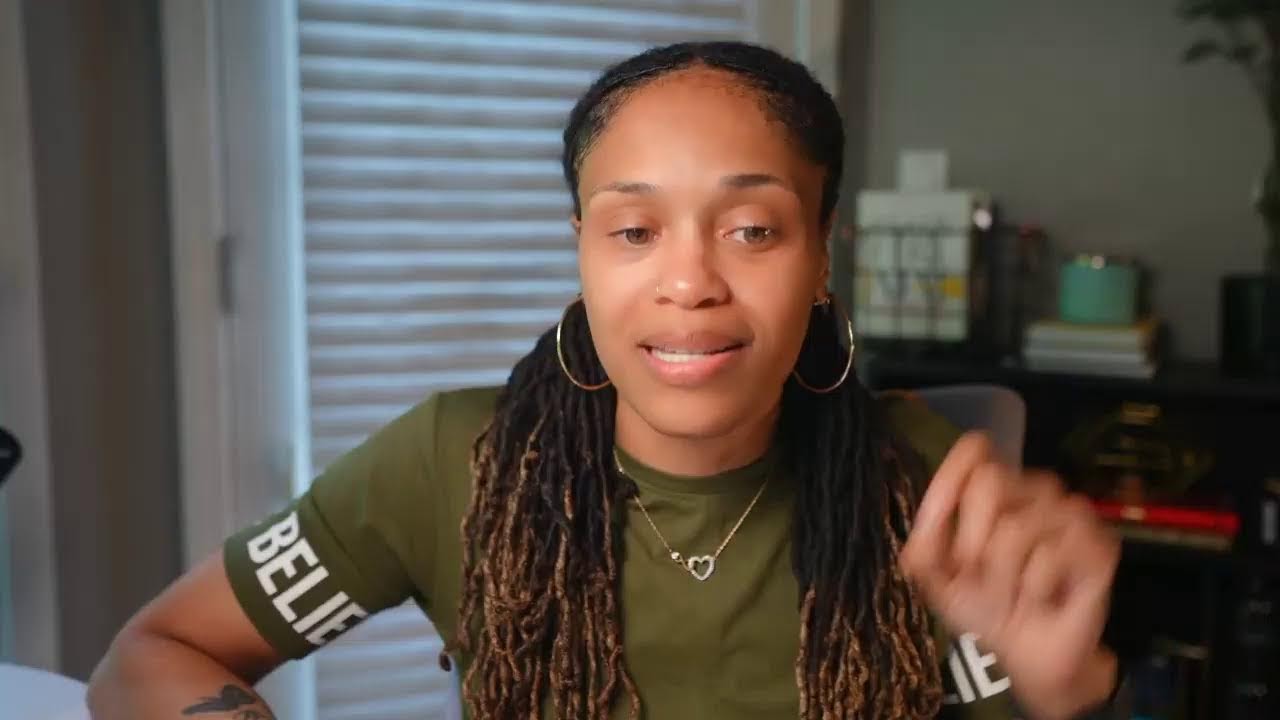
Kamilah Stevenson argues discipline isn't the real problem: chaos is. When your environment lacks structure, enjoyment, and community support, willpower fails. Build automatic habits and rhythms instead, and let the system do the work.
Chapters
All right, what's going on everybody? Here for a minute to share some things with you. I'm actually going to, um, answer a question that was asked to me. Let's make sure I got my— all right, I hope you guys can hear me. What's going on? It's a good day actually because the sun is out. I'm always happy when the sun is out. I, I just don't like rainy days. It just does something to my energy. All right, um, I want to talk to you a bit about discipline. Uh, one of the questions that I received the last time I asked if any of you all wanted me to go over certain trainings, and someone talked about discipline. So I kind of wanna Um, I kind of wanna— hey, hey, Jillian! Who is that? Is that Jill? I'm not sure if that's you or not. Um, but I want to go over, uh, the concept of discipline and, and how— I want to talk about how discipline is really not the problem. Or I can even rephrase it to say how to become disciplined without being disciplined. Or how to become disciplined without discipline, however you want to word it. Um, it's, it's— discipline is not something that most people really need, and I'm going to show you why and how and, and why you need to start refocusing yourself when it comes to trying to get results and outcomes. Your main, your main goal should not be, oh, I need to be more disciplined. It's just, it's not how it works, and I'm going to prove it to you, okay? Um, so, um, I'm going to be talking about— somebody asked, what is the topic? How to become disciplined without discipline. Um, how discipline is not your real issue and how you need to stop trying to get discipline. It's— you're going to go in the wrong direction. All right, now, uh, first of all, also, um, sorry, somebody's calling me. Some people did reach out and ask, uh, am I still running the health and wealth challenge, the 90-day challenge? Yes, I am. It's description, go to hwchallenge.com. All right, hwchallenge.com. All right, Jillian, I know somebody named Jill, so I didn't— you know, you can't really see those pictures because they're so small, um, but hey to you. You know, I'm happy you're here. I'm happy you're here to learn, to grow, and to, uh, do better. All right, so I'm going to get into it because I know you're probably confused. What, you know, what do you mean we don't need discipline? And what do you mean we become disciplined without discipline? Like, how does that even make sense? And so I want to definitely make sense of it and show you how most people are not— who are successful at anything, whether it's, you know, a diet, losing weight, or whatever, it's not about discipline. Um, and if you make it about just discipline, you're going to crash at some point. That, that's, that's why we see people go back and forth and back and forth and back and forth. So, um, I'm going to give you a paradigm shift, and I hope that it makes sense to you. You know, so, so that you can move forward in wisdom, right? One of the things that people are always trying to do, they're always trying to use their willpower for stuff. I keep telling you over and over, success is automated. It is. It is. Willpower is limited. It's okay for the moment, um, when you do need to make a quick shift at times, but it will not— the things that you do, they have to be automatic. They cannot be something you think about all the time. If you get it— if you learn how to drive, you understand that you're thinking about a lot of stuff when you first learn how to drive. Like, okay, stop here. Okay, the sign is this. You're learning so much stuff at once when you're first learning it, so you do have to use a lot of effort, right? And oh no, I gotta stop here. Oh, is that light— okay, they're blinking. Okay, this— what's the sign? What does this sign mean? How to make a, you know, uh, um, bag up and make a 2 or a 3-point turn. How do you— you're just thinking about so much, and you have an instructor on the side of you, and they got the little stop, you know, in case you don't. And sometimes they have to use it because you don't remember everything. Why? Because you are thinking about it. You are, you know, trying to juggle all of these different things. That will never make a good driver. You, you know that, right? A good driver is someone who automatically knows how to drive. They don't have to get in the car and think about driving. They get from one place to the next without any thought, without any discipline, without any willpower. Okay, so that's what I'm trying to explain to you, right? Um, so this idea that we gotta hustle harder and we need to, you know, push more and get disciplined, that will never ever ever work. It will not. I am not— um, you know, I say often I'm disciplined because of the terminology and what I know people think it means, but I'd never have to use discipline to work out. I don't at all, right? So here's the issue, like, you don't need willpower, discipline, and all of that, and hustle harder. What you need to do is ultimately stop living in chaos, right? So most people are— they think that this struggle is with discipline and doing the right thing and pressing harder and reaching the goals, but a lot of times people are just dealing with mental overload. They're dealing with, uh, physical fatigue. Um, and really a complete lack of structure. A complete lack of structure. And when you live like that, even the smallest routines is going to feel hard, like a mountain to climb, right? So I want to give you a new approach, and one that doesn't rely on this guilt or this grind, because real consistency is not going to come from pushing harder. It is going to come from building a rhythm that pulls you forward. Okay, and so I want to share that with you a little bit. I'm looking at the, uh, I'm trying to look at the, um, chats while I do this. Somebody— Tiffany said that's good. Yes, it's good. All right, so let me start with, with this, because most people often overlook this reality that I want to share, and it's that you actually are already disciplined and you're actually already consistent. You are, you really are. I'm gonna show— I'm gonna prove it to you. Think about this. Um, you— do you constantly check your phone, right? Do you scroll without thinking? Are you— are you— do you check, uh, Instagram every day? Are you disciplined with checking Instagram every day, yes or no? Do you check Instagram every day without— it's a habit, right? Are you disciplined? Does it take a lot of effort? Um, do you invest every month in getting your nails or your hair done? Does that take a disciplined mindset, uh, you know, uh, a go-getter? To get your hair in there. Do you pay for Netflix every month? Is that hard for you? Do you pay for Netflix every— and how do you pay for Netflix every month? How— think about that for a minute. How do you pay for Netflix? Do you write a list on your— pay for Netflix, okay, I gotta remind myself and be disciplined and think about— do you do that? Just think about how you pay for Netflix, right? We— first of all, we have to stop thinking of discipline as something that we lack. It's not missing, it's just misused. It really is. And for investing discipline in the wrong direction, for example, when you don't know what brings real return, you start to invest in things that are actually draining you, whether it's your energy, your resources, your money. And without realizing it, you build habits around that, okay? That is what you build habits around. So there has to be a shift from this idea that you, you really don't need more effort. You really just need to understand that you have to create an environment of less chaos for you to win. No one is consistent in chaos. And when I say chaos, I mean it. Some people are in chaos and they don't even know what that really means. Most people are literally living in complete disorder. Their brain is overwhelmed, their body is totally exhausted, their routine is non-existent. I remember asking one lady— we went to the gym, and when we were done at the gym, I remember asking her, um, so what are you gonna do today? This was years ago. Probably about 10 years. This is when I lived at my old, um, house, so this had to be like 10 years ago. And I was like, what are you about to do? And she was like, I don't know. And I'm like, you don't know what you're about to do? Non-existent routine, non-existent. And I'm not saying that she had to be doing something special, but even if she would have said like, I think I'ma just chill for today, I think this is my rest day, I'm about to go watch a movie, or to not know what you're going to do, that— I was like, that is totally— you're gonna wind up just sabotaging yourself, and you're going to start blaming yourself and feeling guilty for not producing, and thinking that you need more hustle and more bustle and more discipline, right? So of course, when you're living like that, when there's no structure that you've put in place for your life to make you win, then you're going to fall off course. All right? And then you're gonna feel like, oh, I'm fighting myself up, you know? So discipline, it's not about like this thing of like, I have to be doing hard things all day. Again, I said if she had just said like, hey, I'm about to go chill, I'm about to go read a book, I'm about to go take a walk, whatever that looks like. But she had no clue, right? And so again, discipline, it's not about doing something hard, you know? It's about— it's about designing an environment that removes resistance. Okay, think about that. You have to create— because in that person's life, there would have been a lot of resistance towards any goal that she had for that day if she don't know it, right? She didn't create an environment to— I, I feel like people can plan their do-nothing days. That can be planned in a sense, but at least there's some kind of structure to it and it doesn't make you feel guilty for doing it. So now that she don't know what she want to do, she might go home and do nothing and then feel bad about doing nothing and then think she's disciplined. And then now she's like, oh, I got to get more willpower, I got to get more distance, I got to get habits. And then that goes down a bunny trail because that is you putting in too much effort. And when you put in too much effort like that and it's not automatic, just like trying to put in a lot of effort with driving the car, it doesn't work. You're not supposed to grind all day. Even if you— some people have a hard time sleeping and it's like, oh, I'm trying to make— force myself to go to sleep. You shouldn't have to grind to go to bed. You should not have to have a, a, like a, some kind of tedious way of going to sleep. You just need to have structure that makes you want to sleep, whether it's sunlight in the morning, screens off at night, a little magnesium, you know, like whatever that looks like. You have to design a rhythm that makes it easier for you to win. That is what this is all about. Now let me say this also: you must have enjoyment. Thank you, Gigi. I'm happy that you— that this is blessing you. You have to create enjoyment in your life. And the reason why I say that is because enjoyment will fuel energy and efficiency. So it's not about the what, it's about how you're doing what you're doing, right? So if you don't enjoy it, think about this, you're not going to have the energy to do it. If you don't enjoy going to work out, you're not going to have the energy to do it. Enjoyment is not just a luxury, it is a fuel. It's what your brain uses to release dopamine and stay energized, right? So when you are like forcing yourself to do things you hate, of course you're going to crash. That is not a discipline problem, that is really an energy problem. And a lot of people just really have an energy problem, and the solution is structure plus enjoyment. Now think about this: community is a system. It, it makes things enjoyable. I just, uh, I was at my martial arts class earlier and I found out that like 2 months ago they uh, let us know that our— one of our testing is coming, and that's Saturday. And y'all don't understand, because if you was told that you got to do this type of test, you will probably need time to prepare and discipline yourself and all of that, right? It is a 5-hour test. The last time we did, uh, one of my levels of testing, they turned the heat up to like 95 degrees. Um, we had to start off with 500 burpees, 500 kicks of different kinds, like all of this craziness. Um, and then in the— the whole point is to exhaust you. Um, this is a training that is used for self-defense called Krav Maga. CIA uses— uh, special intelligence use it to defend themselves, right? And so the testing is very, uh, tedious, right? And, um, well, if you make it tedious, right? So it's a— it's a very, um, draining— I'll probably burn 2,500 calories, I don't know. But it's a very draining test. I mean, you have to listen sometimes to a teaching for 30 minutes while you're focusing on the type of kicks that you move, that you have, and then you get tested on what you're listening to. So you have to learn how to do a lot of things at once, right? That would seem like I need to get a heads up on this date, right? And they did give me a heads up, I just didn't get the email. But because I am in community And I had some people there and I'm like, wait, you going? You going? Okay, y'all going? Okay, we gonna do it. Okay, we going on Saturday. Okay, then we just gonna get it out the way. Yeah, we, we together, right? Because I had community and I had a system that did not— I didn't need to get my head wrapped around it. Okay, I got to get my head wrapped around starting to work out and I got to get my head wrapped around, you know, starting this new meal and do it. I didn't need that because I had the community. So that's an example of how you make things enjoyable, is you get in community with people who are doing the same thing. And you don't need a lot of discipline when you're in an enjoyable community, okay? So community is a system, and a lot of people just don't have systems in place that allow for them to do the things that they need to do that they think they need discipline for, but they just really need a system to hold them accountable for it, okay? Because honestly, like, one of my, uh, the partners that I was working with, she was like, wait, you're not going— you know, she holding me accountable. I'm like, going where? Doing what? She like to test us, you know. And I'm like, Tess, you know, so, but she's holding me accountable. She like, no, she like, you, you need to do the test, you know. So that's why systems are really important, and community is a system, and it's a system that helps you to enjoy what you're doing. And that's why people get stuff done in communities right now. Let me give you one more truth that you absolutely need to understand. And it's one more thing that will cause you to take action on things that you know you need to take action on, right? And a lot of people are really stuck and, and they're like, well, how do I— you know, I know I should be doing— I'm going to tell you what helps you to take action. One word: pain. Pain. Coming into awareness of pain will help you to take instant action. It's powerful. If you accidentally pick up a hot pan from the stove, what will you do right away? Drop. Do you need to create a plan for that? When you, when you encounter pain, do you need to create a plan? Oh, I think my hand is burning. I need to do a 3-step program on how to release this pot from my hand and stop the pain. But if you don't come into contact with your pain you won't take action. And a lot of people don't take action because they have not been in acquaintance with their pain. They haven't thought about the pain that's going to even come from not doing what it is that they're doing, right? So you don't need a planner, you don't need a routine. Pain is going to move you instantly. Pain is one of the most powerful activators of action. Think about why somebody is all of a sudden able to stop smoking cigarettes all day life. When they finally go to the doctor and the doctor tell them, you about to die. If you smoke one more cigarette, you dropping dead. Oh, okay, so you mean to tell me I'm about to die? I ain't gonna be here for my kids? I'm— you know, yeah, you got lung cancer. You got to stop right now. Oh, after 30 years of being told by mama, daddy, the kids, everybody, stop smoking cigarettes, finally they come into contact with pain. The pain of death. The, the pain of the scare that I'm not gonna be here. And it's scary. And then all of a sudden, you mean to tell me you got the willpower to stop like that? That is what happens to people. But a lot of times it's too late. The damage is done. See, the problem is most of us has become, uh, most of us have become numb to our pain. We are numb to pain. We are numb to living paycheck to paycheck. We are numb to having not enough money in the bank account and still don't want to get help, still don't want to join a community, still don't want to do something. That's because the pain— when, when you get to the point where now you have nothing, and you— this why success have stories that's, that come from the, the grave almost. I was homeless. I didn't have a dime. I didn't have a pot to pee in. I had nothing. I was with my child on the street. You hear these horror— and then all of a sudden arises creativity and, and things that they would do that they have never done before. And I would really admonish you to come into contact with what it's going to feel like when everything is drained, all your resources, because you're not making the moves that you're supposed to be making because you have not acknowledged that there is pain there. There is the pain and the anxiety of not having any investments, not having any resources, not having any money, not doing your body right, not getting enough sleep. And then when they— and when you start forgetting things and you start getting scared because you think you're getting memory problems and you're getting Alzheimer's, and then you go to the doctor and they tell you that you got high blood pressure and you might have a attack and all of this stuff, do you start getting heavier and heavier? And okay, you gain 20 pounds, now you gain 40 pounds, now you gain 60 pounds, now you gain 100 pounds. And then finally something clicks because you have been numb and you have normalized your pain and normalized your dysfunctional lifestyle. We normalize exhaustion, we normalize and tolerate poor sleep, we've adjusted to brain fog and belly fat and debt and low energy. So we don't move because we just don't feel it no more, y'all. And I, I just wanted to really admonish you and encourage you: come into contact with your pain. Become fully aware of the sacrifices that you're really, um, making. Like, to— you're, you're making a huge sacrifice, and it's a negative sacrifice. It's a sacrifice that's going to cost you something bigger than what you can afford, right? When pain is in— when pain hits that full awareness, when it finally clicks, like holding a pot, like that the way you're living is not sustainable, that's when you gonna drop the pot and say it's time to get rid of this pain, it's time to move, all right? And, and when you— and when you make that decision, you do need support. You need somebody to motivate you. You need somebody to help you to create systems, right? So I want to say this: do not wait until the pain gets unbearable. Wake-up call, y'all. Wake-up call. All right, um, I'm looking at, uh, some of the comments. Yes, Breezy Bree, what's going on? I love you. Good day, Body G, y'all. Hey, somebody say preach, it's time to move. Absolutely. Now, um, I'm not going to be on here long because I actually have a coaching group that I have to attend to in a few minutes. So, um, I'm happy that this is freeing you, and I'm happy that this is so good, Andrea says. And, uh, and I'll be, I'll be back on to continue the conversation to address some of the stuff, uh, that you wanted me to address. So again, this was a response to, um, can you talk about discipline? Yes, I've talked about discipline. I now have you realigned to understand what the real problem is and, and how to fix it. Now if you want further, uh, help and you do want a community, again, I said at the beginning, I'll say it again, yes, our community is still open. Go to hwchallenge.com. It's also in the description below. And, um, if you do want personalized coaching, I also have the link there for you to book a call. All right, um, and so what we can do is if you want to, um, book a call, we'll go over what's holding you back, what structure you actually need, and how to get back in control of your life and make it more enjoyable again. Again, the link is in the description. Um, that is, I think, KamilahStevensonCalendar.com. Or you can join our 90-day health and wealth challenge at HWChallenge.com. All right, again, links are in the description. I'll be back on to, uh, talk about some more, uh, interesting things that, that can help you guys to push forward. All right, I hope you guys enjoy the training. I'll be back on. You all have a blessed day.









