Everyone Thinks The Worst Is Over for Oil — The Supply Chain Says DIFFERENT
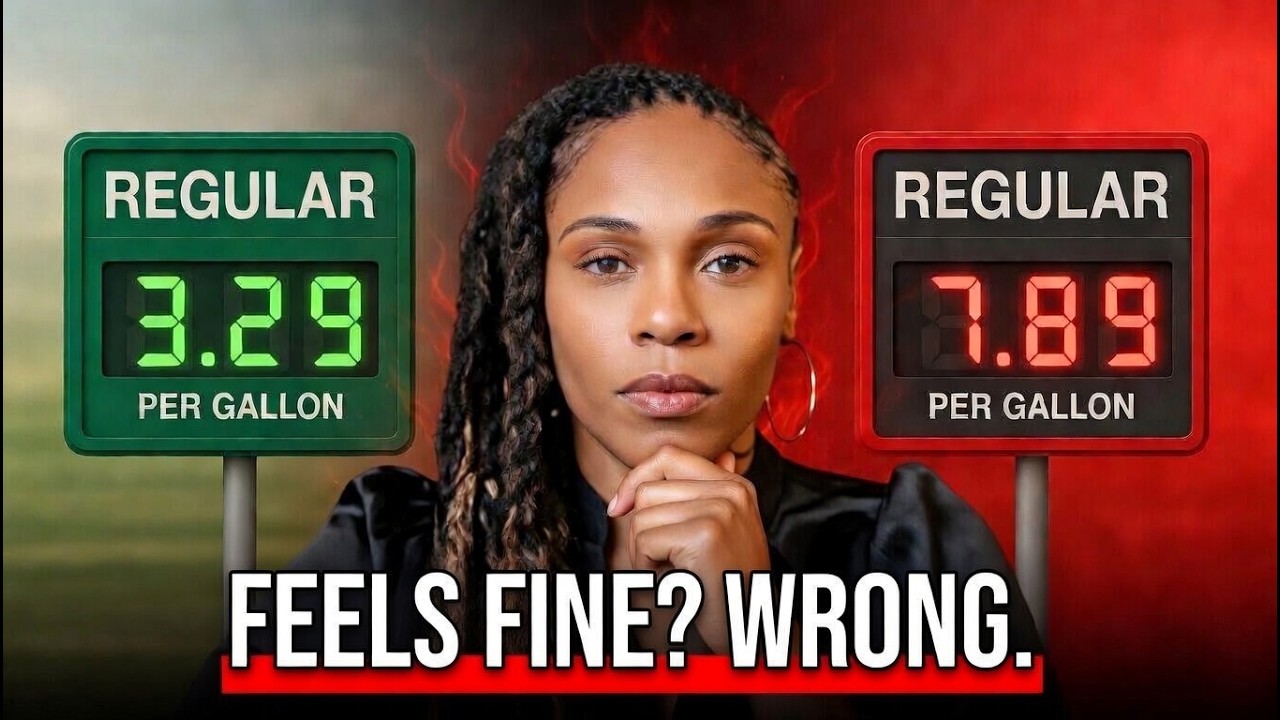
Kamilah Stevenson argues oil markets are calm only because tankers carrying oil take weeks to arrive, masking real supply shortages. Once in-transit supplies run out, demand destruction will cascade through fertilizer, semiconductors, and construction. She points to the 1979 Iran shock, which triggered 20% Fed rates and prolonged slowdown, as a parallel.
Chapters
Let me ask you something before we get into this. Have you ever been in a situation where everything looked completely fine and then you found out later that something had already gone wrong? You just couldn't see it yet. Like when you get a medical test back and the doctor says this has actually been developing for months, or when a company announces layoffs and everyone acts shocked but the people paying attention knew the signs were there 6 weeks earlier. The outcome didn't happen suddenly. The outcome was already in motion. Most people just didn't have the information to see it. Well, that is exactly what we're dealing with right now with oil. And what I want to show you is how most people are making the mistake of trusting what they can see instead of understanding what is really moving underneath the surface. Now, I'm Kamilah Stevenson, and around here we talk wealth. I want you to like the video, subscribe if you have not already, and I want to say Nothing I share is financial advice. Always do your own research and drop in the comments right now. Do you feel the oil situation is as bad as people are saying, or do you think it's overhyped? Because I want to know what the temperature is before I show you what I'm about to show you. All right, so let me first address why everything feels relatively fine right now. So here's the thing that most people do not understand about how oil moves around the world. When you flip on a light switch, the electricity is there instantly. When you turn on a faucet, the water arrives immediately. So most people assume energy works the same way. Something happens in the Middle East on a Tuesday, and by Wednesday you feel the pump. That is not how oil works at all. Oil moves on ships, and those ships are enormous. They're big ships. We're talking about vessels carrying 2 to 3 million barrels of oil each, structures that are so massive and so heavy that they move at roughly the speed of a slow highway drive. And the routes that these ships travel are not short. Oil leaving the Persian Gulf headed for the United States travel around the entire continent of Africa or through multiple transit points before it ever reaches a refinery on American soil. That journey takes weeks and sometimes even longer, which means right now, today, most of the oil sitting in American refineries and gas stations was loaded onto a ship before the current conflict escalated. It has been traveling the entire time. The supply chain that's delivering your relatively stable gas prices right now was set in motion weeks ago before things got serious. And I know some places are experiencing higher prices than others, but most of the world is still running on oil that was already in transit before the disruption began. Now here's where it gets very important, because on top of the natural delay in the pipeline, there are two additional things artificially holding prices down right now that most people have no idea are happening. And again, some places may be higher, but the first is stockpile releases. A group of major oil-consuming nations recently agreed to release hundreds of millions of barrels from their emergency reserves into the market simultaneously. Now think about what that means. Emergency reserves exist for exactly this kind of situations. They are the buffer, and right now that buffer is being actively drawn down to keep prices from spiking to levels that will cause immediate panic. The second is market psychology. Every time there's a signal like a statement about potential negotiations or a headline suggesting the situation might resolve quickly, oil traders who are betting on future prices sell those positions down. That selling pushes paper prices lower, which is the number that you see reported everywhere as the price of oil. So the number most people are watching is being influenced not just by actual supply and demand, but by the emotional reactions of traders to every piece of news that comes out. When hope goes up, paper prices go down, even if the physical reality on the ground has not changed at all. And this is why the number that you see on your phone or on your financial media right now does not reflect what's really happening in the physical world. You've already seen me cover the gap between paper prices and physical prices in previous videos, but what's different about what I'm going to show you today is that we are now in a specific countdown window that changes everything. So here's the data point I want you to hold onto. In 1979, when Iran's oil supply collapsed, not as dramatically as what we're seeing right now, but very significantly, oil went from $15 a barrel to $40 a barrel. Inflation in the United States hit 14.8%, not the 2.6% we're seeing on CPI reports. 14.8%. To bring it down, the Federal Reserve Chairman at the time raised interest rates to 20%. I'm talking 20%. Mortgage rates followed that, and the economy took years to recover. Now, I'm not saying that is exactly what's coming. I'm saying that is what happened the last time something like this hit the physical oil supply at scale, and the mechanisms that created that outcome meaning the delay between when supply gets disrupted and when the full economic consequences arrive is the exact same mechanism operating right now. The calm that you are experiencing is real, but it's not the signal that the worst is behind us. It is the signal that the worst has not arrived already. And the window between those two things, between calm and consequences, is the most important financial window most people will completely miss because they're trusting how things look instead of understanding how things work. Now let me explain what is actually coming and what to do about it. So I want to show you what happens when the calm breaks, because this is not about oil prices going up a little more. This is about something much larger than that. There is a concept called demand destruction. And it sounds technical, but it's actually one of the most important ideas that you can understand right now in this situation that we're in. Most people think about an oil shock in terms of price. Gas goes from $4 to $6 to $8, and that is very painful. That is real, and I'm sure a lot of people are experiencing it right now, but it is survivable in isolation. You adjust your budget, you drive less, and you find ways to manage. Demand destruction is what happens when the price gets high enough or the supply gets scarce enough that entire categories of economic activity do not just get more expensive, they stop. Factories don't just slow down, they close. Airlines don't just raise ticket prices, they cancel routes permanently. Construction projects don't get delayed, they get abandoned. Supply chains do not just get disrupted, they get restructured around a permanently smaller energy supply. And here's what makes this moment specifically different from a normal oil price spike. When oil supply gets cut by 20%, which is roughly what the current Middle East disruption represents, you're not dealing with a marginal problem, you're dealing with a structural one. The global economy was not built with a 20% energy buffer. It was built lean, efficiently, with the assumption that the oil would keep on flowing. First off, fertilizer production depends on natural gas that moves through the same corridors being disrupted right now. Fertilizer shortages are already developing in parts of Asia. That's not a future problem, that's a current one. And fertilizer shortages become food shortages, not immediately, but the chain from disrupted energy to higher food prices to reduce food availability is already in motion. Next, semiconductor manufacturing requires helium. Helium is a byproduct of natural gas production. Natural gas production in the affected region is now down significantly. Semiconductor factories in parts of Asia are already facing supply constraints. Everything that runs on a chip, which is everything, sits downstream of that constraint. In addition to this, construction materials, Lumber harvesting and transport requires diesel. Steel production requires enormous energy inputs. Both are getting more expensive, and that feeds directly into housing costs for everyone trying to buy or rent right now. And here's the timeline piece that makes all of this urgent rather than theoretical. The oil that was already in transit when the conflict escalated, meaning the supply that has been keeping prices relatively stable and keeping most people feeling like things are manageable, Well, that supply runs out on a specific schedule. For parts of Asia, it already has. After that date, the pre-conflict supply buffer is gone. What arrives at refineries and gas stations will be oil purchased at current physical prices, not the paper price you see reported, but the real price buyers are paying right now, which is significantly higher. And the stockpile releases that have been cushioning the market are a one-time tool. So once they're used, they are gone. There's no second release that brings the same relief. And I hope in all of this there's a miracle that happens. But I do want to be direct about something because I'm not here to create any type of fear. I am here to create clarity. The United States produces significant amounts of its own oil and is more insulated than most countries from the worst of this. Okay.— So we're not looking at fuel rationing or the kinds of disruptions that some of the countries are experiencing right now. But insulated doesn't mean unaffected. Higher energy costs embedded themselves into the price of everything. Okay, so they do it quietly and gradually and then all at once when the full repricing happens. And when the Fed looks at inflation running significantly hotter than their target while the economy is at the same time slowing, well, That's a trap. And rate hikes make the economic slowdown worse, and rate cuts make the inflation worse. Neither tool works cleanly in a supply-driven inflation environment. The paralysis is the environment where sitting in dollar-denominated savings accounts quietly destroys your purchasing power. All right. And this is not dramatic or in a way that may create instant headlines, but it is a very consistent thing that happens every month in one direction. And the assets that have historically held and built value through exactly this kind of environment, meaning scarce assets with fixed or shrinking supply that exists outside of the monetary system being stressed, those assets do not just hold value in this environment. They tend to appreciate as capital rotates away from the system under pressure and toward the things that exist outside of it. And I've mentioned this before so that you can know where capital will eventually find its way. Now, that rotation is not a future event. It's something that builds over time and then it accelerates. The people who are positioned before the acceleration are the ones who will benefit from this. Okay? So I am saying all of this because the moves that we make have to be designed and aligned with what the signals are telling us and what will benefit us best in our personal endeavors. Okay? So I do want to say that the window between understanding something, and that understanding becoming obvious to everyone is only the window that really matters for your cost basis right now. Gold and silver are experiencing the kind of forced selling that happens when institutions need liquidity fast, not because those assets lost value, but because they are some of the most liquid things available to sell in a crisis. Now, that is a buying opportunity that history shows closes very fast once the liquidity pressure resolves. Right now, XRP is sitting at a cost basis that does not reflect the infrastructure being built around it. 6 consecutive red months, the longest streak in XRP history, while at the same time the most significant institutional connections ever established around this asset are going live. Now I hold both inside a Roth IRA through iTrust Capital, not because I know exactly when the repricing happens, but because when it does, every dollar of appreciation stays mine. Completely, right? So no silent partner taking a percentage of what I built, no tax event forcing me to convert gains back into a currency that has been losing purchasing power. They also hold gold and silver alongside digital assets in the same structure, and they do have treasury accounts for LLCs and holding companies for those building at the entity level. And I mentioned this before, but they recently added RLUSD, which is Ripple's stablecoin as a holdable asset. So you can check them out. The link is in the description. There is a $100 funding bonus when you fund your account, and that's a great strategy. Now, understanding what's happening in the macro environment is one layer, but knowing exactly what that means for your specific position and your stack size and your structure and your timeline, your tax situation, that is a completely different route that you have to take. And so that is what my community and my clarity calls are for. We help to look at your situation, your numbers, and build a plan around what you actually understand and what you actually own. And we'll make the adjustments that put your financial future in a better position. The link is in the description for that. I want you to like the video, subscribe, and drop a comment on how you're thinking about this entire oil situation. I do know that the people who understand the mechanism before the headline arrives are the ones positioned correctly when the headline does arrive. Because it will, but by then it'll be too late. And as always, I want you to stay wise, stay wealthy, and I'll see you in the next video.









