How $23 Turned Into $27,000 (and How You Can Do It Too)
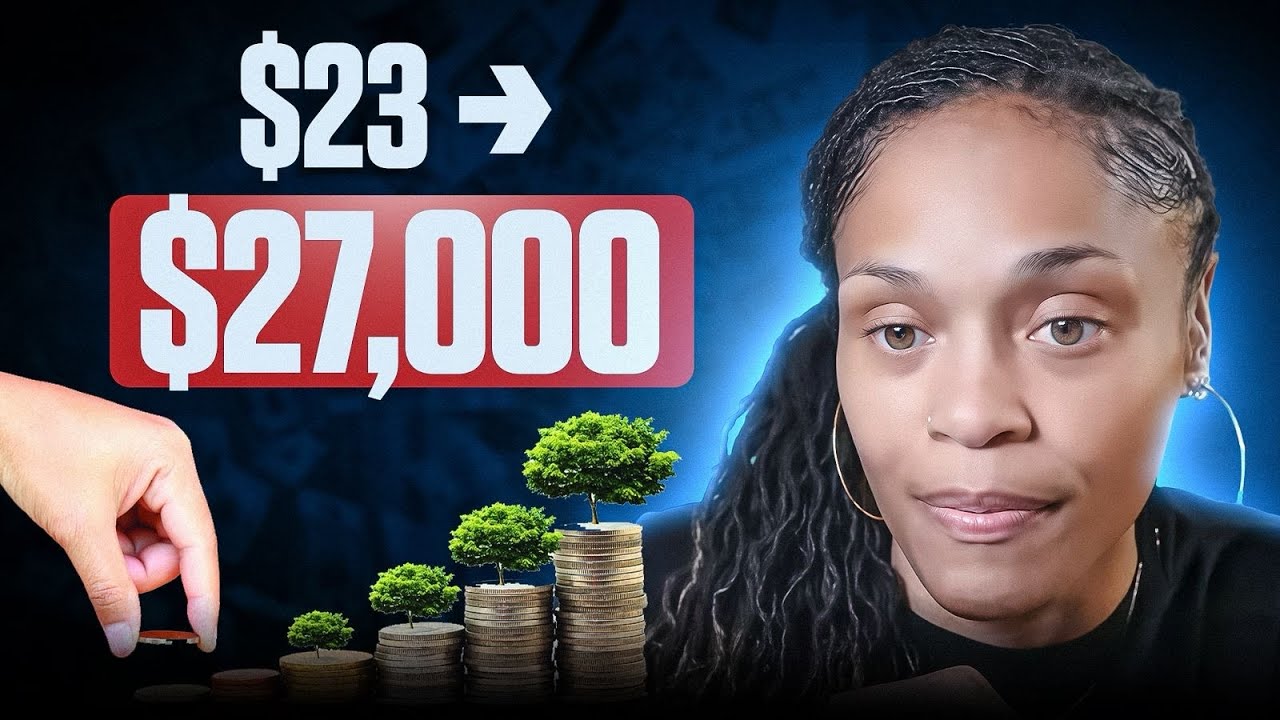
A woman bought Palantir at $23 per share through her 401(k) and watched it grow to $27,000. The host argues that active investing beats slow retirement accounts, and outlines four investment lanes: dividend stocks, growth stocks like Nvidia, high-yield savings, and crypto ETFs to make every dollar work harder.
Chapters
All right, good evening. All right, I got some amazing stuff to go over with you today. As always, always excited, um, to speak with you guys. All right, hope you guys are having a wonderful evening. We got some stuff to go over. I want to empower you as always. Let me make sure you guys can hear me. Come on in, I'm just waiting for a second. I'm about to get started. I'm trying to turn off this noise from the background. All right, all right, we got some amazing stuff that we're going to talk about today. Um, as always, I'm back and I'm, I'm speaking on some content that, uh, have been presented to me. And, and actually, this is inspired off of a conversation that I had today. So you guys are going to love this. Come on in, uh, like and share, it doesn't cost you a thing. Just hit that like button for me really quickly. And, uh, hey guys, hey Danielle, hey Jakara. Hope I said that right. Yeah, all right, um, good. I'm happy you can hear me. We got some great stuff that we're going to talk about. You're going to be empowered by the time you're done with this. You're going to know exactly what to do to start building your wealth. Um, the title is not any type of clickbait or anything, true story. All right, so I'm going to go into some stuff today and I'm going to help you to know exactly what you need to do. By the end of this, you're going to be empowered to know your next move, your next step with your wealth building. I am always elated to have this conversation and just continue to empower you with the things that you should be doing currently that most people are probably not talking about. And I really feel sorry for people who are not prepared for the next season because I'm telling you, it's going to be— it's, it's not going to be good for those who are not preparing themselves, okay? So I want you to really pay attention to this because there's some things that's coming that I don't think most people are prepared for or will get the opportunity to really, um, capitalize. And you're here today learning how to do that, right? Uh, I always say this, and, and I'm going to keep saying it, that most people, um, they think that they're broke because they don't have enough money. I'm telling you, if I could break that myth every single day, I would. Why? Because you could double your paycheck tomorrow and still feel broke. Why? Because of this one principle, and I'm going to tell you right now: the way you handle your money is more important than how much you make. If y'all could get that— I'm telling you the truth. The way you handle your money is more important than how much you make. How do I know this? Because there are so many people who make much less than other people who have so much more, whether it's invested up, uh, stored up, or whatever that looks like. I'm telling you, it doesn't matter how much you make. So stop thinking that you got to make more to make strides. I'm going to help you to know exactly what you should be doing today, and I'm going to give you a secret as to, uh, what you should be doing, why you should be doing it, and almost like a secret to what is capping you from being able to build wealth. Okay, so I want to get into that now. I'm going to just say this right now. I talk to people all the time who have retirement accounts, okay? Retirement, like 401s, IRAs, uh, maybe even some of them have their stocks in a brokerage account, right? They log in, they see the number go up and down and then back up again. But let me tell you something, here's the key, here's the key, and we're going to dive in. They have no control. They have no control. And the reason why I say that is because if they want to take money out, there's a penalty. If the market crashes, they just got to watch it happen. And I'm telling you, I listen to people complain all the time when their retirement or the stock market is going down, and they have no control. I need you to end that. I need you to end that. You cannot be one of those people. Um, it's good that they have some stuff stored away, but I'm telling you, you will cap your wealth if you stay like that. Because meanwhile, somebody else is deciding how their money moves, and that's the problem. Because if you're not controlling at least some of your money, you're going to forfeit your opportunities to build real wealth, okay? And, and honestly, some people don't even think about this because they have a retirement. That's a— that's another message for another day, is that a retirement plan can sometimes stop you from being more intentional. Okay, um, please make sure that you like the video before we get started. A funny, um— it's not a funny story, it's actually a serious story. But before I start, I want to give you this disclosure, um, I am not your financial advisor. Again, I'm not your financial advisor. I do not have a magic crystal ball. I don't know your bank account balance. I don't know what's in your bank account, right? And I definitely, definitely don't know if you are secretly DoorDashing lattes every single day, okay? Anything I say here is only for educational purposes. I really do need to say that. Please do consult with a real financial advisor before you go risking all your, your rent money on a stock you pick because maybe I got excited about it. And just so we're clear, You can lose all your money investing. I must say that. You can lose all your money. Poof, gone away. Okay, so let's start small, let's stay, uh, strategic, and let's keep this fun because broke and bitter is not the goal here. That's not what we doing. All right, let me, let me go ahead and, and, and start diving into this because you're going to learn a lot. Please share this video, like the video. I am, I'm going to give you some real nuggets today, okay? Now listen, um, I want to talk about why passive, hands-off investing keeps most people, uh, pretty stuck and broke. Now I was talking to a lady today and, uh, we were talking about this very same thing, and she was saying how, uh, she made one single play in her account that made her a lot of money within a year, just with one stock. Okay, this is not like a whole account, right? And And but the problem was she had to call her job because she was in a retirement account. She had to call her job broker or whoever she had to call and beg them, uh, to buy Palantir, which, which is a stock, uh, great company, uh, but to buy the Palantir stock when it was at $23. She had to beg them. Now, and they didn't have it— they didn't have her invested in this stock. Unfortunately, um, but fortunate for her, she said she had to really wrestle and beg with them, right? The stock was $23, and she said thank God she did, because a year later she said that her account was up from that one stock $27,000. Okay, so that one move, that one stock that she controlled, that she had to beg her retirement, uh, people to get, get her to, you know, to buy into uh, made her $27,000 in one year. Now imagine if that's with one stock. Imagine what you could do if you had a little bit more control just from that one decision and that one stock. Imagine if you had several, if you had ETFs, if you were, you know, knowledgeable about the game plan and you're building on that game plan, right? So, um, if she had left that same money locked in some safe retirement plan and Listen, I, I just want y'all to know retirement plans are the bomb, okay? Um, in the sense that you get free money, and if your job is matching you, you never say no to free money. I mean it in that way, okay? But imagine if she had left it in a safe retirement plan, didn't confront them about it. She could have maybe made a couple hundred bucks in, in the same time. I don't know, you know, a year. It just depends because that money moves pretty slow. It's safe. Um, But the reason why is because institutions can move very slow with your personal money. I'm gonna explain what that means. And most people think that there's this secret to wealth of like, just keep dumping your money into the retirement account and just wait. That's, that's the only plan most people have, and that's what we've been told and sold on for decades. 401, IRA, a couple of mutual funds, Set it and forget it. We move away right now. Again, definitely get that free money if you work for a job. Do have your retirement plan because companies match. Never turn down free money, right? Because why? Yes, it is safe. So that's the good. I'm gonna tell you the bad. It's safe, right? It is also very steady, and it is a good— hear me out, hear the word— addition. It's a good addition. Okay, so keep it in place. It's a good add-on, right? But here is where most people get it wrong. It is also slow death for wealth building if and only if that's all you do. If all you do is having a— listen, I, I know this because even now you have people who are living off their retirement plan, their pension, and all of that, and they, they will tell you please do something else. Don't, don't do what I did. Like, don't just have a retirement. I'm living off of a budget. And you— I know you guys understand this. You got grandmamas, you got aunties, you got older people, and they have a budget that can't— that they can't do nothing about because this is their retirement budget. This is all they have. Now here's why a retirement plan is a slow death to your wealth building. Hear me out. For those who think, hey, I got a retirement, I'm good— no, I'm telling you, you're good— no, I'm telling you, when you get at the age where you can finally get access to it, you're gonna wish that you had something else because you're not gonna have wealth building capabilities at that point. And here's why. When you hand your money over to a retirement account, what you are giving up is control, and you cannot move fast when opportunities come up. If you're locked into some retirement account, you can't move fast when an opportunity arises. You can't pull it out without paying a penalty. So you can't say, hold on, let me grab this out without paying a penalty. There are some ways you can move your retirement, um, over without a penalty, but for the most part, there's some restrictions. Um, you can't shift, uh, usually to a higher return play unless you get on the phone and beg somebody to make the move for you like this lady did. Thank God she made that move because Palantir is a really good company. And here's what you got to understand when you put your money in retirement, that is, the institutions, the way they manage their money is different from the way you would manage yours, okay? They are playing an entirely different game than you. Okay, so, and I'm explaining it. Think about it. If a bank or a fund has, just, just for the sake of an even number, $100 million under management, they don't need 20, 30, 40, 50% gains to win. They don't. They need 1%. 1% will make them $1 million, okay, off that $100 million. They don't, they don't need— and, and $100 million is really on the low side. I mean, you got to understand, these institutions are dealing with 100— I mean billions of dollars, okay, trillions of dollars, okay. They only need 1% to make a million dollars or much more. If they dealing with a billion, you know, then, then we take that up some, right, a whole lot. Um, and I can't— I don't want to do the math in my head and get it wrong, but even if they were just letting it sit in a high-yielding savings account, um, off $100 million, that's $4 million. Doing nothing, okay? And again, that's on the low end. I'm just using that number to, to make it make sense, right? So of course, what happens with what would be with your money, they're gonna play it slow and safe. They don't need big wins, okay? And they don't want no big swings left and right. They don't want all of that, okay? They don't need to. Now, you do have a little control over if you want them to get more risky with your money and stuff like that, but again, you're dependent on them and you lose control of the whole game, right? And so they play your money different. They're, they playing with your money. Another person, they playing with hundreds of thousands of people money, and they got enough of it to not have to make a big move. But where does that leave you, right? Think, think about it. If you— so for you, you can't, you can't build wealth off those type of moves, right, that they make. Because let's just say you use the same number and you only got $10,000 and you use that, uh, same 4% or 1% to win, you got $100. That's not wealth building, okay? 4% is $400, y'all. Let's be honest, that's grocery money, okay? And this is why passive, hands-off investing alone— hear that word, alone— is going to keep you broke for decades. And you're gonna look up and you might be able to access— if you got retirement, some people don't even have that. But if you have retirement and you start getting at that money, it's— and then don't pay— you're gonna have to pay taxes on some of it depending on how you invest it. Some people won't because they pay the taxes before, but for most people, they're gonna have to pay taxes. So you're not gonna wind up with much if you're hands-off. Okay, now, um, the other thing you got to realize is that if you are in passive hands-off investing alone, meaning a retirement account, if you got that Um, it grows your money, but it doesn't grow your options. Hear me out. Wealth is built on options, okay? Understand, when we talk about the stock market or crypto, you don't have to become like a day trader or anything. That's not what I'm talking about. Trading and investing are two totally different things, okay? You don't have to gamble your future, but what you do need is you need to have some control over your accounts. Because when you learn to move some of your money into the right assets, when you know how to enter and exit plays strategically, your growth can go from what I would call turtle speed to wealth building speed. That's the difference. Okay? And even just one or a single smart move in a personal brokerage account can change your life. I know it because it— first of all, because it changed my life. And it changes the lives of many people that I'm around. I've seen, and I've had accounts make 5 figures in just a few months, okay? Even 6 figures in just a few months. Not because someone's gambling, and not because somebody's like going into luck or gambling or, you know, trying to, you know, be overly risky, but it's just because there are people who understand how to move intelligently while everybody else is just sitting on the sidelines, right? The bottom line is that retirement accounts, they are a tool. They're just a tool, okay, um, to your wealth building, but they're not the entire wealth plan. If you want freedom, you can't just park your money and pray. You need to be in the driver's seat for at least a portion of your wealth. Somebody asked, do I mind sharing some of the investments that I've made? Um, I've made plenty investments. I have investments in real estate, I have investments in ETFs, I have crypto investments that's made me a lot of money. I have investments in growth stock companies, individual stock companies. I have investments in dividend, um, uh, company, uh, companies that give dividend. That, that'll be passive income that I have on drip. I have investments in silver and gold. Um, so I have plenty of investments, but I've been diversifying over the years, of course. Okay. Um, now here's what you have to understand as well. Now, uh, that— and, and timing, even to answer that question about some of the investments, it's about timing too. You know, wealthy people are investing when everyone's fearful. So the, the majority of your investments, um, life-changing— I'll say investments— the majority of life-changing investments come when you have options and opportunities, and especially when everybody is afraid, okay? Um, so, and, and just big economic downfalls— 2008, during COVID um, even the years of 2021, 2022, um, April of this year when the stock market crashed and everybody was screaming and crying and we was in extreme fear. So as a matter of fact, because I was looking at Some of this, uh, I was telling a young lady with Palantir, I believe Palantir had dropped from like $140 all the way down to $88 during that time. Can you imagine if you have stock that go from $140 all the way back down to $88? You're ready to pull out. But guess what? When everybody else was ready to pull out, there's people on the sidelines waiting to jump in. Okay, see, people be afraid. They got it backwards. They, they jump on when it's everything moving up and everything. Oh, they you know, FOMO, fear of losing out. And then when everything starts crashing, they get afraid, like, oh my gosh, should I pull everything out? Oh no, my, my stocks are crashing. You know, everybody in my family was complaining about it, and I was just like, yes, stock market on sale, baby, let's go, right? And guess what? It made a V-shaped recovery. Like I said, Tom Lee said it's the most hated V-shaped recovery of all time. Why is that? Why would anybody hate a V-shaped recovery in the stock market? Beats me. All right, um, let me say this. When you are at the point— because we got to deal with this, okay? And I'm gonna, I'm gonna show you exactly what you should be doing, um, and I'm gonna name some of the ETFs that I'm, that I'm in, um, also, um, and some of a few of the stocks that I'm in. So this is very, very key because once you build wealth, you got to be able first you got to have opportunities to be able to, um, build wealth. And the problem that most people run into is even if they start investing, even if they get a raise or they start making tons of money or they find a way to, you know, get on the sidelines and make a little extra income, what happens is most, um, people still never feel wealthier even if they get a raise. And the reason why is because their lifestyle quietly starts to eat at everything that they're earning. I'm telling you the truth. Pay attention. Think about it. When you have gotten a raise or extra money, what happens? Or what happens just to the average person? Suddenly that old car don't seem good enough because you gotta reward yourself, right? You gotta buy something new, okay? Vacations get upgraded. Uh, nothing wrong with a vacation if you have investments. Like, if you, if you are doing all of this, you spending all this money and you have no investments, no money, if you get fired tomorrow from your job, you don't know what you would do. Then that concert ticket or that extra whatever you, you know, was about to buy, I think you should probably put it aside for an emergency fund or something. Okay, um, you need to have at least 3 to 6 months emergency fund. It'd be great to have 6 months to a year emergency fund. Um, what else starts happening? You go from Netflix, uh, okay, Netflix, I'm only doing Netflix because I'm on a budget, and then you get paid, you get more money, now Now it's Netflix plus it's Hulu plus Max plus Amazon Prime plus every other subscription on the planet. You start getting new iPhone drop, you gotta have it. Um, social media don't make it any better because, uh, now everybody's living high off the hill and they got their reels and they showing all of this stuff. And so now you got to keep up with that, right? And so you just start really spending more money. People start spending more money when they have money. That's the truth. They don't save it, they don't put it towards something. And that means that your income didn't just go up, your expenses multiply. I'm gonna tell you why everybody— most people have enough money. And I, and I was listening to a guy who was talking about, like, it was an older guy who was saying, you know, I, I took care of my wife, I paid the bills or whatever. And then the younger guy was like, he, he seemed like he was about in his 30s, and he was like, well, we can't do that right now because look at how much this costs. And if you, you can't even make $100,000 because this and that costs, and you know, and he started talking about all the costs. And the— here's the trap. The trap is that this idea that, okay, I get more money, now I gotta, um, start buying more stuff, it is going to— for most people, it persuades and seduces you into increasing luxury and not leverage. Luxury and not leverage. It seduces you, okay? The second you get money, you are seduced, usually. Now, the guy who was talking about all this money stuff, and, you know, like he was saying, back in the day, you know, it wasn't this many expenses. I, I promise that's not the case, y'all. Here's the case. Think about this. Think about how people live back in the '80s or decades ago, okay? No $1,500 iPhones, right, or phones in general. No 17 streaming subscriptions. No Uber Eats 3 times a week. No constant pressure to buy clothes for vacations and post about them, right? Cable TV was an absolute luxury. Okay, and if you had cable TV, you may have one channel. Okay, one, right? Life was simpler. People outside, they barbecuing, they jumping rope, hopscotching it, playing basketball in the driveway. It's not that life was cheaper back then, it's that lifestyle was cheaper. Okay, now fast forward to now. You can make $100,000 a year with, right? Um, and you can still feel broke. Why? Because the lifestyle you're trying to maintain eats your wealth before it can ever grow, right? You're spending all of it on stuff, all right? There's so many different gadgets going on. I know that because I— look, I got an Apple Watch on one, a Whoop Band on the other, and an Oura Ring right here. I know that there's so much, you know, like devices and stuff that we spend our money on. My son was going into the room with his— had a little snack in his hand, and he yelling out something. I'm like, who you talking to? And he like, Alexa, Alexa, you need to— I'm like, the boy screaming at Alexa. I'm like, you shouldn't even have Alexa, you ain't even got no money, okay? And so I'm telling you, our money is being spent on stuff that That's why it got— it takes intentionality to really come away from this stuff. So as I always say, you have to audit your lifestyle and look where your money is leaking the fastest. The fastest. I've done this. I found subscriptions I didn't even know I had, okay? Stuff I didn't even know I had. You gotta cap— for the meanwhile, you have to— when you're really trying to go in and you're investing, you have to cap your luxury. Decide how much you're going to allow yourself to spend for comfort versus growth. Redirect the excess into assets. Turn the subscriptions off, okay? If I didn't have any investments anymore, I would be taking this iPhone Watch and maybe selling it. I would take this Whoop band and throw it somewhere in the, you know, and sell it too. I don't know, I would do something. I would stop the subscriptions, okay? Because the, the, the truth about it is You don't really need more money, you need less lifestyle. And the sooner you understand that, the sooner your money will start working for you instead of disappearing every single month. I'm telling you what I know. I'm happy, Victor— uh, Victory, that you— she said, I'm listening, sis. Um, she said, I have no bills, subscript— I have no subscriptions, no bills. On fire! I love that, right? Most people do though. Um, I buy a lot of organic food and books. That's right, that's a great investment. Organic food Hey, for your health and, and books. But if you ain't got no subscriptions and all that other junk, you can afford yourself to buy the things that you need, you know what I mean? Now I'm going to tell you some things that, um, that I have because I want to give you 3 lanes of acceleration, okay? These are action steps, right? So remember when I was talking about, you know, your retirement money moving like a turtle or whatever, slow, locked up, and you have no control? Well, if you want acceleration, here's where you need to start. It's 3 different lanes, I would say. Number 1, lane 1 would be, uh, ETFs. And I would say 4 lanes actually. Um, yeah, maybe about 4 lanes. Okay. Um, number 1 would be ETFs and dividend stocks. Okay. These are your steady growth lanes. Okay. So some of the stocks that I have as far as ETFs are SCHD. That's a dividend stock because I do want passive income. And I, the money that I make off of it as it grows and it, you know, it pays you basically for owning the stock and I reinvest back into the stock over over again. So it's compounding growth. I love VTI, but I mean, you could do, um, VOO, you know, it's— it, it depends on you. Everybody just make sure your portfolio isn't overlapping. It doesn't need to overlap. Um, I love QQQ. I even love IBIT. That's a cryptocurrency, uh, ETF. So for people who don't want to actually buy cryptocurrency, they can do an ETF. Okay. Um, so this is what I— this is what some of the picks I have. I have a lot more. I'm just naming a couple. And then you have another lane, which be your long-term growth plays. Okay, so these are companies that you believe in and can hold for years, just really solid, good companies. You know, the kind of companies that you'll look back and say, look, I'm glad I held on these companies. Like Nvidia, like the young lady was talking about. I love Nvidia, I love Palantir, I love Meta, I love Netflix. Um, there's a ton of other ones. I, I love Amazon, I love— I, I invest in Apple. Um, so there's some, you know, good companies where It's not about like, okay, sometimes they are down in the stock market, go up and down, you know, that, that's cool, um, but these are good solid companies. And then you have, um, your cash flow safety moves, like, um, that's when your money is making money, uh, work while it just waits, okay? So whether it's reinvesting your dividends, uh, parking your emergency fund in a high-yielding savings account, or putting money in a CD, every single dollar should either be working, earning, or compounding. And then lane 4, I would say people need more exposure to— I love the exposure of cryptocurrency. So again, nothing I say is financial advice, educational purposes only. Do not listen to me, you can lose all your money. But for educational purposes, I will say cryptocurrency, some people need to be more exposed to cryptocurrency. They're scared of it, and so sometimes they're just not exposed because they're afraid of it. Okay, so those are 4 lanes that you really want to look into, and The point is this, that when you start moving, um, even a small amount of money with intention, okay, you cannot be hands-off. You have to have some intention. Even if they're slow little pace moves, um, you have to move with intention. And once that happens, you stop being a passenger and you start being the driver of your wealth. And here's a rule that I live by: slow money plus control becomes fast money, and fast money with no control becomes no money. You have to have some level of control. Now the last thing I want to say is this, and you got to understand this, guys. Um, everything I talked about so far— lifestyle leaks, slow money, taking control— no, none of this stuff matters or will ever stick if you don't shift your mind. That's the reason why most of us is in this predicament in the first place, is because of your mindset, okay? Um, because what you must grow to understand is that you got two versions of yourself fighting every day. You want to know what those two versions are so you can know yourself better? There is the sober you. That's the one who— and, and tell me if I'm wrong— that's the one who wants freedom, options, and real wealth. There is a sober you in there. But guess what? There's also spending you, and that's the one chasing them dopamine hits when they buy, buy, buy. And it's just stuff you want, and it's stuff you want in life, and it's stuff you want to do, and you just you know, you feel like you got to spend everything. But if spending, um, the spending portion of you, if that part keeps winning, you're gonna stay stuck, you're gonna stay broke. And when I say broke, I might not mean like you just broke where you can't do nothing, but I'm saying you're never going to get into no real wealth, right? You're going to be working harder, saving slower, and you're going to watch freedom drift further away, especially as the years go on, as— because our economy is going to change, right? So the shift that you have to recognize is if you can just delay one year of gratification, you can buy decades of freedom. I promise you, there, there is so much opportunity that you will see in just one year's time if you become more intentional. Now let me be very honest with you guys. Let me look at the chats. I want to be honest and say something. I love that you're writing it down, okay? And Arnetta wrote it down. VTI, VOO, QQQ, IBIT, SCHD, SCHG. Um, I'm happy that this video was right on time. I'm looking at some of the comments right now. Um, I'm looking to see if any questions on it. Okay, I want to be honest and say this: this is not always easy. It's not always easy for anybody. And if anybody tells you it is— and when I say this, I mean really staying focused, really sacrificing sometimes, and saying no. When you, you know, like, if you say yes to everything that you want, that's like a kid. Like, a kid wants everything that they want right now, like, even whether they can afford it or not or whatever that looks like. That's like a kid mentality where it's like, Mommy, Mommy, can I have you in the grocery store? And you— and they just want whatever they want. They're not thinking about a budget, they're not thinking about a bill or anything. So if you're that person that keeps spending and don't take a moment to just sit back and grow up with your spending and grow up with your analysis of your habits that are toxic and, you know, taking away your financial freedom. Whether it's, you know, I over— you know, when I went to the car lot and bought the wrong car, you know, I was emotionally buying. And you know what I mean? If you don't take a minute and just really get a little more mature about your decisions, um, you're gonna be in trouble. But it's not easy. That part is not easy. The growing up, the being responsible, the saying no to things that you want, you really want it. And guess what? You might have the money for it. There's a lot of things that I say no to that I have the money for, but I am being very intentional because I know this small little period of time. I know that if I, if I'm living like nobody now, I'm gonna live like nobody later, you know what I mean? I know what this means for me, my children, my children's children, my great-great-great-great-grandchildren. I know what these decisions mean. So it's not easy, and it's not easy when you see your friends spending money, when you see your family taking vacations, um, you see social media showing off new cars, nights out, and all luxury this and luxury— look at the— go to this island and go to Dubai here and do all of this other stuff. It's not easy because you feel that pull. Yo, I'm human, I understand this. You feel like you're missing out. You wonder if the sacrifices will be worth it. But here is the truth. Like I said, if you sacrifice now and you live like nobody now, you're gonna be living like nobody later when people suffering. And they've been like, uh, was all that stuff you spending on worth it now? Now I get to buy, yeah, I can buy whatever I want. I ain't even got to think twice about it. I don't even need to look for a sale. But here's, here's the thing that you also got to realize that, and you're gonna have to accept this role, y'all. I'm telling you what I know. You are going to have to be a Joseph to your family. You are. Because you who are listening right now, you— if you go ask, you might be in the community and you might hear a lot about like investing and stock market and cryptocurrency and all, all this other stuff. If you go ask most of your friends, family, or people at work if they know anything about a, a, a, a, a Ethereum, or, you know, you just mentioned stuff with the stock market, they wouldn't know what you're talking about half the time. They're not going to know what you're talking about. You're gonna have to be a Joseph. You're gonna see storms coming that they don't. They're sleepwalking through their financial life, and one day some of them are gonna need you, and you got to be okay with that. Now listen, I'm not talking about funding some toxic habit or, or empowering people to spend more on their addictions or any— I'm not talking about that. I'm talking about being the one prepared, the one who has built freedom while everybody else was distracted. And you may need to help your family because I'm telling you, they don't know nothing about this. They don't. There is the 0.1%, 0.001%, and I guarantee you most of them don't know nothing about no cryptocurrency. They're gonna be like, ain't that cryptocurrency? Ain't that that fraud or that scam thing that happened? Like, that's something that they gonna say, that scam thing that happened. I'm sorry, what scam thing? Oh, you mean the thing that where people have $50 million and $100 million off of Bitcoin? You talking about where people got millions of dollars because they invested in crypto? Like, maybe somebody was scamming. And by the way, watch the chats because people will be in my chats trying to scam people. Don't send nobody your money. It's it's not me. I'm not asking for your money and send me this and copy trace this and that. Watch out, don't trust them. They be in there like, oh, such and such made me $50,000 in one day and follow her and here's her name. Don't listen to it, okay? It's all scams. But most of the people, they, they equate, you know, cryptocurrency with scams. And I think we are still at the brunt— we're really at the beginning of a lot of this. Institutions haven't even got in yet. They're waiting on some things to happen. They're waiting on ETFs and funds and safe plays because the banks don't need to make super risky plays, right? But me and you, we got a discount going on, all right? So, um, and here's the, the last thing I want to say, um, and you can, you can check the links in the description, but a lot of times it's hard to do it alone again because nobody— most people are pushing you out of staying focused. They want you to spin. Come on, let's go shopping, let's do this, let's do that. And you see them and it's, it's pull. You gotta— you can't do it alone, right? Because if you do try, culture pulls you back into autopilot. Friends will tempt you to spin, and, and without accountability, you're gonna drift back into the crowd. You really do need community. You need people who speak the same wealth language, who reminds you why you're sacrificing, so you can feel in charge and empowered. Like, yeah, we all doing this. Yeah, okay, yeah, look at my bank account now. Like, maybe you don't see it because I ain't got I'm not driving the fanciest car and all of that, but oh boy, I got some, I got some things cooking. Okay, you need people who reinforce your future instead of your impulses. The, the crowd will, will, they will, uh, attract like a magnetic force to your impulses, right? So, um, that's one of the reasons why I created my community, um, the 90-Day Health and Wealth Challenge, is because I really, really, really, really believe um, that everything in your life shifts when you just stop doing it alone. It's just that simple. People need accountability, right? If you want to build wealth that lasts and you want a plan that sticks, if you, you know, ready to have a little bit more control, education, um, control of your health, your money, your future, you really need to plug into a culture that's moving with freedom, right? A community that's walking down the same path where, listen, winning is normal, investing and making money is normal. Where taking care of your health, um, is not just what you do, um, it's, it's, it's how you live. It's, it's, it's, it's, it's an essence of who you are. It's part of your DNA, right? So, um, most people are just drifting away, okay? You got to stop the drift. You got to stop. It's a cycle, and you know what a cycle is? The past rehearsed over and over again. You waking up to the same day over and over again until you make a difference. It's just that simple, and that's pretty scary. That's scary, guys. All right, um, so if you want more information about the community, it— the link is in the description. Please hit the like button, y'all. Hit the like button. It don't cost you nothing. It helps the algorithm. It helps my videos. Um, hit the like button. Share this video with somebody and put in the comments, um, what's your first move? You know, are you looking to, um, are you looking to get more educated? Like, what's your first move? Are you— do you want to get educated? Are you going to go ahead and invest in a dividend stock? Are you you know, like, hey, it's time to finally buy a little bit of Bitcoin. You know, I feel like this is something I should do. You know, uh, Bitcoin just had a fall to like $113,000 the other day, and if it falls lower, fine, I'm buying some more. Um, but you should be stocking up on some of these assets, guys. Um, again, I don't care if, uh, if it's a small amount. HBAR will net a better ROI at this point. I love HBAR, guys. I love HBAR. Um, I have a ton of HBAR stored up. I'm a professional athlete, but the financial wisdom she's given could have saved me so much time and effort. Oh my goodness, I have watched so many documentaries about— thank you for saying that, I appreciate that. I've watched so many documentaries where like the football players, the basketball players, the athletes are just spending money, you know, showing each other what they got, and just, you know, and it doesn't end well often, you know. And so yeah, just time to, you know, reset. It's just a hard reset, y'all. Reinvesting into more companies and a business. Absolutely, that's where it is, is you can invest in businesses, guys. I, I do, um, angel investing. I invest when businesses are not even known, you know what I mean? So because it's not much money and I don't care about the risk because I'd rather do that than blow it off. Okay, I'll buy Bitcoin. Awesome. Um, educated and invested a little at a time. Yes. Uh, make smart, educated moves. Absolutely. Learn more about Bitcoin. Yes. XRP. I love XRP, um, personally. Like, everybody is different. You got the— you got the hate XRP community, and then you got the love XRP community. I have to love XRP because XRP has made me a ton of money, okay? How do I not like an asset that has made me hundreds of percentage? Hundreds, okay? And I still think it's gonna make a lot more. Again, whether it um, falls down, you know, that's part of the— that's part of the game, y'all. Y'all just got to be mentally prepared. I'm not looking for— I do, you know, swing trading and day trading, yes, but I'm not— my long-term investments, I'm not looking. I'm okay with the volatility, y'all. It's gotta— the market has to correct itself, okay? It's part of the game. When it correct itself, buy more. Now what I did do with— with, for example, I'm gonna give an example, then I'll get off here. With Doge, when it dipped down, uh, last week, I I saw it dipping down and I sold it in the 20, like around 23 cents or something like that. I can't remember because I had it much lower. I sold it and then I waited for it to get back to 18 cents and I reinvested back at 18 cents. Um, that was a nice little percentage to go down. I don't even know what the percentage from 18 to 23 or whatever, but anyway, I pulled them— I pulled it out. I had my profit, I just didn't want to lose more of it. And then it went all the way down to about 18 cents, and I had a limit order set at like 18-something, and it picked me up. It probably spiked down real quick because, you know, it spikes down and it pick you up. Um, so yeah, um, that's how I play it, but that's— you got to have control for that. All right, what is XRP? Um, it's a cryptocurrency. Um, I can't go into it right now, but, uh, again, that's why I say most people need to be educated on— uh, it's a utility, uh, coin, but a lot of people need to be educated with some of these because Um, they can make you a ton of money, you know. So again, people— some people don't like XRP. Um, I can't not like something that's made me so much money. I'm sorry. And that is making me so much money. I, I've had, I've had certain cryptocurrencies that go up $50,000 in one week. So I, uh, how I'm gonna hate something like that, you know? Like, somebody who don't like it is somebody who's not making money with it. It's just that simple, you know. And if it worst case scenario, if it just crashed, okay, if it just crashed, I still made money from it. Ain't gonna crash because I'd get out before it went to so much. You know, you can get out and get back in at the bottom. Um, you know, you, you just gotta know what to do. All right, all right. Um, Victory, uh, you— that is, I don't give financial advice. I'm, I'm telling you guys, um, because I don't want to get in trouble with YouTube also, you know, they, they getting people in trouble. So again, I want to say I am not giving financial advice. Everything I say, I'm not a financial advisor. Speak to your financial advisor. Uh, you can lose everything in investments. I'm saying this for educational purposes only. Um, I'm just sharing my experiences, and these— this is what I've done. I cannot tell you, uh, what to do. Um, at the end of the day, and I want to clarify that, YouTube, because I'm not trying to get in trouble or banned, all right? I want to clarify that, all right? Um, I'm only sharing what I do. I cannot give you financial advice. Uh, but you can join my community and I go into more details there. All right, the link is in the description. Um, no, XRP is not an ETF, it's a cryptocurrency. The link is in the description, uh, if you want to. Um, I have XDC also, George. Um, so, and, and it's, and it's cheap, it's cheap. Um, so, and I do think, I, I agree with you, George. I agree with you, you know, and I'm not saying, you know, hey, I could be wrong, but I agree with, I personally agree with you. George, that XDC is going to be, uh, very good and valuable. And that's why I do own some XDC also, a nice little amount of it, as a matter of fact. All right, um, um, what platform do I use to purchase stock? Uh, I have— I've used E-Trade, I've used, um, uh, MooMoo. I love MooMoo. I use, um, uh, Charles Schwab. That's my favorite. I've used Vanguard. I have different, um, I have different accounts. Okay, um, and I use them for different purposes. Yeah, she can't be too detailed. Yeah, so I like all of those, uh, and I'm not telling you which one I use currently. I'm just saying I've used them. I've used all of them. Um, I've used Ibis, uh, no, that's, uh, yeah, okay. Yeah, I've used a couple of other ones too. So thank you, X, uh, Vidition Files. She can't be too detailed, go research. Yeah, I've used a lot of them. Um, but I won't tell you which ones I'm currently using. Uh, do I teach option trading? No, not necessarily. Um, I do option trading. Um, I have a few people that I do train in, in our group because they do it, and I'm— they, they do swing trading specifically. But I myself do option trading, um, cover calls. I do, uh, swing trading. I do all of it. Yeah, I do all of it. Thanks so much. X-Files, you, you got it, you got it. I love that, I love that you're looking out for me. All right, um, I think that's all the questions. I was just trying to look through a couple of questions and just see, um, again, I can answer like some general questions, but I can't— I don't want to give, uh, financial advice, um, on anything. Uh, all right, so hey, check out the link in the description. Um, I'll be back on, you know, put some comments. What would you like me to talk more about? What would you like to learn more about? I love that you guys are here rocking with me. I appreciate it. Make sure again before you leave that you like, just hit that like button like right now before you leave if you if you have not hit that like button, please do it and share this video with someone who needs it. Uh, put in the comments, share in the comments, uh, what's your biggest takeaway or what you would like me to talk about or what's the first thing you would like to do. Uh, we read these comments and I make videos based off of them, so please do get in the community and share. Um, thank you guys always for watching. I'll be back on to share some more nuggets, and I wish you all the success. All right, I'll see you next time.









