The Dollar Just Lost Its ANCHOR — Here Is Why XRP Holders Are Not Worried
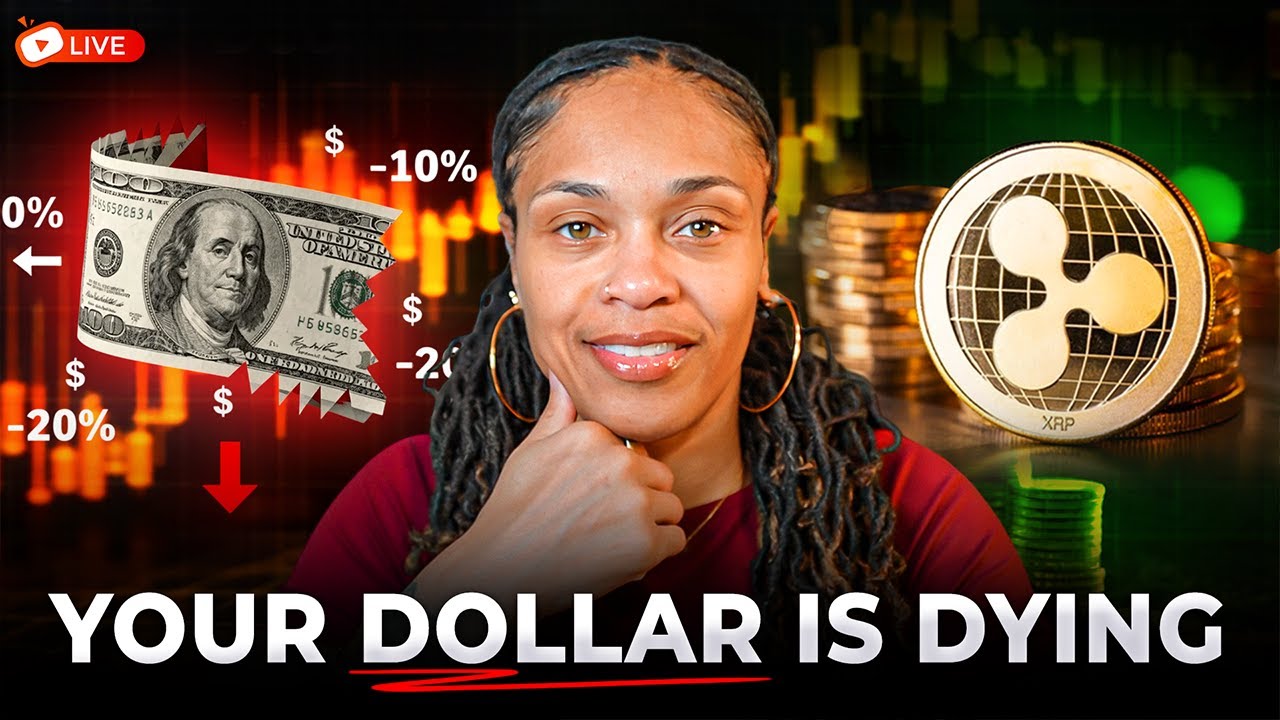
Kamilah Stevenson explains how the dollar lost its oil anchor as countries like Iran switch to yuan for oil trades, causing a 3-5% drop in dollar-settled oil since mid-2024. She argues assets outside the dollar system, including XRP, are positioned to appreciate as the currency weakens from contradictory U.S. policies.
Chapters
What's going on, family? It is Kamilah Stevenson, and around here we talk wealth. And, um, I don't know, I feel like saying class is in session because I, I want to be able to present where we are in our economy. What's up, Tiffany? And give you some perspective so that you can, um, stay focused on the game plan. What's up? Uh, I see you from MD, what's going on? Every matter of fact, let me know where you're from. Um, I don't do that every single time. Oh, by the way, hit the like button and share this video with someone who needs to hear what is happening in the world. And also subscribe if you haven't subscribed already. All right, let's do the housekeeping first. What's up from Oregon? What's going on? I'm gonna give you guys some, um, updates and kind of help you you to understand where we are with our economy. I think people are mishandling the situation and totally confused about where we are. Connecticut, what's going on? New Jersey, Montana, what's up? Charleston, Baltimore, I see you in the place. Uh, Texas, what's going on? Uh, Long Island, what's up? Uh, I appreciate all of y'all being here with me on this Saturday. I do want to, um, just continue to caution you. I'll be back on, of course, Monday And I'll be on with my members to further talk about what I'm doing in this environment. Uh, what's up from Virginia? Liberty. Let's see, Philly, what's up? Vegas. Hey Vegas, I'm, I'm certain I, I remember you, you said, uh, 744 that you're in Vegas, so I'm sure you probably go to the XRP conference. I'm, I'm assuming at least. New Orleans, Chicago, what's going on? My town. Saudi Arabia, what's up? All right, um, we got a lot to go over because I want to help you guys to understand what's happening. And I promise you, you will need to understand this because the headlines and, and the charts are not reflecting— they are not reflecting where we are, guys. There is a lag, there's a gap. And what's up from the Netherlands? And, uh, I hope I, I'll see 744. I still haven't made a decision. What's up, Georgia? But I hope so. Uh, Maui, what's up? Aloha. Hey, I— it's been about— let's see, you know what, the last time I went to Hawaii, it's been a while. Um, but whatever time I went, it was like the 20-year anniversary of Janet— Janet Jackson did a concert there and I went. I went all the way to Hawaii just to see, um, I don't know, rhythm or whatever the, uh— I can't remember her famous, um, 20-year anniversary. But anyway, I went there to see it and it was phenomenal. Um, Harlem, what's up? Canada, all right. Netherlands, what's up? Kevin, all right. South Africa, what's going on? A couple of people from South Africa. Um, all right, California, awesome, awesome. Hawaii up in here, yes, I love it, I love it, Troy. All right guys, so we got a lot to get into today. Um, I am going to— I see you, Irvin, I see everybody else. Uh, what's up, uh, Rhythm Nation? Yeah, Rhythm Nation, see, you know I went to the 20th Rhythm Nation, uh, tour in Hawaii. Or not tour— well, she was on a tour, but yeah, she went to, um, uh, Honolulu. Honolulu. Yeah, I wanted to go to Maui, but I've never been there. Anyway, it was awesome. I took a first class flight there. It was like— I think I did for my birthday or something like that because it was in November, so it must have been for my birthday. All right guys, we are going to learn what is happening so you are not deceived. Listen, The market has not priced in where we are. I can guarantee that. I just saw a tweet too that came through from, I guess, uh, I, I don't know, our president said something else and said, hey, we gave you 10 days. If we got 48 hours left, left, and, uh, we gonna start, I don't know, bombing the crap out of everything. I don't know. But what I can tell you is that I think a lot of people are confused about some of the rallies for for the market. This is not just from a technical analysis standpoint, although there are some cases like for Bitcoin that a bear flag is forming or has formed, and we'll see some down pressure. But as I spoke to you guys before and I said, if we have green days, green weeks, uh, rallies, I don't believe it. It just has not priced in where we are. I don't think a lot of people— some people get so consumed in their life they don't really know what's happening. They don't know that this is one of the biggest energy crisis that we've experienced. I'm talking— and it takes time. I keep telling you guys, it takes time for it to hit your front door. So there's a lag, um, somewhere in that. And out of the blue, um, it'll hit you. You have to understand that oil is involved in everything. I don't think you guys are getting it, okay? Um, maybe you guys get it, but when I say you, I, I don't think the world is, is getting it. Food, um, plastic packaging, electronics, healthcare, transportation, clothing, makeup— everything will be affected, okay? Um, and so, and it has not hit everywhere yet. And there's a— I just did a video yesterday. If you go back and watch it, it really can help you become more educated on the futures market of, of oil. It's like Thanks, uh, I appreciate this. This is so kind, right? Um, yeah, it's already hitting the pumps, but a lot of people are looking at the futures and they, they— the paper oil, the paper representation is not the same as actual physical oil being restricted. So I want you to understand, I'm gonna walk you through something real quick and, um, and help you to understand what is actually going on. What's up, Johnny Crypto? What's up? I see you with a K. All right, I appreciate you. You have a great day. I hope you resting and restoring, you know, and whatever you guys got coming out today, because you all are rocking it. I'm on every session, I promise you. I appreciate you, Smart Smart Guy. Make sure you guys— I already know my audience is, um, subscribed to Good Evening, uh, Crypto. So make sure if you're not that you are, because they give you the news and they, they be on top of it. I don't know how they keep up with, with the news I'm like, I'm trying to do my little one a day, okay? But they keep up with— if you want to know everything that's going on, um, brilliant, brilliant, um, channel. So good evening, Crypto. Make sure you guys are following and subscribe to them and paying attention to what Johnny is saying about the market because he's a very intelligent guy. Um, so I appreciate you guys and, uh, hope to see you guys if I'm in Vegas. Yes. All right, um, so I want to walk you guys through— what's up, Kimberly? I want to walk you guys through, uh Yep, the one and only. I see you, I see you. I love them guys. All right guys, I want to help you guys understand what's happening in the market right now, how it hasn't priced in everything. And I just want to caution you because one of the things that I try to describe are the signals, the signals, the signals that you have to look for. Everything else is a bunch of hype and noise and a lot of day-to-day stuff. And you know what? That's good for traders, that's good for trading, but when you're making investments and when you're trying to look out long term, you have to catch the signals. Yes, Johnny, I definitely feel the same way. Thank you so much. I, I appreciate this so much. You guys are so great, inspiring, and you know I'm a fan. Y'all, y'all already know. So I, uh, I look forward to seeing you in the flesh too and working with you guys. I appreciate it. He's so kind. Uh, thank you so much. Um, Voice Art Quick, uh, what do you use to track your purchase and your code? A storage wallet so you know your averages, uh, for tax purposes. You know, I just, um, right now I'm doing it manually in a sense. I am— I have a digital, um, uh, log sheet where I, I track everything, you know. You— I mean, everything is transparent on the blockchain as well, so I'm sure there's some AI stuff out there. Y'all tell me, um, that I could do better tracking, but right now I'm really just tracking it manually, um. But also you got to realize that I am not selling a lot. I have my sell orders and I have my average. You know, the thing about it is when you've been buying crypto, I don't even know my average because I've been buying crypto for so long. But I do— I'm not, I'm not buying this, I don't trade a lot. So a lot of traders may need that a little bit more than I do. I don't trade crypto a lot. And obviously if you're doing stocks and stuff, the, um your, your brokerage account can keep up with a lot of that information, right? And so, so, um, right now I'm just doing it manually. I'm just looking at the chats before I get started. Thank you so much. Much love from the UK. Keep on stacking, people. Yes. So I am going to, um— oh, Merlin, Merlin. Johnny Crypto said Merlin is, is the best crypto tracker. So we'll get you set up to try it out. So, um, check that out. Make sure you guys get started with that because if you do want to track everything, then you want to have a good tracker in place, right? You want to have something reliable where you don't have to be trying to figure all of this stuff out because right now it is very difficult to, um, manually do it yourself. And you are going to have to keep track of those taxes because they will hit you before you know it, and a lot of people aren't, aren't ready for that. So make sure that you check that out, Merlin, okay? Um, and I'm sure you guys have some of that on your page if you, um I don't know if you guys got a link or something for that, um, but— or a website or anything. Um, not sure. Can you explain dollar cost averaging? Dollar cost averaging is just, um, it's just buying it at certain prices. Like, for example, if you— you know, the problem now is a lot of people bought on top, and then once these prices drop, then they're too scared to buy at the bottom. So, um, the best way to bring down that dollar cost average is to buy more of it when it drops, right? The whole point is to buy low and sell high, not to buy on the top and then sell on the bottom. That's emotional, and that's a lot of fear. People gonna lose a lot of money that way. All right, um, so Merlin has a, a YouTube page. Oh, okay, got it. Okay, thank y'all. Y'all coming through for me. Y'all coming through for me. Look, Merlin has a YouTube page. All right, so, um, there you go with that. So I'm happy you guys have that resource, uh, and they'll get you started on that. All right, um, heard great thing. Okay, good. Heard great things about Merlin. So that answers the question. I'll check them out. Um, myself as well. All right, looking at the chat. All right guys, so let's get into it. All right, I, I— here's the, the thought that I had right now with what's happening, because this is how a lot of people live their life. You know how you get, um, all kind of warnings, you know, hurricane is coming, something, a tornado is coming, and all the authorities are like telling you go ahead and evacuate and, you know, get yourself positioned. And a lot of times what most people do is Well, you got some people that'll pack up immediately. They'll leave early. They get to safety before the storm arrives. And then you have those people who say, you know, I've been through this. I know what this looks like. I'm going to wait and see how bad it gets. You know what? And let's, let's flip that. There's a lot of people who are saying, I'm going to wait and see how bad it gets. And then when you have digital assets and all of that, they're going to say, I'm going to wait and see how good it gets before I invest, before I accumulate, right? So it's always somebody waiting to be proven, you know, to, to make moves. They need certainty to make moves. But in a situation where you're looking at signals as to where the economy is going and you wait to see how bad things get, what, what happens is when the, when the hurricane hits, you are trapped, meaning the window has closed, the road, the roads are now flooded. And what would have took you, you know, maybe 2 hours of preparation is now a crisis with no good options. And the whole point of checking these signals is to give you optionality, optionality, right? That is why we're here, to understand that. So I really want to walk you through something, and very important, so that you can understand where we are with the dollar and, um, why the dollar even has value, you know, and what's happening to it right now. So you can understand, because a lot of you are— well, I'll get in, I'll get into what I want to say later, but I want to help you to understand why the dollar even has value at all, okay? And this is something that most people don't even realize, okay? And I've talked a little bit about this, but I want to take it a little bit further, um, with how we, how we have to understand the, the strain that the dollar is under right now. So what gives, what gives a piece of paper or a number in a bank account its value when it's not backed by anything tangible. And most people never thought about this very clearly, right? Until, um, and until you can— until you do understand this, you are— you're not going to understand what's happening in our global economy right now. And it matters for your money. This is going to matter for your money. I know you're not thinking about it now because you don't think about it until it— until the pain hits. And honestly, I tell people all the time The, the majority of what will change your, uh, decisions and the instructions that you follow is pain. Some people have to experience pain to move. And what I try to do is I try to educate you and help you to understand the experiences even of other people who've already experienced that pain to get you to move ahead of time. Because pain should not be your only teacher, although it is a teacher, okay? But I need you to understand ahead of time what's happening so that you don't experience the pain. Now, I've gone through this before, how the dollar was first backed by gold, right? So before— and I went through this a little bit, but I'll explain it a little bit. And yes, pain is a good teacher, unfortunately. And most people are not going to change until they experience pain. It's just that simple. It's a great motivator. It's a great teacher. It will, it will push you to do things that you would have never done. And some people, that's just what it is, okay? So, or you can learn from other people's— other people's pain, experiences, or historical patterns. So I need you to understand a historical pattern that's happening right now. Now I've talked about this. 1971, Nixon removed the, um— in 1971, every dollar in existence was supposed to represent a fixed amount of gold sitting in a vault, like physical gold. So the dollar was kind of indirectly backed by gold. So that physical constraint meant that you could not just create more dollars without having enough gold to back it. So the supply of money was anchored, and that's why I titled this The Dollar Just Is— it's lost its anchor. Okay, so, uh, 1971— it— so this was before 1971. So Nixon came along and removed the anchor. So overnight, the dollar became a currency backed by nothing except the confidence of the people holding it and the power of the government that was issuing it. And but here's the problem with that that I need you guys to understand: confidence is not a physical constraint. When the anchor is confidence rather than gold, the temptation to create more money is essentially unlimited. And that temptation has been indulged consistently right now for over 50 years. And I have to take you back to, to understand this, but the dollar needed something to replace gold as its anchor, right? So there was a replacement, and I'm going to help you to understand that, right? So, um, yeah, it is, it is. Thank you so much, I appreciate that. I'm trying to, you know Speak just the language so you can follow the line of understanding with, uh, what, what's taking place right now and why it matters. Okay, and so again, the dollar now needed something to be replaced by its, like, uh, its significance. Okay, something that would create almost like a genuine global demand for dollars even without the physical backing, something that would force every country on Earth to hold dollars. Like, what What would make a country now want to hold dollars if it's not backed by gold, right? So, um, hey William, what's going on? I appreciate your, uh, Super Chat. Join late. What's the likelihood XRP will drop close to a dollar? Do you have any guesses? Looking to buy more. I mean, I don't have a crystal ball. I mean, you got a lot of technical analysis that say it's more likely to drop next to a dollar than it is to go over $2 first. I'm talking about as far as priority, um, but I mean, we never know, right? So for me I just dollar cost average while they're at these prices because these are still very undervalued prices. And as I keep saying, when we look out 5, 10 years from now, we are not going to care whether or not we got it at $1.30, $1.20. Oh, my average price was a dollar, mine was $1.50. Nobody's going to care at, at full scale of institutional adoption. I'm talking, you know, y'all, I'm, I'm long-term minded, right? So just look out— nobody's really gonna care. Right? So if it does drop, always save some dry powder. Never like just exhaust all of your cash flow, right? But I tell people, if you don't— now for somebody who has a large bag, they could say, you know, I'm not going to buy my next big purchase until it drops, because they have enough of it. But if you don't have enough of it and you still want to accumulate and you want to get at larger levels, I would be participating, um, and buying, you know what I mean? Like, you know, it was at $129 last week. I bought some at $129. I'm— I got enough of it. But even I keep telling you guys, I've started cold wallets for my family and my sister and my nieces and nephews and stuff because I know they don't— they ain't gonna do nothing, you know what I'm saying? Like, they don't understand this whole world, and, um, it's exhausting trying to even help them. But I know they're going to need some help, so I just decided to do that. They're— they're good people, by the way, okay? So it's not like— I mean, you might got some family that you don't feel like fooling around with. I don't know. So, um, but anyway, um, so what would make people want to hold, uh, the dollar? Well, that something was oil. Okay, so hear me out, follow me, right? Hey, you've been listening. The Nixon shock, because I talked about that last time. If it does drop a lot, XRP is gonna, uh, go missing off the exchanges. Yeah, just make sure you're, um— and somebody said, uh, Japan actually will not happen. US and Warren Buffett have, uh, backstopped the yen and Japan inflation under 2, uh, percent. And well, the thing is, um, and I don't know, you— but the thing is, guys, y'all have to be long-term minded. Even if— even in an investment for crypto, even in like the speculative phases, we had to wait. We had to wait years, um, for a bull run. So I don't— I don't understand why people all of a sudden come in a year ago and all of a sudden want like XRP to go to like astronomical amounts like that, you know, like if it was to happen, hey, I, I ain't got no complaints about it, but I think you should be long-term minded and I think you should accumulate. And I've always said since last year that I think people think that it's going to happen quicker, um, or want it to happen quicker than what it will. You got to have some patience. And that's why I just— patience is a character issue. That's why I come on here every day and I talk about patience. Have some patience, you guys. Trust me, the time will come, the season will come, and trust me, it'll come faster than what you think. When the time comes, in hindsight, you'll look back and say, hey, I, I'm— it was worth the wait. All right, so just be patient. Right now we still have time to accumulate. Every— it don't matter what, what direction we're in, it's always opportunity in whatever situation you're in right now. If the price is suppressed, the opportunity is you can buy more. If it goes high, then that means that your net worth increased. Either way you look at it, it's a win-win situation. So while the price is low, let's focus on making some money and investing in assets that make sense. Now, 1974— I want to talk this through— United States struck a deal with Saudi Arab— uh, Saudi Arabia. And I'll get to some more of the, uh, Super Chats, don't worry. Um, so Saudi Arabia was going to price all of its oil sales in US dollars, right? And then you had every other what they call OPEC, um, nation, or the Organization of the Petroleum Exporting Countries. They followed that same suit. And because every, uh, country on Earth needs oil to run its economy, um, to power factories, to fuel its transportation, produce food— remember, all of it— run hospitals— every country on Earth had to purchase oil in what? US dollars. Okay, this didn't have anything to do with trusting the dollar, but it had everything to do with the fact that there was no other option at that point. Okay, so what that then forced— because remember, if it's not backed by gold, why should we— what's the importance of it? Well, it went— it— this was another way to make, uh, the dollar significant. So what that did was forced global demand for dollars, and, um, and it was replaced of course by gold being the anchor. And it is what has kept the dollar strong from that point for 50 years, um, from transitioning from that physical, uh, standard of it being backed by the gold. And it's why the United States could run massive deficits and fund wars and borrow, you know, endlessly for currency. Because I, you know, I, I can also argue to say that the only other way to produce more dollars is by debt. So the dollar is backed by debt. Okay, so, but the, the rest of the world was, um, forced to absorb those dollars to participate in the global energy market. Now here's what's happening right now. I had to give you that background because so you can understand where the problem is. Okay, so what's happening right now that most people are watching is as the Middle East conflict story starts to unravel, there's something more significant that's happening. Iran has now been accepting payment in Chinese, uh, yuan for oil transit through the Strait of Hormuz. So at least about, for now, 2 vessels. And even the, the entertainment of the idea that other countries can start purchasing or will start purchasing oil in other currencies will wind up being a problem. Okay, so, and this is already happening. So what does that mean for your money? Okay, what does that mean for your money? Well, for the first time in 50 years, the commodity that has replaced gold as the dollar's anchor is moving through a major global choke point without requiring dollars. So the anchor isn't gone, but it is dragging. And even if you want data on this, between June of 2024 and around February of this year, The share of global oil trade settled in dollars declined by roughly 3 to 5% points, and it is still accelerating. So when the global demand for dollars decreases, the purchasing power of the dollar that you hold decreases. And this is because the mechanism that created artificial global demand for those dollars is weakening. Okay, so here's what I want you to pay close attention to. Because now we go into, well, what is the government's response to this pressure? And the government's response is not making anything better. It's actually creating a new problem on top of an existing problem. And once you understand that, you're going to see why— what— this environment is not going away quick. I, I want to get to that, y'all, because I, I know when y'all see a green day on the chart, again, the green and the red It's for trading. Okay, you can have those opportunities. This is not going away quickly, guys. Okay, and you need to know this because you need to know why the assets that's positioned outside of this whole environment are not just an investment thesis. It is now a logical response to what we're dealing with and what the data is showing we're dealing with in this environment. So there are assets that are a logical response to this, that you need to start positioning yourself because this is not going away. And I know y'all think it is just because y'all see a couple of green days in the chart and everything looks good. That's for now, okay? And you can have temporary looks good, okay? But you need to know the entire scope of where we're headed and how you can position yourself to have opportunity. I'm telling y'all, some people are just going to be in a rut. They gonna be in a mess after all of this is said and done. I mean, this ain't getting no better. You got AI— you talk Oracle just, uh, fired 30,000 people, okay? Just like that, okay? Like, there's a lot happening that you want to position yourself to, okay? Thank you, I appreciate this. I'm loving it. Uh, nailed it. You see, you can see what's happening there, um, shifting us from the dollar being world reserve currency to more of a basket of world reserve currencies. Absolutely. And so this is going to wind up being an issue. And if you don't— if you are just looking at headlines and you blinded by what's happening in front of you on a data, you can't— this is not just a data— like, people are like letting day-to-day activities and headlines move and swing their emotions, which you got to be solidified. This requires education. You need to be studying this stuff because this has every— this is going to affect you in more ways than one, okay? And that's why I come on here and I try to help you guys to understand in a very simple way what is happening. Now here's, uh, what we— here's what I want to say next because I have to talk about this as well. Say, is it better to buy, uh, XRP now or is it going to dip again? Should we wait? I need an opinion, please help. Well, if you don't have enough XRP, we don't try to time the top and we don't try to time the bottom. We DCA. We buy when we have. You can get some cash flow, make some money, sell some stuff, whatever you guys got to do. Stop spending your money on stupid stuff. Like, you got to stop spending your money anyway because you— we're going to find out real quick that we're headed for some times. Let me just say this: every time oil spiking is a signal, okay? Every time— and I'll— I've answered this question, but I'll answer it again just so y'all can be clear. Oil spiking is a signal. Every time oil has spiked in history— and I'm not guaranteeing this, I don't know— but every time it spiked to this magnitude, we have had a recession that followed. If we don't have a recession, this will be the first time this has happened, okay? We will need a miracle, but it's not looking good. And this situation is not going away anytime soon, and different countries will get hit very differently, okay? I don't know all of what's happening. I'm learning in real time just like everybody else because it's stuff happening every single day, right? But if you do not have enough digital commodities— I'm going to call them commodities because that's what SEC calls them, commodities, okay? Real assets, physical silver and gold on the pullbacks. Like, I get some people, you know, I don't do a lot of swing trading and, you know, silver and gold and stuff. Some people sold at the top, that's fine. If you get a pullback, hey, if you don't have these digital commodities and you don't have enough of them, I suggest that you just dollar cost average, meaning that you buy them at the prices that they're at now. Anything under $2 is actually a great price. Like, you got HBAR hitting 8 cents. Like, these are very undervalued assets right now. Next wave of infrastructure, financial infrastructure, and you're buying in. It's going to take some time for institutional adoption to happen the way y'all want it to happen, okay? It is just— they don't just jump in, okay, like overnight is what I'm saying. But by the time it happens, just understand that this has been happening for quite some time. Wealth accumulation doesn't happen in one day, right? So when you say buy now or later, what are you waiting? Are you waiting on a magic moment to where it gets to the right price? Well, I would suggest that that is the wrong approach. Nobody should be just waiting on this magic price that XRP is going to get to to go all in. You should be dollar cost averaging. It's very simple. You get a little money, you put a little here and there. If you don't make enough, hey, you can put $10 here, $5 there. $50 there, $100. Maybe some of you got $1,000 here. It depends on how much cash flow you have. There's no right or wrong, but I would suggest if you don't have enough to just start dollar cost averaging right now. If you— again, I mentioned this before— if you got a lot of it, you could decide my next large order is here. I got large orders all the way below a dollar, and I will be honest and tell you that I have limit orders. However, I am still dollar cost averaging because maybe they don't hit the limit orders. I don't know. I can't time the bottom. Right? Maybe they don't hit it. So I just— when I make money, I just put some aside. What am I doing keeping it in fiat? What am I doing keeping it with the dollar? I just gave y'all a case on what's happening with the dollar, right? And so I don't wanna— and I wanna, with a caveat, I wanna balance this and say, yeah, you do need to have a little cash reserve to invest in these, but that's the purpose. My cash reserves, if I'm gonna hold the dollar, it's not going to be for the purpose of just buying a bunch of stupid stuff. I'm not looking for the next Louis Vuitton shoes, and I'm not paying $2,000 on a purse right now, you know what I mean? Like, I'm not, I'm not doing that right now. Why? Because my, my money has a greater significance being invested in something that will appreciate over time, right, and, and have value over time, right? And so I'm not gonna hold— I'm not holding money for the sake of spending it. I'm, you know, I gotta pay my bills. I got 3 teenagers, y'all know they expensive. But I'm holding my money for a purpose. Okay, so yeah, you do need dollars, but make sure you have a purpose behind the dollars that you're holding. And just make it simple and dollar cost average. Now I want to help you to understand what, what the government is, um, in a sense, what their options are right now. So you can— so this can make even greater sense to you. Okay, and then I'll get into, um, any of the super, uh, let me actually, uh, I think I missed a Super Chat earlier. Um, oh, William said thank you for the Super Chat, you so kind. Uh, wow, I didn't even look at it that way. You buy it now and just hold on for the sky. You're right, it doesn't matter. Thank you, just love your high value education. And I want to be honest, thank you so much. I want to let you know I am selling some of my XRP, okay? But I have a plan. It's all about the plan that you have. I do have limit orders for sale, but if you don't like— if, if somebody just getting in and they're like, I got 500 XRP, I got a thou— Like, I don't, I don't know if you got enough. I mean, you, your first priority— let me say this, nothing I say is financial advice. Everything I say is for educational purposes and entertainment purposes only. Do not listen to what I say and go invest your money. You manage your own expectations. You can lose all your money investing, okay? But for me, my first priority is my long-term bag. That was always my first priority. I started a long time ago investing in cryptocurrency and XRP, right? So even now, if you decide, like, even at these prices, even if you saw it at all-time highs, like, that's a nice little move too. So if you have your long-term bag, you could say, hey, I'm going to start accumulating at this phase and dollar-cost averaging so that I can sell at certain price points as it goes up. So everybody's game plan is different. All right. But what I would suggest is make sure you have some that you never sell, please. Because you go— well, I know everybody ain't going to do that. So I don't even need to beg you guys. Um, some people just not gonna do it, but they're gonna find out the hard way. So, and I don't mean to laugh at that, but it is what it is, you know. Um, just because of emotions, most people, you know, understanding the psychology behind it. But anyway, let me explain to you the economic pressure, um, that we're feeling. And I want you to understand that most people, uh, this feeling is not going to resolve quickly because we're gonna— it's gonna play itself out, right? Right. We're, we're in the middle of a global reset And, and the thing got cracks, and it's just gonna come— it, it's got to— it's gonna come tumbling down at some point, right? So the United States government is currently running what I would call two massive economic policies all at the same time, okay? They simultaneously, uh, and they directly contradict each other. So on the one side, you— it passed a multi-trillion dollar tax cut designed to stimulate the economy. Y'all know it's gonna be more money in the economy. Right? Put more money in people's hands, boost demand, keep spending going. Like, that's the gas pedal that we put the foot on, right? Then you have this other side of things, um, where it imposed trillions of dollars worth of tariffs on imported goods, for example, which raises the cost of almost everything manufactured, uh, using imported components or materials. Which means that— let me help you to understand— it's like the same money that got placed in people's hands through The tax cut immediately buys less because the price of goods went up. Okay, so that's like the brake pedal. So we got the gas and we got the brake. All right, I'm giving you a picture so you can understand it. So you got the economy is being stimulated by $4.1 trillion deficit finance tax cut, while then at the same time being taxed by $4 trillion in new tariffs, and they don't net out. Okay, so you got one policy that boosts demands while the other constrains supply chains and reduces demand via higher prices. So think about— and again, this, this ties to your dollar. I'm trying to, I'm trying to build a case for what the dollar really looks like to you. Okay, so in practical terms, just imagine this: you get a $500 bonus at work, you get excited, you ready to spend that money, but then everything you want to buy now is $500 more expensive. Because the cost of making and shipping it went up. Okay, so you still got your bonus. It didn't go nowhere. It didn't disappear, right? But its purchasing power did. Okay, the purchasing power of the dollar. So you're really, in essence, no better off than you were before. That is the gas and the brake problem at a household level. Okay, I mean, it's the same thing with anything, you know. You give people stimulus checks and then they go, they go make the the rich richer. Why? Because they're gonna go spend it on big businesses. You're gonna, you know, buy some from Amazon, Walmart. You're gonna go buy you some Nikes. You're gonna go buy a car. And you just make them more wealthy, and then you make the shareholders more wealthy. Okay, it's gonna— it's gonna flow through the same hands. And that's your— that's your choice. You know, when we start looking, you know, looking to blame people— oh, the wealthy getting wealthy and the rich getting rich and the poor getting poor— That's because you decided to go and be a consumer. Y'all know I'm gonna put the mirror in your face, right? And so anyway, here's the part of this that, that's genuinely dangerous, um, is that when you press— think about this again, and I, I'm just— I like to give you analogies, right? And so, and I'll get to some more of the, uh, the Super Chats, right? So absolutely, absolutely. I can't wait. I cannot wait. Thank you so much. All right, um, let me stop and give a— get a Super Chat. Also, I don't think the Clarity Act will flip the switch, but it will pop at some point. It's not gonna flip the switch. I don't know why people think— I mean, the Clarity Act just again puts the rules, um, they give the regulations, they put up the guardrails because, you know, there's certain institutions that's not going to go in, and they have to— they, they have compliance, um, issues and stuff. So They have to have that in place. However, I mean, you're going to get like some speculative and some FOMO and stuff like that. But the price, the price that you guys are waiting on comes from institutional adoption of the utility. It comes from the usage, the need, the necessity, like the scale that you guys want. That's where that comes from.. But yeah, we can do— I mean, Hex, uh, retail can make a speculative bull run. Y'all seen it in the past, same stuff. You can go 5x, 10x, some can go 20x. But I'm talking about the prices that you guys are looking for. But yes, I, I want the Clarity Act to go through, all right? But it's not like tomorrow. I think some people think the Clarity Act and then boom, it just jumps to— like, that's not gonna happen, okay? So just, I, I just prepare yourself. And if it did happen If I'm wrong, I don't mind being wrong, okay? But don't just think you're just gonna get $1,000 XRP from the Clarity Act. Like, that's not gonna happen. It's gonna come from institutional adoption. Um, that part takes a little bit of time, so be patient. But you will get, you know, you, you're gonna get some hype and some FOMO and all of that, okay? So, um, you know, just pay attention to it. We'll see what happens. Uh, Love it, love it, love it, love it. Y'all see I love them, right? Y'all see I love them. So if y'all not following them, y'all have to because they be on it. Like, they give all the news and, um, you can keep up. You shoot, you ain't even got to watch nothing else. You can just go on their channel and keep up with all the crypto news. I promise. I get so busy sometimes with my, um, with my family and everything, and I could just go on there and just like figure out what the heck is going on in the world and in the digital space, to be honest. Right? Um, yeah, so I'll be— yeah, this is— it's gonna take 6 to 9 months after the Clarity Act, um, before the money starts to come, right? So think about this, like, institutions, they're not like, um— and that's what I try to say, it's not, it's not like something that's just gonna happen right in there. They're not emotional. They don't— they're not in their field. They don't operate like us, you know what I'm saying? So just understand it's going to take some time, right? Thank you so much for the Super Chat. Uh, God bless you, um, for your accounting, the cost. So thank you so much, I appreciate this, Jonathan. I appreciate all of you guys giving it, um, into the channel. Now let me walk you through, um, one last little part because I do want you to understand this. I do want to finish this whole point of like the gas and the, uh, the putting it, putting it on the gas and then, you know, stopping it, the brakes, right? When you do that, think about in a logical sense, like in a real sense, when you're in a car and you put, you put your foot on both of them at the same time, right? The car won't just stay still. What you're going to create is enormous stress on what? The engine. So the— because the components, they're working against each other. You got the heat that's going to build, you got the system that's going to strain, and eventually something breaks. Not because one force, uh, was stronger than the other necessarily, but because the two opposing forces were applied at the same time. What? For too long. All right, it's a— this is a time frame thing too. That is the environment that the US economy is in right now. You got stimulus and, you know, the, the pumping the money and all of that on one side, then you got inflation on the other, and you got both being applied together, both working against each other. And sometimes what happens is the Federal Reserve sitting in the middle is unable to fix either problem without making the other one worse. So it's like a— you stuck between a rock and a hard place. Okay, now here's one thing that would, or that could, actually resolve this situation. Okay, this is the one escape valve that economic, um, that what I would say the economy keeps pointing to as a potential way out. Let's say potential. And that is one word, one word only, and that is productivity. Okay, but let me— there's a nuance to this. Okay, so there's a big nuance to productivity. If the economy— and I'm happy y'all here learning, right? Because this is like, right now it's not like the updates and stuff I'm doing right now, but I'm, I'm really trying to help you to understand how the economy works. Because if you can get educated and you can start thinking a little bit beyond what you see in front of you, you know, you got to be able to read the signals that's not in front of you. You got to be able to see things that's not like right there, okay? You got to be able to catch the signals. Because a lot of people, if they would just pay attention to these signals, they would know what moves to make ahead of time. You can't be late to the party. This is not going to work this time. Being late to the party means you're behind, you're not going to make it, okay? And I'm gonna just give it to you straight, because a lot of people are not going to make it. Productivity, okay? So meaning that's the only way out of this, in a sense. Meaning that if the economy becomes genuinely more productive, if workers can produce significantly more output per hour work, then you can have growth without out inflation because you are creating real value and not just printing money or borrowing demand from the future. Okay, productivity growth is the only way to sustainably raise living standards without debasing the currency, um, doing the measuring. Okay, without debasing it. So this is also where artificial intelligence is gonna— we got to talk about that because this is where Um, people get this wrong with artificial intelligence. Also, let me say something about productivity too. This is why people need to get healthy, okay? Because you cannot have an economy that's going to produce if people are sick. And this is why I'm a big component of like the food we eat and all the chemicals that they put in our food and stuff here, right? Because it is going to affect the economy and it's going to affect productivity if everybody's sick. And nobody can like function and produce, and there's not enough energy, um, that you are— your output is going to be tampered with. Okay, I want to get into that, but I'm just saying, this is— it's very interesting, like the stuff that they do with the food and stuff. It makes people unhealthy, and people got diabetes, and then they're dying early, and they're not— you know what I'm saying? Like, it's, it's a big trap, right? But AI has to come into this conversation because— and we talk about this whole productivity boom. They assume AI is being adopted as skill, the productivity is going to gain its way and it's going to flow through the economy. But let me just say, for now, the data is still saying something different. And I'm sorry, I can only give you what the data is reading. The AI booms have, uh, so far been purely an investment in infrastructure that is boosting current growth, okay? There's no signs of a significant productivity boom yet, just yet, okay, which is the true dividend that will determine the return on investment. So the labor market needs to equip workers with the right skill sets to fully utilize AI and meaningfully change how work is done, right? So there's still a gap there. So, um, the thing that would save us, um, meaning like a broad economy-wide productivity growth from AI, it just hasn't arrived yet. Okay, what has arrived, so you can know what phase we're in now, we, we'll— I mean, I'm sure People are learning. That's why people need to learn and get their skill sets and stuff. So you see where the money can come in, guys. If you don't, if you don't have any money and you're trying to figure out like what to do, your last resume is not going to work, okay? What, where we're in right now, you have time. That's the good thing. That's what I'm trying to empower you with, because right now we're in the investment phase, okay? We're in them. And some people may just say, you know what, I just need to find the best investment for, uh, AI and I'll be fine. And guess what? You will if you find the right one. Okay, so it is, it is going to be a matter of which, which ones do, do we find, which ones are gonna, you know what I mean, scale in the future. Um, it's a handful of ones that will and some won't or whatever, but we're in the investment phase. So the building of, like, we're in the building of data centers, the deployment of infrastructure, the early adopters seeing gains, uh, while most of the economy is waiting for the technology to diffuse broadly enough to show up in the um, in the, in the numbers, all right? There's a gap. So there's a gap between the investment phase and the productivity phase, is that— and that's where we are right now. I want you to know where we are. And that gap, in that gap, I would say, or in that space, the gas and the brake problem is still running. So that ain't gonna stop. Inflation is not going to stop, y'all. The Fed is going to, uh, a bit stay paralyzed in that phase, okay? And the dollar's purchasing power is going to keep eroding, and the pressure on the ordinary household keeps building even when the headlines on any given day is saying otherwise. I don't care what the headlines are saying, y'all. You guys need to know what's really happening, okay? And I wanted to help you to understand this because it's going to matter with the assets that you hold, the assets that you believe in. You— and you know, you might have done your research, you might understand the thesis, and yet Every single time the market gives you a red or a scary headline, something inside you start to question that. You don't need to question it. You just need to continue to educate yourself and know that, you know, you're being positioned correctly. Okay, the signals are not changing, you guys. The environment is— I get it, it's loud, it's confusing. Most people around you make decisions based on what looks, you know, what it looks like today. Okay, oh, is we bouncing? We— oh, we crashing? You know, like they're looking at everything today instead of the underlying data. Follow the data, follow what's happening, okay? Because there is an underlying data and it's speaking very clearly. We are in an environment where the dollar's anchor is weakening. That's not going to change. Where the government's policy response is pressing gas and the brake, which is creating instability rather than a resolution, okay? That is where we are, where the only thing, the one thing that could genuinely relieve the pressure, which is broad productivity growth, has not arrived yet. That, that's where we are, and where every major historical episode of dollar weakness and monetary system stress has produced what? The same result. It ain't gonna, it ain't gonna change, y'all. Okay, follow the money. It ain't gonna change. I'm just trying to help you I'm just trying to help you understand it's not going to change. All right, here's the same result: capital moves away from the system being stressed and towards assets that exist outside it. There you go, there go the answer to your solution. Okay, why you still spending money on all this other nonsense? Capital moves away from the system being stressed and toward the assets that exist outside of it. So get positioned. Get positioned, right? No, I'm not AI. I know, why do people keep saying I'm AI? I am not. Like a lot of people, I'm not AI. I wish I had an AI. Listen, it could save me a lot of time. Um, I, I wish— I, I need to build an AI, okay? Just dump my intellectual property and dump my brain in it. I, I'm not smart, y'all. I'm not that smart. I promise I'm not. I'm not that smart. I just do a lot of studying, and, and I study a lot because I'm not that smart, right? I need to learn stuff. I promise y'all, even when I'm, I'm allowing AI to teach me what's going on and to help me, and, you know, and I'm researching and investigating and watching, um, you know, videos to help me learn from some of the best, uh, I have to— I can't, I can't process stuff unless it comes through my brain in a very simplistic way, very, very simplistic. That's why you see that I do a lot of analogies and parables and stories and stuff. So I— this is why I'm going to align and connect, okay, what the Fed is doing to like being in a car, because you understand being in a car. That's easy for people to understand. A lot of people have been in a car. But sometimes if you, if you just— you, you have to bridge the gap between the known and the unknown through parables and being able to connect with people. Okay, well, you know this, you know about driving a car and what that would look like. You know, if you put the If you, if you're riding down the street and all of a sudden you put your foot on both the gas and the brake at the same time, you know what kind of damage that does, okay? So that's why I give analogies and stuff, because that's how I learn, okay? So I— this is a little crazy. If you don't think so, I probably am a little crazy. You got to be a little crazy, huh? Right now. So, um, so But I want you, um, AI girlfriend, a cheap date. What does that mean? Oh, your AI— oh, AI girlfriend. Okay, people looking for their AI girlfriends now. But this is the best way I can help you to understand what's happening in the economy. Because here's the thing, if I can paint a picture for you where you really get it, then you will say, oh, now I get why I need to invest in certain assets. Now I get why I shouldn't be Um, uh, I don't want to— I don't want to say insulting word. I don't— I should be wise with my dollars because these dollars can only do so much, okay, because of the purchasing power decreasing. So maybe I ought to put a little bit away in something that's going to be valuable in the future and not use it towards a bunch of liabilities. Okay, not become overly consumed and become, you know, overly invested in consumerism. Okay, or, or hex, save way too much of it and not put a little bit of it away, like that old school mentality where I'm just gonna save, you know, a million dollars under my mattress somewhere. And just like, because your purchasing power is, is, is being decreased as day to day. Okay, and I'm helping you to understand not only is it not backed buy gold. And not only is it, um, it is the only way to print more money is to go into more debt. That's the way they print more money. Um, but the one thing that, that was kind of keeping it valuable is now being challenged. So you know what I'm saying? Like, this stuff isn't going anywhere, anywhere. And yeah, we know a lot of people, you know, they do that. Like, this is, this is the way, like, a lot of people do. Um, they keep their cash heavy. And again, it's okay to keep cash. You need cash. Okay, so I, I the cash is king. I get that because it can buy you those investments, but you just have to know that you, you know, you have to deploy it in the right manner. And that's— and I'm trying to build the case that I don't care what you see in the day-to-day headlines. Yeah, you can keep up with it and stuff, but I'm telling you as an overall picture what, what this looks like, where we headed, what kind of environment we're in. And, uh, and it's not that things can't change, it's just that you got to catch the signals that will, that will prove to you that it can change. And signals always show— the signals are always there first before the actual manifestation of what's happening. So if we do wind up in a recession, if we do wind up having some, some really bad issues, you're gonna know why, you know. And I always say, hey, plan for the worst, hope for the best. It's just better to do it that way, all right, so that you're not in a rut Okay, now I do want to say this as well, right? Everything that we just walked through— the dollar, uh, the dollar's anchor, uh, weakening for the first time in 50 years, um, at this magnitude, the government pressing the gas and the brake together, you know, creating instability rather than relief, the productivity boom that would resolve the pressure not arriving yet— all of that points to one thing, and that is an environment where the purchasing power of dollar denominated assets will quietly erode, okay? They quietly erode while assets outside of that system quietly appreciate, okay? So there is— there's, there's going to be a separation there. And most people that's holding XRP and gold and silver right now are doing it correctly on the asset side. They identified the right things to own in this environment, but they might be holding them in structures that are going to hand a significant portion of what they build to a government that is concurrently pressing gas and brake and wondering why the engine is straining and it's not going to change anytime soon. And the thing is, people are so present-centered that they never think through the fact that when your assets appreciate significantly inside of a taxable account, um, then you gotta— you're gonna have to deal with that, okay? So you're gonna have to deal with it if you, if you are not holding it, if you're not giving it structure, you're gonna have to deal with it on the other side. You're going to be forced to convert. Here's the way I want to work this so you can understand what you're really doing. You're now— remember what I talked about with the dollar and the devaluing of it and how significant it is, right? Now you're forced to convert, to convert a portion of that gain back into the very currency that has been weakening. Okay, so you're going to sell a scarce appreciating asset to pay a tax bill denominated in an inflating currency. All right, the government's monetary problem becomes your personal problem at the exact moment that everything that you did and all your investments and all your patience and all your convictions paid off. Now you got to convert an appreciating asset that you held on to into a deflating denominated currency, right? So, um, just think about that. And that to me is a structure problem. And that's exactly why I use iTrustCapital. Um, that's how I solve that problem for myself. You got to see the problems that's going to exist and say, you know what, I'm gonna solve that for myself. These are my own choices, right? So that's what I do. So inside of a Roth IRA, every single dollar of appreciation stays mine, okay? So when XRP moves and I do not sell a portion into a weakening dollar to pay the IRS, because that's what people are going to have to do. You don't understand it. This is not just about— like, people are going to have to now sell some of their assets to pay taxes. They will, trust me. When the tax— when the tax— when your silent partner come back and say, hey, you owe me, like, that's what they're gonna have to do. So anyway, I— so that's why I hold it inside. I hold a portion of it inside a tax-free account permanently. I also hold, uh, silver and gold there, backed by physical silver and gold. So And by the way, these are the assets that the central banks around the world are accumulating as they quietly move away from dollar-denominated reserves. Okay, so you can have, um, them in right alongside the digital infrastructure assets being built, um, for that multipolar world that we just discussed. And it's all about how you're going to structure it. So two assets positioned in the same environment, one structure that lets you keep everything that you build inside of it. Okay, they also have— I do want to say this— they also have the premium, uh, custody account, and that's built around a closed-loop system for serious long-term holders who do want institutional-grade custody, uh, or security, I would say, and want to be positioned for yield as digital asset products develop in the future. So this is not the retail exchange, it is infrastructure being built for people who understand what they're holding and intend to hold through everything else. So that is also an option. And then the third thing is that they do have business owner treasury accounts for LLCs and trusts available. So you can position at the entity level as well. Now the link is in the description. There is a $100 funding bonus. Um, and I do want to point out that April 15th, if you guys didn't know, April 15th is the deadline for maxing out your 2025 Roth IRA. So if you have not maxed out last year's yet, you still have what, a couple of weeks, less than 2 weeks, um, to do that. All right, to max out 2025. 2025, I think the max was $7,000 for if you're under 50. If you're over 50, it was a little more, right? I don't remember. Somebody else, probably $7,600, $8,000. I can't remember. It's a little more if you are over 50 years old, but that, uh, window is coming up. So if you, if you want to, you can still fund last year. So silver and gold, don't forget about these commodities, guys. Um, don't forget about real money, okay? Real money. Uh, there's a lot of other, uh, you like ZBEC and say don't sleep on— I have a little bit of ZBEC, by the way. Uh, I am going to get into, uh, oops, I accidentally hit— I'm going to get into some, um, okay, 8K. Thank you so much, America Caver. 8K, if you're over 50, you have an 8K maximum, uh, from 2025. You still have a little bit of time, so get something in there. Like for last year, if you haven't maxed out last year, get something in there. I, I tell people it ain't got to be every— just even if it's a small portion Just to start in DCA. Yeah. And I trust it is only in the US. Yeah. So if you are, I know a lot of people were kind of disappointed about that. I think they answered this question in detail the last time when we talked. I want to say they answered this question. There is a way you can contact them. There is a way to name beneficiary. The thing about a brokerage account it's much easier for your family members to get access than for a cold wallet. So, uh, there are cold wallet maximalists, maximalists, and I don't— I think everybody has the freedom to think how they want to think and to do things according to what works best for their psychological mindset, okay? This— because it's all about how you sleep well at night. Some people sleep well at night, you know, having all of their stuff in a cold wallet. Some people sleep well at night having all of their stuff in a brokerage account. I like diversity, so I want to have some in a cold wallet, but I don't want to have everything in a cold wallet. You do have to understand that a lot of people still don't understand cold wallets, and so to have a portion of it somewhere safe, like in a brokerage account where your family could get to it while they— if something were to happen to you while they're trying to figure out the cold wallet stuff and the seed phrases and stuff like that, it's just easier. I know some people who just don't want to deal with cold wallets. I keep— I mentioned this before, my family would never deal with cold wallets. Some people, you, you can't, you can't break past programming and filters so easily. All right, so this is why options are available. Options are good because options can help align with certain people's psychological framing. Okay, so this is why I do like, um, those type of options. And, uh, and I know like you, you do have to, um, you're gonna have to educate your people on how to get access to your cold wallets and stuff like that. Uh, yeah, I do understand AI agents, um very well. And I've even talked about how AI agents will use XRP, um, how they will utilize it. Because first of all, our, our world is being built for artificial intelligence, okay? It's not being built for humans. All of this getting rid of the middleman, um, and, you know, trying to make everything automate— like, that's what our world is being built for, okay? So, um, yeah, it's too complicated for a lot of people. That's why it's good to have some in a brokerage account. Uh, so anyway, our world is being built, um, to remove all the intermediaries and, you know, and have everything automated and stuff. So, uh, let's see, let's see. Can you help me understand that if XRP can be used by banks over and over, more than once, why would institutions need mine if they're already— I don't understand your question. When you say why would institutions need yours, what do you mean by need yours? Um, and yeah, they can hold theirs on, they can hold theirs on the books. Um, or they can, or they can buy it. They, they will buy it whether it's from the exchanges or whether it's from people. These are all ideas that are like futuristic, that yeah, some institutions may want to borrow XRP from certain people, uh, but those who are trying to, uh, use large amounts of it, at some point when they get in, they'll probably hold some on their books so that they can have their own XRP to be utilized. Um, But the— but I think what you don't understand also is that there are— this, this financial infrastructure, it's not like right now you have— first of all, it's not a lot of people who are exposed to it like you think, okay? Your algorithm is different, guys. Everybody here, go talk to the average person at your job and just ask them about HBAR, Quant, and XRP. They're not going to know what you're talking about. Okay, so, but you got to understand too, as time go on, there's going to be people who sell at certain levels. There's, there's just gonna be people who sell. They're going to get emotional, like, I've never seen this much money. No, I just, I just— they're gonna sell into the dollars that we just talked about, that, that the— yeah, um, just because psychologically they don't have a game plan. They haven't been intentional. They haven't structured everything, like, so they're not going to have a game plan. So most people, they're not intentional about this, so they're going to sell. So the majority of, I believe, probably XRP and some of these, um, digital commodities, they're gonna end up, they're gonna end up in a very— at the end of the day, when they get to high prices, it's almost like buying people out. Like, what's your, what's your, what's your number where we can buy you out? In a sense, there's always a number for a lot of people who don't understand, who have not been educated to understand where this technology is going. Maybe who bought in to make money. Most people just want to make money. They don't want to learn. They're not sitting here being educated about the next financial infrastructure and digital commodities and economy and what's going on. They don't care. They just want to make money, right? And you get this thing go to 3 and 4 digits, or you get these things to go to whatever wave that they'll buy out— they might say maybe I won't buy here, but I'll buy it— they're out of there. And it's going to be captured by majority of who, who understands this infrastructure. So there's going to be only a small percentage of people who own it. So yeah, at some point, if you're part of that small percentage of people, at some point maybe, um, institutions will— you maybe you will be lending it., you know, um, to institutions. But I just want you to know it's going to be a small group of people. Some people who say they gonna hold, they not. They're not. You guys underestimate human decisions and human psychology. I don't, because I study it. They're not going to hold. Some of you aren't going to hold. I'm just going to be honest. You say you are until that day comes. Everybody got a price point. Trust me, trust me. Uh, but you can't transfer crypto to, um, trust. Uh, so what do you do with crypto that's in the wallet? You can transfer to their premium account, right? But not to a Roth account. You cannot transfer any asset to a Roth account because they have to keep up with how much money you put in it. So even for— even if you were buying stocks, if you were buying Tesla or Nvidia or Amazon, you can't move Amazon into a Roth. You have to, you have to put money in there, and then you have to buy the Amazon stock from the, uh, Roth account because they have to track how much money. Remember, there's a cap. To how much you— because if that be the case, everybody would— think about if the Roth IRA didn't have limits and you— this is a tax-free account. Do you know people will be putting— they would load up. I don't got to pay taxes on this in the future. They will be loading up. Um, so no, you cannot just move assets, uh, because they, you know, not to a Roth IRA. So with the Roth IRA, you have to deposit money in there and then you have to buy the digital commodities. Okay, so I got XDC, SHX, I got Quant in there, I got some Ethereum in there, XRP, XLM. I got a lot of it. I got silver, I got gold. Um, but in their premium custody account, you can't move money— I mean, move money, you can't move assets into that account. But remember, it's a closed-loop account for the sake of making sure that your crypto do not get stolen or anything. So make sure, um, that you are either moving it there because either you do want to take profit and sell at some point, or either you do want to hold long term and try to see if you can, um, get yield. Or they got staking with Ethereum and Solana where you can make passive income right there. Off of your, uh, assets. So, um, so if you— yeah, $1,000, if you sell a portion, then yeah, you could— you can move it into iTrust Capital. Their rates there are very, very cheap too. So if you do want to, you can sell there as well. Um, somebody say, I'm not selling until it hits $1 billion. Well, guys, and maybe I need to talk about this a little bit more about the game plan with that as far as, um, you know, selling and, and how to get— maximize your amount. Maybe I need to talk about that with my membership because some people still don't understand how to borrow against their assets. And I have had some people talk— ask me to talk about that a little bit more and how the wealth, um, build this process, how they pass assets from generation to generation by borrowing against it, and a, and a complete game plan on that, how you get, you know, insurance to cover, um, cover your bases with some of, um, your debt if you, you know, when you pass away. There are some things Uh, there are some laws in place that when you pass things over, um, your, your children can start with a clean slate, but there's stipulations to all of that. So maybe that's something I have to go into because, um, this honestly is something that no multi-billionaire would do. They, they still would— if it hit a billion dollars, they would have a different plan. They still would not sell. And matter of fact, they 100% would not sell at a billion dollars. You would— I mean, after they get to a certain point You, you know what I'm saying? So, uh, why? Because do anybody know why you would— you shouldn't sell XRP when it gets to a billion dollars? I'm not saying it's gonna get to a billion dollars. We're talking hypothetically. I'm not saying it's gonna get to— I don't think it's gonna get to a billion dollars. I don't know what the future is. Maybe 100 years from now, I don't know. But I'm saying if an asset got to a billion dollars and you sell, what, what is the problem with that? What is the problem with that? Can y'all tell me, right? Uh, uh, do you think you'll need— thank you, thank all of you guys for the Super Chats. Do you think we'll need digital ID for crypto in the future? Probably, yeah, the ID going on the blockchain too. Ain't no telling. They want to control your money, um, you know what I'm saying? Like, digital ID is a thing. It's scary. It can be a blessing and it's scary. It's good and bad to it. I can talk about that a little bit more too. All right, um, taxes. Why wouldn't you sell? Never ever. If, if it would— and this is the problem that people don't realize. Like, do you know how many— how much money about to go to taxes the moment you hit that sell button if it goes up there? You know, and I'm not saying— again, I'm just giving you an example. I am not saying XRP is going to no billion dollars, okay? But I am saying that if it go to high digits, that's more and more— the more it goes up, that's more and more reasons that you would not sell. Because your net worth has now gone up, all right? And now you're gonna like trigger taxes, you're gonna trigger capital gains. You know, you don't pay taxes on anything that's not taxable income. So what do you do with that? You're gonna have a strategy to borrow against it where it makes sense, okay? I can talk a little bit about that more so you guys don't get tripped up. Be wise, a majority got to— thank you so much, Purple Rain, uh, you are awesome. Be wise, a majority got to be set up on DCA and ongoing investments, Roth IRA ensures everything won't be sold no matter what. Fudd or noise is ushered in on the news. Master your emotions and go long. Thank you for saying this. Um, and really, uh, one of the things that IRA does is it protects you from you, because some people will make decisions emotionally and then they're gonna come back and regret it, and then they're gonna find out, wow, I'm so happy I stored up some digital commodities for that rainy day that when I can cash out, I do not have to pay taxes on this, right? I keep telling you all, that's why people get in a lot of trouble, because they never stored it up. They just spend, spend, spend, and they're not thinking about their structure or whatever. And so this is again one account, part of a structure. And so I do, um, I do— I did want to mention that. Now I do want to also say that most people who have been following this channel for any length of time they may have that understanding. I told you guys, you guys have been learning, educating yourselves. You may understand that institutional adoption curve, um, you know, why the petrodollar shift matters. And that's what we talked about today, is the petrodollar. That's the idea of the, uh, um, that, uh, oil has usually— has been purchased in dollars for quite some time. And so that's what's under threat, even though I didn't use that word or that term. But understanding and uh, and having an actual executable personal plan. They are two completely different things, you guys. So, and, and that opening between them is where conviction, uh, goes to death very quickly. I, I promise you. That's why I keep saying, I know some people in their head think, you know, you got stuff in your head like, this is what I'm gonna do, this is what I'm gonna do, but you've never mastered the feeling, that overwhelming feeling of looking at your account and saying, oh my God, look at how much money, you know what I mean? You've not, you've not mastered that, that feeling, um, yet. And so I, I don't think people really get, uh, the dopamine rush and the chemical, uh, release and, um, did not having a plan. And you don't understand, decisions are always made emotionally. They are not made— logical decisions are not made unless you somehow align your emotions with, with the logical part. And you have to pre-do that. You have to premeditate meditation. You got to pre-do this, okay? It's just like Like, you know, you know, when you're trying to figure out how to get out of a, a burning building, you're gonna panic if you haven't practiced this ahead of time. You're not going to learn how to be in the midst of, of panic or in the midst of overwhelming emotions and know how to do things the right way at the same time because your brain goes into survival mode, right? You have to prepare for that. Even if you go buy a car, trust me, it's not a logical decision um, by the time you buy it. That's why they put you in the car, they let you smell the leather, they take you on a ride, they tell you to take the car home for a few days and drive it around. Why? Because they want you emotionally attached to it, because they know you're going to make emotional decisions. You're going to make a decision based off those emotions. And then when we sit down now and we try to map out the, the math to make it make sense, you're gonna think that the math is making sense because you're just trying to push it and to align it with your emotional decision. Okay, so now the logical side of you is just in sync with the emotional side of you, or the emotional side of you is justifying the logical part. It's all an emotional decision at the, at the end of the day, okay? So you want to be prepared for this, all right? What do you do if it drops another 30, uh, percent, another 40%? Some people are going to panic sell, you know. What do you do if it runs and you have to decide whether to take gains or to hold? How much of your portfolio belongs in digital assets versus hard assets versus cash reserves? Right now, given your specific situation. You know, when is your tax— what is your tax strategy? What is your structure? What does your timeline actually look like? And is your position sized correctly for that timeline? Those are all things that don't require basic answers. It is work to be done. They are specific to your life and your situation, and you got to think through all of these things. And I want you— I want to point that out. And if that's something that you're interested in, that is the specificity that we work on in my one-on-one clarity calls, and that's what they're designed for. Also in our community, you get, um, a lot, you know, it— our community, you get a little bit longer, um, with me, the accountability, me coaching you. I do live sessions as well, but the one-on-one calls are very specific to your plan. It's built around your actual numbers, your actual situation. So the link is in the description for that. And again, the link is in the description for, uh, iTrust Capital, uh, $100 funding bonus, remember. And then if you don't have a cold wallet, then Tangem, uh, is in the description as well. So I got all those resources for you. I'm just looking at a few more of I, I love that, uh, of the, um, yeah, I love XLMs. That's like my number 2, um, crypto. I love them just as much as I love XRP, to be honest. Uh, I'm looking at some more. Thank you so much, I appreciate. I opened an iTrust account this week. Yes, I'm rolling over 401k. Thank you for all your great information. Absolutely. And there are some very brilliant people in the world, billionaires, who are now coming on record saying, you know what, if you don't have at least low end 5% to maybe even 20% of your assets in, you know, exposed to digital assets, then you're, you're doing the wrong thing for your future. Um, so even people in the traditional sphere is coming out saying that you need a little exposure to digital commodities. All right, uh, I love this, I love this. XLM, XRP, XDC, HBAR, Solana— you can't go wrong, you can't go wrong. Utility coins is where it is. Thank you so much, Mommy Wolverine. Love it, love it. Just making sure I didn't miss any of your, um, uh, question from— hey, from the airport. Yeah, can you open up— thank you, Arthur, uh, for sending this question. Um, can you open up an iTrust Roth account and already have a Roth account? Yeah, absolutely. So if the maximum contribution divided— yep. So you, um, you just got to keep count of how much is being divided amongst all of the accounts, right? So yeah, that's, that's what we're saying. Like, even you may have a Roth. I have a Roth, um, I got also, you know, stocks in, um, some of my, uh, accounts as well, right? So Amazon and Nvidia, and you know, I have ETFs inside of my Roth account. And, uh, but if you only are exposed to like traditional investments, then yeah, you might want to start rethinking that. Again, nothing I say is financial advice, but even the heavy hitters are starting to say this, and even 401s are now allowing you to, um, you know, it's not all the way like done, like there's some time for the transition, but they're, they're now able to, um, access digital commodities, um, in the 401k, um, plan. So this is where it's going, y'all. Y'all see where it's going. Y'all see it's going on the blockchain, it's going into tokenization. So you definitely want some exposure. So that is amazing. But yes, you still can open up a Roth account and put a little bit, uh, towards your digital commodities. And again, April 15th, um, and then after that you start 2026. All right, uh, I'll be back on Monday, guys. I wanted to come on and just kind of help you guys be educated on where we are and what we're doing. I know we've been on for quite some time, uh, like I said, I'll be back on Monday and we'll be talking about, uh, some more stuff. Uh, I don't even know what we'll talk about. I'm just gonna follow what's happening and I want you guys positioned as best as possible. And then we're gonna go even deeper into some Q&A and I'm gonna There's some, a few more things that I bought and I've done this week that I want to share with my members. Last week I shared my game plan, my personal game plan, and, um, I'm gonna be sharing some more. I told them that I will come back and share exactly what I was doing week to week because I am, I am making changes because this is not going anywhere, you guys. This energy issue is not going anywhere. And, um, and, and I believe that the S&P will— I keep saying that, I said it, even if we rally up I believe— I don't have a crystal ball, but I'm just telling you what I'm looking at through the macro environment. I believe we'll come down more, so be prepared. I have, I, I have, um, I, I'll let my members know exactly what I've done, um, but I'm up on a lot. I got some options, um, that I'm making money off of even now from this. And, um, my last question: how do you feel about borrowing against your crypto rather than IRA when the price goes up? I think that's a great idea., to borrow against your crypto. But I also like having a, a tax-free account as well, because why? I mean, you're not paying any taxes in it. And so to me, those are accounts that you can decide what you want to do with it. This— I have some people who I work with who say, you know what, this Roth account is not even for me because I'm gonna borrow against it. This Roth account is for my children. This Roth account is for my grandkids. This Roth account is for my kids' business plans. This Roth account is for their— I don't even know what's college is going to look like in the future, but, uh, for education, okay? Because everybody needs education, whether it's, you know, the traditional way or self-learned or whatever. Um, so yeah, so it can be for anything, honestly. So it doesn't have to necessarily be like, or it's for my— this Roth account is for my trip around the world. This Roth account is for my home when I retire, that I'm going to live in another whole different location. I'm just— I'm building almost like a— you know how you build a a fun, a fun fund. It could be a fun fund like, uh, I'm, I'm gonna have a house in another country, or I don't know, like anything. So you can label it. It's, it's not, it's not limited. The, the, you know, the, the reality is, is that everything that appreciates in this account is all yours, and that's what I love about it. Okay, the thing about borrowing against, you still have a monthly fee. Okay, not that there's nothing wrong with that, because if it's appreciating and you got yield, you can cover that. But it's still a monthly fee, you know what I'm saying? So this account is different. It's a, it's a different option. It's a different— every, every structure, every, um, account is for a different purpose. So that could— so you can name your purpose to that account and boom, um, just know that it's all yours and you don't have to pay anything to the government. But, uh, yes, I will be borrowing against my crypto as well, and I also have a Roth IRA. So to me, it's not either or, it's It's both. Why not do both? It's not like Nvidia or AMD. How about I have both of them? Okay, how about businesses, uh, or digital commodities? How about I have both of them? Okay, even if I gotta start in one direction, take profit and roll over and reallocate and diversify or whatever, my whole goal eventually is to do a little bit of diversifying. Okay, so, um, say you speak my language, I have a simple brain. Yeah, I do too, trust me, I do. All right, um, I will again be back on. I appreciate all of you guys for rocking with me. And, uh, somebody said, uh, Jake, uh, the fake 100%, man. What did he say? 100% that, um, only wants the Super Chats. I, I, you look, I don't know, I, I don't, I don't know him, um, like that. I know a lot of people are upset because of the price point, you know, but remember, that's why I always just tell you guys, you know, um, just keep it simple, you know, um, don't get too wrapped up on, you know, price points and what people are saying. About the price points because you got to do your own due diligence. You got to have your own conviction. And I think that just kind of stables you and, um, allows you not to be upset at anybody or what, what their convictions are or whatever that looks like. Just make sure, you know, I always tell people, you know, like, I know we, we tend to, uh, judge a lot of different people for a lot of different things. And you may have your feelings about how people are maneuvering, um, through this digital world and through this digital space. You may agree with some, you may disagree with others. And, um, same with politics, you know, people are wrapped up in the White House and I say, hey, don't be so wrapped up in the White House that you're not paying attention to your house, okay? So that's what I want y'all to concentrate on, you know, everything else is noise. We are focusing on the signals, you know, and the signals are the priorities, um, and signal can mean more, more than one thing, okay? The signal is your focus, you know, become hyper-focused with building your financial future and don't put a lot of your energy towards, you know, um, you know, what everybody else is doing. Honestly, you know, take— if you can take good from stuff, take the good from it. Leave the rest that you don't like. Uh, follow the people that you respect and you believe in, you know. Get your nervous system healed. Get healthy. Get some good sleep. Make sure you're meditating. Make sure you know your spiritual life is where it needs to be. Make sure you're doing the hobbies that make you feel good, you know what I mean? Doing, you know, activities that, that just give you joy. You know, and standing in a posture of like gratefulness and, you know, and just understanding like that there's a lot of people that's experiencing worse than you in life, okay? So always have a grateful heart. These are just simple principles that you can live by. Reserve your energy because right now we're not managing our time, we're managing our energy. And our energy is everything. It's going to explain what the output looks like for our life and how well we're able to build our financial future. Go ahead and like the video, subscribe if you haven't already, and as always I want you to stay wise, stay wealthy, and I'll see you in the next video. Peace out.









