The Market Cap Lie... Why XRP Can Go MUCH HIGHER Than Most People Think.
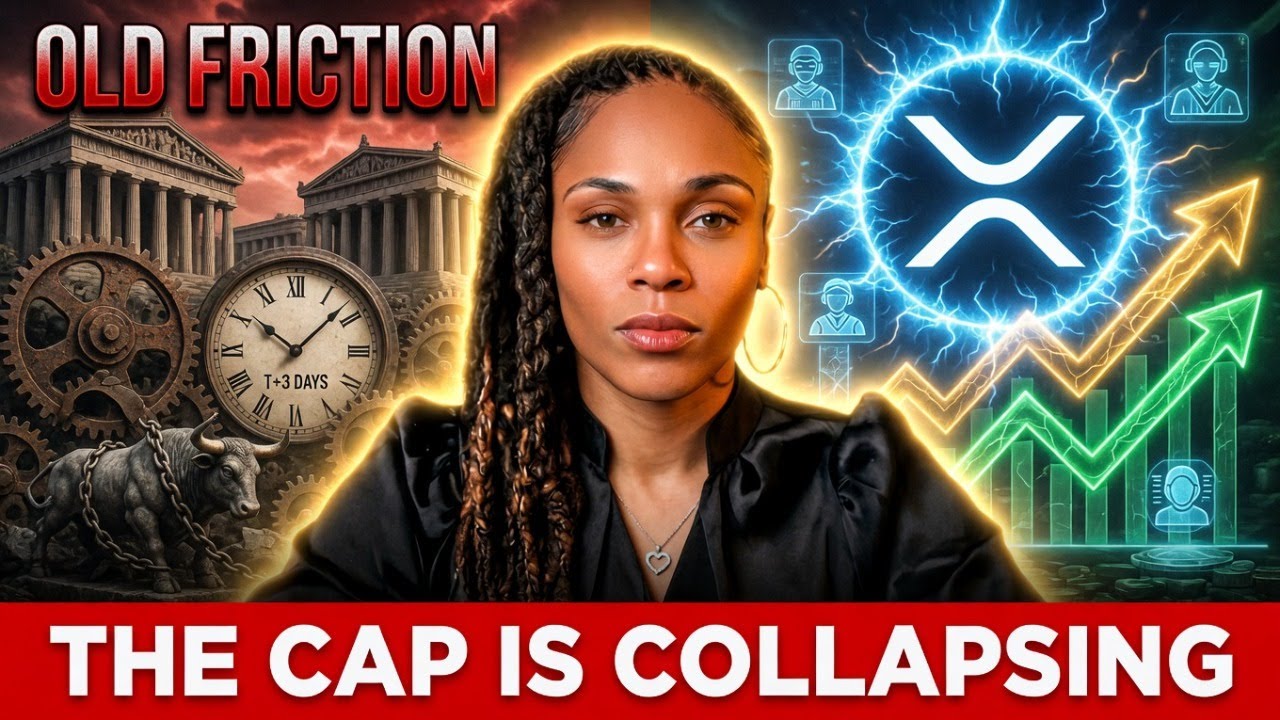
In this livestream‑style video, Kamilah Stevenson argues that the common criticism of XRP’s price potential—based on its current market‑capitalization—relies on an outdated view of financial infrastructure. She explains that market cap is not a fixed ceiling but a function of how much capital can flow through a system, and that the ongoing collapse of friction (through tokenization, blockchain settlement, AI‑driven agents, and 24/7 global banking rails) will dramatically expand that capacity. Using analogies such as the transition from physical bank visits to ATMs, and from traditional water‑tank heaters to tank‑less heaters, she illustrates how each reduction in friction historically increased the amount of money that could move, creating wealth. She highlights concrete developments: the DTCC moving to 24‑hour operation, the Global Messaging Network shifting settlement to blockchain, central banks tokenizing assets, and the Federal Reserve approving crypto‑native institutions. She also discusses practical steps for individual investors—using iTrust Capital Roth IRAs to hold XRP, HBAR, XLM, Quant, and other assets tax‑advantaged, dollar‑cost averaging, and the importance of proper account structures to avoid tax penalties. Throughout, she encourages viewers to adopt a long‑term, patient mindset, to educate themselves, and to consider coaching or community support for deeper financial planning. The overall message is that XRP (and similar assets) can far exceed current market‑cap‑based price targets because the underlying financial architecture is being rebuilt, opening a massive wealth‑transfer opportunity.
Chapters
Hey, it's Kamilah Stevenson, and around here we talk wealth. And, uh, this will be a good one. Go ahead and like the video as you come in and also subscribe if you have not already. We're gonna get into this. Um, I feel like I had an aha moment yesterday evening, and, um, I'm just gonna tell you guys, I have never— for my own conviction, I've never been more convinced than ever about where things are headed. And sometimes we get so caught up in wondering what everybody is thinking about this entire, um, market and tokenization, and there's just so much that's happening right now. But I feel like I'm clearer than ever on where this is headed and the, the possibility of, uh, where this is headed. And, uh, first of all, Uh, I see that, uh, what's going on? Blessings to all of you guys. I see you all are in here. You started your raw— I mean, your, uh, iTrust Capital, uh, Roth IRA. I love it. I love the action that you guys are taking to protect your future. And let me tell you, it's a big future. It is a very big future. Um, what's up guys? And I'm hoping that I am not freezing because I see myself freezing a little bit. Um, again, go ahead and like the video and, uh, send it out. Send it out to some people. Who need to hear this because I'm going to get into it. And I, and I can— I really feel like if you just journey through my mind and my thoughts on this, that you will become more and more clear about it, and you won't be restricted by the analogies that people come up with based off of how, um, how far they can personally, you know, see things. You know, I, I don't want you to be restricted I want you to expand your mind a little bit, and the best way to do that is to go back and look at the patterns of how technology evolves. Okay, I— once you see it, you can't unsee it. That's all I'm gonna tell you. I do see XLM has been taking off, right, and not making moves locked up to Bitcoin at this point. All right, um, we see it's a little bit of a, you know, cool off, a little bit of a pullback. So we'll see what that looks like. Um, I see HBAR is up 7% in the last 24 hours. SHX, uh, it did run with it, but now it's pulling back a little bit. Uh, it was up a lot more than that, but, uh, so yeah, uh, I was just looking at the, the, um, the prices just to see where we are. And hopefully you guys are not FOMOing into anything. I know you guys know right now I've always had XLM as my number 2. I've been very open about that. So I love to see it. I love when XLM, you know, breaks out. But I'm going to be honest, I really want to pull back because I have limit orders and I would really benefit from XLM the most off of, you know, a pullback. So anyway, I'm going to walk you through something that I was thinking about. What's up from the shop? What's going on? I'm going to walk you through something that I was thinking about. Oh, before I get into this also, Again, like the video, subscribe, and I want to say this is not financial advice. Everything I say is for educational and entertainment purposes only. And if you did not get a chance to see the live that I did Friday, yesterday, with Good Evening Crypto, after you watch this, go back and watch the live. We talked about some amazing, incredible things as it pertains to the market and cryptocurrency and DTCC. And just, it was a beautiful time. I love, uh, I love them both, um, Johnny Crypto and Abs, and we just had an amazing time. So please make sure you go there, watch the video, like it, you know, subscribe to their page if you have not already. Uh, what's up Corey? I see you was there. Um, it was definitely amazing. All right, so let's get into this because this is just going to— I, I can guarantee that, um, I try to simplify things like to the point where if I'm talking to my teenage daughter she, she will get it, okay? And that's what I'm going to, um, that's what I'm going to do for you. I'm going to make it easy and, uh, to understand and to comprehend so that you can set your own convictions, okay? I believe, um, I believe— I just hope we get another dip. I don't— you know, you never know for sure, but I was hoping that we would get at least a double bottom, um, or some type of black swan event. You can't plan for that, you just got to be prepared already. So I'm prepared for a black swan event as well. Okay, and thank you. I see some of you guys were there. Um, so, um, I want you guys to get this, and I, I really think you will. I, I am very convinced that XRP is going to in the future be very high. I, I am. I really am. And it's, and it's simple once you simplify it. And, you know, like, a lot of people again got all these arguments, and one of the greatest arguments is market cap. Okay, so, um, do I think XAI will jump with IPO? Um, usually they do, but most IPOs are going to have a big pullback if you haven't already. You know, if a lot of times if you don't invest in these companies— and that was this question right here— a lot of times if you don't invest in them through, you know, private deals, uh, you don't get the real upside. You know, a lot of the upside comes from getting in, in the private deals, right? And thank you so much, Purple Rain. I see you already giving Super Chats. You're always so kind. XLM, SHX, Z-Back, Gaining a little just means the conviction with DCA is paying off. Definitely not rushing, but the capital allocation is on my mind even more. I love it. Dip buying for sure. Thanks for all you do. Thank you so much. I appreciate you sharing this. And, and yeah, absolutely. Like, dollar cost average. When they do pull back, go ahead and buy. And I'm telling you, if you just sit tight and have some patience, it's going to pay off. I see we have some people that was in the show, so that's amazing. Now, So I'm going to debunk this because one of the greatest things that people say— and I'll get to some more of the chats because I want to get through this, because I really want you to understand, and I can guarantee you it'll be simplified. Everybody keeps saying that these assets can't go high like XRP just because of the market cap. Okay, I'm going to help you to understand wrong way to think about this totally, and we've seen it time and time again. First, let me just give you a quick definition of the market cap. I always try to say I don't assume that you understand this language, and I want to make sure that I explain it for anybody who don't really understand the market cap. So the market cap— cap is short for market capitalization— it is the total, the total dollar value of all the coins or shares of a particular asset combined, okay? So, um, it's, it's very simple how they, how they come up with this. So what happens is you take the price of one unit and you multiply it by the total number of units that exist. Okay, so let me give you an example. So if XRP is trading, uh, right now at a dollar, it's still around a dollar and 30 cents, right? Yeah, well, it's a dollar and 34, but simple math is if it's trading around like a dollar and let's say 32 cents. And there is roughly, uh, 6 billion XRP in circulation, then you multiply the price by the supply and that is the market cap. So right now that's coming out around 80— what is the market? 83 billion. So somewhere around $80 billion for XRP. So that's the number that most investors use to argue why an asset cannot reach a certain price, because they look at the price target that they maybe hear somebody, you know, say, okay, it's gonna be at this price target, and they do the math against the total supply, and then they, you know, of course respond and say no, because that will require the market cap to be larger than gold or larger than the entire stock market. And so that, that can't happen because it is just— that's illogical to them, right? So they'll dismiss that. And what I want you to understand What I'm going to help you to understand and explain in very simple terms is that, that math that they're doing is based on a framework that's about to be completely debunked, overridden, okay? Market cap is not a fixed ceiling, and that's the way they're looking at it, is like a fixed ceiling. Market cap is a function of how much capital can flow into an asset, and the capacity is about to be completely redefined by the system being rebuilt right now. Okay, so, um, so yeah, so I'm gonna help you to just get it in simple— like I say, simple terms where you can understand it in everyday language. What's up, y'all? All right, again, like the video. So let me, um, let me Uh, let me just, let me just start here, okay? Um, just because this is what I started to think about, and I want to bring you into my thought process on this. And I don't know, sometimes these examples just come in my head, and when I start thinking about the way things used to be, I start connecting the dots to where things are at the current moment. So Follow me. There was a time, and it wasn't that long ago in hindsight, where if you wanted to cash a check, you had to physically go out your front door, get in the car, drive to the bank. Then when you get in the bank, you gotta wait in line, okay? And I just went to the bank like 2 weeks ago, and I was in there 30 minutes. You gotta wait in a line, then you got to talk to a teller. Um, you got to sign your name on the piece of paper, you know, cash, go through all the process, and then you can walk out with the money in your hand. And the process took different time depending on how, how long the line was. I've been— I remember back in the day standing in long lines at banks. Okay, now, um, what I want you to really think about is that the amount of money that could move through any given bank in 24 hours was limited. What was it limited by? How many people could physically walk through those doors, which means that the system, um, had a built-in ceiling, and that ceiling was the friction of having to physically show up to make money move. There's no other way. You had to physically show up and make this happen. And also there's the, the friction was how many banks were built at that time, you know, because obviously as, as things like, um, French, you know, as they started to plant more banks, physical, uh, banks and buildings in your neighborhood, that restricted, you know, also how, how much money could move through the bank. Because maybe it might take you 10 minutes to get to the bank, maybe it might take you 20 minutes, maybe it might take you 30 minutes, okay. But when they start building them in your neighborhood, then you can go around the corner. So when they started to build more banks, of course now you have, uh, more places where people can physically go in and cash their check. So, and then now think about it, uh, the technology started, and I know y'all can relate to this because a lot of you all were there with this process going on. So then the technology started removing that friction piece by piece. And you watched it happen again. Some of you all are of course old enough to know this, to remember this, unless you're like just super young. Um, so first we got— I don't know what order it was. Was it direct deposits or ATMs? I don't even remember. But let's just say we got ATMs, okay? So now you didn't have to wait in line for a teller anymore. You could go to an ATM and cash your check in and get money out or whatever. Um, we had direct deposit, so you have a job or whatever, you can get money automatically into your bank and you didn't have to cash the check at all because the money was automatically sent into your account, right? And then we got— oh, do y'all remember this? When we finally got mobile banking where you could— now you could take that picture and cash your check. You know, I remember when that— I don't even know how long ago that was, but, um, time just flies. But Yeah, you can basically cash your check in 30 minutes, uh, 30 seconds. Okay, listen, while you sitting on the couch in your pajamas watching TV, okay? And then, um, we got instant transfers where you can now, uh, you know, a lot of stuff just started getting upgraded. You got Zelle instant transfers between accounts where you can move money boom boom boom boom fast, okay? And then Um, let's see what else, what else. Any, any ones I'm missing? Put it in the chat. Like, am I missing something? How else, how else could money start moving quick as we started to like, uh, move into this like technology? Those are the basic ones, right? Okay, and while y'all think about that, let me do this Super Chat. XRP, XLM, and Quant are the future. I love it. God bless you for all the information you provide. Thank you so much, @Tallo. I love this, @Tallo XRP. All right, so would I buy XLM at these prices? I would, because I buy it— I'm buying at prices for the future, a dollar cost average. Like, so yeah, I don't mind buying it. Remember, XLM was at like, what, 60 cents, um, when it— when it went to the last all-time high, the last high that it went to. It was like at 60, 60, almost 70 cents or something. So it's still down even though it made a run. It's still down, you know. Like, I don't get caught up in all the like, oh my God, should I buy it at this price? And I, you know, like, I'm buying, I'm dollar-cost averaging, I don't care. Like, even in the stock, there were times— think about when you were buying Palantir when it was like, you know, $10 and $15 and $20, and say it hit $20 and it's like, are you still buying Palantir? It's at all-time highs. It's okay to buy at all-time highs when you're looking 10 years out, okay? Yeah, we like to get a good deal. Now, if you swing trading, that's different, but that's why I say it's so easy to be an investor because you can buy them at different prices technically if you looking far out enough, okay? And you got a game plan, okay? So like maybe you're not gonna sell, maybe you're gonna borrow and use it as collateral, you know? Um, thank you so much, Deshawn. I appreciate this. I just started a treasury for my business and church. I love to see that. Would like to, uh, get to, uh, our church for a seminar. I love that. Keep talking to us, sis. This is our repartitions Okay, I see, I see. And I appreciate you, um, giving this, uh, this Super Chat. And yeah, reach out to me, you know, uh, I love working with, uh, the church. And, uh, you know, whether it's ministering or just giving the information or whatever, I think, you know, it's God's people who need to hear the truth anyway, because most people in church, they don't have enough investments, if you ask me. So thank you, I appreciate this. Um, so Anyway, we're going through the, the different, uh, technology. I like, uh, Flare as well. Uh, Black people so misled about slavery. I, I hear you on that, right? Uh, XRP is not going much lower, somebody said. Um, so we got some people who don't think XRP is going lower. Um, it was at 14 cents before the news. Yeah, so if you was heavily invested in XLM, you made a nice little, uh, upside, especially if you were selling it now. Okay, so as we, as we started to evolve with the technology, right, what happened is— this is what you got to pay attention to— what happened, um, every single time the friction came down with, with what I just explained with the ATMs, or being able to, you know, take your phone and get, you know, put money in your account right away, every single time we reduce the friction the amount of money flowing through the system went up. Okay. And the more money that could move, the more wealth was created, the more transactions happened, and the bigger the system became. Okay. So this is what I started to think about, um, when I was just looking at the way people talk about market cap, because I was just thinking about that, like, wow, there's been so much friction removed. I remember being able to physically walk into a bank. And then my mind started going and thinking, wow, there was a restriction on how much money could be put inside of those banks just because of the simple fact that people had to physically go in and cash their checks and get money out. So I'm sure there was a limit to how much money was flowing in and out of the system. And, and this is, this is— and I started to put two and two together, like This is the whole issue with market cap, because the way most people frame market cap is like it's some kind of permanent ceiling that an asset can never break through. And honestly, that thinking comes from a place of believing that the system that we have today is the system that we're always gonna have. But the truth is that market cap has never been a fixed number. It has always been a reflection of how much friction exists in the system at any given moment and how much capital can flow through that friction. So when friction collapses, the capital that can flow expands, and the cap that any asset can reach moves with it. And that is what has happened every single time technology has removed friction from a financial system throughout history. If you go back and look at it, and right now What we're watching is the friction of the entire global financial system collapsing at a scale that has never existed before. And most people are completely missing what is happening because they're too busy watching short-term price action to look at the architecture that's being built underneath them. The American stock market itself is being rebuilt to run on public blockchain rails, and the institutions that clears trillions of dollars in security uh, securities transactions every single year, no longer is experiment— or is no— is about to experiment with blockchain. Uh, well, they're not experimenting, they're actively building toward it, uh, for future, uh, architecture. And I was just looking at— because what is the date on here? I was just looking at a post, um, June 28th: DTCC plans to operate 24 not 24/7, 24/5. Okay, um, on— so now they're going into like 24, I guess, um, Monday through, uh, Friday. Okay, but now 24 hours a day, so all, all around the clock except for weekends. Okay, and when you start to think about all of this, remember, um, just to remind you, the Global Messaging Network that connects 11,000 banks across every country in the real— in the world is now moving its settlement layer onto blockchain infrastructure within the next year. And then the Federal Reserve has approved the first crypto-native institutions to operate inside of federal banking perimeter, which means digital asset companies now hold the same regulatory standing as traditional banks. Okay, then you got real-world assets like treasuries, money market funds, and corporate credit. They are being tokenized and migrating off legacy chains onto purpose-built settlement infrastructure at a rate that has reversed the flow direction in just 30 days, if you're paying attention. And then let's not forget, you got central banks that are investing in, um, buying gold at the fastest pace ever. Why? Because they don't trust the system. You got tier 1 banks— Europe, Asia, Middle East— they are disclosing positions in digital assets through regulated trust structures, which I would say They're some of the most cautious capital and they're still moving anyway. Every single one of these is friction being removed from the global— global, remember, this is global. Okay, so whatever country you're in, this is a global transition and the friction is being removed globally, international to international, and the pipes that carry capital are being rebuilt to carry significantly more significantly faster and significantly at lesser cost. And I need you to understand that because when the pipes change, the cap is going to change. When the rails become faster, the volume that flows through them are going to expand. It's going to rise. When the friction starts to disappear and we limit that friction, the limit on what's possible disappears. So you cannot look at the market cap today and sit and think, oh, well, how much market cap would that take? How much? No, the less friction we have, the greater expansion. So when someone comes and talk about this argument that XRP cannot reach a certain price because the market cap is too small, what they're really doing is they're using a framework from a system that's about to be obsolete to tell you what is possible in a system that has not even fully been built yet. How can you tell somebody what this price is going to be when you're not aligning with the future system that's being built. What they're looking at is they're looking at the old plumbing and they're telling you the cap of the old pipes is the cap of the new pipes, and that's how this is about to work. That's not how this works. That's just like, you know, you know, when you have a phone and you have these updates and new updates, and remember when we used to text, right? We couldn't send the emojis and the faces and all of that. We could only send words. And that's like saying the updated version is restricted to the old version. It's not. It expands. Now we can send the emojis and the faces and all of that. Um, and so we have to understand that friction is being removed. And I'll get to some more of the Super Chats. I want— I want to give you an example because I learned— I didn't, I didn't know about this, but I learned about this when I was shopping for new water tanks, water heater tanks. Now y'all know, and most of you all got the old, probably steel. Y'all know um, the water tanks in your basement, those big old, you know, tubes or whatever, right? Think about those for— and I'm about to probably give new information that most people don't even know the technology is even out there. And they're water heaters. And I know y'all know the, the big old tanks, water heaters. So the, the old water heater, if you look in your basement or whatever, um, is— it's a big tank that sits in your basement or in a closet somewhere. It's huge. It holds about 40 to 50, maybe some people— it hold more 70, 80 gallons of water. And what happens is it keeps the water hot all day long, every day, 24 hours a day, whether anybody is using it or not. Whether anybody is using it or not, it keeps it hot. So you're paying to heat water that you might not even use. And then the moment all of a sudden too many people in the house— let's say you have company or you got Chris and people spending the night Now they use all of the water and they try to take a shower at the same time, and guess what then happens? The tank runs out. Now you get cold water, okay? That's what happens when you use too much of the water, okay? So the whole system is built around storing a limited supply just in case somebody needs it, okay? And if too many people use it, it runs out. Now, I don't know if y'all know that they got new water tank systems, and they've had it for quite some time because I was introduced to it years ago, years ago, and it's called a tankless water heater. Did y'all know that existed? Let me know in the chats if y'all know that existed, right? And I'll tell you what the tankless water system heater is like. Thank you so much, I appreciate this. Will crypto crash with the reverse carry, uh, wait, buy, uh, if the reverse carry trade unwinds quickly? Um, yeah, because it's going to be a lot of selling pressure, um, in order to unwind their trades, and, and they'll have to now pay the debt back because it's too expensive for them. So absolutely it would if, if that happened. Uh, thank you so much, I appreciate this. Uh, Ingram, you're special. Doctor, I appreciate this, you guys are awesome. Um, let me know, did y'all know that there was a waterless heating tank? I didn't know, I didn't know. I've lived in places that had them. Yep. So yes, I didn't know. Okay, so some of y'all know, some of y'all don't. Tankless Uh, was just talking about that today. So here's how the tankless, um, uh, water works. It's a small box, it's about the size of a briefcase, and you mount it on the wall. Like, and because when I got the show, I was like, this is interesting. Like, so you mount it on the wall, um, it doesn't store any water at all. The moment you turn on the faucet, the water flows through the box and it gets heated instantly as it passes through., and it comes out hot, um, at the tap. So you don't have a tank, you don't have no wasted water, you're not paying for water that you're not using or anything. It only uses energy when you actually need the hot water, and it can serve the entire house at once because it's not limited by what's sitting in a storage like them old tanks. That's exactly what tokenization is doing for the financial system. The old system is the water tank. It's big, it's slow, it's wasteful. You got, you got water sitting there that you had to heat that maybe you don't use for a while, and it's limited by what's only sitting in that storage built around the middleman, right? Who maintain the tank and decide who gets to access to the hot water, if you get what I'm saying. The new tokenized system is the tankless heater. Small, fast, instant, available the moment you need it. No middleman sitting between you and the value, right? Scales to serve anybody, everybody at once. Why? Because it's not limited, um, by what's locked away in the tank. Okay, same outcome. So when you think about like even the vostro and nostro accounts, having to lock money away, locking capital away, that's costing you a lot of money that you may not even use. We got to have these, uh, these currencies in these banks just in case we interact with them. Okay, I'll give you another example. Think about, um, yep, it does not run out of hot water at all. So it, it doesn't want— it's not limited, and you're— it's not wasteful. You're not using— because again, when you are, uh, yes, wow. So right, when you're using those tanks, even if the tank is heated and it's— you got one person in the house, if you're not using all that, that water, you still paying for it, right? Just like in the Nostro and Vostro accounts, okay? And so, and who would have ever thought, thought So you gonna tell me when the man come and say, here's the waterless tank, and then you try to say, no, but it's gonna be capped at that. So now you're putting limitations and restrictions around the waterless tank, and you're, and you're reducing it to the tank. It's even though it's a new tank, a new system, it may— it makes water flow limitlessly, but you saying, no, only this much water from the old tank can fit in that tank. That's what people are doing with the market cap, and they don't realize that that's what they're doing. Now think about Apple also. If you tried to explain Apple's trillion-dollar market cap to somebody in like 1980, they would have laughed at you. They would have laughed at your face. Why? Because the math didn't work inside their framework, because their framework was built around physical brokerages, paper certificates. That's the old way. Slow settlement, limitless access. Their framework is built around the exposure of the old. But then the framework changed, and now we got computers. So computers come along, now you got online brokerages. You don't have to again walk into brick and mortar. You got online brokerages and everyday people clicking a button, click to buy something, right? So they were able to buy Apple, the, the expansion of that, because technology changed. And they weren't limited to have to, like, deal with, like, paper certificates, physical brokerages, slow settlement limit. You know, we're limited. We're even limited when— because it's closed, okay? It's not open right now. So there was now, again, quicker access to money. So the friction of buying and selling stocks collapsed completely. And then Apple's cap move to places that nobody in the '80s could have ever imagined. Why? Because the system that determined what was possible had been rebuilt. The same thing is happening right now with digital assets, except the rebuild this time is bigger than what happened even with the stock market. We're not just changing which asset is valuable, we're rebuilding the entire infrastructure underneath the global financial system. And the assets that sit at the center of new infrastructure are going to capture the value of everything that gets built on top of it. It's going to capture it. So man, what, what, what makes money move faster? What makes real-time settlement, you know, possible? Okay, what makes that right? HBAR, XLM, XRP, you know what I mean? And also let I didn't even add this part. Who's on the other side of that trade? Who's on the other side? Do you know who on— you don't even know. You could be interacting with an agent. We are headed into a world where AI is going to be transacting on the blockchain rails on behalf of humans and on behalf of other AI agents. They're going to be moving money, executing trades, paying for services, all in real time. 24 hours a day without humans being in the middle of the transaction. Do you guys understand what this is about to look like? The volume of economic activity that happens when AI agents are participants in the system is going to absolutely dwarf— it's going to dwarf anything that we have ever seen in human-only finance. Because AI don't sleep, y'all. AI don't get sick or take breaks or anything. And I just saw a video the other day of a little robot cleaning up the house. I was like, I need one of them. But then somebody said, yeah, they had a government watching. And I was like, oh, you right about that. I don't know, what if they plug a camera in there? So I had to take a step back. I said, I'll let— I let my kid— my teenagers still work work as the robots. Okay, but those AI agents, you got to understand, they're not going to be using legacy banking rails. Why? Because the settlement times are too slow, the friction is too high, the cost is too expensive. What do you think they're going to be using? They're going to be using the rails where, um, that's built, you know, for fast, deterministic, low-cost settlement, which is the demand layer that we need to see coming. So when I think about the cap of XRP, and I really spent time pondering on this, and I'm trying to make it make sense, make common sense. Don't come to me with no market cap stuff about XRP in the future. Why? Because the same way you can't prove to me that the water tank is the restriction of the waterless tank, same thing. Right? I'm not thinking about today's number because today's number is a reflection of what the old system— I'm thinking about what the cap looks like when AI agents are economic participants on the blockchain, when securities are settling, settling on the blockchain, on the public chains at scale, when global banking messaging is routing through blockchain rails, when tokenized real-world assets are running into the hundreds of trillions of dollars. That is what I'm thinking about, right? So the framework that says that these assets cannot reach certain levels is based on a system that is about to be completely obsolete. And the people who are still using that framework to make decisions around the new system are going to look up in a decade and they're going to realize that they were doing the math wrong. They was doing it from a world that don't even exist anymore. Wake up. Yes, fast settlement infrastructure is going to blow your mind. In the— it's going to blow your mind. You just have to have patience for it. That's it. That's all. You just got to have patience for it. And these are these arguments. And I would love for somebody to come and tell me, oh no, Marky, after, after hearing this, I would love for somebody to come to explain to me why the waterless tank is going to be restricted to the tank that holds the water. I would love— tell me how that's gonna happen, right? Try to, try to prove that to me. Try to prove to me that when all of a sudden things go digital, like with Apple, where you can press a button now to move money, you tell me that money is not going to be moving in great proportion now. Right? Try to explain to me that the banks now, um, are still capped off at the same numbers where you had to physically go in the bank and cash your check. And then now you come and tell me, oh, you can cash your check in 30 seconds on your phone, or you can go to an AM. Tell me that we're going to have the same cap for how much money is flowing from the physical restrictions. No, you don't even make— that doesn't make common sense even. It's not even common sense at this point. I'm trying to debunk it to where the old system, trying to use the market cap for the old system, doesn't make common sense. Okay, and you know, y'all could tell me if I'm wrong, but this is how I'm thinking about it. And, and I try not to be super deep about this stuff, but it's just making— I'm just trying to use common sense. The friction to me is collapsing. And that means that the pathway is opening. And when the pathway opens, I think the cap goes with it, right? And honestly, the people who can see what's happening right now, who's going to position themselves for the system being built instead of the system being replaced— you can, you can, you can align with the system that's being replaced. Go ahead, go ahead. But your math is going to be wrong. You're, you're, you're going to underestimate what's going to happen in a decade. And that means you're not going to be positioned for it. But the ones who are ready, they're going to be on the right side of this. They're going to be on the side of the biggest, the largest wealth transfer in modern history. That's why I'm telling y'all it's the biggest wealth transfer in modern history, because there's people who sliding in on that because they do actually got some common sense, okay? And if you just pay attention to the architecture instead of the headlines you will be positioned too. Okay, now remember, as I always tell y'all, positioning, uh, for the new system is not just about which assets you are choosing to hold. I— when I got on here, I saw somebody say, man, I opened up my iTrust. I love to hear that, because you got to understand, even with the right assets, you gotta be— you know, you gotta, uh, it's about what vehicle you put those assets inside of. And that's where most retail investors, they're going to make the biggest mistake of their life without even realizing it. Why? Because when the cap moves, and it will, and the assets are repriced and the moves are sharp, um, the way they're likely to happen when the architecture finish— finishes this process of assembling underneath them, right? You don't want to be giving 30 and 40% back to the RIS— the RIS— the IRS. I don't even want to say their name right. That's how frustrated I am with the IRS because taxes is— oh my goodness. I, I told you guys earlier I was on a meeting with my, um, because I'm going through some tax amendment, but I was on a meeting with my, uh, my tax, um, attorney for like, man, 3 hours earlier this week. But the reality is you don't have to. If you do this the right way, you won't have to give your money back. Um, you can have certain accounts that are specifically designed for you to not have to get that money back. And so iTrustCapital is one of the platforms that I use for digital assets. It is, uh, the only one that I use, as a matter of fact, for real native, um, XRP in a Roth account. Um, it is a retirement structure, and the reason it works is because it holds real XRP, HBAR, XLM, Quant, gold, silver, um, along with a lot of other digital, um, assets. And it's all inside of a tax-advantaged retirement account. So when the friction collapses and the cap moves and the assets again reprice, every dollar of appreciation will stay yours if it's in a Roth account. They also— iTrust Capital, if you use the link in the description, they do give you a $100 funding, um, bonus to fund the account. They do have stocks and ETFs coming, so you can use that money as well. And you can rotate, you can sell inside of a Roth IRA. That's the part that I don't think a lot of people know, is that if it gets to a certain price and you did want to sell some of it, you can sell and you can reallocate into other um, assets in that account, right? So, uh, it is totally, totally up to you. I want to make sure I didn't miss any, uh, I want to make sure I'm looking at some of, some of y'all, uh, poor All Gamble. I'm looking at some of y'all's, um, comments, and I'm hoping it is, uh, that, that you guys understand why market cap Um, rails are there in place, and you can think what you want. You can think based off of the old, um, you can think based off of the old system how things are going, but, um, but I'm telling you, this thing is about to turn. Deepfakes about to be norm. Meeting and interacting with people about the new currency. Yes indeed. I'm happy y'all getting it. I see a lot of you guys are getting— oh, I didn't even know you was here. Hey Johnny Crypto, what's going on? Good afternoon, cryptomaniacs! And y'all know we some, uh, cryptomaniacs. I love Kamilah Stevenson. She is so right about the upcoming greatest wealth transfer coming. I love to see it. Thank you so much, Johnny Crypto. I was behind on all the comments. I wasn't even looking at them because I'm so invested in what I'm trying to explain to you guys. So you all do not miss this. Thank you so much, Purple Rain. Uh, did you say IR stress? That's what it is. That's what I said. I said I don't even want to say it right. IR stress. That's exactly That's exactly what it is. I appreciate your Super Chat and pointing this out. I don't even want to say it. I'm gonna get to, uh, all the Super Chats. Uh, just started in January and just hit my goal. Yes, I love it. 10K XRP, now it's 20K. I haven't received an email for waitlist yet. Um, just want to miss the 24 mark. Make sure you, um, check your spam account. Um, uh, I will— let me, um, screenshot this too just in case, because at least I know your, um, your social media page. Uh, but check your spam account because it may have went into your spam account. I've been telling everybody to also check their spam account, right? I, uh, Internal Revenue shysters. Yes, you do not want to be giving back your money to the IRS. Let me get to some more of these. Uh, thank you so much, I appreciate this. Guess I'm gonna have to be the one to straighten you out about the water heaters. Yes, absolutely. So it's time to upgrade. Y'all got them— they got the waterless heaters, boy. They got the waterless heat. And at the time, I don't remember how much they were. They was a little bit more expensive, um, but, but worth it. But worth it, you know, especially if you're anybody who run out of— like, you know, I know a lot of people who are like, um, they run out of, um, you know, a lot heated water if they have too many people in the house. So, um, I've never had that problem because, uh, from day one we've— we had two— we have two, um, big water heaters, um, for the house. So Uh, Dwayne, thank you. I appreciate this. I just came from a Blazers and brunch men's meeting at my church, and I had a conversation with my accountant and financial advisor. I told him that, um, I did take some profits, but most of it is my iTrust Capital Roth IRA account. Love it. And a lot of people— yeah, a lot of people don't know that there's people who sell in their Roth account, and it's easy for them. Why? Because they don't have to pay taxes, so they're not thinking about— you know, they can even buy back in, you know, if it gets back lower. So they, they're not thinking about— a lot of people trade in their Roth accounts as well. So, um, yep, got some iTrust and some on cold storage. Yes indeed, diversify. Got some more. Of course, get your Sovereign on your cold storage. I do have a Tangem account. I mean, uh, I have a Tangem account along with, uh, like maybe, uh, 11 other accounts. I have a Tangem link in the description as well if you do want to get a cold wallet, if you don't have a cold wallet. And if you, you might feel a little overwhelmed about it because— and I'll get to the, uh, I see a few more Super Chats. You might get a little overwhelmed because of the seed phrase and all of that. Tangem is very easy. If you understand Apple Pay, you'll understand Tangem. It's easy to connect to your phone, and your cards are your seed phrase. They are basically your keys, like the keys to your house. So it's a little easier of a setup for people who are starting off. So if you do not have some of— if you still have it on exchanges and you need to move it into a cold storage, make sure you do that. Also make sure you, of course, open up a Roth account and move some into that Roth account as well. And also, for those who just don't have no idea how to apply any of this, any of what I'm saying, you know, uh, with the Roth account opening up, structuring it, your asset protections, um, you know, if you, if you just need some, some help and some guidance with that, and you need someone to look at your situation, your accounts, your position size, um, your timeline, all of that That's what my one-on-one clarity calls are built for. Uh, when we— when you book a clarity call, what we're going to do is sit down, we're going to look at everything you have and map out, you know, the moves that make sense for where you are and where you're trying to go. And, and you're going to walk away with a, a real plan, um, that you can take action on and structure everything and protect everything. So the link is in the description for that. And, um, I'm not always going to be doing one-on-ones. Um, I'm I'm restructuring everything. As some of you all see, you all have been getting my emails. My waitlist is open, and so things are going to change very, very quickly. And then, um, also for those who want to keep building alongside a community of people doing this same work every single week, my coaching community is available for ongoing coaching, weekly support, accountability, resources, trainings, a room of wealth builders who are all moving in the same direction together and winning at life. Everything will change. So what I'm telling you now, I can't promise you next week things will be the same, uh, way, right? Um, things are changing in real time. I have a team working, uh, diligently behind the scenes to reconstruct everything. Okay, so again, like the video if it added value and subscribe if you have not already. Uh, continuous— yes, I've been checking spam. Okay, um, do me a favor, uh email me at— email me at info@healthyandbetter.com. Email me at info@healthyandbetter.com and, um, say this is continuous on, uh, so I know who you are. And, uh, and then give me your real name so I can know who you are as well. And I'll make sure I get— I get your email over to my team so that we can get you squared away, right? I appreciate you as well. All right, y'all, so, um, Let's see, let's see, let's see. What's up @744? I see you in the place. Dwayne, what's going on? Dr. K set me in the right— uh, on the straight and narrow. I love it. My one-on-one with her was on point. She loves helping. We went over time because she wanted to help. And, uh, absolutely, you know, I'm— that's what I'm here for, is to add value. And honestly, I want to make sure you walk away with clarity. So if you do get me on that one-on-one, trust me, you are going to get the clarity you need. You're going to get the help that you need. And, um, I'm gonna go over and beyond to make sure that that happens, okay? So because it's not even about the restrictions or the limitations and time and all of that, I really want to make sure that you walk away with a clear plan because this is your livelihood, this is your family, this is your, you know, these— this is how you're setting things up for your children and your grandkids. And that is important. If it ain't nothing important in life, that is important, okay? Is what you leave to your family. And the reason why is because guess what? Most of us are in situations because our families didn't do it the right way, and so we had to like go over and beyond to figure out how to do this the right way. How do we position ourselves and get ourselves in, in alignment with, uh, where our future is headed? You know, how do we get financial freedom? We've— a lot of us had to struggle, right? Because— and it's not because our parents didn't love us, they probably just didn't have the information. And my people perish from a lack of knowledge. And that's just the truth. And that's why I try to get on here and give you guys the knowledge in a simplistic way so that you can understand. The water tank analogy is perfect way to explain it. I love it, I love it. And that, and that came to me actually, um, because originally I, you know, all I was really thinking about is just the physical aspects and how we've changed with technology. And if people can just get it that in a very simplistic way, then it can make sense to them and they can understand that, hey, the— this, this thing is going further than probably what I can imagine. And the caveat to that is, which I'm going to continue to talk about, is the patience that you develop along the way and the personality that you build that you can align yourself to be able to govern well over your resources. Okay, and, um, this is an easy— this is something very easy because I really do think because of how far we're headed in the future, I really do believe a little bit will go a long way. So don't feel intimidated. If you feel like you don't have enough, just start with what you got. A little here, a little there, a little here, a little there, and you will look up. And those little steps, they add up and they matter. So I don't want you to feel like this has to be overwhelming. Get positioned, you guys. This is going to be the greatest opportunity that you'll probably ever get in your lifetime. For this level of resource to be able to flow into your life. And, um, the decision is not just yours alone. It's not. Think about your family. Think about your children, your grandkids, your great-grandkids, your great-great-great-great-grandkids. Think about them, because the decisions that we make, they are not for ourselves. We don't need to be self-absorbed all the time, right? I mean, we can enjoy ourselves, enjoy our lives, Um, but set them up right because some of you all weren't set up right, right? You got the information, so, um, the only thing you have is left— or the only thing that's left is the choice to act on it. And that's all I'm telling you to do is to act on it and to do it very slowly and consistently. And I guarantee you, you'll be blessed on the other side of this. And as always, I want you to stay wise, stay wealthy, and I'll see you in the next video. Peace out.









