They Pay ZERO TAXES: The Hidden Rulebook W-2 Earners MUST Read
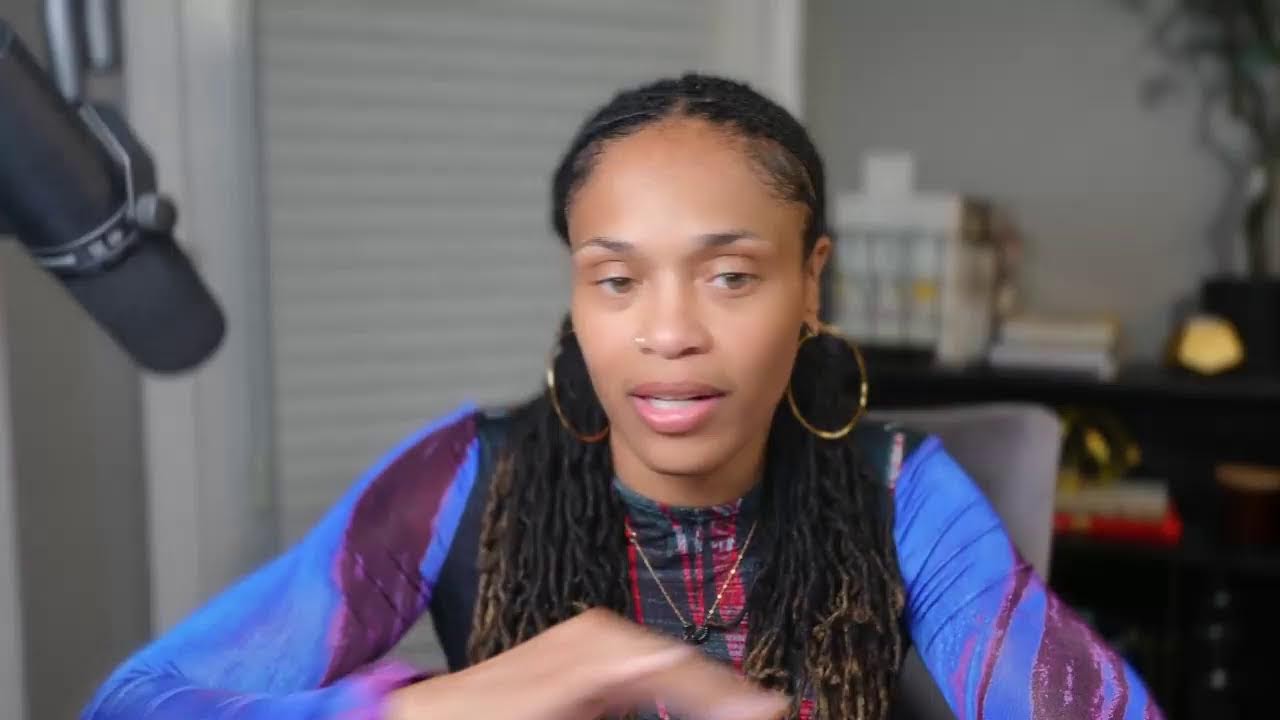
Kamilah Stevenson explains why wealthy people pay less tax than W-2 earners: they use business deductions, depreciation, capital gains rates, and strategic debt instead of earned income. The tax code is public, she says. The wealthy just read the manual.
Chapters
All right, what's up, what's up? Um, we're gonna talk about a topic that so many people have requested me to talk about, and, and honestly, this topic makes a lot of people upset. And so I'm going to help to, um, bring some clarity. And, uh, first let me know where you from. Hopefully my, my internet is— I saw a little bit of, uh, stillness in, in my video, so hopefully this, this goes well. Go ahead and drop where you're from, and if I have to— I'm hoping my Wi-Fi— let me know if you can hear me and, uh, drop where you're from. We gonna get into it. I don't have a setup. I usually have one of my monitors is, uh, acting really, really crazy. What's up from Michigan and Las Vegas, Alabama? Um, hopefully you guys can hear me, uh, since you're answering that question as well. I want to get into a topic that causes so much good. Thank you so much, Foxy Jetta. Um, man, so many people are really upset at this issue of taxes, and I want to put you up on game and help you to kind of understand how to, uh, how to play the same game that, that some of the people maybe you're upset at is playing. And, uh, by the end of this, um, man, you're gonna, you're gonna be so enlightened. You're gonna be so enlightened. Like, um, these, these are the type of rules that can really change the trajectory of your entire life. Okay, all right. Uh, Shreveport, what's going on? To Dallas, Texas, what's up? Um, so hey, Stephen Lee, what's going on? I want to, um, put you up on game. Um, you know, we got to start playing a little bit of chess, y'all. We ain't playing checkers, right? Cleveland, Ohio, what's going on, everybody? Um, if you plan on being wealthy, you better understand this a lot. Now, I'm not an accountant, but I work with, you know, tax teams and lawyers, and I've learned a lot along the way for business. And, um, hey Pastor Lori, what's going on? And, um, oh, for my members, I see some of my members in here. I will be, uh, doing a, a live after this, um, and, and I'm going to talk about one of the principles, uh, that, um, that God shared with me to help me to, uh, build, build my portfolio much better and build wealth along the way. So, uh, stay tuned for that. It will be, um Uh, it will be recorded so you can see it later on as well, but I'll be doing that in a little bit of Q&A. All right, I want to get into it because I want to make sure that everybody understands the game plan and the reason why I'm doing this video. Yes, yes, I'll be there. And the reason why I am, uh, doing this particular video is because somebody left a comment and they were really upset. And of course this happens all the time, people are really, really upset chat. Looking forward to the membership live. Yeah, I'll be on. So if anybody isn't a part of my membership, uh, make sure you join before then, uh, because I'm gonna be going over some powerful stuff. Oh, by the way, if you are in the S&P 500, if you're in the stock market, if you got shares, I mean, you making money, okay? All-time high again, S&P 500. I think it rose around 1.2% or something. Another all-time high, second, second day straight. Uh, I believe, um, um, the, uh, NASDAQ all-time high. I mean, things was popping today. Everybody making money. And as somebody said, like, if you ain't making— if you're not making money, if you're— if your portfolio in the negative, something ain't right. All right, I'm starting to understand that H&R Block probably wouldn't be a good fit for my taxes. Yeah, I'm gonna— you know, uh, first of all, I want to say, um, I'm not your financial advisor. I'm not telling you what to do with your money. I'm not telling you how to invest. I'm not an accountant. Um, everything that I say is for educational purposes only. I'm just sharing some of the, the principles that people who build wealth, they live by. And if you're ever going to get super wealthy, I suggest you start to live by these same principles because you will save hundreds of thousands and millions of dollars if you, if you think like this and if you understand this. Okay, so, uh, I want to make sure that it's, it's very clear to you, um, But as I start to talk about some of this stuff, you'll find yourself kind of understanding what it is and, and understanding that, okay, I need to shift the game plan. All right, so again, hit that like button as well. Uh, if you're not subscribed already, please go ahead and subscribe so you can get notifications. Uh, I really want to get through this because again, this is something that really upsets a lot of people. And I saw a comment— I see a lot of comments on taxes because people are upset that wealthy people are, uh, are— don't, don't pay as much taxes, okay? It's just that simple. And I saw a comment where someone says, you know, why do they tax the poor more than the rich? Make it make sense, okay? And so I want to make it make sense. I want to make it make sense to you so that you can understand, um, because at the end of the day, uh, I'm trying— everything shot up, but Disney took a nosedive. Yeah. My auntie wouldn't even try to enlighten us. Um, at the, at the end of the day, you know, we, we got to make sure, you know, that we're, we're saving money, okay? We're especially when we're getting, when we're getting wealth, all right? So again, I want to make it make sense, um, because it's not that, it's not that the rich are getting taxed less. Hear me out, okay? If you can just understand this mindset, okay? And And before I even start, let me just say this, like, there's— there's like, wealthy people are not bad. If you think wealthy people are bad, you're not going to be wealthy, because why would you want to be something that's bad? Okay, there are bad people who are wealthy, and there are bad people who are not wealthy. There are bad people. There are bad and good people. Okay, this is not about, you know, oh, wealthy people need to pay their fair share. And you know, some people just get so upset, but I really want to sober you and help you to understand, because I guarantee you that if you make a million dollars, you don't want to give $500,000 to the government. That's a— come on, that's a no-brainer. You're not going to get wealthy and all of a sudden say, yeah, you know, I want to stick to the plan of what I was trying to get wealthy people to do when I, I didn't have no money. You know, you're gonna change your mindset too, trust me. Okay, if you ain't in their shoes, you don't understand. Why would anybody want to work hard and pay 50% tax? Okay, so I want to make it make sense. It's not about the tax the rich getting taxed less. It's just that they understand the rules of the game, okay? And I want you to understand, if I— again, if I build a $100 million or $500 million estate, every, every bone in my body working, every sacrifice, why would I want to hand it over to the government knowing how wasteful they are with money? They are wasteful with money. They're $35 trillion in debt. They spend recklessly. They fund things I don't believe in biblically. So no, I don't trust them to manage my money better than I do, you know what I'm saying? And better than my team of experts do, okay? I'd rather use that same money to hire people to get a charity and to build something that feeds families instead of bureaucracies, okay? So, um, yeah, Vincent said amen. So I, I just want to help you to understand this a little bit more. Make sure you like and subscribe again, okay? Now let me break this down. All finances, whether you know it or not, I'm telling you all, this will change your life if you just understand this. Please just open up your mind for a minute and just be flexible and adaptable. All finances, every dollar that you will ever earn in this life comes down to just two things. It's just simple. Let me just simplify it, okay? What you make and what you keep. There it is, two principles: what you make and what you keep, right? And when you're trying to build wealth, there is no bigger, uh, threat out there than taxes. It's just that simple, okay? If you don't understand how they work, you're just gonna be in trouble. Most people are obsessing over the first part. They chasing the higher income. How do I make money? But wealthy people have learned to master the second part, is that when you build money, now you got to protect what and keep what you've built. Okay, so taxes are built— hear me, this is— this has nothing to do with nobody. Let's take everybody outside. Taxes are built to punish labor and reward leverage. Okay, if all your money comes from a W-2 job that's called earned income. Nothing wrong with that, but I want you to know it is the highest tax income in the country. But if your, uh, if your, uh, money, okay, your income is coming from assets ownership, uh, debt leverage, okay, um, that's strategic income and that's taxed the least. So let me, let me just give you an example. Think of the tax code like the rules of the road, okay? Look at the rules of the road, right? If you get us— if you speed and there's a, there's a speed limit, right, for the road, and if you're speeding, then, um, let's say the speed limit is like IRS rules, okay? If you speeding every day, you're gonna rack up tickets. Now you're gonna be paying, right? And you can be mad at somebody else who is not paying that many tickets. Why they ain't paying all the tickets? But that's because they're driving within the rules. They got rules, okay? Now you could do the same thing, you just gotta learn the rules of the road. And, and you might be like, oh, why I keep getting a ticket? Maybe you're not looking up at the rules of the road, maybe you're not looking at the signs, you don't know the rules. And the problem is not them, but you don't know the rules and you don't really know the— that you're living by these rules, okay? So you're kind of— you may be unaware if you're upset about taxes. Okay, so it's not about taxes, it's not about punishing the poor. I'm not saying that don't do this in the midst of it, I'm just trying to help you to think outside independently of it. It doesn't punish the poor or protect the, the rich. There's just a rule book for how money flows, and if you earn it the wrong way through only taxable income, you're going to pay the highest price. It's just that simple. And if you earn it the right way through ownership, through business deductions, uh, through investing, you're going to be able to keep more of it. So it's not that all the rich are cheating. I'm not saying it's something out there that's doing, you know, dirt. I'm not saying that. But I'm saying they're just playing a game with the manual open and they know how to read it. And you know what's crazy? The manual is public, y'all. It's public information, okay? And so instead, um, you— instead of complaining, I would say, because it's the tax code, instead of you know, complaining. You got to learn it, you know. Instead of learning it, for most people, they're spending all their energy getting angry at those who did. And that's why I tell people, stop fighting the rules and start learning them, because until you do, the government is going to keep taking from you what you could have been using to build your own legacy. And that's the truth, all right. And so now I want to explain to you why do the rich pay less legally, okay. So, so, because guess what? You're gonna be rich, okay. So you're gonna need to know this because Why, why you again focusing and all distracted and stuff? Because like I said, I see comments and stuff, make it make sense, why they, they need to pay their fair share, you know, and stuff like that. And it's just a lot of anger that comes from it. But I want to explain to you why they pay less taxes and why and what you can do. So you, it's going to be very clear. It's about when you're thinking, when you get paid, it's about understanding incentives, okay? The, the, the tax code is— it's not a punishment system, it's an instruction. It's an instructional manual on how to stimulate the economy, in a sense. And so the IRS literally will reward behavior that grows the country, okay? It's just set up like that currently, okay? So you, um, if you create jobs, you get deductions. You build housing, you get depreciation. You invest in businesses or the stock market, you get capital gains instead of income tax. And some of that— and then, um, if you— so if you take a risk, you're hiring people, you're building infrastructure, you're going to get rewarded. You know, I have these sometimes arguments with people who are thinking on a low level, and I say, okay, the way your system is designed, you, you don't end up with much. Okay, you don't end up with much. And you're like, okay, because I don't end up with much, I need the wealthy people to pay pay for everything. But are you, are you the one, uh, investing in the school? Did you give a million dollars to a school or charity? You can't even do that. So what makes you think that somebody wants to like be on that level where they can't do anything but complain and tell people who are working their butts off to like take up the majority of the bill, you know what I'm saying? Because you didn't decide to, to play by the rules, you know what I'm saying? Like The system is rewarding you who contribute to the, you know, society in a sense. You're not really contributing to society. You haven't enabled yourself to necessarily do that. And I know that there's some roadblocks in the way, but all of it is really mindset. It's just not the system. It's not how the system works. It's not about who's, uh, who's fair and who's not. It's about who's useful. Are you useful or are they more useful? So whether they get the tax break because they're creating jobs, they're building the economy or whatever, you know what I'm saying? If you work a job, that's absolutely honorable, y'all. It's absolutely honorable to work a job and to serve in a company or whatever, but the tax code treats it differently. When your income is coming from a W-2, it's taxed before you ever touch it. That's the highest level of taxable income because you got to get— you only get taxed on taxable income. So how can you get income that's not taxable income, right? You really get left over what you pay from taxes from a W-2. But when you own a business— now listen, now listen to the setup so y'all can get, get why it's, it's a benefit to own business. When you own a business or an asset, meaning you invest, you earn, you spend, you reinvest, and then you get taxed on what's left. You don't get taxed first. You got, you gotta— what did I spend it? You know what I'm saying? You got it. And there's things you can spend on, and that's why people do love giving to charity and giving where they get more of the control. I want to have control over what I'm giving to, okay? And here's what most people don't realize: you don't have to be rich to use these principles. You just have to stop acting like an employee in your mindset. If you run a small business, every expense that supports your business— your phone, your computer, your vacation travel, your education— it can be deducted. If you own real estate, depreciation can reduce your taxable income. If you own assets— somebody said stock portfolio, I'm long-term investor— because, right, because you get a tax advantage if you hold it even longer than a year, right? And then I'm gonna say something else about that, okay? But if you own assets— stocks, ETFs, crypto, whatever— you can borrow against them. And y'all, guess what? When I said to try to figure out where you can get income that's not taxed, well, debt is not taxable. It's not taxable income. So that's the move that most people don't understand, is when you borrow against your appreciating assets You're living off liquidity without trigger— triggering a taxable event while your assets keep growing. I ain't trigger no event because this debt is not taxable income. It's not like I got a W-2 from this, okay? I, I owe this, but guess what's gonna pay for it? You still got your assets appreciating. And let's say your assets are appreciating more than the percentage that you're taking out on debt. You take out 3% against your portfolio, whatever that looks like. 3 to 4%, your portfolio is rising 15, 20, 25% a year or whatever. It's enough to cover the interest. Got it? And now I can take this and I pay myself. And I, you know what, next level, maybe I go get another investment and then I do the same thing over there. Now I got an ROI here, my assets still appreciating. I didn't hit a trigger, a taxing event. I went and invested here. Now this thing is growing. Now I could borrow against this if I want to. And the story goes on and on. On and on. And then when I die, if I got any debt left, I just have an insurance policy to cover it. And then my kids start from zero and they take the assets and they do the same thing. It is how the wealthy people get their yachts, fund their lifestyles, their businesses, do their philanthropy work without bleeding out through taxes. Tell me you wouldn't want to do the same if you got $100 million. You want to give $50 million of your estate that you leaving to your kids after all your hard work to the government and hope that they do something right with it? Listen, the next time you're thinking like, oh, the rich don't pay their fair share, remember, they're not living off paychecks, they're living off principles. They are using the same rule book that any one of you can use, and they just learn how to play the game different. And you can too. Now first, of course, you got to grow your assets to be able to be big enough to borrow from it. That means you got to stop spending so much money. Foxy said, yeah, we just got to catch up. This is a gold mine, y'all. I'm telling you, you just gotta shift your question from why do they have it easier to what they know that I don't. Now they got to know something. How they getting away with this? That's how they're getting away with it, because they live off debt. Right, that one question could change your life forever. How do I figure out how to do what they're doing? Well, again, first you got to stop being a consumer. So let's stop being angry because, see, most people are emotionally— first of all, most people emotionally exhausted by money. Um, they, they're emotionally exhausted about money, not educated about money. What's up, Stevie J? Right? Not educated. So let me tell you something, envy is one of the fastest ways to stay broke. You cannot be envious of this. If I'm sick, why I want everybody else to get sick? I want to get healthy. It's like, why you want them to— you know, I gotta— you don't want to pay tax. Nobody want to pay taxes. Now I know we got to give our fair share, but who actually enjoys paying? Like, I'm excited to give the government my— even without— with little money on a W-2, you don't want to do it. So what you want— why you want them to do? Just because they got more money? No, the principle is the same whether it's a dollar or $100 or $100,000 or $100 million. Nobody wants to give half of their paycheck to the government, right? But I want you to start rethinking this, okay? Because if you see somebody paying less in taxes, why you want to pull them down to your level? Why wouldn't you want to learn what they're doing and come up to their level? The poor is thinking like, if I'm taxed high, they need to be taxed high too. No, wealthy people think, how can I learn their strategy? Because they got them there, because I need to know what they doing, right? Nobody— you're not going to want to pay 50% of your— you're not gonna— you're not gonna want to sit, sit and watch somebody, okay, they got $50,000, oh, they got a low tax bracket, okay, they only paying, I don't know, like, let's just— 18%, and then you got $100 million and you— that you— they like, well, we gonna take half of yours because you got $100 million anyway. $50 million is like, why are you reading my pocket? Do you know what I did to get to this $100 million? I worked my butt off. I got employees to hire. I want to scale this, uh, this estate. I want to build more businesses. I want to give more to church. I went to a school when I was, um, when I was going with my son when he was entering into high school, and it was this high school that we, uh, went to, and they was like talk— it was a private, uh, school because he goes to a private school And they was like, yeah, this whole wing is for science. I mean, they had like a dome, like a 3D dome in their school where you look up and you see like the star. I mean, it was just crazy. And I'm like, who built this? And they was like, it was a wealthy guy that just gave the whole $4 million to build that wing of the science. Now you tell me what, what person outside of somebody wealthy doing that, you know what I'm saying? Like, that's the type of stuff that I would want to do where I see where my money is going, where it's making a difference. You know what I'm saying? So I'm telling you, we got to think different about this because the truth is the information is available to everybody. It really is. The difference is that wealthy people act on it. Don't waste your energy blaming. They spend their energy building while you're— why you just mad, you know? Because like I said, I could feel the energy in that. But make it make sense why they get to pay, you know what I mean? When you focus on what somebody else has you push what you could have further away from you because what you focus on expands. And the truth is, like I say, if you envy wealthy people and you like, oh, they need to do this, they need to— you're not going to become wealthy because your, your nervous system, your mentality, your— the alignment of who you believe yourself to be do not want to align with somebody bad. So if you think wealthy people are bad, you're not going to align to it. You will subconsciously self-sabotage because you think they're bad people. And why would you want to become a bad person? So it's very psychological. So you got to be careful and you got to make sure, you know, that number one, become an owner and not an earner, or not just an earner. It's okay to have a W-2, but find other ways that you can help your, you know, help your tax situation out. Number two, invest before you increase your lifestyle. That's usually what people who are investing in assets do. I got a new member, thank you so much. And we're gonna get— we're gonna rock after this because I'm about to end this and go to that. Um, and we're gonna go through a huge principle that God showed me, and so that's going to be awesome. If you haven't joined, uh, it's only $3.99 a month. For Android users, it's cheaper. Um, but there are people who are sacrificing. They're like, I'm not gonna spend all this money, I'm not gonna do— you know what I mean? And so what you— what sometimes people want is all the sacrifice that they did. Now all that sacrifice of not spending and pushing into your asset, now you want them to pay more. Like, so all the sacrifices not going back to the government, back to— you know what I mean? Like, why would anybody want to do that? There were people in other countries that were shutting their businesses down at one point because after a certain dollar, they basically giving it away. They giving their money away. It's like now at— I think they would shut their stores down at like, I don't know, 12 o'clock, because they like, after 12 o'clock, I'm literally working for the government. The join button is in the description, uh, is right next to my video. It's just— it should have a join button there, um, where it says join for the membership. Um, so invest before you increase your lifestyle. Uh, learn to use debt strategically, okay? Don't get in debt where you just like— you can't— you can't have like $100,000 and then take out $100,000. Like, you go— you know, the interest— you're gonna have to pay interest, and now you ain't— you know You don't want to do that, okay? You want to take out a portion of it that is under what it's appreciating at annually. And then, uh, also trade emotion for education. Don't get emotional about it, just get educated about it. Because I promise you, if you start to understand this a little bit, you'll be like, hmm, okay, so let me do that. Let me do that. Let me not get mad. Let me do that, okay? Let me, let me stop worrying about them and start worrying about me, okay? And then reinvest your profits, you know. Don't reward your pain, reinvest. You know, you are— if you, if you're saving money and you're getting money and stuff, you really want to reinvest it. You— the more your money can circulate, I'm telling you, this thing could just really— like, this is how they do it, y'all. And we— it's just most people just not doing what they doing. It's just that simple, right? Smart investors, they start to recycle money. Every profit funds the next play. They look— they cashing out of this and they looking for the next play. Okay, now the boats and the yacht and the vacation, again, those are write-offs, y'all. Those are write-offs because they got businesses. I'm gonna deduct this from my business. I'm working from my phone. I'm on my computer right now, by the way. I'm working from this computer. It's a business computer, not personal. Business write-off, absolutely, because I'm working, right? That's how those small— that's how the wins turn into unstoppable momentum. And that's what I'm trying to get you there, because at the end of the day, you don't beat the house. You, you don't You don't beat the house— I talked about this— by luck. You become the house. You build your systems, your assets. You own, uh, income streams that work while you're asleep. Okay, so, um, again, if you haven't, uh, already, uh, uh, built, uh, Charlene, I hope you found where it is. Uh, it should be about, um, about the video, the, uh, it should be just a little join button by the video, um, where you can join. And again, Android, uh, users pay even less. It may be $2.99 or something like that. Um, but, uh, if you join that community, it's very cheap. Um, and if you're getting value from these videos, that's where we go a little bit deeper with mindset, money, market strategy, all of that. Uh, you'll learn how to create your own financial playbook, and you'll have a community that speaks your language. And so that's what we doing over there. I'm teaching them, um, you know, a little bit of charting indicators, which, you know, taking little steps forward to really be educated, right? Uh, you don't want to build freedom alone. You need accountability, you need insight, you need repetition, you know. So hit the join button if you haven't. Uh, yeah, Charlene, because we're about to get started over there. I'm gonna, I'm about— I'm gonna share with them a biblical principle, uh, that I learned that, uh, just blew my mind. Um, but if you're ready also to go deeper, a lot of people ask about my 90-Day Health and Wealth Challenge. That's a full coaching experience where, uh, you get a personalized game plan, um, that fits your goals, your mindset, your lifestyle. We're gonna walk you through how to grow wealth the right way without the burnout while also optimizing your health and well-being. I'm a health coach, so you got to get your health in order. All right. Um, I always say real wealth is not just about money, it's about your energy, your focus, your ability to sustain success without losing yourself in the process. So we want to work on that as well. All right, um, hey from Maryland, what's going on? All right, so I am actually about to drop off of this and I'm going to go ahead and, um, let's see, uh, I like to honor our new members. What's up, what's up, um Hope to see you in there. So I'm about to get started. Uh, will you have a calendar call in November? Oh yeah, yeah, I'm, I'm trying to do at least 2 a month. And then of course my private live stream, uh, sessions will also be recorded, so you can go into the group and you can watch the replay. They'll be there. Okay. All right. Um, so yeah, if you, if you join, you will be able to get the notification because I'm about to, uh, go with them, do some Q&A, and really walk them through this strategy. I wanted to take my time. Again, it's a biblical principle that, uh, just rocked my world. And so I want to be able to share that with my community. Uh, check out the links in the description as well if you're interested in a 90-day, uh, challenge, or if you're interested in one-on-one coaching. All right, I see we got a new member here, so we're gonna go on over there. All right, I'll see you guys later. I hope that this blessed you. Again, please hit that like button. Um, it just helps the video, uh, it helps the algorithm, it helps YouTube push this out. And I think a lot of people need to hear about You know, just on a simple note, a lot of people need to hear about understanding how the tax world goes. And I'm just really trying to help people understand that you're only taxed through taxable income. So if you have taxable income, you will be taxed the most. But we want you to do things that can help optimize your taxes. Again, I'm not an accountant, I'm not a financial advisor, I'm not here to tell you what to buy, hold, or sell, or what to do with your money. Investing comes with risk. I am— everything I just said and I am saying is for educational purposes only. Uh, I appreciate you teaching us how to get our finances— yeah, in order. Children and grandchildren, yeah, absolutely. Uh, don't worry, watch the live if you missed it. I promise you it's going to bless you. I, I'm, I'm talk— I'm talking some really good stuff, all right, that we all need to know. All right, I'll see you guys. I'm about to start my other live, uh, in about 5 minutes, so, uh, I'll see you all over there. All right, peace out.









