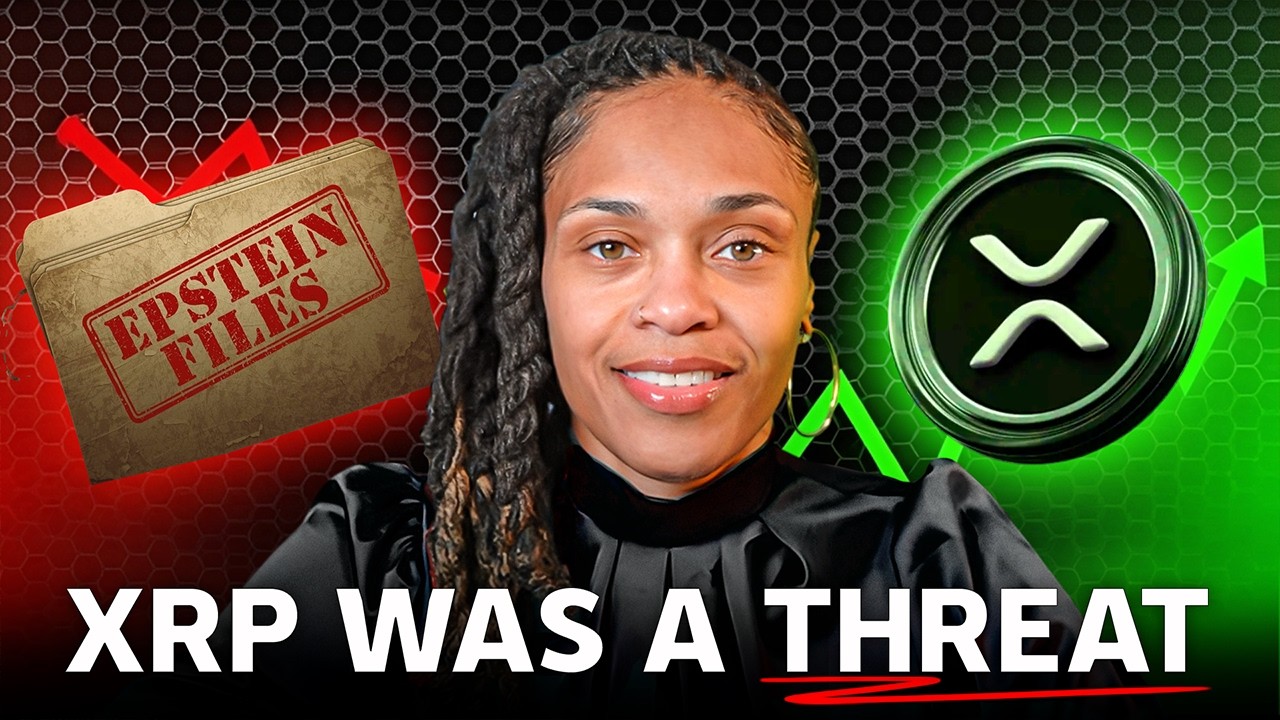
In this YouTube video Kamilah Stevenson examines newly released Department of Justice documents that include a 2014 email from Austin Hill, co‑founder of Blockstream, addressed to a small group of influential crypto and finance figures. The email frames Ripple and Stellar as threats to the Bitcoin‑centric ecosystem, urging investors to choose sides and describing support for XRP as “backing two horses in the same race.” Stevenson explains the significance of the email’s recipients, the coordinated nature of the message, and how it reveals early, deliberate opposition to XRP rather than market indifference. She then cites Ripple’s former CTO David Schwartz, who publicly confirmed the email’s meaning and suggested the mindset was widespread, while also clarifying that XRP had no ties to Epstein. Stevenson argues that this early political pressure explains the consistent resistance XRP has faced over the years and highlights the project’s durability, noting that a truly marginal project would not attract such scrutiny. She shifts to a practical segment describing her personal long‑term crypto custody strategy using iTrustCapital’s Roth IRA and premium custody accounts, outlining tax benefits, security features, and additional asset options. Finally, she promotes her paid coaching community, emphasizing weekly live Q&A, portfolio blueprints, and a limited‑time discount code, while urging viewers to like, subscribe, and comment. Throughout, she includes standard disclaimer that the content is not financial advice.
Chapters
Hey, it's Kamilah Stevenson, and around here we talk wealth. And I wanna reveal something about XRP that many people don't know about. For years, people acted like XRP was just another project the market ignored, like it just struggled for no reason at all, or like it never quite caught on. But the documents that just came out tell a very different story. They show that XRP wasn't ignored at all. It was noticed very early. It was discussed behind closed doors, and there were real efforts to to block support for it before most people even knew what XRP was. Once I explain the actual email, who wrote it, who was copied, and what was said, it changes how you look at everything that happened afterward. Now, before I go forward, if this type of deep diving thinking is helpful to you, please like the video, subscribe, and let me know in the comments if you ever felt like XRP was treated differently long before the SEC lawsuit. I'd love to know your ideas about it. Now we're going to unpack this. So let me explain why this even came into my radar in the first place. These weren't rumors and they weren't screenshots floating around on social media. These were documents released by the Department of Justice. Buried inside of them were emails from the early days of crypto that most people never thought they'd see. One email in particular stood out to me because it wasn't vague and it wasn't subtle. It was written in 2014 by Austin Hill, one of the co-founders of Blockstream. If you're not familiar with Blockstream, stream. This is not a small player. This is one of the most influential companies in Bitcoin's infrastructure. They had a massive role in shaping how Bitcoin actually works. In that email, Hill was talking to a small group of very powerful people, and what he was concerned about wasn't price, it wasn't regulation, it wasn't adoption. He was concerned about investors supporting Ripple and Stellar at the same time they were supporting Bitcoin-focused companies. He literally described it as backing two horses in the same race. And then he went further than that. He said that Ripple and Stellar were bad for the ecosystem they were building and that anyone supporting those projects was essentially working against them. That's not competition playing out in public markets. That's private pressure behind closed doors. And here's something interesting. The people copied on that email weren't random. They were wealthy, influential, deeply connected to tech, finance, and early crypto infrastructure. This wasn't one guy venting. This was a coordinated conversation about who should and should not be funded. So when people say, why did XRP face so much resistance? Or why did Ripple get treated differently? This is the first time we're seeing something concrete that helps explain the environment XRP was launched into. It wasn't ignored. It was noticed early, and it was viewed as a threat. And once you understand that, a lot of what happened later could start to make more sense. Now, one thing that I understand is that this wasn't normal competition. What stands out here is not just that the email exists, but what it reveals about how early power operated in this space. This wasn't Bitcoin competing with XRP in the market. This wasn't users choosing one network over another. This was infrastructure leaders deciding behind the scenes who should be allowed to receive capital and who shouldn't. Blockstream wasn't just another startup. It was positioned at the core of Bitcoin's technical roadmap. So when someone in that position says that Ripple and Stellar are bad for the ecosystem, that statement carries weight behind opinion. And when that same person pressures investors to choose sides, it tells you something important. It tells you XRP wasn't seen as irrelevant. It was seen as competitive enough to be shut out. That changes how you read the early history of this market, because if XRP were just another project, there would be no reason to care who invested in it, no reason to frame it as an enemy. And no reason to make funding a loyalty test. What this shows is that the early crypto landscape wasn't neutral. It was political, it was strategic, and it was already divided along lines that most retail investors never saw. This is also why this phrase, backing two horses in the same race, matters. It assumes a race in the first place. It assumes overlap. It assumes threat. And that's not how people talk about things that don't matter. So when people wonder whether XRP was suppressed on purpose, this email doesn't prove intent across the entire market, but it does show that at least one powerful group saw XRP as something that needed to be opposed early. And once that kind of framing exists at the infrastructure level, it influences everything downstream— narratives, funding, regulation, and perception. That's the environment XRP was launched into— not indifference, but opposition. Now let me share what David Schwartz confirmed and what he didn't. See, after those emails started circulating, David Schwartz responded publicly, and his response is taken in consideration because he was there early and he understands exactly what the language meant at the time. He didn't dispute the email. He didn't downplay it. He explained it. He said very clearly that the message from Austin Hill meant that supporting Ripple or Stellar made someone an opponent in the eyes of that group. Not a competitor, an opponent. He also said this likely wasn't an isolated view, that similar attitudes were probably expressed to many other people behind the scenes. Now that's important because it tells you that this wasn't just one tense email, it was a mindset. At the same time, Schwartz was also careful to draw a line. He said he's not aware of any links between Epstein and Ripple, XRP, or Stellar. He said there's no evidence that anyone at Ripple or Stellar ever met Epstein or worked with people closely tied to him. That clarification is important because it keeps this grounded in facts instead of letting it drift into speculation. So here's what we're left with. We have documented proof that early Bitcoin infrastructure leaders viewed XRP and Stellar as threats. We have confirmation from Ripple's former CTO that this framing existed and likely went beyond a single email. And we also have a clear statement that XRP itself was not tied to Epstein or wrongdoing. That combination tells us a very specific story. XRP wasn't controversial because of scandal. It was controversial because of positioning. It sat at the intersection of payments, liquidity, and infrastructure in a way that directly challenged how some people wanted this ecosystem to evolve. And when you see it through that lens, the resistance XRP faced over the years stopped looking random. It starts looking very consistent. And let me just say this. I am not 100% clear that everything is 100% correct. I am just stating what's been observed in the emails and in the documents. Nothing I say is financial advice. This is only for educational purposes only. I want to make sure I am not in trouble by YouTube for even speaking on this matter. Now, I want you to understand how I'm thinking about this and what matters to me. So what matters to me isn't that XRP faced resistance early A lot of things do. What matters is that it survived it. Projects that don't matter will fade very quickly. They don't trigger private emails, they don't get framed as enemies, they don't force people to pick sides. XRP kept moving forward anyway. It kept building, it kept showing up in conversations around payments, liquidity, and settlement, and it did that despite being launched into an environment where parts of the industry were already working against it. That tells me something important about its durability. It also tells me that the story of XRP isn't just about price cycles. It's about positioning in a system where power, infrastructure, and influence matter just as much as technology. So when I look at XRP today, I'm not looking at it as something that suddenly needs validation. I'm looking at it as something that's already been pressure tested. And personally, that affects how I think about positioning. I'm not chasing headlines. I'm not reacting to short-term noise. I'm paying attention to what continues to survive and where it sits in the bigger picture. And that's why for me this email is important, not because it's shocking, but because it confirms something a lot of people felt without ever being able to point to. XRP was not overlooked. It was challenged and it's still here. Now, before I keep going, I do wanna share something practical because this comes up a lot when people ask me how I'm actually holding my assets, including XRP, long term. I use iTrustCapital and I have two accounts with them, a Roth IRA and a premium custody account, because they serve two different purposes. The Roth IRA is obvious. Anything that plays out over the next several years, I don't want taxes to be a thing that erodes the outcome. With iTrust, you can hold crypto inside a Roth IRA, trade inside the account, and if those gains compound the way a lot of people expect, that growth is tax-free. Now, the Premium Custody account is different, and this is the one people ask me about the most. It's designed for people who want institutional-grade custody without keeping assets on exchanges. Your crypto is held off exchange in a closed-loop system. That means assets can't just be sent out to random wallets, which significantly reduces the risk of hacks, phishing, or account takeovers. Inside that account, you can still trade 24/7. You can hold stablecoins like USDC and get yield on them, and you can also earn yield through staking on assets like Ethereum and Solana. You can also hold physical gold and silver in the same platform, which I like because it keeps different asset classes under one roof. Fees are straightforward, no monthly account fees. Trades are clean and transparent. And if you decide to open and fund an account, they're currently offering a $100 funding bonus, which I'll leave in the description below. I'm just showing you how I structure things when I'm thinking long-term and taking custody seriously. Now, I do want to share what I'm doing with all of this information so you can know where I stand and why I even investigated this at all. So when I put everything together, I don't walk away thinking I need to do something dramatic. I walk away thinking I need to be precise. What these documents change for me isn't my conviction in XRP. It's my understanding of the environment it was built in. It tells me this wasn't a project that accidentally ran into resistance. It was something that disrupted existing plans early, and that kind of disruption doesn't just disappear. So my focus right now is not on trying to predict the next price move. It's on positioning myself around assets that have already been tested by opposition, time, and pressure. And as you know, XRP already has the clarity it needs because it's deemed that it is not a security. And that is important to me because I pay attention to what survives when it's challenged. I pay attention to what keeps showing up in serious conversations, even when it's inconvenient. And I pay attention to where power tried to intervene early because that usually signals something worth understanding more deeply. That's how I'm approaching this— calm, patient, long-term, and not reactive. I'm not looking for validation from the market on a daily basis. I'm looking at structure, durability, and where this fits into the bigger picture. And once you see it that way, the noise will start to fade away for you like it's faded away for me. And so I wanna be very clear about something. Moments like this are not just about information. They're about execution. They're about confidence. They're about having a plan when the noise gets loud and knowing you're not making decisions in isolation. That is why I built my coaching and community the way I did inside. We're not just talking about markets. We're working on portfolios, blueprints, and long-term strategy. We're building towards financial freedom in a real way, not just chasing trends, but understanding how all of this fits into the life you're trying to create. I'm live with my members every single week. We do Q&A, we walk through what's happening in real time, and we talk honestly about positioning, risk, and mindset. There's also educational videos being added as we go, and there's support in place to make sure you're actually moving forward and not just consuming content.. This is a community. There's accountability, and there are people moving in the same direction, asking better questions and thinking long term. And I'm there with you every step of the way. I also want to say this very clearly, that this is the last week the program is available at the current price. The price is going up, and right now there is still a VIP reward code available that gives you an even better entry while it's here. If you've been waiting on this moment where having guidance, structure, and support actually matters for you, then this is it. And all of the details are below. Also, make sure you like the video and subscribe if you haven't already, and comment and let me know, is there anything that you've discovered about XRP that you want the community to know? I do read the comments, and I would love to hear how you're thinking about this and what things that you've discovered along the way. And as always, I want you to stay wise, stay wealthy, and I'll see you in the next video.