Unraveling the Weight Loss Mystery Podcast with Guest Patrick Liu
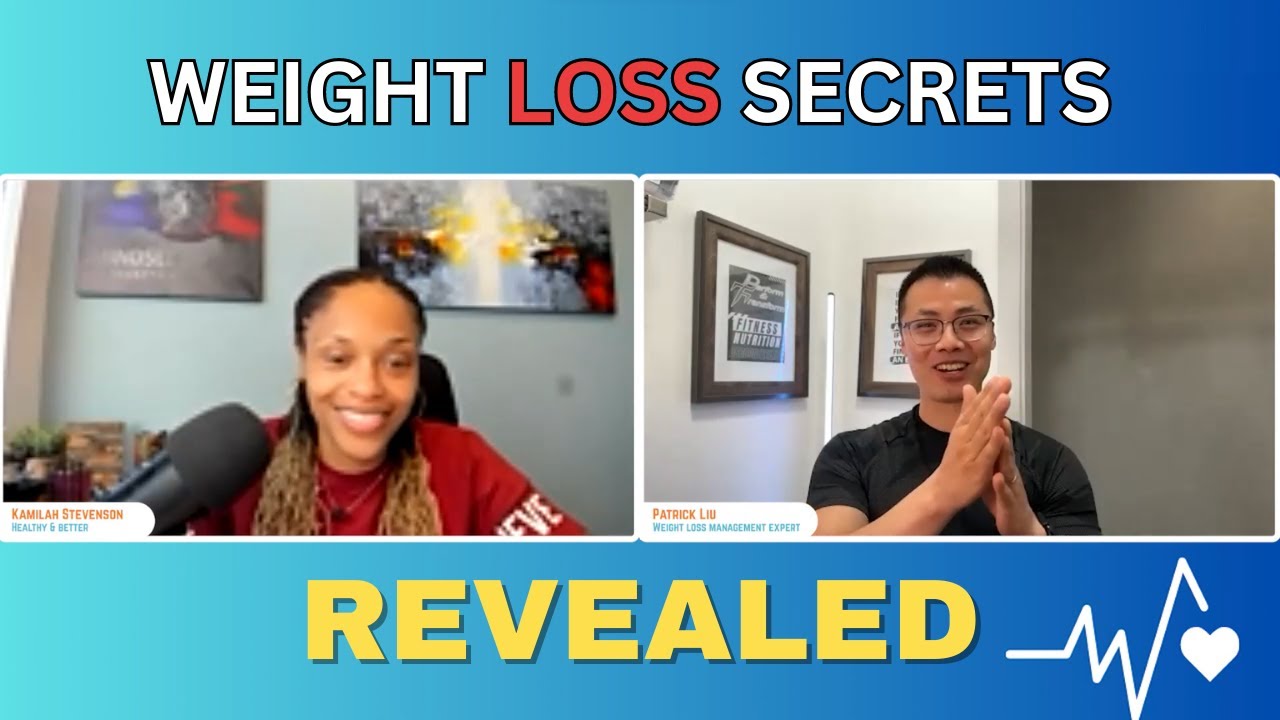
In this episode of the Unraveling the Weight Loss Mystery podcast, host Kamilah Stevenson interviews Coach Patrick Liu, a Vancouver‑based weight‑loss coach, personal trainer, and nutritionist with seven years of experience and over 2,000 clients. Patrick shares his personal journey from a “freshman‑30” weight gain in university to becoming a top‑ranked coach, emphasizing how a lack of accountability derailed his own progress and inspired his coaching model. He outlines his three‑pillar philosophy—fitness, nutrition, and daily accountability—and describes the three primary client segments he serves (young professionals, busy parents, and menopausal women), each with distinct obstacles (nutrition skills, consistency, and metabolic plateaus). Patrick then delivers concrete, step‑by‑step protocols for breaking weight‑loss plateaus: four nutrition actions (hand‑portion method, trimming nighttime carbs, increasing food variety, and timed eating/intermittent fasting) and four exercise actions (shifting from cardio to strength, lifting heavier, rotating workout programs, and employing a split‑session format). He stresses habit formation, aiming for automatic daily routines rather than dependent coaching sessions, and characterizes his training style as “gentle and firm,” balancing accountability with encouragement. The interview concludes with Patrick promoting his free weight‑loss detox guide and a 5‑day workout challenge, and provides his social‑media handles (YouTube @CoachPatrickLiu, Facebook, Instagram, TikTok).
Chapters
Today I have a special treat for you, an interview with a pioneer named Coach Patrick. He is an expert at weight loss management, a personal trainer, and a nutritionist. He's been helping his clients to lose weight and to gain back their life and pushing them past the mental barriers that prevent them from progression and getting the outcomes that they desire. You're going to absolutely love this. Stick around to the end because he has some free stuff that he wants to give to you. So enjoy. How you doing, Coach?
I'm doing good, I'm doing good. Thanks for having me on your show. Super excited, uh, to be here and to add value to your audience. And, uh, yeah, go from there.
Awesome, awesome. Now you're in, you're in a line of work that so many people absolutely love and they need. I mean, you'll never ever be without people wanting help with losing weight and, uh, just trying to get fit and looking good. That's just people's number one priority these days. And so I want you to just tell me a little bit about yourself and what got you into this line of work on, you know, weight loss management and, um, you know, coaching people through exercise routines. You know, how did you get to this place?
Yeah, absolutely, absolutely. Well, first off, you know, a little bit about myself is I'm a weight loss coach, nutritionist, personal trainer, and I've been in the industry now for the last 7 years. I've served over 2,000 clients. I'm from Vancouver, Canada. And in Vancouver, I've been ranked as the number 1 weight loss coach, which is pretty exciting. But, you know, for me, the reason I became a weight loss coach and a personal trainer is because I actually struggled with my weight in university and growing up. Like, in university, you know, they say the freshman 15. For me, it was like the freshman 30. Like, I gained so much weight that, you know, my pants didn't fit anymore, my energy levels took a dip. I had pimples and acne everywhere, and I just didn't know what to do or where to turn to. I joined a gym membership, and I signed up for the whole entire year. And guess how many times I went to that gym?
How many? How many times?
One time, even though I signed up for the whole entire year. And when I walked in, you know, nobody greeted me, nobody welcomed me, nobody showed me how to use the equipment. I sat in the corner on a stationary bike for 20 minutes, I felt like the whole gym was, was looking at me. And, you know, after 20 minutes I left the gym and I didn't go back. And, you know, it was very, very intimidating. You know, there was all these big bulky guys banging weights around. And I find that's the experience for a lot of people, you know, like they, they know they need to lose weight. In fact, like 60% of the population is either overweight or obese. 60%, right? That's a, that's a big number, right? And a big part of this population, they just don't know where to go, right? They try going to the gym, they try maybe Weight Watchers, or they try Noom or Peloton and all these things. And all of these things, they're missing one component. When I went to the gym, and the reason I went only one time is because no one followed up with me. There was zero accountability, right? Um, and so what I think a lot of people need is people know how to lose weight. Like if I ask a random person on the street, how do you lose weight? Easy. Eat better, exercise more. Not rocket science, right? And the key component that's missing is that accountability, right? Someone to check in regularly, someone to encourage them, someone to hold them accountable from beginning to end. And that was what was missing for my weight loss journey until I found Chad. Chad was my very first Coach. A little bit intimidating, you know, like reaching out to a personal trainer. But Chad took me under his wings. He showed me everything. He helped me stay consistent with exercise. He helped me to improve my nutrition so much so that, you know, he helped me to build my confidence and just to be comfortable in my own skin. And so now I get to— Chad inspired me. Now I get to do this for a living and be able to inspire people and see transformation. And I love what I do. And for me, you know, it comes down to 3 things. Very, very simple. What I do is fitness, nutrition, and daily accountability. Daily accountability. When you have someone checking in on you every single day, it's impossible to fail, right? Like, I don't let my clients down and I'll guarantee them results and back that up. So that's a little bit about me and my story. I love what I do and I love coaching people and I love seeing them get results. And not only just like losing weight, but everything starts to change, right? When they look themselves in the mirror, when they go on their dream vacation, when they're comfortable in what they're wearing, you know, on vacation, in their dream body. Just that confidence and the energy that they have is just like absolutely inspiring for me to see. And, you know, after like 2 months, 4 months, 6 months, a year, they're like, oh my goodness, Coach Patrick, thank you so much for changing my life. And I tell them, you know, you're the one who put in the work. I'm just the one that guided you. And when people call me Coach Patrick, you know, I don't take that lightly because growing up before, you know, university where I gained all that weight, in high school I played basketball, you know, and growing up I didn't have a father figure. My dad passed away when I was 1 year old, so growing up was difficult, you know, single mom. I didn't have any siblings and my mom was an immigrant here from China. So, you know, she barely spoke English, worked at a job barely over minimum wage. And so it was really rough growing up. I didn't have any father figures. Any coaches to kind of pour into me, to guide me, to mentor me, to father me, right? And until I met my basketball coach in high school, and he wasn't just an ordinary basketball coach, like he went above and beyond. Like summer we'd be, you know, training in the gym, right? He'd take us out for lunch and breakfast, right? He'd sit us down one-on-one to get to know us, to get to know our goals. And for me, like that was a real role model what a coach looked like. And for me, he was more than a coach, he was a father figure. And so I call him Coach and he changed my life. He was that very first father figure for me. And so when someone calls me Coach Patrick, like, you know, it's an honor that, you know, that I humbly wanna live up to, to be able to just inspire and father people because people need that. People need inspiration, people need hope, and people need something that is bigger than themselves. Themselves. And so that's what I do. What I do is a little bit of my, my story.
That's awesome. You know what, your story is so inspiring because the way you touch people is from an empathetic place. It's not like you haven't been where they've been. You understand, you know, what they're going through, and you were able to design a way to reach them that was based off of the void that you felt in that, in that predicament. And so I love it because it's inspiring. I know a lot of people, uh, can relate to that And a lot of times people really want to reach out to people who understand them, you know, someone who's not distant, someone who knows how to connect and understand exactly how they feel. So with this being said, how did you eventually transition into becoming an actual personal trainer? Like, what did that look like? And a nutritionist, you know, what, what was the journey for you to actually, um, get the, the credibility? Because you, you come from this one place where you're, you know, you're trying to look for your own transformation, and then you wind up getting a coach to help you and to understand what that model looks like, and then now you're here as a coach. What was that journey like for you?
Yeah, I think a lot of things, a lot of trial and error. Like, I first got started at a big box gym here in Vancouver. It was called Steve Nash at the time. Now it's called Fitness World. And, um, that's how I really got introduced to, to personal training. But the problem with personal training is that for a lot of people, it's just a transitionary job. Right. I was there for a year. There was 20 trainers. Of the 20 trainers, after a year, there was 2 people that was still there, me and the fitness manager.
That was it.
Everybody else left. Right. And during that year, um, you know, I saw a lot of change. And for, for people, it's just like a lot of trainers are in there just counting reps. Like, all right, do 10 squats for me. 1, 2, 3. Right. They're not really pouring into their clients. And so I'm like, this industry needs to change, right? This industry needs some inspiration. This industry needs some fire under them. So, um, so I wanted to be different than everybody else. And I didn't want this to be just a transitionary job that, you know, that you do, you know, on the weekends or in the evening, or, you know, as a college student, I wanted this to be a lifestyle. I wanted this to be a career. Um, and. Even when I opened up my own studio, what I found that people became dependent on a trainer, right? Like, hey Kamilah, I'll see you, Dr. Kamilah, I'll see you Tuesday, Thursday at 6:00 PM, right? And then they saw me Tuesday and Thursday, 6:00 PM. And then what happens when I go on vacation? What happens when they go on vacation? What happens when maybe they pause the program for a month? They go back to their regular habits of not even exercising at all because they became dependent on me. Right. And so I wanted to create a program out there where it's all about creating habits, right? Kind of like brushing your teeth, right? Like, how often do you brush your teeth, Dr. Kamilah Stevenson?
Every— several— a couple of times a day, 2, 3 times a day.
3 times a day, right? You don't need to book in an appointment with a dentist just to brush your teeth, right?
You do it.
So I want to be able to empower people to build the right habits around fitness and nutrition so that it becomes something I call an automatic habit. It's a habit that you do every single day without even thinking about it. And that's the secret to permanent weight loss, not short-term weight loss, not a fad diet, not an exercise program you do for 12 weeks, but permanent weight loss, right? And it, and it starts with building the right habits. And because I check in with my clients every single day, I wanna make sure that they're doing their exercise homework independent and outside of me. Yes, when they see me, I train online over Zoom because I'm an online trainer, um, and I'll kick your butt during the session. Um, and then outside of the session, I want to equip you to be able to do your homework and exercise on your own so that one day you can continue this lifestyle with or without me. That's the goal, right? To be able to empower my clients to do this and to keep the weight off permanently. So that's, that's a little bit of my story of becoming a trainer and little bit of the negative side of the fitness industry.
I love when you say like you're getting them to tap into that subconscious place. That's the place where you're not thinking about it. When you ask me, do I brush my teeth? It's not like I wake up in the morning and say, oh, I'm going to brush my teeth right now. It's just I do it. And so you want them to have habits so deeply instilled in them that they just do it. They don't even have to think about it. It's second nature for them. Now, I have to ask really quickly, like, when you're working them out, because you say you kick their butts, like, what kind of like trainer are you? Are you that one that's, you know, because I go to UFC or I have a trainer when I take some of my classes and some of them are like, you know, inspiring or like, you can do it. And some of them are just like in your face, like, get down and don't stop. You know, like what kind of—
I would say I'm gentle and firm.
Okay.
If you're not doing your workout, I'm going to call you out. But then when you're doing your workout, I like to be inspiring and motivating instead of like, Kamilah Stevenson, what's wrong with you? Like, how come you can't do a squat? I like to be like, Kamilah Stevenson, you can do it. Great job keeping your chest up. Let's keep going. Doing amazing. Last 10 seconds. Give me a final push.
I like—
that's kind of my—
oh, I like that. Yeah, that's, that's the kind I like too, you know. Every— like I say, everybody's different, but I love that.
Now, like, I want them to leave the workout instead of feeling defeated, to feel inspired to tackle their day, right? And a lot of my clients, they'll work out with me first thing in the morning. Right? And if they can get into the mindset of like, okay, like I just completed something that was challenging and tough. And after I complete this, I feel so good that I can tackle any other obstacle that's thrown my way.
That's the point too. And that's, that's why it's really like working out is more than just physical, it's mental. It helps. It's a principle that gets built in the person where they can take that principle where they just, you know, defeated the odds or broke past those mind barriers and they can use them for everything else. So I love that. Now, like when you're dealing with, like, I'm sure you have all kind of people that you're coaching and that you're trying to like get to lose weight. Like what kind of people, you know, do you find that usually like struggles with weight loss? What does that person look like?
Yeah, there's 3 main categories. Number 1, you have young professionals. Number 2, you have busy parents with kids. And then number 3, you have women transitioning through menopause. So depending on which category you fall into, you have different struggles. For example, like young professionals, usually like 25 to 35, you have a pretty good career, right? Like you're working full-time, usually like working at a desk job remotely from home, and you have a lot of income banked up, right? Like you don't have kids, right? You don't have like all this debt to pay off, right? Like you're usually single by yourself. And so they love eating out. They love eating out, hanging out with friends, having some drinks, going on vacation, right? And when they're young, they can do that, right, without any consequences of gaining weight. But as they approach their 30s and they continue that lifestyle of eating out, trying new cuisines, trying new restaurants, happy hour, you know, going to Mexico and Hawaii, all-inclusive, right? Buffets and all these things, right? It's easy to put on the extra weight. So the first category are young professionals, and they typically struggle with nutrition. Usually as well, sometimes maybe they've just moved out from their parents and their parents did all the cooking, right? And then when they moved out, they didn't have the skill of cooking on their own, but they have the skill of buying food, right? So without the skill of cooking and with the skill of buying food, you can imagine what happens over time, right? So that's the first category. The second category of people is what I fall into right now. Like I have two kids at the time of our video. I have a 7-month-old and I have a 3-year-old. Life is crazy busy, right? Busy parents with kids. And typically a lot of moms fall into this category, right? They're overwhelmed, right? They're limited with sleep. They're busy with their kids' activities. They're driving their kids around everywhere. They're working full-time as well. And they're just exhausted at the end of the day. They don't have the energy to work out. They don't have the bandwidth to cook healthy meals, right? And these, this category of people, they struggle with consistency. Right? So these people, I help them on how to build the right habits. The third category of people are women transitioning through menopause, right? They're a little bit more seasoned in their age, right? Usually from 45 to, to 55. And this group of people, they have tried every single program. They've tried Noom, they've tried Weight Watchers, they've hired a trainer, they've hired a nutritionist, they've joined a gym, they've done LA Fitness, they've done, um, um, What's the other one where you'd go to the classes? Can't remember, but you get my point. They've tried every single program and it has not worked for them. Yes, it has worked like maybe temporary. They'll lose 10 pounds in a few months and then they gain it back again, right? They lose some weight, they gain it back, right? And these people, they go through like a lot of hormonal shifts, right? When they go through pre-menopause, menopause, metabolism slows down, bad habits creep up, um, energy levels slow down as well. And these people, they struggle with getting results. They're like chronically in a plateau. So these people, I help them break through that plateau to help them with their weight loss goals. So those are the 3 categories of people: young professionals, busy parents with young kids, and women transitioning through menopause. Young professionals typically struggle with nutrition, Busy parents with young kids typically struggle with consistency, and then women transitioning through menopause typically struggle with a plateau and getting results.
So when you say plateau, like, you know, I'm sure a lot of people have different reasons why they struggle with their plateau. Like, what specifically do you do to help them with some of these plateaus when they're stuck in that place?
Great question. Great question. So a plateau pretty much means like you're doing the same thing that has helped you, let's say, lose 5, 10 pounds and you're doing the same thing, but you're not losing weight anymore, right? And so what I do is I look at two things, nutrition and exercise. Nutrition. I got 4 steps to help people break through that plateau. Number 1 is we got to master the portions. I use something called the hand method— fist of vegetables, palm of protein, scoop of carbs. Super easy. Once you've mastered the portions, step 2 on breaking through a plateau on nutrition is trimming down some of the carbs at night. This is the trick, right? Because if you have too much carbs at night and you don't burn it off, guess where it all gets stored? When you don't burn it off when you're sleeping at night, it gets stored as fat, right? So have your carbs at breakfast, have it for a snack, have it for lunch, afternoon snack. Just don't have it right before you go to sleep. We want to have more veggies, have more protein. So that's number 2. Number 3 is we want to incorporate more variety. Right? Because certain foods have certain vitamins and minerals, and so you want to mix things up, right? Say one week you're having fish, the next week maybe you can have some vegetables or some seafood or some tofu, some vegetarian type protein. Maybe one week you're having more red meat, and then next week you have more white meat, right? Like one of my clients, Christian, he was losing 2 pounds a week consistently.. And then for 3 weeks in a row, he was not losing weight. And I asked him, okay, did you change anything? I look, had a look at all this food pictures that he sent me, and we couldn't figure out why he wasn't losing weight anymore. So I asked him, okay, instead of having the pork and the beef, let's switch it up. Let's have white meat. We did that for a week. Boom, he lost 2 pounds. Well, okay, well, let's try this again this next week. Boom, he lost another 2 pounds. So we identified for him specifically His body wasn't as efficient in breaking down red meat, right? And so that was causing some of that plateau. And then the more efficient we are in our movement patterns as well, this can cause a plateau as well. So that's number 3, having variety in your nutrition. And number 4 is introducing food timing, right? We call this intermittent fasting, right? Great, great way to help, uh, love that, through a plateau. But intermittent fasting only answers one question. Answers when to eat. So if you do it wrong and if you don't eat the right portions and if you don't eat the right type of food, this won't help you, right? This might even cause weight gain. And so typically, you know, when you look at nutrition, there's 3 components: what you eat, when you eat, how much to eat. And a lot of, a lot of nutrition plans, they focus on one thing. So for example, like Mediterranean diet, the keto diet, Atkins diet, they focus on one thing, what to eat. They tell you what to eat, but they don't tell you how much to eat. They don't tell you when to eat. So in order to break through a plateau, those 4 things, right? We want to master the portions, number 1. We want to trim down the carbs, number 2. Have variety, number 3. And number 4, introduce food timing. So that's nutrition. Exercise. Again, there's 4 steps to break through a plateau with exercise. Number 1 is we want to transition from doing cardio to doing more strength training. Right? Cardio is great for burning calories. That's about it, right? Um, strength training, not only are you burning calories, but you're building lean muscle. And the more lean muscle you have, the more calories you burn throughout the day, which is going to skyrocket your metabolism. Number 2 is you want to lift heavier. Let's pretend you're doing a shoulder press, 10 pounds, right? The more you lose weight, the more stronger you get, the easier it is to do a shoulder press with 10 pounds. Do you burn more calories or less calories? The 10 pounds feels easier. You burn less calories, right? So you're burning less calories as you get stronger. So what we need to do is we increase the resistance and make it a little bit harder, right? So number 2, lift a little bit heavier. And a lot of women, they struggle with this because they don't want to get bulky. And I assure them, you know, we're in a slight calorie deficit during the weight loss phase. You're not going to be gaining weight. You're not gonna be getting bulky during the weight loss phase, right? So don't be afraid of that. Lift heavier. Let's get stronger. Number 3 is you wanna update the workout plan. If you do the same thing over and over again, you're gonna get similar results. If you're in a plateau, you're gonna continue to be in your plateau. So updating the workout plan is really important. What I like to do is transition between endurance training to doing more, um, heavy strength training. So heavy strength training looks like 8 to 12 reps, about 30 seconds. Endurance training, more like 45, seconds, 60 seconds, a little bit longer reps, 8 to 12. And we want to cycle through that every 4 to 6 weeks. And then the last step, um, and this is really rare, if you do all these things and you're still in the plateau, this is the last thing I would implement. It's called a workout split. Very, very effective. Um, so what a workout split is, let's say you're working out for 30 minutes a day, right? Instead of working out 30 minutes a day, we split that into 15 minutes. So it's still 30 minutes, But 15 minutes in the morning, 15 minutes at night. In the morning you wanna do more cardio. At night you wanna do more weights. The reason we wanna do cardio in the morning is at night you're not eating anything, you're fasting, right? So you're burning more fat. So in the morning we're continuing to burn fat in the absence of food. In the evening, all of the food that you consumed, all the calories that you consumed, when we do strength training at night, we convert those calories into building lean muscle. So burn fat in the morning, build lean muscle at night. That's the formula to help, uh, increase results. So exercise, 4 steps: transition from cardio to strength training, number 1. Number 2, lift heavier. Number 3, update your workout plan. Number 4, workout split. So those are, um, the 4 steps with nutrition and the 4 steps of exercise to break through any plateau. And, and the key thing is you gotta do consistently as well. That's the key, right?
Oh, I love it. I love it. I'm sitting here learning myself. I'm like, because we all hit plateaus. Like, I know I've hit plateaus and I didn't necessarily know exactly what I needed to do, and it was like trying to discover it. So I know a lot of people are excited about this information because it's, it's something that's not easy for everybody, you know. And I love, uh, one of the things that you said about, you know, uh, the guy when he was breaking through the plateau for not losing weight, you know, you, you got to the point where you're like, let's find out why your body isn't doing this. And And to now find out, okay, red meat, his body processed it different than the white meat. I mean, I love that because I love bio-individuality.
I love solving the problem. Inflammation, kind of like what you said. Oh, yeah. Like, vegetables is good, but eating this type of vegetable may not be good for you, right?
Right. I love that journey of just trying to figure it out for the person. And sometimes it's like that because sometimes it works and then Sometimes it doesn't, you know, and when you get stuck, you know, you want to figure out a way out. And I think that's most people's pain point is like, I'm stuck. I don't know what to do. I've hit a plateau. Everything that I know how to do, I've done, but it's not working for me now. And so, listen, if you are looking for, you know, some help with weight loss, coaching, nutrition, you know, trying to get this body together, you know, and you've done everything you can and you're at a place where you need help. Get the help you need. Get a coach that can help you break through these plateaus. There's no sense in, you know, not looking and feeling your best. And so listen, I know a lot of people are going to want to figure out where are you, where can I find you? So if someone's looking for you, where can they reach you?
Yeah, you can follow me on social media. I'm on Facebook, Instagram, TikTok. My main channel is YouTube. I post workouts almost every day on YouTube. So if you don't know how to work out, follow me on YouTube. If you want some strategies on weight loss, Follow me on YouTube @CoachPatrickLiu. For all the listening listeners and viewers out there, I want to leave you with a little bonus. It's called my weight loss detox. Inside there's recipes, there's workouts, there's my 3-step formula to boost metabolism. If you want a free copy, I'm sure Dr. Kamilah Stevenson will post it on her page. You can click the link below, grab a free copy. And then also as a bonus for you guys, I want to offer you guys a 5-day workout challenge where you can either work out on your own. I can give you all the materials Or you can come join me and work out with me live over Zoom. And it's free for the first 5 days. And so if you're interested in that, you know, Dr. Kamilah, you can post that link below and you guys can check that out.
I certainly will. And I'm sure they're saying, "Free is me." And so make sure you don't miss out on that opportunity to be able to do the 5-day challenge, get the free material that he is giving you. Make sure you reach out. I'll put all the information there for you. Listen, if you're looking for him, make sure that you find him. @Patrick— how do you spell that last name? Because there's something—
Coach Patrick Lee. So Coach, C-O-A-C-H, Patrick, P-A-T-R-I-C-K, and then Liu, L-I-U.
I know it's going to be down there for— but I just wanted you to spell it. L-I-U.
Complicated, my last name, 3 letters.
So make sure that you look him up, and I'll post the information. Put some comments in below. Let me know what you think. Um, how many of you all are ready for, you know, the transformation that you need for the weight loss journey, make sure you comment below and make sure you seek him out. Get the free stuff. It's time to be transformed. I'll see you next time.









