You Have NO IDEA What's Coming for Your Money
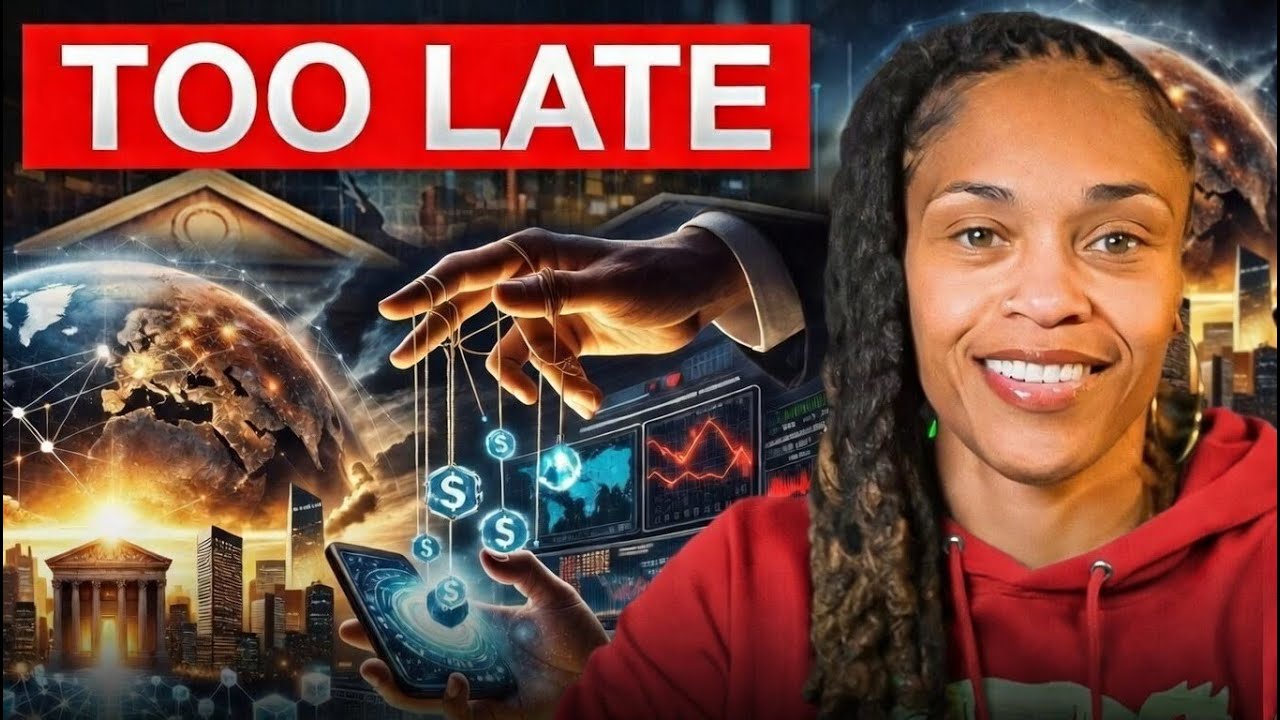
Kamilah Stevenson argues a digital financial reset is underway, driven by energy crises, job market weakness, and Fed pressure. The Clarity Act will shape whether programmable money or neutral assets like XRP control the future. She recommends self-custody and buying during dips before tokenized assets reshape wealth.
Chapters
Hey, it's Kamilah Stevenson, and around here we talk wealth. And I see in the comment, the Great Reset is upon us, and I believe that to be true. Go ahead and put where you are from inside of the chat. I am going to help you to put the pieces of this puzzle together because I can promise you this, a lot of people aren't paying attention to what's happening. There is a global reset happening, and I'm going to show you the different pieces of the puzzle and what the control is all about. I can guarantee you, by the time you're finished with this, you'll understand a lot more. If we are investing in this next financial wave, this next financial global reset, we have to be educated about it. And I think the reason why some people aren't getting invested the way they should is because they don't have a clue. What's up from Texas? What's up? Yes, I'm here on a Saturday. Yeah, I usually come in on Saturdays, usually Mondays, Wednesdays, and Saturdays. What's up everybody? I see you guys in the place and, um, I'm gonna give you some updates and we're gonna get into it so that you guys can kind of understand what, what we're dealing with right now. All right, there's a lot happening, man. There's a lot happening. And listen, y'all ain't seen nothing yet. Y'all ain't seen nothing yet. I, I don't think people are prepared for what's, what's, uh, at play. Okay, um, there's a lot of damage already done, you guys, right? Um, the markets are gonna feel some, some, a little bit of— well, for me it's a little bit of opportunity unless something crazy happens that we get some crazy good news, or you know what I mean. You're gonna see the S&P 500 pull back some more. We never really got the, the 15% pullback that we needed. Um, we're gonna see some down, we're gonna see some to the downside. I still think we're gonna see some to the downside for cryptocurrency, for Bitcoin. Um, the S&P 500, uh, I think this the second week it closed underneath the 9. So, you know, um, we, we got some more to the downside. It looks that way. All right, so, uh, and, uh, oil was up 15%. Um, oil is going crazy. Listen, um, you guys just get ready. I'm gonna help you to understand how to prepare for this. Uh, what's going on? I, I appreciate all of you guys. Um, I, I want you guys to be totally prepared for what is at play. Hit the like button. Yeah, hit the like button for me. I just want to say this right now because I'm going to get in. Nothing that I say is, uh, financial advice. Everything is for entertainment and educational purposes only. Do your own research. What's up? Um, South Carolina, first time live. I love to see it, Nadine. Yes. All right, um, what's up everybody? Atlanta, Georgia, what's going on? More opportunity. Oh, they gonna shake you till you can't be shaken. I just want y'all to know that this community will just buy more, right? More opportunity. They— listen, listen to what I'm telling you, just in case, okay? The market manipulators are willing to shake you until you can't— until you're all out. I promise you that. Stand down. Nothing I say is financial advice. Stand down. Because if they want to, if they want to do it, they're going to do it. Okay, there, there's still there— I, I believe there's still some room to the downside because you can look at history and just kind of understand we are— we have formed the bottom, but you can kind of look at history to understand when the bottom has actually happened. And we're still missing a few things for that bottom to say that the bottom is in. Now that doesn't mean that it couldn't go up, you just never know, but we would have to get some crazy fantastic news for things to like go the other direction. Okay, um, and this is so true, Stephen, they, uh, leverage is very dangerous for that reason alone, because these assets are still moving as speculative plays and they are still coupled to Bitcoin. So be very careful because the last bit of that leverage will be wiped out. Okay, say they can try to shake, they ain't gonna shake me. As a matter of fact, they gonna make me buy some more. And I've been buying, um, I think anybody who don't have the position that they need should be Dollar cost averaging, even if you are waiting for a drop, you can never say 100%. But even like, even me, I mean, I have enough of it, but I'm still buying because even if I have orders, limit orders, I'm still buying because you just never know. And these are still great prices, $1.35 I just saw today. So, um, but they are buying, the whales are buying, they're holding a Okay, so, uh, we, we're seeing it's a lot of activity. All you got to do is follow the liquidity. I know a lot of people don't follow stuff like that, but I'm telling you, they're buying, they're buying, buying, buying. Now, um, oh, I didn't know that, uh, ZP, uh, is it true Ripple can only keep 20% as per the Clarity Act? Yeah, they, they have a limitation right now, um, Ripple, I think they have about 300, uh, mil— 300— how much? Hold on, give me one second. I, I— you can look at the ledger and see, um, what, what if they've released more. I've been following it, uh, you can look on XRP Scan and you can see whether or not they're still— so they still— because they had Yeah, they have 500 million still in there, so they haven't circulated that. I think they had like 300 million that's in circulation. But as long as they don't— I'm looking all the time to say, don't y'all move this because this is gonna help with this supply shock, okay? Because we need it, we need it to go to the moon, right? Um, why are you not allowed to post? Is this, uh, I don't know. Um, I didn't, um, I didn't hear about, uh, I didn't hear about it, okay? But I guess they are, I guess they are. They got a few people that's gonna be there and presenting. All right, So let's get into it because I really want you guys— listen, y'all gonna understand some things. I'm gonna, I'm gonna share my thoughts about what's going on with the economy and, um, and help you to see the bigger picture of what's going on. I do— I keep telling you guys, uh, first of all, you know, I went to the gym yesterday and I was just looking around and I was just wondering how many people in here understand digital assets, right? Oh yeah, y'all got that right. That's, that's for XRP right there, y'all. Um, so I was just wondering, like, how many of these people understand? I really believe it's going to be like good, hard-working people who have absolutely no idea of what's going on. They don't, they don't know what's happening right now. And I mean seriously, um, the financial world is being built from the ground up, and most people are still thinking about money the same way they did like a decade ago, two decades ago. I'm telling you, things are changing, and the markets have not fully reacted yet. I just want you to know that, which means there's still a lot of people who are comfortable right now who think everything is just fine. But I'm telling you, uh, you're going to see some changes, and the evidence is everywhere. I don't think it's hidden, it's out in the open. But I don't think some of the people, the powers that be, I don't think they care because they understand retail psychology is already cemented, okay? So you got the people who are building the next financial system, they are doing it in the open at this point. But people still sleep on it, okay? When this thing fully lands, you guys, there's always going to be two groups of people. I, I keep telling you, that gap between those two people are going to be life-changing, okay? So let me, let me share, let me give you some updates, and I'm gonna put— I promise you I'm gonna put the piece of the puzzle together. You're gonna learn something because I think you do need to understand, uh, where we are going. And I'll talk about, is XRP, uh, good? Yeah, y'all know I'm an XRP lover, so Um, and yes, I'm going to, um, I'm going to keep educating. Thank you so much for that, all of you all's, uh, kind remarks. And if I do see any Super Chats, I'll get to them, don't worry. But I do want to explain this because I want you to be educated. The people who are most educated about what's happening— and this is not something you can study in one day, obviously, you know, there's a lot of changes being made— but if you can follow what's happening in the world, I promise you it'll make more sense. So first, just quick update. The Strait of Hormuz situation is still alive, okay? Um, and remember, you— I did a video, I think it's already out, where I just kind of help you to understand that it's, it's not just even— it's not even just the, um, the fact that there's restriction there. Um, it's the fact that the insurance companies, they've repriced, uh, risk on tankers almost overnight. They're astronomical. Okay, now pay attention because this is going to hit you guys. I want you all to pay attention to what's happening. Costs are going to go up. Energy is baked into everything. Okay, I saw a picture of in LA, I think gas was at 7, over $7. I was like, oh my goodness. Um, you're going to see that, that downstream pressure. Um, that is going to happen. Okay. You, you got your electricity bills, your food. I think people just think gas when they think about what's going on with energy. Consumer goods are getting hit. Plastic, that's the packaging, all of that. Shipping costs, okay? Healthcare, construction, manufacturing. Even your water, your water bill is going to change more than likely. Why? Because water treatment and pumping systems, they run on energy, okay? So the water bills follow the energy prices. Um, government services, public transportation, emergency services, um, military operation— bottom line, everything, y'all. Okay, energy is going to cause problems in all of those different— everything. Okay, so, but I, I need you to like, you know, y'all, y'all know I like to look at signals and I like to look at what most people are not looking at. And so what this exposes is, is something very, very important. What it's doing is it's showing you just how fragile and slow our current system is when any pressure gets put on it. It's slow. And it's not just the energy that's showing cracks. They just got, um, also the job market is weakening. We just got a report that came out. It was significantly worse than expected. And most people don't even, um, I don't know if they're following it, but they don't know that it's that almost every single job report that's coming out that's been released is coming out with negative revisions from the previous month. Okay, so we're in— that's a problem. Okay, it's coming out negative every single time, which means, um, let me tell you how that gets a little bit more complicated for the situation that we're in. It means that the Federal Reserve is essentially stuck They're stuck, and I'm gonna tell you why. Because think about it, if they cut rates to help the labor market, they're going to risk inflation getting worse, especially with the energy price rising at the same time. But then if they don't cut rates, then the labor market is going to continue to weaken. So they don't have a clean move, right? And that's, that's when we're looking at pressure and tension. Somebody said tension is my favorite word. Yeah. We're looking at the old system, how money is flowing, how things are working in our culture and in our, um, economy. It's showing you that there's cracks on multiple fronts at the same time— energy, labor, monetary policy. All of it is fragile, but all of it is connected. And I don't— I'm showing you these different things. I don't think you understand how they are all connected. Now I need you to understand something because I want you to understand what's happening with your money and where the real fight is. So let me walk through this, okay? And, um, I constantly tell people at work, AI is taking over fast. We are at the service market. Yeah, we ain't going nowhere. Skilled labor is safe for now. Yeah, it is. Um, thanks so much, Mike. Mikey, uh, or is it Mickey? Mikey. Um, but thank you, uh, Somebody said XRP will not save the day whatsoever. Well, I'll create a case around that, okay, so you can understand what— how I think about XRP in this, okay, about saving the day. And it, it, it's not that simple, all right. So first of all, let me, let me help you to understand why XRP, it can become significant. Let's go to the Clarity Act, you guys. We're gonna, we're gonna put on our thinking hats today. So we have the Clarity Act moving, and you have the banks in Washington. They are literally, of course, fighting over who gets— let me help you to understand this— they're fighting over who is going to get control, or who's going to control the yield on the digital dollars, okay? Not whether or not digital dollars is coming. That, that, that's done. That's a done deal. They are fighting over who controls them. Okay, now I speak— I spoke about this in my last live, that BlackRock put out a 3 to 12 month timeline tokenizing all their ETF products. Everything— stocks, bonds, gold— all of it is going to move on to digital rails. And institutions, they're not going to put public timelines on things that they're uncertain about, right? They put timelines on things that are already decided behind closed doors. Don't think that you know everything. The news is not telling you everything. Folks got NDAs and everything. You're not going to know everything. You got to watch the signals, okay? You, you're not— you can't wait for everybody to just come out and tell you. And you definitely— I mean, mainstream news, you definitely can't listen to that. But it's not gonna— things are not just gonna come out clear and just be right there in your face. You gotta look for the clues and the signals behind all of this, right? And so Japan, for example, when it comes to XRP— because I know you, you, uh, somebody who just said XRP won't say today— let me just say this. All I can tell you is what I am investigating, okay, and what's, what's transpiring. Japan didn't— they didn't just start exploring XRP, okay? They have been— y'all got to understand this— they've been running XR— they've been running this through their banking rails. And they've been testing this, they've been testing the ledger for years while everybody else in the West debating on, oh, is crypto real, is it not real? Japan was one of the countries that was integrating the infrastructure into their actual banking system. They, they tested everything available to them and they chose XRP. Not now, years ago, they already chose it. And they've been building it ever since. So you got to think about what that really means, because people are arguing, okay, we, we got one side of the people that's, oh, price predictions, uh, what the regulators doing, how they— are they dragging their feet, are they not? People on social media debating whether this is legitimate, whether this is not. No, no, listen, there's been banks while all of this been happening. It's been banks. They were in rooms that none of us are invited to, and they're running tests on whether this technology is going to work at scale, and they found out it does. So when you have people, you know, like some— because some people say, well, how do you know Canton is not going to work, or this and— and/or Ethereum, or this or that? I get it. I get why, why people are wondering. But you have to understand, there's like Canton and there's other chains, they're still being built, they're still being tested, they're still trying to figure out their regulatory path. XRP is already in the system. Do you guys hear what I'm saying? Japan has been— Japan is different, right? They sit differently than the— than the— they are the mo— they are the biggest country that has an alignment with Ripple. They are already tested. They've been doing this for years. Do you guys understand what I'm saying? Probably 10 years. Y'all late to the party. Y'all think that, that just because we're talking about this now that they have— no. They've already integrated it into their real banking infrastructure, into one of the world's largest economies, right? So that is the whole argument. Say what you want to say, they've already got it. You're late. You don't, you don't understand what they've been doing. They've been doing this. So right now what we're watching, finally, okay, it's been happening, it's been happening since 2008. I keep telling you guys that what, what you've got is the old system is cracking under pressure on multiple fronts, okay? And then you got this new system that's already being assembled in real time in some of the largest institutions in the world, okay? And the people building— y'all could say what you want when you say, oh, XRP is not this and that. They not waiting for your public approval. They don't need your approval. They've already been testing it whether you agree or not. Right? They not— they don't care whether you understand it. They've already moved. That's what some people don't get. They think just because they heard about this or whatever, that like these banks haven't been testing this stuff. They've been already implementing, testing. They have been, you know, like, you come on, it's simple, you guys. You know how you're pre-testing and you're running through, you know what I mean? You're, you're testing the system, you're over and over, whether it's a car or whatever technology you have. Like you're testing and testing and testing and testing because you want to make sure when it goes live that it works. They've been testing it for years. Do y'all get what I'm saying? Right? So I think, I think sometimes because people don't know what, what the big banks and what institutions have been doing, they think, you know, you're thinking because you haven't gotten the memo that it's not being done. It's being done. You just don't know it. They've been stress testing this. You just don't realize it. And so now, is it— you think this is all a coinkydink? This is not a coinkydink, okay? That's how we call it, y'all. Y'all know what I'm saying? A coincidence, okay? If you want me to be proper about it, they— this is not a coincidence. All of these different plays are happening. They need a crisis. They want to— they've been testing it whether you get it or not. Right, so I, I hear you, Dorothy. See, I'm picking up what you put down. So this is all orchestrated, this is all manufactured, guys, right? Um, uh, I'm just looking at some, some of the, uh, where I get the— I don't remember where I got this hoodie from, but I like it. It says One Life, right? And then at the bottom it says Limited, one per person, make it count. And that's what we're gonna do right here. We gotta make it count because you only get one life, right? So, um, somebody said if you had $5,000, are you going with HBAR or Jasmy Coin? Oh, um, I would be going— I personally, I like fast settlement, so I would be going with, uh, HBAR. Nothing I say is financial advice, but I'd go with HBAR. But I ain't got nothing against Jasmy Coin. I've been hearing some good news about that. I've been investigating Jasmy Coin. At the end of the day, you know, let me say something on that note too. Like, you're not going to be able to— at some point, I know if you got a lot of different coins spread out, at some point you guys are going to have to like concentrate this because it's going to be hard to keep up with like 30, 40 different coins, you know what I mean? You, you're going to have to at some point because you're going to have to be educated in what you're invested in. And so I'm a little more educated currently on like HBAR and Fast Settlement. That's why My top 3 coins are XRP, XLM, and HBAR, you know what I mean? So, and I love studying fast settlement infrastructure, and I'm going to tell you why. Thank you so much. Um, yeah, yeah, I, I, I like the meaning of the shirt as well. Um, well, all season right now is— I'm— it's gonna need the Clarity Act. Like, we're gonna need the Clarity Act to pass before all season goes anywhere because everything is still coupled again to Bitcoin. There's a lot of manipulation. There's— let me tell you something. It's more market manipulation than, than we've ever seen in crypto, ever, ever in history. Like, why is that? Look at what we, we have the most suppressed time. These, these, uh, prices have been suppressed, totally manipulated, but yet fundamentals are at all-time highs. All-time highs. Everything you hear about digital currency, tokenization, moving to hunt— when everything is tokenized, we're not looking at a couple of trillion dollars, you guys. We're looking at hundreds of trillions of dollars when everything— when we're talking about real world assets being tokenized on the blockchain. Okay, now let me explain to you really quickly too what we're actually building, and then I'll look at some more of the comments because I need you to understand this is all about control, and it's about control of your money. Um, this is what we're having is an important conversation because when you hear these words stablecoin and, and tokenization and digital rails and programmable money, most people are hearing, okay, this is going to be convenient. I'm going to be able to, you know, we, we, we do talk about fast settlement, faster payments, no waiting 3 and 4 days and all of this. And I help you to understand how it's going to change the game with how money moves. Um, and then also all of these ridiculous fees and stuff to move money across borders. And yes, that's part of it, but that's the part I think they want you to focus on because it's easy to— it's easier to sell convenience to people. What's harder to sell is what is underneath all of this. Let me explain. Um, matter of fact, let me explain what programmable money really means, uh, because I don't think a lot of people have thought this through. Now, right now when you have cash, or even like, let's say you have money sitting in your bank account, it's right now it's relatively neutral, okay? You get to decide when do I want to spend it, where is it going to go. Um, the money itself doesn't have any conditions attached to it. It doesn't— it can't do anything outside of you actually taking the money and doing something with it, okay? So it doesn't care, it doesn't know who you are, what you believe, whether the government approves of what you're about to spend this money on or not. When you're talking about programmable money, that changes everything because programmable money means that someone can write down conditions into the actual currency itself. So these are conditions that's determined by how much is going to be spent, where it's going to be spent, uh, when does it expire, whether your access gets restricted based on criteria, that you might not even be aware of, right? So the technology to do that already exists, but the fight— I don't think people understand what the Clarity Bill fight is about. The, the fight that's happening in Washington right now is over stablecoins, and that is directly connected to who gets to write those conditions. So who are going to write these conditions? So remember, Trump has sided with the Americans over the banks. On stablecoin yield. Um, and what it means is that banks, banks basically walked into Washington and said, we don't want regular people to earn yield on digital dollars. We want to sit in the middle of that as the banks. We want that control. We want to control that flow. And what Trump basically was saying, he pushed back. He like, no. Um, and I, and again, I'm not making this a political conversation. I'm just trying to help you have a money conversation on why the Clarity Act, why there's even been friction, and how that moves into how they really want to control your money. Okay? And so what, what's happening in Washington is revealing something, that there's two different visions for what the new system looks like. Okay? You have one vision, and one vision is a system that gives people more access, more control, more direct participation in their own financial life. And then you have the other vision, which is a system that looks like, um, that looks like digital on the surface, but it has more, a more centralized control underneath it. Okay, more centralized than anything we ever seen because now this is in digital form. Okay, so, and the reason why this fight is so intense right now is because whoever wins, it shapes everything that's going to come after that. Now let me walk through this real quick. Let me do this Super Chat real quick, um, because I want to help you to understand. Hit that like button for me. Thank you so much, I appreciate your generosity. Hey Kamilah, what's your stance on RLUSD cannibalizing XRP adoption? These partnerships announced confirm XRP LUs but not explicitly saying XRP over RLUSD with no volatility. Thanks in advance. Well, the thing is, RLUSD is, um digital stablecoin. I mean, it's digital fiat in a sense. Any stablecoin— all banks are gonna have their stablecoin, okay? And as we know, Ripple is a bank, so they're gonna have their stablecoin. The stablecoins can't compete with our XRP. XRP is neutral. It cannot— nobody— there cannot be any clawback on XRP, right? There's no programmability. That's not how the ledger works. So when you own it You— nobody can take it from you. Now, the stablecoins operate differently because there is clawback. It is programmable, meaning there is— there are rules that are baked into it. Okay, so Ripple, that's their stablecoin. They want to have their stablecoin, but guess what? All of the banks are going to have their stablecoins. Okay, so they— XRP and RUSD do totally different things. They're like night and day. One is a stablecoin which can be programmable, which means it is baked into it rules and regulations and clawbacks and all of that. Okay. So, but that can't happen with XRP. That cannot happen on the Ledger. And the Ledger has a dual function where you can put stablecoins on there, but remember, they can get, they can get clawed back, okay? They can get taken back because it's programmable. There's rules and regulations to it, whereas XRP cannot. They— you cannot, you can't take it. It's that, that's how they created the Ledger, right? And so, um, a lot of the— and a lot of these will be used on the XRPL. Because XRPL has that dual mechanism to be able to use, uh, other technologies built on top of it. Okay, so there, it's not like one over the other, you know what I mean? Like, a lot of people are asking about Ripple stablecoin. Think of stablecoins as pretty much digital fiat. It still has rules and regulations, and every bank is going to come up with their own stablecoin. No bank wants to adopt another person's stablecoin. That's why XRP is different, because XRP is neutral. It doesn't have any like commitment to no country, to no bank, to no person. It moves as a neutral bridge. It just bridges each one to one. You don't have to have trust in each other or any of that, and that's what makes it uniquely designed. Um, and, and I'll talk a little bit more about that as, uh— thank you so much, I appreciate these super chats. Um, this shows me something really big is coming, and it and the elites is really trying to shake us out and buy the dips all by themselves. You are so right. This is exactly— this is what it's all about. Let me— this is not all of this. This— none of this is— this is all manufactured, you guys. It takes a crisis. First of all, they always have been preparing to transition to the next global reset, to find— to another financial reset. This is a— this is a world order reset. Anytime they transit— think about this. First of all, let me just say this: we have to transition. First of all, there's too much control. First, you know, and this is why even with Bitcoin, when, when Bitcoin came out, people were ecstatic about the fact that they can control something outside of like the current financial infrastructure. Remember, uh, Catherine Austin, and you can look this up, Catherine Austin Fitz has been talking about something that she calls control grid for years, right? She's been talking about this for a very long time, and it's a simple— it's a simple idea that if you can control someone's money, you can control their behavior. Do your research. She's talked about this, right? You don't need laws, you don't need any type of enforcement, you just need the ability to turn the tap on or off if you can control their money, right? And a fully digital programmable, uh, financial system gives whoever controls it exactly that capability, okay? Now here's where it gets real with this, and that's what I'm telling you. Like, like, even in this— even with the switch, they still want to control your money, okay? And which— and that's why XRP is different, because I'm telling you, with stablecoins digital fiat. It sits in between currency and, and, and whatever, you know, whatever coins you can— like, it's like an interme— it's like a— it's in between them, but it is, it's really digital fiat money. It's not— it's still controlled, okay? It's— and that's why— do you think the banks are fighting over this? Why do you think that we can't get the Clarity Act? You would think that they just say, hey, let's just get this done, because there's a sense of control that they want. Right? Um, hold on one second, I'm gonna look at that Super Chat because I'm looking at it over here. Uh, okay, thanks for your answer. Absolute— thank you so much, Miguel. Um, completely agreed. Second part, if XRP with super high velocity is used to bridge payments, wouldn't that mean the price doesn't need to be very high, or is that wrong? Yeah, I think that's wrong because you got to remember, um, when banks are moving money, they're, they're moving large amounts of money, okay? So they are not moving like $100,000, they're not even moving, moving $100 million. They, they're often moving billions and trillions of dollars, okay? And remember, the way the system works is that you got to have all of that pre-funded. There's all these intermediaries, so it keeps money locked up for quite some time. If you have one country moving XRP, or, or moving current— I'll say moving value, not XRP— moving value to another country, and you're trying to close settlement on the other side. Just imagine, remember, there's a finite amount of XRP, okay? Um, and so imagine if they're trying to move $50 billion, then they would need to own the majority. They would have to You— these countries have to let XRP sit on their books in order for inventory, in order to move on demand, right? At some point, if they're losing— using large amounts of money, there's only— it's not like they can make more and more XRP. The only way for this to work between banks that are moving large amounts of money at scale is for XRP's price to be high. They can't move it at $2. They would need too much of the supply. It's not enough. To be able to do that. So it would have to be priced high enough for them to be able to move it and, and not run into friction. I mean, if, if it's still low, then we're still going to run into the same problems that the new system is trying to overcome and fix, which is friction. XRP at a low price still brings friction, still brings problems, still brings a, a blood clot in the plumbing system. So that's exactly why even for now, institutions are— can't— banks can't really utilize it at scale. They can use— utilize it right now, but they can't utilize it at scale, um, if, if it's priced low. You would have to have it priced high enough because then you would have one bank having to own all of the XRP in order to move it, you know what I'm saying? Because— or they will be capped with how much they can move. That doesn't work for a liquidity crisis. You need deep liquidity for that. A low price XRP doesn't give anybody deep liquidity. You need deep liquidity. That means that it's got to be high priced on the books in order to have deep liquidity. That means you're going to be restricted with how much you can move. Okay, so it still doesn't work if it's at a low price. Not, not when we're talking about banks, or not when we're talking about a liquidity crisis, or not when you're talking about anything outside of a calm market. Outside of a— in a calm market, all of this stuff can be totally fine, right? Smash that like button for me, please, right? And so, um, and a little bit more about, um, XRP. You know what, I want to say this too. Look this up as well, because if you can— if you really can do your research and, and understand the type of control that they're trying to gain with your money, you'll understand. So look up Catherine— look up, control grid. And then also remember, remember this too, because all of this— the reason why XRP shines again is because it solves a liquidity problem. You people want access to their money right now. Like, you can't get that. Remember, go back and look at this. Tucker Carlson, he talked about publicly about walking into the bank. And I'll get, um, into some more of the Super Chats as well, so don't worry. Remember, he walked into the bank and he was told he could not withdraw his own cash. The cash was there, but the bank decided— and I'm gonna give you another story, it's gonna blow your mind— the bank decided that the transaction looked like, like suspicious. So, um, you got all kind of people. Catherine Austin also, who talked about the control grid, said the same thing. She tried to wire $5,000 from the Netherlands and her block— her bank blocked it because they decided that she might be a victim of romance scam, right? And she said nobody asked her, nobody called her, they just blocked it, right? And so it— and I know, I know some people hear that and think, well, it's just, you know, it's just being over, overzealous compliance. It's not what it is, right? In those moments, a financial— you got to understand this, A financial institution is deciding when you can access your own money based on criteria that you didn't even agree to, and they can't even see, right? That's the type of stuff that's happening right now with your money. XRP solves that problem. Well, in a way, um, it depends on how you hold it, okay? So that's what the fight is really about, okay? The fight is about control. This is— and this is why I keep telling you guys that self-custody is important, okay? Because if you got the entire financial world that's moving on to digital rails— and obviously y'all know it is— then the single most important question you can ask yourself is whether you actually control what you own. Do you control it? Because there is a fundamental difference between holding an asset and holding an asset that someone else can freeze. Can restrict, can delay, or that they can program conditions into without your knowledge or consent. That's the restriction of stablecoins. Anything that is programmable runs into that problem. Oh, guess what doesn't run into that problem? There is no clawback on XRP. They cannot take your XRP. Okay, so you got to understand the difference between that., right? And let me look and see, uh, because I got a couple of Super Chats. Let me make sure I don't miss these. Okay, um, uh, thank you so much, I appreciate this. Is it worth holding Flare if I have no intention to wrap anything? You are a gift to this community. Thanks, thanks, I appreciate you so much also. Uh, yes, I think it's worth holding your Flare, um, because, because of first of all the technology, of the fact that Flare helps assets to do better. Okay, so these are things that, um, I'm a health coach, so you know, there's certain things that when you have— when you take probiotics, right, probiotics is good bacteria. But if you take prebiotics with probiotics, prebiotics help probiotics to work better. Okay, so you're going to get the best out of your probiotics if you couple them with prebiotics. Okay, it's the same thing with flare. Flare helps these technologies to work better, to produce more outcome, to, to have more benefits. Okay, and I think that anything that's connected to XRP is going to appreciate when XRP appreciates. I think that these assets, um, that have any type of connection to XRP are, are going to do better. Uh, Flare makes XRP work better, so the technology in and of itself to me is a great investment. That's to me, okay? Nothing I say is financial advice, um, but— and I don't know if it'll be available to everybody at some point. And so the more scarce an asset becomes, the more valuable it becomes, right? So I, I think it's going to do well, me personally. And I, you know me, hey, I think a lot of these, um, I, I think a lot of these technologies are going to they may push restrictions around them. Who knows? Once the— once the Clarity Atoms and institutions start loading up, they're not going to want everyday people to have too much access to this, right? So that's why they're quietly doing what they're doing right now on the OTD. I mean, you can look at the whales, uh, alert. Like, they're, they're loading up. Like, they, they spending— I'm watching them purchase hundreds of millions, $200 million, $500 million, $700 million, $800 million. Like, they're, they're loading up. Why everybody else is complaining and thinking, oh, is we in a bear market? These aren't going to do anything. Everything's crashing to zero. All you have to do is follow the money. Do not follow what they are telling you. Follow what they're doing. Because you got institutions like JP Morgan, all of them have done this. They come right out and they say, sell your crypto, sell this, sell Bitcoin. All where on the back end they're making moves to create ETFs and all, all of these institutions have done it. They telling you one thing, but on the back end they're doing something different. And you have got to follow what they're doing, not what they're telling you. And too many people are following what is being told. No, you gotta, you, there's a trail mark. To this. And, and that's why people get confused, because like, no, didn't they tell us? And it don't matter what they telling you, you got to follow what they're actually doing, because they don't want you to know. They don't want you to, to succeed on the other end. You know how it go. You know how it go. Um, let me get some, some more Super Chats. Uh, last one. No problem, I appreciate it. What is your deep down, not financial advice, uh, price, uh, belief you believe XRP can get to? Hype and hope, you Messiah. Love your channel. Um, hey, people are going to disagree with me, and I'm sorry, but yeah, let me just couple this with this. Do I, do I come here and just hype you guys, or do I educate you? Do I not tell you how to follow these signals and these clues and how to do your own research and due diligence? So I do want to say I've never come out here and just say, oh, XRP is going to go to the moon without coupling it with my thoughts behind what gets XRP to these certain prices. Now with that being said, I believe easily that XRP will be at 4 and 5 digits. I'm not giving you a time span on that, by the way, but I'm telling you that logic— even just logical thinking— again, I think it's crazy. Like, people— I mean, you watch Solana go from, you know, a low price all the way to the 100. I don't understand how people have been so brainwashed, you know, as to think that these prices can't get there. Now, first of all, these are good investments because even if you look at where XRP is now and some of these, uh, prices, even if it went to all-time highs, you're still looking at 200 and 300%. Don't tell me that that's not a good investment. I don't know anybody who can say that these technologies are not a good investment. When even if it were to reach all-time highs, you're getting hundreds of percentage of a gain. Okay, so that's just, that's ABC. Okay, 1, 2, 3. All right, now you have— when Ripple came out and he— and Ripple, uh, I don't want to say he, the institution, the, the, the business. Okay, because it's not just one person. Yes, we know Brad is the CEO, But when they had to introduce solving a problem of on-demand liquidity, because banks had this problem of on-demand liquidity, so when they come and pitch RippleNet, they're not just like— I'm sure as a bank they had to have— they had to overcome objections like that the banks were going to ask. And one of the most like simple objections that I would have if I'm an institution that want to buy into, you know, XRP or XRPL— not that they pitched that first, okay, I'm not saying that. They just pitched, we gotta, we got a solution. But at some point, a bank has to wonder, well, what happens if I move my currency into, uh, on the ledger, XRP? If I— if— and by the time it gets to you, there's slippage. Like, they had to have overcome this objection. What happens when I move my currency to your currency? Like, and, and there— and it's a price gap, and it's a gap down or a gap up or whatever that looks like, you know what I mean? Like, what is— what happens there? This has had to be the first objection that has to be overcome when you're talking about a neutral asset, a neutral bridge asset, you know what I mean? That's going to bridge currencies together. Like, is the price of it— because we got to make sure that it's a stable price, that there isn't any slippage, that by the time I move my currency to your currency, there is no big change in value. Right? And so by it being— having its neutrality, you would think that the banks could technically determine what price this neutral— what price they're going to go in to utilize at scale this neutral bridge asset, right? And so they had to have overcome this whether we know it or not. There is no specific price like, oh, it's going to be, you know, $12,455, or, oh no, it's going to be $9,400, or, or it's going to be $20,000. I don't know, but it's going to be high because banks are not going to go in and you— they— it cannot be utilized at a low price. It can't. It won't work. And this asset is not for retail. Y'all keep forgetting it's meant for banks and institutions. To be able to move value quickly with at a low price. Y'all know it's not for retail if they got it stuck at a low price. It's cheap, it's fast, it's affordable. So it's not for us. And so the banks are not going to utilize this at a low cost at scale. They're not going to do that anyway. I believe they've already decided, um, like that it'll be in 5 digits or it'll be even above that. But yes, I, I, I'm, I'm all I— I want— I'm watching the clues. That's all I can tell you. It's not just— I'm not just here to just hype you and say, oh, it's gonna go to this price. No, it makes a— you gotta— I mean, some of it is really common sense if you just do your research. Okay, uh, yes, uh, Catherine Austin Fitz, and I'll get some more, um And yeah, um, I'm stuck in some of the older comments. Yeah, that's a lot of control. Like, that's, that's what they want to— that's what they want to do. And, and the thing about it is that XRP and assets like it represents something very specific to even what we're talking about with the control and all of that. It represents— they represent the freedom, okay? The freedom that rails side on in this, in this whole equation is openness, is interoperable. It's not owned by a government. Y'all have to understand that word neutrality is doing a lot of work. I mean, it's doing a lot of work. Neutral. It's not controlled by a single institution. It's built to move value across borders without asking permission from a correspondent bank or from central authority. You know what I mean? It doesn't side with anybody. That's why they have to almost, because it's so neutral, the banks, if they want to communicate with this, they almost have to come together to design like, okay, let's agree on a high price. All right, because this, first of all, it benefits all of us to use this new technology. Why? Well, because we got capital locked. I gotta, if I'm sending, you know, from Japan to Korean or to, you know, to Mexico, to the United States, to Europe. Like, I gotta have your currency locked up. I gotta have it in your currency, and I gotta have a little extra to make sure by the time things clear on your end that there's enough, you know what I'm saying? Like, so it traps capital. Do you understand when you unlock that amount of money being trapped what that does for an institution, how they can utilize that that money in different ways, like, it's a game changer. Like, none of this is a coincidence, y'all. This is all by design. And it's exactly why the fight over who controls the new financial system is going to be more important to anyone holding these assets, because the outcome of that fight is going to determine what the system transparently looks like when it's finally built. And right now, that outcome is not decided. That's what we're trying to figure out. And I always say XRP, the regulation, they already have that. So before the Clarity Act, it still shines, right? Uh, this is a live video. I'm, I'm talking in live. I'm right here talking to you right now. Um, Pittsburgh here, pretty much broke unless I sell my XRP. Um, you gotta— I mean, that's why I say the other thing is you gotta find ways to produce income to and which is getting harder and harder. Do y'all understand why so many people are not going to make it on the other side of this? It's already hard enough. We already got inflation, we already got an energy crisis headed. Food is about to go up, our energy bills, our gas, everything that we buy, everything. Manufacturing, the cost is going up, everything. The delivery services, when you know Uber and, and all of these, they're about to start charging an arm and a leg if you was getting stuff. Everything is about to go up. And meanwhile, it's, it's planned because they can't just come out and say, all right, today is this date, this year, and we are now transitioning into a new global financial system. They can't come out and say that, y'all. Like, this has been planned, so they got to make this dramatic scene and it's got to be a crisis. Like, like, it's, it's a problem-solution. Like, we created the problem and we're creating a solution. We're going to save the day for you guys, right? Um, and it's— and things have been tested. Do I think— yeah, I do, especially after the Clarity Act. We do need the Clarity Act, um, outside of XRP being adopted as a crisis, as a solution, as being necessary to, um, you know, I keep telling you guys, like, so yes, yes, we need the Clarity Act for all of these assets to go to higher price, but The other option that XRP has to go to higher digits is to be adopted by Japan. Okay, so if right now, if energy continues to stay up, okay, because we see oil prices going crazy, Japan is going to have to raise interest rates. Japan don't have only own oil. This is hitting them hard. They're going to have to raise interest rates. Now, I don't know if like a 25-point raise raise is going to do it. I'm not sure. They said that they were going to have a meeting, they were going to wait till April, I think. I don't know, I don't know if they can wait that long. If they raise interest rates, the reverse carry trade is going to unwind and they're going to need a way out of this, okay? Um, there would need to be a supply shock, there would need to be a lot of things that happen that would get XRP to go to, you know, maybe double digits, maybe to even triple digits. It would, because they're not going to be able to utilize it at a low— they're going to have to have a higher price where there's no slippage for them to use it. So you have two different alternatives for XRP. It could go its course with all of the other cryptocurrencies during the bull run after the Clarity Act and all of that. You're gonna have people FOMOing in, trust me. Like, the FOMO is gonna be enough. Or you got XRP sits in a unique situation where it can be adopted by Japan as a solve of the reverse carry trade issue that Japan could experience if the oil prices continue to stay rise— risen, and if they have to wind up hiking interest rates. It's not going to be good, okay? And I do want to warn you guys, if this happens, you're going to see blood. And when I say blood, I mean you're going to see your portfolio chopped. It's going to tank. I don't mean to laugh, and you know, but you may as well laugh before you cry, okay? And I say that to say that if you have liquidity on the side, this is going to be one of the greatest opportunities to buy in. Seriously. I mean, we're gonna get a pullback anyway. We're gonna get a pullback anyway, okay? Let me look at some more Super Chats. Again, do not disclose how much XRP or other assets you have in the public forum. Please listen to it. To this person, um, do not disclose how much XRP you have. It's just not a wise idea, okay? This is a public forum and, um, you don't want people to know how much you have, okay? Um, I see some people are buying and I appreciate your generosity as well, even to, um, you know, care about the community enough to even make that statement, um, through a super chat. I appreciate that so much. Uh, thank you, A Fox. Uh, what is your take on World Liberty Financial? Um, and applying for bank, I feel Trump boys are involved. They won't be on the losing side, probably. Definitely not. Um, I think it's going to do very well, and a lot of people are investing in it. I even have a little bit of it, so I, I think it's, I think it's going to do well. And, uh, and, and, you know, obviously these, these politicians, they have information that we don't have all the time. I've been doing a little research on it. I haven't done a deep dive into it, but it's looking like it, it may be a good investment. And I know a lot of people who are I'm also invested in it, um, and so, uh, if you are invested in it, let me know. Um, uh, Dr. Kamilah Stevenson, yes, I love this. Is not a financial advisor. This information is for educational and entertainment purposes only. Please do your own due diligence, um, as investing is very, very risky and you can lose everything you have through investing. Let me make sure I didn't miss any super chats, um, because I want to say something also. I love this. Thank you for the Super Chat. Uh, XRP to infinity and beyond, and I love it. I mean, the thing is, is that I, I think a lot of people have not, um, and I'm, I'm missing a lot of super— I mean, I'm missing a lot of chats. I'm not gonna be able to get through all of them. I'm trying to get through the Super Chats. Hey, what's going on? Um, uh, good afternoon, Miss Kamilah, just checking in, and yes, you are pronouncing my name. Oh, got it. Okay, because I never— I was always wondering. I appreciate your knowledge, conviction, and passion. And thank you so much. Um, I just speak blessings over you. You're always blessing the channel, and I appreciate this so much more than you, um, could realize. I don't take any of this for granted, guys. Um, I'm very appreciative and very grateful for all of you all being here, um, and just investing in this channel. And yes, tokenization is a big factor because the market cap is going to change. I don't think people— I think the way people are viewing the potential of how high some of these assets can go is— and you know what the crazy thing is? I say assets, but shoot, some years ago if you were saying assets on XRP, um, that was kind of— they didn't want you to look at it as an asset because remember they were in the middle of the court case and they was kind of— they almost— they didn't want you to look at it as an asset. That's— that was what they were fighting against, okay? Like in the same way like a stock is an asset. And they were coming after second-party holders as well when they sued Ripple because obviously anybody who owned XRP, when they sued Ripple, they had to— their, their, um, they lost a lot of money because obviously things like tanked, and then they pulled it off the exchanges and everything. It was just like a mess or whatever. But they were viewing it the way they— the way they were viewing XRP is they were taking it from the perspective of whoever was holding it. So people who didn't really understand much about it Um, about the matter of fact, most people who own XRP, they didn't even understand Ripple until the lawsuit came. So that right there shows you like that people weren't buying this technology due to Ripple, but some could say they were buying it almost like, uh, like a gamble, you know. They thought it was an asset that they can put money in and it go high or whatever. So they was taking the interpretation of the, the investor who was buying XRP, and they would— they use that in the lawsuit. Um, anyway, that was just a side note, uh, because I've been studying— even I still study to this day, like, what made SEC, you know, try to sue, uh, Ripple, and what was that all about, and what was their mindset, and, you know, how a retail got really affected by that. And, you know, the exchanges, like, had to take them off. The only exchange that didn't decide to do it, they was like, hex, we ain't got nothing to do with this, was Uphold. And, um, but I got something to share with you guys. I, I found out something very interesting. But anyway, tokenization Yeah, this— the, the rules are going to change. Everything's going to be tokenized. Let me get to some more super chats. I love your videos. Thank you so much. I appreciate this, Purple Rain. Proud to say I got a bonus yesterday, added in my crypto IRA and bought the dips on XRP, HBAR, and XLM. I loved it. Learned that wire transfer real quick. Check SHX today. Great job for long-term holds. And yes, thank you so much. I appreciate this. And yes, SHX, um, hit a, a low, a low for the last 3 months today. Um, so it— I bought some this morning. Um, I got the notification that it was, um, it had hit like a 3-month low. So hey, I bought some, right? And so these are opportunities unlike anything else. And again, check out, do your— do a search, find out how— what is the percentage if we got— if I invested in HBAR, if I invested in XRP or, you know, XLM, if it just got back to all-time highs, which y'all know it's gonna do after the Clarity Act. Come on. Y'all, what do y'all— why do y'all think institutions are buying and loading up on this stuff? They already know, like, they already know, like, even if it gets to— we don't even need all these price predictions. The price predictions are going to blow your mind when they get there. Even if they get back to all-time highs from where they are now, you're looking at 100%, 200%, 300% gains. Where else are you going to get this from. And that blessing comes from the fact that it is down this low. So we're blessed. We are blessed. You just got to see it right. You got to see it. Thank you so much. Appreciate you for real, for real. Have you heard any Clarity Act updates about banning self-custody? Um, no, they're not going to be able to, um, they're not going to be able to ban, uh, self-custody. They're not. Um, and that's why— that's— and that's a good Um, whether they try to do that or not, this— their fight is over stablecoins. They want control over the yield, right? Is, um, so this is about you. And for me personally, I'm not, I'm not diving all into the yield stuff right now while there's speculation, okay? I'm just safely holding custody account, all of that. You need to— first of all, let me share something with you guys because y'all think I'm just talking crazy when I tell y'all about these exchanges. I just did a one-on-one, and I'm just gonna be honest because I gotta tell it to you. I just did a one-on-one, and, uh, one of the guys said that— and I love Uphold, but he had his stuff on Uphold and he could not move his crypto from Uphold to the Ledger, okay? He tried over and over and over again, and I'll get to some more of the Super Chats, but he could not move it, right? And so, um, he could sell it, he could move money into Uphold. He said he reached out to them over and over, he couldn't get an answer, he was just stuck and he could not move any up. And you want to know what? He had over $20,000, uh, worth of crypto in there and he could not move it out. He had to liquidate it and did, you know, he had to finally liquidate it and then move it because he was like, shoot. And then what he did is he rebought in, and so he lost in on fees and stuff, but they wouldn't let him do it. And he still to this day don't know why. Still to this day. And he got a little bit still in there, I believe, but— and he, he go back in and it's like, you cannot— like, he couldn't move it, so he was restricted with what he could do. And I keep saying that if you have it on exchanges, you're going— like, especially with the transition, I would not have my crypto on the exchanges. It's not safe, okay? These centralized exchanges are not safe. It leaves you very vulnerable. So self-custody is maximum control. If you don't have a little bit on self-custody, please do so. I got a link in the description for Tangem. Very easy, very affordable if you don't have a cold wallet. Also, one of the things that I also use is I use iTrustCapital. Um, they have a— so you got, uh, first of all, iTrustCapital, and I use Caleb Brown. Okay, Caleb Brown is a OTC, okay? So if you want to sell, um, if you want to sell your crypto, you own it, um, in even in the OTC, you own your crypto, okay? But they manage it and they protect it for you, okay? And then iTrust Capital, um, they secure— you can secure it on institutional-grade custody account. Now let me just tell you too, I got a video coming out. I did an interview with Caleb and Brown, so that'll be coming out next week. So you can see they answer all of the questions and it's beautiful, like Um, a lot of the— I asked them everything under the sun, all of the stuff that y'all would want to know, like what happens if your business go out, do we really own all of that, and did a brilliant job. They did a brilliant job with being able to answer all those questions. Also, iTrust Capital, next Wednesday, uh, or this Wednesday, I'm doing a live session with them to also, um, do an interview and ask them questions. So you— they'll be able to, um, come on and answer your questions as well. Uh, one of their brilliant Intellectuals named Jared is going to be with me live on Wednesday, so they'll, uh, be here. So be on the lookout for that. If you have any questions with iTrust Capital and you want to know a little bit more, they got a Roth account, they got a premium custody account. You can now earn yield on staking. They do plan to increase more services with yield as the Clarity Act gets passed out. They're going to have those services available, so you're going to be able to have your assets appreciating and also making rewards on them. Solana and ETH, you can already, get, uh, rewards on. Uh, you can do also USDC stablecoins. And for the business owners, they have now a treasury account for LLCs and trusts, so you can position at a corporate level as well. So, and I think that's how Sirius Wealth gets structured. So I did want to mention that. Also, they say, and I'm excited about this, they said tentatively in Q2 they're coming out with kids accounts. So y'all know all my, my 3 of my kids are going to have their accounts, um, on there as well. So, um, I did want to mention that, but be very careful on these exchanges because I think as we're in this volatility phase and this transition, people are going to get screwed over. I think if it's on the— if it's on the exchanges, um, they owe you your crypto. You do not own it. And so I had to— I hated having to tell the guy, I'm like, well, it's in writing, you know. They can do whatever they want. They can, you know, so they decided they didn't want you to move your crypto into a, um, a cold wallet. All you could do, you could move money into there, you could buy and you could sell. So you obviously ain't that much of a threat if you can buy, steal, and sell it and liquidate and all of that. But they just would not allow him to move it off the exchange to the cold wallet. So y'all better get y'all stuff off these exchanges, please. Let me go to the Super Chats. Um, also, uh, I forgot to tell you, there is a $100 funding bonus in the link, um, in the description if you are interested in iTrust Capital. If you have questions, you can always ask them as well. Um, but there's a $100 funding bonus as well. Okay, so all of those links are in the description. Let me get to some more of the Super Chat. Thank you guys, I appreciate this so much. Uh, P Money, thanks for everything. If I transfer my crypto from the exchange to the wallet when it was $3 and went to $2, do I lose the value in the wallet? Nope. No, uh, it is what it is wherever it's at, whether it's in the wallet, the exchanges, in a, in a custody account. Um, you don't lose the value because that's the value that everybody has with XRP. If it goes down to $2, we all lose the value, okay? So all of us, when it went from $3 to $2, all of us go down, okay? And whether it's in a cold wallet, whether it's in an exchange, whether whatever, you're gonna see that number drop. But it has nothing to do with that because the XRPL is where your XRP lives, okay? That's the native coin on the ledger. So it doesn't matter if you're— if it's on the ledger in, in an exchange, you know, if, um, you're holding it on the exchange or if you move it to the cold wallet or whatever, it's, it's all, it's all being moved on the ledger. So whatever the price is, the price is, um, yeah, so that doesn't make a difference, um, but I get what you're saying.. But no, you're not going to lose value. Now, there are a little bit of fees when you withdraw from an exchange, but it's not like crazy or anything. But there are like a little bit of fees involved, very minimal, you know, not too much. But yeah, the cost of keeping it there is going to be worse if for some reason they lock it up, you can't move it, you can't liquidate it. Or if you do liquidate it and then you try to move the money to your bank account and the bank account say, no, we freezing this, we don't want to move, where's this money coming from, no, you got to prove this. And all of that. Like, you don't have that problem, you know, obviously if you were trying to move it from an institutional-grade custody account or OTC desk like Caleb Brown, or obviously if it's in your cold wallet because you own the keys there. And so, um, I have those— I have them in all three places. I have my cold wallet, I also have on an institutional account. It's easy because that's like a brokerage account, like where you have your stocks, and it's easy to transfer beneficiaries and stuff like that. Because you do got to think, where on your cold wallet do your family have access? Will they know what to do with that? Okay, now Caleb Brown is where my execution is. So when I'm selling my orders, when all of the chaotic stuff is going— is going to happen on the exchanges, because if XRP were to go into higher price digits, or if Japan were to adapt XRP at scale, um, they're coming to the exchanges to get it. So that's where all the— that's where the showdown is going to happen, on the exchanges. All right.. And so I think people who have their limit orders and stuff set there, they're not going to get that, or their sell orders, they're probably not going to get it, um, the way they think they will. So you don't, you know, you, you want to be very careful on that. All right, um, should market cap apply to utility like XRP? Seems like, uh, asking emails to have them. I'm happy you mentioned that. You see, it's the same thing as trying to put value on email protocol, right? How did you— how— when emails came out, how do you put a value on an email protocol? How do you put a value on that? That's why the market cap cannot put a value on XRP, okay? First of all, the market cap is— the market cap is going to change when tokenized, when, when real world assets are tokenized. If everything is going to live on the blockchain right? Imagine that. Imagine what the market cap is going to look like, that amount of, of value, you know what I'm saying? That how much money is going to be added to, to the blockchain, to digital assets. And the market cap is not where it's going to be years from now, right? We cannot look at today's market cap and try to figure out what the price points of these assets are going to be. That's wrong. That's why it's more than market cap. It's more— you got to look at Like, you gotta— it's more that you have to look at, um, macro center, geopolitics, where, um, the tokenization— you got to take all of that into consideration. Remember, by— they said by 2026, full adoption at scale. BlackRock just said 3 to 12 months. Why are they saying this? They don't put themselves out there. Why are they saying 3 to 12 months everything gonna be, uh, everything, all of their ETFs, everything that Everything tokenized. So yes, we can look at the market cap, and I think that that's a good analogy as looking like asking emails to have a market cap. When emails came out and this— here's the protocol and they bring it before you, how do you give that a market cap? How do you cap the value of what emails are going to do? How you can send information like this in 2 seconds when before maybe you had to go other routes and put it in the mail, and how many days is it going to take? To, you know, for this letter to get, and then the post office person got to take it, and then the mail person, then they got to put, and then you got to put it on the truck, and then you got to move it, and how many days that take? And then when you say, oh well, we got a way to get information, uh, through writing, through email, and it'll get sent to you in like 2 seconds, 3 seconds, XRP, right? How do you put a limit on that? Well, I think the market cap on the email is good. No, you can't put a value on how you can't put value around that, you know what I'm saying? So I— that's— man, you guys are— y'all putting on y'all thinking cap, boy, because that, that's, that's a very good way to explain, um, how people are restricting some of these, uh, assets, um, in a way that doesn't— you can't, you can't, you got to think beyond, you know. I think you still thinking old programming, you still thinking with the old the old programming, the way the old system— you're thinking from the old system, basically. That's what it is. You're thinking from the old system, so your brain, your mindset hasn't elevated into the new system. Yeah, I get it, I get it. Um, let me look at— I think I might have missed a couple of more Super Chats. Uh, thank you so much, I appreciate this. Keep it up, you're best at— uh, you are the best at XRP forever. I love it, I love to see it. And, um, yeah, this is true. I, I just happen to look over and see this. I'm missing a lot of the comments, I'm sorry. Uh, but I'm just catching a couple of them. You are a creditor to the exchanges. Absolutely, you are the creditor. Y'all don't want that. Okay, uh, I'm happy that you are learning, learning, learning. All right, let me get to this Super Chat. Uh, can I withdraw money out of a Roth IRA from iTrust for the first time? Or for— I think you can. I think those are the limitations. Um, as a matter of fact, if you are a first-time home buyer or if you are like sick or something like that, those I believe are the exceptions, if I'm not mistaken. Okay. And then remember also with a Roth IRA, you can always withdraw what you put in. You just can't withdraw the appreciation, right? So if you put $10,000 in there and it appreciates to $100,000, you can't withdraw that $90,000 unless I think you're a first-time homeowner or you get sick or something like that. There are some stipulations with that, but you can withdraw the $10,000. Okay. And so that's good. And if you, you know, and we can go over this question too on Wednesday. Um, and you can always reach out to them as well. But, uh, yeah, I think you definitely, uh, can. I think that's one of the exceptions. It's not a lot of exceptions, but I think that's one of them that is an exception. Um, and I'm making sure I didn't miss any super chats. I'm not going to get to all the chats. I just, uh, just want to make sure. XRP is designed for 1 million shares. 1 cent times 1 million equals $10,000. Hey, I like it. I ain't mad at it. Okay, I'm mad at it. Like, uh, let's see, somebody's adding value. It needs to be in a Roth container before you take out, as what I was told from All I Trust. Okay, so, um, thanks for even sharing this, and we can get more, you know, you can, you can, um, reach out to them if you want to, uh, and they will answer this for you. Tell them I sent you from my community. They said they would meet with anybody from my community, um, if they needed to talk through, or you can, uh, and This is— let me screenshot this. This is, uh, a question that I can really, uh, get very clear even when I speak to them, because that's what, that's what it's for, you know. Like I told them, hey, they got a lot of questions I can't answer, you know what I'm saying, because I, I, I'm not the brokerage account, you know what I mean. I'm not the CEO. I don't, you know, work for you guys or whatever, but I try to answer as best as I can, you know, from what I understand. Uh, but I want you guys to Super Chat, uh, is my 12K XRP enough? Don't tell nobody how much you got. Um, anything over 10,000 is in like the top, like 4 to 5%, you know. And I came on because this is— because you asked that question. But remember, you don't have to tell anybody how much XRP you have. You, you could say, um, I don't know, like, oh, you know, ask it in a way— if you want to ask it in a way, you can say something like, it's over 10— what do you feel about trying to get to 10,000 XRP? Or something like that. Like, but don't tell nobody how much XRP you got. You're— yes, um, that— I mean, when you say enough, enough for who and what? Like, like, that's a, that's a question that's gonna change per person. But to me, 10,000 XRP is more than enough to retire in the future, okay? So I'll say that. But like, let's say, but you want to sell like 8,000 of your XRP, well, it's not enough. If it's like, well, I want to be able to sell 8,000 XRP when it get— then you, you know what I'm saying? So it just depends on how much you want to hold long term and how much you want to— if you are cashing in. Some people aren't cashing in at all, and some people are taking profits at certain levels because they need to pay high-interest debt or they want to reallocate into other assets. So everybody got a different game plan. There's no right or wrong to this. But, um, if it's like, okay, well, yeah, man, I do want to take a little bit of profit, um, maybe I can add another $3,000 so that I can take $3,000 profit. To me, even if somebody had enough XRP, again, they could still, they could still accumulate right now because, hey, maybe, maybe I can buy now and then I can sell it at all-time highs. Maybe that's what I, I'm not selling that. I, I didn't do this for no, not even all-time highs or $5 or nothing, okay? So that's not me. But let me tell you something, uh, I don't know what the return is from $1.35 to all-time highs, but is it— what are we looking at, like almost 300%? Maybe a little more, maybe a little less. I don't know, I don't have the math in my head, but if somebody can do the math, that's a great return. Like, like, that's a great return. That's all I'm saying. So, um, just because it's not my plan don't mean it ain't a good plan if you think in that way, right? Um, XRP doesn't work unless it's at a high number, not for institutions. Yeah, it's not— it doesn't know— it doesn't work for institutions. How do they— how do they move trillions billions of dollars with a limited supply of XRP. XRP only has a limited supply. They're gonna have to own all of it. That's not gonna happen, like, you know what I'm saying, just to, just to move money, you know. Um, so we got to think about it that way. But don't worry. Um, how much is the new financial system worth? How? A lot. Um, your house gonna be tokenized. Diamonds gonna get tokenized. Pearls. Stocks, bonds, the derivative— we talking, you got to include the derivative markets in all of this as well. Like, y'all, a lot. I mean, more than you can imagine. Nothing like it is now. Everything on the blockchain, everything tokenized. Are you kidding me? Able to move digitally. Like, that's crazy to me. Quadrillions. A lot, y'all. Y'all not— y'all not thinking. I believe this will be the greatest wealth transfer of humankind. That's what I believe. Now you can believe whatever you want, um, so— oh, diamonds already tokenized? Yeah, they, they tokenizing everything, everything, right? Um, so everything tokenized, real world assets, everything you can imagine, okay? Payment settlement, everything, anything, anything and everything you can imagine tokenized, y'all. So do the math in your brain and just know what that's gonna look like, okay? So we did this little $2 million, you know, all of that is going to change, okay? So you got to understand that And I just really want y'all to understand, um, uh, yeah, um, because they'll be able to put in sell orders. They— but they have market sell orders, so you would have to wait for things to settle. Okay, but yeah, you can sell, um, but that's why I did Caleb Brown, because Caleb Brown have limit orders. So you will 100% be able to sell there. My, my iTrust— the reason why I have mine in iTrust is I don't want to sell in iTrust. Okay, I want to appreciate and earn yield. I want passive income being with an institutional custody account, and I want to eventually be able to use this collateral. Okay, my sell orders, I go with an OTC desk for that. Okay, that's what Caleb Brown is for. So I use them very differently. And once, um, once you see the interviews, you'll understand how they operate a little different. They're all different strategies, um, for me. Um, but I love iTrust because they had the Roth IRA and stuff, and this is like long-term wealth preservation and structure, you know what I'm saying? But Caleb Brown is like buy-sell orders. You can get them at better prices, um, you can even negotiate percentages with them because it's an OTC desk if you have large orders and stuff like that. And so they work much better. Um, the bigger picture is that I want you all to, um, to realize is this, and, and I appreciate you guys staying to be educated because there's so much changing. We're all still learning as new information keeps getting rolled out But you cannot— you gotta— some of this stuff, you gotta kind of put the pieces of the puzzle together. Um, and I just want you to know that the institutions, they are positioning. They are positioning. Let me say that a third time. They are positioning. They have a lot of money invested, okay? And if you think about it, if you have countries that are moving away from dollar dependence, because that's what they are, and they're looking for neutral bridge assets Then assets that no single government can own, um, that can move value across borders without any political conditions— think about that, there's no political conditions attached to this, um— assets that's built specifically for that function is going to become more relevant in this time, right? That's why, that's, that's why I talk about XRP, is because of the relevance of what we're dealing with right now, okay? We just spent an hour establishing that the world order is moving towards faster settlement, tokenized assets, interoperability, financial rails. XRP was built specifically for that environment. That is what I need you to know. Now, I know it has not decoupled yet, so I get it. Y'all still looking at the price. It largely, uh, trades with the overall market sentiment right now. Um, so when risk gets sold everywhere, yes, it's going to drop, but that is because the market is still treating it like a speculative asset. There could, um, there could be a decoupling if the reverse carry trade happens, but also we need the Clarity Act for all of it. Like, even for XRP to get anywhere near 5 digits or whatever, you're going to need the Clarity Act even for that, for scale. But it can get there out of just pure necessity. Okay, so, um Yeah, there's a, there's a gap. There's going to be a huge gap between those who benefit from this reset, uh, and you know what, I just want to be honest to say, even though I'm educating you guys, it's, it's almost— it's still— the gap isn't about information. It's, you know, people, people need to act on what it is that they're, that they're being educated on, okay? That the gap is always going to be structure and accountability. I know that because you, you see people who make money and they lose it all the time, right? So just understand that, you know, and if you are somebody, you might— some of this stuff may be foreign language to you, I get it. Uh, but if you do need somebody, uh, or a culture to help you to build a plan, you know, that you can hold to and help you think through these decisions, um, because things will get volatile, I think things are, are going to be, be worse, uh, that we do have our coaching program for that, right? So we will walk you through a game plan. Uh, my one-on-ones have been completely— I've had people reach out and want to like meet in person. I'm like, I don't really do in person, but, um, I will, you know what I'm saying? I will if I, if I have to. But, uh, but it's diff— it's— yeah, that's a, that's a whole different structure. All right, I can do what I do, um, just through the way I do it now, but we will walk you through a game plan, um, help build your portfolio blueprint, help you with knowing where to structure your everything. Some people don't have their LLCs together, they don't know where to go, what the resources are. You know, we talk custody, organization, tax strategy, all of that. And we work on also identity, okay? That identity piece is important because you have to grow into someone who can hold through a transition like this, or you will self-sabotage, okay? You'll self-sabotage. And so we do have to walk through that. But the links are in the description for everything that we talked about. I Trust Capital, Caleb and Brown— get your structure together. We, we're running out of time. I don't mean to say it like that, but, uh, I have to say it like that in a sense, because when things start, you know, when we get the Clarity Act and everything starts to like turn around— I know right now we're in the middle of, uh, indecision and uncertainty and stuff like that, but, but trust me, time passes quicker than you can think. And you— and it's not like— the reason why I say you running out of time is because I know you can't get all of this done today, right? It's going to take you time to to structure this and to get things done. That takes time. So I'm— that's why I'm saying you should have been doing this like yesterday. Get your cold wallet, get your stuff off these exchanges. They want control. You don't want to give them control. You need sovereignty in this next, uh, phase. You need some level of sovereignty. So get your stuff organized as much as you can, even if you do one thing a day. Okay, again, all the links are in the description. I want you to keep being educated. I'll be back on Monday. I'll be live with my members also. We're going to get into some deep stuff even with my membership. So if you haven't joined, go ahead and join. Um, I think I did get through all of the Super Chats for today. I'm sorry if, um, if I missed, um, I'm sorry if I missed your, um, your chats. God chose us to be responsible in this moment, and I think that, um, you know, with much blessings and, and opportunity comes a lot of responsibility. And I always say taking responsibility is one of the most adult, mature things you could ever do. So that's what I want you to do. I appreciate you guys rocking with me and just taking time out on your Saturday to come be with me I want you to, again, like I say, keep getting educated, keep doing your due diligence, keep researching so that you are not priced out. Because I want you on the other side of this celebrating. There's a time of celebration, and I don't want you to miss that. All right, and as always, I want you to stay wise, stay wealthy, and I'll see you in the next video. Peace out.









