52 - WHAT IS DEPRESSION? - MY LIST OF 10 WAYS TO DEAL WITH DEPRESSION
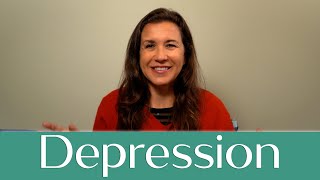
YouTube video (Dr. Carol Darza) explaining what depression is, distinguishing functional depressive symptoms from diagnosable major depressive disorder, and offering a practical 10-step list of self-help strategies. Steps include awareness/tracking, deliberate action/opposite behavior, social connection, mindfulness, movement/exercise, sunlight/nature, taking one day at a time, consuming inspiring/positive media, avoiding drugs/alcohol, and seeking professional help. The video targets people with mild-to-moderate (‘functional’) depression and emphasizes early self-help while acknowledging referral to therapy/psychiatry for severe cases.
Chapters
Are you struggling with depression? Are you having a hard time to be motivated or getting out of bed? Hi, I'm Dr. Carol Darza, author, psychologist and founder of Reconnect Trauma Treatment Center. Today we're going to talk about depression and how to deal with them. Okay, well let's start with first sort of the definition of it is really an overwhelming sense of sadness and difficulty to do certain things in life and feeling sort of low in energy is how we define a depression. But in order for it to be officially a diagnosable depression such as major depressive disorder, I would recommend actually you Google major depressive disorder and look at the criteria because not every depression means or not every depressive symptom means you are actually officially can be diagnosed. So it sort of depends on the length, the severity and how much really it interferes in your life. A lot of people can be still quite high functioning depressed people and, and unfortunately or fortunately they often end up getting help when they're only, you know, not able to function anymore. Which I think at that point is a little bit late. So don't wait for it to be so severe. If you are going to look for professional help, I'm probably going to address in this video more sort of functional depression because I do strongly believe that there are things that you can do more on your own. But when you reach a really more severe forms, I, I would say you're going to need to talk to a therapist and, or a psychiatrist for a medication management. So my first step is almost often I'm going to give you 10 steps is awareness, right? Being aware of your symptoms, really understanding where things are coming from, what's happening and maybe even tracking yourself. So throughout the day or throughout the days, weeks, track how frequently you, you are sad. So I would keep like a patterning journal writing down Monday I was depressed and then start seeing to see if there's reasons for it. Is it really out of nowhere which could mean that maybe you have a chemical imbalance or is it really situational? You had a fight with my husband and my boss and I got fired and I'm depressed now. Well, that would make sense, right? So all of these are very important indicators in terms of what it means and how you deal with your depression. So number one, awareness. And then we go into different actions and things you can do, believe it or not, things that are opposite of depression, which means being more in action can actually be very helpful. Although you will feel like you don't want to do anything, doing the opposite of that can Sometimes creates a sense of energy in people. So in the beginning you're going to be a little bit faking it. You probably heard the expression fake it till you make it and then you'll find yourself in gear. Almost like the car engine, you know it's not starting and then you push a little bit and it goes. So create action steps, create action plans and write them down. And even if in the beginning doing a whole plan is too much for you, start with one only, but then stick to it. If you can't stick to it on your own, find a buddy, find someone that would be supportive. You support her and him and they support you and sort of become accountable right of each other and just encourage each other to stick to a plan. Research shows that when you're able to stick to at least one plan throughout the day, it really impacts your self esteem and therefore it impacts the depressive mood. The third one, I mean step three is interacting, having a connection with other people. Now we are social beings, we are humans who need other human connections. So I know it's hard, especially during these days, although some restrictions are finally being lifted and people are more having connections with people. But find a way to really have someone in your life in any sort of interaction with another human being is actually a proven medicine against depressive mood. And of course I'm going to suggest that please choose the right people. Because if the people that you are choosing are actually worse for you, they're abusive, they're highly critical of you, or they're basically flat out mean, then you're going to have the opposite effect and you're going to find yourself more depressed, maybe more angry and more in trouble. And you're going to want to isolate. So hopefully you'll find at least one person that you can connect. You can join groups. If you have addictions, for instance, you can join AA or other supportive group like that. You can go to your church or your temple and find people that way. There's a lot of other ways to find groups now through Internet too, where you just feel that there are some people around you. Number four is one of my favorite techniques that I often talk about and that's mindfulness. So mindfulness is a whole practice. There are great mindfulness classes out there that I really, really recommend for anyone. Whether you deal with depression or not doesn't even matter. Mindfulness is really the practice of being present and being here, in here, basically in the here and now with a non judgmental attitude. So for instance, from a mindfulness perspective, you Wouldn't be angry at your depression. You would notice your depression and you would just notice it being curious. But, but you wouldn't just sort of get angry at it or be more frustrated at it and, and believe it or not, this kind of attitude towards already a struggling situation makes the situation more bearable. So yes, it doesn't get necessarily rid of the depression or the symptoms but, but you'll have more strength to deal with it. So mindfulness again, number five is some form of a movement exercise. Walking, yoga, Tai chi, anything where you are able to feel your body and you are able to move your body. Well, first of all, the movement creates more serotonin and so that's a great chemical that goes into your body and sorry into your brain and that is a happiness hormones. So using the body for your depression and again you're going to find yourself not wanting to do that. And that's where I said the first step of, of, of the second step of doing things against what you need to do. Right. So taking opposite actions in other words. So finding a body would be great for it. If it's very difficult for you, you can kind of maybe join two activities together. You can go for a walk and talk on the phone with a friend. Here we go. That's number three and number five at the same time. So I'm combining the steps for you or find an activity that's really joyful. Some for some people it's not workout in the gym, but it's a biking or it's a dancing. You know, just finding the right movement for you will be important. And if you can do the activity with someone else, that's even better for you. Well, getting sunlight. So sunshine, vitamin D and something about the warmth of sun. Sorry. For those of you who live in cold weather environments, we are in California, although today is not that sunny. But I highly recommend finding some way to get sunlight. Again, research really shows that it affects the mood. I'm going to add to that basically of being in nature even if it's not sunny, then maybe being in nature next to trees, animals, those are great ways of connecting to, to nature and helping with your depressive mood. Another one is something that you probably heard very common on, on step seven or really item seven is take it one day at a time, which is sort of in conjunction really with mindfulness. Because in mindfulness you are focusing on really being here in the here and now without projecting into the future and without traveling into the past. So when you take one day at a time, you Are recognizing that this day is difficult for you, but you are only thinking of this day when you project into the future and you are sort of bringing further fear. Oh, I'm going to be depressed every day. I'm always going to feel so bad. Then you are going to make your depressive symptoms much, much worse. Right? So know that the only time is now, right? There's no proof of tomorrow, no proof of yesterday. And then this way you can bear the difficulty with less weight. Because having the difficulty of one day versus three months, obviously the weight is much, much more affordable, so to speak. Another item in my list is embracing positive thoughts and embracing inspiring people or books. So one of the things that I use for myself actually that I find very helpful is again, I'm very good at combining two things at the same time. So if I'm getting ready cooking or something, I'm putting a video or a talk podcast that I find inspiring. So it's like I'm hearing positive words, inspiring people thoughts. It could be a book, but really embracing positive, positive thoughts from other people could then eventually help you to take it in. I love stories of people who have been through horrendous events and then they talk about how they overcame it. I think that's a very, very inspiring thing and it fills my brain with positive thoughts at all times. The other item is do not use drugs or alcohol. They actually in the short term may relieve your symptoms, but in the long term they cause further pain, further depression, further anxiety, and really mood swings. And that's what really gets a lot of people. So they feel bad, they use a drug or alcohol, they feel a little better, and then they want to stay up here all the time. Well, that's not really a realistic space to be in because that you got there because of a substance use, right? And then everything that goes up, yes, you guessed it right, must come down. So then the person comes down and then has even further depressive state. So therefore, please know that they alter your mood and they alter your mood in a longer term. So if you need help, professional help in quitting substances, you can contact therapist, a psychiatrist or a rehabs that help you with substance abuse. And then my last item is what's kind of similar to what I said earlier, but it's seeking professional help again, obviously, because I'm a therapist. So find the right therapist for you. Here at Reconnect, we are available to help with depression, with anxiety, with mood disorders. And overall we really help you to see underneath why you're having the depressive symptoms to begin with, right? Often it's related to trauma. So do not be embarrassed to ask for help. If you can't get professional help, get help from the people that you love around. Thank you for watching. And always as a reminder, trauma equals disconnect and healing equals reconnect. Thank you, Sa.
More from Dr.


58 - HOW DOES TRAUMA AFFECT CHILDREN - IT MIGHT BE MORE THAN YOU THINK - HOW TO SEE SIGNS

57 - GAMING ADDICTION AMONG ADOLESCENTS - WHAT ARE THE SIGNS AND HOW TO DEAL WITH IT AS A PARENT?


55 - OCD - WHAT IS OBSESSIVE COMPULSIVE DISORDER? WHAT ARE THE SYMPTOMS? HOW TO DEAL WITH IT?

54 - ARE YOU NERVOUS ABOUT YOUR FAMILY GATHERING FOR THE HOLIDAYS? I HAVE SOME TIPS FOR SURVIVAL :)

53 - DO YOU HAVE A HARD TIME KEEPING YOUR NEW YEAR RESOLUTIONS? THIS EPISODE CAN HELP
51 - SELF SABOTAGE - WHY DO YOU SELF SABOTAGE? WHEN AND HOW TO GET HELP? WHAT CAN YOU DO?