Demystifying Entrepreneurship Through Powerful Fables | Steve Distante
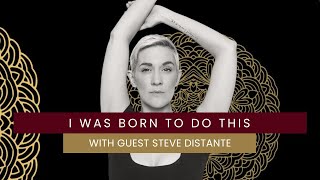
Transcript of a podcast episode (I Was Born to Do This) where Keira Brinton interviews entrepreneur, author, and mentor Steve Distante about his book Once Upon a Time in Entrepreneur Land (14 entrepreneurial fables), mentorship, and the Private Investor Network. They discuss storytelling as a teaching tool, entrepreneurial personality traits (drive, free will, risk), learning from failures (‘business tuition’), community/mentorship for founders, and resources for connecting entrepreneurs with investor-mentors.
Chapters
Hello, my friends. Welcome back to the I was born to do this podcast. I am so excited because today I get to interview one of my friends, my mentors, and a JOA author, Steve Distante. I'm so happy you're here.
Hello, Kira.
So good to see you. I have to introduce you my way, and then I'm going to let you tell us who you are. But who you are to me is you have been one of the most impactful mentors that I have experienced in my entrepreneur journey. You came into my life in May, and you helped me really move some. Through some serious rough patches and in business. And then you invited me out to Georgia, where you and your wife and your daughter were at your home in Georgia on your tree farm, and you spent a full day blueprinting my business, which completely, radically shifted the vision of where I was going and the results I got. And not only are you a mentor, you are my friend, and now you are a JOA author. We will talk about your book today and all the amazing things you're doing, but I'm so grateful for you, Steve, and I'm honored to have this time together.
Kira, thank you. I mean, it's exactly why I was put on Earth was to help entrepreneurs give clarity and really make some meaningful things happen. And you're such a generous person and kind person and the things that you do. Allowing, you know, just regular people like me to write a book is awesome. My first book took two years. This book took six months. So, wow, did I accelerate tremendously. And if I wasn't so tied to every little detail and perfection, I probably could have gotten it done in a month. So thank you. So I. I actually get really energized by working with people who are sprinters. And what I mean by that is. You and I spoke about this, right? It's. Do you. If you're given a direction, are you going to sprint to it or are you going to kind of just dream about it or talk about it or, you know, what we call that? Analysis? Paralysis. Right. But you didn't. You, like, acted right away. And how cool is that? So, I mean, have you always just jumped in and done things like that?
I am a sprinter by nature. It is. It's actually my favorite way to do things. And what I found was when you gave me. So you. You helped me get so clear on where I was going that it was so easy for me to sprint it. One thing that came to me was, you know, you can drive 10,000 miles in a car in a parking lot if you don't have a vision of where you're going. And that's kind of what I was doing. I was sprinting, but I was sprinting with no vision. And as soon as we got clear on the vision, it was like shit. Like everything moved because I knew where to go.
There you go. And the coin, Dan Sullivan's saying, which is a paraphrasing here. The mind can. The eyes can only see what the mind is looking for.
Yes, yes.
So there you go. I mean, once you knew what you wanted, you were like a crazy lady going after it.
Yeah. Wild. So grateful for that time in Georgia. Tell me about. Why don't you tell our listeners who you are and what you do so they have a little bit of a background on you.
So for all my entrepreneurial friends out there, I am one of you. I am part of the tribe. I'm the unemployable, the crazy thinker with this crazy drive to do something. And so I'm an entrepreneur. I'm a farmer. I'm a filmmaker. I do documentary films. My first book, so I'm an author, and I recently found out that author means authority, so, duh. Right. And so written two books. First one is Pitchology, the Art and Science of Raising capital for Entrepreneurs. And the second book is Once Upon a Time in Entrepreneur land, which is 14 entrepreneurially popular positive fables. I also have a bunch of businesses that I've created that I am now chairman and founder of, but I don't have to work in them. I'm there for visioning, which I really enjoy. I have an amazing team, and I love to work with entrepreneurs to help get clarity around what it is they're doing. And I have a special gift around, you know, taking a million details and turning them into magic, like real momentum and getting down to the essence of things. So my unique ability is really being able to help entrepreneurs, including myself, scale and grow in a meaningful way, often with recurring revenue, often taking expenses and turning them into assets, really helping entrepreneurs get very clear on why were they put on earth, what is their unique ability? And so when you and I decided to. When. When you and I decided to. I guess. What do we call that? Book channel. Yeah, I'm not mocking it. I just. I couldn't remember the word. It was with the idea of creating a next book. And then somehow we happened upon amazing fables, and so 14 fables came out of it. And you just had a chance to read some of them, right?
Yeah, yeah.
So they were. They were Pretty cool fables.
Yeah.
The neat thing is that people remember them much better than a chapter of a book that's got all kinds of technical stuff in it, Right?
Yep. Yeah.
I'm also a multimedia kind of guy. Right. So entrepreneurs don't like to do it just one way. We like to do it multiple ways. So in both my books, I have QR codes going to YouTube videos as well as. And this is the same content, a podcast. So I have podcasts with people that talk about the chapter. So I had a. A podcast with Dean Jackson. So Dean Jackson is the. The father of or the grandfather of who, not how. Right. It's a concept that Dan Sullivan and Ben Hardy took and ran into a book and so on. Well, I created a chapter with Dean as the owl. So we have Dean the owl, and it's called who Hunter. So I have this owl in a tree talking to B.B. wolf. And B.B. wolf, big bad wolf is in there because he actually is in business with all the Three little pigs. These are all different chapters, but they kind of mix together.
Yeah.
And what ends up happening so in who not how, BB had had hired a bunch of cats. And the challenge with the cats was they were all over the place. They chase ribbons and moles. And they were hired specifically to protect the grain feeds, the grain silos in Pigville. And he became very successful. BB because he could hunt like anybody. Right. He was really good at it. But then he hired the. The cats, and that's where the trouble started. And so, long story short, he had to get rid of the cats. And what Dean the Owl said was, can I give you some owl advice? You know, not to be your typical owl, but when you hire in your own likeness, you're hiring a bunch of use. And what you really need to do, BB Wolf, this is the wolf from the Three Little Pigs, is you need to find some who's.
I love that.
And BB goes what? And he goes, who's. Who's are those who can help you? Where is their unique ability? Again, that's a Dan Sullivan strategic coach. I'm giving kudos and, and and credit to Dan because I'm afraid that the intellectual police are going to come after me. Intellectual property police. But he says, who's are exactly working within their unique ability, which is what's just natural to us. And it's so natural that even Dean the owl didn't realize that owls are the best rat hunting machines in the world. And BB ended up hiring all of these owls to do what they do best. What they do naturally. And everything was better. I mean, the farmers with their grain silos were happy. The all the people in Pigville were happy. And the owls, bb the only ones that weren't happy were the rats. And so what I found is people retained a lot more information when they actually went and listened to a story. Because what I'm told is that people drop their, their fact checkers and their egos and they really come up with ideas that normally they wouldn't because they're always protecting. Like, is that really true? Is it? And so the COVID of the book, which obviously I have right here, is Once Upon a Time in Entrepreneur Land. You can't see it really well, I'll.
Show it with mine.
Thank you.
Look at that. Isn't that beautiful?
Yeah, it's a bunch of cave people and drawing on the side of a cave and there's three pigs, baby wolf and an owl. It says a collection of entrepreneurially positive fables because we can be vilified. And some true, not some. Some not so true. So some true, some not so true. And the reason we use that tactic was, well, was because we didn't want to have to have people fall into that trap of criticizing themselves and losing the message. And then. So each story is followed by a bunch of feedback. Some different concepts that are taken from the story as well as from interviews within, within the book where you have a QR code to go listen to Joe Polish. And we started with the story of Stone Soup with Joe Polish. Right. Because Joe says, you know, every, every friggin entrepreneur that I invest in, I feel like they're selling me. They're the, they're the guys in Stone Soup. They've got nothing and they're trying to use my money, opm, other people's money to create a business. Well, what the heck.
Yeah.
The truth is, he's right. But the fact is it's important for us to support fellow entrepreneurs, isn't it?
Yeah, it is, deeply. And I love this.
It sets the stage really well. The Stone Soup Song story and then the trilogy, the three stories of the Three Little Pigs. A lot of personal stuff is put in there so my, I could work through my trauma over, you know, somebody stealing lots of money from me or being, you know, the wolf of, of a litter of five. You know, I was born to a dog, but I was the only wolf that was born. So you get to see all the stories about both how I grew up and lived my journey, but through animals. And that's a lot of fun. I love being able to come up with these crazy stories, but we did others, right? So you channeled, I think it was you who channeled Christopher Columbus and his story. And so we kind of did some fact checking around. The fact checker asked me because I had a quote which was, bet big, but don't bet the kingdom. Lord Farquaad. And it was a joke. I made a joke, haha. And she says, I need to fact check this. Which version of Shrek is it from? I'm like, are you kidding me? Come on.
She's a real fact checker. Yeah. I. I have to tell you, what I love about the stories is that most entrepreneurs, they're listening to podcasts all day on how to build business, and they're reading these big books that are great and amazing, but what happens is with so much content coming in, very little of it is actually retained. And so it's almost like things are coming in, but very little stays inside.
And.
And the power of your fables, the power of these stories is that there is no fluff. You just go straight to the center. Every time the stories go straight to the center, they go straight to the lesson. And because it's a story, our brains are able to understand it better. And then the way that you follow up the story with actual, like, here's how this pertains to being an entrepreneur or an entrepreneur investor. And I love this model. I think that this book is going to be something that every entrepreneur needs to have, but it's going to be the thing that they give to their other entrepreneur friends. Like, hey, this is going to teach you something so huge and impactful quickly and easily.
Thank you. And I'm finding that colleges have lots of interest in this. My son Quentin had said to me, you know, the only book I really loved in college had fables in it. He goes, this fits right there. And then I have entrepreneur parents who are reading these to their kids. Their kids are getting inspired. So it's like, wow, these are the things I didn't expect. And they're just gifts because I want to share. I want to share as much as possible with other people the gift of entrepreneurship. And so there's. There's more books in there. I mean, who. Hunter is definitely a book for the future. I took the entrepreneurial personality type, and when I'm writing, I'm coming up with clarity on concepts. So one of the clarity, One of the clarifications for me was what I call the entrepreneurial triangle. Like, what are the different sides of an Entrepreneur's personality and how do we feed it? So one of the sides is drive, right? So we talked to Doug Brackman, you know, the Dr. Doug Brackman, the author of Driven, and he talks about that drive, that's possession about 10% of the population. You know. You know what I'm talking about, Kira, right?
Yeah, I do. Yeah.
You just can't stop, right? Can you? Can you? Can you stop?
No, I. I can't. No matter what, no matter what happens in my life, it's still like there is something that makes me run every damn day.
Yeah. Yeah. And that's called drive.
Yeah.
So there's nothing wrong with us. It's not add, it's not that. Where we need to meditate more or whatever. Screen from the mountaintop. Although I don't think there's anything wrong with meditating. It's great for some people and others maybe not. But the reality is there's nothing wrong with you. So one side of the triangle is drive. People have asked me like, when is enough enough? I don't even know what that means. I said it's, I'm a human doing. I'm not a human being. That's the difference. I'm an alien to you. Because you don't get the fact that I enjoy tremendously creating these wildly exponential thoughts. Thoughts, Right. But then there's free will, right. Like the thought of being tied down, it just drives me crazy. I. Can you imagine being in jail? Oh my God. Can you imagine? Like that would be torture.
Yeah.
So free will, drive, and then the other one, which is risk. I find that we have an appetite to be bad, to do something that is a little risky. And however you define risk, right. So in our businesses, we can bet big. Bet, bet big. But don't bet the kingdom, right? So you put together a team to create some sort of AI or whatever. Maybe that's your big thing, or maybe there's other ways. But it has to be imbalance. And when I show people, it's like an equilateral triangle, right? Each side is imbalance. And I'll even say to Heidi, my wonderful spouse and partner of 35 years plus, I need some risk like I. I need. Because if I don't feed will, feed itself. And you could do something that's self destructive. You could just do something that you could risk money. You could. So understanding it, there's these three triangles, which is drive. Free will and risk is really important. And I describe that in the book for people to get a better sense of who they are as entrepreneurs. So you're nodding your head a lot, and I think you re. That resonates with you. Is that true?
Yeah, I mean, I. I've gotten texts from you before this. Hey, Kira, have you started any fires lately? And it's because I crave risk. I actually crave risk. And if everything is going really well, then I end up in my personal life. There's a fire that starts. Or. Or I do make a decision that wasn't the wisest. And it's like, oh, it's because of that piece that craves risk. And I think that's the thing that really sets us apart as entrepreneurs is because there might be. People have a lot of drive. They might desire free will, but if you don't have that weird, crazy desire for risk, you're never gonna jump off the ledge when the time is right.
Yeah. So that lands with you pretty well, right? Yeah.
Yeah. Beautiful.
So you may. It makes sense for you. And some people can evolve to that. But most of us run away from fires while you and I and most of the people listening to this run into fires.
Right.
Right.
Stand right in the middle.
We're gonna bring some water. We'll probably bring something to breathe, and we'll probably wear something to keep us from burning up, but we like it. But what also we talk about in the book is. And I think Dan Sullivan also coined this phrase, but okay. This whole podcast is dedicated to Dan Sullivan from Strategic Coach. And any idea is not original. They all belong to Dan. I don't want to get any trouble. So. But anyway, so, I mean, Dan talked about the arsonist in your business, and I didn't even remember that he said it the other day at a session. And, you know, a lot of people say, I'm busy putting out fires in my company. I say, okay, are you a paid firefighter? Are you a volunteer firefighter? Or even worse, are you. Are you an arsonist? A lot of times when things are going good in our companies and we raise the company where it needed us every single moment, you know, then all of a sudden, it's actually turned into something that we can't mess up anymore. We find our purpose inside that business through lighting fires and turn, you know, setting off bombs and arguing and just. Just because we can. And the point. Especially Saleem Ishmael, who's one of the interviewers, the point is use your energy for good. And it might not be in your business. It might be some other aspect of your life. Take that risk, but understand you need to take Risk. Okay. It's like you need to take a shower. Go take a shower. Well, you need to do some, you need something risky. Realize what you're doing in the rest of your life as an entrepreneur and that is it serving you well. Are these patterns serving you well? So that's the book really goes into a lot of that through Fables and then some feedback. But I find probably the biggest value that an entrepreneur can yield from this, if you're a true entrepreneur in business, not just thinking about it, is being able to find somebody who's willing to mentor you, who's willing to talk to you about their journey. And so I've created from the concept of this book a platform called the Private Investor Network. And it's not like Private Investor Network is the, the actual name on the Internet is Private Investor. Dot Network is the name of the site and it's a community that we've built for entrepreneurs and entrepreneur investors to connect and for them to have a pitch room where they can actually pitch if they're looking to raise capital. And even more important is the entrepreneur investor, which is somebody who's been an entrepreneur, but we have some cash, right? We somehow figured out. And that's what my first book, Petrology, talks about. How do you get money, right? Do you sell something? You sell it, do you, do you raise capital? Do you whatever. But how do you make money your business? So if you have money and you're an entrepreneur, well, we could risk all that capital or we could invest a little bit of time and money into an entrepreneur and we get the juice from that relationship. We can skip them to the front of the line on a lot of different things. And when an entrepreneur investor invests in that company, it gives the entrepreneur credibility. Like it's. I don't know if you know this trick, by the way, Kira, if you want to get good credit, obviously pay your bills on time and so on, you need to have credit cards. But if you have a credit card that you've had around for the last 10 or 15 or 20 years and you put your kids names on a credit card, they absorb your credit, believe it or not, they get your credit from that particular credit card or so. So it gives them time. Like so you got a 15 year old who's got 25 years worth of credit history, which is insane, but it's real. The same thing happens with an entrepreneur. So an entrepreneur investor who now has mentorship and clarity and money from an entrepreneur investor inherits a lot of what their goodwill is and we're looking to introduce them to our communities, our network, our bankers, our everything. So the reason why the private investor network was set up was to connect entrepreneurs and entrepreneur investors to help them scale and grow. And the entrepreneur themselves, the entrepreneur investor themselves gets a lot of juice out of it. From the perspective of we get to be young in business. Scared. I was, I was on a trip yesterday with a guy who's pretty new in business and he was telling me how his wife would, you know, text him. We don't have enough money for payroll. Make sure you don't hand out the checks. They were talking about demagnetizing the check, however you do that so that people can't get quick clearing on their. And I'm like, wow. I said to go back those days. And he said to me, yeah, but I don't have any debt. And I said what? He was, I don't have any debt. I said okay. So I get that. But if you look at Apple and any other good, well run company, they usually are paying their debt 90 to 120 days later. So you've got whatever a month's run of money is, you've got four and five time multiples of that, which is not in your pocket, it's in their pocket. And what do you do when you can't make payroll? So anyway, we love to mentor entrepreneurs and help them really gain momentum and don't make the same mistakes we make, you know, leadership lessons, all that kind of stuff. Having a mentor is really, really important. And it's, it's, it's so fulfilling to us. You know, we just want to be able to give back to a community of entrepreneurs. But we're not giving donations. We want to invest, sure, we want to make a return. But I can't tell you how many entrepreneur investors have been ghosted and you know, only, only to get really disappointed or disrespected, only to get disappointed at the fact that their investment in that entrepreneur was treated as opm other people, other people's money, right? So they gave you 25 grand or 50 grand or 100 grand, whatever the number is, you never hear from them again. So what the community also does is it creates victory conditions. So we have a MoU builder memorandum of understanding builder for ease and EIS. So entrepreneurs and entrepreneur investors. And on the back of Once Upon a Time in Entrepreneur Land, I have a picture of Einstein writing on a whiteboard and it says E times EI equals E squared and the E squared represents exponential entrepreneur. So when you go through A Clarity blueprint session, like you did with me, Kira. Right. Your eyes are seeing things differently, aren't they?
Yes.
Right. There's things you start doing and things you stop doing.
Yeah.
So my MTP to. To give pay homage to one of my coaches, Peter Diamandis, is to create the world's largest community of entrepreneur investors, EIS to mentor and help entrepreneurs ease, scale, and grow. That's my moonshot. That's my massive transformative purpose. Because we solve problems, we help people, and, you know, everybody talks about how important entrepreneurs are, but the reality is most of them fail. Very big majority. And they fail for reasons of not being able to get through the frustration, setting up the wrong partnerships or relationships, running out of money, not understanding money, all of that stuff. And we've been there, we've done, done that. So any of this resonating with you?
Well, yeah. And I think what I. What I'm hearing, and I know this is my belief, and I feel like you probably believe the same, which is it's entrepreneurs that actually change the course of humanity. And what you are doing is helping entrepreneurs do that. Because if we can get more entrepreneurs to succeed, that's how we actually change the course of humanity, because it's in the creations that come to entrepreneurs that the tides change. And so I love that you're created. You created this network to give people like me. You know, I'm still in the baby stage of entrepreneurship. I feel like. Right. Like I'm. I've built it, I'm here. It's not going anywhere. But I wouldn't say I'm a master to go find a mentor that could help me. And I hear how beautiful it is, because entrepreneurs, we never. This never dies. It never dies in us. There's never going to be the day that we're like, wow, I built all that I've wanted to build. Like, that never goes away. So this gives investors the same excitement of being able to be creating by helping a young entrepreneur. I think it's a beautiful network you've created.
Thank you. And we also have created a dashboard within the private investor network for entrepreneur investors to keep track of all of the companies that they've invested in.
Wow.
So now we're working with financial advisors who have hundreds of these things and they don't know what to do with them. Right. But in turn, we connect with those entrepreneur investors who now get clarity around what it is they're investing in. And I've created an auction room where they can sell off their investments in other companies. And either get paid for them or write them off for taxes. So. So I've got, I've got such big plans for so many different parts of this. One of them is on the. I have a company, I have a room within the network group that we've created this community, which is called the IP vault, the intellectual property vault, where people can do the same thing, keep track of all their intellectual property. But I'm also going to teach them how to monetize it, where I can set up lending on it and so on. So stay tuned. A lot of exciting things going on. And I want to give credit to Peter Diamandis because he's the one who put in my head and sometimes I think of things for a week, a month, a year, decades. Like literally decades.
Yeah, things.
And Peter put in my head, if you create a community, that's where you want to be able to have the most influence and impact on other people's lives. So as again, Dan Sullivan put in my brain, who do you want to be hero to? I want to be a hero to entrepreneurs. I want to help them to scale and grow and demystify raising capital. Purpose of pitchology. So, you know, how can I be more useful to people making a difference, you know, and that's, that's, that's what I think. I know. That's my purpose. So it's all come very much aligned, thanks to you, by helping me to create this book, which has really become me. It's a part of me. It's like I feel like when I lift this book, especially the one from Amazon, my God, it's got this creamy kind of feeling. It feels like my flesh, like, this is me. Like, come, come read this book. And we have one section which is gather around the fire. Like you're, you know, in a cave or out, you know, in the wilderness or. So let's tell a story, because that's the way it's been done for so long and that's how entrepreneurs connect, by telling their stories, not by shooting on you. Right. They want to hear stories. They want to hear. Okay, tell me about a time when you didn't look so perfect and you weren't acting. It wasn't your selfie picture. And you know, in front of something amazing. We want to hear vulnerability. We want to know, like, what made you do this? Why didn't you just keep going the easy route and you'll get some really interesting stories here. I'm telling you the stories I'm hearing. I've got to be told from an entrepreneurial perspective, it's the fuel that makes it happen. And so that's why I just love serving this community in a meaningful way because it's been so good, good to me. There have been some really key people in my life that have really made a difference in. Gotta be honest, they probably don't even know it. And it was just them being ready. Pick up phone, call me. This is not the end. It's the beginning of something very special. I'm telling you now, I've been through this. Like, this is advice that I've gotten and it made all the difference.
It does. I mean, you made all the difference for me at a really critical part of my business. And your. You know what it is, is we live as entrepreneurs in a world that most people don't understand. And so we can't actually call up our mom or call up our sister and say, okay, this is the new vision that's coming to me and I'm going to start running with it. Because most humans are like, oh my gosh, why are you doing something new? Why are you creating what? Your plate is full, your plate is full. But to meet another entrepreneur who's walked the path and who goes, oh, I get you, like, and I actually think this is brilliant. Oh, all right. You just need to do this, this and this. Like, that's why it feels. It fuels our fire to have someone believe in us in the way that we actually believe in ourselves. And I, you were that for me. And I think that this network is going to do that for so many entrepreneurs. What I want to ask you as we kind of roll this all together today is if you had some advice. Maybe it's a story in the book or if there's something that you can share today for all entrepreneurs who are listening, that could maybe move the needle for them today, that this episode actually moves the needle and they find more momentum or more clarity moving forward.
Got it. So who Hunter is one of my favorite chapters because I want people to shift from needing to know how to do everything to finding who's that can do that. Dean Jackson did a great job. He's got a hat with a picture of a cow on it and he says you've never met a self milking cow. And that's the entrepreneur, right? The entrepreneur is there for a purpose. That's your energy. You need to be really clear on where you're going. Because if not, it's like, it's like a magnifying glass. If you shake it back and forth it's not going to burn holes in anything. But now I've seen you during your last sprint, Kira, burn holes and things. Is that right?
Yeah.
So you can create that clarity, but you need to find those who's. And the other thing is, it's not if, it's when. I'm just going to say this as like a public service announcement. Somebody is either stealing from you now, has stolen from you, or will steal from you in the future. It's just a fact and it sounds really horrible, but I call it entrepreneurial rape. Nobody talks about it. It's terrible. It happened to me. And the reality of the story is you don't feel so proud. Especially me having an accounting degree as my undergraduate right, to have had that happen to me. But the reality is it makes us stronger and better. So in the book, you'll see the story that describes in it a guy who's a watchmaker, and you'll see what he does. And then there's some takeaways, like all your bank statements are coming home. Make sure you got copies of this and that and so on. Be careful because people feel entitled to take what's yours. And suddenly you're going to find yourself short on money going, what the heck, you know, where'd my money go? And a lot of times it's people having their hand in the till. That's really sad, isn't it?
I have to say this. I had a pretty rough situation happen two months ago and I called you up just in a dire, you know, someone had wrongly. There was just a rough thing that happened and I would. I was really a mess about it. And you said to me, well, this is just business tuition right now. Learn to trust. Learn to know who to trust and learn to know when not to trust. And if I were to go back and when I first started business with this person in some capacity that we were in, I didn't have the best feeling. But I side swiped that feeling because my brain told me something else. And so even though I lost money in this experience two months ago, it. I looked at it after you said, this is business tuition, I looked at as like, well, you know what? It was only $8,000. And $8,000 I've spent on courses all the time. I've spent $8,000 on courses and programs. So this was my course on listening to intuition. And this was my course on never sign a contract without a lawyer. The end. Like it was so clear. And then I wasn't bitter, I wasn't resentful. And now I am smart as hell. Like there won't ever be a contract I sign without a lawyer reading through it. And that was my business tuition. And you taught me that. And I feel like that helps propel entrepreneurs forward rather than that could have tanked me, but instead it was like, no, let's get going. All right. I learned and we keep moving. And I think that even if somebody's stealing from you, it's what you called to me, business tuition. Well, what do you learn? How do you make this better? And that's the spirit of entrepreneurship, right?
Exactly. Yeah. We just need to move on because wherever we channel our energy is where we're going to either come up with something good, something bad. You know, Tony Robbins says it, I know I have to give everybody credit here along the way.
I like it.
He says if you focus on the guardrail, you're going to crash. Right. So if you're going to focus on licking your wounds around eight thousand dollar invoice or whatever, what's that going to do for you in the long run?
Right?
Money did you just pass up as a result? And that's the kind of thing that we as entrepreneurs need to learn. I call it know thyself, Understand where you're spending your energy and if you're spinning out, I think I also use the word halts. Hungry, angry, lonely, tired, stressed. Right. When we're in that state of existence, just take your hand, put it on your heart and say, okay, little Kira, you're okay. You're tired, you're hungry, whatever. Tomorrow's a different day. Get a good night's sleep and move on. And, and that's really the takeaways that you're going to get from a lot of these stories. Plus you're going to be able to share them with other people. Plus, plus, plus. There's a lot of pluses here and belong to a community. You're not alone. There are many communities out there. Mine happens to be eo, the Entrepreneurs Organization. I created a chapter, I brought a relationship with the UN to eo and you need to have fellow entrepreneurs because a lot of times our families abandon us or they have no, no sympathy. Like, why would they have sympathy? We're entrepreneurs. We're making so much money. Meanwhile, you're looking at the bank, you know, oh no, I, I, I, I'm now, you know, need to dip into something else or I don't have any more money. What do I do? Your fellow entrepreneurs have all been there, done that, and will continue to do that. And that's who you get your, your best energy from. Because you could be vulnerable. You don't have to have that mask on and you tell your story and be non judged. No judgmental people in the room, just giving you experience, shares, nobody shooting on you and telling you what you should do. They tell you, well, when I was in a similar situation, this is what I did. And if any of it applies to you, I'm glad to help you along the way. So you can't. Does your brain work when I tell you you need to do this? Most of us are broken that way. We don't want to get told what to do. Are you the same?
Yeah, yeah. That, that, that does not mix well in my body. But if someone were to say, hey, this happened to me, which totally clears out the shame, right? Because as entrepreneurs we're all trying to write our own playbooks all day long. And so when we get our feet into some really deep mud, we're like, shit, how did I get myself into the mud? I should have seen it was muddy over here. And then having someone say, hey, I walked in that mud and guess what? Here was the fastest way out, that clears up shame. And it also creates movement. When we don't have shame, we can move. And I think that's what if I were to say from my realm of being an entrepreneur is what actually kills entrepreneurs is the shame of doing something wrong. And the truth is, is that every time we do something wrong, it is only the bridge to where we actually need to be.
Yes, yes. And I'm so grateful that mental health has become less taboo to speak about nowadays because EO was actually formed because of an entrepreneur who committed suicide. And it still happens. Yeah, at times. You know, the spouse who's, you know, got everything taken care of and the person's not vulnerable to anybody, doesn't have a community to talk to, ends up feeling this, this lack of any confidence or any way out, and they decide to end it all. And that's not okay. You're not in your right mind when you're thinking that way. And there's a way out and it's by talking to other people that you can get out and be able to survive another day. And usually you learn such valuable lessons, the next run is going to be even that much more impactful. Again, your tuition. Right. So I'm just so grateful that we're able to share our emotions in such a non judgmental way. Yeah, you know, I'm just, I over and over I keep hearing this and seeing it most recently, I've. I volunteered to help a not for profit, which is all combat veterans. And I don't know if you know this, but 22 veterans kill themselves every day. And there, many of them, especially combat, are suffering from ptsd. So what this not for profit does is they. It's called Operation Tackle Box. And they take combat veterans and teach them how to fish. They call it healing through reeling. And they've got this, I'm going to say a pastor, this guy who runs it, Jacob Watkins, who's amazing. I think he did two tours in Afghanistan. He went to the hospital in Germany. He was all shot up. And they're like, okay, you can go home or you go back. He goes, I'm going back. Like, whoa. You know, this guy's hardcore. And he dedicates his life to being able to help people through rough patches. Well, God bless him. But also for the entrepreneurial world, we're here for you. We're here to talk and, you know, help one another out, find a good group. Eo, ypo, wpo. There's a bunch of them out there. But you need a community. You need people to talk to and be vulnerable and confidential. That's the most important part. So, yeah, I'm a big believer in being able to help the community and help me to become successful in my life. And I'm not done. You know, people say, when's it going to be? When's enough, enough? And I'm like, what are you talking about? I'm just keep going.
This is breathing. I'm breathing, so I'll move.
Yeah, well, I'll end it. I'll end with this. Okay. So I got. I was introduced to perfection as a disease. And so years ago, perfection was the. The opposite of being able to be motivational or inspirational to one another's. And so you'd sit with your team and it would be the. Yeah, but, you know, oh, yeah, we did all this great stuff, but did you get this done? And you just completely kill the spirit in the room. That was the original version of perfection that I was succumbed to. I. I had succumbed to, but the reality of things. And I gave it up for 10 years, by the way. And then I got introduced to a thing called teleo, and it's the word in Greek. And this means that your life is an evolution of perfection, getting clearer and clearer as to what your purpose is and what's your unique ability and how can you use your gifts and talents so that every day is uber satisfying? At least 80%, let's say where you're feeling like you're very much in the, in the position you're supposed to be in and just get energy from it all day long. And that is. And then what happens when you reach perfection? You die. So that's okay. But it's a long journey. So anyway, I won't go on anymore, but I just love that being able to share with entrepreneurs and be part of the community and hear about what everybody's doing out there, I just love it. I just, I just enjoy seeing all the innovation that's to going.
Going on and we can feel that. Everyone who's listening can feel that. And I want everyone here. This book will be live. What date did we decide it was going to be? Live in the world? January.
January 31st is our kickoff.
But it is January 31st is when. So we'll make sure this episode is not until after that. So I'll have my team. Team cut that part out. Okay, so your book is now live. We're going to have this, the link to it on our show.
Notes.
How else can people. If people want to learn about the Private Investor Investor Network, how do they do that?
They can visit Private Investor Network, private investor.network and you can find information on both of my books. You go to Amazon and type in my last name or Steve, Steve Distante. It's like distant with an E on the N D, I, S T A N. And you'll see that we have a website also which is Pitchology AI. So Pitchology, the word which I have a trademark on and the AI instant dot com. So Patrology AI will bring you to the website with all of my collateral and such, so you get to see what's going on there. And if you happen to be connected to a university, let them know there's these fables and if you want to really inspire your kids and start whispering in their ear about becoming entrepreneurs when they get of age. And by the way, I started my first business at six years old, so I don't believe in of age. Consider getting this book for them as well.
I love that. Well, Steve, it was an honor. It was an honor to be your publisher to help you channel through the ideas in this book. It is an honor to call you my mentor, my friend. And this is just the beginning of amazing things that we're going to do in the world together.
Absolutely. We're just getting started.
Just getting started. So thank you for being here and everyone, thank you for sitting with us. I hope this woke some fire up inside of you, that it put fire at your feet, that belief moves through your body and that you follow the calls in your heart. And I will see you next time on this beautiful episode of I was born to do this.