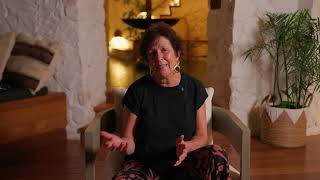
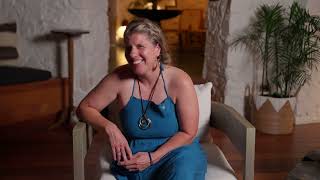
"Finding Hope in the Desert: Navigating a New Autism Diagnosis with Amber Arrington"
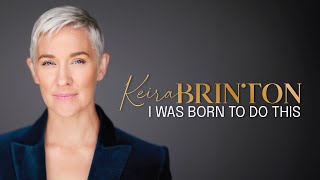
Amber Arrington talks about her book for parents navigating a child's new autism diagnosis. She emphasizes autism is not an emergency and walks through immediate next steps: pause, research, seek support. Arrington has three autistic children and runs AutismSavvy, a resource and community platform.
Chapters
Welcome back, my friends, to the I was born to do this podcast. I'm your host, Kira Brenton, and it is my deepest honor and joy to create the space for our beautiful authors at JOA Publishing to come in and talk about their books and talk about the work that they're here to do in the world, the work that they were born to do. And today we have the beautiful and talented Amber Arrington on the show. Amber, thank you for being here.
I'm so happy to be here with you today. Thanks for having me.
Of course. It's always so fun to see your beautiful face. I have such a love for you. We've walked this path for a while now, and I love. I love that we're sitting here talking about your book, talking about the work that you are here to do. So why don't you tell us, first of all, the book that you wrote?
My book is called it's right There. Not a Typical Motherhood. It's the Guide for Navigating a Child's New Autism Diagnosis.
Can you grab it? Can you grab it and show us so those who watch this recording can see how beautiful it is?
Oh, this is her. We have the infinity symbol on the COVID just because the infinity symbol is leading the way as the symbol for autism. So, yeah, the COVID turned out so beautiful.
I love the COVID It just has. It also has such a comforting calmness to it. I feel like when I look at it, I feel calm. And I would imagine that those who need this book probably don't feel calm when they are in that space of life, right?
Absolutely. Most of them. Most of them do not feel calm.
So why don't you talk to me about who needs this book?
So I wrote this book for the. For this specific moment in time where the parent is essentially leaving the doctor's office with a new autism diagnosis in hand for their child. And in that moment, all they know is my child's autistic, and that might be all they know. And then they have what the world's narrative about autism is, which is not inherently positive. And so that person is feeling so scared, so much fear, confusion. They're paralyzed. They don't know what to do next. And that's who this book is for.
And it feels. It feels as though this is what I'm. What I'm feeling right now. And you can tell me if this is true. But it feels as though there are so many who are leaving doctor's offices right now with this. With this diagnosis and that they've just entered like walking on like glass. Like no one told them to put their shoes on. Like, no one, no one prepped them for what they were going to go through. And so they're just, they keep getting cut and it just feels like they can't get ahead. Would that kind of explain how they feel when they leave? Talk to me about how that, how that moment is for them.
I think that's a good analogy. I actually use an analogy in the beginning of the book where this. We're just going to call her a mom because that's what I am and that's who I generally speak to. She is in the middle, like she just got dropped into the desert with no shoes on, with no sunscreen, with no umbrella. She's just in the middle of the desert and she feels like she's completely alone. So yeah, I think that was a good, like, visual. But yeah, that's, that's what it feels like. But what she doesn't know is if she can just get over the hill, there's actually like a whole army of support waiting there for her and she just doesn't know about it yet. And that's what I seek to do also with a book is just like, to help her know, like, I know you're scared. I know you don't know a lot yet, but I'm going to help you know everything high level that you need to know right now so you can begin asking the right questions, seeking the right support, and realizing that this is not actually something that you need to be so scared about.
Yes. Oh, I love that. I love that analogy and the visualization and just knowing, you know, it's so much easier to do something when, you know, oh, if I could just go one more mile, right? And like all my hardest days, I have to be like, hey, can you just like do five more minutes to this spot? Can you do 10 more minutes to this spot? Right? And there's like something where, like if we know around that corner there's a thing that we've been needing. And I love that your book is actually that. It's like the guidepost that says, hey, let me help you, instead of you just, you know, I would imagine it would be easy if I were dropped in the middle of the desert with nothing. It would be easy to just actually sit down and be like, why? Why would I even walk? Yeah.
Take a nap.
Yeah, yeah, yeah. I was like, well, I'm gonna die anyways, so might as well just sit down. Right?
That's what it feels like. And that's what a lot of mamas do. I. I didn't realize this because I feel like when something hard happens, whatever kind of hard it is, we tend to handle it in one of two ways. Like, we tend to one, leap into action and. And bury any emotions with the action to try and fix, to try and remedy, to try and, like, try to feel like you're in control of the situation. Or we shut down and we fall into depression. We just sleep if we can. Like, you know, there's these two camps, and I just happen to be in the camp of action, but I know there's a lot of moms that are paralyzed, and they just are like, I. I don't even have anything to give to try to figure this out. And so I like to try to support both with wherever they're at and just pick them up and say, all right, this is your next step.
Which I think is so powerful. I would love for you to share. I know we kind of jumped straight in, but I want. We'll see where. I would love to talk about you writing the book, but before we get there, this seems so loud. To just dive here is like, what would you tell a moment who just found out that her child has autism? Like, what do you teach in the book that you could teach them right now?
I really like to focus on. Autism is not an emergency. It's not the emergency that you feel. You might feel like it is. Obviously, it's something that, like, needs our attention. But you can take your time and slow down for a minute until you are grounded again because there's going to be maybe doctors or professionals telling you you need to throw your kid in this or that. They need 40 hours of this. They need that. You might just believe the first thing anybody tells you. And I think it's really important to realize it's not an emergency, an autism diagnosis. It's not the final verdict of their future. It's not a hundred percent indicator of what they will accomplish in their life. And it's okay to pause and just research a little bit, ideally with the help of a tour guide like myself, so that the fire hose of information is not affecting you so greatly out on Google and Facebook groups, you know, but like, take your time. Take a pause. It's okay if it takes you a few weeks or a few months to figure out how to dial in what your next step is. And it's also okay if you do nothing, because an autism diagnosis doesn't mean that you have to do something about it. And so I just think it's important for moms to know these things. In the very beginning.
What I can only imagine the relief that brings to a mom.
Yeah.
Just knowing that, like, just knowing, like, hey, this is an emergency. Because it does feel like the. The trauma is in that experience of, like, this is an emergency. And then everything gets turned to fight and flight, and then your nervous system get wrecked, and you're also trying to navigate raising this child. Talk to me about your journey. Talk to me about, like, why is this the book that you wrote? And. And why, you know, what you know?
Well, I guess this is a good place to say, this is not the book that I meant to write right now. Like, I found myself through what I consider divine, something that led me precisely to this moment where I ended up in a mastermind of women who were all writing books. And I intended to write a book about how it took us 20 years to build our family through IVF and adoption. And I got a couple months into that mastermind, and I was like, I don't want to write that book right now, but I am supposed to write a book. So, like, what else do I know a lot about? Well, at that point, I have three autistic children out of my six, and I thought, well, I know a little bit about autism, so let me just write, like, a handbook about autism for parents, which is essentially what I did. But as I got into this book and wrote it inside of three months, by the way, with the help of yours truly, as I was doing my research and the pieces that weren't about my personal journey, like, I ended at this book was nothing like I thought it would be. I ended up learning so much that helped heal my soul, that helped me understand the reality of autism, and it really. This book did a lot to change me. And so then I ended up with this book about autism. That's how I got there. Wow.
Yeah, I remember this. I remember you coming into the Mastermind. I remember the book that you were going to write. And then I remember when this one showed up and it was like, oh, my gosh, this is the book you're here to write. It's not the book you thought, but it's the book that needs to come out. And I think it's very divine that you have three children who have autism, because I'm sure every one of them is different, which allows you to see through the eyes of multiple mothers.
Yeah, exactly. And I think what the question that you asked me that I didn't answer was, what was it? Like for me to have, you know, essentially have three autistic children. And the thing that's unique about my journey is I have a 20 year old autistic son, but I also have at this point, three and a half and five year old autistic little girls. So it's something that I have been navigating for 20 years already. It's also something that I am currently navigating daily. And also, just because your son is 20 doesn't mean that they don't need you involved in their life on a regular basis, because that still is the case. And the way I felt about each of their diagnoses was different depending on the situation. When my oldest son was diagnosed, that didn't happen officially Till he was 12 years old. And so I was relieved to finally have that diagnosis in hand and realize what we were dealing with. Trying to piece that all together for 12 years was so crazy. Now when Mallory comes along, my miracle baby that I wait 20 years to have autism is nowhere on the horizon of what I suppose happens after a 20 year old miracle comes along. And that one really took the wind out of me and that was really hard to cope with. When my baby ends up with a diagnosis, I call it an accidental diagnosis. It wasn't an accident, but she was hitting her milestones and I didn't think she was autistic. And the story, it's all in the book. But the way that that happened, I guess I, I leaned into that pretty quick because I was like, well, we know what to do with autism and if I have this diagnosis for her so early, it will only help her. I know how to get her supports now and she's absolutely thriving. So. But it's just really interesting how like you can have different emotions about that diagnosis depending on what's going on. And all emotions are okay.
Yeah.
Oh, wow.
My heart is just. I can feel the relief this conversation is going to be for many because I think with anything, every, anytime we feel alone, everything feels harder. And you just sharing your stories and then you writing this book and then you've created a membership for people. Like, you're annihilating the belief that we're alone, which is like half the battle.
Yeah.
Well, I hope so.
That's the best gift.
It's the best gift that you've created.
Well, because everybody, most autism moms, moms of autistic children really do feel alone. And even if they have a really loving partner, even if they have an awesome mom or dad in their life that are really Supportive in lots of ways, even if they're that lucky, and not everybody is. You still feel alone because nobody gets raising an autistic child the way another parent raising an autistic child does. Like, you just don't have a place with people with typical children. So, yeah, that is super important.
It is. And I would love for you to share with us about your membership, because, you know, you and I are similar in the sense of, like, my deepest belief is to eradicate people feeling alone. And, you know, in my way, I have a network of leaders because leaders feel alone a lot. And so I have, like, an actual network where leaders come in and it's like, let's clear out this bleed the year alone, and let's, like, band together. And you've done this for parents who have children of autism. And so I love this, and I think this is the thing that's missing. It's not getting into a Facebook group where everyone's sharing their problems and you don't leave feeling uplifted. It's. It's like being in a community that sees you, hears you, knows you, and I know that that's who you are. So tell us about this membership.
Sure. So I. I wanted to create something special that didn't exist. Community is a piece of it, for sure. But there are so many parents that are struggling to get, like, they're waiting one to two years or more just to get a diagnosis. They're stuck waiting, or they're stuck waiting for their appointment, like, for services. Essentially, they're stuck waiting. Some parents can't access services at all. They don't have insurance, or they're in a rural location. They're in another country, and they can't even get support for their child. So I was like, how can I help solve some of these problems? That's why I created the Infinity Mom Club. So it is a community, but it's also a place for education and resources. Now, here's the problem. Education and resources sounds elusive. Like, moms want to what do I get? Like, why do I need that? You know, I created a place where we could come in and, yes, we can have conversations, we can vent, we can ask questions. Like, there's a beautiful forum type feature that's kind of like Facebook in there. But then, like, I have a whole resources section in there, categorized for information about, like, state disability agencies, for example, resources for speech therapy, resources about facilitated communication, like, books to read, podcasts to listen to. Just so, like, it's easily attainable information. But then we bring in experts at least once a month. So I'm bringing the experts to them that they can ask their specific questions to about their specific child and get specific answers. So we're talking like, behavior analysts, speech therapists, occupational therapists, pediatricians, that. That happens in there. And then we have, like, mom's night in once a month. So we hang out on Zoom together, and we have book club, and I have the autism accelerator boot camp course, and they get to listen to my audiobook for free as members of the Infinity Mon Club. So I just packed it full of so much that I think that moms would find valuable, and we have a great time in there. So that's the Infinity Mom Club.
My gosh, it's genius, Amber. It's genius. And the thing that I think is so great. And again, like, I. I know I don't have a lot of room to speak here. I mean, well, what happened to my hair there? I got a little crazy over here. Spigs was there. But, you know, I have five kids, but I don't have any. I have not dealt with autism, but just having five kids. Anytime I've struggled with something as a mother, my bandwidth is nowhere. I don't have the bandwidth to go and research and figure out solutions. I don't have the bandwidth to try and figure out, okay, like, how do I find a therapist for my kid? Like, I don't. Like, this is the problem of just being a mother, Then throw on an autism diagnosis. And I can't imagine that there wouldn't be any bandwidth to do the research to find things. And so I love that you've brought it all together so that it's just there for them and they don't have to go try and figure it out. It's already here. And then to be able to have.
Experts come in, I mean, this is.
So brilliant what you've created. Anyone who's listening right now, if you know a mother or you are a mother or you are a father or you know a father whose child has autism, I'm highly suggesting you go towards this space or that you show them this membership, because life is just too damn hard to walk it alone. Throwing on top of trying to navigate autism without any resources. Everyone needs to know about this. So how do they even find out? Like, what. Where could we send them so that they could learn more about this?
I make it pretty easy. So I ended up essentially building a company around this book. So it's called Autism savvy. So autism savvy.com and then on social, like, TikTok and Instagram. I'm tismsavvy.
Perfect. Okay. And that will be in our notes as well. But this is me saying, go, like, run. Share this. Let's not have parents be drowning while they're also holding their babies. I didn't feel that. You know? Yeah. I just think what you've done is so powerful. So what I would love is if you could share a message to anyone who's listening right now who maybe feels like they're drowning while trying to hold their kids. Like, what? Could you speak into them right now?
Oh, man. I'm just gonna say, like, take my hand. I'm not. I'm not a big organization. Like, I'm just a mom like you. Or find someone like me who's walked his path and know that autism isn't as scary as you think, that you have so much to hope for. Having an autistic child doesn't mean that they're not capable of having beautiful lives or that you won't still have a joyful life. We just have to make some pivots, and everything can still turn out pretty dang good. So just have hope for that. That would be my message.
I love that. I love that. Have a hope. Have hope for a future that could possibly be better than they even imagined. Right?
Yeah, absolutely.
There's a piece that I'm hearing of, like, there's something that happens when we get thrown off our path where we lose the hope of a future that we thought we were going to have. Can you speak about that? Like, the grief of losing the hope of a future that you were expecting?
It's so real.
It's so.
It's so real. And when. Yes, when your child is diagnosed with autism, you might feel like you were handed a death sentence. You're like, oh, my gosh, all these dreams I had for this child. I don't know if they're going to talk. I don't know if I'm going to hear the word mom. I don't know if they're going to go to college. Are they going to be bullied? You're going to have all these. These things that. Yeah, it's not what we planned. We dream up all of these beautiful dreams when we're carrying that baby in our belly. And it is. It is hard. And I think you have to let yourself process those feelings. But here's. Here's something. I think I actually talk about this in the book. It's like, yes, but having. Having an autistic child it doesn't mean that they're not going to have a beautiful, joyful life. There might be challenges, but guess what? Having a typically developing child also is no guarantee of a perfect, joyful life. How many of us have typically developing kids that end up with depression? Suicide ideology. They have an injury, they lose a leg, they have a heart defect. Like, raising children comes with risk, and there's no guarantees anywhere, you know, so it's just like. But I just think that it's a mindset shift that if you're like, oh, my gosh, you're right. Like, having an autistic child doesn't mean that they're going to have this terrible future or that I am. And having a typically developed child doesn't. It means the same. Like, it can go either way no matter what. So, like, we're really not that special because our child's autistic. Like, being a parent comes with these same risks. And the bottom line is we just have to learn how to pivot with grace and just find where you don't feel alone along the way. Yeah.
That's, like, the best sentence ever. Like, parenting comes with risks. Is that what you said? I was like. It was like, oh, my gosh, it's the best sentence ever. Like, it's so true. Right? Like, to raise children is risky. I mean, we've got drugs, we've got. I mean.
Yeah.
It's like, this is. This is like a landmine every damn day.
You know, it a hundred percent.
And so I think you naming that really takes off the pressure of, like, it's just risky that we decided to become parents. Yeah.
And, you know, I would like to share a little story on this subject.
Yeah. Yeah.
Okay. So we adopted our first four children one by one as babies. Okay. Three of them are from the same birth mom. So there's two birth moms, four kids. I had them within four years. So grateful. All I wanted to be was a mother. Okay. Then I. Along the way, I could just never get pregnant. My husband has spinal cord injury. I have endometriosis. I wouldn't get pregnant and miscarry. I would literally. I just literally would never be pregnant. And this went on for a long time. We tried IVF off and on. Well, probably the average listener is like, you had four kids. Like, I'm sure that's plenty. But I had this thing in my soul where I was like, I'm missing one. I'm missing one little girl, and I will call her Mallory. And I would try adoption, and I would try Foster and I would try IVF and nothing would work to get her here. It was like this whole thing for a really long time. Okay, so anybody who's been through ivf, it is, like, going to battle. Like, it's not for the faint of heart. The IVF sucks, emotionally and physically. And it's not a guarantee. No pregnancy is. But when you're paying 10, $15,000 for a chance, you really hope that it works. So, anyway, I finally get pregnant with Mallory and have her 20 years into my marriage. 20 years. And not only that, I end up with extra embryos in the freezer. I never thought that that would be the case. Like, they would always die off. So now I have my miracle baby, and I have four embryos left in the freezer. And I agonize because Now I'm almost 40, and I'm like, but she's gonna grow up like an only child. My older kids are teenagers to young adults at this point. And I don't want her to grow up like an only child. But I don't ever wanna put myself through that again. I don't wanna hope for that ever again. And it was this whole thing I went through. Like, what do I do with those embryos? Do I try? Cause it could work on the first time or the second or the third, or the fourth, or none of them. That could take me four more years to get through. Like, I could have a stillborn. I could have miscarriage after miscarriage. I'm old now. Or what do I do? Destroy them? Donate them to another couple so someone else can raise my baby? Like, none of them seemed like great options. I had to get to a point where I said, there is no reward without risk. And I had to get to the point where I said, I'm going to try for this baby and it might not work out, and she might have health issues, and either way, I am going to be okay. Took me a long time to get to that moment, and so I went for it. And on the very next treatment, they put in this embryo, and it took right away, that was January of 2020. We know what happened that year. But I had Another baby in 19 months later, she ends up with an autism diagnosis. I would have told you that's the worst thing that could ever, ever have happened. Yeah, it's not like I am okay. She's okay. She's more than okay. All of my kids are okay. Like, there's hard things, but there's no reward without risk. And my worst fear came true, essentially. And I'M still okay. I just think that's a big lesson.
Powerful lesson. And what an extraordinary story of resilience on your part. There's a journey that you walked, and it's created you to be this leader, to be able to help people. And this is so interesting, this idea of, like, our worst fears coming true and then you being like, oh, and we're fine. It's like just speaking that into people right now. Like, maybe somebody's afraid that their kid has autism and they don't want to go get diagnosed because they don't want to find out. You just speaking that over them right now is probably helping them have peace. Like, everything's going to be okay.
Everything is going to be okay. And some. Some kiddos do require a lot of support for their whole life. I'm not saying that doesn't happen. It does at least one third of the time. And these parents struggle so much, and that is so valid. They're still okay. They still wouldn't trade their kid. They still adore their child. So I'm grateful for you letting me share my thoughts today. Yeah. Yeah.
I'm grateful that you're here. I had this really powerful experience this week. I went on a retreat. I wait to be silent for two days. I'm a bit of a talker, so that was a real challenge that maybe I broke a few times. Like, maybe I couldn't actually abide by the rules completely. But there was this insight that came to me when I was silent, and it was really fascinating because there was nine of us women there, and if no one spoke, we didn't know where to go. So the leader would take a gong and gong this sound, and we would know to follow. And it was like this thing of, like. So as leaders, if we're not sharing, if we're not teaching, if we're not speaking what God has told us to speak, then, like, no one and really knows where to go. There's, like, power. Yeah. You know, sharing. And there's power in what you've done, and there's power in your words, and there's power in what you've created. And it's because those who are lost and struggling and drowning and don't know where to go when they can hear your voice, when they can hear what you've created, it gives them a place of safety and a focal point. And that lesson that I learned this week, like, it changed me. It was like, yeah, no, this is why we are guided to share.
Yeah, I think that's so good. That was insightful.
Yeah. That's profound for me. So you have created this work because there are many who need to hear. They need to hear where to go. They need one voice. Is gonna be like, hey, I've figured some things out. I've gathered the experts. I've brought this for you. So those who are listening don't walk the path alone. Whether you get support with Amber or you go somewhere else, but, like, for the love, don't do this alone. Right?
Yeah.
And grab her book. It's on Amazon. We'll link it in our show notes. Why don't you show it one more time and say the title one more time so people can look that up right now? Beautiful.
It's called not atypical motherhood. But the word atypical is, like, it's not what you think if you're just listening. It's a T, Y, P, I, C, a L. Not a typical motherhood. Yeah. Thank you so much.
I love that. And go follow her. She's phenomenal on social media. You are. You are such a great. What is the word? I mean, I love watching your videos. They captivate me every time. Like, every time I see one of your videos, like, I literally have to sit and watch, like, you catch me. And you're really, really good at what you share. So everyone go follow her. It's autism savvy. And, Amber, I know I'm your publisher and I helped you write a book, but I'm also your friend, and you showed up for me on a day when my marriage was falling apart in Arizona. I'll always remember you just showed up for me that day in that car. And I just want people to know, like, yeah, you're a leader, and you're brilliant, and you're an amazing businesswoman. You're also, like, an extraordinary human. And I just, like, feel really lucky to know you. And I'm, like, so grateful you showed up for me during a time when my whole world was falling apart.
You're one of my favorites. I sure love you.
Same. So with that, my dear Amber, I want you to take a nice, deep breath in, and I want you to take your eyes into your heart. And if there's a message that you can share today as we leave, what would be the most important message that you share?
How about just, like, keep your chin up. Everything is. Is going to be okay. And trust your gut more than anything.
Powerful. Beautiful. Amber, thank you for writing this book, thank you for being this leader, and thank you for being here today.
Thanks for having me. It was so fun. Yes.
And as we leave, I always like to leave one message. The message is just so loud to me today is that don't walk alone. Whether you have a child with autism or not, don't lock this life alone. Find the people who will see you, who will hear you, who will guide you, who will hold you. Because life is not meant to be alone. And there are so many who will come around and hold you with that, my friends, I will see you on our next episode of I was born to do this.