Freedom House LIVE Author Summit
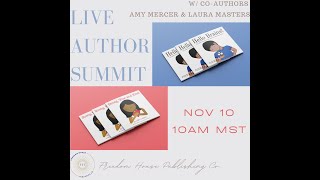
Laura and Amy present their children's books Strong, Wise and Kind and Hello Brains, which teach kids about the three-brain framework: head, heart, and gut. The authors read from the lullaby book, answer questions, and share how families use the framework at home.
Chapters
Summit. I'm going to invite everyone to mute their microphones. That will help keep the sound really nice and clean. I'll introduce myself. My name is Kira Poulson. I am the CEO founder of Freedom House Publishing Company. And I am so honored that we were able to publish Amy and Laura's books. Not just one, but two at the same time. That's so exciting. And so what we do at Freedom House is I host these beautiful summits. And what they are is this is a way for you to celebrate these beautiful women, but also for you guys to participate. So we'll open up in this if you guys want to ask questions to Amy, Laura, or maybe you have amazing experiences with their book that you want to share. This is like an author signing, but way better. It's way better because we get to play together. And it will be a full hour. If you can't say the whole time, that's okay. The recording will be sent out to you guys. But know that this will probably be the best hour of your day. Okay? So with that being said, I want to just bring Laura and Amy up. Ladies, congratulations on your books.
Thank you so much. Thank you.
So why don't you hold your. Oh, sorry. Amy, go ahead.
Oh, I was just going to say it's just been amazing to actually have the help to get it. To get it out there. So what I really say how much we appreciate working with you about it.
Thank you. My team is really, really good. Claire is like the best ever. So I'm so glad you guys got to work with Claire. I want you guys to just grab. Let's grab one of the books. So, Laura, I see you have them behind you. Amy, if you maybe one of you grab one and the other one grabs the other, and we'll just kind of talk a little bit about each book. So let's start with that one. Laura, why don't you talk about, say the title and why don't you share with me and everyone what your. Both of you, your hope for this book is.
So I'll begin. So this book is called Strong, Wise and Kind. And one of the things that, that Amy and I just love about this book is it's simple and it's just a lullaby and something that children can be read to at night and have as a memory to hold on for their whole life. And it is a book that introduces just very briefly and sweetly, the idea that we have skills and beauty and intelligences in our heart and in our head and in our gut. And when they work Beautifully together. It's just a wonderful way to be in this world. And it's just a light, easy reminder every day so that when we are introducing this idea to children and they hear it all the time, that they develop a way of being around that that feels natural and develops the ability for them to always be able to tap into all of their inner resources.
I love it. And I'll. I'll speak as a mom to five. I have five kids. And, you know, it's funny how we sing the same songs all the time. Well, at least I do. I have the same lullabies. I sing to them at night. I have the same stories, like, they love. Like, the Three Little Bears is just, like, a favorite one of lots of my kids when they were little. And it's because there's, like, the lullaby essence to it. So I love that you guys call this a lullaby because it allows it to become a part of the practice, a part of the nightly program, you know, so I'm just celebrating the genius behind that.
Thank you. I want to say one little thing. I just. For everybody to know that all of the illustrations are done by Amy, and it's just. I'm just so moved by just her work in it and the time that she took. And I say, we need a child that looks like this, or we need a heart that looks like that. And she just draws at it. It's just so amazing. So I just want to take a second. Honor the beautiful artist and the work that Amy did in the illustrating of these books. So thank you, my friend, for making our books so alive.
Well, I kind of actually. Oh, I am really sorry. I'm gonna have to put us on pause for just a second.
I'm really sorry for interrupting. You're fine. So I'm wondering if. Could you just show us, for those who don't have this book yet, can you open the book and just kind of flip through and. And show some of the pictures and maybe maybe one of your favorite pages. If you could pick one of the pages, what would be.
I always love the beautiful image of the heart that Amy drew, which is just. I just think it makes it shine. And this one I love because it's actually my daughter with her favorite cat.
I did not know that.
Yeah, her name's Savannah, and so I love that one, and I think that I just love. I'm gonna grab one from the other book. There's. I just. Well, I love the way he's holding his head, heart and gut in the beginning of this Page, and it's our logo. And I love how she's just pondering. And I love the fact that, you know, we just talk about how there is three brains, but that. That, you know, it's what science says. And then what when they all work together, I just love how they're all rowing in sync. On this page, we're just showing favorite pictures. Amy. And this one is Amy's son. This is her son holding his heart, which I love, love, love, love, love that picture. And then the little girl checking out, holding her gut, which is just so gorgeous. And then, of course, the final wisdom picture, which Amy drew so beautifully with the head, heart, and gut just holding each other and working together. And how wonderful it is when we're doing things or moving in this world, when we just feel all in, when everybody's on board and we've made the picture of our life big enough that everyone fits in and everyone's happy and our actions are aligned and beautiful, and that is when the magic of us appears in this world.
So beautiful. And such wisdom to teach our little ones. They're so hungry. When they're little, they're so hungry. And I. So I love that you created these to be children's books so that we can teach it to them when they're hungry and they're not, you know, all walled up and listen. Right. So I would love to hear is, did Amy come back? Oh, yes, Amy's back. Amy, why don't you share whatever it is that you would like to share about the books and how it was for you guys to bring these through.
Starting with strong, wise, and kind.
Yeah. One of the things that I think strong, wise, and kind came the poem. The poem originally came to me.
As.
I was thinking about how to bring the wisdom of our neural centers that are in our body to kids so that parents could give them to kids, like Kira said. I mean, I see it that. I feel that kids, that it's using the three brains and accessing our wisdom is actually kind of our birthright. It's how we are designed as humans. And I feel like we have been taught it out of us. So kids come naturally wired to use this. Naturally wired to do this. And honestly, in truth, I'll give you guys the big secret that in a lot of ways, these books are for the parents, because allowing the parents to have the knowledge and have the respect and have the interest in these skills that their kids probably came into the world with and being able to encourage the kids and using them and connecting with Them, which they probably already are, really, it's kind of the responsibility of the parents to get out of the way. Right. And these books are almost in my mind the way that parents can begin to listen to the kids innate wisdom that they already have. So, you know, again, to piggyback on what Kira said, which I really like, is, yeah, we have all been taught to create these walls and create. And create things, create blocks and difficulty with the internal communication. So, you know, the more we can just help the parent, help these loving parents who want to have. Have their kids feel free and they want to be free themselves. Right. Have ways to keep moving in that direction. And because I think it's better for all of us if we continue to free the human spirit and really change the way we've done things, you know, stop controlling each other, stop, you know, try to control ourselves. Stop being controlled by people who are inappropriate to be controlled by. So this is to me about, about freedom and the. And the strong, wise and kind book is a lullaby. In my mind it was Goodnight Moon, because to me, Goodnight Moon is the book that I can just say, you know, I could just sit here and tell you goodnight Moon because I read it so many times to Sam. So, you know, I just thought, I want a book that is, I mean, as beautiful as Goodnight Moon, but has a little bit more like something we really need to know. And I think in the, in the tradition of fairy tales or anything, where there's a. There's a story, there's a lesson, there's some gem in there that I got it in my head it's permanent, I can't get it out. And it's information I really need and how important I think that is.
So that.
And then, and then hello Brains came kind of on the second wave when Laura and I started talking about like, yeah, but, you know, if parents haven't been to an MBIT program or an evolve program or the coach cert for MBIT training, which is a coaching modality, then I don't know if the kid, if their, if their baby starts asking questions like, mom, why do we say that? Or the parents, like. So I thought, well, you know, as the. If a child knows this lullaby and grows up and then starts asking questions, I'd like to have a manual for the parents. They're like, oh, well, let's read hello Brains, you know, and hopefully they've already read it and kind of know the themes. That was kind of the idea. But, hello, the blast to write it.
It's just so brilliant. You know, I think we said this on our podcast. You guys haven't heard our podcast. You can go over. I'll send it out in the email with this recording with this really beautiful podcast. But, you know, I've got children ranging from seven to 18 and I was telling Amy and Laura like, it would be really. It's really amazing if I can ask my 18 year old to read this book to my 7 year old. But really in the background, I just want my 18 year old to know it. This is the genius of what you guys did, is that you put it in a way that we're trying to read it to our children, but it's getting into our bodies and into our minds and ourselves as we are the readers. So really sneaky. It's just like putting vegetables in our kids muffins. Way to go, right?
You did it.
Really good work. I would love to open it up right now to everyone on this call. Is anyone have either you had an experience reading their book or you have questions for Amy and Laura? What? I just unmute and you can take the stage now? That's kind of scary for some people, but not here. This is all safe here. Anyone?
Okay.
Yes, Cindy.
Well, I have not read the books, but I will.
But.
And I'm a fast reader. Laura knows that, but she knows I read everything. But what I like, from what I'm hearing about is visually appealing. And I think that's important. I think the pictures are beautiful from what I've seen. And I love Savannah and her cat because I know Savannah, but I like how it does internalize it. And it's giving children some power. You're teaching children that their feelings are real, are valid. And I think that. That very important in this day and age.
Hi, Phil.
I have.
I just sent off an email again. I have no idea why this is such a hassle. I apologize.
I. I am dumbfounded that they are just hold on.
Thank you.
Sorry about that. All right. The fun of zoom. I really love what you're saying, Cindy.
I want to.
I want you to just finish up what you're saying because I think what you said is just so powerful.
Oh, thanks. Well, no, what I'm saying is that, well, you're giving children power is what you're doing. It's.
It's.
We.
We are living.
I went. I. Laura and I were talking at a mental health conference, you know, mini conference evening on Monday, and I told her that I think. I think being depressed is a perfectly sensible response to some of the things going on in the world today. And instead of telling. Letting kids think that they're damaged somehow, depression is a rational response, really, for much of what we're seeing. We need to give children tools to deal with it. The younger the better. And this is not. This is not, you know, incredibly didactic. You know, this is fun. This is musical. It reminds me a little bit of Margaret Wise Brown's books, you know, with the. With a gentle repetition. That's very soothing. And it does. Does go into the reader and to the listener. So this is good. This is. This could be very helpful.
Yeah. Thank you, Cindy, for sharing. I appreciate that.
Welcome.
What? Yeah, who is this?
I was just gonna say I love that feeling that you were talking about of the depression. I've just been more and more.
And.
More clear and more and more aware of how every single one of those feelings is a communication. And it's such an important thing to hear them and to honor them.
Right.
Because every single thing of those things that those kids are feeling need to be heard.
Yes. I love that one thing that came to me. Well, I'm just letting a few people in, and I want everyone who's here just. Just, you know, get into your heart, see how it feels. See if there's something that you want to share. One thing that came to me is, you know, the awareness when you're reading this to kids. Exactly what you said, Laura. Or maybe it was Amy. It was like, we. We came already knowing this. So when you hear it, it's like a relief. Like, oh, when I don't want to go hug this person because my gut says no. I get to honor that when I don't want to. Right. Like, it's like, oh, this is wisdom inside of me. So I never thought of that until Cindy was talking about the power of it being a relief. Like, it's okay if you feel depressed. That is okay, because that's valid. So, anyways, I just really like that. Cindy, anything that you, Amy, or Laura want to say.
Yeah, I just want to talk about that just for a second. In that, you know, with truly, what's. What is happening in our bodies is 80% of the messages in our whole entire central nervous system is traveling from our bodies up to our head. And, you know, we were talking about it the other day that, you know, we. We get these messages from our gut, and we get these messages from our hearts, and we're not really prepared in this life from many perspectives, from sometimes our family systems to generations to society, not to acknowledge just how important and how Real. They are. And that, you know, every one of those messages that come. And I remember. I just want to say, I remember when I was training for the train, the trainers in Spain, I was walking down the beach and I went, oh, I get it. It's like, we're already kind of doing this. We're like, oh, man, I should have listened to my gut. I knew this. Or I should have done that. Or my heart was really. My heart was really right about that situation. And so we're already kind of doing this. And what's so beautiful about what Marvin and Grant did in their book, the M. Braining book, is that they said people are working with the head, people are working with the heart, and people are working with the gut brain, but nobody is teaching us how to bring it together and how to learn to really communicate to them and then help them get along, because they. There are three kids at a table sometimes that can't agree, and our hearts have different messages, and our guts have different message, and sometimes our head and our heart doesn't agree at all. And it's like, how do we start working with that and learning how to just check in and get the messages and start to go, okay, well, let me just take that information and create a bigger story around it of how I want to be and just really honoring and admitting and allowing that information to come up and living from all of the wisdoms that we were naturally given that we've forgotten how to honor and communicate with.
I love that image. Three kids at the table. Yes. And the idea that. I mean, isn't it interesting that we say this? Like, oh, my gut said this? Like, we're like, we say this as humans, you know, and it's so funny that we aren't taught like, yes, that is actually your wisdom. And so that's what I love. I think it was Amy who said, you're reteaching where you're helping kids not be taught the other way with these books.
Well, and the other thing that I think that was really interesting that. That Laura was talking about was the. The feeling. Oh, I just lost it.
I'm sorry.
So one of the things that Laura was talking about that I was thinking about is what was it that Laura said? Shoot, I wanted to say something else about it.
It'll come. Go into the. Go into the gut, go into the heart. It will show up. Is there anyone else that wants to share, like, thoughts? Pamela?
Yes. First of all, hello, Laura. It's been so many years, and I was just thrilled to get the about this, and I wasn't quite sure what you've been doing or what was happening. So I'm just delighted to know about the book. I have a question for you. As you know, I'm kind of into the brain kind of stuff. As a matter of fact, I'm just finalizing another book that's going to be published in June about building the reading brain. So I need some help understanding the communication system and the fact that you're calling the heart and the gut a brain. So tell me how you work into all that and make it work.
Yeah. Amy, did you want to address that or do you want me to?
Well, I can start just a little bit. Is that actually, weirdly, it's kind of part of the point that I was trying to remember to talk about. But what's really interesting to me is actually it's not us that's saying their brains. There are neurocardiologists and neurogastroenterologists. I mean, the neurosystems in the heart and the gut fulfill every one of the criteria that science has given for brain. They have functional structural learning. They have separate intelligence, separate memories. They have their own hormone delivery systems. Each of those neural centers, of course, they all work together. They're all connected and work together, but they each actually can. They're plastic. We can grow our hearts, we can grow our gut intelligence. We can store specific memories there that aren't anywhere else. I think about, you know, one of the examples I think about is if we know that we can sense fear in somebody else hormonally, but we can't do that with our head brain. Do you ever go like, oh, I noticed that that person is scared because I can tell that they're having hormone release. We don't do that here. The sensory organs that actually we have our enteric or our gut brain neurons in our lungs and in our nose. When those hormones come in, the first brain that gets alerted is our gut brain. It's the one that goes, oh, and the communication goes up to head. One of the things that I think is really interesting and what I was going to say when Laura was talking, or after Laura was talking, was that there's all these scientists actually writing, writing books about the. Get the second brain, the gut, you know, that's Gersh Gershon. And you know, and so there's all these people writing about the gut brain right now. It's really exciting, cutting edge neuroscience. And as far as I know, very, very, very few people, if any, have actually said how to use that knowledge? How do we use the fact that we know that the gut is a complex, structural, functional neural network? How do we do that? It's really exciting to us to be on the cutting edge of. Yeah, all this great neuroscience is coming in. We've been talking about the heart for quite a while. This gut stuff is really, really new. And how do we get to really, really play with that on a personal level within the realms of coaching and teaching and those kinds of things.
And some of the evidence, Pamela, comes from, I mean, all kinds of neuroscience that we have, the technology that we have now, but just in a. In a, you know, like in the heart transplant, and somebody gets a new heart, and they develop different qualities of the person that they got their heart from. And. And some of the surgeries that have happened around the gut brain and the. How they're now linking all kinds of things like IBS to mental health and to all of that and how it all combines together. But the books are just to help kids to learn to first use all three brains. We have to learn how to just listen to them. And so that's that little bit about learning how to breathe and just listening and feeling your heart and then breathing again and stopping and listening and just list feeling your gut and what's down there. And then to learn to start doing that a little bit quicker. And what the body does so beautifully, like it does in your brain for learning, is that the first few times you do things, it's kind of like this little pathway that happens. And then if you do it again and again and again, it gets stronger and faster. And as you stop to learn to take time to listen to your gut and listen to your heart, when you're thinking about your life and moving forward, you create those pathways to be stronger and more efficient for you. And other ways of thinking will drop away, because our entire nervous system is a use it or lose it system. And so as we learn to communicate with each one, we are enlarging our brain, which is just a huge brain, all through our body. And how wonderful to have three perspectives on everything that we do in our life. And then after a little while, you'll kind of go, well, gosh, my gut just doesn't want to do this. What does it really want? And you listen for a little while, it goes, oh, it needs to know that if it gets too late, you're going to get home on time. And then you go, okay, well, my head is going to make a plan for that and make that happen. And how does that feel to you heart? And it's like, okay, yeah. All right. Okay, now it feels really good. Now I'm just going to move forward with this. And we all kind of do that, but we never knew we could do it really well. And that's what I love about these book and what I wish for children to learn early, that they can trust themselves, that they, like Cindy said, that they have the power. They can tune into their feelings and their intuitions and let them guide them. And more than that, that we can become a really beautiful, safe place for ourselves inside of this crazy world that sometimes yanks us in so many ways that we just kind of go, wait a second, wait a second. None of this, this isn't really right yet. Let me just stop and take some breaths and get really home and get centered and grounded and go, okay, let me gather what I really need to know here. Yeah.
Thank you, Pamela, for asking that question. I feel like I just. You just got so much great information. Did that answer your question?
Yes, it did. And I'm spinning around in my head to see how I might acknowledge and honor what you're doing here as I put my final draft together, because that's interesting to me. I don't want to miss out on something. And I was thinking as you were talking where I have addressed this, that I might be able to address it more fully. Thank you. I'm looking forward to reading the books and seeing how that all fits in. Thank you.
Thank you so much.
Pamela and I have belonged to a group where we studied neuroscience since the early 90s with an amazing lady named Pat Wolf. And we're part of the brainy bunch that she coached along for years. For the last 20, 25 years, she would bring in neuroscientists from all over the country and we would have these fabulous weekends when it was all grow and positive psychology was growing. So it's so lovely to see you, Pamela. Thank you for coming and good luck with your new book. You've changed lives with your book.
Thank you. Well, and I would love for Laura and Amy, if you want to talk about how you teach this in your coaching program, because maybe people who are here don't know that you guys do that. So Amy and Laura have a program. Can you guys just go in and talk about that a little bit?
So we, Laura and I, just maybe a little background, both have educational practices where we work with kids with learning differences through neuroscience. And also we have together a coaching business. And we are teachers and trainers of mbit, which MBIT stands for Multiple Simple Brain Integration Technique. It's based on the book M Braining by Grant Susulu and Marvin Oka. And so we. One of the things we're doing a lot of these days is traveling around and getting people who are in, maybe specifically coaches, but people from all walks of life who work with other people, giving them the coaching and certifying them as coaches of MBIT because it's such an amazing communication tool between people. Say if a nurse or a doctor is talking to their patient and they can actually get a more full communication from that person, imagine how that changes their experience. Or imagine for somebody who's doing bodywork to integrate not only the body but the head brain, the body brains and the head brain together. It's really a beautiful coming together of all those, all those intelligences together. So we've had many, many different professions come and become certified coaches of MBIT to take back to whatever it is that they, whatever realm they are specializing in already, as well as coaches from icf, the International Coaching Federation.
Yeah.
Is that what the app stores were? So we're going around and teaching these to coaches and also we're going to teach a two day course as a, either introduction or as a way to have people learn how to embed themselves and work with embit. And there are three brains and how that creates this emergent wisdom for us. We're going to teach a two day coming up pretty quickly in December.
So I love that you guys are doing this. You got this book that people can reach their children but ultimately they learn as themselves and then you go deeper. If people are like, oh my gosh, this, this brain, like this three brain thing, it's working for me. I'm hungry. I want more. You guys. Don't leave them hanging. You've got this beautiful coaching program. So anybody who's watching this live or replay, reach out to Amy and Laura if you want to go in deeper because they're the masters at helping you understand these three brains. Anyone else on this call want to jump in, share an experience that they've had or questions that they have for Laura and Amy?
I just want to share thoughts on the brilliance of the book. Thinking of that bedtime, quiet time, it's intimate, it's special, you know, and babies, children, they never forget those intimate moments. And it's just. But to teach right from the get go, even in the womb, you could start saying, saying these things and you know, reaching children with the facts and truth. Some these topics that are so crucial that will be just part of their foundation. It'll be part of their, their thinking to construct once they go outside the doors of the chaos and the confusion of the world, that they're going to be so equipped with this crucial, crucial information that they know how to have that emergent intelligence as children. And it's beautiful. I mean, it's just endless. What you could talk about with what you, Laura and Amy have here, you know, for the reader, the adult and the child, it's just empowering.
Thank you, Lisa.
Thank you.
I was actually, Lisa, when you were talking, I was actually thinking about something Kira said that was really special for me about families and about what this has to do with how we relate together at home. But you know, having a story at home with the whole family, like she said, her 18 year old and her little ones. But I mean, you know, if this is the family story, if this is our story for a family, that we're all in deep communication with all of our brains and that we're connecting with ourselves, and once we connect deeply with ourselves, that we're connecting with our family, we're also connecting with their selves and how this echoes out right in these beautiful, really connected relationships and how powerful I think that is. Thank you for bringing that up. Lovely.
I had one friend of mine who reads a book at night and then they take a moment to say goodnight to the gut and good night to the heart and goodnight to the head. And sometimes one little guy said, but my gut's not ready yet. It needs a little more action. And so they went and did 20 junking jabs and a bunch of stuff over there. And they came back and then he goes, okay, now my gut's ready for bed, have to move anymore. And so there's just been lovely little stories like that. Another one said that, you know, came running in and said, mom, today this was going to happen at school. And I checked around and my gut said it just wasn't safe. And I should listen to my gut.
Right.
Because it's about safety. And so when they really learn about what the little pieces are that each of these neural centers bring and the part that they're taking care of for us and the intelligence and wisdom that it's offering us, and we can be there and learn early to do that and make it part of a good morning and a good night, I just can't even imagine how wonderful that would be.
So.
Thanks for bringing that up, Lisa.
Thank you, Laura. As to bringing up stories, one of my most favorite stories was There was this mom and she has this little boy and he always has that anxiety of her going anywhere because he wants to, he wants her to stay. And whenever she has to go, he gets really, really upset. And so she was, she, you know, once she really got the sense of the power of the, of the three brains and how important those communications were, he was, he was really, really upset that she was going and she just said, you know, that, she just said, well, I'm just going to hold you and you know, and we're just going to connect and, and we're just going to, you know, be here together. And she just took that moment and she just took herself and put herself in that really comple place. You know, she really connected with herself and all of a sudden she connected with herself and all of a sudden he looks up at her with absolutely no problem. She looks up and he goes, okay mom, I'm gonna go play, I'll see you later. And we were just like, it's so great, right? Like when you start really, really, it hasn't happened. They get it so fast, right? It's just, it's just amazing how it can pivot these like patterns that have been really difficult to break with kids who really need that extra moment or need you to feel calm in order for them to feel calm to move on. It's been an amazing experience to hear parents connecting with their kids with these techniques and through these stories. We've heard some amazing, amazing stories from people.
Wesley, I saw you wanted to say something.
I wondered if you were going to call me out.
Laura.
Well, Kira, when you were talking about all of your kids and their ages and then either Laura or Amy, when one of you said something like, oh, it's like all of these children around the kitchen table, I thought, yes, I can relate to that analogy. I have four elementary aged boys and so finding a way to talk to them about their brains and their hearts and, and their guts is challenging. And I've struggled over the years with how do I make this accessible to them and as I'm learning things as an adult, how do I translate that for a flock of little boys?
So to have a book.
And I almost always find that a book is the answer to how to reach my children. I'm usually, you know, hunting for where's a children's book that will explain, explain something to them. And so I'm really excited to have that medium to reach them. And they are always needing help with how to sort through what's their brain saying and what's their heart saying. And so I'm very excited to get this and read this and read this with them. Kira, I hope when you send the information afterward you'll include include how we can order copies of the book because I haven't gotten my hands on it yet. But I'm very excited too. And congratulations Laura and Amy. And are you going to be doing any parent coaching? You were talking about all the coaching you'll do. How will you help parents with now once I've read this to my children, how do I guide all of these conversations that are going to come out of out of my children in the wake of reading this to them?
Thank you so much. So I think the word we have we are about to do our first two day program on teaching this way of being and how to connect deeply with yourself and your intuitions and the embranding strategies which are so powerful. We're going to do our first two day in December 8th and 9th and so we're excited to do that and I'd love to bring it to Napa and and also we're being hired to go to different places to teach it. And so there's that. But the other thing is another way to get a little more grounded in it is to read this beautiful book by Marvin Oka and Grant Suzulu who is the inspiration behind it. And so that's another great way to go. And then there's lots of YouTubes and research papers and interviews that he does on the Anne Braining site and just want to just a word about endbraining is it's nothing secretive, it's nothing. It's just a process where you go, okay, what is my heart really feeling about this and is my head on board and what's going on in my gut? Is there anything to really take into consideration? And so we have a little handle where we say have you membrane done that yet? Like have you really like checked in yet? And so that's an easy way to kind of go. If they're in a quandary, your kids and they've got stuff going on and the kids at their table aren't agreeing, just go, have you really listened to them all? And if you haven't, there's an important message that's stopping you from doing something or you know, holding you back from jumping all into something. And it's usually an important message. And the head is good about creativity and making meaning and being smart about things and really knowing in your heart is your values and your relationships and connecting and you know, living by just really emotions and then your gut is about safety. It's our deepest sense of self. It's the one that just will like hold the horses if it's not feeling safe. It's about who we truly are deeply inside, what we move on, what we do, what we don't do, what we like, what we don't like. And just very intuitively it's our gut brain. I mean, it's taking care of you and we don't listen to it enough. I think that's of part probably the one that's just standing down there going.
Come on, I have so much for you. Just listen. You know, and, and Laura, as you can see, Laura has a lot to offer, which just to back up to what your question was is yes, we would be happy to do parent coaching. We are happy to be a bit. And, and we really. What our, what our dream is in the near future is to actually do our two day program and have like different sets of people where we're doing the grownups and the parents. We're doing a teenage group and we're doing a kid group. So you could ultimately come to that and take home the whole chunk to your family. Like you could all go back with the same information together with the same ground. Right. And go home and play together with it. So ultimately, that's our, that's our goal. One of our big goals, you know, is to create where we're doing two days but with different groups of people doing different, slightly different trainings to different age groups or different groups. Right. So that they can do with their peers and then take it home as your family tool, as a whole unit that you guys are going to go play with together. So that's.
Yeah, I love that.
Well, and in the meantime, I'll just keep asking my kids, have you inbrained on that yet? And they're gonna, they're gonna come looking for you, Laura, when I tell them. Well, Laura taught me this, so they're gonna hunt you down now that I'm gonna be saying this all the time in our house.
Yeah. And we do offer coaching, so you can always reach out for coaching.
Great.
Thank you.
Well, congratulations again.
Thank you, Wesley.
So I have a question. I want to play with you guys for a little bit here. So I think everybody here.
Okay.
Okay. I'm not going to say that maybe everybody here has a stronger brain. Right. Like mine is my heart. My heart brain is like a thousand percent fire almost all the time. How do we. If we have a really strong one. Like, I know a lot of people are really strong in their head brain. How do you manage? Like, because my heart just wants to make all the decisions. How do I bring them into a, an agreement when one is so much stronger than the other? Like, what would you say to that?
Well, I mean, that's very often true sometimes there's a lot of different ways that that works or it gets very personal. But I think the most critical thing is to begin the conversation, because if two of the brains are used to not getting listened to or getting heard, they're definitely going to be less likely to enter the conversation. And I'm not even talking about it mystically. I'm talking about neurologically, right. Where the actual neural pathway that you use when you make decisions is the one you do over and over and over again, right? So it is a slower process. It's kind of like whoever that strong brain is, that's the Autobahn. I mean, people are screaming along that at 120 kilometers per hour, right? I mean, so in order to kind of pull back the speed and maybe make an off ramp so that we can make a new neural pathway. So, I mean, one of the things that is, you know, one of the things that we do that we use a lot is heartmath, which is biofeedback for getting in coherence, which means you're balancing your sympathetic and parasympathetic nervous system. When we're in that parasympathetic, when we're in that balance in our central nervous system, we tend to make wiser decisions also. We get quieter, right? We start to bring the level down a lot of times into this, or up if we need to, right into this quiet, alert, kind of calm, alert place. And then when we start to ask the brains, the different brains to speak, we are starting to put in place those different neural pathways, right? And we just have to keep doing it. So maybe you're in heart, maybe your gut brain is not going to be able to catch up to the head brain tomorrow. But we definitely have to start making space to connect so that we can start to develop the communication. And then the next thing, right, as we start to include maybe the gut brain, because really commonly in the, in Western culture, the gut brain is kind of. There's parts of the gut brain that is really used a lot and other parts that aren't attended to as well. So, you know, including the gut brain in a really full communication and then learning, once you do that, then how do we then get them all at the table. So once they're all at the table, right then and all start to get a say. I think the most beautiful thing about the MBIT process is, well, the minute we start to listen to everybody, we start to get these like, oh, I see what's going on. The heart brain is like, just think it's the boss and it just gets to do everything, because that's passionate. And it's so amazing when we really, really attend to all the. But these. These messages, these but, but, but messages, right? And we don't just run them over. And eventually, what I've experienced is we make the story big enough, and it's a story we never thought of before. It comes from creativity and listening and cooperation with all of them that we have this bigger story we've never thought of before. And it's something. It feels miraculous. It actually literally feels miraculous. So if we think that that heart running the show is awesome, it's like the next step from that. Even better. It's even better. So the story, if anybody thinks their head brain is just the most awesome, it's the next step better than that. Because once you really listen to all the messages, you have these incredibly incredible, creative, insightful, universal, ecological meaning everybody, you know, you know, there's no downside. And so, you know, you kind of. Those communications where you end up feeling like, yeah, I mean, my gut doesn't want to, but whatever, just go ahead with it anyway. It's like there's something lost there and we can pull it all back together.
So it's.
Again, it takes some time to build that new neural pathway, for sure.
That's beautiful. Thank you for explaining that. Is there anyone else that wants to ask a question or share an experience with Amy and Laura's books? Anything that this is stirring up inside of you? I had this thought. One of you be Laura or Amy. Could you read the lullaby book out loud for us? Could we just hear it?
Oh, yes, Amy, I think you should do that. You're so beautiful at your reading.
I would be happy to. You know, I'm oddly. I'm in my office and my books are in the house, but I would be happy, if you guys want to.
I would be happy to go grab.
It really quickly if you guys want to talk about something. Something else for a moment or if Laura wants to read.
You do that, Amy. That'd be great. I would love that.
Okay.
Right.
Okay.
While she's grabbing it, Laura, why don't you share whatever came to you when I asked that question? What Was it that came to you? Like, how, how do we combine them equally? Like, how do we listen to them all?
Well, I mean, I think one of the things is in this, in this culture, we're so quick to do everything and we have things lined up one after another and there's always something to get to and always, you know, maybe I'm mostly speaking for myself because it's true for me, but, but actually taking, taking the time that, that extra 10 seconds just to kind of, you know, check in, like, what is really, what am I really, really feeling here? And that there's a, there's a wonderful book by Robert Sapolsky. It's called why Zebras Don't Get Ulcers. And, and it's about, it's about how we just don't really listen. And then, you know, like if you were walking up to a very scary elevator and there was something about you that was, you know, saying, don't get on that elevator, that we would just kind of override that and go, that's so silly. I'm the middle of this place in New York City and I'm going to get on this elevator. And he says, there's not a zebra in the world that would get on that elevator if it was getting that signal. And so this, so much of this has just been drowned out and, and, and overridden and not cherished and not honored. And you know, in Japan, if they say, I'm making this business decision, they say, what are you basing that decision on? They go, I have a gut feeling. And the whole table will go, oh, okay, great. And we don't, we don't have that. We don't, we don't innately trust our hearts and our guts because we haven't allowed them most often to show up as often as they could and would like to. And it's taking time to listen and developing that beautiful self trust again and just taking the time. I mean, mostly taking the time.
That's so beautiful. Thank you. Yeah.
For avoiding reads the book. I have a question for Laura and Amy because I have been using this with my son and my kids. So last night I put them, I did congruence with them where we walked through their head, taking love from their heart to their head and then bringing it down to their gut. It helps them go to sleep so much better when they go through those, those steps. So I'm just curious when you know, if you, what your plans are for creating a children's program and you know, when you think that Might be something that would be available to, like, really bring this to kids.
Well, we're working on it. We actually are working right now on our teenage book. And our goal is to. To have a pilot program in the spring. We would really like to be able to do it in the spring where we have parents going through this one and the kids going through this one and then in the end, like Amy said, bringing it back home to play. So hopefully in the spring. And we're working on it all the time. So thank you for that question, Jessica, and I really appreciate all you've shared with us how well this has worked for you and your family.
Yeah, I look. I look forward to. I will definitely be. Somebody signed up for that, for that program. So. My kids. My kids love your books. They're like, they're your favorites right now, so definitely works.
Thanks, Jessica.
Thanks.
So exciting. I love these summits. These are the best. So what I'm going to have as we finish today, I'm going to actually have Amy read us the lullaby book. So why don't everyone just snuggle in? I've got my blanket. Get all snuggled. Come on. We all get to have a lullaby. We never get this anymore. So I'm going to let you, Amy, just give us this beautiful reading.
Okay, Here you guys go. Heart beats strongly in my chest Reminding me what I like best Kittens, friendships, half read books, grandma cookies and hidden nooks and for that matter, what I do not embarrassed when falling from up on top. Can you show the pictures, Amy? I know I'm asking a lot. No, that's okay. Quick as a whip My head makes plans and barks out orders on deck, all hands Seeing, tasting, touching things. Wait a minute. Does that leaf have wings? Figuring it out and remembering it too. Next time I'll have a solid clue Slowly, slowly gut decides what's good for me deep down inside what is safe and what is not When I move, when I do not when all my brains are in a line My actions are strong, wise and kind of. There you go.
So beautiful. Thank you so much for reading that to us. Now, everyone who's come today, I just want to honor you because I know life is busy and wild and you all took this time to come here and I just want you to honor that. Whatever brought you here was for a purpose and a reason. Maybe you needed this. Maybe you know children who need this, maybe you have grandchildren who. Who need this. But something pulled you here. So I just want to honor you for making that commitment. And as Always. It is just like my deepest. Oh, I'm going to get emotional. It is like my deepest honor to publish books like this, to bring these types of books to the world. And it was an honor to help both of you publish these two books. I would love to end if both of you want to just take a minute and share what's in your heart, just a last little bit for everybody who's here.
Well, it's really moving to me that you all showed up today and that the responses from you all about your support and your excitement for the people in your life or your communities and. And it's just very, very meaningful to get to be here with you and to offer this out generally into the world. Yeah. It's been quite a beautiful and amazing experience in general. Yeah.
And all of that, Amy, thank you. And just want to take a moment to honor Grant and Marvin, who wrote the book in the first place, and how fortunate I feel to be able to share their message and how different my life has been since I took that course four years ago. And just to share, you know, just a little of our vision for the work and don't know if you know that story about the one starfish at a time on a beach. I mean, our wish is that, you know, people start reading this book and they share them with their friends and that over time we create, you know, just a new generation of kids and their caregivers and aunts and uncles or big brothers or moms who are reading them, of people who are just becoming more and more authentically ourselves and beautifully expressed in the world and just want to change the world. So thank you, everybody for coming. It's meaningful to see all of you. Thank you. And thank you, Kira, for publishing our books and being.
Thanks, Kira.
Such an honor. Such an honor. So I'm going to take you all through my process as we close today. Okay? So I want you all to just take a nice deep breath in, breathing all the way down to your toes, and do one more breath in.
And.
All the way out. Just noticing your body, noticing all the things that woke up today. Honoring yourself for creating the space and time and. And honoring that there's something that may have woken up in your heart today that like, woke up your passion. Something that you want to create, Honoring it, seeing it. This is the realm of creation. This is the place that we play. So honoring each one of you for being the brilliant human you are. Laura, Amy, so many blessings to you, each one of you. You're going to get this recording later. On today you're going to listen to our podcast that we recorded. You'll get a link to the books to buy on Amazon. Go buy like 10 Christmas is coming. This is the best children, really. Right? Like, we don't need any more Nintendo switches. So this, this will all be coming to you today. I'm going to get the name of that book that Laura and Amy were talking about. I'll put that in the email as well so you guys can have that as a reference. If any of you want to become authors. We have. We have a few more spots open for new authors in the next few months, so reply to the email, let me know. We help authors who change the world. And Amy and Laura, you too are here to change the whole world. And it is an honor and a privilege and I have so much love for you.
Thanks, Kira.
Thank you so much. All right, you all have the most magical Thursday. See ya. It was wonderful. So glad.