The $100M Journey: How John St. Pierre Turned Setbacks Into Business Success
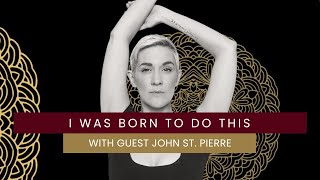
This YouTube podcast episode (host Keira Brinton; guest John St. Pierre) profiles St. Pierre’s entrepreneurial comeback and the book The 100 Million Journey. John recounts being fired after building a successful company (~$50M+ revenues), reflecting, codifying seven principles, and then applying them to scale another company from under ~$5M to over $100M in revenues by 2022. The episode highlights the book’s combination of personal narrative and actionable tools (end-of-chapter action zones, SFG/self-financeable growth rate, workbook and video supplements at 100mjourney.com), emphasizes aligning life goals with business strategy, and stresses entrepreneurs’ ethical responsibility to protect employees and equity.
Chapters
All right, my friends, welcome back to the I was born to do this podcast. I am overjoyed. I am so excited to have this guest on our show today. He is one of our J Way authors. He is an extraordinary entrepreneur, a leader, and one of my friends. I'm going to invite you to the wonderful world of John St. Pierre. John, I'm so happy you're here.
I am so excited for this conversation. Let's go.
We do. Well, you can see if you're watching YouTube, you can see his book cover behind you. But if you are listening, this book right here is called the 100 Million Journey, your guide to growing the business of your dreams without going off the cliff. John, welcome. Tell us about you. Why don't you give us some background on who you are and why you wrote this book?
Yeah, I'll go right for it. I fell off the cliff. And after 15 years of growing the company of my dreams with people I loved to north of $50 million of global revenues, I made myself vulnerable and I made some mistakes and ended up getting fired from the very company that I co founded and built and had to wake up and pick myself up off the floor or off the ground terrain after I fell off the cliff and figure out why. What am I doing? Why am I here? What do I want to achieve in this life? And to your point, what am I meant to learn from this experience and share with the world? Yeah.
Oh, such an inspiring story and one that I feel like if you are an entrepreneur listening, you have hit that cliff many times and some of us fall off and some of us wobble a bit. But I do notice that the. The bigger the fall, you can either do one or one of two ways. You can just literally get stuck for the rest of your life, or the comeback is greater. And for you, the comeback was greater. So why don't you talk a little bit about the comeback and then we'll dive into this book.
Yeah, absolutely. So, you know, upon falling upon the cliff, you know, failure teaches you a lot in life. And they say, you know, failure is a prerequisite for success. There's a lot of positive words around failure, but when you're in the midst of failure, Kara, it's hard. It's really, really hard. And to continue to be strong in the face of your family and friends and, you know, want to kind of pick yourself back up and go do stuff again. In my case, I took some time off to really reflect. And I was always a hundred miles an hour all the time. For the first 20 some years of my entrepreneurial career all the time. Let's go, go, go. Let's grow, let's build, let's grow, let's build. Never really took the time to self reflect and think about what I was trying to build, what I was trying to do, what my purpose was. I had mentors in my life. Say, John, one day you're going to figure out what your bigger purpose is. I'm like, I don't need a purpose. I'm good. I'm building stuff. Right? Well, this moment really was a humbling punch in the gut, slap in the face to wake up and what am I trying to do? And so I took a lot of time, Kira, to think through really the alignment of my personal ambitions in life. What am I trying to achieve beyond myself? What am I trying to do? And then correlate that to, okay, well, in business, what do I want to achieve there and how can I marry these two things together? A lot of people run really hard in one direction, not thinking that they can really have life abundance if they really focus on all areas of their life in symmetry, you know, how can I get this all orchestrated in the right direction? That was a huge learning for me. So subsequently took all those learnings of what I had done, the failure, the introspection of everything that took place, and thought through the things I will never do again as an entrepreneur, what are the lessons and the principles I've learned to, you know, that led to this moment of vulnerability and failure? And I put those lessons and principles into practice in another business that I was part of. And we successfully grew that company from little under 5 million in the mid 2016s15 area to north of $100 million in revenues in 2022. Applying the seven principles of entrepreneurial success that I talk about in the book.
I love this. I love it. Because everyone loves the story of the comeback, but you're not just telling that story. You're not just like, and this is how it works. Like, done, I did it. You're like, no, I wrote a whole book. And you tell the actual principles on what you used to help your company get to 100 million and above. But what I really love is that you start the book out with your story so that everybody who's reading the book can find themselves in it. It's hard to find ourselves in a story of 100 million. I'm an entrepreneur that seems wildly crazy, like 100 million. It's hard for me to relate to you. And so for us to believe You. We had to, like, meet you, and you met us with your story.
Yeah.
What would you say to entrepreneurs? Because I have a lot of entrepreneurs who listen to my podcast. What would you say to them right now that you wish someone had said to you at the beginning of your entrepreneurial journey?
Yeah. Well, I'd say turn the first page, because the first page of the book is a letter I wrote to myself called Dear entrepreneur and sign from your future self. And it's a letter I would have loved someone to send me 20 years ago. But the problem here is I don't know if I would have listened anyway. And that's the problem with us entrepreneurs. We feel invincible. We go, we build, and then to your point, we potentially sometimes slip off the cliff, but we're grabbing on by one hand, like, you know, Tom Cruise in a Mission Impossible movie, trying to get back up on top. And a lot of us successfully get back up, and then we keep going again. And then something else happens. And so the life of an entrepreneur is all about the messy middle and the ups and downs. And you take two steps forward and then three steps back, and then you're trying to build. And as an entrepreneur, that can be really frustrating. And so what happens is you start being more aggressive. You start trying to, you know, race your car a little faster towards that cliff. So you just got to be really careful as you're growing a business, whether it's a startup business, a lifestyle business, or you want to grow a business to be a hundred million dollars or more. There's a lot of traps we talk about in the book on all of those things. But if you do aspire as an entrepreneur to grow a business that can create wealth and freedom for you and your family and others, there are some. There are some really hardcore principles that if you violate, you'll find yourself in big trouble. And that applies to all entrepreneurs.
Yeah. Powerful. Powerful. And I actually would love for you to open your book. Do you have it with you right now?
Yeah.
Okay. I actually would love for you to read that letter. I want everyone who's here to listen to the letter that you wrote for entrepreneurs.
Okay. Dear Entrepreneur, it's time to wake up and take control of your business and your life. You wanted to become an entrepreneur because you dreamed of achieving financial success and freedom by running your own business. Still here you are, stressed out, overworked, sleep deprived, out of shape, not spending enough quality time with your family and paying yourself less than you're worth, if you're paying yourself at all. What are you doing the tail is wagging the dog. If this is what being an entrepreneur means, you'd be better off getting a job. Maybe you were meant to work for another entrepreneur and help them achieve wealth and freedom. Many great companies are looking for people like you. You could get a very consistent and lucrative salary with several weeks of paid vacation where you can entirely escape your responsibilities. And you could stop killing yourself trying to achieve your ambitious entrepreneurial goals. Oh, so you do not think this letter is directed at you? Do you think you have this thing called business all figured out and that you are on the path to achieving all of your business dreams? Yeah, I thought I had it all as well. And guess what? Just when you think you have it all figured out, you get punched in the gut. Or worse, experience a fatal business event because you are not as wise as you think. Then you wake up in the aftermath only to discover that you were a complete idiot for thinking you knew everything you didn't know. There's a big difference between thinking you know something and really knowing it. You reflect on all the times people close to you tried to warn you and you shrug them off with an air of overconfidence. If you want to learn from others experiences and have a burning desire to achieve all of your life and business dreams and goals, this is where you need to be. Right here, right now. It is time to gain a new perspective and make a paradigm shift. Don't let yourself become another statistic, another entrepreneur who loses their business. Take the initiative to be bold and go after what you want. You can make a real difference in your life and the lives of those around you. It's time to stop being a business operator and become an actual business owner. Don't wait. It's time to regain control of your business and your life. It's time to kick some ass. Sincerely, your future self. No.
Oh, it's so good. It's so good, John. And it's so needed. I. I just. I really feel like what you wrote is one of the best books on business out there. And I know that because I don't read every book that we publish. I can't. We publish too many books and like I can't get in every manuscript. But I did get to work with you one on one, and that allowed me to really pour over your book and over your words. And this is an extraordinary book.
Yeah. Well, thank you. And as I've mentioned several times to you as well, that's the power of working with Kira, in my opinion. Right. I could have wrote the most boring business book possible. Like, I was on that track of X's and O's and textbook style and being more bold and being more vulnerable throughout. The book is really a credit to your guidance. Because when I do talk with people about the book, I do get a lot of. I got on a flight and I couldn't put it down. I read the whole book on my cross, you know, Atlantic flight or, you know, once I got in the book to your point, I felt like you were talking just to me in my current business situation. I connected with the story. I think a lot of people, when you first hear the title of the book, and I'll. You mentioned that earlier, the Hundred Million Dollar Journey, you may say, well, that's not for me. Here's this somebody bragging about $100 million business. The reality is a book about failure and lessons that we can all relate to as entrepreneurs. And that is really the message within the book is, at any stage of your business growth, do you connect where you're trying to go in life with your business and align everything so you can achieve all of your goals, whatever those goals may be.
I love it. I love it. And I do think it is the boldness. It's the boldness that makes people stay. I mean, even just that letter, right? You call us out as entrepreneurs because for some weird reason, we all think we're invincible. Me, myself, right? Like, we. It's like this weird thing that got changed in our brains, right? Where, like, for some reason, they're like, nah, nah, I got this. I got this. And that's magic. That's why we are entrepreneurs. Most humans would never take the risks that we take. We're crazy.
Yeah, Crazy. Yeah. And we. And we work for lunatics, right. Ourselves.
It's so great. But it is. For those of us who are entrepreneurs, it is also, like, the greatest joy. It's the greatest joy to create and to build. And there's so much joy in building a business that supports other people's families. I know for me, my publishing house, I support almost like, almost everyone that works for me is a single mom. And that's, like, to, like, help them, you know, pay for their mortgage. Their mortgage and pay for their food. And, like, this is why we're entrepreneurs. This is also the moments that I feel like I'm gonna, like, crack. That's what makes me keep going.
Yeah.
Like, oh, I can't mess this up. I got, like, people's livelihood on my hands. That's why your book is so important. It doesn't just affect the entrepreneur.
Yeah.
It affects their whole ecosystem of who they've built into their world.
Yeah. And listen, that's the one lesson I learned on a personal level, is the ethical responsibility we have as entrepreneurs to do the right thing for the business, even when it's difficult. Sometimes that means letting go of an employee that doesn't fit the core values of the business or making bold decisions in your business because you have a lot of people to protect. And we were at our company summit in the last week, and I was there with some people, and one of our advisors said, look at all these people and all the mortgages you're supporting and how happy they are and the culture and everything else. And it was a profound moment of, oh, my gosh, you're right. But then there was also a twinkle of, oh, my gosh. In the failure we had. There were hundreds of employees that were impacted by what had happened at that business post my departure and how vulnerable I put the situation. And there are a lot of people that are affected by it now. Everybody's recovered and doing great, and everybody's fine. But the ethical responsibility of an entrepreneur, that if you do slip on the cliff and you hang on, you can hang on for dear life and you pull yourself back up and you stay on that cliff and keep going. But try and surround yourself with protectors and advisors and coaches and mentors so that you never, ever get close to the edge again. And you build something that is substantial, that you can be proud of, but also, to your point, help build those around you to enjoy their life and life offerings through what you're building.
Yeah, it feels. It's. It's actually like, hit me really hard lately, like, that responsibility, you know, like, oh, this isn't just like some fun, like, side hobby I decided to, like, whip up one day, you know, now it's like, oh, it's like a whole. There's a lot of people who pay their bills off of what I've built. And that makes your book even more important. To be an entrepreneur, in my opinion, is actually. It's actually a selfless journey of, like, we got to figure this out. And. And anyone who's listening, I really highly suggest you go and get this book. And if you are not a reader, John has it on Audible so that you can go in and listen. And I would highly suggest buying both the Audible and the Hard copy. And those who are watching the YouTube. Lucky you, because you get to actually look, I'm going to show you. His book is filled with graphs and. And places for you to actually understand the principles that he's teaching. So if you are a listener, go listen, but buy the hard copy as well so that you have access to all this. And then you, of course, John, in your amazing ability to create and give service, tell us what you created for everyone on top of the book.
Yeah. So there's two tools that I created. One is the $100 million Journey Workbook, which you can go to 100mjourney.com and download today. You don't need the book or the audio, but you can go get that today. And that workbook has forms and templates, a lot of financial templates that entrepreneurs should be using. And I know they're not because I never even heard of them before either. So a lot of templates and tools in the workbook that you can go Download again@100mjourney.com and also on that website, I have some supplemental videos. So we have. You know, I recorded a video about five to 10 minutes for every single principle with a dry erase board, which I love my dry erase boards, to really talk through the principles. So, you know, if you learn via YouTube, that may be a good channel for you to go to. The YouTube channel, which is basically John St. Pierre 100. Or you can get the workbook@100mjourney.com or the book in audible, as you mentioned.
Amazing. So I like to do this thing. It's this new thing that I'm doing on the podcast.
Okay.
Will of Fortune.
Okay. Okay.
What we're gonna do is. I just started it yesterday. It's fine. It's now a thing. I want you to pick up your book.
Oh, I know where you're going with this. All right?
And I want you to Wheel of Fortune land on a page, and you're gonna teach us whatever was on that page.
Okay? So you're. Why don't you do it? I'll flip, and you tell me when to stop.
How about that? That makes it even more fun. Okay.
Okay.
Are you ready? Go. Stop.
All right, let's see. Where are we? So we are on how to build your own capital, which is principle two. And I landed on the action zone, which is the. At the end of every chapter, we have the action zones, which asks you some questions about you and your business. And the one question I think I'll. That is really, when I talk to entrepreneurs and people who have read the book, they're like, I hadn't even heard of this before. But as an entrepreneur, let Me just discuss principle two. If you don't build your own capital, if you don't build your own cash flow from your business, that can help you continue to grow your business, you'll eventually end up going to banks or financiers or investors to help you fund your business. And a lot of entrepreneurs glamorize, I just raised $2 million, I just raised $5 million. And that sounds really sexy. But the problem with raising money or going into bank debt is it hurts your business and it hurts principle one, which is your ability to protect and grow your equity that you own in a business. And as you can give, you know, probably have an example from my failure. As we grew the business and we raised more capital, my equity was diluted. Diluted, diluted to the point where I didn't lost control of the board, lost control of decision making, put myself in a position to get fired. But if you build your own capital for growth, you can protect your equity and do the subsequent principles. But on this page it asks, what is your self financable growth rate? So it's called the SFG rate. There's a Harvard Business Review written called how fast can your company afford to grow? Because if your company can afford to grow at 5% but you put together a business plan to grow 20% not knowing how much cash you have available to reinvest, where's the other 15% going to come from? How are you going to fund that growth? And a lot of investors don't even think about it. In the company that I had the failure with, we were growing 100% and we could, we probably could only grow 5 or 10%. So guess what, our bank debt kept going up, we had to go get more investors, our equity was going down, everything was going sideways. There is a formula to calculate your self financeable growth rate. It's okay if you want to grow more than that rate. So if your self finance growth rate is 5 and you want to grow 20%, fantastic. But what's your strategy for capital? How are you going to go raise the capital? How are you going to get bank debt? Are you going to loan the business some money? How are you going to come up with a strategy that as opposed to just start growing and realize we're out of cash, what do we do? So self finance growth rate is where I landed and it's one of the principles that really changed the game for me. And with entrepreneurs I work with today, when they start realizing how fast they can grow based on the cash they're generating it really teaches them as well, how can I generate more cash so I can grow faster and build the business of their dreams.
Oh, that's such a great one to land on. And that's just a snippet for everyone who's listening of what you're going to gain from this book and everything else that John has created. His videos, his tools. Like, these are. These aren't. I feel like there's a lot of business books out there that, like, hype you up, you know, like, go, go. You can do it. I believe in you. Change your mindset, which is great. All that's important. I'm a mindset girl. But your book is both. Your book is like, hey, I believe in you, and I'm going to actually show you how, like, I'm going to, like, pull back the curtains and Oz isn't back there. Instead, it's actually, like, hard work and, like, get clear. But here's what's so interesting, is that as entrepreneurs, no one teaches us on how to get clear. We're just like throwing darts, hoping that they land somewhere. And you're actually like, I have clarity for you. And something you always say in the book is, clarity is king. And so it's like, that's what your gift is.
Yeah. I mean, there's no doubt that as entrepreneurs, we think we have clarity, but sometimes we lack that alignment of what we're trying to achieve, like I mentioned in life and your business, and align those two. Or we think we have clarity on what's going on. But then as an entrepreneur, as you know, you're playing a game of whack a mole. You think you get everything figured out, but then there's a hole over here, the water just shoots through, and you go fix that problem. You jump from problem to problem to problem. You're. You're the chief cook and bottle washer. You're kind of running around doing everything. And then people come and, you know, coaches will say, hey, can you work on your business? Not in your business. You got to be more strategic. But when do you have time to do that? You're running around, you're stressed out, you're trying to figure out everything. You're trying to grow your business so you don't work enough on your business because you can't. And then, so all that clarity you can get by being a little more strategic, rising above the trees, having good alignment, not trying to grow too fast, you know, not going too far over your skis, because another way to fall off the cliff, all those are really key principles that we talk about in this book that entrepreneurs must follow to build the business of their dreams.
So good. All right, as our time is coming, I want to ask two questions. One question is just as an author, how was it for you to write your book? How was that experience?
So about 15 years ago, I thought, someday I'm going to write a book about business or something. And every time I think about it and someone said, well, what are you going to write about? I'd be like, I'm not really sure. I'm good at this. I know how to do these pretty well. But I didn't really have a core calling to what I was going to do. And when I experienced this failure we talked about, I did a lot of start doing a lot of journaling. I started introspectively thinking through what were the lessons I really learned here. And I started seeing things come together, but I hadn't really executed upon them. I hadn't used the principles to prove concept. So upon proving that concept, when we successfully grew this business to $100 million the right way, applying all of the principles, it was like, I got to do this. I have to write this book. And the problem with that to the question is, well, I've never written a book before. Don't know where to start. And so, you know, our first few conversations that we had, it was taking the story as you talked about and pulling it out through deep thought, deep conversation that really helped me see the book before I really started putting the structure to it. It was kind of like, ah, I all of a sudden saw the story, I saw the principles being fit in them, and it made it a lot easier to kind of put it together. Definitely a lot of work, a lot of revisions, Especially now that you've done. I've done my first book, Kira. Like, the second one's gonna be a lot easier because I have a better idea of the framework, how to write, how to do different things. But there's a lot of tools available out there. You know, obviously, when you add in the editors helping a lot and design, the feeling of accomplishment from writing a book is no different than I'm sure people feel after triathlon or after a marathon. I can do this. I can do anything. This is amazing and so hard work. Extremely rewarding, and it's kind of my legacy. This is going to be around a very long time and hopefully can impact many others. So extremely rewarding. So beautiful.
And I can't wait for your next book. You're going to come on an adventure that's going to make it so much fun. It's going to be really good.
No doubt.
Right? All right, final question, and this is what I like to ask everyone who's on the show is if you want to just take a minute and feel into what would be the message that you want to leave today, the final message that we leave for everyone here, what would that message be?
A lot of entrepreneurs start their business with very big aspirations, but over time get tired and get stressed and burnt out and become more risk averse. And a lot of entrepreneurs at some point need to really dial into what they're trying to accomplish in their life and their business and put them together. I talked about that a few times. But how many business, excuse me, how many entrepreneurs have a true north life plan for themselves and have a long term, you know, five to ten year strategic business plan and have them aligned? And if you don't have that, stop, take a breath, get some, get some help. But align your life goals and mission and all segments of your life with your business and all of a sudden everything will soon just become extremely clear what you need to do to build the business of your dreams for you, your family and everybody else around you.
That's such a beautiful message and I feel that, I feel that so deeply. How can people follow you? Where are the places that they can gain information and learn about you?
Yeah. So100mj.com is our website. A lot of information on there, a lot of tools we talked about. You can find my social links on there as well or learn more about me or the book. And then on the social, you know, whether it be LinkedIn or Instagram, John St. Pierre or John St. Pierre 100.
Well, awesome. We'll have that in our show notes. And I just want to thank you, John, for writing this book, for taking the time and putting your heart into it and creating a masterpiece of literature that I believe will be here for. I mean it's gonna, it's gonna stand the test of time and you did an amazing job.
Thank you very much for all your contributions and help and guidance as well.
It was my honor. And for all of you who are listening, thank you for being here. And if you are an entrepreneur, then I highly suggest you go and get this book. It is live on Amazon. I would suggest get the audible and the hard copy, go through it, get real with yourself, create with clarity and the results will be amazing. With that, I will see you guys on our next episode of I was Born to do this.