The 'Boomerang' Experience: A Book That'll Change the Way You Help Your Parents | Myrna Jackson
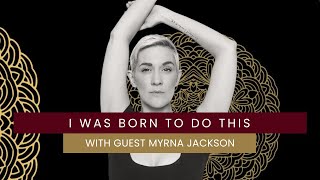
This is a recorded interview (YouTube/podcast) in which Keira Brinton speaks with Myrna Jackson about Jackson’s book Boomerang: How a Daughter Led Her Parents from Chaos to Calm in a Walk Through the Wilderness of Dementia. Jackson recounts how the COVID-19 pandemic revealed cognitive decline in both parents—stories include unpaid heat bills caused by paranoia, a wandering episode, difficulty getting doctors to accept family reports under HIPAA constraints, a hospital fall and ensuing decline, and her father’s death. The book is framed as both a practical guide (establish baselines, watch for landmarks, add trusted family to accounts, advocate persistently) and the start of a community (“inner circle”) to support caregivers.
Questions this video answers
Boomerang: How a Daughter Led Her Parents from Chaos to Calm in a Walk Through the Wilderness of Dementia.
September 18, 2020.
myrnajackson.com.
Amazon (Keira states the book is live on Amazon).
Chapters
Welcome back, my beautiful friends, to the I was born to do this podcast. I'm your host, Kira Brinton. And I am so lucky and so honored to have one of my amazing authors over at JOA Publishing here on the show today to talk about her book today, talk about her message and the work that she is here to do in the world. So I want to welcome Marina Jackson.
Thank you, Kira.
So happy.
Time to be here. Opportunity to be here. It is.
And I'm so excited. We have walked this journey together for over a year. Your book went live maybe, what was.
It, two months ago, September 18, number 18.
So, yeah, around two months ago, your book went live. And here we are now talking about it, talking about the message, talking about why you felt so inspired to write this book. And I want to just show everyone who's watching a YouTube video. This is Myrna's book. Myrna, why don't you tell us the name of your book?
The name of my book is Boomerang. Yes. And there's a little story behind that, but I'll just answer the question. Boomerang. Boomerang.
And I want to read the subtitle. It's going to give people a little bit of an idea. The subtitle is how a daughter led her parents from chaos to calm in a walk through the wilderness of dementia. So I want you to tell us what called you to write this book.
So my life called me to write it and just sort of an alignment of stars, if you want to look at it that way. I happen to be a baby, baby boomer in the generation of baby boomer. And I had the opportunity to grow up with parents, humble beginnings, rooted in Christianity and discipline and responsibility. And as a result of that, my parents, I became who I am. But who would have known that in the same way a boomerang works? So I'm a baby boomer. Boomerang goes up, starts at a place, goes around, and somehow ends up. It lands back in the place it started. Aerodynamics make that happen. Yeah. And that's what happened with my parents. And every responsibility that they have ever taken and embraced and. And parted in me as parents became my responsibility to give back to them. And I never would have anticipated that.
And this isn't just. You're not the only person. There's so many people who have walked who are walking this path of feeling that boomerang, of feeling like every responsibility their parents had, they now hold for their parents. And that's why I think your book is very rare. I don't think there's a lot of books that touch on this. And so many people are taking care of aging parents, and they're doing it blindly, and they're doing it while they're running companies or working for a company and raising their own children. And it's a very lonely, uncharted path, I would say.
Yes.
So I love that you wrote this book to help them, and I love that you wrote the words, how a daughter led her parents from chaos to calm. Let's talk about that. Let's. Let's go back to the beginning of your journey when things began to become chaotic. Take us to that point, because I know there's listeners right now who are caring for their aging parents, and I want them to feel like they're not alone. So take me back to that time when things began to become chaotic with your parents.
So it just so happened to coincide with COVID Otherwise, my parent were aging. Parents were aging in place in the home that I grew up in. And so everything was sort of organized and normal in such a way that would prevent me from seeing that underneath things were happening. Covid, however, created the environment where I needed to be more aware of food. How are they going to get it? They can't go to the stores. How do they get to the doctor? So I had to get closer on a more repetitive basis. And what I learned was that while my mother and father could support each other, each was compromised in a different way. So my mother could remember appointments and administratively could help my dad from that standpoint. My father, however, memory was compromised and my mother's ability to think rationally so she could do things repeatedly, but she didn't her thought patterns. And there was paranoia. So the difference between Alzheimer's and Alzheimer's dementia. And so the combination of those two things when the world was changing opened up for me. This window of your parents are unable to care for themselves. And that's sort of how it became apparent to me during that time when the world was shutting down. If you could only imagine.
Yeah, yeah, I can't. I really can't imagine it. And yet, what a gift. That the world was shutting down, which required you to be more in their lives. That you could see this unraveling, See it unraveling.
As you mentioned, when there's a combination of responsibilities. I was a senior leader in a corporate environment and a mother, only child at the same time. But I'm thinking about you just describing earlier the families who are sort of in the midst of it. And when you're in the midst of it, you do what you have to do because you're aware. And I believe that my calling and because of the battle scars I had of not knowing what was happening, I didn't grow up with grandparents, so it wasn't apparent to me what was going on. My calling is for the people who have the boomerang looming and they don't know it because there are things that are happening. They're sort of hiding in plain sight. And what I hope to offer through this book is insight into what you might not see that's there.
I feel that and I can feel the value of this. So everyone who's listening, who has aging parents, they think that they're doing okay. This book is actually for you to be aware. Like there are landmarks to be looking for so that they don't come out with the battle spar, the battle scars that you did.
Got it. You got it, Kira. Yes. So what I encourage as I painstakingly describe what I went through, my hope is that the reader will go back and establish a baseline of what's normal. Because as children and guardians, we see what we want to see and sometimes we'll fill the gaps with what we want. Like, there were times my mom was saying she saw things and my eye, my assumption was, oh, she is her vision, she needs glasses. But it was really paranoia. It was really delusions of things that she thought she really saw. And if I really would have stepped back, establish a baseline of what was normal in their lives, I would have known, I will have, would have known that many things, the normal things, their patterns had changed. How often they go to the cleaners? Are they really going to church on the same. On the same schedule? How are they eating? Are they buying the same things? Are they cooking the same way? I made an assumption because it all looked the same on the surface that it was and it absolutely wasn't. If I had it to do all over again, I look for those things, the way they really existed, not through the eyes of the daughter, but through the eyes of now an adult who may have caregiver responsibilities. And that's what I want to get back through this book here. I want someone to read. And that's why I didn't make it so long. So you just get lost in the whole story. But the guts of what happened. Know the patterns of your parents. What time do they get up in the morning? What kind of medication do they take? How often are the doctors really assessing the. The changes in them? Like my mom and dad have Been taking the same regimens for many, many years without someone really looking into how they were changing. They wouldn't know that the way I would know.
Yeah, you had. You have a. As an outsider, you have an ability to see it differently, but only if you know what to look for. And so I love that.
Inside or on the outside? That's right.
It's like, so it's like, I love that this book will be that for people. It will be the guide of like, what do I need to start looking for as an outsider so I can support. Because I think what we need to do is touch on the pain points. If you're willing to tell us some of the battle scars that happen so that those who are listening understand that they don't have to walk that. But it's almost like we don't know. We don't know. So nobody knows how to take care of aging parents because they've never done it before. And so they don't even know what battle scars could happen. Take us through some of the hard things that happen for you so that those listening realize that like, let's not do that. Let's. You don't have to go through this. But I almost feel like we have to show them pain points to make them take action.
Yeah, yeah. So I want to share too. There's sort of the beginning and the day I went over and my parents were. I went over at an unusual time in the afternoon, not my normal evening time. And at one o' clock in the afternoon my parents were still in the bed and it was very cold in the home. Now I want to just share that I have never had to contribute to bill paying or anything along those lines. And it's not a judgment thing, it's just a baseline sort of thing. So for me to walk in and feel that there's no heat did not take me to a place of. They had. My parents had not paid the heat bill. Now, ultimately what it had happened was that my mom suspected that someone was stealing the money that she was paying bills with. Doesn't make sense at all. Worst thing I could have done was try to lean into, you know, and try to understand what she was saying as opposed to accepting this is what she thinks is happening. So what can I do to meet her where she is and mitigate the impact of that? I often found myself, no, mom, that's not possible for, you know. And this sort of wasted energy.
Yeah.
So when your baseline has shifted, then you take the gap between the two and figure out what Needs to be done to protect them as opposed to try to trying to create the story that makes you feel comfortable. So I have really. I'll pause.
I want to pause here because this is a really powerful insight because I can feel what it would. It would. Must have been so wild to experience your parents, who you see as parents, like they have everything together. There are parents.
Yes.
They're. They're the adults. And then to have them say something and you being like, what are you talking about? Like, this isn't true. You know it's not true. But what I hear you saying is don't share that story with them because it's. It's going to waste time and energy and it's going to be like, no traction. But this is something for people who are listening to be aware of. So if an aging parent starts saying something that just is absolutely ludicrous, that's a landmark for them to go, oh, something's not right. Instead of like, oh, my mom's crazy. Like, it's very. My mom's just being crazy right now. Instead, oh, this is a landmark.
Trust your gut.
Trust your gut.
Trust the baseline that, you know, you established whenever you were with. With. Were with them and accept that something has changed and really explore the change. Not pursuing the normal.
Yeah, yeah.
So in that situation, I did learn that my parents had not paid the heat bill for six months. And the reason the government let it go that long, government, the gas company, let it go that long is because they had never missed a payment. So during COVID what they called themselves doing was giving them room to recover from it until they cut it off, which they did. There was no way for anyone to reach me. And I don't know that I have a fix to this problem, but this is the safe space that I want to create where I believe there will be a collective body of people with influence and insight from in other places. And what I would like to know, for those who have parents who are aging and they have one kid, let's just one child. Let's say that that's me. That there is some system in place where when they hit, it clearly happened at 85 for my mom, that there's someone who knows who I am, and if a pattern changes, they can notify me. None of that was in place. But I want a collective body to come together to say, how do we make this happen? So. And it's not just single, you know, single, where there's this one child, even if it's two, depending on where people are located and how quickly someone could get to someone. I want to bring families together so we can say, who should this be? How can we notify? How can we force our areas where our parents have been law abiding, tax paying citizens who have an influence as to why things are the way they are in an environment to now be cared for in a way that people show create some kind of mechanism for the right people to know when something has changed. That's one. I fought to get their gas bill turned back on. Literally went down to the gas place with my mom, wouldn't give me a statement because there was broken trust. Because I spent a whole lot of time challenging what she was telling me to be true. Kira, another lesson, believe what she says is true and see what you need to do to help her or them in the midst of it. Not again, challenge them. Because all that's going to do is put space between them. So I go down to the gas company and I am unsuccessful in getting them to simply let me pay the bill, the gas bill and turn on the gas for the particular app, my mom and dad's particular address. I literally have to go back and reach out to a person from D.C. government to say my parents are going to die in a cold place if someone doesn't let me pay the damn bill. Is that clear enough? And that's how I get permission to pay. Is that insane?
I can't imagine how out of control you must have felt like that. It's. That's ludicrous to really be like, I just need to give you money to put heat on so my people don't die. And they're like, nope, not without a statement. And that's where I feel like what you're saying. Whether there's a system or body that can do this if everybody who has an aging parent just gets to be on their bills with them. Like, hey, just put my name on it. If everyone just did that. Right? Like if everyone just said, hey, put my name on your. Your essay, you know, your electric bill, your heat. Still put my name on it so that I have access at any point to make sure you're protected. Mom. Like that just feels like something.
No, it's not. Yeah. And I. So I missed that opportunity.
Yeah.
But I think it's a broader sort.
Of.
Systemic change because we're humans, we're families, we just can't forget that. Just like in hospital, like a medical system says there's a next of kin or just like for your money, you know, we find a Way to say who else should get it just for care. We're just missing something fundamental.
Yeah. Because I can't imagine how hard that was. So you got the gas turned back on, you got their heat on. What was the next thing that happened that you would say was just like a battle scar from this experience.
The next battle scar I would share is that naturally I've learned there's mental incapacity for both my mom and my dad. So what do I do next? I go to meet with their doctor. Literally it takes me three visits and just sort of this a scheme of some sort of to get the doctors to first hear me like I want to speak to through a nurse. Because no doctor will hipaa, no one authorized you to get information about what's going on with your parent. Okay, I don't want information. I want to give you information. So can someone just hear me say my mom is wandering, she's getting up, she's walking out at night. They're not taking their medicines, they've lost weight. All kinds of things that I think they should know, the doctor should know that's been seeing them. And there was a significant amount of pain associated with trying to get to a doctor who trusted number one, me enough to know that I here's a credential that says I'm their daughter. Something's going on with them. Now you check it out. I'm not even suggesting I can diagnose them. I believe that there should be a way when I can validate that I'm a daughter, a family member with a baseline who is saying something fundamentally has changed. Accept the information and look into it yourself. Because they were continuously going to the doctors. My mom with this administrative sort of gift, she still had it. So they were visiting their doctors regularly. And my hope, always my prayer they'll check into it when they see her next time. Even though they won't give me any, any information. And ultimately the first time it happened, they called my mom and said I came. They told her to report that something that was. And that just triggered mayhem. My mom, you don't have the right to be. I mean it was awful. So I had to go through my dad, I mean just like a really covert operation to get the doctor to check into them. Number two, the third and the toughest one. So I go through what I go to. I snatch my mom and my dad out of their home one evening because my mom literally wandered out of the house. Three, four o'clock in the morning. She's looking for my brother who died in 1988. It's Covid going on. And, you know, I grew up in a neighborhood where I knew many of the people. But in this one case, the third time, she had wandered that evening. And I got a call at 3 in the morning, it was from a neighbor, a new neighbor in the neighborhood. And she said, your mom has come in my yard twice. And I thought she was a homeless person. That hit me hard. Like, my mom, my mom retired from the government with just high respect and honors. And there's this person saying, I found your mom in my yard twice. And I thought she was a homeless person. And then that evening, my husband and I knew we had to make him make a decision. We made a decision that we didn't have a plan to back it up with, and that's we're going to snatch them out of that home. And my mother thought always that there was this risk that someone was in the ceiling that was going to blow up. And we fed into that and said, you got to get out of here now. We came to get you, Something's going to happen, and we want to get you before. And we got them to go with us. And during that period, I learned their patterns because now they're with me. They go to the bathroom. I hear my mom, who has a routine of speaking to voices. And like, I get to see it for myself. My father, in the midst of that, started to not feel well. Long story short, he ended up ended up needing a kidney stone removed, in and out surgery procedure that he has had before he went into the hospital. I could take him. My mom could not. I'm managing this story back at my home, right? And in the meantime, I'm taking my father to the doctor and I cannot stay with him because it's Covid. And I asked him, because his memory is compromised to please let me stay. He's not, you know, never been away by himself in this way. And I'm told no. And I leave him after sitting in a corner in the hospital for about an hour by myself, trying to figure out what the story is. I'll tell my mom when I get home about where her husband is. And that morning, at 5 o' clock in the morning or so, I get the call from the hospital staff that says, my father fell. He got up at 5 o' clock in the morning, Same time he gets up, Peter. So I know that was true. But his bed was raised in such a way that he tipped over, smacked his head, got a brain contusion. And I would Watch him die over the next couple weeks, starting with him not even knowing who I am. You know, my gosh, there's this part of me who never gave up the fight until I had to. I took pictures of us, my family, the first few days that they let me go, like that's a blessing. They let me go for a certain amount of hours each day. Who is this dad? This is Mom. Until he learned and he began to decline. And this was the hardest part, that not only did I have to bury my father, but my mother could not process that her husband was gone and didn't attend the service. And so I had to bury her husband as well. See the flag, all the things that go along with that. The lesson. The lesson in that horrific story when my father died on September 18, 2020. The day the book launched. The day the book launched is that patterns are known. They are learned to be shared. Didn't think of when I left the hospital. They wouldn't let me stay there. And I'm saying, let me stay, but I could have said this too. Here are their patterns. My dad's going to get up at 5 in the morning. So this is what I want to give. This is what I'm called to give back to a group. And if 100 of these books sold in a week, 100. And if 300 more gets sold tomorrow, it is not the mission. My mission is not to sell books. It is to bring together a community of people who are either in it or don't know that they are. And let's talk about what we need. Let's talk about what we might miss. Let's talk about how to build this fortress so we can prepare ourselves for the inevitable. That's the why behind it.
Oh, I feel this. Thank you for sharing that. I'm so sorry for your loss.
Thank you.
And to have to bury your dad on your own while managing your mother, while having a very big job, while being a wife, while being a mother, like, it's just a lot on the plate. And you navigated this on your own. You navigated how to do this. And I just honor you and what it took.
Thank you. Yeah, thank you.
And I honor you for writing the book. Because this message needs to be. It needs to go everywhere. Because that's something that we're all going to deal with. We all have parents. We all have parents, and they will age. And this is not something that we're taught. It's not something we're prepped for. It's not something that we even Think about until it happens. So I'm just really honoring you in this book and I'm honoring that it's here and I want everyone to know it's live on Amazon. So if you're listening to this and it pricks anything inside of you, just go grab it. It's on Amazon. I'll put it in our show notes. Call Boomerang. Myrna Jackson's the author. If you could tell us one thing right here, right now, that you wish you had known, what would the message be that you could share with our listeners? Right now?
The message is for what is inevitable because our parents don't live and then die. Now we're eating better. We're taking care of ourselves better. The message would be that you're not alone in the boomerang. That's what makes it hard, is to build community around it. At the end of this book, there is a call to send an email to myrnaernajackson.com if you want to join the community of people that are coming together. So that's the calling. That's the. That's the, the. That's the message. Don't do it alone and don't have ignorance around it by yourself. Let's come together and build a community that we can use to walk through this thing. Yeah. And ease some of the pain or prepare us for what's unknown. Beautiful.
Oh, this is really important work that you're doing. I see it. I feel it. I knew it. From the minute we talked for the first time about your book, I could feel this is a message that needs to go out. And not only the message, but like you said, this is the community that must be built. When we're not alone, our burdens are lifted. And that's really what it feels like you're creating with this community is like just come in and. And don't be alone. And also let us all share so that we all have different. Like everyone has their own different experiences. So when they all start to share, it becomes an awareness that's so alive, powerful.
Can you imagine? I call it the inner circle. It's like this group of us ordinary people. We're not talking about doctors. You know, when you hear about caregivers, a lot of times you're going into the medical. No ordinary people with loved ones that you want to begin to care for and look at a different way. Some, you know, before you need it, before you need it, there's power. And then when you're in it, that's power that I Mean, we're all holding each other. I'm brutally honest in this book in a way that I was uncomfortable with. I don't know how my family will receive it, but the calling's bigger. It's bigger because I can't have this experience and then hold it, hold. I can't. And that's.
That's the call. The call is to share your sharing. And then if people come into this community, I love that. The inner circle. It's a beautiful name. Come in and share. And it is in our sharing that we become free. It's in our sharing that we get support. It's in our sharing that we liberate others.
Absolutely. And I have high level contacts in the medical field, and what I want to do is challenge these. These systems that don't support us in knowing what's going on. It's not insignificant ways. Add my name to my mom and dad's, you know, parents bills so that if something happens, don't, you know, respect their privacy. But when there's a significant change for six months that has not been present in 60 years, call someone. Simple as that. Just want you to know this is happening.
It's.
It's.
It's a deep level of care and safety.
Yes.
But it feels like it's like really care and safety.
So when the inner circle grows, then the calling has been responded to. Book is just the beginning. The book is a conversation. So starter.
Yeah.
The inner circle, that's where the magic happens.
It's like the books. The door.
Yes.
Yeah. Walk through it. Come in, sit down, Be held. Be held.
Yeah.
Oh, Mara, I love.
Didn't have that.
No. But it was for a purpose because it brought this through.
Absolutely.
Using it as fuel to make a difference for others. And that's our best service, is we use the fuel of our pain to go help others not be in that pain.
That's why we're here. We're all here. That's why everybody has a book. I know.
And I'm so grateful that I got to work with you in the Mastermind. I'm so grateful I got to be your publisher. And I just want you to know I see you and your brilliance and the vulnerability that you shared in this book so that others don't feel alone. So I celebrate you.
Thank you. Thank you.
Celebrate you and everyone once again. Go grab her book. Go follow her on Instagram. We'll put all of the show notes. All of it will be in the show notes. And if you would like to be in her inner Circle. Tell us your email one more time, Myrna.
MyrnaJackson.com Great.
We'll have that in the show notes as well.
Yes. And my website, myrnajackson.com you can also purchase the book from there. Talks about the inner circle and what it exists to do. So feel free to go there as well.
I love this, I love this amazing work. My message for everyone who's listening today is to not walk these paths alone. You don't have to do the heart alone. You don't have to figure it out. You don't have to make your own recipes. You have enough going on. So let yourself be held, guided and connected to.
Yes. Yes. Yeah. To feel connection. Absolutely.
Safety, connection. And a place to release the burden that is very unknown.
Absolutely. And there will be resources accessible through people and things to help you to help them along.
So beautiful.
It's a refuge. No, I love this.
I want. Let's end on that. Find the refuge.
That's it.
Find the refuge. Beautiful. Myrna. I love you. I celebrate you.
Thank you publishing for me. Thank you for being such a strong, strong mechanism for me to get this out. Just for the grace with which you do it, the power with which you serve your own purpose, creating this space so we can do what we do. Thank you. I honor you.
Yeah, I, I, I received that. Thank you. Thank you. And for everyone who's been here, thank you for spending time with us. We see you, we hear you. And I will see you. On our next episode.