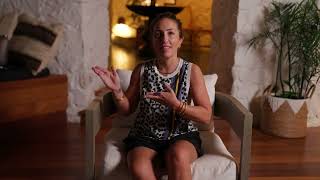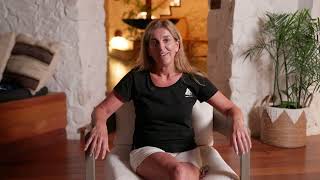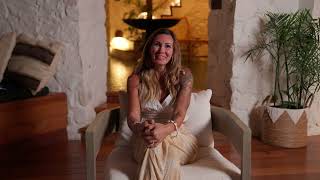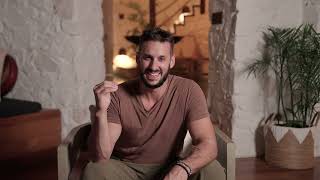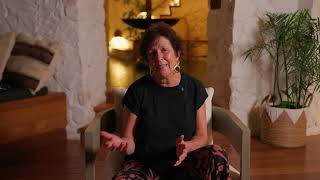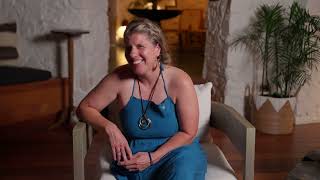
Val Fishman wrote her book I Know What I'm Doing, Come With Me in roughly 11 days. She reads from it, discussing her mother quitting smoking, wildfire smoke triggers, and how she uses yoga and bodily intuition to work through trauma and climate anxiety.
Questions this video answers
I Know What I'm Doing, Come With Me (by Val Fishman)
Joan of Arc Publishing (JOA Publishing), founder/CEO Keira Brinton
About 11 days (writing sessions roughly 4–6 AM each day while working full time)
Artist Martha Rast (Val described collaborating with her sister, Martha Rast, for the cover art)
Chapters
I want to welcome you all. My name is Kira Brinton. I am the founder CEO of JOA Publishing, Joan of Arc Publishing. It is a publishing house that is committed to transforming the world through books that are by authentic authors, authors who have written from their hearts. They didn't use AI this is their stories, their messages, and. And every book that we publish, I say, is like a Joan of Arc book. It's a book that's going to be bold. It's going be fearless. We're going to go change people's lives with that book. And it's my deepest honor to have published Val Fishman. I'm so honored to be here for her summit, and I welcome you all to this beautiful space. This is where we get to celebrate Val. This is where we get to talk about the book.
And.
And I'm actually not going to be doing a ton of talking. I would love for this to be a group summit. And what that means is if you have something to share, if you felt something when you read Bell's book, this is a place for you to share it. This is a place for us to create community. And my deepest desire with every summit that I run is that this is the best hour of your week, that somehow, in some way, you feel completely shifted in your vibrations just by being here. So welcome. Welcome, Val. I want to bring you in. I am so honored that we were able to publish this book. How have you felt now that it's been a few months since the book has been published? How do you feel right now?
Yeah, I feel good. It's hard to take my own advice.
Yeah.
That'S been the biggest lesson is I'm like, oh, right now that it's in print, I actually have to do what I said I do.
Isn't that powerful?
Yes.
Yeah, it is. It's really different to have it written out than just thoughts in your head.
Yeah.
Yeah.
And how. I know most of you know, Val, but this is going up on my YouTube, where hundreds, if not thousands, will watch this. So I want to ask you questions, Val, that maybe most of you know, but I would love for you to share how it felt to follow the call in your heart to write the book that when the call came, you listened to it and you wrote the book so quickly. How did that piece feel for you?
Yeah, it just felt like. Like I wasn't really in control. It was really not up to me. It was more like I was a vessel or a vehicle for that book to come through. I certainly had a thought about writing A book my whole life, as a lot of my friends know and can attest to. But that was a thought. And in fact, one of the people is on the call today who. Who I talked to about writing a book because it was her. She wanted to write her own book. And I was sharing with her that, yeah, I've always wanted to do that too, but it's not like that big of a deal. To me, that was like six months before I met you, I think. And then I met you, and I was like, I guess I'm writing the book. But it was like the question was just removed. So I think it went from something that maybe I aspired to do someday. Maybe it was a dream, but it didn't really matter if it was ever realized, or at least I told myself that. And then I met you and just realized, well, this is happening. I don't exactly know how hard or not hard it's going to be, but it wasn't hard, right? I mean, and I say that in the book, right? It took 11 days for the actual book to come through. And not even. It's not like I took in a retreat for 11 days. I mean, I worked full time. I just was up at like 4 in the morning, and I wrote from like 4 to somewhere in the 4 to 6 window for 11 days. And it was done. And then I went into editing. So the process was really. It was quite magical, actually, and unexpected. And it wasn't even like I was involved. I mean, I just woke up and I was like, here it is. And I just kept doing that until it was done.
Which is just so the backwards way that the world thinks you're supposed to write a book, you know, like, it's going to take you two years and it's going to be this. I mean, I can't tell you how many times I hear people say, oh, so hard to write a book. And I'm like, oh, I just want to, like, shake you and be like. But because it's. You're just subscribing to a different method and the method that you're using and the method that I really promote is be the vessel. Be the vessel. And it's just. Instead, it's magical, just like you said. And I mean, even I. Let's just talk about your cover. It just to look at the book. Talk to us about how this vision of this cover came and how you brought it to life.
Yeah, okay. How did the vision come? So I did an Instagram live with you. You invited me to do An Instagram live to channel the book cover. I'm just like, okay, sounds good. And I don't even really. You know, I know you say a lot when you channel. You don't remember because it's just your present in that moment. So I can't exactly recall what that experience was like, but there was a vision that came out of that that basically looked like what is now the COVID of my book. So we did a live session, you and I. I mean, I think it was like 30 minutes. They're not very. Maybe not very long.
They're never longer than 30 minutes.
Yeah. And so it was. It was a person, you know, sort of running through a field with something over them, flowing. I mean, exactly what it looks like. And so I did the session with you, which was. Which was one thing. I had the vision, and then I was like, well, I'm an artist, but I make, like, abstract stuff like this. I don't make what's on the COVID And my very best friend in the whole world, her sister is a very talented artist, and. And I just thought, well, she will know exactly what to do. So I called her, and it was like seven in the morning or something and just said, I wrote a book. That's another story for another time. I need to design the COVID art, and I'd like you to do it. You know, are you willing? She's like, yeah. So I just. I was like, can we just brainstorm really quickly what's in my mind? And she said, sure. And I walked her through verbally what this has now come to be. And she just got it. I mean, she got it, and she's so talented. And she. We went through a few iterations together. It was so fun. She just came back with a few different iterations, and we kept kind of going back and forth on it. But the whole experience of that actually even deepened our relationship. I've known her my whole life, but, you know, to a level that just we. We hadn't been connected every. Every day, you know, and we still aren't, but it was just like a. It was a deeper connection. So she is the artist. Her name is Martha Rast. And just. Just an unbelievable process to go through that with her, and really beautiful. So I'm super grateful for that.
I love that. That's one of my favorite things, is taking a vision to an artist and letting the artist birth the vision. There's like a. There's like an intimacy that you just can't describe of. Like, I had the vision, and yet someone Birthed it for me. It's so beautiful. So I love that, that that's a part of this. I would love, if you want to just maybe sit in your heart and think of a story inside your book that you want to just share, just in case. Anyone who watches this later, who sees this on YouTube knows a little bit about your book, which is called I Know what I'm Doing, Come With Me by Val Fishman. Why don't you tell us a story in here that. That comes to your mind?
Yeah, yeah. The one that's really present for me is there's a moment in the book where. Well, let me back up for a minute because there's some. Some background that's important. So my profession is. I work on climate change issues, and I've been doing that for a little over a decade or maybe two. Lost count. I think it's actually been two decades. Anyway, it's been a while. And, you know, we should have been doing something like 20 years ago, but here we are. And so I have a whole inner narrative all around climate change and my own personal responsibility to fix it and do everything I can in my lifetime. And there's a lot of people in that profession that. That have that narrative and then burn themselves out and then can no longer work in that industry, which is awful, because if you're motivated to work in this industry, we need you. Right. And so I just. I have that. And when the. When we were in the midst of COVID it was 2020, and we were living in Portland, and that day, that week that the fires just blotted out the sun and you couldn't even take a deep breath inside. It's interesting how the body remembers. I'm telling this story and I'm like, my voice is getting like, there's smoke in the room. There's no smoke in the room. But I just got to a really bad place. And so that's in the book about when that happened. What it triggered for me was this inner narrative of you're not doing enough, you've been working so hard, and none of it matters, and what are you doing and what are you doing with your life? And really, a very, very negative spiral. And I realized after that, a couple things. Number one, it's going to be like this every summer. We're going to have smoke every summer. And I cannot afford to go down that rabbit hole emotionally every summer for myself and for people who are in my life, for my husband and for the world and the work that I do. So I Was talking with somebody the other day who's a new friend, who is also very triggered by smoke and said she was asking me. She's like, well, how are you dealing with it? You know, she was calling me because we had smoke the past two weeks. How are you dealing with it? And I said, well, not like I was before, because I can't. I have to find a way to be more resilient. And so, again, that kind of goes back to where we started this conversation of I'm learning to actually take my own advice and say, okay, that narrative, you know, thanks for sharing, but that is not going to help anybody, me or anybody else in the world if I listen to that. So what are some other things that I can listen to and who can I turn to and who else can I surround myself with that doesn't share that narrative? Right. I think often when we're in a difficult place, we call people that we can vent with. We can. Or people that will relate to us as opposed to reaching out to people that will lift us up or get us in a different place or think differently than us. And often we have to be our own resource for that. There isn't always someone to call. So I think it's a little bit of thinking about who I'm surrounding myself with, what their narratives are, thinking very intentionally about who I invite into my personal space and who I get very close with. And then if I'm not going to make a call to somebody else, reminding myself, what can I do to feel grounded and strong so that I'm not going to go down that spiral and sort of change those neural pathways in my brain? Right? And it's just. It's practice. Like, everything is practice. And I talk about this in the book, too, because I studied yoga for a long time and taught and practiced yoga. And there's a reason it's called a practice, because it's never done. It's just another layer to work through.
I love this. And what I love about your book personally, is that your book is a practice. Your book teaches through stories, the practice of listening to your inner intuition, which is a muscle that must be strengthened every day. Every day, every day. And there is no mountaintop. There's not one day where like, and we did it. I now listen to my intuition. Right? It's like, no, it is a practice. And you teach that through so many beautiful stories. And I. I just celebrate you on the way that you wrote your book and the stories that you told it, because it's how humanity learns the deeper lessons, the best is through stories. And so I would love to open it up to anyone here. Don't be shy. If there was a story from Val's book that really, like, taught you or it. Or pulled at your heart, I would love to invite you to just raise your hand. I'll. I'll have you unmute and just share what. What was the story that pulled at you? Anyone brave enough to share? Okay. While you guys are thinking, because I just kind of pop that on you, as I do.
Welcome.
Welcome to the summit that you get to be a speaker at. I. I loved the story, Val, of your mother and smoking. It really impacted me, and I can't tell it as good as you if you could tell that story for us, because it just. I don't know, I mean, it, like, brought me to tears. Like, it just is a really profound story. Do you mind sharing that story?
Of course.
And interesting that you picked that, because I didn't make the connection until those fires in 2020. I was like, why am I so triggered? Because it wasn't just the climate change voice. It was like there was something else at a deeper level. Like, my body was just like, don't breathe. Like, hold your breath. I'm like, well, I can't hold my breath for a week, right? Or however long it was. And it was because I used to do that in the car. My mom used to smoke with the windows rolled up in the car. And I would roll down the window, like, try and put my head out the window. And it was cold. We lived in Minnesota, right? So she's like, roll up the goddamn window. You know, I mean, my mom used to swear a lot, so I got that from her. But she's, you know, roll up the window. And then I was like, I can't breathe in here. And anyway, so I think that that triggered that, but I think I was about 10 years old. I was really sick of my mom smoking. I have always been a very direct communicator, even when I was a kid, Right. So she knew I hated it, didn't really care. That was the deal. She was smoking. And I think when we talked about this once, I was telling you about how committed she was to smoking. I mean, she smoked, I think, up to three packs of cigarettes a day. At one point, you have to wake up in the middle of the night to smoke that much. Like, you are. You're doing it.
The commitment.
She was doing it.
Yeah.
And I was just done with it. And so I cut. This was back in the Day of newspapers. And I cut an ad out of the newspaper that said it was like, for Lung Centers of America. And it had a promise that they would help you quit smoking in seven days no matter how bad your addiction was or how severe your addiction was. So I cut that out, I stuffed that little ad in my pocket, and then I packed some stuff into a suitcase and I started heading towards the front door. And my mom said, valerie, where are you going? And so it was my full name. So I knew I was in trouble. I was prepared for this anyway, and I knew I was going to get in trouble. I said, well, I'm running away until you quit smoking, because I can't handle it anymore. And she was like, well, can we have a conversation about this? And I was like, yes, we can. So I, of course, had the ad and I said, I found a place that will help you quit smoking if you agree to go, then, you know, I won't run away. I mean, yeah, kind of. Kind of knew this was where it was going. Right. And so she agreed. She's like, I'll go. I'll go tomorrow. And she went. And just, by the way, what they do is they lock you in a room that's filled with mirrors and packs of cigarettes, and all you do is you sit there and you watch yourself smoke until you're physically ill. That's how they get you to quit smoking. Yeah. So she did that for seven days and never smoked again. She was like, that is disgusting. I'm sorry. So it was. It was very effective. But, yeah, that was. That was the story of how my mom quit smoking.
Oh, I just find that so profound. Like, that at such a young age, you had such inner knowingness. You were so clear, and that you were able to create this plan, like an intervention. As a 10 year old, you led an intervention. That's so crazy. It's amazing. It's amazing.
Yeah.
Anyone want to share? I gave you a few minutes. A story that stuck out at you or. Or how Val's book impacted you. Just raise your hand if you'd like to share. Yes. I've got Jenna, why don't you. You're unmuted.
Perfect.
Pop in.
I wouldn't say it was one particular story, but there are two. Two kind of pieces that are really resonating with me. And maybe a question. I don't know how you have become as strong as you have become and handled the physical and sexual abuse that you have. And I don't know anyone who talks about it. And I want to Share how incredibly powerful and brave it was to read your book and how many times my stomach felt like I was going to throw up. So I want to say you are badass and brave. And I don't know how you shared your story. I don't know how you found that strength. And I'm so incredibly grateful for what the gift that you've given us in your stories. And I'm curious if you could talk a little bit about whether or not you made a decision to. To be vulnerable in the knowing that this is also going out to people you work with, people you love. How did you decide you were going to be brave enough to actually tell all of these stories?
Yeah. Thanks, Jenna. It wasn't up to me. That's the truth of the matter. It wasn't about my strength. It wasn't about me. The reason I wrote this book is because you're right. Not enough people are doing that. And I didn't want to reach the end of my life and not have shared my full story and be fully known, because I think by doing that, it's really. It allows other people to see that they can be fully known. And, yes, people don't talk about this, but that is changing, and people are talking about it more. And the more that we normalize and say, this happened, I survived. I found strength. It didn't break me. I am not going to let that break me. No way. So that's a different answer about how did I. What. Where was my strength? Where did it come from? You know, I talk about in the book that I'm. I've become a little maybe too comfortable with death and dying. And I just know that life is short and precious, and we don't know when it's going to end. And I don't want mine to end without having shared what might help somebody else come to terms with something in their own life or see strength or just some inspiration for them to be stronger. So. So really, I think the answer is, it's just not about me. That's not about me. It's not about my story, my strength. If anybody wants to cast a judgment on the fact that I shared this information, they can do that. That's really not my problem.
So beautiful, Jenna, thank you for sharing. And, Val, I do. I feel the same. I feel like this is the power of such power, the authentic author, the author who shares their full story, because it's the thing that frees people from the biggest lie, which is isolation. And I'm the only one who's gone through this. And that lie is what keeps people in so much suffering. And you sharing your stories actually breaks that lie completely. And it makes that. It like, makes a new pathway of possibility and hope. And so I applaud you with courage and bravery because there will be probably hundreds, if not thousands of people who will read your book that you will never know. And you will never know that those stories were the thing that freed them from the. From the lie of isolation, that they're the only one who went through it. And so just like, huge applause and like, so many blessings upon all those who read this book that it will do that for them. Yeah. Beautiful. Thank you, Jennifer, bringing that. I so appreciate that. I saw. Heather, I saw your hand was up. Why don't you unmute and share?
Thanks, Cara. I just want to say, Val, I. And I just feel so lucky and grateful that you're literally just like two minute walk for me this way behind me here. And for me, I just wanted to acknowledge the way I have seen Val live the stories in her book, and she post about it recently on Instagram. But I was in a bit of a doubt spiral a couple weeks ago when I stepped out of the hiring process, and. And Val said the most powerful thing to me. You said the most powerful thing to me. And it was trust, you know, even when you think you don't. And so I just want to acknowledge the way that on the daily you live. Come with me. I know what I'm doing, or I know what I'm doing. Come with me. I just. I know based on what Kira said that there are a lot of people that will read this book and you'll know that they've read it. And there are a lot of people that will read this book that you don't know. But the. Just the strength and the bravery that emanates from you, and I know you said it's. It's not you, and it is you, too. It may have come through you, but there is a wisdom that you possess that I have had experience with, and I just wanted to acknowledge that and share that example and how it's impacted me.
So.
Thank you, Heather, for sharing that. I. I feel the same. Like Val, this is. It is. It is you. You live and breathe this. And that doesn't mean you do it perfectly. No one does.
Who.
Who does things perfectly?
No one.
We all live our own lives. But you have lived this. And that's why this. What. You were the vessel for this message, right? You were the vessel for this message because of all that you've been through and the strengthening, you know, it's through the massive trauma, that actually is what strengthens our inner intuition. And so it's like the coal being pressed into the diamond. Right. And I just so admire every part of this book and who you are. I'd love for. If someone else wants to share, raise your hand. Any other voices? Yes. I don't know how to pronounce your name. Can you say it for me?
Oh, it's just Sean.
Okay. Okay.
I just want to ruin it. Okay. Sean, why don't you share with us whatever is in your heart? Sure.
Well, Val, you know, I appreciate talking to you, but. And it was really funny. I was the one having this conversation with Val about writing and the fact that you were saying, like, you know, if you were going to die, how would you feel if you wrote that book or didn't write that book? And I just started crying. And I wasn't calling Val to start crying, but then Val has been an unofficial mentor for me in the climate world, climate solutions world. And so the. Come with me. I know what I'm doing is literally how. I just feel like that's Val's vibe. So, Val, appreciate. Always appreciate that about you. But then reading the stories, there's some of the stuff because you're We. You're just funny, you know, your attitude, but then other parts of, like, really big kernels of wisdom, of like, I'm, I don't know, five or so years younger than you, so I'm always looking up to being like, and then what do you do when you turn 50 and you're in doing this for 30 years, and then what. And like, and the burnout and that whole kind of conversation and talking about listening to your journey, but then also letting your journey lead you a little too, you know, it's like, well, I'm going to see what happens here and be present in that. And so I don't know, reading, there's so many stories, but, like, the. The vibe over and over again of, like, why are. Okay, but I'm alive right now and what am I going to do with the situation that I'm in, no matter what it is? And I appreciate that because I feel like I resonate with that pretty strongly. And, you know, reading the book was fun in a way, because it's like the part that was fun was go. Because I could hear you saying some of these things and. And the whole thing about, like, listening to your inner guidance, even when things are kind of ridiculous, something you get something out of it. You dig something out of there that you can use. And I really appreciated that. So I didn't have one specific comment. It's kind of like touching on something. The things everybody else already said. But yeah, and. And also the. Come with me. I know what I'm doing. Always reminded me of that cool, like, upperclassman friend in high school. It be like, oo, she's got ideas. Let's go see what she's doing. Anyway, thanks, Val.
I love that. I love that. Thank you for sharing that, Val. How does this feel? How does this feel knowing, like, people are in your book?
Yeah, it's. I'm not really good at taking stuff in, so that's probably part of the answer to the question of Jenna's, you know, how are you so strong? I think part of my strength has come from not letting stuff hit too deeply, honestly. And that has been something I have actually had to learn to cultivate, is I've actually had to learn vulnerability and learn that. That one of the best ways to show leadership is to actually be vulnerable. So. So that's a. It's. It's. I don't think I would take it in right now. In this moment. It's probably like, after this is over and we're not on computers, recording something is probably when I'll take it in. But in this moment, I'm also very used to being on computers in front of people, and I am well trained to do it without getting emotional. So I'm in. I'm in that space right now.
Yeah.
And I love the honesty and. And I hope the reason why I run these summits is, well, for people to meet the author. It's always fun, but it's actually for the author. So often we write books, and then it's like, it goes off into, like, never never land, and we are like, does anyone. Did anyone read it? Did it land anywhere? And it's very hard as an author to know if it went anywhere. It was really important to have a moment. I'm just hearing this, like, oh, this book has gone in and it's moved through people's bodies. It's created ripples, it's moved energy, it's opened hearts, and I want you to feel that. So whether it's after this, I want you to take a minute and, like, really get that, like, you didn't just write it to write it. Like, it's already gone through bodies, it's already moved hearts. It's already doing its work, and it's just the beginning, Right?
Yeah.
Yeah.
So sometime tonight, I want you to breathe it in. Yeah.
And I do. I do. I do.
I will say one of my favorite parts of your book. And we talked about this a lot on the podcast, and if you guys have not heard our podcast together, it's on Apple. It's everywhere. It's underneath. I was born to do this. That's my podcast. Such a great episode. I, like. I couldn't even, like, we, like, went like an hour. I, like, just couldn't even stop. It was just so good. But it was this. It's the message that I know so deeply. And you shared it, which is listening to the body. Listening to the body. And I think that is just one of the most profound lessons that I'm still learning. I mean, I'm embarrassed to tell you guys, I've been sick for four weeks because my body told me something four weeks ago, and I was like, I don't want to listen.
I don't want to listen.
And I didn't. And my body's like, fine, well, be sick for four weeks. I mean, take your time, Kira. Take your time. You know, and so it's not like, oh, I've mastered this. But I. I know this. So true. So could you share a little bit about that concept? It might be new for some people.
Yeah. Yeah. Thanks for asking that question. And there's also. If we have enough time, there's one other thing I want to remember to share. So try and remind me if you can, my other friend Heather, that's how I'll remember what to share. So body. Yeah. So. I. I think, tying back again to what Jenna asked about strength. I mean, I think I just am, like, physically a strong person, and I've always been attracted to hard, strong workouts. And so I've always, like, kind of prided myself on my strength. And probably. Yeah, probably until about 29. I mean, I think I just kind of walled off a lot of emotions and something happened at. I don't. I don't even remember if this is in the book. I don't think I put this in the book, but I had, like, pre cancerous cells that appeared on my cervix.
Okay.
And I think I don't even remember my age. I mean, I think I was 29, and that was my body saying, hey, like, just. You gotta just take it down about 20 notches. You can't just keep going at this pace. Right. So, like, our bodies do have ways of slowing us down and reminding us if we're not going to listen to them. So that was one for me. But what was really interesting of that experience is that I then had a choice to listen to the doctor that was telling me, you have got to get your cervix removed in like the next two weeks or, you know, all these terrible things are going to happen. And, like, she was so alarmist that I was just like, you know what? I have got to. I'm not going to listen to that and I'm going to get more opinions. And I ended up getting seven opinions before I got the one I wanted. I went to seven doctors to get to get the opinion I wanted, which was that there was something I could do about this that wasn't quite so extreme. And so I had to listen to my body, but then I also had to listen to other doctors and I had to listen to professionals tell me what I had to do. But ultimately I took the choice of what I was going to do with that information, what action I was going to take. So I think that was probably around the beginning of the time that I started to get in touch with that my body has something to tell me. And then that's about the time that I started practicing yoga. And that was how I got in touch with learning how to listen to my body and breath work and movement. And, you know, once you start to move, anybody that has practiced yoga at all, you start to realize there's a lot of stuff in different parts of your body that you weren't even aware of. And until you breathed into them and felt them and realized they were there. And then. So. So I'd say that it was really through the. The practice, the training, the teaching, studying of yoga and breath work that really helped me connect with my body and remind me that that's where I'll get the best information about what to do. Because I get stuck up here a lot, a lot, a lot. And I know a lot of us do.
I.
But what I've realized is that my answers are never going to come from my. My brain or my thoughts or my thinking. They're really going to come from my body. And sometimes I might be needing to ask my gut what it thinks or my heart. Usually those are the two centers for me that are important. Some people, you know, there's been times I've had, like, lower back pain or neck pain, and it's like, well, what's that about? Um, and I don't do rest and sitting quietly. Well, so it does have to be a practice. And that's really the only time that I can get those messages is when I'm actually still or quiet. That can include walking in nature, not walking through a city or walking and listening to headphones. Right. It still has to be, like, in. In connection and touch with yourself and. And a quiet space, even if that's like walking through nature. So it's interesting that you brought that up, because one of the things I was thinking about in terms of taking my own advice is I'm now at that age where I'm going through a lot of hormonal transition, and there is a lot of very controversial research about whether women should use hormone replacement therapy or whether they should not use hormone replacement therapy and what kind they should use and how they should do it and all this stuff. So I had been listening to my doctor for 10 years, and I just sort of, like, woke up this year and was like, hey, this is my decision. Oh, I have a lot of research to do and studying to do and a lot of other doctors to talk to and a lot of other women to talk to to figure out how to make this decision. And so I'm in the process of doing that right now, but was very interesting because I was like, why didn't I take my own advice earlier? Yeah, it's like. Like we said, like, we forget. Right. And so I was like, oh, well, my doctor surely knows better than me, but they can't. They're not in my body every day. They can't know. And they've got really, really terribly difficult jobs, and they have to usually focus on the people that are in a much better. I mean, much worse condition than I am. I'm. I'm pretty healthy. So, you know, it's. It's easy. Like you said, we were talking, like, it's easy when you're pretty healthy to just kind of count on that until. Until you can't.
Oh, and this is such a. I feel like this is one of my favorite topics to talk about with your book, because so often we are not taught this. We're not taught that the body is the wisdom keeper. Right? And I think that, you know, even. I mean, I don't take antibiotics. And my body. Last night was like, it's time. And I went to the doctor, and I was like, I don't actually care what you say. I need antibiotics. My body said so. Right? Like, it's like, huh? And they're like, all right, let's figure this out, you know? And it's like, immediately my body feels better. Why? Because I just. I Asked it like, what do you need? What do you need? What do you need? And there's a practice in that. And it's a practice, like you said with yoga.
Is.
Is a practice. It is a practice. So I love that you share that in your book. I would love for you to talk about the thing with Heather.
Oh, okay. Okay. So my other friend Heather, not the one that spoke, is a singer and she was here this weekend with her band playing and I didn't know this was going to happen. Kind of caught me off guard. Speaking of being able to control your emotions, I did not. At this event, she said, I'm going to dedicate a song to you. It's a song that was written by Sarah Bareilles, if that's how you say her name. And the song is called Armor. And I had never heard it before. And she's in a three woman harmony. And you know that they're harmonizing this song. And I just recommend everybody listen to the song Armor by Sarah Brown Bareilles. But it's a. It's a song about resilience and it's, you know, it's called Armor because it's her talking about how she becomes resilient. And now it is my new anthem. So I'm like in love with the song. I'm completely obsessed. But then the way that, that she and her band sang it was like so touching, so moving. And I texted her. Then of course, I couldn't sleep that night and I started going down the rabbit hole on their music and her music and all this stuff and looking at the lyrics of the song and it just meant so much to me. So I sent her this text just telling her how much it meant to me that she dedicated the song to me. And I just want to read what she responded. She said, I didn't say all the things. We also were really good friends. And so she got nervous on the stage and wasn't able to say everything she wanted. And I think she could pick up on me being like nervous that she was dedicating this song to me. So she said, I didn't say all the things I wanted or rehearsed or meant to say during my song introduction. So I'll share with you some of the things that didn't come out because my brain malfunctioned and they were meant for you to hear. You have taught me that resilience isn't about bouncing back as so many people think it is. Resilience for people is like resilience in nature. It's about adaptation and learning from trauma, whether that be a wildfire or a bad relationship. In your book, you show us that adapting also means learning to listen to your own inner voice. Sometimes adapting means burning it all down and rising like a phoenix from the ashes. The first time I ever heard the song Armor, I thought of you, Val. And every time since, you are a phoenix, but you haven't just risen as a reincarnation of your former self. You rise because you have listened and learned. The world can try to bury you, but you're a goddamn seed and you will grow anew. That's part of the song. Got it. Actually, you know what I thought of when I heard the song? I thought of Joan of Arc Publishing. I'm like, this is Joan of Arc's song.
I can't wait to listen to it.
I'm going to.
I almost.
I almost chatted you, but I knew you were at a thing, and I was like, you know, I'll just tell her later. But yeah, you've got to listen to that song. So thanks for letting me get that in.
Oh, but that was so beautiful as you wrote. I know, right?
So to your thing of like, can I let it in? I'm like, yeah. I mean, like, all weekend, I was just like, I really let that in, you know, And. And to be fair, when people. When I've had one on ones, when people have told me how my book has affected them, I let it in on the one on one. It's just in the group setting. I. Not so much.
So beautiful. Well, I want to open it up if there's anyone else that wants to share before we close up, or if you have a question for Val that you wanted to ask her. This is your space, your time.
I don't really have a question, but, I mean, I could probably think of a question. Mike, I have to curate and edit accordingly in my brain what I'm going to say.
Well, then just share whatever's in your.
Yeah, no, I. I think. And I shared this with Val, too. I. I've. Reading Val's book was really profound for multiple reasons. Certainly the reasons that I'm hearing tonight and and so forth. Going to try not to cry and. But I probably will. And then I've known Val for most of my life, and so I knew her in many iterations and through a lot of ups and downs in her own life and through mine, too. So I've had this person alongside me and in my heart, even when we were far away, which we are, but never but physically Right geographically, but like, in a heart sense, always right next to each other. And I told her this, which is that I got to know her in a really different way and in a deeper way than I could have ever imagined. Like, I got to see it as it was unfolding in many ways, but even, like the sexual trauma, I knew some of it, but not all of it. And a lot of the things, the decisions that were made. And so it just revealed, like, more facets of this person who I love and adore. And I got to see that person in a. In. In a really different and deeper and more meaningful and. And more profound way of her own process, which I didn't ever get to really see that even when we would talk and process, I'm not in her head.
Right.
So it's like as I'm reading the book going, wow, that was her experience. That was her way of dealing with it. That was her understanding. So even in our talks about. Right. Any number of things. So it was like this window really into somebody's soul who I love and adore and then getting to see.
See.
Yeah, I guess it's like the seed constantly, like, I'm watching it bear fruit over and over again in this beautiful way. So I was profoundly touched by the book by getting to see this person. And she allowed herself to be revealed. Not in a way that was like, look what happened to me. This is tragic and sad, and I just overcame it. It was really. It was really a straightforward telling of an internal story about external events that was really meaningful on multiple levels. So I'll stop there. But I'm grateful that she put it out into the world. It's really important. So thanks.
So beautiful.
Dare you to take it in. Just kidding.
As a best friend would. Betsy, thank you for sharing that. It was so beautiful. So beautiful. Well, I would love. We have a few minutes and I like to. I like to shift things for you guys. Right. This isn't just like. We're not a regular publishing house. Okay. This is not a regular publishing house. We make happen. We move mountains. All right. Let's move some mountains for you tonight.
So.
So I'm going to have you guys spend three minutes and you're going to drop in your hearts and you're just going to listen. Listen to your inner intuition, your knowingness. Take what you learned from Val's book and you're going to put it into a practical moment. Maybe there's a question that you have. Maybe there's been a decision you can't decide on. We're going to. We're going to literally, like, put massive focus and on the inner knowingness. What does your intuition say to you about it? I'm not going to share this. I'm not going to ask you guys to share, but we're just holding space for you to receive an answer from inside right now. Okay. So we're just going to give you three minutes. If you want, you can close your eyes, drop in your heart. I'm a big believer of putting your hand on your heart and just ask inside. What does my body tell me? What does my inner intuition tell me? Let me be quiet while you listen. All right, so just take a nice breath in. And maybe you received something and maybe you didn't. If you didn't. We primed the pump. We primed the pump, so the answer will be on its way. If you did, look how quick it takes. Just three minutes. Just takes that long. Right? So thank you for coming, Jenna. So grateful that you were here. Thank you. Thank you. So, Val, as we finish up, I'm going to request from everyone here that if you know someone who needs Val's book, that you'll send them the link. Let's get her book into more people's hearts, into more people's lives. Right. Let's help her spread her message far and wide to reach those who need her message. And, Val, I would love for you, if there's a message you want to end with tonight, that this is your space to just share whatever is in your heart.
Yeah. I think what came to me, Kira, is just that we aren't alone and that everybody's story is worth sharing and hearing and telling in whatever form works for them. And the more that we share with each other, the less people feel alone.
Yeah.
And I think that's a beautiful message to. To take into everyone's lives. If there's a time where you have an opportunity to share a story that you kind of don't want to, but you feel inspired to let Val's courage and bravery and her willingness to share be your inspiration to do that for someone else. It's always in the sharing of others that we find ourselves. It's in the sharing of others that we're freed from all of the illusions that we're alone. So just beautiful. Beautiful. Val, it has been my deepest honor to know you, to help you write your book and to be your publisher. It really is.
Thank you. Thanks, Kira.
Yes.
Yes.
Yes.
And thanks, everyone for showing up.
Yes.
Huge.
Thank you.
Thank you.
Thank you for spending your evening with us, sending you all off with so much love. And I will talk to you soon, Val.
Thank you. Love you all. Bye bye bye.