Your Voice vs. AI: Why Writing Your Book Now Is More Important Than Ever | Joshua Pellicer
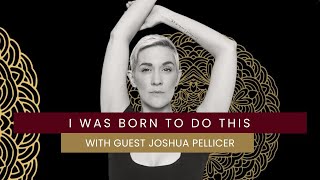
Joshua Pellicer went from selling 40 copies of his first self-published book to 500,000 copies and built a bestselling publishing business. He argues authors should publish now, within the next 1 to 3 years, before AI-generated content floods the market and devalues human authorship. He uses AI as a research tool but warns that preserving your authentic voice matters more than ever.
Questions this video answers
March 17, 2024.
Around 2008–2009 (he says “about 10 years ago… actually 2008, I guess nine”).
About 40 copies (he jokes that his mom bought one).
About half a million copies.
Chapters
Welcome, welcome, my friends. I'm so excited to be back on the I was born to do this podcast. As always, I have an amazing guest who is here to teach us, to show us his beauty in the world. And I am so, so excited to introduce you to Joshua Pelissier. Joshua, I'm so happy you're here.
Thank you for having me. It's so wonderful to be here and great to talk to you about this.
I know. And I have to really tell everyone that we don't know each other. Well, we're both in. Are you ingenious or are you just, like, a special guest that they bring in?
I'm a special guest that comes in and speaks and work with Joe.
You're a special guest. That's very important, actually. But we met last June at a genius event. And, you know, I meet a lot of people and there was something about you that, like, stuck with me. I was like, something. There's something here. And I'm gonna have to talk to this guy in the future. And then one of my dearest friends, Sam Karashi, who we talk regularly, and he shared with me that he had had a conversation with you, and it was like another, ding, I gotta talk to that guy. So we don't even know what we're going to jam about today other than some magic. And I would love for everyone here to know what you do also. I want to know what you do. Tell me, who are you? Joshua?
Well, I can tell you how I show up in the world, probably the easier way. Yep, I see about. I've always been a business owner, entrepreneur kind of person and always liked teaching people. I went to. To school and studied elementary education and really loved simplifying things that were otherwise complicated for people. And. And that eventually translated into me just helping people in general and kind of found for myself that the simpler I could understand and break things down for people, the more I could help them. And if I gave them very complex answers to problems or questions in their lives, I wasn't really helping them much. And I was actually. Oftentimes they would feel frustrated. Like they come after. Out of talking. Out of a session, talking with me, and they'd feel like they're stupid, you know, and that's not what I wanted. I wanted to help people because it made me feel good, to be totally honest. It wasn't like just altruistic. It helped me understand myself, too, and gave me a kind of purpose in. In life. So about 10 years ago, a little more than 10 years ago, actually 2008, I guess nine. I wrote a book and became an author. Before that I was just coaching and teaching in general. And it ended up. Well, when we released it, it sold 40 copies and no one bought it. My mom bought it twice. It's a digital only book, so she didn't have to buy it twice. She was so supportive. And it was a book on dating and. And for men. Dating for men. So my mom had absolutely no reason to buy it, but she just wanted to support me, you know, And. And then I got into marketing and I was like, okay, well, now I got to figure out how to be a marketer. And like, I'm not a marketer. I'm a. I like psychology and stuff, but I don't want to figure out the way to convince somebody this is valuable. But I did anyway, you know, and as a result of that, we ended up selling about half a million copies of my book and I became a bestseller.
What?
Yeah. And then.
I don't know this about you right now.
I don't talk about it.
This is so amazing. Right now I know nothing. Keep going. This is extraordinary.
Yeah. So I had a company, a company then that I formed around it. I asked that actually had a. A publishing house before that. That was. That was really cool. Yeah, and we did a lot of that.
You were a publisher too?
Yeah, I was a publisher before that. And what I did is I had a. I had a process. I think this has kind of primed me to do. What I do now is that I had a process for writing books that was. A friend of mine told me that somebody was doing something similar, and I was like, let me try that out. What I did is I made a massive mind map of the book and the content and I organized it so that the bubbles, the first child bubble was. Was a chapter, basically. And then I expanded on those and added everything in the right order. And then I just recorded myself on the computer talking about each of the bubbles and stopped at the end of every chapter and made a new MP3 file and just kept doing that. And this was in 2008. Nine, you know, so I. There was no, you know, digital dictation service, AI, you know, transcription services. So I had to pay someone to come in and transcribe it. And then I paid someone to take that transcription and make it. Edit it to make it feel more like a book and less like a transcription. And then I took that final and edited it, you know, with a fine tooth comb and. And I could get a book out in about two weeks. Right. So every couple of weeks I would have a new book, we'd release the book and we. Or I'd sell the book. Right. Which is like I'd sell it to a company. You know, for example, you know, this is not one of my actual clients, but say like an organization like Alcoholics Anonymous. And they are, you know, they, they have a big membership base, but they don't have a lot of content. They, they could want to produce their own content that is, that's, you know, part of their program and release it. But they don't have the time or the, or the content. Content creators. Right. To do it. So they would hire someone like me. And that was my publishing house. We did catered books and then I released my own book. Right. And it did really well. And I used the same process. It took me like 13 days, but then it took me several years to figure out how to sell it. Right.
Yeah, that's the hardest part.
Yeah, it was very tough to do that and I didn't want to do it. So I was eventually got to the point where I realized there was a formula for writing a book in my style, especially self help books and information products. And I ended up building a company that published my own materials using that formula. And we jumped in 12 months, we jumped from, I think we started out somewhere around $5,000 a month, maybe $10,000 we were making. And we jumped to 10 million a year in 12 months and built a kind of empire around it. And yeah, after that, went on walkabout and found myself spiritually and left everything and started over and got into technology and many other things as well. And that's what led me to what I do now, you know. Wow.
Well, this is delightful. I love that I didn't know anything about you.
Yeah.
Now I'm like, joshua, will you be my friend? I feel like we have a lot in common.
Yeah, I feel, I feel it. That's why whenever you talk about what you do and advancements in tech and how they are, like you're finding that line for yourself. I'm like, yep, I totally, totally understand. Exactly. And everyone's got a different line. But, you know, I think I crossed that line a long time ago whenever I started recording myself talking about my book and then turned it into a book. Yeah. I didn't sit down and write all the words. If I did, I promise you, it would have been a piece of crap. I'm not a great writer, you know. I have great content, I think, but not really. I, I think way Faster than I could type and I start getting confused.
That's like, that's the thing. It's a fire hose. I. I just wrote my book in three days. Actually, it's coming out in two weeks. I'll send you. Yeah, it's called Unleashed and it is, it is my most fire of all. It's like a fire hose for 100, like 70 pages. Like it's just gnarly and you go off. But I think you'll like it.
You do retreats kind of style to write. Is that what you do? Like what, what's your three day process like?
Yeah, yeah. So for me, I mean, when I help people write books, I take them on five days and I infuse those five days with like a lot of sacred work. So we actually start the day like in deep prayer, blessing the body. Like it's very, very like I always say we're going to the mountain. Like we're going to go to the mountain to hear God. So if we're going to go hear God all day, then we better get dialed in. So there's a lot of like spiritual dialing in and then there's a lot of fun. And so like on this last one, actually, no, two ones ago, we, we went to belly dancing class and we went to the cryo place. Right? Like, I just watch people's nervous system and I never plan an adventure. So people get all stressed like, hey, what's the itinerary? Nothing. Nothing's on the itinerary. God will show us what we need to do. And every time God shows me exactly the thing that's their recipe. I never know what's around because we go to places I've never been before. This last week we stayed in a tree house in Mill Valley, California. And it was like, literally I felt like a monk, like sitting above the trees every morning as we're like blessing our bodies and all the walls are windows, looking over acres of enormous trees. And I just kept thinking, like, how is this my actual life? Like, this is the best life of all. And books get done in five days. But we do write all day besides the playtime. But when I took my three days to write a book, I didn't have five. And I only had three days and it was a total disaster. I mean, my book came out and it's really good, but I had no one to watch me and I know how important that was. So I forgot to eat. I ended up writing like 16 hours a day. I ended up like falling into depression somewhere in the middle. It was like, you know, it was like, no one should do this by themselves.
Totally. I totally agree with that. Yeah.
Not my best plan. But I got the book out and I. And I love it. So. Okay. So much fun here. I had no idea. All this magic. But now what do you do? Talk to us about what you do now.
Yeah. So about six, seven years ago, I started getting. I started teaching myself chemistry and several other areas. Nuclear physics and chemistry were my big areas of focus because I wanted to understand. I kind of got in it myself. I think that most. Most authors realize at some point that the simpler thing you can make something, and simpler you can go. The more you understand everything instead of having to. Instead of having to look under and inspect every blade of grass in your yard, you can just say, this is all grass. And you understand how it grows and what it is and how to talk to it, basically, and how to deal with it. And my mind started with Adam's. Well, this was after spiritual stuff. Spiritual stuff. For me, the truth connection and the getting to the truth and the. The reduction of limiting beliefs was a major precursor to this. But then after that I got into, you know, some. Some research and I started a lab for research and development of really interesting innovation. So I had an R and D lab, went all over with that, and started to meet with a lot of scientists about some really cool stuff that I was working on. We were working on 3D molecule printers and alternative energy capture systems, things like that. And it was really inspiring me in a lot of ways and also teaching me. So just like you kind of wrapped your business up in something that's good for you, that's what I did too. And only mine was very much like learning the universal laws and understanding the universe around me. That was my stage, right? So I started a researcher development lab and we had an AI department. And the AI department was. I don't really believe in AI. I don't really think it's a thing. I just think that there's regular eye and then that's that, right? And that this is just like. I think that if you went back 300 years and you said if you told somebody that a car was AI, they would totally believe it. They. They would go, this is the most complicated machine I've ever seen. It's got to have its own intelligence. You know, how does it know when I push the brake, you know, blah, blah, blah. And. And it looks artificial, but it's not. It's just an extension of our. Of our genius. And it's a mimicry of our, of our thought processes. And it always is, no matter what it is. It's that and our attempt to reach and understand nature and to live in balance with nature. And the way that we do that through words is that, you know, there, there are statistics and math, of course, which is a part of this whole thing, which kind of proves to many people who are really heady and in the mind that there's no way of escaping nature. But all of our words and all of our. Or the origin of language and etymology, if you study etymology, which is the origin of words, is, is deeply connected to nature and has a deep meaning. All the words have deep meanings and sounds have deep meaning. So we forget this because it's so inherent to us and we learn it so quickly when we're kids, we kind of gloss over that sort of thing. So there really is, even in words, no way to escape nature. Right? You can't live outside of nature. There's no unnatural words and there's no unnatural elements or no unnatural chemicals like that in the world. They don't exist. Nature allows it to be right. No, they. Nature creates the physical laws, so there's no way to escape it. And so getting into the AI department of my business, I was like, you know, someday we're going to have this like, you know, Iron man type AI system and I'll be able to ask it to do experiments for me, and it will control my experiments. And then I can do three times as many things. And it's not about getting things done, it's about exploring. And I only have so much. If I had, if I have to read all the books to find one universal law, and there are many, you know, I don't want to waste my time past the point of learning that law and integrating it. I want to then move on to the next one and understand life. I'm not here to specialize, I'm here to internalize, you know, and I want to, I want to integrate, right? And to be, to live this life and at the end just be like, hell, yeah, I did it and bye, you know, I'm going to do it again and whatever's next for, for all of us. So. So yeah, so I got into just like thinking about AI structuring AI systems and. And then a generative AI came out, which is what we know of AI now, though. Machine learning was already around and deep learning was already around, but that was just a bunch of code and numbers and it was boring.
Yeah.
As soon as it Got to the point where it could write for you and talk to you. Then it became this whole different thing. We can interpret all of these realms that we couldn't interpret before. You know, everybody who was an engineer was now suddenly a poet. And everybody who was a poet was suddenly a physicist or. Or a financial advisor. Like, you could convert your theories and your philosophies now into other areas of life. And that was very, very difficult before because we had secret languages that blocked the walls, that block people off. Like legalese. If you walk into a, you know, a conversation with a bunch of lawyers and they're using all these words that you don't know, then you're excluded from the conversation. And if you start asking things like, what does that word mean? You annoy them.
Yeah.
And they don't have time for that. Right. So that caused us to put these walls up. And as soon as AI was able to break those walls down, then I started testing to see what it could do. And it was unbelievable what a simple AI program could become. You know, and the simple one that we use now, you know, they. The way that. If you've seen Chat GPT, right?
Yeah.
So chat with Chat GPT, the way that they. The way that OpenAI figured out how to. How to make that system. It's called a completion engine. And at first what they did is they took all of the semantics and all the rules and laws from a language and they put it into this big program and they said, okay, all right. And it was horrible. It was just. It did terrible. It never did anything right. It screwed up constantly.
Yeah.
And then finally they tried that for a long time, and then they said, you know what? They have an AI program that learns, but they didn't have one that could speak. So they gave the. The goal to the learning AI, which was deep learning and machine learning, something that already existed. And they said, you figure it out. And it goes, okay, well, language is basically a human saying a thing, and. And then the next word is the only word they're thinking of. But they do it so fast, they don't realize it. So the completion engine was born, where suddenly AI just goes, here is the next word. And it reads everything in beforehand and picks the next word, reads it again, gets the next word, reads it again, gets the next word, and it fills in just one word at a time. And it's not even words technically. It's called tokens. Right. Where they do parts of words and it guesses. That's what it does. And you can control how Creative it is on the guess and how deliberate it is. And you can feed it information ahead of time. Prime it, they call it. Right, like priming the pump and. And then it will read that every time and then try to continue the thread. It's good or bad at that, depending on how you know what it's reading and what it's trained on and how intelligent it is and how big it can be and that kind of thing. But it's gotten very, very good, in my opinion. I'm very impressed with what they've done. And it's not just OpenAI, it's other, other language models too. So. But yeah, that's, that's what ended up happening. And so I picked that up and integrated it and learned it. I've been working with AI for more than a year, really, really deeply. And before that I had it in the company, but it was one of many programs in the company. So I stopped focusing on the others, just focused on AI and started to integrate it into different aspects of business and things like this. So now we teach, we have a program teaching people how to. Well, actually we don't teach the business owners because business owners are too busy to integrate it. But everybody pretty much knows that they need to in their business in some kind of way to make things easier, if at least just easier on their employees so they can not A, be replaced by it one day and then, and then B, that they don't just do the same repetitive tasks over and over again. Discover it on their own and use it without telling you. Because that's pretty much what's happening. 40% of people currently who are employees, I saw a statistic they're using AI in business aren't telling their boss, they're just using it. They're acting like it's what they're normally. It's just them. Right. So I love. We basically just, we train employees for, for companies and train owners as well on how to, how to use the technology and integrate it into standard operating procedures. And we have a group for that.
It's amazing. And I'm signing up all my, I'm signing my employees up when we're done with this. So, so excited about it because I'm a big fan of collapsing time and however we can collapse time, the more we can make a difference in the world. And I think what you're doing is you're going to te my team how to collapse time so we can actually scale and grow and reach more humans, you know?
Yeah. And I, I once heard someone Speak about it like this, where they're saying you want to automate whatever you can so that you can humanize. And that's the real issue, is that people, people, they think, and I understand exactly why this is the common conception is that adding AI and if you do it wrong 100%, it will do this. Like it'll be stupid, it won't work right. But it can fail because you can add it focused on the wrong things. You can say, oh, we have design. We don't need a designer now. Buy. But that's not true, actually. You need a designer now not just to take it the last 10 yards, which is like major. You know, you get something that's pretty good, and then you still have to convert it into vector and Photoshop and edit it and add text and make it custom and use it as an asset. It's not going to just build everything for you. And then the other part is that you need somebody to prompt it. And so it's this new language that everyone's having to learn all at the same time. And it doesn't enhance the work environment a lot. And it can triple the output of each of each of your employees, including yourself. But the goal, as a business owner, you run your business. You make the decisions about what goes where. And you have to be holding in your mind and in your heart the intention to connect your employees to God or to nature or to their humanity and whatever is important to you through this technology. And when computers came out, everybody had the same fear. When horses, people started riding horses. There's a history of, oral history of resistance to the horse riding. Like no one would ever, no one would ever be patient again. And when the, when the printing press came out, it was like, no one's going to talk anymore. It were. People were afraid that this technology would ruin our humanity.
Right. Interesting. I love this. Well, what an honor for us to, to sit with you. I mean, there's so many ways we can go with this. But what I feel so inspired about as anyone who knows me, every book that we have has a stamp on it that says the authentic author, no AI. And I just wrote a whole book around like, authentic creation and this idea that we must still be the ones who receive inspiration. And I still use AI every day, so. So I think that there's this marriage between the ideas that we don't live in this black and white. Wrong, bad, good, like, no. Like, how do we come to this place of. Like an agreeance agreement inside of ourselves that we can use AI as a tool that it needs to be. But you know, I always say, like, you would never have AI have orgasms for you. Like, no. And creation is orgasmic. And so I always think that if people give it over, which people will. They want to. Because people are lazy and they want the easy way out. How do we. How do we live with it in a way that it aids our work, but it doesn't still the magic of creation.
That's a great question. And I think that for most people, they're aligned with the same thing that you're talking about. They're not. They don't want. You can't outsource an experience, period. No matter what the technology is, you won't be able to outsource the experience. You can outsource a mimicry of the expression of the experience, but then you're still the one experiencing the mimicry. You're. No one can replace you. You're the experiencer of life. So that's just. Period. And there's a lot of conversation. I think it's a distraction, to be honest, the conversation of will this thing become conscious? Because consciousness is not something that is made. It's already here. It's always here. And technically it's in everything already. And the. The funny thing about the conversation of consciousness kind of like and. And different technology becoming conscious is that it's based in a materialistic perspective. The idea that the material world is. Is real in the first place and that we're temporarily existing in this material world rather than the other way around, which is that we are eternal as consciousness and the material world is just a temporary blip in our consciousness. And that spiritual perspective is going to have to come front and center for everybody. Which is why I think this is a divine tool. I think this is the tool of the great awakening of humanity to their spiritual depth. Because it's going to clarify that and has to clarify that. So that's really beautiful on one hand. On the other hand, yes, there will be a temptation for people who are. And I won't call them lazy technically at least not to their face, because. It's just overwhelm mostly. And when you start, if you trust in the humanity and society to give you direction and you don't question it and you don't. I don't want to say don't think for yourself because everybody thinks for themselves. But if you just sort of outsource decision making and in your life too much, you end up getting this victim mentality of, like you said that I would be safe, and now I'm not. And all the promises you made, and it creates resentment, it creates anger, which then of course can create disconnect or the illusion of disconnect from some source and higher purpose in life. But also it's. There's no getting off the path. Right? You. No matter which way people go, they are on their path. And even if it leads down into the sharp jagged rocks, that's their path right now. And that's what they have to do. So I think that there's that too, that aspect of it. But to use it in the creative process is fascinating to me because at one point books were in this position where I can imagine when books came out, someone who was in oral teacher and a speaker would say, that's not everything. And it isn't. It's just a little tiny piece of information that is static, that isn't going to answer your questions, that isn't going to evolve with you or cater itself to you. It doesn't care about you. You know, you can't outsource your trust in a human to a book. Right. And that's, that's true and makes a lot of sense in a lot of ways. But now we use them so much and libraries have been so supportive for us as creators. It's. It's lifted me up and I grew up without a lot of resources and in a trailer park in Florida, and it was just like really happy version of the Eminem story. And, and it was, it was awesome, you know, and beautiful. And I. But I had to generate value and see value in nothing before it existed. And that's what it gave me, that talent. And books made it possible for me to actually learn from these people, these ancient people that are dead, that speak through the ages to us. And that's been a positive impact. Now, I don't know anybody now that says books are bad because they've used these books in the right way. Now if you go open a book and you copy word for word what it says and you put your name on it, that is called plagiarism. Right. Right. Now we don't have a word for that with AI.
Yeah, right.
But we will. And it won't be plagiarism. It'll just be. It'll be worthless because the person who reads it can go on chat GPT and get the exact same thing for free or for their 20amonth. Right?
Yeah.
And they know that you didn't come up with it. If they talk to you later, you won't have any idea what you said, you know, and so you won't have an internalize those ideas. So I do think that trust is going to be the new currency with this. And if you've been focused on that for a long time, then that's, that's going to be just fine. You're going to be just fine. You can become more valuable over time. But in the direction of using this to enhance the process of creativity, I'd say right now I use it a lot like I use a book. But it's not just a book. It's a book and an assistant together. So I can, for example, I can go open a book to a page, read it, take notes on that section and then summarize that in my book and say in this book that I read, I found this information which I think is important for you to know and not, not all inspiration is divinely striking me with, with my own like connection directly. It's sometimes through a conduit of others who are struck divinely. And that's, that's great. That's a great connection and great point. I also will look on the Internet and search for papers or for other writings or articles and things like this to get information. And so here's what I use it for. A really classic way that a lot of people can use it for if they're an author is that you can outline stuff like by going online through, for example, ChatGPT is the most common tool, right? So I don't use it very much, but I do use it to do quick searches. For me, I don't go on Google really to do searches if I can help it, unless I need a paper or I need to find a website or a person. But if I'm looking for information, I'll just go on ChatGPT and I'll say, hey, I'm, I'm trying to make this point. Find five proof based arguments and quote the data as a result and list them for me. And then it will spit out a list, it'll look online, it uses Bing to search it. So there's definitely control of content no matter what. Google and Bing will definitely sensor data, right? So you still have to think for yourself here, but it will pull back the, the supporting data for you and then list it all out. Now you're not just going to copy that and paste it and put it in your book. You know, I mean you could, you totally could, you could say, you know, in a book you could easily say I Googled this. And here's what I found. Paste. Like, that's easy. You can say, I looked at the definition of this and here's what it is. They don't expect you to rewrite the definition. You can, you know, they expect you to put it in as it is. So there's frameworks. There are frameworks and, and they're acceptable frameworks for you to, to plagiarize in a way. Right. Quotations and block quotes, things like this are common.
Yeah.
And they help support your argument. But when it comes to expressing the way you feel, you know, the way I say that, I use AI like an assistant and like a research tool, the assistant is kind of like my dictation service that I would use. I might say, this is what I'm feeling. Here's all my philosophies as a, you know, that I've already got written down. Expand on this in a way that I might say it, and then it reads back through everything and it expands on it. And then I go, you know, is that actually how I would say it or is it not? And if it's better than how I would say it, I go, wow, I have to learn this now, you know, I need to learn how to speak like this. I need to learn how to write like this. And it does teach you. The more you look at it and go, oh, that was a fucking amazing metaphor for it. Sorry for my French, but that was an amazing metaphor, you know, and I never thought about that before. It's really brilliant and I like it a lot. If you agree that becomes your new tool of content creation, which is quality assurance, and you attacking, tacking your trust, ability to that statement, whatever it is, is going to be the new value for content creators. And a lot of people won't make this transition, but a lot of new people who weren't able to do it before suddenly will be able to. And they will speak in ways that we've never seen before, like the most beautiful, inspiring, poetic way. And they'll never be able to talk like that, but they think like that and they have a disconnect between their brains and their hands or typing on the computer. And whatever these different tools that we've learned to use over time that we've actually had education in, you know, sit down, learn how to use the keyboard, learn how to type, this is going to be removed as a barrier for them. And we might find out that the most brilliant mathematician in the world, for example, is a farmer in Oklahoma who works on tractors. And suddenly they will be able to Stand in a conversation and communicate and say, well, this is the, this is the way that the world works to me. And so it's going to be a beautiful, beautiful tool that will change humanity, especially content creators. But at the same time, what you're saying is there's a line somewhere here where, and each person draws it themselves and you're taking a stand for it being research and then creativity. Right. Research on one side and creativity on the other side in a lot of ways. And a lot of people need to hear that because they will eventually and probably immediately, many people immediately will not draw that line, will jump in, blindly, release stuff. Right. And I understand you're trying to support them from, and help them. And the way to help them in the way you are helping them is by saving them the pain of being obsoleted instantly and also being lame. You know, like, that's lame. It doesn't have any, you're not adding to the world in any way. You're just taking repurposing.
Yeah.
However, now we get into a new kind of, a new kind of talent, which is prompt engineering. How do you get this AI to write like you write, or how do you get it to write better than you write, but say what you want to say, exactly how you'd like to say it? And, and that's a new talent that I think a lot of people need to learn and schools are going to be teaching it. Everyone's going to have to adopt it because the cat is out of the bag. You know, you can't, you can't put the typewriter away and say, after the world sees it, don't use this.
Right. You know, I, I, I so love this because I really believe it is, it is a marriage. We have to bring them together. And I, like, I will tell you, I'm actually super good at prompts, but I, I'll tell you why I'm really good at prompts. Because I, I, this is how I work with God. Like, I'm not bland with God. I'm very clear. My asks, the asks are very clear and very distinct. And I know exactly how to dial in my asks. So I'm not saying AI is like God, but I've been really good at asking. And I think that when I work with AI, I mean, like, this is so funny and he'll never hear this, so I could say this, but I, with my ex husband, I try so hard that any text I sent to him is void of all emotion because I can get, I am a fiery soul. And so I don't want any text to come off full of that fire. It will only add to, to the pain and suffering that is already present. So I throw into AI all the, like, this is it. Like, I'm so pissed. D d d d d d I'm like, I need to have this sent to my ex husband. Could you please rewrite it? Void of emotion. That is clear and kind. And then that is what I text.
I had this. One of the best ways of using this. There's two ways of using AI that I think that most people are going to use it for eventually. One is very similar to what you're saying where one is finding movies between you and your partner. If you want to watch a movie and you're like, this is what they like. This is what I like. Find me a movie and they'll give you a list of movies. And you're like, I haven't seen that one. And you watch it and it's wonderful. I've done that so many times. And then the other is, you know, I had a landlord similarly to your ex husband. That's the way where I was just like, I get an email from him. This is my last landlord, not my current one. And he was just like, yes. So I walked by your house today, and he's very neurotic, man. And he'd be like, I need you too. And he'd list like 50 things, you know, like just, no, it's ridiculous. He has no reason, he has no right to ask me to do them, you know, things and it would take me a week just to do them. And I would have no other work done. Right. And therefore I wouldn't pay rent. Right. So I'm just like, okay. So what I ended up doing every time that he, that he replied and did something like that is I just vented into a dictation system, you know, and then. And then put it in AI and said exactly what you said. Like, hey, I want to be kind but stern about this. Like, I'm not going to do it. And, and make a logical argument that, like, that shows that I care and that's why I'm not going to do it. Like, I just literally said, do this for me.
Yeah.
And I would have spent hours, hours crafting that email and just making sure I wasn't, you know, reading back through it a bunch and stuff. And, and I love, I love that I would do that because I care. But I'm not giving my gift to the world if I'm doing that. I'm Sitting here talking to my landlord and, you know, while I'm learning myself, I definitely think there's. There's a lot of. A lot to be said for me recognizing I didn't have the ability. But, like, how humble do you need to make yourself in order to get that picture? I could. If I have to put it into AI, then I'm like, I probably should work on this, you know? But I'm not going to work on it before I respond to my landlord. I need to work on it later. It's going to take me a month to be able to.
This is a process. I don't got a process time right now.
So I was just like, nah, I. I love me enough to not put myself in. In this situation right now, in the middle of my need and struggle. I have a kind of short story I'll tell you, and then I'll kick it back to you here. But I used to do construction work. I also used to do kung fu. I still do now, Shaolin. But I was doing them both a lot at the same time. Like, construction and Shaolin really went well together, you know. One was just like, focus and do my thing.
Like, the boots made it so much easier to do kung. Is that what happened?
Yes. Boots were big. Actually, I think it's the other way around. The discipline of kung fu made it easier just to cut stuff and drill stuff and think. And one day I was living in a chap. No, I was living in Ann Arbor, Michigan, at this time, and I was working for my boss doing construction. And he said something really simple. Take this pile of wood and put it into the back of this truck. And I was like, great. So I'm out there and I'm doing it, and I'm working on it, you know? And after about 15 minutes, he comes out and he goes, what are you doing? And I was just like. Immediately, I was like, I'm doing what you told me to do. Like, I was a kid, you know. I was immediately reactive. And he's like, no, look at what's in your hand right now. And I go, yeah, I'm doing it. And he goes, that wood that you're pulling out is on the bottom of the pile. Why are you pulling out from the bottom of the pile? And I was like, I don't know. I realized it was because it was too easy to do it the easy way. I was, like, so programmed by celebrating the hard way and putting myself through stress and throwing myself in the water in order to learn how to swim and trial by fire and every kind of painful way you could think of. And every boy goes through this, I think, as a transition from boyhood to manhood, is that at some point you realize it's all. Life is already difficult enough to learn and focus and integrate the lessons that you have around you. It's already difficult enough just to do that. To make it more difficult is really. It's not actually you going, oh, I mean, your ego might think life is so easy, I have to make it hard on myself. That's a total lie. It's a way to hide from the real things we need to do in order to make it feel like we're doing, Making progress. We're just running in place. And you can't go on a journey running in place, you know, and you don't. You end up the same person you were when you started. Just tired.
Maybe a little sweatier. Yeah, I love this. And. And I want to. I want to hit on this one point before we wrap up today, because this was something that really impacted me and I think it will impact so many. A lot of my listeners are authors. Is when you said, I want you to tell me what you believe the time frame is for authors and thought leaders to really secure their voice in the world. Can you share that?
Yeah. So this is a really important point. I'm really glad you brought this up because I don't get a chance to say this very often to people and I. I really see it happening right now. And I. I want to warn people ahead of time. If you're an author, look at what AI is doing right now. I can go on AI and I can say, I want to write a contract. Operating agreement contract. List the top five books that are about operating agreements, and then it will do it. And they're real books. I can go look them up and like, there they are. And then I can say, okay, using the information in this book, in these books, I want you to outline an operating agreement for me using the best practices. Now, I'm not using. I'm not reading those books. You know, I'm not having to sit there and one at a time. I'm not fine. The fine tooth combing them either. So I'm not picking out what I agree with and I don't agree with because I don't know the. The business and the. The reality. And the fact is I don't want to. I don't care. I just want it to be good. I would likely hire somebody to do it for me. I'm still not going to learn how to do it, you know. Now this is an example because I did actually learn having a lot of businesses how to write operating agreements and stuff, but I don't like doing it. Yeah, it's not my favorite thing in the world.
Not really delicious.
No, not in life. And I don't mind doing that sometimes. But this is, you know, a great example of how I can get through it, at least to a starting point and get a working model and be done. Okay, so those books, those books are already written. And the models are trained to go out and research and find information and then pull that information in. It doesn't have to go search it on the Internet anymore. It will just know that if this is the topic, here's the related neural network type connections, and these are the books that are there. Right? Okay. Now the reason why this is important is because those books already exist. And right now, books are still being written, a lot of them. They will always be written, you know, but soon someone will see a book, someone who's never been romanticized around the idea of reading books like we have in our lives, like they are the wonderful tools. There's going to be a generation coming out where they haven't done that. They didn't have to romanticize it. What do they do? They're going to go, this book wasn't written for me. I can get this book custom written just for me. I can. I can also upload this book into a tool and say, tell me how to answer this question. Why then do I want to read this book? I don't want to read this book. And people will stop writing books in the traditional way as much people still will, because they're going to want to know what authors think and people think. What are your opinions? You know, what is your content? What is what is good and bad to you, right and wrong to you, you know, and they'll want to know that, but they don't need a book for that. So my point with all this is that if you have a book in you now, again, one more point before I get into this. If, if you have written a book already, you are in the AI and you are an expert. So if you look up any content on my previous work and you ask, who are the people that I should read for this, it'll tell you me, right? It'll actually recommend me. And this is just like the search engine. When search engines first came out, people were doing search engine optimization, SEO. They were like, how do I get ranked really high in Google. This is the new Google. It's the new way that you're going to show up to people and a lot of people, it's going to break down barriers. You'll be able to speak to someone in Arabic, in Farsi, you know, in French, and you'll have your book recommended to them and you, as an author or as a content creator, recommend it to them. So soon. Already there's a tremendous amount of content being produced by AI on some programming websites. 80% now of the code being written is written by AI and a person is telling them, telling it to write the code and telling it how to do it, but it's being generated by AI and it's almost the same ratio, climbing to that ratio with content production, social media and places like this, you know, so soon it will be everyone's using this tool, right? And that means there's gonna be a lot less value placed on the content you produce because they'll assume you just went on AI and wrote it. Right. So if, but we're not there yet, we're probably about two to three years max at that point where the, where the devaluing starts to happen. But I'm usually wrong about this and it's usually a lot sooner.
Yeah.
My suspicion is that it'll probably be a year before people start integrating new models of content creation as the specialty that they have. Like, I use AI to make an AI tool instead of a book. And now you just read these notes, I upload them into the tool and you talk to it and it's more valuable to you than a book. You might get a book too, just because it's nice to have and you might want to read it later and that kind of thing. But the tool itself is the question and answer, the back and forth, this sort of evolution of static writing where you write one thing for a thousand people. Instead now you write one thing for one person each time and cater it to them. So all that being said, my point with this and my, my, my personal perspective on this. And again, this is like I'm very, I see this happening right now, 100%. If you have a book in you, you need to get that thing out now, you need to write it now, because soon authorship isn't going to mean much, not as much as it used to, but we're still in this window yet where no one gets that yet. So the whole world will have to catch on and say, oh yeah, you wrote something, well, you probably just used AI to do it. But they're not doing that yet, you know, so if. And again, you can use AI to write and support and do whatever, but that isn't the point. The point is that if you have content in you, you need to get it out right now in a format that the AI, as it starts to read the Internet and index things, will find you and label you an expert. Because we don't know what direction it's going to go in right now. And soon. I can be an expert on anything right now. I can like, literally write a book on 50 things if I want to. And it's only going to be a matter of time before someone does that. They are like the expert on everything and then it devalues it. And no one has any idea who's a real expert and who isn't. The AI will have timestamps, though, and they will know that before 2025 you were an expert. And that means that you are weighted heavily as an actual expert. So I, I highly recommend that if you have a book inside of you, you get that thing out right now, that this year you finish your book and if you have 10 in, you get them all done this year and release them all.
I feel that, I feel it. There's such an urgency. And when I heard you say this, that's why I knew I needed to interview. Know that for most people, writing their book is like, I don't know, I'll do it in 10 years. And it's like, no, that's a no. That's a no. It's time. And I feel it in my body. And you just get to come in here and stamp it of what I have felt so deeply. And we need, we need authors. We need those who are going to continue to seek and share, but we need them now. And I love what you said, and I'm just like, thank you for sharing that.
Yeah, I fully believe that as far as my perspective goes. And I, I have it too, if you have one. Another big thing is that if you. It's really about, like, identifying where you want to live in your area of expertise. You know, I used to be a dating expert for, like 10 years, and I need you. No, I don't think you do.
Hot mess over here.
The secret is we're all a hot mess.
Okay, well, we'll talk on the back end. Okay, keep going.
Yeah, so, like, you know, I used to be. But if I. But that's not who I am. You know, I'm not just that. I don't do that now. It's not my area of focus. So if you are, if you're trying to define yourself or redefine yourself again, I don't want to tell you. Hurry up. I don't like to tell anybody. Hurry up. It's like you either are on board or you're not. But if you feel what we're talking about, if you feel what I'm feeling about this, then I just, am. I just really encourage you to act on it because there is never going to be a time like this in our lives again where there's a before and after. This is going to be a stark contrast. We don't know what's coming. We'll look back on this conversation in five years and we'll go, either that guy was crazy and, and everything he said was wrong or we'll say, yep, like this was, this is exactly what we thought was going to go on. So I just want to encourage you as an author, not you specifically, you know, Kira, because you're obviously dedicated to this already and you agree, but also you, if you have another three day stint and you want, you know, I.
Just finished my book this morning at 8:30am like, to the edit, like all the edits done, and my body's like, oh, I got to take a break then. I hear you right now I'm like.
All right, yeah, just schedule the next one. You know, I think once you put it in the calendar, it's half done.
You know, it is. It's so true. It's so true. But I. Okay, finish your thought. Finish with that.
I, I want to encourage, and this is for you and for, for anyone watching right now, is that I want to encourage again. The hard part is just deciding to write more than one book. And like, not just going, I'm going to produce one thing, but the second thing is putting a date on it. And if it helps a lot to hire someone like yourself to work with them, work with you on this. And like, that's just the way it is. I totally understand why. And it's like a, it's like a personal trainer. If you do not do this, you're going to regret it majorly. And sometimes, like I said, just putting it on the calendar and agreeing to it and setting a standard and having accountability and then having a partner to help you through it is all you need. And so for you, I just, I know that you don't necessarily need that, a partner, though I'm sure you have friends that will go out with you and hang out in a treehouse and help you write Books. If there is someone now who's been waiting for this moment, I just want to implore them to really, like, reach out to you and to have that meeting and get that content out. And even if it doesn't become some bestseller, get it out there. Because soon it won't matter about bestsellers. It'll really just be about who you present yourself to in or as to the world so that they can see they should come to you and trust you around a topic and you put the time in and it happens, truly. And it's definitely. Timelines have collapsed. You can get something done in a very short period of time, whereas before it was years, you know.
Yeah, time is changing. Something shifted for sure. Oh, my gosh. I could talk to you all day. I'm. Hopefully you'll become my friend because I think we can have a lot of fun in life. But we'll see. We'll see if you like this, like this fire over here. I really want everyone who's listening to know that this is not an either or. This isn't one side and the other AI is. It's here and it's not going away. And instead, we need to learn how to swim with it. It's kind of like going against the. The tide or going with it. Like, don't try and jump against the wave all the time. And so this conversation today, I hope, started some curiosity, some awakening, and also just like, profound awareness of you as the divine conscious, brilliant soul that you are. Like, never shut that down, never cap it in the sake of ease, but instead allow it to rise and use the tools that have been created to help us collapse time and make a bigger difference in the world. And anyone who's listening, I will put Joshua's notes in our show Notes. If you guys want to have your team jump in on his amazing offer where he helps your employees learn AI and scale and be able to do things at a much quicker speed. That will be in our show notes. So, everyone, I'm sure you fell in love with Joshua. This was a phenomenal conversation. I always ask my guests right before we end, if you want to just drop into your heart for a second and listen, what is the message that you would love to leave? No matter what it is, no matter what it's connected to, it doesn't even have to be about this conversation, but whatever is, like, heaviest or loudest in your heart, what would that be?
Without any judgment of what I'm thinking, I think that the first thing that came to mind is, is all going to be okay, that this is a. A very, very big time and shift in everyone's lives. But again, I think that the biggest thing to remind everybody is that in whatever you want to call this for yourself, that God's got you and that you can't step off the path. It's not possible. So no matter what happens, no matter what comes, that it's. It's good for you and you'll be able to survive it and you'll thrive on the other side. This is the beginning of the great awakening of humanity and the dawn of that, and you play a very, very important role in that, but you will never be able to define what that role is. You just have to get in and swim and it'll reveal itself. So I think that that's the. We're all counting on you to do that. Yeah.
That's so beautiful. Thank you. Thank you for being on the show today.
Of course. Thanks for having me.
Yes. And my message today. Who My message today is look at your calendar of to do's and all the mundane existence and carve out space and time to swim in the deliciousness of creativity and to wake up the magic that lives within you so that your life unfolds in the most beautiful way. With that, my friends, I will see you next time on the I was Born to do this podcast.