In this interview, Kevin Surace, CEO of Serious Materials, explains how Oak Ridge National Laboratory (ORNL) is advancing building energy‑efficiency research, focusing on high‑R‑value ThermoProof windows. He outlines the technical breakthroughs—spacer technology, center‑of‑glass improvements, and advanced frame systems—that enable R‑5 and R‑7 windows, which he claims save more energy than any other window on the market. Surace critiques the stagnation of the Energy Star rating at R‑2.8, noting industry resistance to higher standards, while highlighting DOE efforts to raise the bar to R‑7 and beyond. He describes two net‑zero home demonstrations—one for Habitat for Humanity and another for the Tennessee Valley Authority—where ThermoProof windows replaced low‑E dual‑pane units, delivering up to three times the energy savings. Over 27 years, Serious Materials has saved roughly 5 billion pounds of CO₂ and hundreds of millions of dollars in energy costs. The installations were performed by an AMA‑certified installer, and the homes are being monitored by DOE and ORNL to quantify the energy reductions, providing proof points for affordability and performance of high‑R windows in U.S. housing.
Chapters
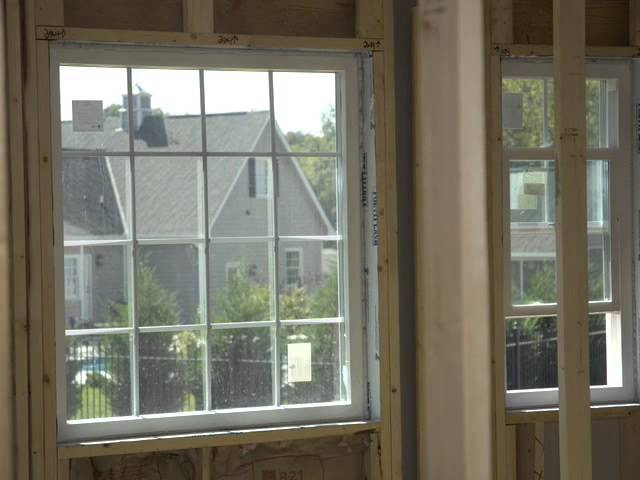
Well, Oak Ridge National Labs is probably one of the nation's treasures. Several thousand researchers are making absolute strides, significant strides, in a number of areas. One of those areas is building energy efficiency, and I think that most of the American public does not know that we've got a national research lab working on building energy efficiency, because energy efficiency is probably the major way that we can address climate change and energy independence. Thermalproof windows quite simply save more energy than any other window, period, bar none. And there's about 8 different technologies involved in doing that, some, some real breakthroughs in spacer technology, improvements in center-of-glass work, improvements in the frame systems, etc. But if you think about Windows a little bit. Windows have been left behind. While we've improved the insulation in our walls from the mid-'70s on R-3 or R-4 all the way to R-15, R-16, R-17 today, we've left windows back in the late '70s at basically an R-2 to an R-3 with no further improvement. With high R-value also comes comfort, and people don't think much about comfort outwardly. We think of R-value as a specification, and what does it mean? Of course it means Heat loss through a partition or through a window. But, and the higher the number, the better. But more important to a lot of people is comfort. Everyone knows that even with dual-pane windows, when they sit next to the window in the winter in the Northeast, it's cold. Let's talk for a second about net-zero energy homes. Maybe many people don't realize that it is possible today to build homes that actually use no energy Net. And that's a result of, first of all, generating some energy on the roof with solar, but it's also a result of significant improvements in insulation and in window systems and in door systems as well. You know, one of the critical steps in the development of ThermoProof was to make sure that these windows could be affordable so that we could offer at least the R-5s and the R-7s for just about the same price or very little more than some premium R-2 and R-3 windows. Energy Star for windows has been stuck at R-2.8, I suppose, for decades at this point, for a very long time, and I think the public would be surprised to know that Energy Star got stuck there. Well, it got stuck there because the industry is very uncomfortable with raising that bar to R-5, R-7, R-9, R-11. I'll tell you, the DOE has been wonderful. They have been trying to move this up to R-7 and and eventually R-10 or R-11 over some period of time. And I think that eventually they'll succeed in spite of an industry that doesn't want it to move. We want it to move because we think it's important to save energy for this country. We think it's important to save energy for our clients. Over the 27 years that Serious Materials has been making windows, high R-value windows, and more recently Thermoproof, we've saved some 5 billion pounds of CO2 and hundreds of millions of dollars of energy bills for our customers over dual panes. So we participated in 2 home retrofits for Oak Ridge National Labs. One was a Habitat for Humanity home and the other one was for the Tennessee Valley Authority. Both of these are focused on net-zero energy. In one of them, we had to replace the existing windows. There have been windows in these highly monitored homes for, for several years And the windows from this other manufacturer were only an R-2.8. Yes, they were dual-pane low-E, and yes, they're advertised every day as saving lots of energy, but what they mean is saving energy in comparison to a single-pane window, not in comparison to other dual-pane windows. So we were able to replace those windows with R-5 and R-7 product. And then in the brand new home for Tennessee Valley Authority, we put in new product that was all approximately R-7, and those are all fully operable, fully modeled, and fully tested in third-party labs. So we're very confident that we've got, in the case of the R-7 windows, almost 3 times the energy savings of virtually any other window on the market today. Well, we sent a team out to Tennessee to install these windows, though any installer could have done it. We wanted to get them in and quick and at the lowest cost, obviously. So we sent our team out there, and in one of the homes we took our 2.8 to our 7, and we had to replace the windows that were there. In the other home, it was a brand new installation. Wade West led the team out in Tennessee, and he has many, many years experience as an AMA-certified window installer. So, you know, he put these in as any trained installer would do for windows, and it was a very successful install. Right now, they've been in for about a month, and the DOE and the Oak Ridge National Labs are monitoring these homes to see how much energy is saved. The models show that this is going to be significant energy saving in these homes in comparison to what dual-pane low-E would have been, because the homes are already pretty well buttoned up. So In these homes, the windows by far were the last biggest leak when they were just dual-pane low-E. So switching to an R-5 and R-7, these are big changes for those homes. So great lesson for homeowners here that this is good enough for the U.S. government to put into these net-zero energy homes, and their focus is for affordability in these homes. Then I think those are, those are great proof points for you to also consider, or for the, you know, the listeners or the watchers of this video to consider thermoproof windows as well.