Strategic Sourcing 2002 - CPO's Speak (HD)
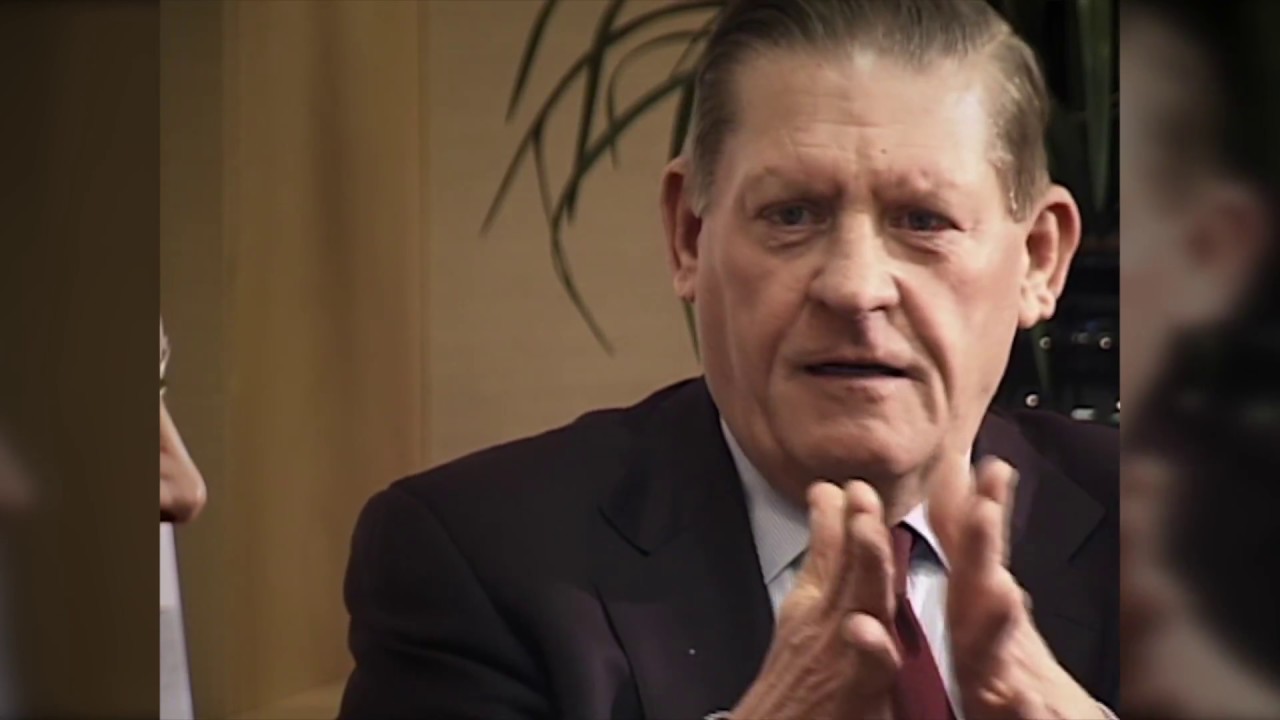
This content was created by Kevin Surace. This content was uploaded by Kevin Surace. This is a YouTube program titled "Strategic Sourcing 2002 - CPO's Speak (HD)" (metadata timestamp 2017-08-25). The excerpt is a multi‑speaker panel/program produced with support from Perfect Commerce and D&B featuring numerous procurement leaders, CPOs, and vendor representatives (panelists referenced include people from Honda, Southern California Edison, Hilton, Perfect Commerce, and others such as Amiko/Amiko Banfield). The content is a recorded discussion/presentation about strategic sourcing and enterprise supply management: CPO roles evolving to board‑level strategy, supplier relationships and partnerships, cost‑reduction case studies (e.g., Honda and the ’98 Accord), supply‑chain risk and supplier continuity, e‑sourcing/supply management technology, best practices, change management, and the business value of strategic procurement. It reads as a curated program or panel rather than a single‑speaker lecture.
Chapters
This program was made possible by a grant from Perfect Commerce, the industry leader in enterprise supply management. ND&B, the leading provider of global business information and technology solutions.
And working at Honda and understanding the value of importance of purchasing to a company like Honda, In talking to, in talking to their chairman, he would say, ever how goes purchasing goes Honda. And the reason for that is, is because the cost of the products Honda produces is 80% purchased, 20% value-added in-house. And so it doesn't take a genius to figure out that everywhere goes purchasing goes Honda.
This program is about CPOs, Chief Procurement Officers. Last century, their job was about purchase orders. This century, it's about board-level strategy and execution.
It started during a period when there was a crisis, and crises are wonderful things to make great things occur. And the crisis was the yen-dollar relationship sliding to the point where Honda was even counting the months before it would go broke. if the slide continued as they thought it might. So in that crisis, a decision was made, and I was at the meeting, where we should take 30% of the cost out of the next car that's, that's in the development stage. This was about 1995. And so I thought that was crazy because I thought we already were buying in a very lean fashion. But nevertheless, 2 or 3 weeks later, I was in front of a meeting of all of our suppliers explaining the crisis and how we needed to work together to take 30% out of the cost of the '98 Accord incoming purchase parts. And the most amazing thing happened during the course of the next 2 or 3 weeks, and that is that the suppliers came in with ideas, more than 800 ideas, of which more than 400 were adopted. And in the end, the cost of the '98 Accord compared to the '94 to '97 Accord dropped by 26.8%. It's just extraordinary.
We were threatened with bankruptcy, a threat that was so real it was talked about on the evening news every night for months. You can imagine that a supplier would be threatened by exposure to payables and all of the kind of continued business and, and whether or not we were going to be able to pay our bills. So the typical reaction in those cases is for suppliers to do things like advance payment, cash on delivery for providing materials, and in many instances simply refusing to supply materials so as to not incur any more exposure in terms of their risk. And our, our response from suppliers was very different. We actually had suppliers come to us and offer to renegotiate payment terms and give us discounts.
As a utility, it was an unexpected, totally impossible to imagine event, but these suppliers stayed with us without a doubt. They didn't ask for special protections of any kind. They simply went to bat, allowing us to continue to supply our customers with electricity under adverse circumstances, and otherwise to get word out to decision makers. This was a critical function in California, and we were doing it well.
In today's world, more and more companies are becoming less and less vertically integrated. As a result, their dependence upon third-party sources of supply or services is growing, and critical functions are now outsourced to third parties. If we don't have the total cooperation of the expertise, the subject matter expertise within the company to assure the success of that supplier, we cannot assure the success of our company. Because our customers in many cases only touch our company through our suppliers.
Suppliers have the advantage of benchmarking many, many customers. We're only one. They have the ability to tell us not only how we do it, but how Joe does it down the street, good or bad, and what's the ways which we can learn from not only the way we do it, but the way all their other customers It's another way of sharing this process knowledge. The people who are successful are the ones who take hold of it, use it, and execute against it.
We're tough in negotiation, but once the negotiation part is out of the way, you have a true relationship. The term partnership and strategic alliances is an overused term. There are very few of those that typically companies have. But even in the dealings that you have with suppliers that are not of that nature, you still want to be ethical, you still want to have integrity, and you still want people to enjoy doing business with you, and they feel motivated to service the Hilton account as well, if not better, than any other account that they have.
I went to a conference, and I was trying to get up to speed on what traditional procurement meant and exactly sort of understand the practice. And a fellow at this conference described the way that companies traditionally approach Their supplier relationships was comparable to someone going up to a pretty woman in a bar and saying, will you marry me? We tended to either be completely controlling or completely trusting, and that, that wasn't the nature of trust, that trust had to be built.
Strategic sourcing is a vastly important part of it because our suppliers are 50% of our total cost base and in some businesses 70% or 80% or 90%, and that's not unusual. And so they represent the biggest part of not only the cost but the capability to deliver those goods and services to our customers.
So there's predictive monitoring and predictive capabilities out there that people aren't even looking at. Perfect example, and these are real-life ones. Major aircraft supplier— provider couldn't deliver the aircraft 'cause their ashtray company went out of business. True. Major bus company couldn't deliver the buses. Their bumper manufacturer went out of business, right? So it's really, as I said, it's about information. And when you look at what do you need to do, it's not just sourcing, because sourcing just says, who do I want to pick? It's also about supply management. What do I need to monitor about these guys so that I don't end up with a bunch of buses that I can't revenue because they don't have bumpers?
We look at strategic sourcing as the springboard for supply management. Supply management is a huge area. There's a lot of processes. There's front-end planning and forecasting. There's back-end supplier management and scorecarding. Strategic sourcing is where it all starts. It's where you select suppliers. It's where you enter into long-term relationships. You manage the performance of that supply base, and then on an ongoing basis, you're negotiating to drive value into your supply management and into your supply chain strategy.
Do they understand what they're buying, who they're buying it from, who they're buying it for, how much they're spending across the corporation on a global basis, and have they realized that, rationalized that, and determined who are the best suppliers? Strategic sourcing.
I think the fundamental question we're talking about is what are we really trying to achieve through strategic sourcing? And if it were all about cost reduction, Price transparency and low bidder approach will achieve that. What we are trying to achieve is a view that understands price and total value, if you will, in terms of the things that are important to us and to our customers.
Someone, not that long ago, furnished tainted beef that killed several people. Well, isn't that a supply issue and a supply management issue? It's just that simple. The complexities aren't just price. It's quality. It's delivery. It's fit. It's a supplier who looks ahead and brings to you ideas to make your process or your service better or your process simpler. To help you develop new product, to help you be cost competitive. So price is indeed an important factor and it always will be an important factor, but it's not necessarily the key factor by any stretch of the imagination.
In some cases, we're very upfront about saying these are our goals in this area. Our goals are taking our total cost down, which may mean the price of the product, may mean delivery performance, it may mean Inventory. Inventory, but whatever that, that, that equation is, it's about taking the total cost down. And as long as you're on the same road as we are, have the same goals about being the most productive in that area, we're okay. But it is gonna be a very frank, direct, and sometimes unpleasant conversation. Now in other cases, we have, we have suppliers where cost has nothing to do with it. It is about what value they're providing to us that we can then uniquely transform into something for our customers.
I think we've taken a very strategic view and a holistic view of sourcing. Now, that's not to say there aren't some components, rope, soap, and dope, nuts and bolts, that cost is everything and the quality differential isn't that huge, but when you start talking about complex services, and specialty chemicals and things like that, you know, there is a huge cost-quality trade-off and you have to get that trade-off right. So it's not just beating down and picking the 14 cents over the 15. It's really understanding capabilities that the various contractors and suppliers have and how do we get them not just procured but get them aligned with our business such that, you know, they're working with us and their incentives are the same incentives that we have.
I think that there's nothing that a company buys that I can think of where only price is important. I think in everything we buy, whether it's a material or service, whether it's a production component or a non-production tool that we're going to use within our company, there's a price, quality, delivery, and technology issue to everything. So the purest use of auctions where everything is judged by only price and the lowest bidder gets the business no matter what, I think are terrible.
I think what you need is alignment, you know. If purchasing would just operate in isolation, then, you know, the sense of belonging on the other side, if you're an operator, they would say, gee, Tony does, you know, the people in purchasing don't even talk to us. But what we do is we try to bring the operators and our purchasing folks together from the outset, bring in the supplier, and go through an RFP. And then really where I think the relationship starts.
I think it's really The ability and the synergies that you get from working with the other functions in a company— marketing, manufacturing, finance, quality, so forth— is really analogous to how you work with suppliers. It's just a matter of listening and a matter of articulating your point of view And getting together a meeting of the minds. If you are doing things only for your department's point of view, you're probably doing things wrong.
Mr. Jones' office? No, I'm sorry. He's in a meeting.
Companies have made huge investments in technology, and now they're trying to figure out how to get the return. And supply chain management in the future is just not about technology. I think some people are putting a lot of emphasis on that. It's more about business process. It's about change management. It's about communications. It's about coordination. It's about taking the total assets of a company whether they be physical or intellectual, and merging them with the best they can find, physical or intellectual assets in the marketplace, to create even better products and solutions for the ultimate customer.
We have a number of people that are in sort of strategic procurement jobs in the company, but I would say their job has evolved more into helping put together tools and standards such that, you know, we can have many people in the line accountable for their own procurement because they're closest to where the work is. And if you give me an example of that, one of the things that we found doesn't work so well is if you empower a drilling crew or a drilling team to go out and drill me a well in a mile of water and do it safely and do it in world record time, if that person doesn't feel like he has he has the accountability but not the ability to really impact putting the teams together, putting the sourcing plan together, then we're not going to get a good solution. So the key is I want that person, whether he's a rig contractor— I mean, a rig foreman or a field foreman— to ultimately feel like he's the CPO of his operation. Now, I want him to be the CPO taking advantage of my company's scale, so I want him to understand what the standards are. So, you know, this guy's not gonna buy chemical X from Nalco, and this guy's not gonna buy the same chemical X from Betts, and they're gonna be a $20, you know, a ton. We don't want that. But I want that person to be accountable and feel like he is that CPO at his operation. But he has to use the corporation's standards, and importantly, he has to have tools to do things better than he did in the past.
If you can synchronize your suppliers' factories with yours and then your customers, I mean, you have an advantage that's gonna be very difficult to compete with. Dell is a good example of that in terms of the build-to-order process which they've put in for personal computers. So my view, I asked Bill, certainly we wanna be worried about price. We wanna do all we can to advantage ourselves on price. But at the same time, we want to have— we want to get a supply base that's responsive to us in terms of our being able to get a supply chain that makes our working capital more efficient, that gives us the flexibility and the adaptability to deal with quick changes in the environment. Take September 11th for an example. And when we do that well, we just have a competitive advantage.
With the level of outsourcing, with the intricacies of supply networks, It's not just my company versus another company. It's my company, my customers, my suppliers, and other partners versus their company, their customers, and their suppliers. And I need to do that in a better way. And that's what I mean by supply chain in competition of— with supply chain.
Without a CEO's support, I would not expect any CPO to be successful or his or her function to be successful. You cannot do this on your own. This has to be a company mindset that we are going to use the value that's potentially derived from the supply chain. And that has to be demonstrated and voiced by the senior management of the company.
I believe that every CPO should be in the boardroom, a member of the top management's team in the company. And the reason is, is because most manufacturing companies purchase 50% of their total revenue and looked at another way of the cost of the products they produce, purchase 70 or 75% of that cost as an average. 30 years ago, that was only 20, 25%. Therefore, there's been a big shift in the importance of supply management, and a lot of folks, even in senior management, doesn't yet realize that.
It's the CPO Who knows how to block and tackle, who understands the strategy of moving down the field, and the CEO who understands the role of supporting that and dealing with the people who are going to fight it. You would think in a corporation that no matter where you were, if somebody came along and could take costs out of the system, thus improving the profitability of the overall corporation, that would be a good thing, you would be naïve. There are wars when one tries to centralize supply management, for example, and take control away from business unit managers. The CEO is the only one who has both the carrot and the stick to make that change. The CPO doesn't. So they are clearly a team, and where you see it working, it's You have to almost do it by executive fiat to begin with.
It becomes an operating mechanism that works harmoniously over time, and in this company now, I think Bill would be the first to tell, that's not an issue. That's the way it works, and people have been the beneficiary of it, and we don't have any trouble making sure that it stays in place. So I don't want him to get fixated on one thing. I want him to have a broad mandate of what he's to do, and then I want him to I want him to set goals in each one of those areas, which he does. And so seriously, it's a crucial role now in the corporation. That's why it reports to me.
We had a real bad experience with the well, so we might have been saving 10% on this contract, 5% on this contract, we got this chemical for 5% cheaper, and the well ended up taking 3 times as long as it should have to drill. So the well took $24 million versus $8 million. And then is that— is the real disaster there the $16 million? No. The real disaster is those guys out in the field that really didn't ever want to change all of a sudden had a great story to tell everybody in the organization why this central purchasing was a fiasco, right? Because it made for great soundbites. Yeah, well, you know, they saved $1,000 on that chemical and it cost the company $16 million on the well. And so my disaster was that type of thing. And again, it wasn't the $16 million. It was the huge emotional inertia that was created as a blockade for further change. And that cost us time. And I think that is, by the way, that's the biggest danger, I think, to fledgling strategic purchasing and procurement initiatives. If they're done wrong, they become incredibly powerful fodder for the change-resistant people to spread their gospel. And their gospel is, look what this idiot from central purchasing did.
Inside of many companies, of course, are pullings and tuggings in every direction by different leaderships pushing for their particular interests, what they believe is right in a company. And these often result with the chief purchasing officer coming out on the bottom of that pile because so often he's not necessarily a part of that senior team, and his interests sometimes get set aside just a little bit. And there's, in many American companies in particular, a large emphasis on decentralization. And decentralization is okay, managed well. And in these companies, the word centralization is almost like a nasty word. But I don't think a company has to be centralized because it has its own set of problems as well. But companies need to be center-led to where they're able to leverage each of the commodities they buy to the fullest extent and leverage the relationships with their suppliers to 100%. And those happen in center-led companies.
If I were a CEO and I was only going to centralize one function in my company, I would centralize procurement. And I would anoint them with the and the responsibility of being the leader in making all the procurement decisions for all the different products and geographies and divisions in the company. And I think that that's very best for procurement. I don't think there's a second best kind of a procurement company. And I would advise people, frankly, candidly, who are in companies, companies where that's not understood and where they're not anointed as the leader in making procurement decisions, I'd suggest they get a job in a different company.
The stakes are very high in strategic sourcing. It is, in my view, one of the most benign sources of new shareholder value that has traditionally been overlooked by a more typical view of a purchasing function. It was in a 10-minute presentation to our senior executive team that I made the case for a strategic sourcing program and the support that would be needed to introduce this level of change across the entire company. And I did it by staking out ground and saying, in 3 years, I believe we can deliver $200 million in cost savings.
Strategic sourcing brought us extraordinary benefits. The bottom-line benefit, half $1 billion, $500 million over 6 years, is striking. And it's way beyond what I think any of us really imagined at the beginning of this process. And that $500 million is— it's real. It's against a very disciplined process to evaluate the program and the true cost savings.
From my judgment, approximately 85% of the companies, particularly manufacturing companies in the United States, have this great enormous opportunity and it's currently untapped. And this change that has occurred has not really taken effect. And so a chief purchasing officer, if he puts in the correct strategies, can easily save 3% per year net of all the— to all price increases on those products that he purchases. If he does this for 6 years in a row, And he can do this simple as falling off a log. He doubles the profitability of the company. And this, therefore, is the enormous opportunity that the chief purchasing officer has in a company if he steps up to the plate.
When you go through this best practice and you say, is that important? Absolutely. Do you do that? No. Is this important? Absolutely. you do that, no? By the time they get to the end, it's self-evident. You don't need to tell anybody, you know, because they're there to do their job. They're there to enable their people. They're there because they have a goal, and most of these goals are pretty tough. When you're talking about— and it's not uncommon for us to see $200 to $300 million worth of savings a year as a target. These people are looking for help. You might be able to do it once based on low-hanging fruit. The second time gets harder, and the third time gets harder, and somehow people just don't say, wow, you gave me that money back last year, thanks a lot, you don't have to do it next year.
Every management wants to do the right thing. They really do. And if they don't understand the contribution that supply management can make to their organization, that's the definition of ignorance. And so many of them have, over the years, such little knowledge about supply management and the contribution that it can bring, and therefore they just don't know. So one of the things that a CPO can do to help his company and to help his CEO is help educate them in every way possible. Sometimes just little bits at a time, but over time that builds up into a real strategy where the CEO will adopt it and run with it.
This program was made possible by a grant from Perfect Commerce, the industry leader in enterprise supply management, and D&B, The leading provider of global business information and technology solutions.
You know, I understand what John and Amico had to say, and, and here at Perfect Commerce, we, we really live in that world every day by developing software that addresses the kinds of crises that our customers are seeing and are likely to see, we actually begin attacking those crises at an earlier stage by creating really preventative medicine in the procurement realm. What is preventative medicine? Well, it really means establishing hopefully better relationships with your suppliers at the same time as driving hard dollars as well as soft dollars to the bottom line. If we can collectively produce software, services, and expertise with our customers to do that, we can ultimately save them hundreds of millions of dollars, as in the case of Southern California Edison.
What our system does is it provides a basis for building that trust. You can see that your decision in selecting a supplier or group of suppliers is grounded based on facts, based on performance. Performance and based on your ability to objectively evaluate the different offerings and capabilities that that supplier has. That's a much better way to formulate trust in a relationship than simply doing it off of personality or some other blind faith hope that because they've performed well in the past to others, they're going to perform well with you.
We look at strategic sourcing as the springboard for supply management. Supply management is a huge area. There's a lot of processes. There's front-end planning and forecasting. There's back-end supplier management and scorecarding. Strategic sourcing is where it all starts. It's where you select suppliers. It's where you enter into long-term relationships. You manage the performance of that supply base, and then on an ongoing basis, you're negotiating to drive value into your supply management and into your supply chain strategy. We looked at strategic sourcing and went out there in industry and found some outstanding work that had been, been done by Amiko Banfield at Southern California Edison through years of a very aggressive program where she was able to deliver a huge amount of value to her company. We've in turn taken that content and embedded it within our product Because we feel there's a huge opportunity for many companies out there to take advantage of some world-class work that's been done. It's been synthesized into our product in a way that's easily usable, referenceable, and actionable, and we think that's a huge advantage to our customers.
What we've seen at Perfect is that in order to truly achieve value. People within the organization need to understand what's important about each purchase. And this isn't an easy job to do. The CPO needs to gain an understanding of enterprise-wide objectives, but it's very difficult. You have issues with turf wars, there are geographically diverse divisions, there are conflicting needs among those divisions, and what we've done with our application is provide a system that allows people in these various divisions and across the organization to communicate, to exchange ideas about what's important to them in each purchase, and to collaborate. It's, you know, it's all about collaboration.
Jean is right on when he talks about listening, listening all the way up and down the food chain within a corporation and listening throughout the disparate groups from group to group to group worldwide. E-sourcing technology with the right collaboration technology built in is, is an absolute boon to collaboration in a way that we've never had before. Rather than faxing and emailing and this and that, people can sit on the same portal-like page and work together on a supply management problem for the good of the company, even if they're in different time zones worldwide, in different groups such as legal or procurement or whatever. They can work together like they've never worked before.
My own personal favorite aspects of Perfics technology are its ability to really work in the way that people are used to working already. We don't force new methods or new ways of doing business. We simply concentrate on making the way you do business already much easier, much quicker, and help you with your complex decisions. And, you know, I really enjoy that because From an engineer's perspective, making customers happy and more productive is, you know, really why I come to work every day.
Why do we call it strategic sourcing? We call it strategic because it is strategic to a company's brand. In fact, it's strategic to their very fiber, their very being. It's everything about them. One company might stand for the finest quality products, which means that manufacturing and QA not only have to meet that, but procurement has to meet that. and buy from the finest quality manufacturers. Someone else might stand for the lowest quality but lowest price. Someone else might stand for the best color coordination with something else in the home. It's unknown, but it doesn't matter. It's all about protecting a company's brand and the brand equity that they've built over years, and that's what's strategic about sourcing.
The Perfect Supply Manager system has business process woven throughout it. And we have taken Amiko's process that she did in her book and made that available as a process template so that you're not starting from a blank sheet of paper. You can start from the proven process that Amiko Banfield used, led her company through to tremendous success. And leverage from there. You quite likely will be customizing that for your own purposes, but the fact that there is this off-the-shelf process, you're not starting with an empty vessel or a blank sheet of paper, you're starting with proven guidance for an end-to-end strategic sourcing process, is again of Great value because it gets you going faster with a deeper level of understanding, especially all the people out in your organization who are going to be involved in the process.
Thank you, Dave. Thank you, Gene. Thank you, Miko. Thank you all the people who are in the show, in the program. You, you spent time sharing with us why you felt that supply management and enterprise supply management is so important. And we feel it is important. We feel it has the makings of something that can make a difference, make a difference in people's lives because it makes the economy better. It's just good for people to do it right, and it's important to do it right. And we're entering the supply management golden age because there are now so many people who are beginning to understand how to do it well and why it makes a difference and why it matters. So really, on behalf of the people at Perfect Commerce, who are incredibly excited, not only about working with the caliber of the folks that you've just seen on this program, but also on the subject of supply management itself and enterprise supply management software and services and so on, thank you for spending the time. We'd love to get more copies into your hands if you'd like to share it with other people. And if you'd like to visit with us or have a visit with you, please just let us know and we'll be there. Thank you very much.