Alexander Keehnen On Purpose Driven Entrepreneurs
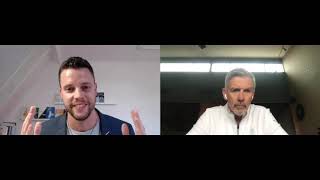
Alexander Keehnen built Win Mastermind because traditional conferences and coaching programs miss something crucial: ongoing peer relationships. He fills that gap with a vetted community where purpose-driven entrepreneurs meet regularly as "mental mirrors" for each other, using the Circles platform to keep conversations egalitarian and real.
Chapters
Welcome to Peer Innovation, the podcast with Leo Battari and me, Randy Cantrell. Building on our previous shows, The Year of the Peer and What Anyone Can Do, we turn our attention to helping business leaders build high-performing teams. We'll talk with a diverse group of thought leaders who will share stories and insights that will help you and your teams achieve new heights. If you believe there is strength in numbers and that meeting the challenges of the future can only be achieved if we do it together, then join us for the conversation. Today's guest is Alexander Keenan, founder and CEO of Win Mastermind, the personal development and business club for purpose-driven entrepreneurs. Alexander is a leading thinker in efficiency and collaboration who believes that when mature, open-minded individuals come together in a trusted environment, life becomes a simple game of ask and receive. We welcome Alexander to the show.
Hi everyone, welcome to this week's episode of Peer Innovation, the podcast. Randy will not be joining us today. He's on assignment this week, which I've always wanted to say that. Actually, he just did have something come up at the last minute, was unable to join us. But anyway, I do want to welcome our guest, Alexander Keenan. Alexander and I met probably, it's probably been close to 2 years ago, first on when I was a guest on his podcast. Second, when I had the good fortune to go to the Netherlands and be in Amsterdam and get to meet in person. But over the years, just, Alexander, following you and everything you've been doing, and obviously your latest venture is so exciting and so amazing. Alexander, of course, as Randy mentioned, is the founder and CEO of Win Mastermind. And I'd love to get started really by, you know, asking Alexander, tell us a little bit about the work you're doing right now and what really led you to, um, this purpose-driven, uh, company that you've started.
Yeah. Thank you, Leo. And, uh, it's beautiful to see where our journey together brought us and, um, I see us growing stronger and stronger. You said partnership, or it's almost like being allies, you know, on a shared mission.
That's right. Full disclosure, I am a member of the WIN Mastermind group and really enjoying the experience so far. So just want to let our viewers know that as well, and listeners, because, um, I definitely have a firsthand understanding of what you're doing and how powerful it is.
Yeah. And for me, it's the biggest compliment in the world that you, the peer group learning expert.
Well, I know you don't like to be called expert, but expert, I'll let you call it. I'll let you call me. I'll just never call myself that. That's all. It's all good.
Out of all the groups in the world, all the organizations, you chose WinMastermind because you recognize value in it. And that is for me a very big compliment knowing that we're on the right path.
Yeah, well, one of the reasons that, you know, for me, obviously with the work I do, it's essential that I am part of a group. I don't want to talk about to everyone else about the value and importance of being part of the group and have me not be part of one. But until recently, of course, you know, where travel has been curtailed quite a bit, and I'm assuming at some point in the future we'll get back to a little more of that going forward, but with my travel schedule I could not be a reliable participant in an in-person meeting that met, let's say, once a month, right? Whether that would be Vistage, which I was a Vistage member for 5 years and I loved it. But I also know because of the work I do that if you're not there all the time and really be a consistent participant, you're not really doing the group any favors. And I'm certainly not doing myself any favors there either. So to be able to be part of a group where we meet for less time, where we can do it virtually, where I can pop open my laptop and participate in a group meeting no matter where I am in the world. That, for my particular circumstances, was really helpful. I'd also suggest to people too that it doesn't— an either/or. I know people that are members of multiple peer groups, you know, depending on the value that you may be looking for. It could be if you're a woman business owner, and you want to be part of a peer group where you're around other women that share that specific challenge, or you may want to go with something industry-specific, or maybe you want to go into something where people could be from all kinds of different industry sectors and you learn from them. So, um, I, I, it's not an either-or, but for me, joining Win Mastermind— and also I had a lot of confidence in you, quite frankly. I think you do a superb job, um, if you facilitating the meetings. And, um, you know, uh, it's just been, just been a great experience so far, but I'd love to get a sense of, you know, when we first met, you weren't doing this work. And so I'd love to know kind of how this came about for you, what you're seeing out there in the world, particularly among entrepreneurs and what type of need that you were addressing there.
Yeah. Yeah. Um, I started my entrepreneurial career, pretty much as a freelancer. Like, I'm an efficiency specialist. I studied time management, but also leadership, communication, psychology for more than 10 years at that point. And I've seen organizations, large corporates, smaller scale-ups, fast-growing companies, single-person companies. And I started to recognize that Most people are just winging it. I expected more strategic thinking in the minds of the people making decisions. So I started for myself. I knew it's time that I walk my own path, my own life path. And I already had written a book about time management called Get Rid of Stress in the Office. Helped many people with that, was doing trainings, workshops, podcasts. That's how we met. And last year there was a big change in my life that created a lot of space. I decided to get a divorce and move forward by myself. And it was the toughest decision I ever made, but it also set me free in a way, free to completely follow my own path. It felt like I was carrying less responsibilities, there was more open space. And I asked myself, what is the thing I would love doing most most in the world? Well, most of all, I just want to be around awesome people and have awesome conversations, meaningful conversations, exciting things, visions, ideas, innovations. And I also recognize that need in other people, especially purpose-driven people, you know, purpose-driven entrepreneurs. They're just like normal entrepreneurs except it seems like they have some kind of broader perspective, understanding that a business is kind of useless if it doesn't add sustainable value to the world. And you want to invest your energy and get a return on energy. And we as humans, what do we want more than leave a more beautiful planet for the generations after us? We don't want it to be done in 100 years. We all know that in our hearts. It's just the way the systems are currently functioning, well, we're going rapidly to the, how do you say it, to the cliff. So I set out to collect all the entrepreneurs who say, yes, I am here to serve the greater collective first, then look after my own needs. And I understand that it is my psychology, my emotional responses to situations more than anything that defines the success of my business. So let's get together, let's work together, use each other as mental mirrors, use each other to make sense of what's going on in our lives, and recognize that we're each walking our own individual paths, our own hero's journey, our own Tao.
So what did you see out there among entrepreneurs that you felt— in other words, you had to either have a gut instinct or you talked to enough people who shared your passion for doing this, right? For being surrounded by other people and understanding that if they could work together, have meaningful conversations, and help one another grow. That that was a path that was preferred rather than just doing it on your own and, and, you know, hoping for the best. Right. I mean, so I guess what were you seeing out there in terms of, um, recognizing that there was a need, um, and that you were trying to obviously meet that need? Yeah.
When I started as an entrepreneur, I recognized that, Although I'm good with operations and organization, I don't know anything about marketing and sales. So I started to go to many conferences, workshops, retreats, invested a lot in my personal development, also to learn marketing and sales. And in all those conferences in over 2 years' time, traveled to the US, South Africa, of course, Netherlands, UK, all over the place. And I recognized the pattern. What I recognized is that most conferences, there's a big room and a stage and the person on stage is in light and makes all the sound and has all the control. And everybody in the room is sitting in the dark, staring to the front, to that one person. But after 2 years, when I started to reflect and ask myself, okay, in my business, what worked? What didn't work. I recognized that by far the most business growth I experienced came through people I met, my own network, my basically friends, business friends, just helping each other out. That moment I started to realize that what an entrepreneur really needs is people by his side all the time. People you can count on, people who know things that you don't know. You know, in the business coaching industry, people pay thousands and thousands and thousands of euros, dollars to learn from the best. And yet when I saw them 2 years later and asked them how they were doing, what they were working on, I was hearing the exact same thing as 2 years before. No progress. So what do we do if we start doing it differently and learn from each other, learn from our peers? We all know things that other people don't know, like that we exchange knowledge.
Well, this is exactly what, you know, let's face it, when you look back at, you know, Etienne Wenger and Jean Lave, who first came up with the concept of communities of practice, they didn't go there to study these communities. What they went there to study was the relationship between kind of the master and the student. If you will, of the master and the apprentices. What they learned was that people got really better at their craft not only from learning from the master but working with one another. And it was these communities of practice, these people that came together with the shared willingness and desire to learn a particular craft and do it really, really well. And they helped one another be better. And do so much faster. And it's really no different from what we see today in our workplace. You know, we, you and I have talked many times about, you know, the biggest challenge to executive development, learning and development and all that is they get these great content and they get these people that come in and they deliver these amazing keynotes and workshops and they get or deliver online courses. The problem is that when those courses are over, you've got these people that are super busy. They've got to run back and they're getting all their work done, especially catching up to the time they missed while they were in class or doing whatever. And there's no mechanism for being able to get these people together and say, what's the one thing? What's even the two things that we get out of that session that we want to start implementing? Right. And unfortunately, all these great ideas and all these great things that could be implemented in an organization, whether it's for individuals or for the team or the organization itself, they never make their way into practice and it becomes a really huge issue. So I totally get, you know, what you're talking about and why you saw exactly that as you were looking at this.
It was this, and then there was also the personal experience factor. I saw that at many networking events, people were triggered by what was said on stage. They were triggered to like act more important or pretend to be bigger than they really feel in the moment. And I realized I just like to be around people where I can completely be myself, where I know that there's no judgment and just space holding. I can be myself. And that's who I try to be for other people. I once read this quote from Mother Teresa. I think it was 8 years ago that I read it. She said something like, "I make sure that every person after their interaction with me compared to before feels better about themselves." So the idea of becoming a spiritual fuel station that when people come in touch with you, they always feel better afterwards. How's that for a productivity tip? We exist by virtue of our relationships. We are nobody. We are this, this, this, this watcher, this observer that sees the whole thing happen.
So let me ask you this. When you're trying to— and here you are, you're You're working at this company, you're building Win Mastermind, you're building these groups. Um, what type of— so if our, for our listeners out there to know whether a group is right for them, right? Any group is right for them. Um, tell me the kinds of things you look for that you think are the ingredients of what will be a really great member that will not only receive value from the experience, but also give it to others.
Yeah.
Great question. After 1 year, I started a year ago with nothing, just an open heart and my own network and a vision. So right now we are a year down the line with 45 members. They're happy, engaged. I spoke with half of them on one-on-one calls in the last weeks, got their feedback to really understand what is the essence of WinMastermind and who is WinMastermind for. A couple of, a couple of elements that are recognized. First of all, purpose-driven. So that includes elements like putting the collective gain above your own personal gain or your ego's personal gain. It is about personal growth. So this drive to develop as a person, constantly up upgrade my mind's decision-making mechanisms so that I get better results in life. It's about inspiring others. I would say 80-90% of our members sees themselves speaking in front of large crowds. It's about being an inspirational leader to your team, you know, wanting to better the lives of your team members because they chose to work with you. It's about the intention to add value everywhere you go. And so how do you find out if somebody is like this? If I ask these questions, everybody says, yes, that's me, that's me, that's me, that's me, that's me. Oh really? Also in a situation where maybe some emotional response gets triggered accidentally by someone? Is it then still really you? And can you really be present in a mastermind meeting? Can you be there with the rest of the group making an empathetic connection with the person who's speaking? Can you relax those voices in your head thinking about how you look in front of the camera and what to say next and when will be your time to talk? No, it's not about you right now. Can you let go and be present with what's happening? So we have a selection process in place because actions speak louder than words. And like that, we can see if somebody added value for the community. Am I proud to present this new member to the existing members?
Right. Well, that's a nice bar, you know, to think about. If you can answer yes to that question, then they can enjoy the privilege of being part of a WIN Mastermind group. And if you, can't answer that question yes, then it's probably just not for them. Is that fair? Yeah.
Does somebody give me energy or do I feel drained by it?
Exactly. You know, one of the things that I, I love about these groups, so I'd love for you to comment on this because obviously it's a huge part of the work I'm doing right now, is I've spent a lot of time, as you know, with peer groups and really studying them really in depth. But what's crystal clear is all of this work in group dynamics is so powerful for high-performing teams. And I find groups to be the practice fields for us being great teammates, us being able to help everyone around us be better. So I'd love for you to think of or comment on that from the perspective of what you're seeing out there with some of your members right now.
A couple of things come to mind. First of all, when yesterday you were presenting the WIN Masterclass about sharing your expertise with other WIN Mastermind members, what I recognized was also the other side of what you, what you have mastered. This group dynamics, I realized in a way this is also about how can I be the best possible teammate for all of you guys. You know, we are the center of our universe. The outer world is only a reflection of our inner world. That's how it works. Look it up. So what is my personal responsibility if I want to create a better world, better results, better effectiveness? Well, start by being the best possible team player you can be because it's all about the team dynamics, team flow. That's what drives the results.
Yeah. I don't think there's any question about that. And, um, you know, and I've talked about this, these groups, this is not a spectator sport. This isn't where you go sit back and show up somewhere and everyone's going to deliver you content, wisdom, and all this other stuff. You in fact are part of the intellectual capital in the room. You are part of the emotional and empathetic capital in the room that makes this whole experience so powerful. And why, when someone goes into a group or is part of a team, the hope is that if I'm bringing my A-game to my group meeting or my team experience, that we're all getting that back and then some, right? The whole idea, you know, the reason Google named their team research, the Aristotle Project, was based on the quote, you know, the whole is greater than the sum of the parts. And, you know, I think that that has been true since then. It's true today. And it's really great, I think. I think I may have mentioned to one of the questions in that masterclass yesterday when I was talking about— it's almost like, you know, people read that book, Think and Grow Rich, and it's this tiny little book that is just so rich, right, with information.
Is it behind me right now?
Probably. I'm sure it could be. I can't—
Yeah, yeah, yeah. There we go.
You know, you, Simon Alexander Aung, big fans of that book. But there's another book that also is a tiny book that I don't think is— maybe it's 100 pages, and it's Experience and Education, and it's John Dewey's book that I believe was written in 1937. And one of the concepts he brings forth, and that is collateral learning, right? So you may take a class or you may join a group for a very specific reason. I want to learn more about finance. I want to learn more about marketing. I want to do something. But the way you go about learning helps you build muscles around things like not judging others, being open to other perspectives, being able to work with other people. So, and he referred that as to kind of collateral learning, right? These are the— this isn't the intent of what you went in for, but all the collateral learning that takes place, quite frankly, is even more powerful and more long-lasting, you know, than the immediate content you may be getting. And I think that is particularly powerful both with groups and when we see high-performing teams, you know, when they were able to get that kind of flow that you talk about, uh, that's just huge.
Maybe you'll appreciate if I share the way we operate with the co-founding team of a new initiative called GaiaNet.
Great.
GaiaNet's purpose is to connect purpose-driven projects with purpose-driven individuals, help individuals align with their purpose and connect with projects of their interest so they can really contribute at a large scale and grow as a person optimally. So we set out to create that with 5 co-founders and we're using the holacracy principles. We're tweaking it, we're making it into our own, but some really interesting team dynamics take place there. First of all, there's not like a pyramid structure with a CEO who is in the end like the big boss making the decisions. That's like an old world paradigm. In the new world, we're all leaders. You're a leader. I'm a leader. Everyone's a leader. You choose your own field, your own domain. If you don't feel like a leader, yeah, then there's some inner work to be done and to set yourself free. Basically, there's some opening up to do, right? Where was I leading this? We're all leaders.
Oh, you're talking about old paradigm, new paradigm, you know?
Yeah, and so in this new collaboration structure, we work in circles. So there are no bosses, no managers. The circle is in charge. Circle consists of 5 to 7 people. Approximately, and everybody has their own role, clear role description, purpose, and these are my accountabilities. Within that role, you can do whatever you want. Nobody tells you what to do. You're the boss, you're the leader, you work your thing. Once a week we come together to ask for what we need, and then we can all go back and do our own thing again. Now, the beauty about these meetings is I think they are about 10 times as efficient as any meeting in any other company I've been to. The big change is that all the topics that are put in are proposals. So a leader comes either with a need or with a proposal. The cool thing with the proposal is it's by definition accepted because you're the leader. This is your domain, your expertise. We trust you. If you think this is best, then principle, yes, let's go, awesome, keep on going. Unless somebody in the circle feels tension inside our bodies. We check in inside, what does our body tell us right now in this moment as we hear this proposal? Does our body say true or does our body sense something false? Is there tension, a question that comes up, I don't believe it's gonna work, or I don't understand what you mean by that, or what are you going to do if this happens? So now it becomes a matter of clearing those tensions, which is often a matter of a few-sentence answer, upgrading the proposal, and off you go. Everybody's happy. It feels like you got this beautiful gift. Suddenly there's this new thing in your team and everybody sees that it works. So It's more like emotionally steered and more assertive way of working together because we trust everyone as a leader.
No, that's awesome. You know, in some respects it follows a bit of, um, you know, last week I mentioned to you, we had a guest on our show, Frances Scholl, who talks about squares and circles and that some people are squares, they're metrics, time-driven logic, predictability and all that. And then there are circles who it's much more about, gut instincts and comfortable with uncertainty and ambiguity and things like that. And sometimes it's difficult to try to deal in a world of chaos with logic and vice versa. And the idea is squares and circles need each other. But I think you're talking about bringing more of this circle thinking to some of these initiatives and conversations that you mentioned, which is, I think, fantastic. The other thing, by the way, I do want to mention because I don't want to forget this, is you mentioned Circles, and Circles is of course what is the platform you use for your groups. I think it's a very distinctive difference between what you do virtually and maybe what others are out doing out there virtually. And one of the reasons I want you to mention it is because, as you know, Dan Hoffman is the founder and CEO of Circles, and it's his birthday today, so we can wish him a happy birthday. And maybe you can talk a little bit about circles and how that really provides a whole distinctive feel for the type of groups that you're leading in Win Mastermind.
Yeah, circles is a massive success factor in what we do. It makes the meetings just much more fun and interactive. Dan, by the way, if you're listening, happy belated birthday. What happens in circles is that because the way the screen is organized, there's this egalitarian principle. There's always a round table setting. And the interaction buttons where you can signal to the group what your intention is or what you're experiencing without having to say something or interject the flow that's occurring in the moment. There's more space to interact and also for the facilitators much easier. The way the hands are risen, the way a participant can be literally placed in the center of all the other circles, slightly bigger, with a clock ticking to see how long the spotlight is active, the hot seat. We use it in pretty much every meeting. And my favorite part are the +1 buttons, which you know that already.
The plus one button's great, and you had to like the group hug. There's, uh, every once in a while, uh, Dan will employ that.
And I heard about group hug. I haven't experienced it yet, haven't figured it out yet.
I'm very curious. Well, we'll make sure we, uh, we get you that. Um, but, um, hey, anyway, as we kind of, um, get to close out, uh, of course we're going to leave, uh, information about about you, about Win Mastermind and all in the show notes for everyone. But if you could do two things for me, one is let us know what are some of the parting thoughts you have, especially for those purpose-driven entrepreneurs out there who may be listening. And then also, where can they find more about you and how to explore Win Mastermind group for themselves?
Yeah, thank you, Leo. My main closing message for anyone listening who feels resonance with what we spoke about is it's okay to be authentic. It's okay to be you. You are perfect how you are, who you are right now. Work hard all day. You do pretty much everything you do, you do right. People around you have a talent for spotting the things that are not yet perfect.
It's okay.
Make sure you talk more with people who do see the positive things. Have meaningful conversations. When you don't know what to do, relax, treat yourself to some rest. Your body will integrate and show the answer. And call a friend, call a business friend, or call 2 or 3, exchange perspective, gain clarity. Now you're ready to go again. Again. But really, you're great how you are right now, and please just be yourself. Don't pretend to be anyone else. We need you the way you are designed.
Nice. And where can they get more information about WIN Mastermind Group?
Yeah, website is winmastermind.org. We're also active on Facebook, Facebook group. We're working on some cool initiatives. There's a lot of awesome people in the Facebook group, by the way, also purpose-driven, which means they love to help, which means you only have to like connect and ask and just, yeah. Ask what are you working on? How can we help each other? Facebook group, WIN Mastermind.
Nice. Alexander Keenan, thank you so much for being on the show. Thanks for the amazing work that you do. And, um, I will be seeing you real soon, I'm sure. Thanks again.
Yeah. Thank you, Leo. I enjoyed this very much.
Thank you for joining us. To subscribe to the podcast and learn more about how you can engage peer innovation for your organization, contact us on the website at peerinnovation.co. Till next week, remember, the power of we begins with you.










