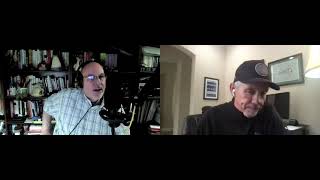
James Moffat On Visibility

James Moffatt, a hyper-growth strategist, left a demanding career after his twins were born and fell into depression. During unemployment, he discovered the Japanese ikigai framework and realized his core passion was storytelling, leading him to start Visibility Impact, a consultancy helping people and businesses become visible and make an impact.
Chapters
Welcome to Peer Innovation, the podcast with Leo Bottari and me, Randy Cantrell. Building on our previous shows, The Year of the Peer and What Anyone Can Do, we turn our attention to helping business leaders build high-performing teams. We'll talk with a diverse group of thought leaders who will share stories and insights that will help you and your teams achieve new heights. If you believe there is strength in numbers and that meeting the challenges of the future can only be achieved if we do it together, then join us for the conversation. Our guest today is James Moffett, hypergrowth strategist, business mentor, pitch perfector, game changer, interactive storyteller, sales and marketing accelerator. He sounds like a Superman. He is. Visit his website, visibilityimpact.com. We welcome James to the show.
James Moffatt, welcome to the show. I can't tell you how excited I am to have you here. We got connected, of course, originally through kind of Win Mastermind, later, you know, through EntNest, I think. And then, you know, I had the really great fortune of being guest number 58 on your show, Featured Business, which, which was really exciting. And, and I loved everything about the way you did the show. I loved opening up with a song, which is just so novel and really fun. I love the way we journeyed from personal to professional to, you know, just where people could learn more, you know, about me and my work and all that, which was lovely. And we went on and had a wonderful conversation and just appreciated the way you did that. And we're going to follow suit a little bit today with that, because what I'd like to do is before we get into the professional James Moffatt, I would love to talk about you, where you grow up, where you grew up, what kind of shaped some of your ideas, what do you love to do for hobbies? Tell us the things that you want to find out about your LinkedIn profile.
I thought you were going to ask him to sing a song.
No, not today. We'll cut him a break on that. But yeah, no, I think, yeah, all these things that we don't always find in our LinkedIn profiles, right? So welcome to the show.
Thank you. It's a pleasure to be here. So it's only been a short period of time since we've actually really got to know each other. And although we've been in touch through other programs and things, we've never really spent that time together. So I, I love it. I mean, I— having you as a guest and, yeah, you mentioned about singer intro. Well, it wasn't me, so just to make that clear, we have a professional that does that. But I, I wanted to try something different the way I did it, and I, I feel a combination of kind of the personal stuff and the business kind of go hand in hand. So And that's the way I kind of do it differently. So I like the way that you kind of put me on the spot and do the same with me. So actually being a guest is quite strange because I'm normally the host. So when it comes to me, maybe I'm a bit more reserved because it's not normally about me. I'm always promoting someone else. So let's see how it goes.
Yeah, you get to talk about yourself today. Yeah. So tell us where you grew up. Tell us all of those kinds of things that we kind of talked about with with me on your show.
Right, so a little bit about me. So I was born in Edinburgh in Scotland. Love that. Yeah, a beautiful place.
It's wonderful.
I was 5 when I left, so I mean, I've had to go back as a visitor because people say, what's Scotland like? And I think, well, I don't know. And they say, well, you're from Scotland. So I had to keep going back as a visitor to find out all these places people kept mentioning. So So, and I don't have the Scottish accent, or you probably wouldn't understand me. So, but born in Scotland and then moved— my mum was always from London, so we kind of moved further south. So we moved to England, lived in the north of England, then down in Brighton where I finished my school and everything. And then I, I knew the streets were paved in gold in London. Well, that's what they said. So I kind of moved to London and lived and worked there for many years. And before I decided that, yeah, I kind of done that, what's next? So I had the opportunity to go abroad. So I went to the Netherlands for 5 years. I lived in Utrecht, then Amsterdam, which is great, great. Also when you're young and single, because it's just a great place to be out kind of all the time and explore and do different things. And which we could talk a whole show about experiences in Amsterdam. But that's another, that's another story. And then I was fortunate enough to be in telecoms and consultancies, uh, traveled a lot around the world, but particularly throughout Europe. And, and then was headhunted, funny enough, by a Californian-based company out of Santa Barbara, and they wanted someone to head up sales and marketing for Europe. And, and they just made an acquisition, uh, in Switzerland of the technology development center. So they wanted someone to kind of head up sales and drive the business there. And so that kind of brought me to Switzerland and then winning my first client here, which was the biggest telco. And then from there, kind of, I decided to stay. So then a few years later, then met my wife, uh, although she's not from Switzerland either, she's from Brazil. And we got 3 kids who are— 8 is the eldest and 5 are the twins, a boy and a girl. So they've got 2 boys and a girl. So hobbies and things, I mean, I've always been a kind of an active person, so I always like outdoor pursuits. So younger, I mean, I always played at school, I always played football or soccer to you, right? And played many years there and then kind of went semi-professional when I left school, although never had the time and dedication to want to do it too much, although still a lot. So, and then other kind of sports and activities, anything that was kind of sporty, either team pursuits or individual. So I loved, kind of loved sports, cycling a lot, mountain biking a lot. I did try paragliding but didn't really I always had a fear of— people say, yeah, I said I had a fear of heights, and someone said to me, you don't. And I said, I do. And they said, you don't. I said, well, I do. And they said, can you go on an airplane? I said, yes. They said, we don't have a fear of fight— flight— heights. Flights and heights. You have a fear of falling, and there's a difference. So kind of more vertical sort of things. And I thought, that's right, because when I'm over a certain height, then I don't like it. So it's probably that safety aspect. But I, so I kind of gave it up because I, I would only go a certain height, and I was okay with that, comfortable with that. But when they said you had to go higher, I said, no, no, no, not for me. And they said, what if you're going to fall? You're going to fall, this will break your leg, whatever height. And I said, no, no, but I'm okay at this height. So I never got over the kind of that distance between going higher, so I never pursued that. But I did do horse riding as well, and then many adventures with that, and then also trips to Spain doing horse riding. So lots of outdoor activities. So I can't remember anything that was so memorable, but I also go-karting, so lots of sports things. Uh, started karting when I was young, although never pursued it as a kind of a something that would be more than just some fun with friends. But we did lots of different circuits in the UK, lots of kind of famous ones like the Johnny Herbert Circuit in Kent, and, and outdoor karts, indoor karts, twin-engine karts, in the wet, in the dry, uh, kind of 24-hour karting. So a lot of karting. And I— we talk about this on my show as well because a lot of the people say they're karters. So we're trying to get together together a kind of a karting team and have some fun doing that. So I got— I, I keep quiet about it because I say, no, karting, I haven't done that for a while, you know, pretty average. But every time I go, I'm like, gotta win, gotta win. So I typically am first or second, and in the worst case, third.
So yeah, never led to an F1 career or anything though.
Well, if I was younger and did it and if I had the sponsorship and maybe someone guiding you on that way, it could have been different. But my time at school, it was kind of— you had to find your own way rather than someone kind of spots what you're doing and, and kind of nurtures you. So kind of different there, because I, I always aspired to be a professional footballer at the time, but I never pursued it. I was also, funny enough, good at running. I was the fastest runner in my junior school and then the junior high school. And I, I remember, like, after— I mean, everybody wanted to kind of challenge me into running, and I thought, well, it was easy for me, and I didn't really put too much effort into it. Never had any professional or proper training. I'm just good. And the ironic thing is, now I never pushed my eldest son, who's 8, into running, and he was spotted by his teacher in athletics, and he I said, well, you're quick. Why don't you join the running team? And he said, Dad, I want to join the running team. I said, all right, give it a go. And he's the fastest in the class and then the fastest in his year. And I think, wow, he's kind of picked it up from me. But yeah, and also maybe the football as well, because he's pretty good at that.
And why didn't you pursue football?
Yeah, I, I don't know. I guess at the time it was never seen as a big hype thing. It was just like kind of more of a recreational sport. And I did it as a sport, and I joined a local team, and, and I, I just saw it as that. I, I never thought that you could make a career out of it, so I never, never bothered. And I focused more on more academic or kind of technology-driven aspirations and passions I had at the time.
The sales and marketing, was that your— because that, that's what, that's what took you to this, the Europe, the headhunter. I mean, is that the background, sales and marketing?
No, my background is engineering. Okay. So I didn't really know what I wanted to do kind of at school, and I did many different things. And when it came to study, uh, Yeah, I was mechanically minded in a way that if you gave me some puzzle, I could make it, make it work or whatever. If you gave me— I mean, we were fortunate, we had a subject at school where we had an old donated car, and if you took that subject, you'd learn about the mechanics of a car, but you'd also learn how to drive. And I wanted to learn how to drive. So at 15, I'm driving the school car around the school trying not to run over other kids, and It was great to learn how to drive, but then they said, we're not just going to learn, we're going to take the engine out and we're going to take it apart and then put it all back, and it, and it has to work again and drive around the school. So I loved that. I, I just thought that gave, gave me an experience of something that— it was a passion for cars. I love classic cars as well, and you probably see on my LinkedIn profile, I, I comment on particularly the Mustangs and stuff like the old classic ones. But I always followed like typical British classic cars. So, and I had many as well in my earlier driving career. That was the kind of things you could afford at the time because they were cheap. But now they're kind of classic and expensive. But so that led me into kind of a mechanical engineering study, and then from there into telecommunications, and then more on the engineering side, but, and then supporting sales guys. And then I found that most of the sales guys didn't understand the technology, so I was supporting them, and I thought, well, what they knew about sales, it was pretty common sense. So I thought, I can do the technical bit and the sales bit. So then I kind of transitioned over because I saw that they get double my salary. I thought, well, why are they getting paid more but I'm kind of doing the work? So I thought, I can do their job and my job. So I kind of became this kind of a blend between the technical side and then the sales, and then transitioned fully into sales but with a technical background, which definitely helped.
Yeah, you could see where that technical background would give you that extra credibility as a salesperson, for sure. You know, and, uh, that sounds great. By the way, going back to something you said earlier, I think it's a perfectly rational fear not to want to fall from high places. I think that was fine. In fact, it's why a lot of people actually don't even love horseback riding, for that stem— that standpoint either. They don't want to fall off the horse.
But, um, I fell off those a few times as well.
What was interesting between the car engine thing you talked about, um, football and other things, it feels like you've been you know, in work and in sports and in other situations, part of teams. Um, and I'd love to get a sense of maybe for you to identify the one or two teams that really stand out for you and what made the team so great. And, you know, because I think obviously our listeners are always interested in just even that one little insight about what made a team really click and really perform at a high level versus other teams you may have been on as well.
Regarding sports or business?
Whatever. You pick a team, like whatever. Sometimes I will say that to a CEO and, wow, a sports team will come into play in mind for them that they participated in, or maybe it was their executive team, or it could be anything. But it's kind of like that first reaction. What do you think of when I say that in terms of great team?
Yeah. So I'm very much into team sports. I mean, I remember maybe a couple of examples, uh, with the, the carton. So we're doing a kind of a 24-hour endurance, and you could have typically 4 drivers, and you, you change after a certain amount of time. It could be an hour, as many frequencies as you want, but you had to keep changing. So, and then I remember doing that, but we, we all had to have that commitment because if we didn't, then one is going to let the team down. And you couldn't have 2 or 3 good drivers and one bad driver. So we— and you couldn't make mistakes because if you made a mistake, it cost you the time and you had to make that time up. So it was very much— that was a, a lot of dedication because you really had to concentrate for the full duration of the time that you were out there because you had to run in the risk that one mistake, you go around a corner too fast or something and spin the car, then you have to make up that time and you're going to let the team down. So there's a lot of pressure on that as well. You had to go pretty much flat out, but you, you had to be consistent. So it was that consistency, that kind of repetition, that every lap had to be as good if not better than the previous. And because one bad lap or spinning the car out, and all of that time that you've made up, you can completely lose again. So we had to do it as a team, and it was good that we were consistent. So, so that was one thing. But also within the football team, which I, I use as a lot of times I use football analogies in the way that, I mean, I like to score goals, so I was always up the front scoring goals. I didn't mind if I was on the left side or the right side because I could score both my left and my right foot. And but I could never score a goal if I never got the ball. And I use the analogy also, like you've got a Ronaldo or a Messi and like top strikers, but if they never got the ball, they'll never score. So it doesn't really matter how good you are, it's a team effort and everybody plays a critical and crucial part in that team. If the goalkeeper can't save a shot and the defense can't defend or get the ball to the midfield and on, then you're not going to score. And then so everybody plays a role, which I found was disheartening when I actually came to working for companies that I felt were disjointed in that respect and they worked in silos. I mean, as a salesperson, I always say that I'm effectively the striker. I need to go out there and score a deal. But if I don't get the information either from marketing or wherever, then you're going to make it extremely hard for me. And I find that's what I want to bring together, the same kind of teamwork, because at the end of the day, the goals or objectives are collective goals and objectives. It's the vision of the company. The vision of the team was to score goals and win and move up the league. So basically teamwork in that, I mean, very much so that everybody plays a role and you support them on that as well.
You had a really interesting, um, when you think about the dimension though of being like, when you talked about karting or all, it made me think of the Ryder Cup, for example, right? Very individual sport. Like the golfers are going out there and they're doing their thing, and even if they, they're doing match play in their team or whatever, but the point is that their individual performance for them, there's that whole added extra layer of pressure because they not only want to win because that's who they are and all that, but the idea that if they faltered, they would let the team down and possibly cause the team to lose is a far greater pressure for many of them. And I think that's, you know, true. And it shows you that I think great teams are not only committed to that common purpose, whatever that may happen to be, whether it's in work team or sports, but when they're committed to one another, uh, just makes all the difference in the world in terms of the level of attention we pay to being as excellent as we can be recognizing that we're not flawless, we're going to make mistakes, and we recognize that, but we're going to be there for one another, and we have that shared commitment, which I think is, you know, certainly really powerful. Um, you know, Jim— as a— James, excuse me— as I look behind you— my dad is Jim— um, James, as I look behind you, I see creating awareness to make a difference. I want to know what kind of awareness we're talking about here and what kind of a difference that you hope to make when I'm looking at visibility impact.
Yeah, so there's an interesting story behind that. So kind of how I found Visibility Impact was I went to a lot of events. This was more when I kind of ventured out on my own and I wanted to do my own thing. So kind of left the companies behind and thought there's a lot of skills that I've harnessed from there. So can I use those and help others do that? And not just one company, but there could be multiple different ones. So So I went to— I felt, I mean, all through life we're always learning. We never stop learning. There's some expressions that, uh, what was it, uh, the more you learn, the more you earn, or typical things like that. And which is true, because even though we can claim that we are the experts— I mean, we mentioned this also on my show— you're the expert to a certain degree, but you can always learn more. From someone else. So with Visibility Impact, I, I went to a lot of these mentorship programs as well because I wanted to learn how to be— are you naturally an entrepreneur, or can you be taught how to be an entrepreneur? And what is an entrepreneur? Just because someone thinks differently or maybe outside the box, does that mean they're an entrepreneur? So I wanted to kind of discover more about that, and if I really had it had what it takes. So I joined kind of these entrepreneurial programs, and I just found that there was hundreds of people in the audience that had also come along to, to do that as well and to start their own business, a lot of solopreneurs. And I find the biggest problem was with the lack of visibility. I said, I'm there and nobody knows me. They're there, I don't know them. Maybe in the break I might speak to a handful of people, but I'm never going to know all the people and it wasn't really there to promote that. So I, I thought maybe there's some great people here that are in the same group, they're doing the same program, that could be an excellent either partner or, or a client or something, but I'm never gonna really get to know them. So I, I found that unless you do something outstanding to create that visibility— so I found that the biggest problem was visibility. If I wasn't, if they weren't visible, and I wasn't visible, then why would anyone bother with me? But what do I have to do to be visible? Do I have to like go in there with, like my underpants over my trousers and be Superman? Or, or dress up as a clown or something? And then I'll be visible. But would I be credible is the next thing. So I wanted to create visibility. And once you've got visibility, then what you need to do with it? Well, make an impact. So that's how that kind of came along. And I thought, now this is way too obvious. I mean, visibilityimpact.com, that would have been gone 10 years ago. And I checked it and nobody had it. And I thought, everybody's talking about visibility and making an impact, so I could put the two together. And that's how Visibility Impact came. And then creating awareness to make a difference. I mean, like, with that is about creating that visibility, that awareness. And then we all want to make a difference. Otherwise, if you don't make a difference, then what's the point of doing it? So, and I— you kind of change your mindset also from egotistic to more a serving nature. We are here to serve others in everything actually that we do, absolutely everything, right? So not just about business, we are here to make an impression and to help one another. It's not all about me. And maybe when I was younger, it was more about me and my mindset and my ego and my materialistic things. But then as you get older and you, you become more mature, then you think, well, it's not, it's not about me, it's about them. I'm here to help them get better and to, to serve their clients in a better way. So kind of changed it all around. Make a difference was more a personal difference.
I love the idea too, that if you want to be known, you have to be seen, right? At least in that, not in the literal sense even, but you know what I mean? This idea that, and that's obviously a critical first step and be able to provide that visibility for people is amazing. Was there a specific event in your life that for you, as you said, on one hand you describe it almost as an evolution evolutionary thing in terms of as you got older, you kind of realized this idea of we're here to serve. Is there anything specific you can point to that triggered that switch for you maybe? Or do you think it's always been part of you at some level? What do you have to say about that?
Yeah, after kind of 20 years of being on a plane every week and traveling extensively throughout Europe, and typically in those days it was more formal, so it's wearing your business suit and tie. I just started to dawn on me that as I got older, and particularly when the kids came along, I didn't want that lifestyle anymore. I didn't want to be on a plane. I didn't want— and I'm on a plane, well, even before I even get there, I'm on the train to the airport, and then I'm going through all the customs and everything. And all I see is other guys like me. I mean, in their suits and briefcases and laptops and things, and they get them all out to go through the checks. And We're just clones of one another. And then I started to look around and just think, I don't want this anymore. And then constantly queuing. And then when I get on the plane, it's the same guys there sitting beside you with their laptops open. And sometimes you try to take a sneaky look to see who they work for, what they're doing, but then they start to get smart and have these black screens that you can't see sideways and what they're doing. So no idea what they're doing. And do they actually want to talk to you, or they're too busy trying to prepare for their meeting? Going to. And I think, well, I need to prepare for mine, but I, I fancy having to sleep at the same time. So I just found that year in, year out of that. And people saying, oh, it's glamorous, isn't it? Even though you stayed in nice hotels, sometimes you had dinner for one in your bedroom, right? And because you, you're on— or if you're unfortunate, then you, a day trip, you'd be the first plane in the morning, the last plane at night, and you'd be home exhausted expecting to like carry on the next day and full reports, you know. And I just thought, no, I, I don't want this anymore. There's more to life than just doing this. So the kind of the turning point was we already had a 3-year-old, uh, Tom. And my— I'm living in Switzerland, we're kind of on our own, we don't have a support mechanism with family. So our families are all abroad. So when we had the twins, which we didn't expect twins, this was the turning point. This was when it all kind of came together, and it wasn't very pleasant because I was heading up sales and expected to travel. If I wasn't traveling, I should be every day. And then we, we wanted another child and were grateful that my wife was pregnant, but when we heard it was twins, we thought we're kind of elated on one hand. I think, great, this is excellent, and think kind of, oh shit, on the other, because how am I going to say this to work and how am I going to kind of reduce the time that I'm going to be traveling? And yeah, it wasn't taking good at all. I, I kind of held off to it and people said, oh yeah, you're having, you know, some more kids, another child soon. And I think, yeah, it's not actually one, it's two. And then trying to approach my boss at the time who a stipulator for like being out on the road, kind of old school. And then when I told him, uh, yeah, I knew it'd go down like a lead balloon. So he basically said, well, if it affects your job, then you can look for another job. And I thought, well, kind of, that was right, the writing on the wall. And it did affect my job. I didn't want to travel. I couldn't travel. I couldn't leave a wife at home with 3 kids under the age of 3 and two of them being newborn babies. So that was, that was kind of the end of the career. And then, then it made me realize, did I actually want that anymore? With all the thoughts I'd had previously, did I actually want that? And, and the answer, even though I was disappointed, then in a way I felt a relief at the same time, and then a refocus on what I wanted. But I didn't know what I wanted to move on with after that. So that was my turning point, and I went through a massive low and trying to, to fight that because I, I fell into depression. I, I didn't know what to do. I felt like kind of this useless father and so on. That, yeah, uh, yeah, there was a book called Parents, uh, Children of a Lesser God. and I kind of renamed it to, uh, Children of a Lesser Parent. And I felt I was the lesser parent, and I wanted to write about how I felt, which I always meant to do, although never did. But I, I just felt that— I felt that I can hardly cope with myself, let alone like a wife and 3 kids. So yeah, that definitely was my biggest turning point. And then a realization that I didn't know what I wanted after that, and that was basically 6 years ago, 5 and a half years ago.
What, what brought you out of it?
Uh, I knew for a certain period of time I didn't mind so much because there was kind of good unemployment benefits, but it wouldn't last forever. So what could I do and what did I want to do to do. And I found that I was unemployed, and I— yeah, with the unemployment, they put you on different training courses because I really didn't know what to do. And one of them was like to write your CV. And I got to this woman and she said, actually, there's nothing wrong with your CV, why aren't you getting a job? I said, well, I don't want this job anymore. I don't want to like get a job, I'm going to be on a plane because I can't do it. So She said, funny enough, I'm not a coach that is really going to focus on that. My skills are more in life coaching. And I thought, I didn't know what life coaching was. I thought, what do you mean life coaching? And, and then she said, to help you find what it is that you should be doing, more something of a purpose. And I thought, I mean, at the time I, I wasn't really into all of that stuff, and I think he's just talking mumbo jumbo. And she said, no. She said, the biggest problem is you don't know who you are. And I'm thinking that she's playing around with me. And then they— and she said, who are you? I said, well, I'm James, of course. And then she said, no, you're not. I thought, what do you mean I'm not? She said, that's just a name. Who are you? And I said, well, the father of 3 kids. And she said, no, that's a situation. Who are you? I'm thinking I don't know. And every time I answered, she said, no, no, no, no, no, no, that's not you. Which then kind of opened up a new world to me. And that was my biggest pivot point into realizing that I wanted something different, but I didn't know what it was. But then 6 weeks later, I knew exactly what I wanted. I knew who I was, and I knew that it's the beginning of something completely different. And that was the biggest turning point. And it was, uh, many aha moments and, and something that I went through that completely changed my life and made me feel that I was valued. I had value, I had assets, I had something to give, I had my gifts locked away inside. I just didn't know I had them, and I didn't know how to express them or use them or anything else. So yeah, that—
what happened over those, over that 6-week period that unlocked it?
Yeah, so she, she used a methodology or a, uh, something, a lifestyle that's called ikigai. And ikigai is actually two words: iki meaning life and gai meaning purpose. And if you found your ikigai you found your life purpose. And it comes from an island off the south of Japan, and it's Japanese, and it's a place where they live a longevity. They call them blue zones around the world where people live 100+ years old. But without going into the detail necessarily about ikigai, uh, which you can look it up, uh, it's basically a way of life and a methodology that they use a philosophy. So it's basically broken down to 4 key areas, so 4 circles that overlap each other, and in the middle is your ikigai. And it is really based on positive, everything positive. So it's great to do. And I mean, we did this like 2-hour sessions on each one of the kind of 4 circles, but the first one was everything you love, right? And then after you've done your 2 hours of that, then she says, like, next time I go, got 2 hours, everything that you're good at. And then next thing, like, everything that you could offer the world, and then how, how you could make a living from doing it. Would there be a need for that? And whatever. So it was very, very interesting to do, and, and it, it can be quite funny at the same time, because when she says 'Right, tell me, James, tell me everything that you love.' And I said, 'Anything?' She said, 'Absolutely anything, like it doesn't have to be business-related, anything.' So the very first things I said, because I love chocolate, you see, right? I said, 'Chocolate.' And she said, 'Okay, I'll write that down.' So she wrote chocolate down. I think, where are we going here? Maybe I could be Willy Wonka in the Chocolate Factory or something. So then she said, 'Come on, tell me more.' So I said football because I love football. And she said, okay. And then the third thing I said, which really was the key thing, uh, storytelling. And she said, ah, storytelling, right, we'll come back to that, right? Because when I say them, she says, you have to explain why. I'm going to ask you more questions. Everything's about asking the right questions. So anyway, I said a whole bunch of other things, and then when it came to the things I like, I said storytelling. And she said, like, Could you make a living out of storytelling? Yes. Could you? Do people like stories? Yes. And yeah, I mean, who's the greatest storyteller of all time? Jesus, of course. I mean, we still remember Jesus, the stories from the Bible. So, so storytelling, people like stories, keynote speakers, TED Talks, whatever, sales pitches, everything is a story. And stories are memorable. So she said, I want to know more about your storytelling. And the thing is that hits you, and it's quite an emotional movement as well, is when they— she asks you questions that you've completely forgotten that you even knew that you had that information inside you. I mean, is it exactly what you said? It's about unlocking the doors, right, that have been locked for so many years, right? So she said to me, right, I'm going to ask you, James, You said storytelling. When did you first tell stories? Think about it. Oh, I think she asked me, when do you— what type of stories you tell? I said, well, I tell them at work, I tell them at friends when they come for dinner, and all this about storytelling. And she said, right, tell me, when did you first start telling stories? Think about it, don't rush the answer, think about it. Anything in your childhood? And that kind of like the light bulb started going on. And then I'm starting to think back when I used to walk to school. I was like a 9, 10-year-old kid walking to school, and my buddies there would come knocking on the door and we'd walk in a group to school. But they always wanted to walk with me. Why? Because I told stories. And I completely forgotten about that. And if it wasn't for those questions, I would have probably gone through the rest of my life never even remembering for him.
Sure.
And that was the critical point because it was kind of an emotional awakening as well. And then she asked what type of stories, and they're kind of fantasy stories, and friends loved them.
This is fascinating. I mean, it's really good stuff. Hey, before we, uh, let our listeners know where they can learn more about you and your work and all that, I would love to know, how do you answer the question today when someone says Who are you, James?
Yeah, it depends on who asks and the situation.
Who are you? Who, who, who are you? We're going to press you a little bit on that. There's only one you.
There's only one me, right? Well, I like to think there's only one. Yeah, so it's a bit— I, I've always like used in a different way depending on the situation. So if it was more business-related, then I'd focus on the business. If it was more personal-related, I'd focus on the personal side. But I mean, what I am— I'm a— yeah, I wrote many of these things down because behind me on the wall, behind this poster, is still my ikigai chart on the wall. So I could say I'm Yeah, I even have to look right now because I forgot what it was. I split it into 3 parts. I'm a meaningful why extractor. Now, I mean, these are just kind of sayings because I help people find their true why. But I would just like to think that if I was to really just say one thing One thing that covers the umbrella of absolutely everything. Yep. I'm a guardian of humanity.
There you go. Love it. Nicely done. No, it really is great. And the reason I pressed on that is, as you're probably aware, and we chatted about this, when we talk about peer innovation, one of the big things about it is the power of we, the part of any ensemble, any team that we're part of, begins with us, begins with our self-awareness, begins with knowing ourselves, how how we connect with others, the impact we have on others. And, you know, it's, it's been tremendous. Like I said, and, and as you suggested, in the short time we've been able to engage one another, it's so palpable to me the impact that you have on others, the impact that you can make on others. And this idea of helping people be seen so they could get known so they can make a difference in the world is really powerful And I just, you know, so this is why, if you wouldn't mind, I would love it if you could share where can people learn more about you and your work and, um, and where can they find your show Featured Business and hear all those great songs and stories.
And yeah, yeah, there's many ways. So I mean, I know more kind of the business technical kind of sales side. I mean, I with Visibility Impact, then I have visibilityimpact.com. You can find me there also on— because when I, I went to this life coach, I, I was blown away by how important it is that every person on the planet should be doing this. So I studied it then for the next 6 years, and then I started practicing on friends and family, and then people would recommend that to come to me, and I I've kind of learned this from my experiences, but I will try. And it completely changed their lives. So then I started blending that with other things. I mean, just digressing a little bit. So not just the Ikigai, but also Howard Gardner's emotional intelligences, the frames of mind, because we all have emotional intelligences, but we don't realize we've got them or even how to use them. And then I also looked at persona types of people. Why are certain people good at one thing but not good at something else? And it doesn't make one better or one worse. It just means that their skills lie in that area and your skills lie somewhere else. So, so blending all that together, I start to do my own program. So that would be on another thing called daretochange.club. So that's more on the personal side. And then something completely different, which we didn't actually touch on, was the interactive bedtime storytelling for children. So we write children's storybooks, our children's storybooks, and this is what we teach other parents and kids, the art of interactive bedtime storytelling. And we take the kids on a magical journey every night it's their story. We audio record ours, so we've got hundreds now of memorabilia that you'll never ever get again. So we could talk a whole show on that. I mean, that is really magical. But I've leveraged on that storytelling because how important and how powerful it is for children to also rekindle that and bring it into the business world and then use storytelling for business. Because it's the same principle and you just have a different outcome that you want, but you just— the formula is the same.
Is there a website for that?
No, not— I've never got around to creating a website. I've got information that maybe I could share somewhere, uh, but yeah, maybe on Facebook or something, but I couldn't— I can provide some links anyway.
Well, you sound like a person— I'm a big fan of Sir Ken Robinson, who passed last year, but he wrote a book called The Element, and he defined the element as the intersection of natural aptitude and what you most love. You strike me as a fellow who's found his element.
Fair? Yeah. I mean, if people say to me, if there's one thing you could choose, what would it be? And I think, honestly, although I love helping people, I, I think it starts with the children. So it would be— I'd give up everything else just to focus on, uh, the interaction and solving problems with children through storytelling, through their stories, not mine, using their imagination, their creativity. Because if you can capture children at young young enough age that they can carry that forward in their life. And I never had that, and I kind of learned the hard way. And it definitely is a kind of a foundation for the future.
That urge to me— go ahead— seems to me you could write Children of a Better Dad now. So there we are, right? We've been on a great journey there. Go ahead, Randy.
Well, I know, and I was just going to say before we dismount here, that, that urge, James, is probably going to continue to grow. As the oldest of the panel here, here at 64. Leo's just behind me, and I can tell you, you know, my youngest grandson is 6, the oldest is 14, and that urge to pass it on, pass it forward, is probably going to intensify for a guy like you because it has for Leo and I both, who, you know, we're grandfathers now. So, man, we appreciate you being on the show. Our audience, we appreciate you listening. Hope you'll subscribe to the podcast. We're going to encourage you to subscribe to James's podcast too. We'll put links in our show notes to all of this stuff. For those of you that have been driving or on a treadmill or walking or running, if you're like James, if you're fast, fleet of foot, I think they say. VisibilityImpact.com is his website. Ours is PeerNovation.co. That's PeerNovation.co. Hey, for Leo and for James, my name is Randy Kendra. We appreciate you listening. Thanks.
Thanks.
Thank you for joining us. To subscribe to the podcast and learn more about how you can engage peer innovation for your organization, contact us on the website at peerinnovation.co. Till next week, remember the power Power of we begins with you.