Leo & Randy On Our Summer Break
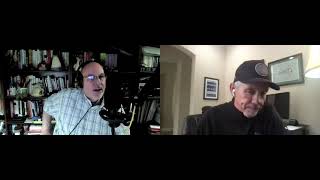
Randy Cantrell and Leo Bottari discuss building high-performing teams through psychological safety and accountability. They share lessons from Firefly Autism about knowing people beyond work, announce their book launching in China, and explore Amy Edmondson's learning zone model as the ideal balance for team excellence.
Chapters
Welcome to Peer Innovation, the podcast with Leo Bottari and me, Randy Cantrell. Building on our previous shows, The Year of the Peer and What Anyone Can Do, we turn our attention to helping business leaders build high-performing teams. We'll talk with a diverse group of thought leaders who will share stories and insights that will help you and your teams achieve new heights. If you believe there is strength in numbers and that meeting the challenges of the future can only be achieved if we do it together, then join us for the conversation.
And here we are.
We are back. We haven't gone anywhere. We haven't been hiding. We're selling it as a return from summer break, but that's a little bit disingenuous because we've both been, as we say here in Texas, we've both been busy as a one-armed paper hanger, but, uh, have taken a little bit of a break to boot. So how have you been? I know you've been back in an airplane and back in hotels, which I know you kind of enjoy.
You know, it's been really good. Last week I did 4 Vistage group meetings, you know, which was, which is pretty amazing. And yeah, and I've been doing a mix of, you know, in-person and virtual events. So that's some fun, you know, webinars that I've done recently and, you know, preparing for some other speaking gigs coming up. I've got that 5-part series that I've been doing with Quest, which is such a terrific company basically out of Florida. In fact, they just redid their logo. So it's kind of fun to see just the evolution of that company. There's a piece in their newsletter, which is this wonderful newsletter they do, and it shows kind of the evolution of the brand and the logo and all of that. And it's very cool and really just incredible company. And I've done— it's a 5-part, basically kind of a leadership development series. And the 4th installment will basically be on leadership specifically, you know, how, you know, all of us can be leaders, as we know, whether we're the leader of the team, whether we're a leader in the team, whether— and to just maybe take a little of the, you know, bigness away from leadership in some levels, you know, and we can all own it, you know, in a way. And it'll be fun to work with them and talk about that. I'm sure.
And what's the backstory on that initiative with that company in particular?
It was actually—
Tell us, those of us like me that aren't all that I'm not that familiar with them. What's their background?
Yeah, well, so they're basically an agency that provides, you know, incredible advertising and communication services largely in the transportation industry. And I was introduced to them through a woman who used to work with me years ago at the William Cook Agency, interestingly enough, when I headed up the public relations subsidiary there. And she's wonderful. And it just happened that she knew the CEO, they were looking for somebody, and Stephanie just happened to think, and she knew what I was doing now and said, hey, let me connect you guys and see what you got. And so Charlene, who's the CEO, and I got on the phone and she talked to me a little bit about what she wanted. And it was kind of an every other month virtual series. So I put together 5 modules for it and sent it to her and she loved it. And she said, this is done. This is like, great, this is what I want. So it worked out well. It was a lot of fun. I guess I love them, um, and it's always been— they're just delightful to work with. Um, but, um, you know, the Vistage groups last week were pretty interesting. I worked with Matt Louth out of Toledo, Ohio, and I think this is like his 5th group I've done this year. He's got a really successful chair practice, and I had worked with all these groups about 3 years ago, and it was largely the workshop on peer advisory groups and how they can really squeeze the most valuable possible out of that experience. This time, this was much more of a peer innovation where, you know, they take now what they know about peer groups and what they do so brilliantly, and it's basically about how do we apply it to high-performing teams. And when you've got a lot of CEOs sitting around with one another, having very intentional conversations about how do they determine who the right people are for their company, and once they do, how do they find them, you know, and how do they interview for that? Do they assess for some of those qualities? How do they, you know, make sure that they're bringing people onto the team that on one hand share a lot of the common values of the company, but at the same time bring the kind of diversity and bring the voices around the table that the company needs to hear for it to be successful? And then they talk about psychological safety and whether they have it, number one, and secondly, if they do, are people leveraging it to the degree they need to, and what can leaders do to make that more inviting because we know it unlocks so much. And if you're going to take time hiring really great people, don't put them in a box. Don't make them feel like they can't speak up or speak out. And then obviously we talk about productivity in their companies, what that looks like, how their meetings are going. We get into a culture of accountability, which interestingly enough, they quickly kind of start making the connection between psychological safety and accountability, and that you don't sacrifice one for the other. They help each other, right? They enable one another, they empower one another, really. And a great example was— there was, um, it wasn't in this meeting, it was in another— but there was a CEO who was talking about the fact that he had a direct report that he didn't believe took enough ownership over his department. Yet the more we talk, the more we realized that the guy's scared to death to take ownership over it because there is no psychological safety there. He doesn't feel like he can move. And then he's wondering why he's going to keep asking permission for everything all the time. And you've got this crazy disconnect. And once there's an understanding of, wow, if we could actually give this person the room to feel as if they can take ownership of it and we allow them to work, then maybe some great things can happen. All expectations can be met there, right? Which, which leads you to the leadership conversation about whether you're doing everything possible to support the team. So, so that was a lot of fun to do it strictly on the team perspective and have people from diverse industries really come together and share how they do things and what their practices are. And there's just a lot of incredible thinking and great ideas that come, you know, out of that. And then actually the last, the other 3 groups I work with, San Francisco, Orange County, and then to Denver on Friday, were new groups. And for them, it's just about, okay, we're just trying to figure it out. We're brand new here. We think we know what we joined. We have a pretty good idea of it. But then the more you dig deeper, the more they have no idea. But that's good. And they find out they had no idea in the best possible light. They didn't realize how unbelievably powerful this experience could be, even beyond what they were already sold on, which is why they joined it to begin with, or why they were invited to join to begin with. So yeah, it, um, so I've been staying busy with a lot of that. I took a bit of a break from— I went 2 or 3 weeks without writing a piece for CEO World too, uh, so I, I just, uh, wrote one of those today. Yeah, well, I was doing one—
You've been cranking out a lot.
Yeah. Yeah. So, and to be fair, I don't write pieces just to write them. I do really feel like when something hits me that I want to— that that's something that's important to say and get out there, then I want to put it out there. And if I don't, and I'm not feeling that clarity of message or anything, then I'm not going to do something just because I feel like I got to submit something.
So the increased interaction, I suspect the increased interaction that you're having, you know, now as we're kind of beginning to come out of some things and the travel's increased, is that fueled— I would, I would think that has fueled the writing a bit, just all of the interaction.
Yeah. Oh, sure. You know, and, and it's only going to get, you know, better, I think, in that regard. I've already got in my head, like, what the next few CEO World articles would be where A week or two ago, I'd have been like, I got nothing. You know? So, uh, right.
Well, and it sounds like you've been able to have a, you know, a bunch of light bulb moments for folks, which I know is for both of us is really rewarding.
Well, you know, and it was a light bulb moment for me, you know, when I mentioned that I visited this group in Denver, uh, Tanya Lauer's group. It's a brand new, uh, Vistage group in the Denver market. And as you all know, the way Vistage does it, at least the members take turns hosting the meeting. And that way it's not just like going to one particular place. Usually they get to visit each other's businesses and it's kind of a nice way for them to really become familiar with one another and what they do. And in this case, it was the executive director of the Firefly Autism, which is a school for— that serves about 250 students in Denver, about 150 in classroom and about 150 actually at-home, in-home students. Typically what'll happen is if there's a tour to be had, like if someone has a manufacturing facility and they bring people out on the floor or there's something, it usually takes place after lunch before they get into executive session. The speaker does their thing in the morning, whatever. Well, it turns out in this case, the more opportune time to do it because of the students' schedules and everything was to actually do it at the start of the day. Now I get the advantage and this incredible privilege of getting a tour of the school. It actually touched a lot of things for me because in the late 1990s, I did a lot of work with a school. Basically, it was called AMAC and it was the autism in the metro area. It was Manhattan at the time. But it was, um, for autistic children. And it was run by a woman named Frederica Blaustein, who I'd actually lost touch with. Unfortunately, I heard that she died back in 2013. She was a magnificent woman who was just so committed and so dedicated. And I remember doing some kind of pro bono work there, and I spent a lot of time observing classrooms and the teachers and all. And I've never been so impressed by anything in my life as I watched those teachers work with those students, and the level of patience was off the charts. I mean, it redefined the word for me when you watch what they do for the most incremental, um, you know, progress and advances. And, um, so it was interesting because it was kind of a flood of that back all over again when I'm getting this tour, and I get a sense, and all of those memories and all those things are starting to come up, and Once again, when you go into what I think was a world-class facility and world-class school, I should really say, with teachers who really care and with a whole staff that is all in it in terms of what their purpose is and the behaviors that they underscore and how they go about doing what they do, it was just remarkable. I just left there thinking, okay, I might go into any given situation and think, here's what I hope to get out of this today. Here I get this tour that I never expected to be on and I leave with these riches of not just learnings, but great reminders. And so yeah, I put it in a CEO World article today. And what prompted it in many respects was there was an office we went into that basically everybody goes through. And it was this— there was a thing on the wall and it was It was called Choose to Be. And there were these 8 behaviors basically that were described in the article. Choose to be kind, choose to be generous, choose to be courageous. But you looked at them and then you looked at the little descriptions of them and you think, okay, well, you get their purpose statement, you get their vision, you see the behaviors they want to use, want to make sure that they not only just read and memorize, but that they live these things every day, which what helps them fulfill that purpose and that vision and do it in a way with just real elegance and class and commitment. And I'm thinking, how many companies really have it going on the way this school really does right here? And it was fun just to be able to bring some of those issues up and again, see how they work with each individual student in a way where they know the individual student and their families to a level of depth that is off the charts compared to how most of us know our employees, right? Which Sad, but not nearly anything like that. Now granted, I understand the situation's different, but it still speaks to the idea of learning and understanding a whole person, not just getting to know them as a coworker or for a slice of their life so that we can make judgments about them in all kinds of other ways. So again, I actually hope people read the piece. I'm sure we'll include it in the show notes because I really wanted to write it because I wanted people to try to know what it felt like when I was sitting there and I got to see what I saw there and the palpable, um, you know, I think emotions that come from that. It was, um, there was a lot of fun, really rich experience. So when I can get out and do stuff like that, can't get that on Zoom, you know. But, but granted, as we've said many times, and we should be really, really grateful for the fact that we had Zoom and we had Microsoft Teams and we had Slack and we had all these other tools. Imperfect as they are, they were a heck of a lot better than what we might've had available to us, as we said, during the 2008 financial crisis where none of those tools I just talked about even existed. So, but yeah, getting out there is great.
[Speaker] Well, when you told me about visiting the school, You know, I had a couple of thoughts. The first one was, you know, how we all get fixated on these quantum leaps, and it's fine. You know, I was thinking about all these billionaires in the race for space and doing these big things, and the vast majority of us are not doing things, at least on a global impact, at that scale. But when you look at these kids and their families and their lives, and you know, I live my life by that old parable, and I can't remember who wrote it about the boy throwing the starfish back in the ocean. It made a difference to that one. And I think in our companies, I don't know why that's where my head went, of these people, these teachers and these staffers working to make, as you said, incremental advancements and to be encouraged by that when we're thinking, you know, unless it's some big thing, We don't necessarily even want to be, be involved with it. The other thing was just the power of serendipity, you know, the power of these happy accidents. I mean, you happen to show up on that particular day where this particular Vistage member was going to host the thing, and it was a gift.
I mean, and this is what I— this was kind of the idea, the theme of the article really is, you know, to kind of choose to be open to the things that discover us sometimes, right? We can be very think we can be intentional about every aspect of what we learn and we seek out this, we take a class in that, we watch a documentary or read a book or something like that. Then all of a sudden you find yourself in a situation and if you allow what's going around you just to go right over your head because you just weren't paying attention and seeing the relevance to your own life and to those around you. So I think the more that we can just be really aware and really attuned to those things, the better. And like I said, what a gift I got that day. And it's been great. Of course, the other piece of big news, and I put it out on LinkedIn today because I've talked with Chris in China last night, that we released the book cover design for peer innovation and its launch in China. And I think we're talking really not only just about the launch of the book, but the launch of peer innovation as a practice that we hope certainly to bring to that country as well as what we're doing in the US. So, you know, my feeling too is for US companies or for companies anywhere that haven't adopted peer innovation yet, you might think about it because I think we're extending the reach and really we're extending the reach on it because it works and it makes sense. And when you have human beings treating each other like human beings and actually having intentional conversations that, and help them align with their purpose and remind themselves about why they are where they are and how it really can serve as everybody's North Star for everything. It's great stuff. I mean, and obviously we believe in it and enjoy it. And so—
Any early insights in the cultural difference in a country like that versus our own?
Yeah, two things. One, it is a more collectivist society than the United States, being far more individualist. So on one hand, the idea of coming together in that way is more natural. Now, when they come together, however, the challenge of trying to be vulnerable in that setting is different. So I think that This is where the confidentiality piece, this is where the recognition that this works and that you can get real results from it. And that if you can adopt a mindset about being open and about looking at one another and recognizing none of us in this room by ourselves has all the answers here, that's okay. And once we can kind of own up to that and talk about what we don't know or what we're afraid of, we recognize that there are other people in the same situation. We know that these groups are based largely on the fact that the people who are in the group share a common challenge of some sort. Could be that they're a woman business owner who has that unique challenge of being a woman owning a business. It could be that they are a CEO of a mid-sized company who can't only concern themselves with sales or marketing or legal or HR. They got to look at the whole shoot match with all the stakeholders and all the responsibility and weight. That comes with that, to be able to share that common challenge with one another, to have that kind of empathy, binds that group. And from there, once they recognize that they're all in the situation, then they all realize that we have a lot of common challenges regardless of the fact that we're in different industries and there's a lot of things we don't know. And by the way, because they're in different industries, As we've talked about many times, there are best practices that are commonplace in one industry that are unheard of somewhere else. And when you start hearing about those things and you pop your head up out of your company and your industry and find out what's going on in the world, it's like, wow, this is really eye-opening. And people become better leaders as a result. I had a group of small business owners recently who in their minds, they're trying to transition from that entrepreneurial small business owner and being the chief everything to try to grow their organization and figure out what their path is to actually becoming a chief executive officer. And so that's a journey. And when people can take that journey together, it becomes really powerful. So I think in both countries, I mean, I think both here in the US clearly, and they certainly have groups like that in China now. The question is, if we can't get this working within teams or inside companies, whether it's groups and teams working side by side or teams at least adopting some of what peer advisory groups do so brilliantly into their practices so their team can function more effectively than— that's the idea. That's the plan.
And you and I have talked before about the siloing of departments and there's clear there's clear differences between a peer group and members of the same team who report to the same boss. And I mean, there is a completely different dynamic there, but I'm curious your insights when it comes to particularly vulnerability, which I might would put another term to it, and that would be courage, you know, the courage, you know, the courage to kind of to be vulnerable, the power of a person or the power of a person or two to completely change the shift and the dynamic of a room when it comes to that. Somebody who's just, for whatever reason, maybe predisposed to be more open than other people. I'm curious what your insights are about that as you've seen it unfold.
Well, just even characterizing the leader between a group and a team as one being your boss, Number one, you know, the leader of a peer group really has no power over you to speak of. The consequences are different certainly between being in a group and a team when it comes to vulnerability. Both need to be encouraged by the leader and modeled by the other members though, and it needs to be something that is part of the group norm because— and with teams because there are consequences that are are different and people worried about losing their job or losing their status in the organization or anything like that is obviously a very big deal. You almost have to have it where the idea of not being open and vulnerable is worse, right? That we have to be forthcoming, that the toughest thing, or certainly one of the toughest things for any CEO nowadays is to make sure that they're getting really good information in real time. And oftentimes that good information has to come from inside and people who are, you know, fearless about talking about what it is we're dealing with, and a CEO that is open and invites that conversation and that dialogue, and that together they are all in it. Because as you know, from the— when you look at peer innovation, we talk about the leadership model that we, that we have there. It was actually first introduced in the Power of Peers in our work with Dave Logan. It's this idea that whatever result you want to put in the middle, I don't care what it is, your accountability, your productivity, whether you hit your number, whether you're having fun at work, whatever it is, the leader, the team itself as an entity, and the individual team members, they all have shared responsibility for whatever that piece is in the middle. And when you look at it in terms of all being in it together, win together, lose together, laugh together, cry together, not somebody on one side of the desk pointing fingers somewhere else and saying, hey, I'm the leader of this team and your team, you failed. It's like, well, no, you don't get to do that. And that just sets up an unhealthy culture of accountability. Accountability, if you think about it, like we've talked about from a sense of just having the personal responsibility to step up and bring your A-game all the time, there's a big difference between doing that and feeling like you're playing defense every day. You know?
Yeah.
So it should— a healthy culture of accountability should serve your success. It shouldn't be onerous. It shouldn't be, um, you know, when I look at, um, a 2x2 that Amy Edmondson had done where she talks about the learning zone, it's actually a fascinating little diagram where it's got psychological safety. Think of it from 0 to 100 on the left side going vertically, and then on the right horizontally, you've got accountability going from 0 to 100. When you have really low accountability and really low psychological safety, what do you get? You get apathy. Basically, no one cares about anything much, right? If you have really high psychological safety, but there's no accountability in the organization, all you've got is comfort. Everybody's just happy and they're doing their thing, probably not doing, producing a whole lot. Conversely, when you have super high levels of accountability, That whole thing about not taking ownership of your department or somebody on one side of the desk and the other, and there is no psychological safety, that's when you're in the anxiety zone. When you have people living in that, you can probably count the days or weeks or whatever that they're out looking for another job because no one wants to work in that environment. But when you're in that place in the learning zone, when you recognize when you are, I think, connected by your purpose and connected by your commitment to one another, you recognize that high psychological safety and high accountability is magical and it puts you in that place. And actually, when you think about the learning zone, where does it take you? It takes you to the learning-achieving cycle, right? But we're always learning, sharing, applying, achieving. We're always growing. We're always getting better every single day. Those are the teams that do well. There's very high accountability, but there's very high psychological safety too. And people know why they're there and it doesn't become personal and it doesn't become, you know, any of that. It becomes about the work. And it becomes about whatever it is you're all there to do together and to know that there's no way you can achieve your potential in terms of level of excellence of what you can do without doing it together.
And it's interesting to me that the leadership that emerges from among the team and not the so-called leader or the boss with a bunch of people that may sit around and they may be they may be a decently performing team, but when it comes to trying to really take the next step, a bunch of people, you know, staring at their paper or staring at their shoes, and it takes one person, right? What, you know, this one bold, courageous person who it may appear they throw caution to the wind and they just kind of crack the, crack the thing and begin to ask the seemingly dumb, curious question or to reveal a bit of themselves more. And it's just, it's kind of fascinating to watch that unfold as it just kind of spreads among the group if they'll tack onto that.
Well, you described it as a real act of courage, which I totally agree with, but I also would suggest is that it's also a real act of generosity as well. You know, when we are open, when we're vulnerable, when we're willing to share, you know, what we do. I wish I could remember that poster from despair.com where it talks about how some people's lives serve as a warning to others. You know, so it's this idea of at least being okay and saying, you know what, here's a mistake I made. It's going to make me look stupid at this moment, but I'm about to keep the 10 other people in this meeting, you know, away from doing that. That's a generous act, I think. Absolutely.
You know, well, and you know, and the way that we view one another, I, I'm I'm always— I mean, I'm not so fascinated, it's just— but I really enjoy seeing it. I really enjoy seeing, you know, seeing people connect in ways before, you know, people that have worked together for a long, long time and yet they don't have a clue about each other. And you can put them in a room, you know, like we're describing, to really try to elevate the whole performance of the team. And it's just— it's kind of remarkable how the more connected that they get, the power that that fosters.
So when you mentioned about COVID before, and so two things, on one hand, we've talked about this many times, I'm not even going to get into it too much, but we know that COVID in so many ways brought us closer together because we started seeing and paying attention to one another as full human beings more than just employees going to a central workplace. But To your point earlier, it also actually in most cases made the silos worse. Our lens into the landscape of what was going on in the rest of the company typically did not improve. Let's put it that way. It got a little rough because there's a big effort that has to be made. And I think cross-functional work teams, if they were really committed to it, could do a lot, to break down those barriers. But, and for many, they're going to have to, because when we go to a much more remote situation right now, this is where, and, you know, in fairness, let's face it, you had companies that really weren't set up to work remotely, have to pivot very quickly and have to figure it out. And over time, they realize, of course, well, we can't, our mindset and our processes and our thinking can't be the same as how we were in the office. It's kind of, we've got to rebuild this thing a little bit with some different core, um, you know, foundational pieces here, right? Um, and so that transition is happening a lot right now. I think companies having to figure out how we go about this, if we're going to stay remote, or if we're going to stay in a situation where most of us will be remote, or maybe there's some of the hybrid going on, what does that look like for us really? I think one of the big challenges there is going to be making sure, and maybe it's not only a challenge that, yes, it'll be difficult to meet, but maybe because it's difficult, because people recognize it could be worse of a problem than it's ever been, we may actually improve the situation. Much like I hope we continue to get to know one another and consider the whole person as we're working with our fellow employees. And maybe if we change some of the way we think about and try to provide access and a lens into what's going on in the entire company, that we won't be so silent anymore. And I think that'd be a big improvement.
Yeah, agreed. I know you've got a whole lot. We both have a whole lot. Collectively and individually, you know, coming up, I know that you and I are both optimistic about life moving forward, particularly the second half of the year. But, you know, before we kind of dive into maybe the specific teasers that you want to leave, talk a little bit about your optimism moving forward and why.
I do. I feel great. I mean, here we are, by the way, this is the first day of the House hearings on what happened at the Capitol on January 6th and the incredible division, just even around that hearing, let alone everything that led up to it and everything that we're kind of dealing with in this country and how divisive it is. And yet constantly I'm reminded about how unbelievably good and generous and amazing that people are. And how they do rally for one another and how there is an incredible commitment to our friends and neighbors and family members. And I think because of that, I just think that that is going to overpower divisiveness. I do. And we're not so different.
No, no, we're just not.
But, you know, it's going to be, um, so when I think about what's possible, especially when you go, you know, into certain organizations and you've got teams and you figure out how, um, they can do what they all want to do. They all, they all want to work together. They all want it to be better. They all want to be associated with and self-identify with being with a high-performing team. They want to think of themselves as a a high-performing contributor to that team. And it's just helping people find a path to do that. But I think deep down, those people, they just want to be good. And by the way, the better they are, the more they want to be coached, the more they want to be— the more reflective they are, the more they look into, the more they expect of themselves and others around them too. Which is good because modeling those behaviors becomes obviously something that can be contagious. So that's why I feel optimistic.
All right, let me— I'm going to throw you a curveball. There's been no coaching about this, by the way, so he doesn't know this is coming. But in the vein of let's let people know, because a big part of this show I think is just our shared humanity. And we started off this episode talking about the School of Autism and just the connection that we make with people. So let's, let's, uh, let's give the audience a way to connect and maybe, maybe get some sense of us. Have you ever had a nickname? And if so, what was it?
Interestingly enough, I never have had a nickname. There's something about the short name of Leo. That was just like, that was it, you know. That was just for that. I always wanted a nickname. I thought that would be kind of cool. And I, and it's very— I wasn't one maybe to kind of self, you know, um, impose one.
But, um, no, me and me neither, except I had my, my dad had a younger brother named Pete, his youngest brother, and he, he gave everybody a nickname. And he would call me Rondo. My dad always called me Ran. Short, left the D-Y off of Randy, but okay. Do you like or dislike surprises and why and why not?
I'm good with surprises. Yeah. Depends what, like anybody, depends on what we're talking about. Yeah. You want a good one. No, but I think, uh, you know, when people, and I love when people, to me, I think about when you get a surprise like that, immediately think about like, Well, that's cool. Like, first someone came up with the idea and then they planned it, or they did something, you know, those kinds of things. If you're talking about that kind of a surprise. Yeah. Um, I think earlier in my life though, if I had an expectation that, okay, here's where we're going, here's what we're doing, and all that, and then someone threw, uh, you know, something in the ointment there, I, I wasn't always like— I'm like, all right, you weren't a fan of that? No, I wasn't a fan of that. Yeah. But, you know, grown up a little bit. And yeah, so, so I'm much more, uh, adaptable, I think, now than I ever used to be.
I had one surprise birthday party, and, uh, and, and everybody vowed that they would never do that to me again. So my answer would have to be no. No.
If it weren't your answer, it would be everyone else's. Yeah, exactly.
Now, I would like to do it to somebody else, so that's the kind of crazy person I am. Okay, in In the evening, would you rather play a game, visit a relative, watch a movie, or read? Play a game, visit a relative, watch a movie, or read?
Um, watch a movie. Yeah, I, I don't— I'm not, I'm not one who reads at night. Um, you know, visiting a relative, you know, sure, I suppose every once in a while. All right, probably be into that. Okay, so speaking— what was the, what was the other one though?
There was Play a game, visit a relative, watch a movie.
That would be last on my list.
You're a man after my own heart. Yeah. See, I'm so not the game player. You know, people break the board games out or the dominoes or the cards.
I want to run out the door when I see, when I see people do that. They go, oh, let's play this game. And I'm like, let's not. Let's really just like, yeah. Yeah.
Well, I'm right there with you.
I should be more open to play. You know, when I talk to, Francis Scholl, you know, his great work around play, or Jeff Harre, right, who we have on the show. Yeah, of course. I get the benefit of it, and, and I, you know, for other, for other people, you know, that's right. Actually, it's, it's great. It's just that, and, and there are times where, when I get dragged into it after the experience, it's like, well, it was all right. It wasn't exactly, it wasn't a sharp stick in the eye after all, you know. Uh, but yeah, not my thing.
No, mine either. Okay, last one. Would you rather vacation in Hawaii or Alaska? And why?
Oh, Hawaii all day long. I don't— yeah, yeah, I don't even think it needs explanation.
Yeah, it doesn't for me. I don't like being cold.
No.
So that's my deal.
Yeah.
All right, well, tell us, uh, tell us what's coming up. Tell us Tell us whatever you want to tell us. Tease us about the future.
Well, very much of a focus on the book launch in China, which will be soon. We'll be ready to give that a date very soon. And when we do give the date, it'll be pretty far. It's not going to be like we'll give the date and it's going to be 3 months after. It's going to be like days within. It's like one of those deals, as it turns out.
And you're still planning on—
But we'll be ready to announce that soon.
Um, yeah, we haven't really, um, you know, I mean, I know things are kind of volatile right now, so I mean, with—
yeah, and also, yeah, and also part of what you want to do with that is you really want to— so let's say, I mean, in my mind, that's something I would want to do at least kind of like a 10-day trip. So I want to be from the time I get off the plane until the time I leave to really make that as productive for everybody. As possible because it's certainly a long way to travel, um, you know, to do that. And, um, my hope is that I can convince, um, my, you know, some of my contacts in Australia to be able to do something either on the way or on the way home since I'm in that part of the world. Um, and, um, you know, certainly looking at doing that. But, uh, but yeah, no, I'm just— it's going to be pretty big focus right now. I'm obviously Very focused also on just continuing to evolve the content. I mean, again, I learn things all the time. I'm trying to bring new aspects of it. I'm completing a peer innovation scorecard for groups and teams that I think can be really helpful so that these things become a part of what you do and how you do things and what you pay attention to. So that you can keep raising that standard. I think when you see things that are repeatedly coming up every month that you've got to work on, you've got to figure out, well, what is it going to take to make that go away? And then there'll be other things that maybe they weren't a problem 3 months ago, but now they're starting to creep into the team dynamic that needs to be addressed. So those kinds of things are stuff that I'm working on right now for sure. And, you know, just really, you know, and just really enjoying the work, just having fun.
Yeah. You know, well, and the opportunity for us to impact teams, internal teams with, with larger enterprises and even midsize enterprises is— I mean, Leo and I both see tremendous opportunity there. So if you're listening to this podcast and you maybe you got started out because you were curious about this whole power of peers and the dynamic of a peer group, yeah, I would encourage you to make some application, internalize that, and think about your team. Think about these groups of people. You know, I'm doing a lot of work with city government and these departments, and some of these departments have a lot of people. Think of fire and police and others, you know, less so. In some cases, an HR department or a parks and rec But as I work with these people and their teams, the application of these principles for people like that and people in the private sector in for-profit business, we need more people to connect those dots.
You know, I'll tell you too, just to offer this, and I'm sure you have seen this, I certainly have seen it whether it's in local government or Washington or whatever that I think government or people who work in government or in whatever position don't ever get the credit for how unbelievably dedicated and committed these people are to the work they do. And everyone can complain about government. At the same time, they don't always equate all the innumerable services the government provides that we take for granted and are delivered to us without a hitch, you know, and recognize, oh yeah, maybe government is responsible for that, and maybe they can do that, and they can do it not only well but maybe better, you know. And, and so I'm sure you meet people all the time that just kind of knock you out with how just committed and dedicated they are to their work, dedicated to their communities and making sure that, you know, people are served really, really well.
And the whole population is that way because in the private sector you could make— you can make way more money. I mean, here in Texas, local city government— and again, to be really clear, we are not talking about elected officials, we are talking about professional workers who are hired by the elected officials, who in this case happen to be city council, and are held accountable by the council. They are there to do the bidding of the council, which would be your elected officials. And, you know, like, I hear it, I hear it every week. We want to turn— citizens want to turn the faucet on and have clean water come out, and they want to drive their cars on roads that don't have potholes. And we can take both of those big time for granted. Oh, they absolutely— I would say to a person, they have a spirit of service because they could go in the private sector and they could make way more money. So there's that. But we want our audience, your company, your organization, if there are two or more of you, there's application to these principles. There just are, because it's largely, it's just, it's human dynamics. The website is peerinnovation.co. You can also go to leobottari.com. That's L-E-O-B-O-T-T-A-R-Y dot com. I'm going to give you the last word, Leo.
Yeah, just thanks for listening. Thanks for listening to our spring break episode of Parentovation. And actually, and not just for anything, but I really do want to extend the reach of the experience I had at Firefly Autism. And I hope you will go to the show notes and see the CEO World article there. And take probably 5 minutes, you know, to go through it and then think about how it equates with a story in your life where, you know, you became acquainted with something, where something discovered you in that way. And, you know, hope you enjoy it. So until next week, and we will be back with you next week, we'll see you soon.
Thank you for joining us. To subscribe to the podcast and learn more about how you can engage peer innovation for your organization, contact us on the website at peerinnovation.co. Until next week, remember, the power of we begins with you.










