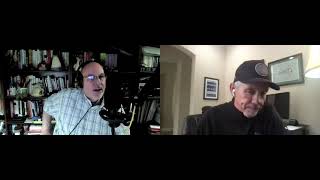
Daan Gorter On Gaianet

In this episode of the Peer Innovation podcast, hosts Randy Cantrell and Leo Bottari interview Dutch aerospace engineer Daan Gorter, co‑founder of GaiaNet and steward of the Light Cities project. The conversation traces Gorter’s personal evolution from a graduate in aerospace engineering to a facilitator of purpose‑driven mastermind groups (WIN Mastermind, Tripreneurs) and ultimately to a visionary building regenerative cities. He explains the origin and mission of GaiaNet – an invitation‑only, private community platform built on Mighty Networks that uses a fractal onboarding system (Great Gate, Bridge of Worlds, Welcome Town) to connect socially‑conscious entrepreneurs, designers, and builders. Gorter contrasts two flagship initiatives: the theoretical “Village of the Future” (a prototype village for 100‑150 residents that blends ancient wisdom with modern technology) and the more concrete “Light Cities” effort, currently being prototyped in Brazil. He details why Brazil was chosen (climate, political openness, land access, spiritual alignment) and describes the collaborative, open‑source, volunteer‑driven model that will generate blueprints, funding, construction, and governance frameworks for future regenerative settlements. Throughout, Gorter emphasizes a shift from competitive, profit‑centric systems to co‑creative, abundance‑based societies, urging listeners to join the network, volunteer, or contribute even a few hours a week. Contact information (gaianet.earth, Vimeo channel, newsletter) is provided for further engagement.
Chapters
Welcome to Peer Innovation, the podcast with Leo Bottari and me, Randy Cantrell. Building on our previous shows, The Year of the Peer and What Anyone Can Do, we turn our attention to helping business leaders build high-performing teams. We'll talk with a diverse group of thought leaders who will share stories and insights that will help you and your teams achieve new heights. If you believe there is strength in numbers and that meeting the challenges of the future can only be achieved if we do it together, then join us for the conversation. Dan Gorder is our guest today. Dan is a Dutch rocket scientist, co-founder of GaiaNet, and a steward of the Light Cities project. Dan believes that being part of a collective is more important than ever before. He envisions a global community that thrives on the energy of love, connection, growth, transparency, and abundance. And yes, he spells Dan with two A's. We welcome Dan to the show.
All right, Dan Gorder, welcome to the show. It's actually been a little while since, uh, we've connected. Uh, you and I of course first met, um, with WIN Mastermind and being part of those WIN Mastermind groups, which by the way, during COVID was pretty fantastic to have these connections with all these purpose-driven entrepreneurs from around the world where we could connect with one another and talk about our various challenges, the opportunities and everything we had. And from time to time you would facilitate those groups. And I have to tell you, I, I thought you did a fantastic job making sure that everyone felt heard, that it was efficient yet really effective, and no one ever felt rushed, and everybody got an opportunity to contribute, and you just did a great job. But obviously want to welcome the show. I do want you to talk a little bit about WindMastermind and some of what you did there, because as I said, I think you did a great job with community. But of course, our main purpose today is to talk about your work as co-founder of Gaiamet. And talk about that community. And we're actually even going to get to show, uh, for our listeners, we'll, we'll give you as good a, uh, a description as we can so that we can— you can help visualize what GaiaNet's all about. For those of you who actually want to see it, uh, it'll be available on video on YouTube. So, so Dan, welcome to the show.
Thanks so much, Leo. Great to be here. Just recently got this invitation and I felt a big yes, so it's good to be here today.
Good. Hey, well, tell us a little bit about what it was like to facilitate those groups at WIN Mastermind.
Yeah, so I met the founder Alexander January 2020, and I was running a company called Tripreneurs at the time, also facilitating masterminds for purpose-driven entrepreneurs. And we soon aligned and he invited me to join WIN Mastermind and come facilitate those sessions there. And in one of the calls with Alexander, I asked him, so what is it so that we do as Tripreneurs that's specifically so interesting? And in that conversation, he said, well, you guys do emotionally driven business development because we really work from facilitating a space where people feel safe to really share what's alive in their heart, the tensions that they're feeling, and not only talk about the strategy and the goal setting of your business, but also talk about the personal journey about that. So I also started to bring that into WIND Mastermind, and that was a joy to facilitate.
And like I said, you did it so well. What kind of inspired you to kind of be on the path you're on right now? Where did that start for you? Tell us a little bit about that.
Yeah, well, I guess I always felt like the black sheep of the family in the world. I, from a young age, didn't really understand why the world is the way it is. In 2014, I graduated with a master's in aerospace engineering, and before that I was already having mastermind groups for my personal growth and development. I was hosting man circles to get together with men, talk about growth as a man. And after I graduated university, I went on a long journey traveling a lot and soon discovered I don't want to work for an employer. I don't want to do the 9-to-5 grind, so I'm gonna do something for myself. And I took years to discover my purpose or my mission here and soon realized that I want to facilitate humanity transition to a new level, to another experience. And that materialized itself in building a prototype village that I had planned to build as the village of the future and realized that if I want to pull something off like that, I need a tribe, I need a big group of people. So I thought, which people are the most applicable for this kind of a mission? Well, that would be social entrepreneurs or spiritual entrepreneurs or purpose-driven entrepreneurs. Anyway, people who understand that professionalism is important but also who want to live from the heart. And not just do it for short-term profit. So that was the birth of Tripreneurs in 2017, to start facilitating these mastermind groups. And well, through that I met Alexander, and through that we started GaiaNet, and through that I'm now in Brazil for building the first prototype, not of a village, but actually of a city. It's been a wonderful journey so far, but that's the short version of how we got here today.
Well, tell us about what you're doing now in Brazil and why Brazil. And then secondly, I'd love to know just about the name GaiaNet, where that came from, and then tell us a little bit about the vision of that? So there's these 3 questions for you that should keep you busy.
Yeah, so what are we doing here in Brazil? Well, the short answer is that I'm really following the guidance of the universe or of God or the Great Spirit, or everybody uses a different name, no, but I'm following the magic of life, I would say. I've been brought here by a series of incredible events that are nothing but wondrous and magical. Which includes meeting my wife. It's a long story how I met her, and I am here to fulfill my purpose that took me years to discover. But I know now why I'm here, and I know why I'm with her. And we are here to build a first prototype of a new city for, I would say, birthing of a new consciousness on the planet. And the way we see that is— the short version of that is that instead of focusing on short-term profits and gains and individualism and capitalism and competition with each other. We need to get into co-creation, and we need to get into a circular way of how we interact with nature, how we extract our resources, and how we bring them back to their original state. That means we need to build cities, living environments, villages that are focused on global human need fulfillment and ecological flourishing. So we are here to build that first prototype in a series of smaller steps, of course, that we can showcase to the world how it works, that it works, use science in the academic world to also measure that and, and yeah, show the impact of this not just in a nice story but actually in numbers, details, facts, and a built environment in order to scale that over the rest of the world. And after we have one prototype, we intend to become the, I'd say, the Amazon for the new Earth, as we like to call it. By the way, we, we do not foresee that we are the only ones doing this. We don't have that big of a nose, but somebody needs to start this. And what we see is once we figure out how to build the first prototype, we want to build all the industry around it and make everything available, open source, all the blueprints, the organizational models, the funding models, the construction models, the design models, and then share that with the rest of the world and gather a collective. Well, that collective is growing through GaiaNet. Which I will come to soon. There's many people in the world who want this nowadays, and up until 2 years ago, I, I was completely alone. Even before Guyanet, I didn't have anybody who really saw this. And now there's around— let's not exaggerate, let's say I have 100 first circle contacts now who are very keen and are capable also of doing this, who have done their emotional maturity, who have trained the necessary professional skills, and who have the necessary network and time and abundance in their life to dedicate energy into this. So that's kind of also how Gyanet started. I met Alexander first in January 2020. I was running Tripreneurs Masterminds for social entrepreneurs. He was doing it for purpose-driven entrepreneurs. We found resonance there and we discovered we also really like each other. And soon enough, well, I was doing that with Reinier, with my business partner at the time, so I introduced Reinier to Alexander. They really liked each other. He introduced Stefan, and then through actually a mastermind session of Tripreneurs, we met Bart. And yeah, the 5 of us really hit it off, and we formed a little circle, and we said, we see there is amazing things happening in the world. How can we bring this together? Then Corona hit, and then we really felt, all of us, the 5 of us felt like, well, this is the endgame, man. It's game time now. There's no more time to waste. So now is the time to converge. Okay, humanity needs solutions for the pressing problems that we have. And Alexander says, look, all these solutions are out there in the world. It's not like people don't know this. It's not like people are not working on this, but there's no glue bringing it together. So our vision was to start a platform, a network of people and find the missing puzzle pieces and click them together and make the symphony sing by bringing them together in the same resonance. Now, as we were doing that, we wanted a 6th player. We also would like some female energy in our group. So we've been working with Julia before in the past and we called her, Reinier called her and told her about that we wanted to start a platform. And she was like, wow, let's go. The funny thing about this is that initially Gaiamet was supposed to be called WIN, a global WIN platform, because it was Alexander who was really saying like, look, I don't care who's coming with me, but I'm going. The boat's going, so who's joining? And it was his forward-moving energy that really got us all together. And we took about a month and a half, I think, of a lot of virtual sessions or defining our vision and our mission and our core values to find out if we are really, really aligned. And we took it meticulously. We shifted words around, we rated them, we scored them, and at the end we were all with a full 100%. This is why we are together and this is what we're going to be doing. And that's kind of how GaiaNet was born.
And the name GaiaNet?
The name, well, Gaia obviously refers to our planet, our beautiful mother of all of us. And the net around Gaia is going to create the new humanity. So we are looking for purpose-driven individuals who really operate from the heart and who want to facilitate this by giving back to Mother Earth. Hence the name GaiaNet.
Is there anything conducive, Dan, about Brazil that prompted that, or was it serendipity, or serendipity? Well, was it a happy accident that you went to Brazil, or was that purposeful? I mean, was there— and what was it about Brazil that seemed to be an attraction to do this, to launch this part of it?
I actually, when I was working on the Village of the Future 3 years ago, when I started a team, I had the world map in front of me and I looked all over the planet and One of my mentors said that in the near future, one of the last free places to be at will be South America. The rest of the world is going to go down. And so I looked at the map like, okay, so it's not North America, it's not Europe, it's not Australia, it's not Asia, because I work with plant medicine from the Amazon also. That's another side gig that I do. I'm a shamanic healer with those. And in Asia, you get decapitated for that. So that was also a no-go. So I looked and I was like, what if the weather really increases, it gets really bad? Where will it be fertile? Where there will be good temperatures? And where is the political climate also healthy for such a project? Because I need the government on board. This is such a large-scale project, you can't just do that privately. So I came up with Costa Rica. I wanted to go to Costa Rica to build the first pilot. So that's also how I built the branding and the websites and all the promo material. That promo material I handed out in one of the ceremonies to a Brazilian lady, and she called me last year in March when we just started GaiaNet, saying like, hey, I met this lady in Brazil who's working on a project and it looks very much like the Village of the Future, but I don't think it's that advanced yet, so I don't think I'm going to send it to you. I said, well, you know, please do send it to me. I open the file and I read over it and I start to cry. Like, it's the first time I met a document that was anything similar to the Village of the Future. And there was the phone number of Marinisi in the back. So I sent her a WhatsApp, we started chatting, and in our first talk I realized, like, wow, this lady's been working on this for 10 years. She's working on the funding for 5 years. She has access to a massive piece of land. She has architects, engineers, designers. She knows a lot of indigenous people in Brazil. So it was a home run for me. Costa Rica dropped off, the Village of the Future became a secondary project, and I'm like, let's go for the Light Cities project. This is it. So that's how I got connected to Brazil. At that time, by the way, I didn't know I was going to move here. I also didn't know I was going to marry her.
That's all like a coincidence. You know, it is truly amazing though when we think about the people we meet in our life and the incredible impact they have in our life. My wife and I were talking about this as well. There are people that each other from that basically. 10 years ago, we didn't know each other. Today, we're the central piece of one another's lives. And it's really rather remarkable when you think about that and you think about the journey you've been on and the people you've met and the places it has taken you is pretty remarkable. What I'd love to do is— and I know for people who are listening to this on audio, uh, it's only— it's going to be, um, a bit challenging, but I know you'll do a great job kind of describing what it is you're seeing. But I'd love for you to put up the GaiaNet site and just kind of walk us through the community a little bit so that people have the option to go on YouTube and check it out. I'd love that.
Cool. All right, so, um, let me just switch my screen and share it here. So we started— we launched GaiaNet on Mighty Networks MyTeamNetworks is an alternative to Facebook, and their big message is that it's promotion-free and your data is completely private. It's not curated either, so it's like a safe whisper room for you to, yeah, to showcase what you want to showcase. Here we go, so you guys can see, uh, Guy in it here.
Yes, yes.
Okay, so this is the, the landing page of our platform. It's a web-based platform, and, um, for new members who arrive on here only see this and they see personal profiles below it. We've built a certain onboarding process that you have like a very light version of the information we see. And people go through a process, they have to attend a session, and that all happens through our fractal structure. So this is like Facebook groups are normally. And people first enter the Great Gate into GaiaNet, and here they are exposed to some information, what we are about and what they have to to do. There's an action and they have to fill out their profile and then send a message to the gatekeeper. In this case, that's me. And then I let them into the next room. Yeah, we've also gamified this, this onboarding journey. So then they are invited to the Bridge of Worlds, and the Bridge of Worlds is actually the place where you leave the old world and move into the New Earth world. Do I have the map here? Ah, here we go. This is the journey into Guyaland. So we designed this route like you get an invitation from somebody because it's a vouched entry process. So it's only invitation only by someone you trust and you become a buddy of them also. You become their companion on their journey to go on to an adventure. Meaning you have the call, you answer the call and you sign the agreement fields for onboarding and then You find the gate, you make your profile, and then you cross the gate. You receive this map and you go through Homecoming, which is our gate, and then you go over this Bridge of Worlds and you arrive in the so-called Welcome Town, which will be the next fractal or the next group that you enter into. And this is the Welcome Town. And in this Welcome Town, we have only vouched members, so they have a completed profile, they have a attended a Zoom call, we've made contact with them, we introduced the history of GaiNet, explain why we are doing what we're doing, and we give them the most recent updates. And within this Welcome Town, this is where most of the action happens. And we have divided this sort of in a topic structure for people to navigate. There's welcome information, there's a navigation point, there's asking for people's personal introduction at a deeper level, And then there's all kinds of activities here. And the Welcome Town is kind of the starting fractal for the rest of the growth of GaiaNet. It intends to be the birthing place for all kinds of other spaces that people can self-host, self-facilitate, fully autonomous within the GaiaNet community. But they will be assured that all the people that they invite to their events and into the fractal will be validated people who are serious, who are real, and who have the right skills and the right alignment with the mission. So I think that's about the short version of showing this to you guys.
Oh, that's great.
These are, these are like, these are the main 4 groups. We also have a social lounge where people can just hang out and share interesting things. And I am the, the main architect of this platform, so I have full visibility of everything. And as you can see, there is many other fractals This one is already active. This is the New Earth Villages fractal. This is like a group behind the Welcome Town. You can find your route in the town to access this fractal. And this is where we showcase villages and cities that are under development, New Earth places. And there is a series of other fractals and rooms that are waiting to be opened when there is enough traction for it. But the biggest interest so far has been for this New Earth Villages and Cities, and we have about, I don't know, 30 members in this or something. Who are hosting these kinds of projects and are building cities and projects.
Dan, earlier you mentioned two phrases. I just— my curiosity, you mentioned, and did I hear it correct, Light Cities and Village of the Future? Did I hear that right? So you gave up— you said you gave up Village of the Future to go forward with Light Cities. Help me understand those two terms.
I wouldn't say I gave it up, but it became a secondary goal.
Okay.
After the Light City, we will still build the Village of the Future on an island somewhere in a beautiful location.
Help me understand those two terminologies.
Gotcha. The Village of the Future is the project that I started in 2017. During a plant ceremony, I was— there's a website of that also, thevillageofthefuture.earth. Villageofthefuture.earth. So for the listeners also, they can look at this later. And this website explains this project, and this intended to become a prototype village where we would test with 100 to 150 people new living forms, environments, how we govern ourselves, how we exchange value with each other, and how we deal with interaction with the natural world in the form of resources and construction, as much regenerative and as possible. So that's kind of in a highly automated way also using the scientific method and embracing ancient wisdom. It's basically, it intends to fuse ancient wisdom with modern technology. That was the goal of the Village of the Future. I was working on that for a couple of years creating all this promo material, which brought me to my current wife Marinisi. My wife Marinisi is the vision keeper, the initiator of the Light Cities project.
And the Village of the Future is— Village of the Future, is there an actual prototype underway?
No, no, it's still theoretical.
Okay.
Yeah. Yeah. And when I met Marinisi, I realized that the end goal of the Village of the Future was the same as the end goal of the Light Cities project. Which is the liberation of humanity on the planet. And for some people, there's like, what do you mean liberation? Aren't we free? No, we're not. When you really understand the political systems, the money system, how everything is orchestrated and kind of emerged over the last 2,000 years, we are all captured in a cage. We're all stuck in the Matrix. And what I mean by that is we live in the idea we are free and that we have democracy and that we have say in the larger scheme of things. But look at what's happening. Humanity is killing itself by destroying our natural world, and that cannot be right, and that's not free. We are heading for extinction, and the powers to be at the moment do not have the intention to turn this around. So we need to create not just an off-grid home to be away from this. We should not just create an off-grid village. We should not just create an off-grid city, but we need to create an off-grid humanity. That means we need to build a network of cities that focused on global human need fulfillment and ecological flourishing, that is connected and is so strong that it has its own power, its own resources, its own transportation systems, its own internet networks, everything on its own, so it can disconnect from the current socio-economic systems which are destructive and competitive and short-term profit-oriented only. Basically, we are all like an employer of our countries. We think we are our inhabitants of our countries, but I think I'm going to turn this off. We are not inhabitants, we are employees, because the only human— the only connection— sorry.
Would it be accurate to say that GaiaNet is a think tank for the Light Cities project as well as Village of the Future? To try to move from theoretical to reality. Would that be an accurate description?
Okay, correct. Uh, we are far more— like, the Village of the Future is theoretical, but the Light Cities is much more than theoretical. We are on the ground, access to lands, access to funds, access to network. We are living here where we're going to build it, so this is much, much more concrete already. And also, the first, the first village that Alexander is stewarding is the Harmony Village, is also coming into fruition.
And how much does your work with Light Cities going to inform what Village of the Future may look like someday?
I think once we've built one Light City, it will be very easy to build the Village of the Future because we'll have everything we need.
Nice. I just love the whole, you know, just focus on purpose-driven collaboration over competition and recognizing that we can achieve achieve an exponentially better result when we work together and to try to do so in a way that is not a zero-sum game and that sees the world in terms of not scarcity, but abundance is one of the things that I just really have enjoyed about you, enjoyed about the work, enjoy about the aspirational nature of it all. And I think it should give all of us pause really to kind of be thinking about not only your work and become more familiar with it, but recognize what each of us can do, right? We talk about peer innovation. It's the power of we begins with me. And it begins with our own. I looked at Guy in that, and there's aspects of it that are not just about collaboration, but about reflection. It's about knowing ourselves and knowing how to take our gifts, how to recognize what those gifts are and bring them to the world in a positive way. It's obviously what you did in terms of the reflection period you had after graduate school and all that to figure out what your purpose in life was going to be. And I just think it's a really, really powerful lesson. So with that, if you could just let us know, let our audience know how people can connect with you, how people can learn more about Guyanette, learn more about everything you've talked about today.
Well, they can go to the website guyinet.earth. There is videos, the videos are offline now. We have Vimeo channel, people can go to Vimeo for the Guyinet channel. They can sign up for the newsletter, we regularly send out information. And if people are really keen and really interested, they should send an email on the contact form on the website. And we usually send them a bunch of emails and documents and formats. We have so there's so much information available about what we are doing, and we really need help. Because for me personally, it baffles me how people can keep doing what we are all doing without focusing on a solution for the disaster that's impending on all of us. I don't mean to speak doom here, but look at the weather and the climate, and look at the poverty, and look at the— ah, it's obvious, no? Like, the world's in bits. Some people say, oh, it's never been this good, and it's true, We have less warfare than ever before in recorded human history. So we've become more peaceful with each other. We have achieved a lot as humanity. And look at our medical establishment. There are very positive things, huh? But it's also very sick and very corrupt and very criminal and disturbed. And a lot of people live a great quality of life at the cost and expense of a lot of other people and at the cost of nature. And we need to turn that game around. So anybody who feels in their heart that they want to contribute, even if it's just 2 hours a week, we need that help. We need volunteers to further grow GaiaNet because it's a volunteer platform. And we're— in a way, it's funny, I think Alexander also said we are all volunteers as souls. I don't know for who believes in that. Some people think this is woo-woo, but I believe we are all volunteers as souls coming from other realms to come here and incarnate now on this earth to completely change the game. So we are already volunteers, so you might as well volunteer to a platform like GaiaNet.
Hey, look, hey, you know, Dan Gorder, thank you so much for joining us today. We certainly, you know, enjoyed having you on the show, enjoyed having you enlighten us about your work and what we can all do. So thanks very much, and you just keep at it and tell Alexander we said hello.
Thanks so much. Thanks, Leo. Thanks, Randy.
Thank you for joining us. To subscribe to the podcast and learn more about how you can engage peer innovation for your organization, contact us on the website at peerinnovation.co. Until next week, remember, the power of we begins with you.