Angela Maiers Year Of The Peer Podcast Season 2, Episode 2
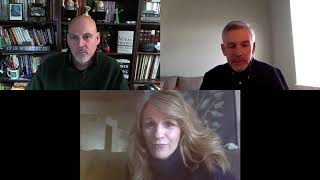
In this episode of the Year of the Peer Podcast, hosts Randy Cantrell and Leo Bottari interview education innovator Angela Maiers, founder of the Choose to Matter movement. Maiers argues that "mattering"—the human need to be seen, valued, and essential—is a DNA‑level driver of behavior, comparable to food or water. She traces how early‑childhood practices like show‑and‑tell nurture curiosity, passion, perseverance, and empathy—habits she calls "habitudes"—but that K‑12 schools have become systems of conformity, competition, and content control that extinguish these traits. Through stories of CEOs missing meetings, a basketball coach’s emphasis on teamwork, and her own classroom experiments (circles, wow moments, writing "I am enough"), Maiers illustrates how peer advantage and intentional community‑building can restore a sense of belonging and responsibility. She critiques standardized testing, grading, and the disconnect between K‑12, higher education, and the workforce, calling for a shift toward collaboration, intellectual humility, and real‑world relevance. The conversation also touches on the challenges of scaling these practices, the role of parents, and concrete next steps for educators and businesses to embed mattering into everyday practice.
Chapters
Welcome to Season 2 of the Year of the Peer Podcast with Leo Battari and me, Randy Cantrell. This podcast is based on a simple truth: who you surround yourself with matters. Author and keynote speaker Leo Bottari and I will discuss peer advantage and interview thought leaders from all walks of life who will share how they leverage peer advantage and show you how engaging your peers more purposefully can hold the key to greater success in business and in life. Today's guest is Angela Meyers. Angela is the founder of Choose to Matter, a global movement that challenges and inspires students to work collaboratively to develop innovative solutions to social problems. She also has authored 6 books, including Classroom Habitudes and Passion Driven Classroom, which introduced the concept of genius hour in education. Her "You Matter" talk at TEDxDes Moines in June of 2011 has been viewed several hundred thousand times and has been the impetus for Choose to Matter. Her powerful message and down-to-earth style has made her a highly sought-after keynote speaker for education conferences, corporate events, and innovation summits. We welcome Angela to Year of the Peer Podcast.
Well, she's the person who made mattering a verb, and she is our first guest for season 2. You're the Pear. We're glad to have her back. Angela Meyers, welcome.
I am so happy to be back. I'm so honored. Like, this was one of my favorite podcasts for the whole year for me, so this means, like, this means a lot. So thank you.
Well, we appreciate it. What was really fun was, of course, you and I met for coffee. Yes, just the other day. You know, kind of picked up right where we left off in terms of how much of, you know, your work and how when— if who you surround yourself with matters, then it starts with you having to understand that you matter too.
That's right.
I shared a story with you, if you recall, from one of the workshops I do it with. I do it for CEOs and business leaders around. And, you know, one of the things that when you consider a group really functioning and really doing well Part of it is really the consistency of showing up and being there. And it sounds like such a basic thing, but you know, when everyone throws around this idea of 80% of life is showing up, like, it's just a— but it's for real. And so there was a member who was in one of these groups who was, I think, being a little cavalier about the fact that, hey, I can make it when I can make it. Yep. I'll just kind of do it and all that. So, and I got a sense from him that he didn't really get what it meant when he doesn't show up. Everyone else that he doesn't show up. What about the value that person loses by missing it? But how it impacts everyone else. So I'd actually asked, I kind of stopped down the workshop a little bit, and I asked everyone around the table to tell this particular gentleman what is lost when you don't come to a meeting. And I have to tell you, it was one of the most powerful things I've ever seen because he just never really thought of it that way and thought of himself that way. I don't care if he's a CEO of a company or not, in the context of that meeting, he didn't get how much of a difference his presence made, and he didn't know how much he mattered. And I'll tell you, after going through that little round robin we did there, he will never miss another meeting again. He was so blown away by the whole thing. And so, you know, I'd love for you to just kind of comment on that. Because as we've talked about, it's really the same for adults in a business setting, certainly as it is for young kids.
1,000%. There's so many things about that story. In fact, Leo, it impacted me so much. I shared that story with a business organization this morning because it just, it is the proof, if you know, like that biological proof that this is a human need. This is not an adult need. This is not a student need. This is not a leader need. That this is a part of our DNA, that it is a driver, our significance, as much as food, water, shelter, air drives us to be healthy and prosperous, knowing that we matter. And if you break apart the component parts of mattering, to be seen by another human being is a human right. To be acknowledged and valued in the presence of other human beings, a human right, a DNA-level need. And the ultimate that you're speaking about is the deepest driver of human behavior, is to know that your contribution is essential, that it would be missed if it wasn't, if you didn't do it on that day or you didn't show up. So this goes back to the principles of show and tell. If I can take you guys back to when you were 5 years old, Why did you run to school? What part of the day was non-negotiable to missing? And as a former kindergarten teacher, it was show and tell. There could be a fire alarm going off and show and tell was such a big deal because it wasn't about bringing something in your backpack that meant to, you know, hurt another person or show off or try to be the best. You wanted to be the most essential. In the classroom so that you captured enough attention that 27 kids will run to you on the playground and say, tell me more about that. That's the drive of your contribution being needed, being essential to another person. And the only way you can do that is if you listen to the other 26 people and what they brought in their backpack so that you know that what you're giving to the world or giving to your circle is an advancement of everyone's goal, not just an advancement of your own goal. So these are principles that are so natural to us, so common sense to us, but they are not common practice and commonplace in the workforce.
And what happens to us, right? What happens to us from the age of 5 to the age of 15, 20, pick a number, right? What happens? What goes away that that takes that away from us?
Yeah. Well, we enter a system, and I am a teacher, and my heart is with teachers, and I believe in public education. So this is not a dismissal of the power of public education. But the environment that public education was built on, was created for, was an environment of conformity, an environment of control, that there was a certain kind of job in the early centuries, 150 years ago, that the workforce needed. We needed physical labor, and then we needed, as manufacturing grew, we needed workers to go into factories and do repetitive things. And as the cognitive age took over, as the industrial age took over, all of those shifts in our workforce absolutely shifted what it meant to be a citizen. In that force. The challenge is schools didn't shift at all. Schools are still educating for the world they were created in, not the world that they need to deliver citizens to. So the system of education is built on the principles that are the antithesis of what we're talking about. They're built on the principles of competition. They're built— individual competition. Built on the principles of conformity. Built on the principles of confined content knowledge somehow elicits your order on the pecking, that if you know more than somebody else, as if information was a finite entity, and that it was to be conserved and controlled and doled out piece by piece as you move up that ladder. None of that describes the world that we're living in right now, a world driven by communication, by collaboration, by compassion and empathy, a world where your behavior as a teammate is far more important than your individual accomplishment. One of the stories that you shared, Leo, that was so powerful this week was from the coach at Connecticut. Is it Connecticut State?
No, University of Connecticut.
Yeah, the basketball coach and the way that they determine if the player is going to be a qualified member of the team isn't simply that they can bounce the ball or dribble fast or make baskets. Those are all sort of givens. Like, if you're going to be an astronaut, you better know science and math. Like, that's not a big differentiator. But the differentiator was how that person acted when their spotlight was over, when they went back and sat on the bench, and how they paid attention to the other players, how they cheered them on, or if they had the mindset that, yeah, I'm done, I'm over, that's all that matters, and I'll just go rest. That's not a teammate. That's not somebody that's going to advance the mission of, of the team. And I think that's a big differentiator, that you have this built-up unintentional arrogance by individuals who've played the game of school, this, this false sense of security that I did okay, and that it is only my behavior that will determine my success. What has fundamentally changed about this connected world and advanced by technology is that it is not your behavior. It is how your behavior impacts and elicits the people that you will be collaborating with, teaming with, a part of. And that's a very different preparation for school. Than sitting in a desk in a row trying to get the highest score in the land.
So Randy, as you were listening to— because you and I, roughly the same age, you were educated in the South, I was educated in the Northeast.
Yes.
The way that Angela described how I was educated as a kid rang pretty true. Same for you?
Oh yeah, absolutely. And I'm wondering, Angela, what, what changes are you seeing in public education? I realize it's probably happening at a glacier speed, but are you seeing any—
There are pockets of innovation or pockets of this mindset embrace with individual teachers that I see and work with all over the country, amazing teachers that are going in every day. But what is challenging is that the system itself is set up to reward in terms of confined standards, in terms of what is requested, like it needs to be this score, it needs to be this certain class is better than this class. And everything that is rewarded and resourced in school perpetuates that mentality and environment of conformity, competition, content, you know, knowledge. And I'm not saying content doesn't matter, but application of that content matters more. That things like collaboration and creation and co-creation and creativity are deemed as extracurricular nicety activities. What you do in art class, what you do on the football field with your team, what you do in music class, all of those things that help develop much more efficiently that skill set where you are a part of an ensemble, you are a part of a team, you are relied on by other people. Those are not part of, in general, the mainframe education requirement. And so you've got this system where you can do all those things, but they're not acknowledged as equal or superior to how well you memorize the facts and dates in your history exam or on your math test or what test you took in the textbook or on even ACT and SAT.
What impact does the corporate world, you know, the jobs that these kids ultimately go fulfill and higher education? I mean, I would think where we typically talk about grassroots and growing from the ground up, I would think that the pressure would be coming from the other end, from higher education, which is more connected and collaborative and certainly companies where young leaders, especially young leaders, in many cases are just so ill-equipped to trust colleagues because of the competitive nature of it. And so there's this distrust and there's this pessimism of, you know, you're after my job. So is that top-down pressure? Is that top-down pressure being felt at all in public?
I don't think so.
I don't think, not near enough. So we get in education, the reports that the workforce isn't prepared. We get feedback from colleges saying the college students are not prepared for the kind of self-awareness, self-management, self-regulation, because in school, K-12, we've marked out every minute of kids' lives. Like, letting them just have free time, we've taken all of those things away. Letting them just not have a minute where they can be bored or where they can grapple over a problem. Everything is in a type box is not near enough, because the narrative is so great to parents about what, what is, what are the elements of a successful student, and it has to do with all those things. How well do you follow the rules? How well do you stay in your seat? How well do you not disrupt things? How well do you just follow directions? How well do you just consume and spit out whatever your teacher said, and and get that A on that test. And the narrative is so penetrating in schools that parents believe they're doing what's great for their kid. They believe in test prep, not testing. Test prep has a bigger budget than the NFL in a specific year. So parents are putting their kids in all of this prep stuff to memorize and cram and learn this. Without any life experiences in problem-solving and collaborating and creating and change-making, all those things that build the muscles of what the workforce needs. So I think there's a massive disconnect between K-12 and higher ed. But then I look at— I've got two kids right now in higher ed. And I look at— we keep saying 21st century, but in this time and space, The assignments that my children are getting are heart-wrenching. They are no different than what I got in college, what I got 20 years before college in high school. It is the same. Read this, memorize this. The professor picks the topic, you do the research, you get this, you try not to copy and paste. There's no— unless you take a very specific class, there's no development of the kind of workforce that we're demanding. You've got companies like Google, I don't know, last year sometime they set out a thing that they weren't hiring college graduates, that it is too much to retrain the mindset, and they talked about intellectual humility, that what they're looking for is a great teammate, like the U of Connecticut. What they're looking for is somebody intellectually humble, meaning I know what I know, and I'm good at what I'm good at, but I'm there to be a contributor to the team. And I think it just goes back— and I'll stop talking, but I say this all the time, but it isn't resonating in schools. School has been a quest to be at the front of the class, whether that's the top of the list of grades, whether it's the top programs, whether it's the teacher standing at the front of the room, higher up than the kids, that hierarchy of who's ever at the top is the smartest person in the room. The flip is the mindset that the smartest person in the room is not the one in the front. The smartest person in the room is the room, but only if everyone in the room feels a moral and intellectual obligation to contribute what they have towards a bigger mission and vision. And it takes an extraordinary kind of leader to create an environment that demands that across the key content areas: math, science, literature, history, government, all of those. You see that kind of mindset in art, music, PE, the football field, but not in core— not in core classes.
So I have a couple of questions, and this was part of what we talked about as well. We're in kind of a bit of a death loop here in terms of education when We're always going to teach to the test, right? But the standardized tests are measuring the wrong things. That would seem to me problem number one, that you're never going to change how we educate kids if in fact unless we change how we measure the impact of that education. But I think more importantly is, you know, you talk about the fact that we're even behind right now for teaching for the workforce today. What we all know is that the next 10 or 15 years It's going to change again, and that change is going to be big. And I'm wondering, from an education, from a public policy standpoint, from all of this, how in the world are we going to prepare young people out of this knowledge-based kind of memorization type of education into something where we've got people who are curious and great critical thinking skills and good strategic systems thinkers and all of that? How is that— the transformation to me seems not impossible, but I'd like— but it's daunting.
A glacier.
Yeah.
So Leo, this goes back to something you and I spoke about earlier, a huge passion of mine, because I began my career in early childhood. I began my career actually working with families 0 to 5 before they even entered school and the importance of creating an environment in the home before they entered school. So what you're speaking about is there are, there are some programs, there's some things that help kids get internships and help get them, you know, to encourage volunteerism and getting out in the community, but they again are few and far between. And almost all of them are targeted at high school students. And my contention is if you start at high school, the amount of unlearning and relearning that has to happen is so tremendous that it is, it is just a massive, massive challenge to rearrange the mindset, the practices, the habits that the kids have adopted being successful, especially the successful ones. I am not worried about the kids that struggle. They have multiple strategies. They, they are survivalists. What I'm worried about is the valedictorians, the ones that have the puffy heads walking around like, I'm an A student and my son's an honor student and they're on honor roll, and I'm not dissing, you know, the discipline it takes to get an A because that's a muscle too, but the sense of full security, like the world is just going to roll out a red carpet because I was on honor roll or I was on the Dean's List, when that means nothing. It means that you play the game really well. So I believe that the best-case scenario, the best chance that we have is entering in kids' lives, the— what do I want to say— the reassurance and the feedback to them that the traits they come to school with, and I'm speaking specifically about 5-year-olds, there's mass research done at Harvard Project Zero, research I've done, research up and down about the consistency of 5-year-olds all around the globe, no matter what language, no matter what demographics, no matter what zip code they come from, They come with all of what I call the Habitudes, the habits, mindsets, disposition, and attitudes that the workforce and the world desperately needs. Specifically, they are fiercely curious. They are absolutely embodied with passion. They are diligent and persevere. It may be about dinosaurs, or it may be about trucks. It may be this, this really obsessive topic, and we write it off as an obsession. That's a characteristic trait of a successful genius, a deep, deep knowledge and commitment to one piece of one area. They are adaptable like no tomorrow. Their imaginations are at the highest level, and they have everything that we want. They embrace with compassion and empathy and awe everything they encounter in the world. And the danger is, by the time the research is really clear, by the time they are even at the end of first grade, which is 7 years old, 7 and 8 years old, 70% of those things that I just talked about—adaptability, passion, curiosity, perseverance, courage—are almost nonexistent because they're muscles not being flexed in school in the system that exists right now. And so it isn't about trying to reteach or reorient seniors. It is about an absolute commitment to noticing and keeping and nurturing the traits that kids come to school with, and school should be the practice of all those habits, not, not the disappearance.
So 2 years, so 2 years in school defeats all of those things? Yes. What a sad, what a sad comment.
No, and there's not a parent out there that needs to read this research. I hear from parents every single day. If you have a child yourself, what is the difference in passion, in curiosity, in just in general awe of the world between a kindergartner and a 4th grader, between a 4th grader and an 8th grader, between an 8th grader and a college student? I did those, you know, pictures where my kids are sitting on my front porch. Here's your kindergarten, first day of school, second day of school. The first day of school pictures, they were filled with hope. They were smiling. They literally slept in their backpacks. They ran to school. And I could see in my kids' eyes all the way through that, the fire, the soul, the passion sucked out of their faces. And telling them it was the first day of school, they're already counting down to when is this over? When is this nightmare prison sentence over? And they count the days as if they were prisoners and they were released. You know, 160 days later. So you're in a time—
you're in a time machine and your kids are 5. Yeah. And what would you do differently now as a mom?
I would reinforce, because here I'm writing, I'm researching this, I wrote a book on passion, and I never asked my son, who I gave up on trying to change my own kids' education. I was verbal about it and then to the point where my children at middle school didn't allow me to go to conferences because I questioned the teacher and then they got repercussions of that. So they're like, "Mom, you're not gonna ask about that. You're not gonna ask if they're using technology. You're not gonna ask. Just let me do this." And so it came from my kids. I mean, it wasn't me not wanting to advocate. My kids are like, "Please stay out of school. Please don't talk to my teacher." I was banned. But I—
How can you be a contrarian parent and not, and not cause your kids that kind of—
that's weird. That I do not know, because the things I was challenging them with were really relevant things. And I guess the biggest mistake I made was, even though, again, I go back to the difference between common sense and common practice, there's a wide gap. So it's common sense. There's no teacher, no parent that says, God, I want the soul sucked out of my child. When they go to school. There's no teacher that wakes up and says, today, I'm gonna ruin my kid's imagination. It just happens. So I think being vocal and looking at this research, whether you call it social-emotional learning, whether you call it soft skills, whether you call them habitudes, whatever they are, workforce skills, they've been named a million things. We have to, as a community, stop positioning those in the narrative as extra niceties, as, oh, I hope they get soft skills, I hope they're empathetic, I hope they can collaborate, and understand that I think it is going to be the narrative from the workforce that speaks about this deliberately, intentionally. I don't know what the answer is for the testing monster because it is a multi-billion-dollar industry, and that it goes back to what Leo said. The test, if that's going to contain and remain to be the final thing. And yet there are changes in at least higher ed. Last year I wrote an article. I interviewed this— I don't know what the joint task force was with 141 of the top universities, Harvard, Stanford, Yale, and they came out and said, we are entering— this was in 2016. We are entering a mental health crisis. Our kids are so stressed about the test, about the facts, about getting a certain grade, that we forgot that universities, that education in general, is about educating the whole child, educating the citizen in multiple components. And our kids are coming in, and their helicopter parents, as nervous wrecks about this score and that. And we're here to say that we are weighting less things like ACT, SAT, all of those things, in an effort to say, let your child learn how to become a productive citizen, a decent human being, a kind soul that serves others. Their passion matters, their compassion matters. That report went wide. It was called, I wrote the articles called Turning the Tides in Education. I wrote it for Huffington Post. Did a whole series on this. And yet, even though I say this to a parent, even though I say this to teachers, even though I share the report, there is still a disconnect between what happens on the day-to-day things in school and what's emphasized and what's reinforced and mostly what's celebrated. And perfection and straight A's and, and I did the best in class, that is celebrated and recognized far more than any of the things that we're talking about. And until that changes, it's human nature to do what you get attention for.
You know, we've talked about this before. I've been really, I think, really fortunate to have, you know, been teaching graduate students for about the last 10 or 11 years now. It doesn't take long to figure out how damaging grades are to the actual learning. Right. And I'll say this on two fronts. One, A student may write a lengthy paper. And I'll have like paragraphs of comments on it. And all they care about is what's sitting on top of that letter grade. And you're like, you focused on entirely the wrong thing. That's right. They don't care if there's a W there. That's right. You need to focus on it. Here's the things that are going to help you get better at what you're going to do. And then as we talked about when at Seton Hall University, when We had these 6-credit modules, but we also had 3-credit residencies. There was a lot of debate about, you know, grading them, not grading them, and all that. And ultimately we decided not to grade them because what happened? Everyone works just as hard or harder. They're able to create. They're not worried about grades. All of a sudden, they really— you really start seeing them flourish. Yes. The kinds of the work product we used to get time and time again over the course of these weekend residencies was phenomenal. Absolutely. Because it wasn't about grade, it was about we're gonna come together, we're gonna do the very best, you know, we do, we're gonna create something special that we can all be really proud of. And somehow we got to get there, you know, this external validation of how I did on a particular test.
How do I get better every day? Absolutely. So what I did, I got to meet, this was a long time ago, probably a decade ago, I got to meet Ben Zander, and he did a TED Talk called The Art of Possibility, one of the best TED Talks I've ever seen. He's the conductor for the Boston Philharmonic Orchestra, and he has a policy with his students that when you come to his class and you are being developed by him, that everybody has an A, that you have something that is A-worthy when you enter this classroom. You do not come in trying to earn your A. What you work toward is keeping that A. So I applied that in my graduate school. I taught teacher graduates, principal graduates, and said— because we still have to turn in grades for the university— I said, but here's the deal. We're flipping this. Every single one of you has an A. And together, we are going to come up with the criteria of what it means to keep that A. What does it mean to you? In terms of your own obligations, your own, your own obligation to your growth and learning. What does it mean to your teammates and future collaborators? And what does it mean to the mission of this class, which is to develop your ability to lead in your school or in your community further? And we came up with those regulations. We made a rubric of those behaviors, which are all the Habitudes. They are, I will be an active contributor. I will create. I will share. I will comment and listen and be empathetic to other people. We will problem-solve together. And if that happens, and these are the activities and assignments that are going to help us get there, that we're going to engage in together, and knowing that they already had an A, it was, it was game-changing, absolutely game-changing. And you're still giving a grade. And kids, and not kids, the teachers would say, you know what, I had to be gone this weekend, or I wasn't able to do that. And it wasn't that they, I said, you're not here to please me. You're not here. You're here to be a contributing essential member to this group. So it is your obligation to your teammates, to this class, to the commitment that every one of them is putting in. And the level of honesty that I didn't put my whole effort in that, I'm going to give myself a B for that. Was self-regulatory. I know I wasn't my best in class. I had this, this, this happen. And so I really deserve a B. That is much deeper than if I had them jump through some hoop and I made just this random subjective decision about what's an A and what's a B. And grades are so subjective because one professor or one teacher could say, Oh, you do a bunch of busywork and then we'll give you credit for your grade. So an A is not an A is not an A at the end. An A could be doing, you know, you could take a class in Shakespeare and do the lowest level literal memorization, read 400 pages, answer these questions, do vocabulary. Does that mean you have A-worthy work and you're deeper in your knowledge of world literature or whatever the course is? So I think we've got to get to that level with schools. We're far away. We're far away from that.
You know, part of this unlearning process we have to go through is I feel like I watched it happen in the doctoral coursework that I did at Northeastern University because the attitude of the faculty wasn't threatening you with how many of you were going to flunk out. It was, you're here for a reason. We believe in you. We're going to help you be successful. You're going to help one another be successful. So the whole idea of mattering really in many respects kind of became redefined for me in that situation. Because, all right, you know, we're all in this together. I have to do my part for myself and for others. And it was this idea of just getting a group of people who believe in one another, who start to trust one another, and their currency, you know, is about those things. It's not about, you know, who got an A or this competitor's Lucian set up and all this, you know, and creating an environment where people, especially today too, where, you know, some of these people, they are working full-time jobs, you know, all kinds of stuff at you. And this is where if you have a group of people that are going to carry you through difficult times and all that, it is phenomenal. And who you are counting on.
So I think the hardest part for me is if you look at this environment that we describe, an environment where there is a sense of bigger, a bigger vision, that you are a part of something bigger, that you are an essential member of a team. I'm describing every sports field that, that exists out there. So why do kids grow when they're in sports? It's not that a percentage of them are going to become NFL players or pro basketball players. It's the skill set. It's the commitment to team members. It's the understanding. So my son was in football and there was a senior player that got injured and came back and took his position. And Ryan was really good at this position, but he willingly went to a different position where he didn't get as much play. He wasn't as skilled at it because this guy, the senior member of their team, came back and he stepped away without even blinking. So you will do anything. You will work on being the best because your contribution to that team is essential. And so you get that there's this— the key that we don't talk about in learning is this sense of responsibility, not just intellectual responsibility, but moral responsibility. And when you have a sense of clear vision and purpose, and there is a moral responsibility of every member to and not only to show up with their very best, but to become better for the group, there is no need for rules. There's no need for this control. Our systems are very much built like prisons. It's all about, you know, you do this, you follow this. There's, you know, the kind of learning we talk about requires respect. It requires trust. It requires mutual admiration from teacher to student. And it requires the knowledge that everyone in the room matters and that the smartest one in the room is the room.
Well, and I want to mention, I want to get back to Randy on this too, because Randy, you've been quiet. No, you're good. And my point, I guess, in this is Randy, you've talked to me so many times about when you were a young CEO. Right? So think about how you were raised in school. Think about what you went through in the workforce. We talk about what's rewarded. Well, what was rewarded in work was individual contribution. It wasn't team stuff. It isn't how you were compensated and everything. But for you, you know, you said as you've continued to learn more about this space and see things change, I mean, it seems to me that so much of what Angela has talked about today in the way she's framed all of this seems to be among the very reasons that you became so attracted to this idea of peer groups in the business and professional.
Yeah, no, absolutely. And while, you know, and then listening to, to you, Angela, I mean, I was thinking, and Leo and I, because we're demographically kind of in the same, in the same population for me, and I'm curious with you, Leo, the, the things that I learned that Angela's work really concentrates on, were definitely learned outside the classroom, not so much in the classroom. And I didn't live in a day and age, and I'm not, I'm listening, I love technology and I completely believe in living in the present world that we live in. But you know, Angela, you mentioned kids being bored and whatnot. I had a 5th grade teacher. This made a huge impact on me. I had a 5th grade teacher who set up a desk at the back and I spent a lot of time back there, and my parents told me later, and it wasn't because you were in trouble, but if, if you, if, if you did well, uh, you got to spend time back there just on your own, just doing whatever. And she told my parents— they would tell me this later, you know— that I spent more time back there than any student. That was an important— that was an important space for me, you know, to get back there where I could do whatever I wanted to do. Read whatever I wanted to read, draw whatever I wanted to draw. But yeah, Leo's absolutely right. I, I got attracted to this because, not because I experienced it, but because I didn't experience it. That's right. And I saw, I saw the value of it in the business world. Now I ran retail companies and I guess it's a little bit different, or at least my experience was in that there's so many moving parts to it. And I was always in smaller business, not, you know, big conglomerate kind of stuff. And Uh, so the distance between me and where the action took place was not vast. And so I knew that, you know, these people, I believed as a 25-year-old CEO, the employees came first. That was just intuitive in my thinking. Now, if there was an empathy scale, I would peg it. So that's just my DNA and how I'm wired. And I'm wired for connection and collaboration. And I know I'm not the smartest guy in the room. If I am, I'm in the wrong room, uh, you know, which is why I appreciate, you know, the conversation with folks like you guys, but I've got enough self-confidence. And this is a question that I've got, Angela's, how can we get, and whether that's the right word or not, I don't know, but I'm really hung up on that, that, that Google phrase, that intellectual humility. Absolutely. I'm thinking of my own childhood and I'm thinking of the classrooms that I know. And I came to know about you through my two grown children who are both educators. So I told Leo, you know, about your work and I was really attracted. I'd read some of your stuff and I'm not in education, but you know, how, how can you— you're basically, it seems to me, appealing to the outlier teacher or student. Yeah. You know, who's willing to— yeah, you got to go along to get along, but, you know, can, can you still in your own head or wherever, you know, push back and kind of go your own way? You know, big phrase in entrepreneurship is that the, the A students end up working for the C and the D students. 100%. You know, it's just how it works.
Or the dropouts. The A student works for the dropouts. Yeah. Yeah. So, and you've got companies, as I said, like Google and other companies that have been blatant about We are, you know, it's like being a dropout as an entrepreneur is a badge of honor because school is the antithesis of entrepreneurialism. You know, when you have those C words, when I look at like the difference between, you know, I do a lot of audits where I've asked to come in and I'm looking to analyze the implementation of technology and the mindset in many schools is that if you've got tech or you got a lot of tech in your school, then you're an advanced school, you're an innovative school, when they don't understand that innovation is a mindset. It is a mindset and a commitment to contribution. It's a commitment to discomfort. So everything that you do in schools is to make things easier for kids, and it isn't. There's a mass amount of discomfort and conflict that come at the foundation of true collaboration and true innovation. But conflict in a way that creates dissonance that moves you forward by bringing in different perspectives, different angles. And that requires you to use technology in a lot different way. We are not using— we are using technology in schools for the wrong C's. We are using it to control content or to deliver content. We're using it for correctness, to assess a test, to assess a score, We're using it for classroom management, because that's the mindset. You've got to manage kids, just that. You've got to control them. You've got to have them conform to the rules. When you have an environment built on trust, built on respect, where the DNA of mattering is in everything that you do, then you don't need to manage anything. What you need to do is— this is why Google and other companies ended up putting in slides, and putting in nap rooms, and putting in other things, because when you're in a team like that, where you are respected and needed and validated and valued, you will go all night. You won't eat. You won't sleep. You won't do anything. You will work until they force you to sleep, because you're like, I only can sleep 4 hours because my team's counting on me. And so one of, I think, the— in defense of teachers and defense of schools, because I don't want this to come— I'm anti the structure of the system. I'm not anti-education, and I'm not anti the people who wake up every day and commit their souls to this work. One of the reasons they struggle so much in creating these environments that are the antithesis of the environment they were educated in. So it's like asking you to do something that you might have seen or read about, but the key with this is experiencing it. Until you experience somebody needing you, somebody validating the contribution that you made, then you don't, you don't, you don't know how to set an environment up like that. It's just such a foreign concept. And so in my workshops, in my world, my number one thing is they can read my books or my content online. They come to experience exactly what I do with kids. I make them sit in a circle. I start the day with show and tell. We end the day with what we call wow moments where we acknowledge one of the presents, we stop and do what might seem to be silly things that might take a long time, like learning each other's stories, listening to each other, looking at each other, and we might not get through half the content, but they leave feeling different and experiencing learning differently where they were truly valued for more than just what they memorized or what they, you know, what they did.
What feedback do you get from students after you do one of those workshops? I mean, after a considerable amount of time goes by? I'm curious what kind of feedback you get.
Feedback is actually, and I consider everyone a student. I consider myself a student of the world, and I consider every student that I come in. So I flip-flop roles between teacher, facilitator, modeler, mentor, and student. So what is so powerful about the kind of workshops I do is the transformation is immediate. Like I said, it's a DNA thing, like what you said, Leo. When it is about, it taps something inside of you to know that you are needed by another human being. And what is amazing is that it is, this kind of transformation is immediate, it's permanent, and it's almost always free. Something as simple as having people sit in a circle. So when I come in, I like make organizers crazy. If it's in like theater seating or theater rows, The first thing I do is I come and I get rid of all the rows. I get rid of all the desks. I put all the chairs in a circle. And so you've got CEOs coming in, you've got really like, you know, executives coming in, you've got principals and superintendents coming in, and they're like, I'm gonna sit here and I'm gonna be a passive recipient of what you have to say, and you better entertain me. I have zero responsibility in entertaining my audience. They are not my friends. I do not need to win them over to like me. I need them to be and play a different role in their own learning. So I hate those evaluations at the end where it's like, well, what'd you think of the speaker, whatever. It isn't about them evaluating me. It's about evaluating themselves. Did you contribute your full self? Did you take risks? Did you ask questions that needed to be asked that pushed the conversation forward? Did you challenge another in a compassionate, empathetic way? How did you disagree? What strategy did you use? And it flips the whole sense of who owns the learning on its head. I'm not the keeper of the learning. Learning is an inside-out job. And so it is about emotional labor, the amount of vulnerability, of courage, of compassion that you're willing to give to another person, and even if you don't like the topic or you don't like me, it doesn't matter because it's not about me. It's not about what I'm saying. It's about your changing role. And even as adults, in training, it's a passive act. Learning is everything but a passive act.
You know, one of the, and I mentioned this to you when I first saw you yesterday, is, you know, we had some incredible guests last year, And I don't mean this, I mean, and they were all really good in their own right, but there wasn't any guest where I felt that immediate transformation after the podcast we had. And I know Randy feels the same way. And it's one of the reasons why, what better way, if we're gonna have a guest back, let's have it at the start of the year where we can have that feeling, that passion, and that understanding for what we wanna do going forward. And before we run though, because two things I wanna do, one, I want to mention that, you know, in this whole category of who you surround yourself with matters, Randy has just celebrated with his wife Rhonda their 40th wedding anniversary.
Oh, Randy, that is amazing. How awesome is that?
Yay! That's hardly a better example of who you surround yourself with matters.
That's so amazing. Yeah, that's true.
So that's good stuff. It's true for me.
It may not be true for her.
No, it's true for her. That's amazing.
But one of the ways, things too, that we always want to do, you know, at the end is, and really, you know, being so grateful for your time that you've spent with us and our audience, is tell us kind of what's next. What's up? What do we need to be looking for from you in terms of anything you've got coming out, or where we can see you, or what this year holds for you in 2018?
The year is a year of learning. I actually took a pause in 2017 and re— reconnected with the core and the importance of this message, even though there's a lot of things that it leads to when you create a culture of mattering. It leads to innovation, it leads to social impact, and it goes back to what you, you said in the very beginning. I was focusing so much on the output, the consequence of mattering, what happens in groups that do collaborate, that do move innovation forward, that do use technology and game. And not focusing enough on what prevents the whole rest of the 99% of the people not to do that. What is their pain point? What is their fear? And as you drill that down in talking and in listening, mostly listening, it is because they don't feel like they matter. They don't feel like they are enough. And so I've shifted a lot of my work back to that core because for me it's It's a reminder that your proficiency is your deficiency as a teacher. And I got so proficient at talking about mattering that I just thought everybody knew it, or everybody— and so I'd whip over that and go right into collaboration and communication and social impact and social change and changing the world and all of that and lose 90% of the audience because they're still back. And when I look at, like, if I do a speech or an interview, and I look and really listen to what gets retweeted, not from an ego perspective, but from an awareness perspective. What gets remembered? What gets the stories coming back to me about transformation? It's this one activity that I do where it says, "I am, I matter, I am enough." And I literally make people write that in big letters. And I think, like, God, I've been doing this for a while. Is this, you know, I don't want to get old. And I'm like, that right there is transformational. The commitment to yourself that you matter and you are enough. Because we suffer from insignificance. It's prolific. It's profound. So for me in 2018, it's getting back to looking at the transition from moving this common sense idea that everybody needs to know they matter, they need to be noticed, they need to be valued, they need to find ways to be essential to the community, to the world, to their company, and trying to really do case studies on practices of companies that do this in commonplace and common practice. Companies beyond Google, beyond Zappos, beyond, you know, Starbucks. I want a real— not that those aren't real companies, but those are such— those are the brands we always talk about. Disney. I mean, you talk about culture and it's Disney. And not that they don't have it down. But what about the everyday retail manager? What about the mom-and-pop corner store? What about the young entrepreneur? How do you turn these Disney-level neurological principles that Apple and Starbucks and all of these people use into commonplace and common practice? And so the start of that, at least the classroom level, the home level, the discussion level, is with my book Genius Matters, because it's all these lessons that I've learned from great leaders like you, the people I surround myself, Gary Vaynerchuk, Seth Godin, Albert Einstein, you know, Napoleon Hill, and, and all of these great leaders that figured this out a long time ago, a lot smarter than me. And then I just try to translate it into what exercises, what lessons do we do, do we need to reflect on to remind ourselves of the potency of these principles and And I would like to do a lot more with businesses and organizations for two phases to not only share their story and share that this is possible when you're not Disney, when you're not Apple, but it's possible and necessary at every company, but also then to usher those stories into education to show them that these are the kinds of companies that kids are going to go into. This demand to want to know that you matter and have a contribution is the biggest asset our kids can have going into the workforce. So I want to do a lot more connecting the world of work and the world with the world of education, and I've been sort of focused a lot on the world of education. It's not enough. So, so that's my challenge to your community. Any business, you want to work together, you want to do this, you want to collaborate with me, we want to find a way to get this message to not every teacher, but at the most minimum, the kindergarten teacher. That every kindergarten teacher has a connection with that vision so that we can keep these attributes and skills of our most amazing new workforce.
Well, once again, you've inspired us, and keep inspiring the world of business and education. And Randy, keep doing what you're doing because you'll be married for another 40 years.
So let me— I have to ask because this is how I end every class. What's your wow moment? So wow means worthy of the world. And it's a moment that it might be a statement, it might be something you said in your head, it might be a connection to something that didn't even happen in our talk, but it is worthy and must be shared with the world. So Randy, I'm going to lead to you. What was your wow moment in today, last hour, all day, whatever?
Well, you know, there are a lot of them, but the thing, you know, the thing that I wrote down was, you know, Google's Google's phrase of intellectual humility, you know, and I was thinking the whole time that we were having this conversation, was thinking obviously about the teachers that impacted me, and sadly there's maybe two, and that's not a diss on my teachers, but you know, my fifth grade teacher, you know, that did that little desk thing at the back, She's gone now. I reached out, I found her kids a couple of years ago. Her name was Mrs. Truman. Oh, that's awesome. But intellectual humility is a phrase that this teacher in a way pre-internet age would have absolutely embraced. And as a father of two educators, I would hope that they would embrace that. I mean, to me, and that's kind of off topic of the mattering thing, but I started off your introduction on intentionally You know, as you being the person responsible for that being a verb, at least in my life, which is, which is big, you know, because it's not passive. It's, it's, it's passive in the sense that it's, it's, it's in us all, but we've got to activate it. You know, we've got to do something. So for me, probably those would be a couple. That's wonderful.
Leo, how about you? Any wow moments?
Yes. My, my overall wow moment was having a role in bringing this podcast to our audience today, because I think that it is so jam-packed with things that are relevant for our kids, relevant for ourselves, relevant for all of the people with whom we surround ourselves, that I just can't wait to get this up and posted and for everyone to have a look at it. So thank you for giving me that wow moment today.
Well, my wow moment is absolutely reconnecting with you, Leo, because our talks have stayed with me in the same way. And I— it sounds ironic, but the education world, especially higher education, traditional education, not the teachers on the ground, don't take urgently serious what I'm saying. That I'm sort of seen as an outlier in our community because, you know, what— even though this is based in hardcore neuroscience, it doesn't go with the rest of the narrative, you know. So— and I'm okay with that. I don't need friends. And it's good to disrupt the conversation. But I think the level of resonance that this has is so— with you, Leo, with your work, with the stories that you show, that what I'm talking— it makes me feel like I really am not crazy, that this is worth fighting the resistance. It's worth handling the critics because this matters in everything. And you sharing stories of this being validated in the workplace, And it is my hope and my challenge publicly to you that we have a moral obligation to keep these connected stories going, to take what I'm saying— and I want it tested in the real world, I want it to be challenged, and if it's not holding up, then I don't want to talk about it— and to move forward in some way. I don't know what it'll look like, but to advance this conversation to even more action. So you guys are my wow moment. So thank you so much for having me back.
Angela Myers, you matter a whole lot.
Thank you. You matter too. Bye everybody.
Have a great day, okay?
To learn more about PeerAdvantage, to submit to submit questions to us and to subscribe to the Year of the Pier podcast, please visit us at yearofthepier.com. Year of the Pier podcast is hosted by Leo Bottari and me, Randy Cantrell. Our music is Vibe Ace by Kevin MacLeod, licensed under Creative Commons by Attribution 3.0 license. Thanks for watching or listening. We hope you'll share podcast. Until next time.










