Christina L Martini On Legal Teams
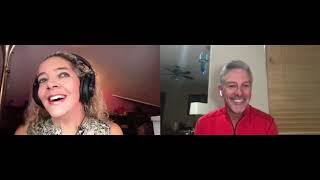
In this episode of the Peer Innovation podcast, host Leo Bottari (joined by Randy Cantrell) interviews Christina L. Martini, a partner and global head of the trademark practice at McDermott, Will Emery. Martini outlines how legal teams are structured around a client‑service model, emphasizing lean yet flexible staffing that can scale across jurisdictions and expertise levels. She stresses the importance of personality, cultural fit, and alignment with client expectations, noting that successful teams require clear role definitions, mutual trust, and psychological safety. The conversation moves to hiring practices, where Martini advocates for behavioral interviewing, intuition, and collaborative assessment to identify candidates who not only have substantive expertise but also the right demeanor and passion. She discusses ongoing performance management, keeping the client’s evolving needs at the forefront while monitoring team health, career development, and future planning. The impact of COVID‑19 on remote work is explored, highlighting both productivity gains and risks of isolation, and describing the firm’s tactics—regular Zoom check‑ins, virtual social events, and heightened communication—to maintain engagement and cohesion. Finally, they touch on Zoom etiquette, security concerns, and the humanizing effect of seeing colleagues’ personal spaces, concluding with Martini’s contact information and podcast platforms.
Chapters
Welcome to Peer Innovation, the podcast with Leo Bottari and me, Randy Cantrell. Building on our previous shows, The Year of the Peer and What Anyone Can Do, we turn our attention to helping business leaders build high-performing teams. We'll talk with a diverse group of thought leaders who will share stories and insights that will help you and your teams achieve new heights. If you believe there is strength in numbers and that meeting the challenges of the future can only be achieved if we do it together, then join us for the conversation. Our guest today is Christina L. Martini. She's a practicing intellectual property attorney and partner at McDermott, Will Emery, where she focuses on domestic and international trademark and copyright law, as well as domain name, internet, social media, advertising, unfair competition, and entertainment law. Tina is the host of Paradigm Shift Podcast, a podcast about the intersection of business and law. She joins us today to discuss legal teams. We welcome Tina to the show.
Tina Martini, welcome to the show. It's so awesome to have you back.
I'm excited to be here. Thank you so much for having me.
Hey, for those members of our audience who may not be familiar with you and your work and what you're all about, if you could kind of set the stage for us here, that would be great.
Sure. I am an intellectual property partner. I practice at the law firm McDermott, Will Emery. I'm based in Chicago. I've been practicing for about 26 years. I currently head up— I'm the global head of the trademark practice at McDermott. And what my practice really is, is working with clients anywhere from startups to Fortune 50s on their intellectual property needs. I work with clients across a bunch of different areas. My own expertise is primarily trademark and copyright. I help clients with their needs in the US as well as outside of the US. Anywhere from launching a new product or service to protecting the brand around it, to enforcing those brands against potential infringers and defending against allegations of infringement. Also working with clients on deals. So if they buy assets that include intellectual property or sell assets that include intellectual property, I help them with that licensing. My practice touches on domain name enforcement, online enforcement. So A lot of the cases that you read or the stories you read about clients that have phishing or fraud that is trying to be perpetrated against them using their brands, those are the types of things I help them with. And, um, really love what I do and really love the team that I work with and have a great firm that I've been affiliated with now for a couple of years.
That's fantastic. And, you know, the team part of this obviously is something we're going to spend some time focusing on. You know, as we've talked about, so recently I've got a book coming out and about, um, 6 weeks or so called Peer Innovation. It's what peer advisory groups can teach us about building high-performing teams. But I think for many of us too, when we look at different types of teams, whether they're in sports or medicine or in the law, for example, we'd love to get a sense of how those teams work and how lessons from those specific examples can instruct us, you know, in our own businesses. So, I would love to get, you know, I imagine that especially when you're working on a really big case or a large project, you've got a number of people that have to work together. And I'd like to get a sense of, first of all, what a legal team might look like. You can just kind of set a scenario for a little bit in terms of, you know, and then talk a little bit about maybe the difference between teams that are good and teams that are really great.
Sure. So a legal team can have many different looks to it. I would say it really depends on what the services that's being offered to the client. So the work I do is, among other things, I work on large intellectual property portfolios for clients. And so not only do I do special projects, not only do I work on cases, but I also do a lot of day-to-day work. And so we really try to have a client service team model, meaning that consistency among the team members for any given client is really what we strive to do. So we staff leanly, but we also staff in a way that makes sense for what the client's needs are. So usually it involves folks at several different levels, including a senior partner like myself, someone who's a more junior lawyer, and then someone who's like a seasoned professional, like a paralegal, for example. And then you dial it up or dial it down depending on what the client's needs are. So for example, if you're working on a large case that you really need to have a lot of people across different jurisdictions, across different areas of expertise, I think a big critical part of having a good legal team is not just knowing folks who may be down the hall from you, but also folks that are in other geographies who may be in the same practice area or maybe even different practice areas, but who you know what their, what their expertise is and what their strengths and weaknesses are. Because a big part of getting a good team together is knowing how well people are going to jive with each other and also where one person's skill sets may begin and the other person's ends. And it's also not just about expertise, but it's also about how do people get along. Are their personalities likely to jive with each other? And it's not just with members of the team amongst themselves. It's also making sure that not just having the substantive expertise for the client, but also from a personality standpoint, a working style standpoint, a cadence standpoint, there really needs to be alignment between what the team you put together is able to do and what the clients expect.
So that's a really great area. So first of all, I found it interesting, of course, that you're dealing with jurisdictions, and I would imagine when you're dealing with, you know, your field, that you have a lot of specialties within that larger specialty, right? So you need various drill-down expertise. And then of course, by jurisdiction, things can change depending on what country in the world I suppose you're dealing with, or even in the US. But on the kind of personality front, right, the culture, the people getting along, and the relationship piece of this is kind of the glue for a team. You know, What, if anything, do you do as a team to try to get people to understand one another better, maybe to get along better? Instead of being judgmental over the fact that someone works differently from them, they can kind of recognize that they do bring some gifts to the team. Even though we may not hang out together after work, they can appreciate their perspective in that regard.
That's a really great question. There are a few things that we try to do. I think having meetings, which obviously is— means a different thing since COVID But I think making sure, first of all, that folks get to know each other to the extent that you can, but also trying to present the team to the team members in a way where folks are really clear, number one, that they're appreciated and that they're trusted for what their role is. I think it's important to clearly define, without looking too mechanical, clearly define what people's roles are on the team. And because sometimes weird things start happening and dynamics start when people feel threatened. And I think in some ways that kind of goes to where your question is coming from. And it's important for people not to feel threatened and to understand that they're being looked at to have a specific role on the team and that everybody's voice is valued. And I think a lot of it is just getting people in the same room, whether it's the physical room or a virtual room. Just to get to know each other. For example, we have meetings every couple of weeks. Sometimes it's to go through deadlines. Historically, pre-COVID, it had been to just sort of hang out together. We would celebrate birthdays, we would celebrate people's work anniversaries, and just try to create an environment that's conducive to people getting to know each other. And I think that's really critically important, but also having people understand that they have a role within the team and that we look to them for it and that they're an important part of the team.
So some of the best teams I've worked with seem to be teams where people's personal currency on that team tends to rest with one another as opposed to people trying to impress whoever the leader of the team is. Is that fair? Would you regard that as similar in your world?
I think that that's a great, I think that that's a great comment, and I do agree. The question is, how do you create it? How do you continue to have that environment? What is the environment within which your team exists? And so I think that gets into issues of your organization and what the culture of the organization is. I feel very fortunate that I'm at a firm that's about its people, it's about the community that we serve, it's about the clients we serve. We really try to keep the formula pretty simple, that we care about our people, we care about our clients, we care about our community. It's important to engage in self-care. And when you have these basic tenets and values as an organization, it makes it a lot easier for teams within that sort of framework to exist where it's about the team and it's about caring for each other and it's about getting the goal done and it's about the clients rather than it's about each of them vying individually to curry favor with the team lead or to curry favor with whoever their supervisor may be. But one of the lessons I've learned is that it's very hard to create an environment or a team like what we're discussing if the bigger culture of the organization is not in alignment with that?
Well, that's a great segue too, because, well, first of all, on one hand, you know, what you said about self-care, I've always thought that, you know, self-care doesn't mean by yourself care, right? Engaging others is really helpful in helping us, you know, to take care of ourselves and take care of one another. But, you know, part of what I talk about in the book Peer Innovation and what the peer advisory groups teach us is we— I look at these 5 factors, and it starts with having the right people. Um, so in terms of, you know, hiring, in terms of thinking about who are the right people, whether you're hiring them or just selecting who's the right people on your team, right? Because you mentioned that issue before, that you want a team that you feel is going to click and jive with one another really well. So what are the things you look for, um, and how do you screen for that? How do you interview for that? Do you do assessments? Do you— what does that start to look like? Because as we know, and I certainly have done it, I've hired people in my career that were awesome on paper, great interviews. 3 months into it, I'm like, why is this not working? What is going on here? You know? And it doesn't mean they were bad, but they didn't work here. They didn't work in our company there. They may not work in your law firm, right? So I guess what is the difference between someone who makes it at your law firm, someone who you would want to feel— I would readily want this person to be part of the team, right? versus someone who won't? What does that look like?
That's a great question, and I think we could spend hours talking about it. Um, I mean, high level, because I've done hiring in a number of different capacities. I've done it, um, as a team lead for— so looking for professionals within my practice area, but I've also done it with law students. And you and I have had that conversation, both in the context of my current firm as well as my old firm. But I think behavioral interviewing is critically important, and that's something I believe in. I think it's something that has evolved, but I've been engaging in it in some shape or form now for at least 10+ years. And I think you, you have to interview for a number of things. You have to interview for substantive expertise, especially if you're looking to add somebody to a team where you have a certain sort of level of experience that you need, that is the foot in the door. But then you have to peel the onion beyond that and look at their work experience, see who they worked for, see if there's information you can get within the rules and the framework of getting information about folks as you're vetting them, just to see what people have to say about them. But asking them in an interview, behavioral type of interview questions like, how did you handle this situation? What was the toughest sort of, you know, experience that you've had professionally? How did you navigate through it? What would your, um, former employers or current employers say about you? What do you think differentiates you from others who are interviewing? And it's not just the substantive answers, although those are really important. It's their demeanor. It's the way in which they express themselves, because you then have to sort of look at the candidate through the lens of not just the substance but also how they present the clients because we live in a world now where it's not just the lead lawyer who's in front of a client, it's the team that's in front of the client. And I also greatly value a collaborative approach to interviewing and vetting candidates. So I usually want to have at least a couple of my colleagues help in the assessment of candidates as well to get their frame of reference too.
So that brings up, you know, kind of interesting question when we think about, you know, these right people. What kind of a premium do you put on them asking really good questions of you?
I think it's important that they do, but I've interviewed people over the years who are just by their very nature a little bit more reserved. They're a little bit nervous, and while I do value the questions they ask, I don't see it as dispositive on the issue of whether or not ultimately they're going to be a good fit. I just recall interviewing one of my team members a number of years ago where she was pretty quiet in the interview, but I could sense that she had this really sort of like a quiet strength to her and a fortitude and a subject matter expertise and a real passion for what we do, which I think is critically important too, especially if you want to have a high-performing team. I think to a certain extent the team members have to have a passion for what they do and the role they play within the team. And I really got that during the interview with her. And so although she only had a couple of questions, I knew she was very interested in the role. I knew she didn't need it because she was coming from a place where she was very well respected, a very well-known company. But, you know, she, she just had a different type of personality. And I think that's something else you need to gauge too, is can you— even though a person may have a little bit of a different personality than others on the team, will they warm up over time? Will they still complement sort of the symphony that you're trying to create with the team.
You know, that's such a great point. You know, about a month ago we had a gentleman, his name was Francis Scholl, who wrote this terrific book, by the way, called Squirkle. And but it's about intuitive intelligence, and it's about really, you know, using, you know, all everything when it comes to making decisions. And, you know, you talked about, you know, it was kind of your intuition, your gut instinct, that this woman had this quiet strength and that she would be someone you would add to that team, as opposed to having some preconceived notion of things that we're checking off a box and all of a sudden you dismiss her when in fact she could, you know, she'd be a really great addition.
Yeah, it is an intuitive thing. And a lot of people, I think there's more receptivity to that conversation now. And you and I have had that conversation a number of times over the years. I do think, and whether you call it a sixth sense or an intuition or whether it's because you've had so much experience experience. You sort of scroll in nanoseconds through all of the experiences that you've had over the years, and you sort of match up bits and pieces of each of these experiences as you sort of process and come to a conclusion. You know, some people sort of describe it differently, but at the end of the day, I do think that effective hiring, you do have to draw from prior experiences. And I do think it's one of those things where if you have done a lot of interviewing, if you've led a lot of teams, if you've been observant to what works and what doesn't, I do think there's a high level of intuitive intelligence that goes into decisions like, is this person going to be a good hire? Is this person, you know, what kind of trajectory do you want to have this team member on, not just in the short term but the long term in terms of career development? When do you need to make a tough choice, whatever that tough choice may be? Because we've discussed this before, but teams are dynamic, they're never static. And I think that sometimes that's one of the biggest weaknesses or limitations in sort of seeing ahead that leaders and teams have, is not understanding that it changes from moment to moment. Whether you really see it or if it's beneath the surface is another issue, but you need to be constantly planning and trying to see around the corner.
You know, that's huge because, you know, when we think about that, and it happens on a number of different fronts, right? It isn't just that you may assemble different teams and the people change. But I know in groups, for example, that if there's a high-performing peer group and they enjoy a really great level of psychological safety, you can't just say, oh, got that, and then not pay attention to that anymore. It's like watering a garden, right? I mean, you've got to stay on top of it. You're constantly thinking about how do we keep that and how do we continue even actually improve on it to get better. So as you're thinking about that dynamic team, if you will, what are some of the things that you're watching for to make sure that, you know, your team is really not only staying excellent but continuing to grow?
Great question, and we could spend days talking about this, and I'm sure at some point we will. But there are a number of things. I'd say first of all, you know, keeping your eye on the ball. Like, what are we here for? Obviously, there's the human element. We are friends, we're colleagues, we're coworkers, all of that good stuff. But at the end of the day, we have to keep the lights on, and so it's all about the clients. And so It's number one, looking at the clients, looking at how they're evolving, looking at how their needs are evolving, how their teams are evolving, how what we do with them and partnering with them changes over time. So clients' needs change, their business changes. Sometimes they're— you're high on the hog. Sometimes they're really not doing very well. I mean, COVID has thrown a huge monkey wrench into a lot of clients' businesses. So first and foremost, keeping your eye on the clients and what they need, and making sure that there's alignment between what the team is doing and how they're doing it with what the client needs. And sometimes clients are very vocal about it and will come out and say what they need. Other times you have to sort of piece it together from your vantage point. You know, there are clues, and it's not that clients try to hide the ball. It's just they're trying to keep up with their own businesses. They're trying to figure out what they need to do from a business side, and then their vendors and their outside counsel, they have to sort of figure it out, or they'll find it out not necessarily in real time. So it's just trying to sort of see ahead and around the corner for, for the clients. And then it's also just trying to stay in touch with, in real time, with the team members, not just with their capabilities, but also with themselves, with them personally. How are they doing? How is their performance? Looking at the typical levers and metrics of performance. And it's not that it's just about performance, but it's again trying to holistically make sure that everybody is doing okay. Some people will be very vocal and say, I'm struggling, or I'm doing really well, or I want to be promoted, or you know what, I'm having issues with this client, can you please help? Some people are very articulate articulate and vocal about that. Other people are not going to be that way. And so you have to try to get to know your team well enough to be able to see what's happening, even if it's happening beneath the surface. And also being able to zoom out. So zooming in and zooming out. And zooming out to the extent that you need to look at your team holistically and say, okay, this is great for today, but this is what's coming around the corner, and this person's getting ready to retire, or this person wants to be promoted, this person's getting tired of of what they're doing and trying to put that all together in a way that you're planning not just for today but for the shorter to medium to long term.
Yeah, that's a really, really great point. And I also want to— excuse me— pivot now a little bit too, because you had mentioned, of course, we live in this COVID world right now. And this— the implications of this is not only for your team working together, but your team you know, facing clients as well. But as far as your teammates, one of the things that was evident early on with CEO groups that I talked to, for example, is so many CEOs were talking about the fact that while people working from home was forced upon them basically, I think they were really a bit knocked out by the fact that, wow, our productivity is up. I mean, we're doing better. You know, people talk about productivity being up 15%, 20%, or even better than that. Now, I think the more savvy CEOs also recognize this isn't sustainable if we don't pay attention to certain things. And we talked about things like people getting burned out or feeling isolated or other such things. But what I do think, and part of my bit of a theory about it, and also what I think a lot of people have talked about, is that when you go to a central workplace and you're all— you got your employee hat on, and you're showing up to the office, and you're kind of versus all of a sudden now you've got people working together and you're essentially being invited into their home. You know, there could be a kid crying in the background, a dog jumping on someone's lap. There's photos or things, household items that you look at that reflect who that person is and maybe what their values are and what they're all about. And I just feel like people have kind of tapped into their collective humanity a little bit and been a little more understanding and willing to be just a little more cooperative and a little more collaborative with one another. And I'm wondering, Would you regard that as something that you think is also true in terms of what you're seeing out there? Are you seeing something different? What does that feel like as far as your team?
I'm definitely seeing it. I think that everything that you just said is definitely what I'm experiencing too. I think that the productivity, it's interesting. I've seen both sides of it. And I'm not just speaking about my team generally. I've interviewed folks for my podcast where we've had this conversation. I've talked to friends of mine who are in other law firms that sometimes it's a bit all over the map. I think some people, and I think a lot of it depends on people's personal circumstances. A lot of it depends on their working habits. There are some people I think who have become more productive working from home. And I guess that's a great thing. I guess the only observation, and I'm not saying that it's a bad thing or a good thing, I think it depends on people's circumstances and their and their psyches and all of that stuff. But one observation I'll make is that we just need collectively and individually to make sure that the increase in productivity is something that isn't being done at the great expense of our people as people. And sometimes when you're living in this type of a world, if you're in isolation and you're the only person in your house, we need to be compassionate and understand that that's not necessarily the best thing for people. Some people handle it really well. Some people handle it really well for a short term. But now we're entering the 7th month of COVID at this point. And I think the shorter-term impact of working from home is very different from the prospect of it now. And so I think we just need to make sure that we're looking at it holistically and that it's not just about the numbers. It's also about things that we may be able to see and things we may not be able to see beneath the surface of what— where people are psychologically with all of this and emotionally.
No question. I mean, we are social beings. There's no question about that. We also know that we learn better when we learn together. We can do more when we do it together and we do it effectively. Are there some of the— are there things that you and/or your team are doing to combat some of these things you're already talking about? Like, how are you getting these folks, you know, engaged and making them not feel so isolated or not feel so— you know, one of the other ones I'll talk about is the feeling of obscurity, right? The idea that, you know, getting noticed even when you showed up to the office every day was hard enough. Now all of a sudden I'm home, I'm working really hard, who sees all of this work I'm doing, you know, in that way? And so what are some of the things that you all have tried that you feel have been helpful for your team?
So we've been trying to do Zoom get-togethers. So there's the Zoom get-togethers to do work and to simulate what we were doing when we were in the office. We also have IMing. We also, you know, have the phone. And so trying to stay in touch with each other, not to be smothering or hovering, but also being particularly mindful of those among us who may have different circumstances. So for example, the folks who live alone, who I work with pretty closely, are ones that I try to check in on, and others I know are trying to check in on more frequently than maybe those who have a family, who are around others, who are not going to feel probably as much of the social isolation. So there's the virtual get-togethers to do the work, and then there's also the virtual get-togethers to just, you know, simulate a cocktail hour or, you know, just sitting around a conference room or sitting outside, you know, when we used to work downtown in our office and we used to go to lunch or get drinks together, trying to simulate that as much as we can. To the extent that it's been available and appropriate, there have been a few of us that have gotten together socially distance outside for— but, you know, that's something that is a very personal choice, and there's some people who are really not comfortable with that, and there's some people who may have been or may are comfortable, may be comfortable with it with good weather. But as we head into the fall and winter, I think that there's going to probably be less of that than maybe we were seeing over the summer. So those are just a few of the things that we've tried to do to make sure that people feel like they're part of the group. And also, to the extent that they have issues, to just really emphasize more than ever before the open lines of communication and just say, you know, if you need anything, you can feel free to call me or email me anytime.
You know, I will say that there's a lot of CEOs that I talk to who in some ways almost kind of sheepishly kind of admit that it's this past 6 or 7 months or so, they probably asked more people, their employees, just how are you doing? You know, where that wasn't a question that was coming out of their mouth every day, you know, in the office. It was more, do you have that report done yet? Is this going? How are we doing with such and such? You know, but just asking the simple question of how are you? How are you feeling? How can we be helpful in any way?
Yeah, absolutely. And also people are doing meetings that used to be done by phone, by Zoom all the time now. So I used to have many more calls than I ever had Zoom meetings. And now it seems like the default is a video meeting rather than a phone call.
And it feels nice because you do feel like you can connect, you know, much more effectively. And I've been enjoying that as well. And yeah, I think that's been good. We are kind of getting used to that a little bit as our way of socializing. Someone joked with me one time talking about these Zoom happy hours and they were talking about getting a ZUI, you know, Zooming Under the Influence. I thought maybe interesting, it'd be fun at a law firm to be giving people ZUI.
Well, there's been a lot of chatter about, you know, Zoom etiquette. Let's just put it that way. And, you know, there was a story, and it's interesting because it cuts across a bunch of different demographics. So for example, there was a story in Pretty High Rotation a couple weeks ago, I don't know if you saw it, about a Harvard Law student that showed up to his criminal law class with his rifle. He was cleaning his gun and he decided he wasn't done cleaning it yet, so he figured, oh, I've got to jump into my criminal law class. And so he jumped into the Zoom meeting with his gun and he kept cleaning it in the middle of class. And so there was a lot of, you know, a lot of buzz about that, like, what? So, and then other people, you know, just you know, just— and then this is what happened with— from a security standpoint, people just dropping into other people's Zoom meetings, like at random. And so that's increased the security measures that a number of video conferencing providers have had. But just, there's been a lot of strange stuff we've seen over the past 6 months.
Yeah, I would say my pet peeve probably is when people show up in a Zoom call and they're eating.
It's like Yeah, yeah, that's a little strange. I'm fine with the kids showing up in the background.
Yeah, oh sure.
Even the, you know, even the pets that like traverse the keyboard and stuff, I'm fine with that. I have a colleague that would have her parakeets on her shoulders, and I've kind of almost felt like they became the group's pets along the way. So, you know, but it also depends on the context of the meeting, right? Because there are certain circumstances where if you're doing like a client pitch or meeting with a client that's a little bit more formal, you just have to be sort of mindful and respectful of what the client's expectations are and what their expectations of that particular meeting are. But I think you're absolutely right. People become a lot more forgiving and more human in this whole process.
Yeah, and I think that's been really a good thing, you know, and hopefully, you know, that will kind of continue. You know, as always, this conversation always goes so quickly, but I do want people to get a sense of, you know, first of all, your podcast and where they can learn more about you, your law firm, and all of that. So, you know, give us some of that. We'll also include that in the show notes for everyone as well.
That sounds great. So as I mentioned, I'm a partner at McDermott, Will Emery based in Chicago. And so you can find out more about me and about the McDermott Firm's practice by going to mwe.com. My work email is c, as in cat, Martini, like the drink, cmartini@mwe.com. I host two podcasts. One is Paradigm Shift, and Leo, you've been a wonderful guest on that. If you'd like to learn more about that podcast, you can go to paradigmshiftshow.com, and you can listen to my podcast with Leo and others. And I also am a co-host of the WGN Radio podcast, Legal Faceoff, and my co-host is Rich Lenkoff. And you can catch those if you go to the WGN Radio website, you can find those. And you can also find both of my podcasts wherever you normally find podcasts. Those are loaded up pretty regularly.
Well, Paradigm Shift is a podcast that I love to listen to, and I encourage everyone else to listen to it as well. It's a great show. Love the guests that you have, the topics that you talk about, and I think it's, uh, just really rich content and really enjoyable for everyone. So I definitely encourage, um, you to look at that. But, uh, anyway, Tina, thank you so much for being on the show. We just absolutely love it, and, um, I look forward to seeing you again real soon.
Yes, thank you so much. I really loved it, and I know we'll be doing this again really soon.
Thanks. Bye.
Thank you for joining us. To subscribe to the podcast and learn more about how you can engage peer innovation for your organization, contact us on the website at peerinnovation.co. Until next week, remember, the power of we begins with you.










