Christina Martini On Leading Through COVID
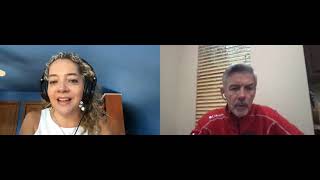
In this Peer Innovation podcast episode, hosts Randy Cantrell and Leo Bottari interview Christina (Tina) Martini, a partner in the intellectual property practice at McDermott Will & Emery. Martini recounts how her firm rapidly shifted to remote work in March 2020, thanks to pre‑existing technology and a culture of preparedness. She describes the logistical hurdles that emerged—mail handling, home office setup, and the emotional toll of isolation and loss—while emphasizing the importance of consistent, balanced communication to maintain psychological safety. The conversation moves to how the firm supported clients during the pandemic, leveraging its healthcare and labor‑and‑employment expertise and checking in on personal well‑being. Martini highlights the emergence of vulnerability, compassion, and empathy as leadership virtues, arguing that asking for help is a sign of resourcefulness rather than weakness. She reflects on lessons learned, noting a heightened focus on team welfare, empathy, and self‑awareness, and outlines the firm’s evolving hybrid‑work policy: encouraging vaccination, phased office returns, and a three‑day‑a‑week schedule post‑September. The episode closes with Martini promoting her podcasts (Paradigm Shift and Legal Face Off) and providing information about her firm.
Chapters
Welcome to Peer Innovation, the podcast with Leo Bottari and me, Randy Cantrell. Building on our previous shows, The Year of the Peer and What Anyone Can Do, we turn our attention to helping business leaders build high-performing teams. We'll talk with a diverse group of thought leaders who will share stories and insights that will help you and your teams achieve new heights. If you believe there is strength in numbers and that meeting the challenges of the future can only be achieved if we do it together, then join us for the conversation. Tina Martini is our guest today. She focuses her legal practice on domestic and international trademark and copyright law, as well as domain name, internet, social media advertising, unfair competition, and entertainment law. Tina has extensive experience in counseling, prosecution, enforcement, due diligence, and licensing matters. She's also a podcaster hosting the Paradigm Shift Podcast. We welcome Tina to the show.
Tina Martini, welcome to the show. It is so great to have you back. Um, you know, one of our, um, few kind of returning guests because you always have such great insights to offer to our listeners. And obviously today, um, we'd love to talk about your whole experience really with, um, from shelter in place moving forward. You know, what was it like? What did you learn and what's next? And, um, you know, given that you do have your own own podcast, which I was fortunate enough to be a guest on recently, Paradigm Shift, right? It doesn't get any more paradigm-shifty than that. So, uh, but anyway, um, yeah, well, just, hey, good to see you.
Good to see you too. Thank you so much for having me back. I always love having an opportunity to chat with you, either on your show or on Paradigm Shift.
There we go. Or sometimes just having conversations. Yeah, it's always good. Um, but let's start. I really do want to go back and see if we can't kind of paint a picture of what it was like back in March of 2020. Now, as we've talked, I mean, obviously in many respects you lead a global team, you're kind of set up for that in some respects anyway, but it does add another layer of it when the people in your office now, when everyone's kind of, you know, at home kind of thing. So tell us a little bit about what that was like back in March of 2020.
So it's hard to believe it's been over a year at this point, but I remember vividly the day that I was out to lunch with a client, and then I came back and was told that everybody had to pack up and get ready to work from home for what we believed at the time would be for about a week because COVID had hit. Um, everybody remembers it was like March 12th where the world just seemed to stop. And so I remember packing up my office as everybody did, including staff as well as attorneys packing up what we thought we were going to need for about a week and heading home and not really knowing what the next week was going to look like, but figuring, okay, we'll see each other within about a week. The good news was that our staff, including our executive assistants and secretaries, were ready for this because we sort of watched the trend and knew that it was possible that we were going to be working from home. And so our, our everybody was outfitted with laptops, including our secretaries, and the ability to work through a VPN remotely. So everybody was pretty calm about it. We all packed our bags, headed home, and little did we know that, you know, fast forward 15-plus months later, that we would still be working remotely. We didn't really skip a beat. I feel very fortunate to be at a firm that was ready for this, and our clients, some of them had already implemented shelter-in-place by the time that we as a firm and many other law firms both in Chicago and beyond had implemented shelter-in-place. Clients telling me at the end of February they were already laying people off because they sort of saw the writing on the wall, and they were already sheltering in place by the beginning of March. So we had clients that were a few weeks ahead of us.
Wow. So you bring up a great point regarding this idea that we all thought it was going to be a week or two, right? And, and, you know, I mean, because our experience here was I think our adult children knew better because when shelter in place was announced, they thought, huh, we're gonna hang out in Southern California. And I think from their standpoint, they were prepared for much more than a week. And it was 10 weeks actually. That initial wave of that was rather extraordinary before they ended up kind of coming back to their own spots. But it was interesting. One of the outcomes of it, of course, was dinners together at night and, family time that would not have happened, you know, otherwise. So it was rather extraordinary from there. But it's kind of interesting that you were so well prepared, I think, at the beginning, you know, that everyone had their laptops and everyone kind of understood, you know, what were you seeing at the time thinking that, wow, you know, because that's a pretty fast pivot, I think.
Yeah, it is a fast pivot. And I think what's really helpful is that from a technological standpoint, my firm and other businesses too had the technology they needed to do this. And I think that everybody was going into it with as great of an attitude as we could have and really trying to make business as usual going forward be sort of our driving north star. What was interesting though is that we noticed over a period of weeks that certain things started to emerge. First of all, we didn't really plan for things like office services. We have a terrific team back at my firm that really helped keep the trains running on time, but there were things like mail, for example, that we had assumed weren't going to really be an issue. We didn't even necessarily think about it, like how to handle things like mail, how to handle things like outfitting our home offices in a way that maybe we didn't need to before then, with extra monitors and printers and things like that. Um, and then there was, as we got more into it, there wasn't just the logistical or administrative side to it. I think there was also an emotional component to it, having to get used to, you know, different types of video teleconferencing, whether it's Zoom or Teams or whatever, and laying that on top of some folks who are living alone and are shelter-in-place by themselves for many days and weeks. The emotional, I guess, the emotional toll that that takes on people, and also seeing people we knew getting sick and some people passing away. I remember talking to you last summer when one of our team members passed away unexpectedly, not from COVID but not being able to take care of life and being with each other under certain situations and circumstances that you would ordinarily do that sort of thing.
So, you know, as a leader there, how were you both identifying and supporting some of your either, you know, colleagues or, or staff members when they were going through this?
Well, a lot of it was just trying to stay in communication as much as possible, realizing that it's a delicate balance between undercommunicating and overcommunicating, really trying to strike that right balance. Firm management was terrific in terms of having wonderful communication both through email as well as having regular meetings by cohort. So there was a lot of communication happening about what was happening at the firm, what we were seeing not just in our various offices but across the country as as well as internationally in terms of what this was looking to evolve like. And in terms of the day-to-day on the team, we already get together pretty regularly. And so those meetings were really helpful. Also just trying to check in with folks and asking how they're doing. But a lot of it was also trying to read tea leaves to a certain extent and also really trying to tune into the different styles, both communication as well as other styles, both professional and personal styles. Really trying to figure out how people are doing, not only by asking them, but also noticing how they were doing and if their performance and communication deviated at all from what we were accustomed to seeing. Because some people really hit their stride during COVID Other folks were really having a very tough time. And sometimes people aren't necessarily communicative in saying, in saying, I need help, or I'm struggling. You see symptoms of it through performance. And so really trying to be communicative and helpful and supportive when I was seeing signs of that among members of the team.
You know, and letting people know it's okay to ask for help during those times, right? I mean, how, how important is that? Now, what's interesting about this for me too is in addition to you know, your challenges as a firm just to make sure that you could keep everything, you know, functioning for your clients. I'm sure you were also having clients who were going through very similar struggles with their just keeping their own business running and communication and all that. So what was that like? Were you feeling, um, that you had to change some things or accommodate some things for your clients to help them with some of the struggles they may have been going through?
Yes, absolutely. And that's a great question. Um, one of the things that we discussed as a firm in doing was making sure that checked in with clients and asked them how they were navigating COVID. Because sometimes it's just being there for them as people, asking them what their struggles are. Other times there were legal struggles that we were able to help them with. And I'm very fortunate to be at a firm that is incredibly well run and has a number of what we call power alleys or, you know, centers of excellence. And one of those areas is healthcare and another area is labor and employment. And those were two critical areas for many of our clients during the onset of COVID and beyond. And so having conversations with clients, the first thing you ask is, how are you doing? How is your family? How is your team? What can we do to help? And that always sort of elicited a conversation. Sometimes it was really focused on the personal, but there were a lot of clients that came back and said, I'm okay, or I'm getting over COVID, or half our team is, is down with COVID or or whatever the case may have been. But a lot of clients really took the opportunity to communicate to us that they needed help. And if it was personal, we were there for them professionally. Of course, we were there too. But a lot of clients needed help to deal with the various business issues that popped up as a result of COVID and trying to navigate what have been and continue to be murky waters from a legal perspective in terms of dealing with their business operations and what those ended up evolving into as, as COVID continued to evolve.
You know, I'd like to think that asking those questions of how are you doing, how's your family doing, how's your team doing, uh, are questions that we're going to continue to ask more often. Because I, I certainly talked to a number of CEOs throughout this whose groups were still meeting oftentimes more frequently and for shorter periods of time as they were helping one another and get through this. But some of them were almost sheepishly admitting that, wow, you know, I'm finally kind of asking those questions probably that I've already always should have been asking. And it just obviously felt necessary now. But I'd like to think that those are questions that we're going to continue to ask as we come out of this, and that it's something that we learned in terms of kind of tapping into our shared humanity a little bit.
I completely agree with you, and that was exactly the term that came to mind as you were, as you were speaking, is the sense of humanity. And I think one of the aspects of humanity, almost, um, a facet of that, I would definitely say, is vulnerability. Um, and whether it's being able to say, I need help, as we discussed a couple minutes ago, or I'm really scared, or I don't know if I can do this. I think that there was a shared sense of compassion, humanity, and vulnerability that really emerged from that, where people are never going to be the same after this. People are different, and on, on balance, by and large, what I'm noticing is that I think people are emerging better for this, rather, and just looking at the world differently and appreciating things that I think a lot of us took for granted, whether it was professionally or personally. I think people are very much more compassionate and really much more empathetic. I think a lot of people, when they ask and see how other people are doing, they're much quicker to put themselves in other people's shoes and to feel a sense of compassion that maybe wasn't so close to the surface before.
I'd like to think that that in the future is going to make it more inviting for people to feel they can ask for help. But, but, you know, you mentioned that a few times. You know, I think culturally speaking, professionally, even personally, oftentimes we're not always really great at asking people for help. And I guess from your perspective and your experience, why do you think that is?
I think people are concerned that it projects a sign of weakness, and they don't want to seem weak. They don't want to seem that they can't, you know, hack it, so to speak. And I think that there are certain certain situations and certain professions where there's more of a concern than, than what I think is a normal concern among everybody. So for example, I've noticed it really in the professional services industry, and obviously being a lawyer is one of them, but other areas as well where we are looked at and strive to be the trusted advisor to our clients. And that is a critical part not only of keeping current clients satisfied, but also our go-to-market strategy in terms of really, you know, looking invincible and being able to take our clients through the fire, so to speak, and get them to emerge from the, you know, on the other side. I think that people think that there's an inherent conflict between projecting that notion of invincibility for our clients and being able to at the same time say, I'm vulnerable, I need help, I can't do it all, I need somebody to guide me through this. I think people see an inherent tension there. And the vulnerability that emerges from that, I think people think is— and are concerned projects a sign of weakness.
You know, and a great irony of that, I mean, think about the fact that you were among the 50 guests, if you remember, in 2017 when we had the Year of the Peer.
Yes.
And the idea was to have interviews with 50 really successful people and, you know, ask them, you know, kind of a series of questions about where they are and how they got there. And when I would ask the question of all of you, hey, did you get you are today all by yourself, you would all laugh at the notion of that, right? I mean, we all have help. We all have had help. We will all continue to get help. So that to me is so interesting that, you know, we recognize that none of us gets anywhere in this world without some help. And, you know, even though when you look at kind of the self-help industry in terms of books and all that, even that isn't by yourself help. It is, right? I mean, it's just incredible to me that we can't see, I think, and recognize both sides of that, in that asking for help, you know, if you think about it, to me is much more a sign of resourcefulness than it is a sign of weakness. I mean, it's this idea that we have people around us, we have resources, we have things we could depend on and rely on. And the point of life isn't to say, well, I'm going to see if I can do this by chaining one leg to the chair, right? I mean, it's the point is like, all right, I want to be able to use all of my, you know, physical, emotional, relationship assets, everything that's around me in order to make the best decision or move forward in a way I need to. And so it's, it's kind of, um, kind of interesting, I think.
I absolutely think it's really, really interesting. And I think as we're speaking about this, sort of what I think emerges from this is self-awareness, right? So I think everybody thinks self-awareness is critically important, having that EQ and being able to not only see yourself, because if you don't know yourself, how can you really know other people? How can you effectively lead? But the question is, how do you get to a point of self-awareness and how do you continue to build upon self-awareness if you don't ask for help in those areas that are your blind spots? Or where, you know, you don't even have it as a blind spot, you just know it's a weakness, but you don't necessarily know how to get from point A to point B. You can't get to the point where everybody, you know, I think agrees self-awareness is a good thing, an important thing. How do you get there without getting some help along the way?
Yeah, this is where people who are part of peer groups, whether it's CEO peer groups or key executive groups and all, it isn't just about being part of a group and asking for help. One of the great outcomes of being in a group like that is you, become self-aware pretty quickly, and other people will be happy to help you do that. And it's a huge, huge thing. In addition to that, though, I'd love to get a sense of, first of all, I guess, the fact that it didn't last a week or two. To your point, here we are over a year later, and we're finally kind of coming out of it now. But I'd love to get a sense of What did you learn from the experience? And what do you think will carry forward now as you think about leading in the firm in the future?
I guess what I took from this was even more of an appreciation for just what I've got, my team, my family, my firm, just, you know, the world. I think it's one of those things where we were all in survivor mode. So I think whatever you typically see from people who survive something that is traumatic, and I think the level of trauma that people experienced, you know, I think varies from person to person depending on the circumstances and how they evolved. But I think we've all sort of emerged feeling like we went through a joint trauma together. And so there comes in the humanity and just feeling more compassion and empathy as a result. And I think we really shouldn't underestimate the importance of that. Um, from my— from a professional standpoint, I feel very fortunate to be part of a firm that, you know, from the very top, from the chairman on down, just really portrayed and had a genuine sense of empathy and compassion for the firm, for every single person, for our clients. We kept our eye on the ball. The clients were the most important thing. Our people were the most important thing. And we ended up having a really terrific year as a result because it was a day-to-day thing where we really just closely watched it. And I think that the lessons we learned in terms of running a business, who we are for clients, um, really staying very keenly focused on our teams, our welfare, our well-being checking in with each other. Those are things that I think are going to remain. And I do think that there are certain businesses that thrive during COVID There's certain businesses that stayed about the same, and there's certain businesses that unfortunately fell apart. And I think there are a lot of lessons to be learned from sort of reverse engineering what happened to these different types of businesses and how they handled COVID, because a lot of it is not just lessons about how to run a business in a pandemic. A lot of it is making sure that you run your business smartly and intelligently going forward, whether there's a pandemic or not. And I just think that we've learned a lot, and I think that those are lessons that because of the circumstances under which we learned them, it was a traumatic time of, time of our, of humanity. I mean, it was everybody globally, and I think that they're going to stay with us forever.
I do think though there's always the danger of— I think it's going to also be important for leaders to be really intentional about keeping that going forward. That it isn't just we're going to assume that somehow everything is going to be a little better in that regard. I totally agree with you regarding it is such a unifying experience when you think about it. Anytime we go through any difficulty together, Amy Edmondson did a webinar for Vistage and talked about this idea of, you know, her field, as you know, psychological safety, does a lot obviously with Harvard Business School. And it was interesting, she said, we weren't all in the same boat, we were all in very different boats, but we were all going through the same storm. And so I thought that was really interesting. And I think the recognition, to your point earlier, that Some people may have been home alone in an apartment, maybe with crappy internet, having to kind of deal with that feeling of isolation. Others were surrounded by having to homeschool kids and having to— I mean, everybody was going through it. People had elderly parents who either were afraid were going to get COVID, or maybe they did, or maybe they lost their parents. So just the unbelievable differences in the personal challenges that people had. And I think a keyword that you focused on was just really compassion. Compassion, you know, two words really, compassion and empathy, uh, for others. And but I do think we're gonna have to be pretty intentional about those things going forward.
I, I agree. Uh, I, I think that at least they're part of the conversation now. Not that people didn't feel compassion or empathy before, but I think people at least, whether they put a name on it or not, it's a feeling, right? And it's just a desire to continue that connection. And I think you really have a hard time staying connected with people, as you mentioned, unless you continue to feel that compassion and empathy. And, um, my guess is that as a society, as professionals, we're just going to have that much closer to the surface than we did before. And I agree with you completely that those of us who are leaders, it's really our obligation to continue on that path of leading with compassion, leading with just empathy, leading with the ability to also show vulnerability. Because I think leaders have to be able to demonstrate that they are just like the people that they lead. And as part of that, you have to show vulnerability. And I think if people are willing to be vulnerable, that's when breakthroughs happen. So I think that, that, I think that's a critical part of the equation.
So as we kind of pivot now, um, and this is interesting too because it's not as if, you know, here you are, I know, in, in Chicago essentially, right? And But you've got many other offices, you've got different circumstances in every state. You know, I've been traveling more recently and, you know, I was in Cincinnati, Ohio, for example, and there's nobody wearing a mask anywhere. And there's a lot of people that are fully back to the office and all that. And then in other states is very different situation. In other countries, it's a very different situation. And there's been an ebb and flow around that constantly. In terms of your firm and like coming out of this, you know, because some people got used to, hey, love working from home, you know, at least a few days a week where I don't have that commute or whatever. So what's that looking like for you in terms of, um, how you are managing going back? And is that going to look different? And what are some of the things that are guiding those decisions for you?
That's a great question. So, you know, I think it's one of those things where, as Jeffrey Hazlett likes to say, we're sort of building the plane as we're flying it. So it's an evolving thing. And so where we are right now is we, as a workforce at my firm, at least as of like maybe a week or two ago, I think the number was 85% of our team globally has either been vaccinated or is planning to get vaccinated in the near future, which is a pretty remarkable statistic, especially when you look at it through the lens of just 2 weeks ago. So what we're trying to do is set up a good back to work policy where people are comfortable. Ultimately, what that's going to look like is there are a number of us who've been going into the office since the fall, at least a day or two a week, and that number is increasing as people get vaccinated. We're putting measures in place so that folks don't have to, for example, fill out a daily attestation any longer if they've been vaccinated and where they can provide HR with their vaccination card. Just to make it easier for them and more normal for them to be back into the office. So over the course of the summer, we're encouraging people to come back at least a couple of times. Over the next month or two, we're encouraging folks to take time off during the Fourth of July because we realize that there's a lot of burnout. And then come September 1st, we're really encouraging people to be in the office 3 days a week. And I think what that's going to look like for a lot of people is probably like Tuesdays, Wednesdays, and Thursdays for a example, and really just encouraging people to get vaccinated if that's something that they're able to do. Really looking at how mask wearing is going to fit into the grand scheme. The latest is that if folks have been vaccinated, they don't need to wear their masks in the office. Our building though, when you're in common areas, you still need to wear your mask. So I think that we're going to continue to keep a close eye on it. Um, but right now that's how it's looking, and it'll be interesting to see if we have to significantly change that over the course of the summer.
So, but the policy right now pretty much is if you're going to be back in the office, you've got to be vaccinated. Is that fair?
Or, you know, I would say that we're not requiring it, but we're strongly encouraging it. And, um, I just think that when you look at things like being masked for travel, when you look at other aspects of doing one's job, especially for the attorneys who travel to see clients, for example, we're not— I don't, I don't see us requiring vaccination. We're strongly encouraging it. But ultimately, when you look at other facets of our job, whether it's seeing clients, getting on planes, I think things like that are going to be more difficult. If you are not fully vaccinated. And so I think that while as a firm, I don't think we're doing anything markedly different, I think a lot of what we're doing is in alignment with other businesses. I think there are aspects of what we do that are markedly more difficult if we're not fully vaccinated.
Got it. This has been terrific. And of course, as always, the time kind of goes by, but I would, before we close though, I do want you to talk a little bit about your firm and also about your podcast and about where people can learn more about you?
Sure. So I'm a partner in the intellectual property practice of McDermott, Will Emery, which is a global general practice firm. We're about 1,200 lawyers. We're in the US as well as outside of the US in jurisdictions such as Europe and Asia. And so I would welcome anybody who's got any legal needs where they think McDermott might be a great fit. We've got a number of terrific practice areas. So it's not just intellectual property, but it's also corporate litigation, bankruptcy and restructuring, and other areas— tax, healthcare. So I encourage anybody who's interested in learning more about McDermott to go to mwe.com and to reach out to me if they have any questions. In terms of my podcast, which you've been a guest at for a couple times now, it's called Paradigm Shift. And what I'd like to do is discuss with guests the intersection of business and law and beyond. So I've been doing it now for about 3 and a half years. It was born out of a column that I used to write in the Chicago Daily Law Bulletin for many years. And if you're interested in being a guest, please feel free to reach out to me. My website's ParadigmShiftShow.com. And then I also have another podcast I do through WGN Radio. It's called Legal Face Off, and I have a co-host and we have a bunch of really cool guests and talk about legal issues straddling politics, sports, and entertainment. And have had a number of interesting guests over the years, including the late F. Lee Bailey. I think we actually did his last interview about 4 years ago when O.J. was back in the news at that time. So people should feel free to check that, that podcast out too as well. We've got our own splash page through the WGN Radio website.
Well, it sounds like you're really busy, so thank you for making time for us here on What Is a Saturday Morning, which is great. And I know it was a good time to to do that. But look, thank you so, so much, uh, for joining us, and, um, look forward to, um, you know, posting the show. Actually, we're gonna post it, uh, this coming, uh, week, so it'll be up in a few days.
Great. Well, thank you so much for having me as a guest. It's always a pleasure. I love connecting with you and really appreciate our friendship.
Oh, and thank you.
Thank you for joining us. To subscribe to the podcast and learn more about how you can engage peer innovation for your organization, contact us on the website at peerinnovation.co. Until next week, remember, the power of we begins with you.










